
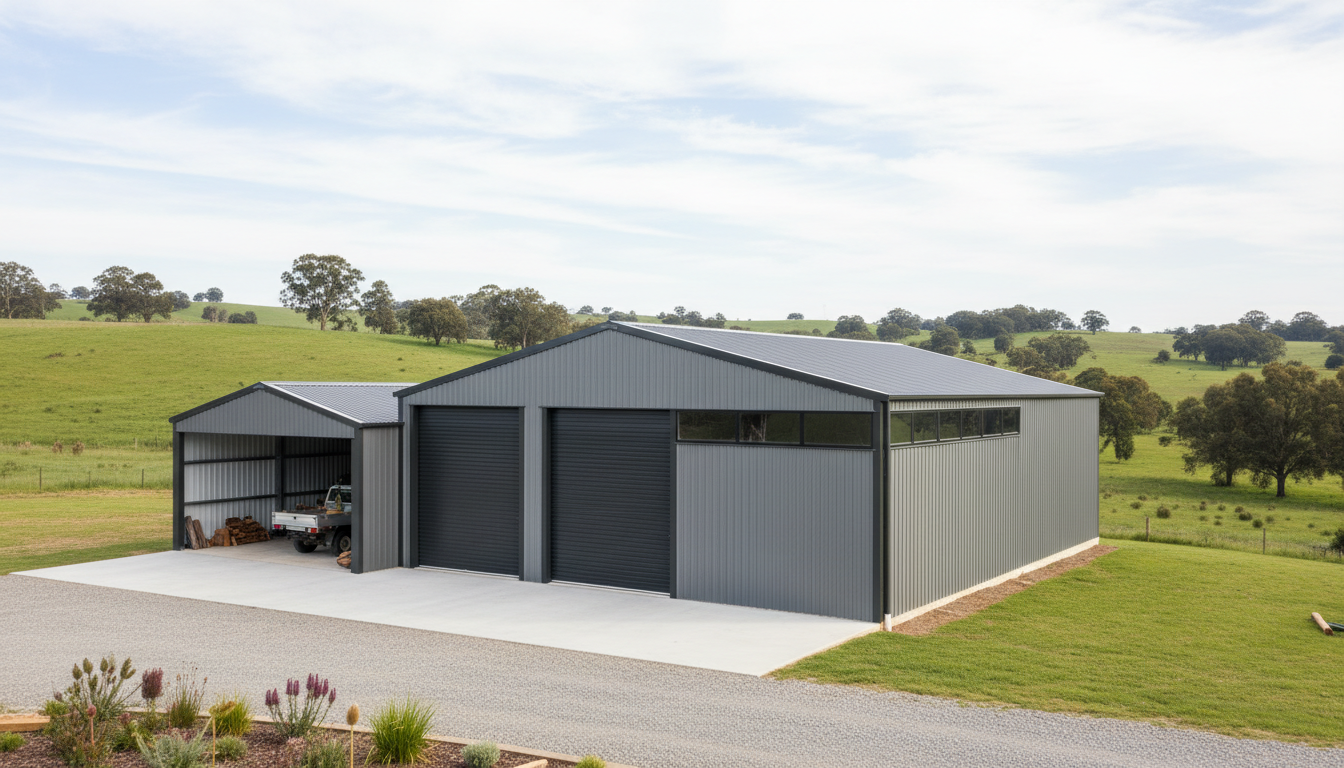
Design, Pricing and Approval Guide for a 10×20 Colorbond Shed in Australia
A 10×20 shed (approx. 3.0 m x 6.0 m) is a sweet spot for Australian backyards—big enough for a workshop plus storage, compact enough to keep approvals and costs reasonable. This expert guide covers Colorbond steel options, wind ratings, WA council approvals, pricing, and build choices for long-lasting performance.
What Does a 10×20 Shed Mean in Australian Sizing?
- Imperial to metric: 10 ft x 20 ft ≈ 3.05 m x 6.10 m (most suppliers round to 3.0 m x 6.0 m).
- Usable space: ~18 m²—fits a ride-on mower, racking, and a workbench, or works as a compact single-bay workshop.
- Common door set: 1 x 2400 mm roller door + 1 x 820–920 mm PA door; add a window or louvre for cross-flow ventilation.
Also searched as a “10 x 20 storage building”, this footprint is a great base for custom-built double garage add-ons, lean-tos, or small workshop conversions. Alternatively, a 10×6 Shed in Australia may fit midsize needs. Or, try the 6×9 Storage Shed Australia for streamlined, but capacious storage.
What Are the Best Shed Materials for Perth’s Climate?
For hot, dry summers and coastal air, most premium builders specify BlueScope steel frames with Colorbond or Zincalume cladding. Here’s how to choose.
Colorbond vs Zincalume — Which Is Better for WA Conditions?
| Feature | Colorbond steel | Zincalume steel |
|---|---|---|
| Coating & finish | Painted, baked-on finish in Australian palette; high UV resistance | Metallic coating (aluminium-zinc); silvery appearance |
| Heat management | Cooler colours reflect heat; good for Perth summers | Reflective but can glare; add sarking/insulation to reduce heat |
| Coastal durability | Excellent in most coastal zones; specify appropriate product class | Strong corrosion resistance; check distance from surf/salt spray |
| Aesthetics & value | Premium look; boosts property appeal | Cost-effective for farm/utility buildings |
| Best use | Residential workshops, custom Colorbond garages Perth | Rural sheds NSW, farm machinery storage, internal structures |
Which Wind Rating Does My 10×20 Shed Need?
Australian sheds must be engineered to AS/NZS 1170.2 for wind loads. Your site’s wind region (A, B, C or D) and terrain category set the design actions. Non-cyclonic sites use N ratings (N1–N6); cyclonic areas use C ratings (C1–C4).
- Metro Sydney/Melbourne/Adelaide: Typically Region A/B, often N2–N3.
- SE QLD (Gold Coast/Brisbane bayside): Check for higher N3 or C1 near the coast; cyclone-rated sheds QLD are mandatory in many coastal LGAs.
- WA North (Karratha/Onslow): Region D—very high cyclonic actions; specialist design required.
- Perth: Largely non-cyclonic (N2–N3), but confirm local topography and shielding.
Added 2024 WA wind-rating compliance notes: Many WA councils now require site-specific wind classification from a structural engineer or ShedSafe-accredited supplier. “Council-approved sheds WA” typically include certified drawings, slab details, and tie-down schedules matched to your property’s wind region and terrain.
How to Get Council Approval for Your Custom Shed in WA
Step-by-step approvals pathway
- Check local planning scheme: Height, setbacks, site coverage, and street/heritage overlays. Call your council’s Duty Planner.
- Confirm wind region and bushfire rating (BAL) if near vegetation.
- Obtain certified shed engineering (AS/NZS 1170.2, AS/NZS 4600, AS 4100) and slab/pier design.
- Prepare a site plan (to scale) showing boundaries, existing structures, drainage and stormwater.
- Lodge a Building Permit with a Registered Building Surveyor (BA1/BA2 forms) and pay fees; some simple sheds may qualify for certified fast-track.
Across Australia, processes vary by state, but the documents above are broadly expected. For cyclone-prone LGAs (QLD/NT/WA North), ensure C-rated engineering and hold-down details are included from the outset.
How Much Does a 10×20 Shed Cost in Australia?
Pricing shifts with steel markets and specification. According to recent industry commentary and 2024–2025 supplier price lists, expect:
- DIY kit (Zincalume walls/roof, single roller door, N2): $3,900–$6,500.
- Colorbond upgrade, lintels for wider doors, N3 rating: +$900–$2,000.
- Insulated roof panels or anticon blanket: +$800–$2,200.
- Concrete slab (100 mm, 25 MPa, basic site prep): $1,800–$3,200.
- Professional install (crew + equipment): $1,800–$3,500.
- Electrical fit-out (lighting/GPOs): $800–$2,000+ depending on run length and board capacity.
Tip: Ask for a written inclusions list (girths, vermin flashing, cyclonic hold-downs, sealants) so you can compare apples with apples across suppliers of steel sheds Perth, custom carports Melbourne, or rural sheds NSW.
What Roof Style, Door Set and Foundations Work Best?
Roof profile and pitch
- Gable roof (10–15°): Classic look, good runoff, easy to ventilate; suits most suburban blocks.
- Skillion roof (5–10°): Modern aesthetic, low overall height; excellent if you need to keep within height limits or attach solar.
- Cyclonic areas: Increase fixings and check sheet spans against manufacturer’s tables.
Doors and access
- Roller door width: 2400–2700 mm works well for mowers and small trailers; add wind locks in cyclonic regions.
- PA door: 820–920 mm with three-point locking for security.
- Windows/louvres: Cross-ventilation reduces condensation and heat build-up.
Slab and footings
- Standard slab: 100 mm thick, 25 MPa concrete, SL72 mesh, thickened edges or piers per engineering.
- Pier-only (regional/rural): Galvanised stirrups and hold-downs into augered footings where a slab is not required.
- Stormwater: Gutters with downpipes to soakwell or legal point of discharge protect footings and neighbours.
Should You Buy a DIY Shed Kit or Go Custom-Built?
DIY kit vs custom install — quick comparison
- DIY shed kits: Cheapest, great for handy owners; follow engineering and installation manuals closely.
- Custom-built: Faster completion, turnkey approvals, better warranty support; ideal for council-approved sheds WA or cyclone-rated sheds QLD.
For tight urban sites or higher wind ratings, a professional install typically pays for itself in time and finish quality.
Real-World 10×20 Shed Examples
Perth workshop conversion
3.0 x 6.0 m Colorbond Monument, skillion roof at 7°, insulated roof panels, N3 design. Added 2 x high louvres + whirlybird. Outcome: Summer internal temps dropped notably, and noise to neighbours reduced.
Rural NSW machinery bay
3.0 x 6.0 m Zincalume cladding, gable 12°, open gable end, crushed rock floor and piers only. Low-cost seasonal shelter that can be enclosed later.
SEQ bayside storage
3.05 x 6.10 m Colorbond Surfmist, C1 rating, roller door with wind locks, extra screw patterns per engineering. Approved via private certifier with site wind report.
5-Step Buying Guide for Custom Sheds in Australia
- Define use-cases: tools and racking, farm machinery storage, home gym, or a custom-built double garage in Perth as a future expansion.
- Pick materials: Colorbond for street appeal and heat control; Zincalume for rural utility. Add anticon or insulated panels for comfort.
- Check compliance: Wind region (N or C), BAL rating, setbacks, and stormwater. Ask for AS/NZS-compliant engineering certificates.
- Get apples-to-apples quotes: Same size, roof pitch, door sizes, insulation, fixings, and vermin flashing across all quotes.
- Plan the build: Confirm slab date, lead times (steel supply), and whether you want DIY or turnkey install with council approvals.
Quick Definitions
FAQs: 10×20 Sheds in Australia
Do I always need council approval?
Many councils allow exempt or complying development for small sheds, but height, area, and setback rules apply. Always check local rules; Perth and most WA councils require a building permit with certified engineering for structures like this.
What’s the best wall height?
2.4 m is common; 2.7 m adds headroom for racking and taller equipment without a big cost jump. In high-wind areas, taller walls may require extra bracing.
Can I attach a carport later?
Yes—design for future loads now. Many owners add affordable carports for Australian homes as a lean-to with matching roof pitch and gutters.
Is Colorbond worth the premium?
For residential settings, yes: better aesthetics, UV stability, and resale appeal. It also integrates well with custom Colorbond garages Perth.
How long will a steel shed last?
With correct specification for your environment, 20–30+ years is common. Coastal or cyclonic zones demand the right product class, fixings, and maintenance.
Popular 10×20 Shed Use-Cases and Design Paths
- Backyard workshop with insulated skillion roof and PA door for tools.
- Rural storage bay for mowers and quad bikes (Zincalume, open gable).
- Boat or trailer storage with 2700 mm wind-locked roller door.
- Custom carports Melbourne add-on, matching fascia and Colorbond colour.
- Upgrade path to double-bay with internal dividing wall and mezzanine.
Care, Maintenance and Long-Term Performance
- Hose down salt and dust quarterly in coastal or arid regions.
- Keep soil and mulch 75–100 mm below sheet bottoms; fit vermin flashing.
- Check screw lines and door balance annually; lubricate locks and rollers.
- Add leaf guards and clear gutters pre-storm season (BOM summer outlooks can guide timing).
Standards, Climate and Market Notes for 2024–2025
- Design to AS/NZS 1170.2 wind loads; steel to AS/NZS 4600 (cold-formed) and AS 4100 (steel structures).
- NCC 2022/23 code changes emphasise correct tie-downs and documentation; many councils request certified site wind classifications.
- Industry reports in 2025 indicate continued demand for outdoor structures, with owners prioritising heat management and rapid approvals.
- BOM outlooks highlight hotter summers; plan for insulation, ventilation, and light colours for Perth and inland WA.
Helpful Australian Resources
- Bureau of Meteorology seasonal outlooks — plan summer heat and storm preparation.
- Housing Industry Association — guidance on residential building processes and reports.
- Australian Steel Institute (ShedSafe) — information on compliant shed design.
- CSIRO — research on building performance, condensation and materials.
- Energy.gov.au — advice on insulation and energy-saving materials.