, costs, and build options with a practical checklist.)
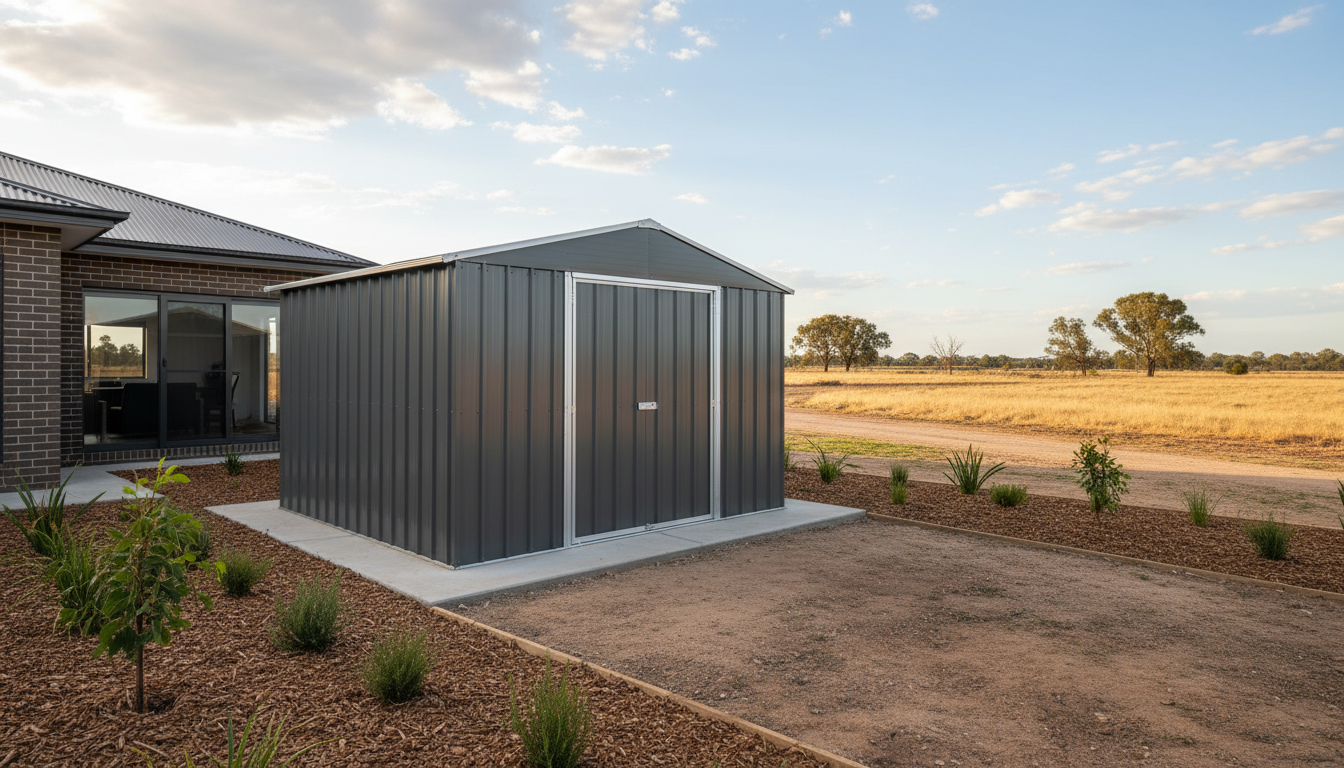
Your Complete 5 x 3 Storage Shed Guide for Australian Conditions
A 5 x 3 storage shed (5m long x 3m wide, 15m²) is a sweet spot for Aussie backyards—big enough for bikes, tools, lawn gear, and a workbench, yet compact for suburban blocks. Below, we cover materials, wind ratings, council approval, costings, and design options so your 5×3 shed performs for decades.
What Are the Best Shed Materials for Perth’s Climate?
For hot, UV-intense summers and coastal air, premium cladding and fasteners matter. Most Australian-built sheds use BlueScope steel in either Colorbond or Zincalume. For a 5 x 3 storage shed, here’s how they compare in WA conditions.
Colorbond vs Zincalume — Which Is Better for WA Conditions?
| Factor | Colorbond Steel | Zincalume Steel |
|---|---|---|
| Coastal resistance (within ~200–400m) | Choose Colorbond Ultra for marine zones; superior paint system helps resist salt spray. | Good general corrosion resistance but not ideal for immediate coastal frontage. |
| Heat performance | Cooler colours with Thermatech can reduce heat absorption in Perth summers. | High reflectivity in lighter finishes; can glare; may heat up inside without insulation. |
| Aesthetics | Wide Colorbond palette to match roofs/fences; premium look. | Metallic silver-grey; industrial look; can be painted later. |
| Price (kit only) | Typically higher. | Typically lower. |
| Warranty (BlueScope) | Up to multi-decade, site-dependent; check product and exposure category. | Comparable base warranty; check site and care conditions. |
| Best fit | Matching home finishes, coastal suburbs, premium backyard builds. | Budget-friendly inland builds and farm utility sheds. |
For a truly compact solution, try a 3×3 Garden Shed.
How Big Is a 5 x 3 Storage Shed and What Fits Inside?
- Internal area: ~15m²; usable wall space for shelving, racking, and pegboards.
- Common wall heights: 2.1m–2.4m eave; consider 2.4m if adding tall shelving or a roller door.
- What it fits: 2–4 adult bicycles, mower, whipper snipper, garden tools, workbench, storage bins, and camping gear; or a compact moto/scooter plus tools.
- Door options: 820–1200mm single-hinged, 1500–2400mm double-hinged, or 2100–2400mm roller door for bikes/mowers.
If storing e-bikes or lithium batteries, include natural ventilation, non-combustible wall linings near chargers, and a residual current device (RCD) on the circuit.
How to Get Council Approval for a 5 x 3 Shed
How to Get Council Approval for Your Custom Shed in WA
In WA, a 15m² Class 10a outbuilding generally requires a Building Permit. You’ll typically submit a BA1 (owner) or BA2 (builder) application with:
- Site plan showing setbacks, easements, sewer lines, and drainage.
- Structural drawings, footing/slab details, and wind classification report (per AS/NZS 1170.2).
- Manufacturer’s engineering for the shed frame and connections.
- Colour and cladding schedule if required by estate covenants.
Timeframes: 10 business days for certified applications is common; allow longer if variations to R-Codes (setbacks/height) are needed. Always verify with your local council.
Added 2024 WA wind-rating compliance notes: Many Perth metro sites are N2–N3. Coastal or hilltop sites can escalate due to topography and shielding. Your engineer should document site wind region, terrain category, shielding, and topographic multiplier.
NSW and QLD quick notes
- NSW: Some sheds qualify as exempt development if under size/height limits and meet setbacks. A 15m² 5×3 often needs approval in suburban blocks—check the NSW Codes SEPP and your LGA.
- QLD: Verify Region B vs cyclonic Regions C/D. In cyclone regions, use engineered tie-downs, higher serviceability criteria, and rated door systems.
Wind Ratings, Cyclones, and Structural Detailing
Australian sheds must comply with AS/NZS 1170.2 (wind actions). Your 5×3 shed’s framing, connections, and door system must be engineered for the site’s wind classification.
- Non-cyclonic: N1–N6 typical across much of southern Australia (e.g., N2–N3 suburbs).
- Cyclonic: C1–C4 for parts of QLD, NT, WA north—requires cyclonic detailing and garage doors tested to high pressures and debris impact.
For Townsville and Cairns, specify cyclone-rated sheds QLD with cyclonic door kits, extra roof bracing, heavier purlins, and compliant hold-downs (chem-set anchors or cast-in bolts). Check AS/NZS 4600 (cold-formed steel), AS 4100 (steel structures), and NCC 2025 updates.
Design Options That Maximise Your 5×3 Shed
- Roof profiles: Skillion (low cost, modern look, easier near fences) vs gable (classic look, better ridge ventilation).
- Insulation: Anticon blanket or insulated roof panels reduce summer heat gain; add foil sarking for condensation control.
- Openings: Consider a 2.1m roller door plus a 820mm side access door; add security deadbolts and anti-jemmy plates.
- Flooring: 100mm 25MPa slab with SL72 mesh and thickened edges; in cyclonic zones increase edge reinforcement and anchor schedule.
- Coastal spec: Colorbond Ultra or marine-grade coatings, stainless screws (AS 3566 Class 4), sealed cut edges, and gutter guards.
- Interior fit-out: Adjustable shelving, shadow boards, bike racks, LED battens (IP-rated), GPOs at bench height, and a small extraction fan.
Pro Tip: Did you know using insulated roof panels can reduce internal shed temperatures by up to 10°C in summer? That’s a big comfort and energy win in Perth, Adelaide, and inland NSW.
Cost Guide: What Does a 5 x 3 Storage Shed Cost in 2025?
Indicative national ranges (materials, site, and wind rating affect price):
- DIY 5×3 Colorbond kit (non-cyclonic): $1,800–$3,500
- Zincalume kit: $1,400–$2,900
- Concrete slab (15m²): $1,800–$2,700 (site cut, mesh, 25MPa, thickened edge)
- Installation (non-cyclonic): $900–$1,800
- Engineering/certification/council fees: $350–$900
- Cyclonic upgrade (if required): +$600–$1,500 for bracing, fixings, and rated doors
Source context: industry pricing trends from the 2025 Australian Steel Market Outlook and the 2025 HIA Outdoor Structures and Home Improvement Report, alongside supplier quotes in metro and regional markets.
5-Step Buying Guide for Custom Sheds in Australia
- Confirm site and wind region: Get a wind classification report and check soil class (for slab design).
- Select materials and roof: Colorbond vs Zincalume; skillion vs gable; add insulation early.
- Pick access and storage: Door type/width, windows, skylights, ventilation, shelving layout.
- Engineer and approve: Obtain certified drawings to streamline council approval and avoid delays.
- Build and anchor: Use compliant anchor schedule, seal slab perimeter, and register warranties.
Installation
Corner Garden Sheds in Australia work well for odd-shaped areas.
Local Use-Cases and Mini Case Studies
Case study 1 — Steel sheds Perth (hot summers, coastal air)
A Kallaroo homeowner chose a 5×3 Colorbond Ultra, skillion roof, and Anticon insulation. Result: cooler workspace, no corrosion issues, and a neat match to Colorbond fencing.
Case study 2 — Cyclonic North QLD
A 5×3 in Townsville with Region C design used cyclonic bracing, C-section frames, cast-in M12 anchors, and a wind-rated roller door. Passed final inspection and insurance compliance.
Case study 3 — Melbourne laneway access
A 5×3 urban install in Brunswick used a modular DIY shed kit with narrow panel sizes for tight access, plus a compact double-hinged door. Shows how DIY shed kits can solve space constraints.
Frequently Asked Questions
Do I need council approval for a 5 x 3 storage shed?
Often yes. At 15m², many LGAs require approval, especially near boundaries or easements. Check your council’s rules for Class 10a outbuildings and setbacks.
What wind rating should I order?
Your engineer or shed supplier will identify N-rating or C-rating from AS/NZS 1170.2. Don’t guess—over- or under-spec can cost money or compromise safety.
Flat (skillion) or gable roof for rain and heat?
Skillion is simpler and cost-effective; ensure fall to gutters and adequate overflow paths. Gable improves ventilation; consider whirlybirds or ridge vents in humid climates.
What about corrosion near the coast?
Use marine-grade fasteners, Colorbond Ultra, sealed cut edges, regular wash-down, and generous eave overhangs. Keep gardens/soil away from wall sheets to avoid trapped moisture.
Can I convert this to a micro workshop?
Yes—add insulation, LED lights, RCD-protected power, and a ventilated bench area. For noise, consider acoustic panels on internal frames.
What about carport or garage alternatives?
For vehicles, consider a compact carport or custom Colorbond garages Perth for secure parking. We also see demand for affordable carports for Australian homes in urban blocks.
Planning the Slab, Anchors, and Drainage
- Slab: 100mm thick, SL72 mesh on chairs, 25MPa concrete, 30mm cover, saw-cut control joints.
- Hold-downs: Chemical anchors for retrofit, cast-in bolts for new slabs; follow engineer’s schedule.
- Stormwater: Connect gutters to downpipes and soakwell/drainage as required by council.
- Termite and moisture: Install damp-proof membrane under slab; keep garden beds off walls.
Related Solutions and Keyword Clusters
- Urban/residential: 5×3 shed, compact garden sheds, backyard workshops, bike storage sheds.
- Rural/regional: rural sheds NSW, small farm machinery storage, tool lock-ups near paddocks.
- Vehicle coverage: custom carports Melbourne, double garages, enclosed custom-built double garage in Perth.
- Materials: Colorbond vs Zincalume comparison, Colorbond Ultra near coast.
- Climate: wind-rated sheds for cyclonic areas, heat-reflective colours, condensation control.
- Buying methods: DIY flat pack sheds, kit sheds, custom-engineered sheds, council-approved sheds WA.
council-approved sheds WA and steel sheds Perth are common queries—ensure your supplier provides site-specific engineering and documentation to match your LGA requirements.
Maintenance for a 20+ Year Lifespan
- Quarterly: Hose down salt and dust, especially coastal; clear gutters and downpipes.
- Annually: Check fastener tightness, door tracks, seals, and apply touch-up to scratches.
- After storms: Inspect anchors, braces, and sheet fixings; re-seal any compromised penetrations.
- Warranties: Register BlueScope warranties and keep records of cleaning and inspections.
Useful Definitions
Standards, Climate Data, and Further Reading
- Bureau of Meteorology climate zones and wind info: official BoM site
- Australian Steel Institute guidance on steel durability: Australian Steel Institute
- HIA outdoor structures market insights: Housing Industry Association
- Master Builders Australia resources: Master Builders Australia
- Condensation and building science: CSIRO
- Energy-efficient colours and insulation guidance: Energy.gov.au
Also consult Australian Standards: AS/NZS 1170.2 (wind actions), AS/NZS 4600 (cold-formed steel), AS 4100 (steel structures), and the NCC 2025 for compliance updates. See Standards Australia for access.
Quick Spec Example for a Premium 5 x 3 Storage Shed
- Dimensions: 5.00m x 3.00m, eave height 2.4m, skillion roof 3° fall to rear.
- Cladding/frame: Colorbond wall/roof sheets, galvanised RHS/C-sections with engineer-certified connections.
- Openings: 2.1m x 2.4m wind-rated roller door, 820mm PA door with weather seal.
- Thermal/condensation: Anticon R1.3 under roof, foil sarking to walls, polycarbonate skylight with UV filter.
- Slab: 100mm 25MPa with SL72 mesh, 300mm thickened edge beam; M12 cast-in anchors @ engineering schedule.
- Coastal pack: AS 3566 Class 4 screws, sealed edges, Colorbond Ultra if within marine exposure zones.
When a 5×3 Shed Isn’t Enough
Planning to store a small trailer or work ute? Consider stepping up to 6×3 or adding a lean-to. For vehicle cover, explore affordable carports for Australian homes or a compact garage solution. Many suppliers bundle sheds with matching carports for unified street appeal.