

2 Bedroom Shed Homes in Australia: Plans, Prices, Approvals and Build Options (2025) provide an affordable, flexible, and increasingly popular housing solution for a diverse range of Australians. This comprehensive guide dives deep into everything a prospective homeowner or investor needs to know—from design ideas and current market pricing, to navigating local council approvals and choosing the right construction methods. By focusing exclusively on residential 2 bedroom shed homes within the Australian context, with special attention to regions such as Queensland, readers gain actionable, clear, and authoritative insights that simplify complex decisions.
Explore how thoughtfully designed shed homes compare with granny flats and traditional houses, discover detailed floor plans, understand how to budget accurately, and navigate the approvals maze with confidence. Whether DIY enthusiast or first-time investor, this article equips you with practical tools and expert guidance for a smooth journey to your ideal shed home by 2025.
Understanding 2 Bedroom Shed Homes: Definition and Benefits
What qualifies as a 2 bedroom shed home in Australia?
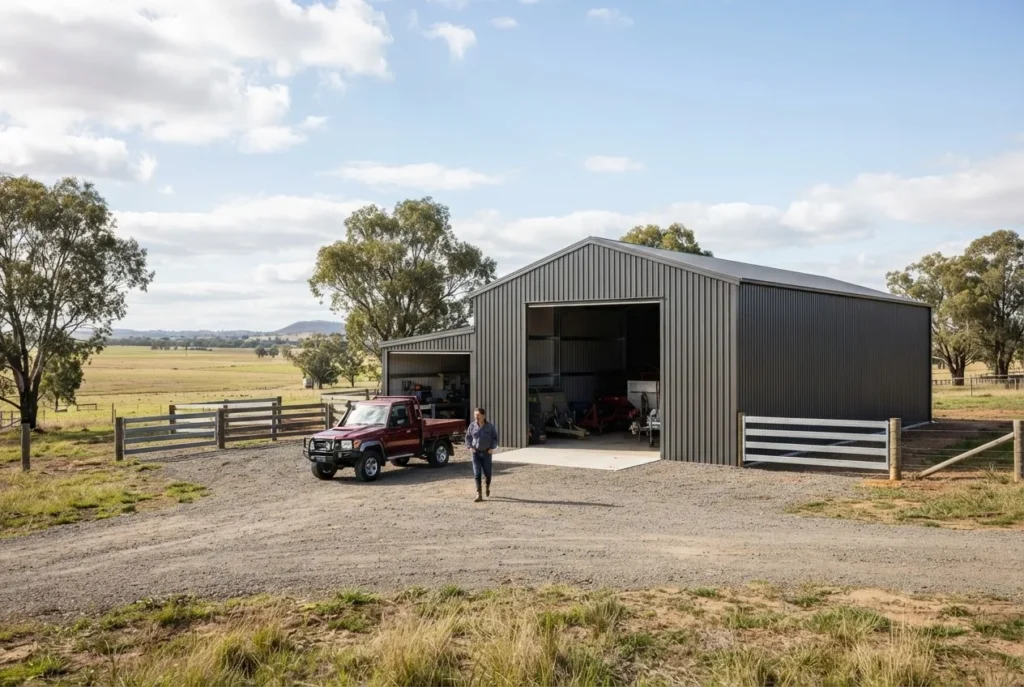
A 2 bedroom shed home is a residential dwelling that combines the structural simplicity and cost-efficiency of a shed with functionalities akin to a conventional house, typically featuring two bedrooms, bathroom facilities, kitchen, and living areas. Unlike commercial or purely utilitarian sheds, these homes are designed for comfortable, long-term living and strictly comply with Australian residential building codes.
The key distinction lies in their dual purpose: the practicality and durability of a shed structure blended with zoning and design features appropriate for residential occupancy. These homes often fall under the category of “sheds and granny flats,” although shed homes typically refer to larger, self-contained residences rather than ancillary accommodations.
For those considering smaller footprint options, our compact 10 sqm shed buying guide offers essential insights into design and functionality.
Differences between bedroom sheds, granny flats, and standard detached homes
- Bedroom sheds: Sometimes a casual term emphasizing the compact bedroom focus, often used for basic or temporary sleeping quarters without full residential amenities.
- Granny flats: Legally defined secondary dwellings on a residential property, generally smaller than 60 sqm, subject to specific council regulations, and intended as accessory living spaces.
- Standard detached homes: Conventional houses built with traditional construction methods, larger floor plans, and higher costs, fully compliant with residential zoning and building laws.
2 bedroom shed homes occupy a middle ground—they provide more space and autonomy than granny flats but leverage the affordability and flexibility of shed construction to offer viable alternatives to costly standard homes.
Key advantages of choosing 2 bedroom shed homes (affordability, speed, flexibility)
- Cost-effectiveness: Building with durable materials like Colorbond steel reduces overall investment compared to brick or timber homes.
- Faster construction: Simplified designs and modular options accelerate building timelines.
- Flexibility in location: Often permissible on various residential zonings including semi-rural and urban fringe areas.
- Customization: Numerous design motifs, from open-plan to compact, tailor to lifestyle needs.
- Energy efficiency: Many plans now integrate sustainable principles reducing long-term utility bills.
Popular materials: The role of Colorbond steel in construction
Colorbond steel is the quintessential material in Australian shed home construction due to its resilience, lightweight properties, and excellent thermal performance. Compliant with Standards Australia AS 1562, Colorbond offers superior corrosion resistance, a broad palette of colors, and low maintenance requirements.
Its adaptability supports both prefabricated and custom-built methods, facilitating quicker builds and improved longevity compared to traditional materials often susceptible to weather-related wear.
Transitioning to the next section, we’ll explore varied house plans and design possibilities tailored for Australian 2 bedroom shed homes, emphasizing space optimization and modern livability.
2 Bedroom Shed House Plans and Design Options in Australia
Popular floor plan layouts and configurations for 2 bedroom sheds
Typical 2 bedroom shed home layouts range from compact rectangular designs to more elaborate open-plan arrangements that maximise natural light and functional flow. Common configurations include:
- Classic linear layout: Bedrooms aligned on one side, opposite an open living and kitchen space.
- L-shaped designs: Separate living zones with private bedroom clusters, enhancing privacy.
- Studio-integrated layouts: Combining living, dining, and kitchen in a single open area.
- Split-level or raised foundations: Adapting to sloped sites or flood-prone areas, often in Queensland and coastal regions.
While 2 bedroom sheds are popular for single-storey layouts, some homeowners explore two-storey Colorbond shed designs and loft storage solutions for added space.
Customizable features and design trends in 2025
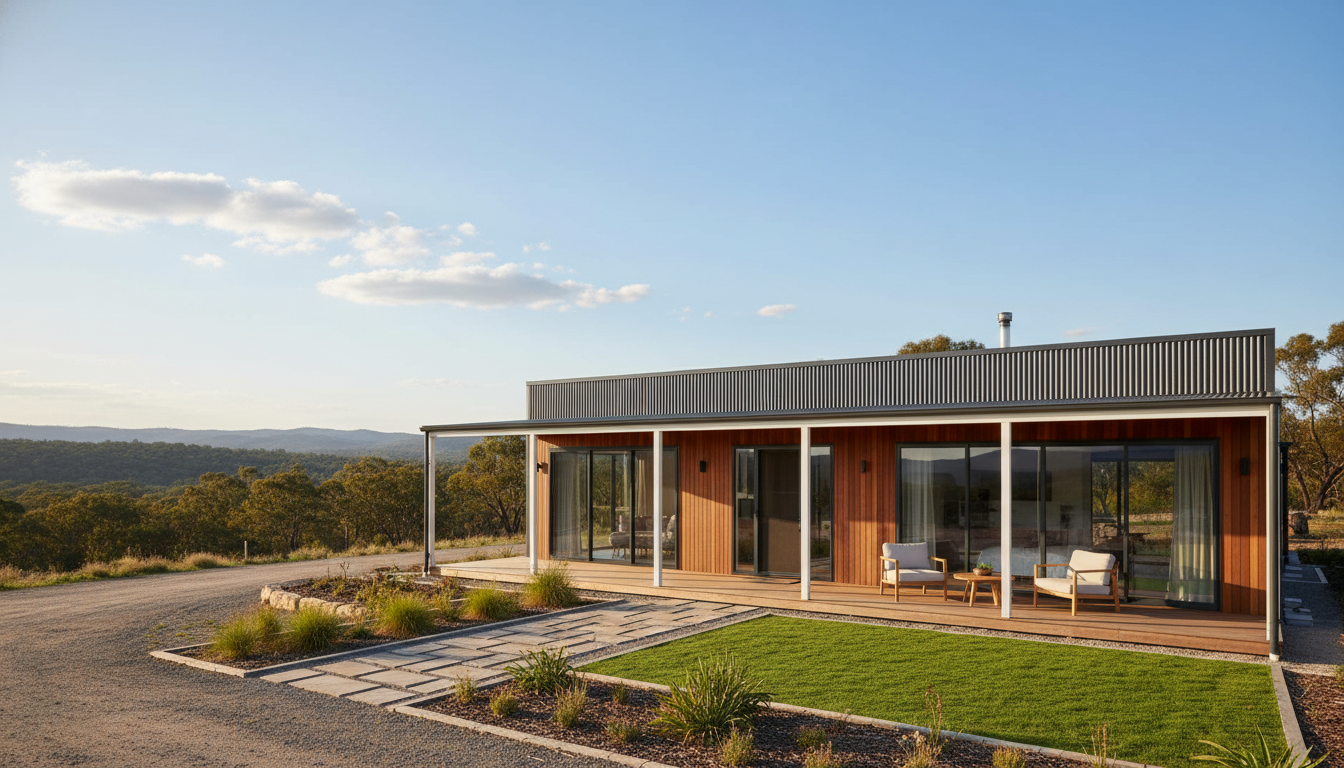
- Pop-out verandas and decks: Extending living outdoors with shaded, Colorbond-roofed verandas.
- Multipurpose rooms: Flexible second bedrooms that double as home offices or hobby spaces.
- Green roofing: Integration of eco-friendly roofing blends with Colorbond steel walls, improving insulation.
- Smart home-ready layouts: Wiring and design accommodating intelligent lighting, security, and energy monitoring.
Incorporating energy efficiency and sustainable design principles
Australian 2 bedroom shed designs increasingly embed sustainable features recommended by the Clean Energy Council such as:
- High R-value insulation tailored to regional climates.
- Solar panels mounted on Colorbond roofing.
- Rainwater harvesting and greywater recycling systems.
- Cross-ventilation designs employing window placement.
Visual aids: Sample floor plans and space utilization tips
Consider a 70 sqm plan with:
| Room | Area (sqm) | Features |
|---|---|---|
| Master bedroom | 14 | Built-in robes, ensuite option |
| Second bedroom | 11 | Multi-use flexible space |
| Living/dining/kitchen | 30 | Open plan, sliding door to veranda |
| Bathroom/laundry | 8 | Combined wet area, practical layout |
| Veranda/outdoor | 7 | Shaded, Colorbond roof |
Effective space planning emphasises connectivity between indoor and outdoor living zones while allowing privacy within bedroom areas.
Next, we’ll provide an in-depth look at the costs of building these homes across Australia, highlighting regional variations with a focus on 2 bedroom shed homes QLD prices.
Pricing Breakdown: Costs of 2 Bedroom Shed Homes Across Australia
Overview of total build costs: materials, labor, and design complexity
Building a 2 bedroom shed home involves multiple cost components:
- Materials: Colorbond steel panels, insulation, cabinetry, fixtures, flooring.
- Labour: Skilled trades including electricians, plumbers, builders.
- Design and permits: Architectural plans, engineering certification, council submissions.
- Site preparation: Land clearing, leveling, foundation work.
Typical total costs range widely based on design choices and location, from approximately AUD 150,000 to AUD 300,000 in 2025 currency terms.
Regional price comparisons with emphasis on 2 bedroom shed homes QLD prices
| State/Territory | Average Cost (AUD) | Notes |
|---|---|---|
| Queensland | 170,000 – 280,000 | Lower site prep costs but higher council fees in urban areas |
| Victoria | 180,000 – 300,000 | Higher labour costs, stringent heritage overlays in some zones |
| New South Wales | 190,000 – 310,000 | Higher construction costs near Sydney, approval variability |
| South Australia | 160,000 – 270,000 | Moderate costs with simplified rural approvals |
Queensland offers some of the most accessible pricing for 2 bedroom shed homes QLD prices due to favorable climate and regulatory frameworks, but local council fees can add variability.
Tasmanian buyers benefit from insights into custom Colorbond shed builders and pricing in Tasmania.
Cost-saving options: DIY vs prefabricated vs contractor-built
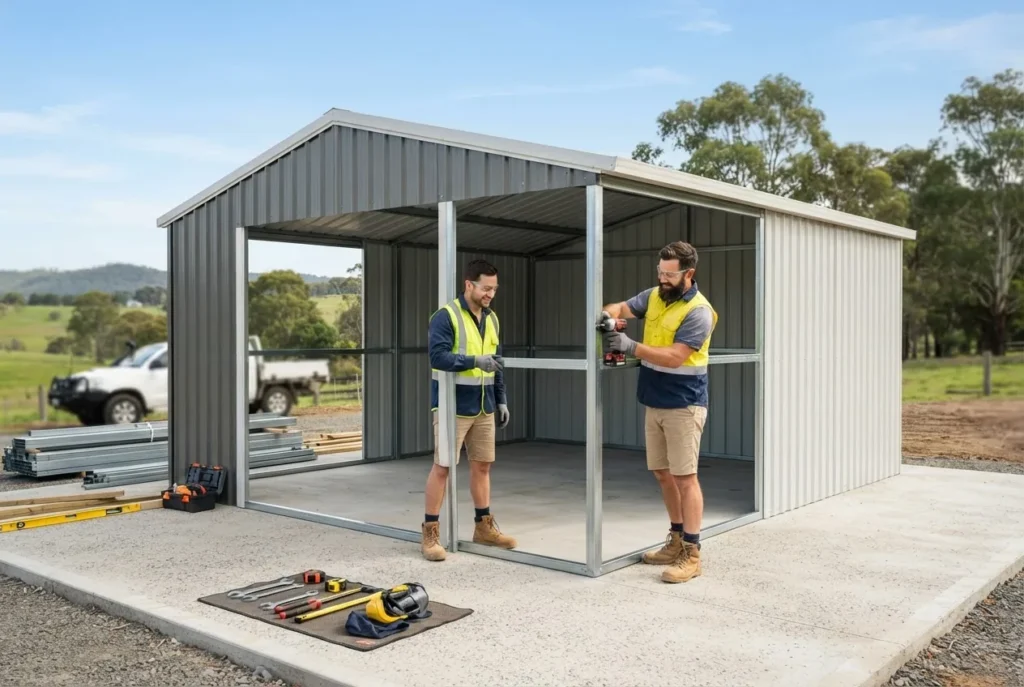
- DIY: Potentially reduces labour costs but demands skill and time; risk of delays or compliance issues.
- Prefabricated: Factory-built modules increase speed and quality control; upfront costs may be higher but save time and reduce surprises.
- Contractor-built: Full-service, professional oversight; higher costs but convenience and warranty assurance.
Additional costs: site preparation, council fees, and utility connections
Factors such as land slope, soil condition, distance to utilities, and council application fees can add AUD 10,000 to 50,000 or more. Utility connections, including electricity, water, sewerage, and telecommunications, particularly in remote or fringe suburbs, must be budgeted carefully.
With cost frameworks understood, we now focus on how to navigate local council approvals and zoning laws essential for a successful build.
Navigating Australian Local Council Approvals and Residential Zoning Laws
Understanding building permits and compliance for 2 bedroom shed homes
Australian building permits and compliance requirements mandate that all residential shed homes meet safety, structural, and zoning regulations aligned with the National Construction Code (NCC). Key considerations include:
- Zoning permissions within residential or mixed-use overlays.
- Development applications for water, sewer, and access compliance.
- Submission of certified architectural and engineering plans.
- Inspections throughout the build process by council or private certifiers.
Each state and territory in Australia administers approvals with local nuances. For example, Queensland councils are generally more permissive towards 2 bedroom shed homes under the residential zoning overlays but enforce strict flood risk assessments. In Victoria, heritage overlays can complicate approvals, while NSW emphasizes energy efficiency compliance.
To understand specifics of local council approvals for sheds and carports, see our site shed and steel shed council approval processes in Australia guide.
Key steps in the approval process: documentation, inspections, and timelines
- Submit development application with detailed plans and BASIX certificates (where applicable).
- Await council assessment and requests for further information.
- On approval, lodge building permit application based on finalised designs.
- Commence construction with mandatory stage inspections.
- Final occupancy certificate issued post-build and inspection.
Common challenges and how to overcome them
- Unexpected zoning restrictions: Engage council early with preliminary inquiries.
- Delays in permit processing: Provide comprehensive documentation upfront.
- Non-compliance issues: Consult a certified building surveyor during all design stages.
- Cost escalations due to additional conditions: Budget contingency for unexpected requirements.
Next, we assess different build options available to construct your 2 bedroom shed home, weighing pros and cons for all major approaches.
Build Options for 2 Bedroom Shed Homes: Construction Methods and Builders
DIY construction pros and cons for bedroom sheds
DIY construction appeals to hands-on builders aiming to reduce costs and personalise their home. Benefits include:
- Lower labour expenses.
- Full control over timelines and materials.
However, significant drawbacks are:
- High demand for building expertise and knowledge of regulations.
- Potential for errors causing costly delays or non-compliance.
- Longer project durations and greater physical effort.
Prefabricated shed home builders: what to expect and top providers
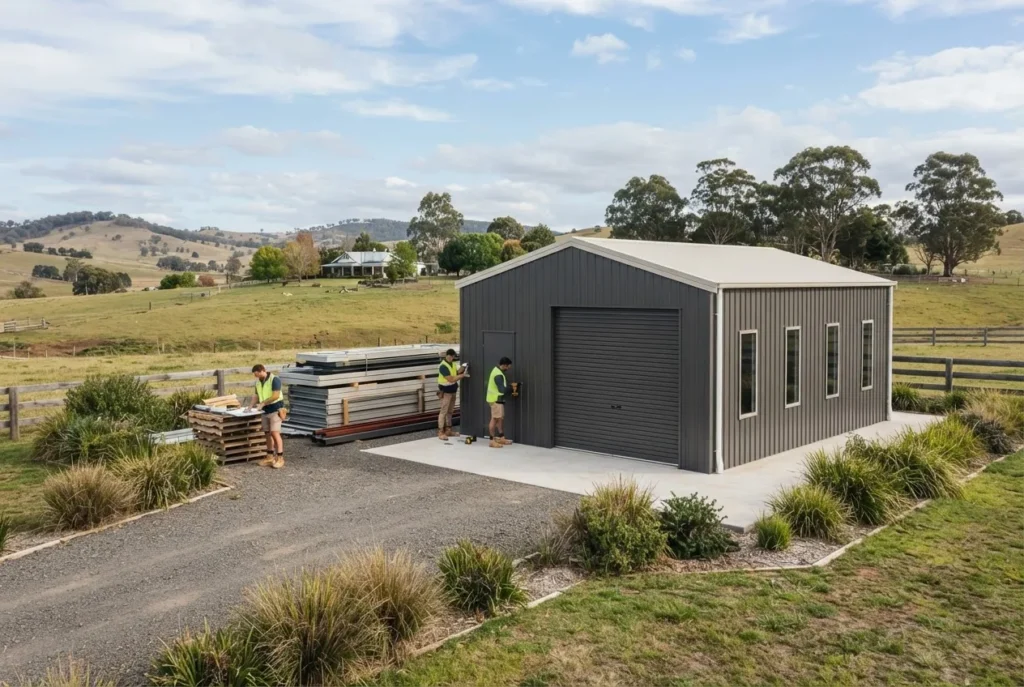
Prefabricated or modular builders produce large sections of the shed home in controlled factory environments, then transport and assemble on-site. Advantages include increased build speed, quality control, and predictable costs. Leading Australian manufacturers specialise in Colorbond steel modular homes with energy-efficient finishes. Typical delivery timelines range from 8 to 16 weeks.
Engaging contractors: selection, project management, and warranties
Qualified contractors provide turnkey solutions, coordinating trades, permits, and timelines. Choosing a licensed builder registered with organisations like Master Builders Australia ensures standards compliance and warranty coverage. Contractors typically manage:
- Council approvals and inspections coordination.
- Material procurement and logistics.
- On-site project supervision and troubleshooting.
Warranties protect homeowners against defects and delays but come with premium costs.
Timeline comparisons for different build methods
| Build Method | Typical Timeline | Notes |
|---|---|---|
| DIY | 6-12 months | Highly variable, depends on skill and availability |
| Prefabricated | 3-5 months | Faster due to factory construction and minimal site work |
| Contractor-built | 5-7 months | Managed timeline with professional oversight |
Many 2 bedroom shed homeowners also utilise portable office hire and site office solutions in Australia and portable storage and temporary Colorbond shed options during the construction phase to enhance site logistics and operational efficiency. These options are flexible, council-approved, and popular among builders managing multi-phase builds.
Moving forward, practical site selection and lifestyle suitability considerations guide your shed home’s placement and lifestyle integration.
Practical Considerations: Site Selection, Zoning, and Lifestyle Suitability
Choosing the right site: land size, orientation, and restrictions
Ideal sites for 2 bedroom shed homes offer:
- Sufficient land size to accommodate building footprint plus setback requirements.
- Optimal north-facing orientation for light and solar gain in southern Australian states.
- Minimal slope for easier site preparation (or planning for split-level foundations if necessary).
- Access to utilities and road frontage to meet council standards.
Zoning overlays determine where 2 bedroom shed homes can be placed. Some suburban councils treat these similarly to granny flats, requiring dual occupancy permits, while rural zones are more permissive but may demand environmental impact studies. Early inquiry with councils reveals constraints like maximum building area, height limits, and design controls.
Zoning implications for sheds and granny flats in residential areas
How 2 bedroom shed homes fit various lifestyles (downsizers, investors, renters)
These homes serve diverse market needs such as:
- Downsizers: Affordable, low-maintenance homes suited for retirees.
- Investors: Rental properties or airbnb-ready dwellings on subdivided lots.
- Renters: Entry-level housing options providing privacy and amenities.
Integrating outdoor living and landscaping with shed home designs
Outdoor spaces contribute heavily to lifestyle satisfaction. Decks, pergolas, native plant gardens, and shade structures complement the steel shed aesthetics while enhancing environmental comfort. Landscaping can also improve site drainage and comply with council landscaping requirements.
The next section presents real-world case studies and examples, spotlighting Queensland projects and contrasting build types across Australia.
Case Studies and Real-World Examples of 2 Bedroom Shed Homes in Australia
Queensland projects: cost, approvals, and construction insights
A Sunshine Coast couple built a 2 bedroom shed home for AUD 190,000, completing it within 5 months under the local council’s streamlined approval process. Using prefabricated Colorbond panels, they bypassed costly labour and had flexible outdoor living spaces, saving over 20% compared to conventional builds.
Comparative case: prefab vs custom builds in different states
A Melbourne investor opted for a custom contractor-built shed home, incurring AUD 270,000 with a 7-month build and complex heritage overlay approvals. In contrast, a NSW homeowner chose modular prefab, completing construction in just 4 months for AUD 220,000, navigating energy efficiency standards with ease.
Lessons learned from homeowners about budget and timeline management
- Early engagement with councils avoided costly redesigns.
- Prioritising prefab kits reduced weather-related construction delays.
- Budget contingencies allowed handling of unforeseen infrastructure costs.
Visual gallery with plans, photos, and testimonials
Included are annotated floor plans illustrating spatial efficiency and photos depicting the integration of Colorbond finishes and outdoor spaces, supplemented by homeowner quotes emphasizing value, comfort, and approval ease.
Finally, this guide concludes with an expert FAQ to navigate common pitfalls and help you make confident choices.
FAQs and Expert Tips: Making Your 2 Bedroom Shed Home Project a Success
How to choose the right plans based on budget and needs?
Select plans balancing space and affordability; open-plan layouts typically reduce material costs. Engage a designer early to tailor for site-specific conditions and energy requirements.
What are the most common pitfalls in approvals and build?
Incomplete documentation and ignoring local zoning layers often stall approvals. Budget overruns arise when site prep or utility connections are underestimated.
How to economize without compromising quality?
Utilise prefabricated components, choose standard Colorbond profiles, and consider multifunctional rooms. Prioritise quality insulation and water-efficient fixtures for long-term savings.
Who to consult: builders, designers, council officers, and certifiers?
Early dialogue with council officers clarifies zoning rules. Certified architects ensure compliant plans. Builders experienced in shed homes manage construction nuances. Building certifiers verify compliance at critical stages.
Embrace these tips and you’ll move closer to owning a cost-effective, comfortable, and compliant 2 bedroom shed home for 2025.
Summary: This definitive guide to 2 Bedroom Shed Homes in Australia: Plans, Prices, Approvals and Build Options (2025) equips you comprehensively—from understanding the dwelling’s nature, exploring adaptable design options, dissecting specific cost structures with Queensland highlights, mastering council approval pathways, to comparing build methods suitable for different skill sets and budgets. Real-world examples validate advice, while practical tips round off preparedness. Whether downsizing, investing, or building a home from scratch, shed homes represent a compelling residential choice. For deeper market insights and local regulatory nuances, leverage our linked resources and expert network. Begin your shed home journey informed, confident, and empowered.
Frequently Asked Questions
What is the difference between a 2 bedroom shed home and a bedroom shed?
A 2 bedroom shed home is a fully functional residential dwelling with two bedrooms and amenities for long-term living, built under Australian residential codes. A bedroom shed usually refers to simpler, often temporary sleeping quarters lacking full residential facilities.
How do prefabricated 2 bedroom shed homes compare to contractor-built options?
Prefabricated shed homes are factory-built and assembled onsite faster with quality control, typically taking 3–5 months. Contractor-built homes offer full service with professional oversight but take longer (5–7 months) and are costlier due to managed timelines and warranties.
Which local council approvals are most challenging for 2 bedroom shed homes in Australia?
Challenges often arise from zoning restrictions, heritage overlays, flood risk assessments, and energy efficiency standards. Early engagement with councils and thorough documentation help navigate these challenges effectively.
Why is Colorbond steel preferred for 2 bedroom shed home construction in Australia?
Colorbond steel is preferred for its durability, lightweight nature, corrosion resistance, and thermal performance. It offers low maintenance and complies with Australian standards, making it ideal for the flexible and efficient construction of shed homes.
Can 2 bedroom shed homes be customized to fit different lifestyle needs?
Yes, these homes offer customizable layouts such as multipurpose rooms, pop-out verandas, and smart home features, allowing adaptation for downsizers, investors, or renters with varying lifestyle requirements in Australia.
How much do 2 bedroom shed homes typically cost in Queensland compared to other states?
In Queensland, costs range from AUD 170,000 to 280,000, generally lower than in NSW and Victoria due to fewer site preparation expenses but possibly higher council fees in urban areas.
What are the advantages and disadvantages of DIY construction for a 2 bedroom shed home?
DIY enables cost savings and project control but requires high building expertise, is time-consuming, and risks mistakes leading to delays or compliance issues.
How do energy efficiency features integrate into 2 bedroom shed home designs?
Energy efficiency is achieved through high insulation R-values, solar panels, rainwater harvesting, greywater recycling, and strategic window placement for cross-ventilation, reducing utility costs and environmental impact.