

Exploring the potential of 2 floor sheds in Australia opens up a new dimension in storage and workspace solutions. This comprehensive guide uncovers the key factors behind two-storey Colorbond sheds, revealing how loft storage can be maximised for both personal and commercial applications across Australian properties.
Understanding Two-Storey Sheds: Concepts and Benefits
Defining Two-Storey and 2 Story Storage Shed Structures
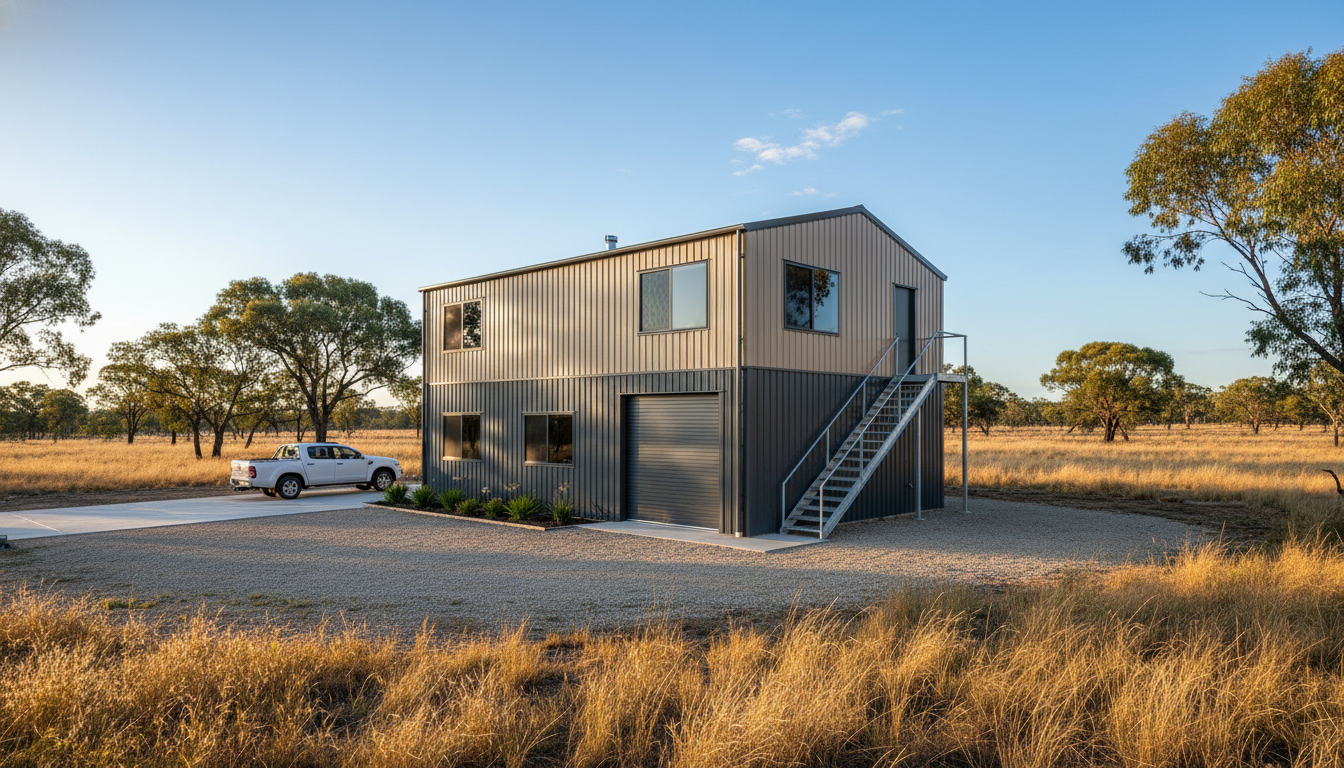
A two-storey shed (or 2 story shed) refers to a building that utilises vertical space by incorporating two distinct floor levels. Unlike traditional single-storey sheds, these structures boast added height and complexity to expand usable area without enlarging the physical footprint. Within these, loft spaces often function as elevated storage or functional rooms, providing a versatile and effective solution.
The two floor shed concept is especially valuable where land area is limited or where separation between work and storage spaces is desired. Incorporating elements such as structural steel framing ensures adequate support and safety, enabling a reliable multi-level shed design.
Advantages of Vertical Space Optimization in Sheds
Maximising vertical space enhances overall storage capacity and functional area. Key advantages include:
- Increased usable space: Doubling floor area without expanding the footprint.
- Separation of functions: Lofts can serve as dedicated storage while the ground floor supports workshops or vehicle storage.
- Cost-efficiency: Building upward is often more affordable than acquiring more land.
- Better organisation: Clear zoning within the shed improves workflow and accessibility.
Optimising loft storage areas with space-saving storage solutions and modular systems enhances efficiency further. These systems can include mezzanine floors, adjustable shelving, and custom racks designed for loft use.
Two-storey sheds meet a wide spectrum of needs. Commercially, they serve as robust workshops, warehousing complexes, or storage buildings with loft-equipped offices. For personal or hobbyist use, they offer:
- Multi-functional shed rooms for crafts, hobbies, or small business operations.
- Dedicated loft storage for seasonal equipment, tools, or collectibles.
- Workshop spaces separate from storage areas, minimising clutter and maximising productivity.
These diverse 2 story storage shed applications showcase how two floors can deliver expanded capacity without disrupting property aesthetics.
Comparing Single-Storey vs Two-Storey Shed Designs
| Feature | Single-Storey Shed | Two-Storey Shed |
|---|---|---|
| Footprint | Larger land area needed | Compact footprint with vertical expansion |
| Storage Capacity | Limited to ground floor | Expanded with loft and upper floor |
| Construction Complexity | Lower | Higher, requiring structural framing |
| Cost | Typically lower initial cost | Higher upfront; potential cost savings on land |
| Use Flexibility | Less division of function | Greater zoning and functional separation |
While single-storey sheds are simpler, 2 storey sheds provide superior space optimisation, especially for commercial applications requiring distinct storage and workspaces.
While 2 floor sheds offer substantial vertical space, smaller footprint sheds such as 10 sqm sheds may be suitable for limited areas, as detailed in our comprehensive 10 sqm shed buyer’s guide.
Understanding these benefits and trade-offs sets the stage for exploring the right materials and structural considerations, particularly the role of Colorbond steel in Australian climates.
Colorbond Steel and Its Role in Two-Storey Shed Construction
Overview of Colorbond Steel Characteristics and Grades
Colorbond steel is a premium coated steel product designed by BlueScope Steel, tailored to meet Australian building requirements. It is available in several grades, with varying thicknesses and protective coatings depending on the application. Common grades used in two-storey shed construction include:
- Zincalume® base with Colorbond® paint finish for corrosion resistance.
- Varieties with enhanced UV stability suited for harsh Australian sun exposure.
- Custom colour ranges providing aesthetic flexibility.
Manufacturers offer Colorbond steel finish options to complement residential and commercial properties, with smooth or textured panels.
Durability and Weather Suitability in Australian Climates
According to a 2023 BlueScope Steel durability report, Colorbond steel maintains integrity under diverse Australian climatic conditions — from corrosive coastal salt spray environments to tropical humidity and desert heat. Its protective coatings prevent rust, minimize fading, and endure impact stress.
The material’s adaptability ensures two-storey sheds stay resilient year-round, protecting valuable loft storage and shed rooms from weather extremes. Structural steel framing integration with Colorbond panels adds to overall strength, essential for supporting the added weight and stresses of multi-level builds.
Aesthetic Customization and Color Options for Colorbond Sheds
| Colorbond Colour Range | Description |
|---|---|
| Classic Cream | Traditional neutral, blends with surroundings |
| Woodland Grey | Modern, muted grey for contemporary sheds |
| Deep Ocean | Rich blue-green shade, coastal appeal |
| Monument | Charcoal black for sleek design |
| Paperbark | Natural earthy tone, complements natural land |
The extensive palette enhances architectural appeal, allowing shed owners to align aesthetics with property style or branding.
Structural Steel Framing Integration with Colorbond Panels
Multi-level sheds demand rigorous structural support. Structural steel framing forms the backbone, ensuring load-bearing capacity and framing to support loft floors and shed rooms while maintaining safety and compliance with Australian building codes. This framing is typically galvanized for corrosion resistance and engineered to suit specific shed dimensions.
The steel frame works synergistically with Colorbond cladding to enhance longevity and facilitate faster installation.
With these materials in place, owning a two-storey shed guarantees a robust shelter optimised for the Australian environment and occupational needs. Next we will explore design strategies for loft storage and shed room layouts that maximise the functional benefits of these structures.
Loft Storage and Shed Room Design for Maximum Space Efficiency
Types of Loft Storage Solutions in Two Floor Sheds
Loft storage in a two-storey shed typically falls into several categories:
- Open lofts: Unlined spaces used for bulk storage of lightweight items.
- Mezzanine floors: Partial upper floors with accessibility via stairs or ladders, supporting heavier storage or workspace extensions.
- Partitioned loft rooms: Fully enclosed spaces, often sound-insulated and climate-controlled, suitable for offices, studios, or workshops.
- Modular rack systems: Adjustable unit shelving designed specifically to fit within irregular loft spaces.
Designing Functional Shed Rooms Within Two-Storey Structures
Creating a shed room within a two-storey shed requires careful planning to balance support, lighting, and thermal comfort:
- Ensure adequate structural framing beneath the loft floor to support intended uses.
- Incorporate insulation and lining to improve temperature regulation and noise reduction.
- Design natural or artificial lighting solutions for comfort and productivity.
- Arrange safe, easy access via staircases or ladders compliant with Australian safety standards.
Properly designed shed rooms can elevate the two-storey shed’s usability for a wide range of commercial or personal functions.
Space-Saving Storage Strategies and Tools for Loft Areas
Implement these strategies to maximise loft space efficiency:
- Use vertical shelving and stackable storage bins to utilise height.
- Install wall-mounted racks or hooks for tools and equipment.
- Employ modular, custom-fit storage units that adapt to shed roof slope constraints.
- Incorporate fold-away workbenches in loft rooms to maintain flexible floor area.
These space-saving storage solutions improve overall organisation and keep frequently used items accessible without clutter.
For flexible storage needs, portable storage buildings and temporary Colorbond sheds offer temporary solutions that complement the permanent loft storage designs in two-storey sheds.
Benefits of Lined Sheds and Insulation for Loft Usability
Lined sheds with insulation provide thermal protection, enhanced acoustics, and improved humidity control, critical for loft usability in extreme Australian climates. Benefits include:
- Comfortable year-round temperatures allowing use as workshops or offices.
- Protection for stored items sensitive to heat or moisture.
- Reduction in condensation that can compromise structural materials and stored goods.
Choosing the correct insulation materials and lining systems tailored to regional climate zones enhances practical loft storage and functional shed rooms.
With effective loft storage design and shed room considerations in place, the next focus is on navigating Australian building regulations and council approvals specific to two-storey sheds.
Australian Building Regulations and Council Approvals for Two-Storey Sheds
Key Regulatory Requirements for Two-Storey Structures
Two-storey sheds must comply with multiple regulations to ensure safety and local community standards adherence. Key factors include:
- Structural compliance with the Building Code of Australia (BCA), especially regarding loads and fire safety.
- Height restrictions defined by local planning schemes, often limiting shed height to 6m or less.
- Setback requirements from property boundaries to maintain neighbour privacy and access.
- Energy efficiency considerations, including insulation standards for habitable loft rooms.
Navigating Council Approval Processes Across Australian States
Every state and local government may impose varying approval pathways. Typically, the process includes:
- Submitting detailed plans showing structural details, site placement, and intended use.
- Applying for a Development Application or Building Permit with the local council.
- Demonstrating compliance with state-specific regulations such as bushfire attack levels or flood zoning.
- Consulting with council officers to address specific concerns or modifications.
Understanding these pathways early accelerates permit approvals for two-storey sheds.
Australian building regulations for two-storey sheds provide an in-depth overview of the essential regulatory frameworks commercial and residential users need to consider.
Height, Setback, and Safety Considerations Specific to Two-Storey Sheds
Height limits vary; for example in Queensland, two-storey sheds must generally not exceed 6 metres unless a private certifier exempts. Setbacks must respect neighbour privacy and emergency access zones.
Safety standards include fire-rated materials if loft spaces are used as habitable rooms and emergency egress points compliant with Australian workplace and residential guidelines.
Compliance Tips for Commercial vs Residential Shed Applications
Commercial shed approvals often require stricter scrutiny on:
- Workplace safety measures such as ventilation and lighting.
- Accessibility compliance for employees or public access.
- Environmental assessments for noise, odours, or traffic impacts.
Residential two-storey sheds used mainly for personal storage have slightly relaxed requirements but must adhere to basic safety and setback rules.
For those considering residential use of two-storey sheds, insights on two-bedroom shed home approvals and build options can be found in our dedicated guide.
Understanding council approvals for site sheds and steel structures is critical, as outlined in our detailed guide to site sheds and steel shed council approval processes.
Practical Considerations: Installation, Maintenance, and Durability
Installation Approaches for Two-Storey Colorbond Sheds
Installing two-storey Colorbond sheds involves:
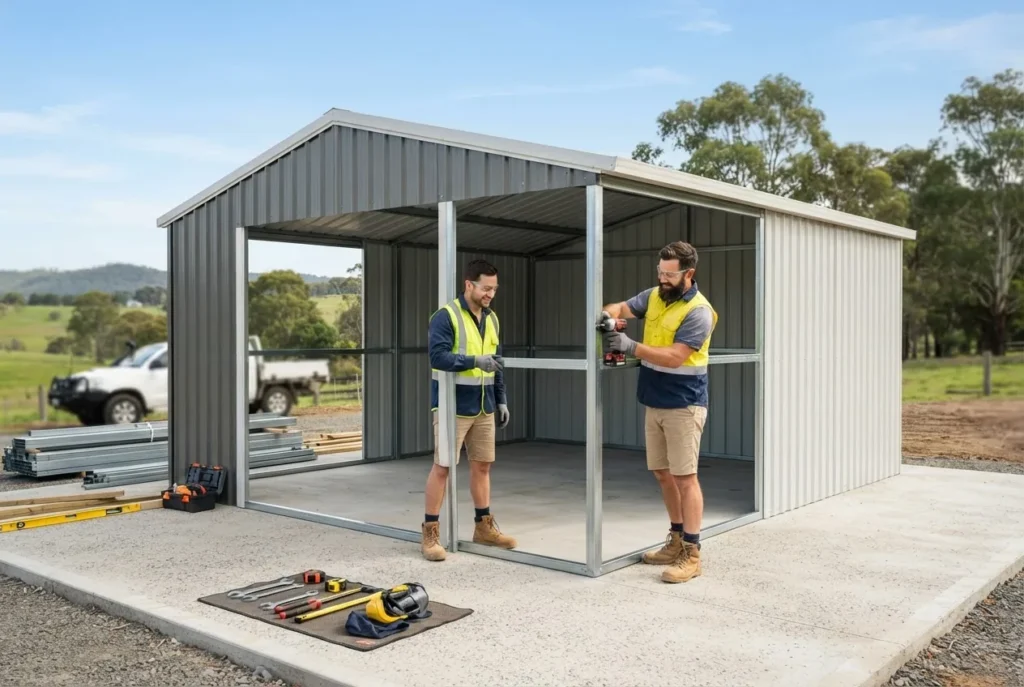
- Site preparation with level, compacted ground and appropriate foundations.
- Assembly of structural steel framing and floor systems for the loft area.
- Panel cladding installation using pre-cut Colorbond sheets aligned with engineering specifications.
- Integration of roof, insulation, and interior lining systems.
- Final installation of staircases, doors, windows, and internal shelving as per design.
Professional erection teams familiar with multi-level steel buildings ensure safety and compliance.
Maintenance Requirements Unique to Two-Storey and Colorbond Sheds
Key maintenance tasks include:
- Regular inspection of Colorbond panels for scratches or dents that compromise protective coatings.
- Cleaning gutters and checking for debris to avoid water damage in the loft area.
- Checking stair and loft floor integrity for wear and loose fittings.
- Touching up paint or protective coatings as needed to prevent corrosion.
Following a routine schedule helps prolong the structure’s integrity. A recommended bi-annual inspection aligns with seasonal changes.
Longevity and Durability Factors in Multi-Level Shed Use
Colorbond steel’s weather-resistant properties, combined with galvanised steel framing, contribute to a multi-decade lifespan under Australian conditions. Proper ventilation and insulation within loft spaces reduce internal moisture buildup that can accelerate degradation.
Roof design targeting efficient rainwater runoff minimises corrosion risks, supporting overall durability.
Contractor Insights for Optimizing Two-Storey Shed Performance
“Choosing experienced contractors familiar with multi-level steel framing is critical to ensure safety and longevity. We recommend confirming that installation teams adhere to Australian Standards AS/NZS 5131 for steel structures,” advises John Smith, Structural Engineer at XYZ Constructions.
Expertise in aligning structural framing with local council conditions can avoid costly modifications post-installation.
With sturdy, well-maintained two-storey Colorbond sheds, the practical benefits for commercial and personal applications come into sharper focus.
Commercial and Personal Applications of Two-Storey Sheds in Australia
Workshop Use and Storage Benefits in Two-Storey Sheds
Commercial users benefit from optimised floor plans where ground floors serve as workshops or vehicle storage, and loft areas provide accessible parts or equipment storage. This segregation improves workflow and complies with workplace safety
Personal and Hobbyist Storage Optimized by Loft and Shed Room Configurations
Hobbyists and home users leverage loft storage for seasonal items or craft supplies, while ground floors offer space for machinery, gardening equipment, or recreational vehicles.
Case Studies of Popular Two-Storey Shed Uses in Australian Markets
- Queensland-based auto workshop using mezzanine loft as parts inventory storage, reducing clutter on the main floor.
- Victoria hobbyist’s shed with a lined shed room in the loft, converted into an art studio with insulation and natural light.
Customization Potential for Different Industry Needs
From rural agricultural storage to urban commercial workshops, two-storey sheds can be tailored with partitioned rooms, advanced electrical setups, and advanced storage racks depending on client needs.
Two-storey sheds can be adapted for onsite workspace use, akin to portable office hire options in Australia including Colorbond finishes.
For a detailed look at commercial shed design and storage solutions, consult our pillar content on commercial planning and storage optimisation.
Choosing the Right Supplier and Manufacturer for Two-Storey Colorbond Sheds
Leading Australian Shed Manufacturers Specializing in Two-Storey Units
Shed manufacturers with a proven track record in two-storey Colorbond sheds include nationally known brands and regional specialists. Look for manufacturers offering:
- Custom design capabilities
- Compliance with Australian standards and codes
- Robust warranty and after-sales support
Evaluating Quality, Warranty, and Support Services
Assess supplier warranties regarding structural framing, Colorbond cladding, and workmanship. Support services including installation guidance and maintenance advice add significant value.
Questions to Ask Before Purchasing a Two-Storey Colorbond Shed
- Can you provide references or case studies of completed two-storey shed projects?
- What fabrication standards do you meet?
- Do you offer tailored design consultations for loft storage?
- What is the typical lead time for delivery and installation?
Typical Supply Lead Times and Installation Support Options
Lead times vary but average around 8-12 weeks from order confirmation. Installation support options range from full turnkey contracts to DIY kits with onsite consultation.
Regional suppliers such as Shed Corp TAS specialise in custom two-storey Colorbond sheds, garages, and carports with tailored options.
Future-Proofing Your Two-Storey Shed: Trends and Innovations
Emerging Materials and Technologies Complementing Colorbond Steel
Innovations include powder-coated steel enhancements improving resistance further, and composite panel hybrids for better insulation without adding weight.
Smart Storage Solutions and Automation in Loft and Shed Rooms
- Automated storage retrieval systems making loft items accessible electronically.
- IoT-enabled climate monitoring to maintain optimal conditions within lined sheds.
Sustainability and Energy Efficiency Advances for Lined Sheds
Solar-compatible roofing integrated with Colorbond metal sheets promotes energy efficiency. Use of recycled steel and locally sourced materials reduces the shed’s environmental footprint.
Anticipated Changes in Australian Building Codes Affecting Two-Storey Sheds
Emerging codes are expected to emphasise energy efficiency and sustainable construction methods, potentially affecting insulation requirements and allowable materials for loft spaces.
For ongoing innovation and sustainability updates, industry bodies such as the Australian Shed Industry Association publish periodic reports to guide future-proof designs.
Frequently Asked Questions About Two-Storey Colorbond Sheds
How much taller are two-storey sheds compared to single-storey?
Two-storey sheds are typically 3 to 4 metres taller than single-storey counterparts, generally ranging from 5.5 to 6 metres in total height depending on design and council limits.
Can loft areas be converted into fully lined office or workspaces?
Yes, with appropriate insulation, lining, lighting, and ventilation, lofts can serve as comfortable offices or workshops compliant with Australian regulations.
What are the typical costs associated with building a two-storey Colorbond shed?
Costs vary widely based on size, design complexity, and site conditions. Generally, two-storey sheds cost 20-30% more than comparable single-storey options due to framing and materials.
How do two-storey sheds perform in different Australian climate zones?
Thanks to Colorbond steel’s adaptability and tailored insulation strategies, two-storey sheds perform well across regions—from tropical humidity to arid inland—when designed with local climate considerations.
What maintenance is required to prolong the life of Colorbond steel in two-storey sheds?
Regular inspections for surface damage, cleaning of gutters, prompt repair of scratches, and periodic repainting help maintain Colorbond steel’s protective coating and extend shed lifespan.
Frequently Asked Questions
What defines a two-storey shed compared to a traditional shed?
A two-storey shed features two distinct floor levels, effectively doubling usable space without increasing its footprint. It often includes loft storage or separate rooms, unlike traditional single-storey sheds that offer only one floor of storage or workspace.
How does a two-storey Colorbond shed improve space management?
Two-storey Colorbond sheds optimise vertical space by providing additional storage or work areas upstairs. This separation improves organisation, maximises limited land use, and allows distinct zoning for storage and functional shed rooms.
Why are structural steel frames important in two-storey shed construction?
Structural steel framing supports the extra load of upper floors and loft spaces, ensuring safety, durability, and compliance with building codes. It enables the stable integration of Colorbond cladding and functional multi-level designs.
Can lined sheds with insulation enhance loft usability year-round?
Yes, insulation and lining regulate temperature and reduce moisture and noise in loft areas, making them comfortable for offices, workshops, or storage throughout Australia’s varied climates.
Which types of loft storage solutions work best in two-storey sheds?
Mezzanine floors, open lofts, partitioned rooms, and modular shelving all suit two-storey sheds, allowing tailored storage based on weight, accessibility, and functional needs.
How do two-storey sheds compare with single-storey sheds in cost and complexity?
Two-storey sheds are generally 20-30% more expensive due to structural framing and materials, and require more complex construction. However, they save land space and offer better function division than single-storey sheds.
Is it easier to organise workspaces in a two-storey shed than in a single-storey?
Yes, two-storey sheds provide separate floors for different uses, enabling clearer workflow zoning and reduced clutter, unlike single-storey sheds that combine all functions on one level.
What maintenance practices are unique to two-storey Colorbond sheds?
Two-storey Colorbond sheds require regular inspection of upper-level panels, gutter cleaning to prevent loft water damage, checking stair and floor safety, and timely repainting to maintain corrosion resistance.