

The market for portable storage buildings in Australia is evolving rapidly in 2025, driven by innovations in materials, design, and shifting consumer needs. From robust Colorbond sheds engineered to withstand Australian climates, to nimble temporary sheds and versatile pop-up storage sheds, this guide delivers an authoritative, in-depth look at all your portable storage options. Whether you’re managing a commercial site, organising an event, or seeking seasonal garden storage, discover the latest trends, regulations, costs, and best practices tailored for Australian users.
Understanding Portable Storage Buildings in Australia
Definition and Key Characteristics of Portable Storage Buildings
Portable storage buildings are relocatable structures designed for easy assembly, disassembly, and transportation. Unlike fixed sheds, they prioritize mobility without sacrificing durability, making them ideal for short to medium-term storage needs. Key characteristics include lightweight but sturdy materials, modular design elements, and adaptability to various site conditions.
In Australia, these buildings cater to a range of sectors—from residential gardening to commercial construction—offering flexibility for changing storage requirements. Their removability often exempts them from certain stringent planning regulations, differentiating them from permanent structures.
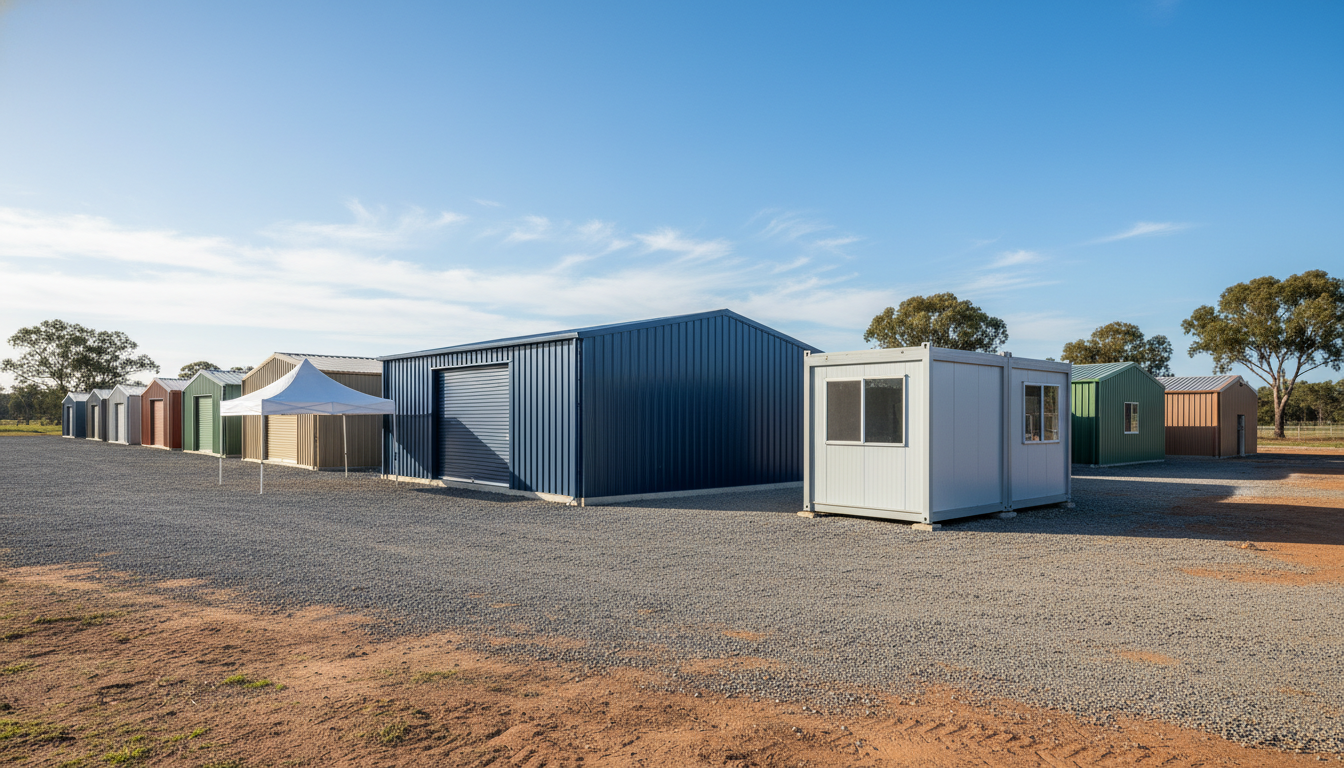
Types of Portable Storage Buildings: Temporary, Pop-Up, and Colorbond Sheds
There are three primary categories:
- Temporary sheds: Semi-permanent units intended for short-term storage, often constructed from lightweight steel or fabric materials, suited for events or construction sites.
- Pop-up storage sheds: Rapidly deployable, foldable structures prioritizing convenience and speed, commonly used for garden storage or event equipment.
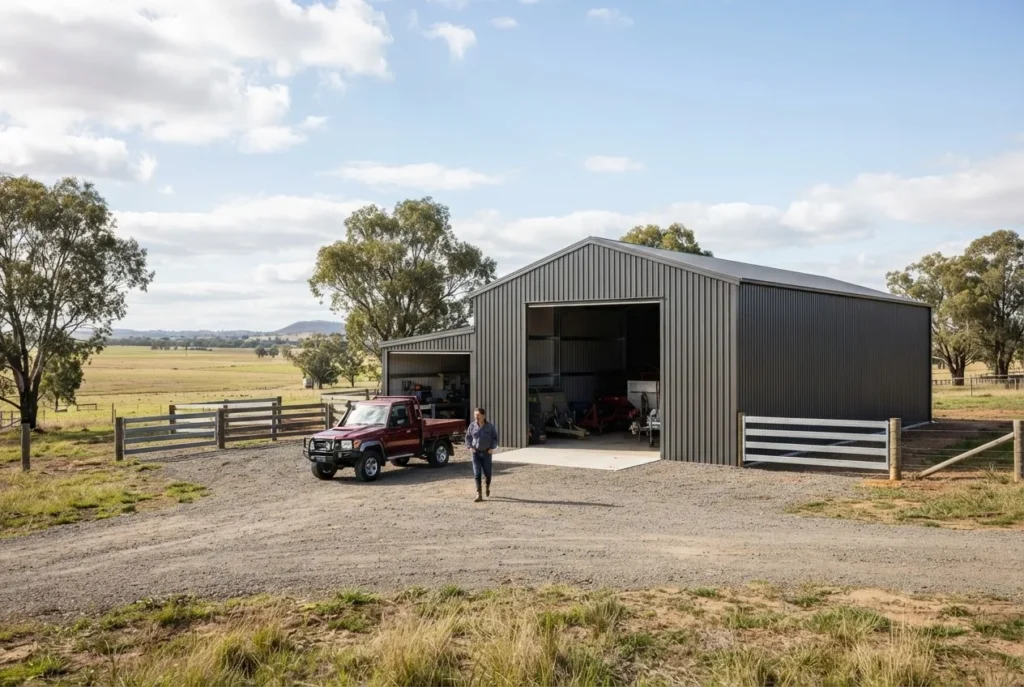
- Colorbond sheds: Portable yet robust steel sheds made with Bluescope’s trademark Colorbond steel, engineered for longevity and weather resistance, especially suited for harsh Australian conditions.
Importance of Portability and Versatility in 2025 Storage Solutions
As Australian businesses and homeowners embrace more flexible lifestyles and operational models, portability and versatility become paramount. In 2025, these features facilitate rapid site setups, ease of relocation in changing climates or work conditions, and conservations of council compliance. Advances in materials like Colorbond steel now blend portability with enhanced durability and sustainability, balancing the demands of challenging Australian environments.
With this foundational understanding, we’ll now explore the material innovations that have propelled portable sheds into their prominent role in today’s market.
Colorbond Steel and Its Role in Portable Storage Solutions
Overview of Colorbond Steel: Properties and Benefits
Colorbond steel is a pre-painted, high-tensile steel product produced by Bluescope Steel, widely revered in Australia. Its zinc-aluminium-magnesium alloy coating offers exceptional corrosion resistance, making it highly suited to diverse Australian climates, from coastal humidity to arid zones. Benefits include:
- Lightweight yet incredibly strong construction material
- UV and heat reflective coating reducing thermal transfer
- Long lifespan with minimal maintenance
- A broad palette of colour options blending aesthetics with functionality
An expert from Bluescope Steel notes: “Our new Colorbond formulations aim to reduce lifecycle environmental impact while providing unmatched durability for portable applications across Australia’s diverse climates.” (Bluescope technical briefing, 2025)
Innovations in Colorbond Material for 2025: Durability and Sustainability
In 2025, Bluescope has released enhanced Colorbond steel formulations that incorporate improved anti-corrosion formulations aligned with Australian Standards for building in coastal and bushfire-prone areas. These steels feature higher solar reflectance indexes (SRIs), reducing interior heat and supporting energy efficiency.
Importantly, modern Colorbond steels also embed recycled content, with Bluescope reporting up to 30% recycled steel use, reflecting growing sustainability mandates. These innovations position Colorbond as both an eco-friendly and high-performance choice for portable buildings.
Colorbond Sheds vs Traditional Steel and Other Materials
| Material | Durability | Weight | Corrosion Resistance | Cost | Environmental Impact |
|---|---|---|---|---|---|
| Colorbond Steel | High; resistant to Australian weather extremes | Lightweight | Excellent; zinc-aluminium coating | Medium–High | Partially recycled, recyclable |
| Traditional Galvanised Steel | Moderate; prone to rust over time | Heavier | Good but less advanced coating | Lower | Less recycled content |
| Wood | Variable; needs frequent maintenance | Light to Moderate | Poor in moist/humid climates | Varies | Renewable but less durable |
| Fabric (Temporary Sheds) | Low; short-term use | Very Light | None | Low | Often single-use synthetic fabrics |
Now that we understand why Colorbond is leading the market, let’s examine the range and characteristics of temporary sheds.
Exploring Temporary Sheds: Features, Uses, and Advantages
Characteristics of Temporary Sheds in Australia
Temporary sheds are designed for swift installation and removal. They typically employ lightweight steel frames with fabric or thin metal cladding, enabling portability and cost savings. Key features include:
- Modular components for fast assembly (often by small teams or DIY)
- Weather-resistant coatings but limited long-term durability compared to Colorbond
- Ideal sizes ranging from 5 sqm up to 20 sqm
- Often no permanent foundations—secured with ground anchors or weights
- Conformance to NCC codes, particularly for wind ratings and fire safety
Common Use Cases: Short-Term Commercial, Event Storage, and More
Temporary sheds find extensive use in scenarios such as:
- Construction sites: Secure equipment or material storage during build phases
- Outdoor events: Protecting supplies or providing staging/storage at festivals and markets
- Seasonal agricultural storage: Housing tools and products during peak periods
Case Study: A Melbourne-based landscaping firm deployed a 12 sqm temporary shed at various client sites over three months, reporting 40% reduced transport time of tools through easy setup and relocation.
Design Considerations and Climate Adaptability
Temporary sheds in Australia must be engineered for the prevailing climate zone. Features often include vented panels to counter humidity, UV-coated fabrics to prevent degradation, and anchoring systems rated for regional wind loads. Areas exposed to cyclones or bushfires require reinforced frameworks and fire retardant fabrics conforming to AS 3959 standards.
With temporary sheds explored, the next section discusses the distinct advantages of pop-up storage and garden sheds in portability and ease of use.
Pop-Up Storage and Garden Sheds: Quick Deployment and Flexibility
What Are Pop-Up Storage Sheds? Design and Mechanism
Pop-up storage sheds are collapsible, portable structures designed for rapid deployment, often within minutes, using foldable frames and pre-attached covers. They focus on usability for short-term storage needs and easy transportability.
The standard design features:
- Lightweight aluminium or steel frames
- Water-resistant, UV-protected fabric covers or metal panels
- Fold-flat mechanisms allowing storage inside smaller vehicles
- Flexible sizes, typically spanning 3 sqm to 10 sqm footprints
Pop-Up Garden Sheds: Applications in Landscaping and Residential Settings
Pop-up garden sheds are especially popular for residential landscaping tasks. They provide:
- Convenient storage of gardening tools, potting supplies, and seasonal items
- Temporary shelter for potting benches or shade during garden projects
- Easy relocation around a property due to their lightweight and foldability
Comparative Analysis of Pop-Up vs Traditional Portable Sheds
| Feature | Pop-Up Sheds | Traditional Portable Sheds |
|---|---|---|
| Setup Time | Minutes (typically under 10) | Hours to a day |
| Portability | Highly portable; collapses flat for transport | Relocatable but requires disassembly |
| Durability | Moderate; fabric prone to wear | High if Colorbond steel or metal framed |
| Climate Resistance | Good for mild conditions | Superior in harsh environments |
| Cost | Lower initial cost | Higher upfront investment |
Pop-up sheds are well suited for transient needs and mild climates, while traditional portable sheds offer better protection and longevity for demanding environments.
Next, it’s essential to understand the regulatory landscape shaping where and how these structures can be installed across Australia.
Navigating Australian Building and Council Regulations for Portable Sheds
Key Regulatory Requirements for Temporary and Portable Buildings
Australian regulations for portable sheds vary by state and local council, but general rules include:
- Classification under the National Construction Code (NCC) as Class 10a sheds or temporary structures
- Temporary structures often exempt from full development applications if under specified size limits (commonly 10 sqm or less)
- Wind loading, fire safety (especially in bushfire-prone zones, AS 3959 compliance), and structural stability requirements
- Limitations on placement relative to property boundaries and neighbours
Compliance Tips for Installing Portable Storage Buildings in 2025
- Consult your local council for specific site rules and required permits before installation
- Ensure materials and design meet NCC-required wind and bushfire ratings for your zone
- Keep records of installation and product certifications to support compliance checks
- Maintain easy dismantling capability for temporary permits
Differences in Regulations for Temporary vs Pop-Up Structures
Temporary sheds often require formal approval if deemed permanent or exceeding certain size thresholds. Pop-up sheds usually fall under temporary exemptions due to quick assembly and removal, but repeated or long-term use may trigger stricter codes.
For a comprehensive overview of comprehensive building regulations for portable sheds, consult the dedicated guidelines and your local authority.
Commercial site needs often overlap with portable storage; for portable offices and site-specific council approvals, see portable office hire and site office council approvals in Australia.
Understanding council approval processes for portable site sheds is crucial; see site sheds and steel shed council approval processes in Australia for details.
With regulations clarified, we now turn to the practicalities of installation and best practices for getting the most from your portable storage.
Installation Processes and Best Practices for Portable Storage Buildings
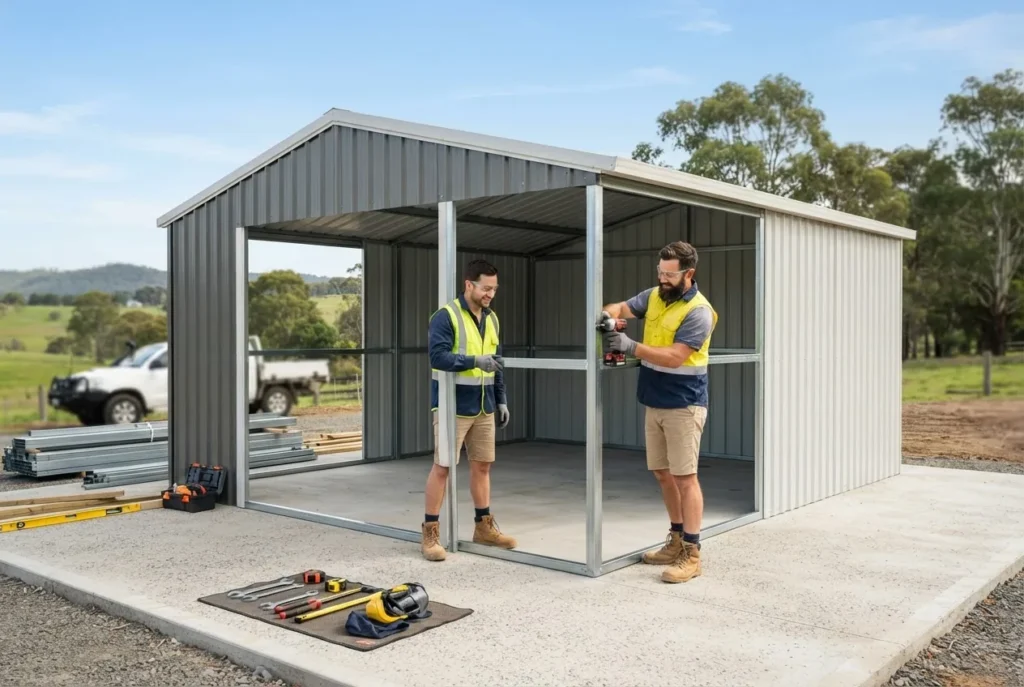
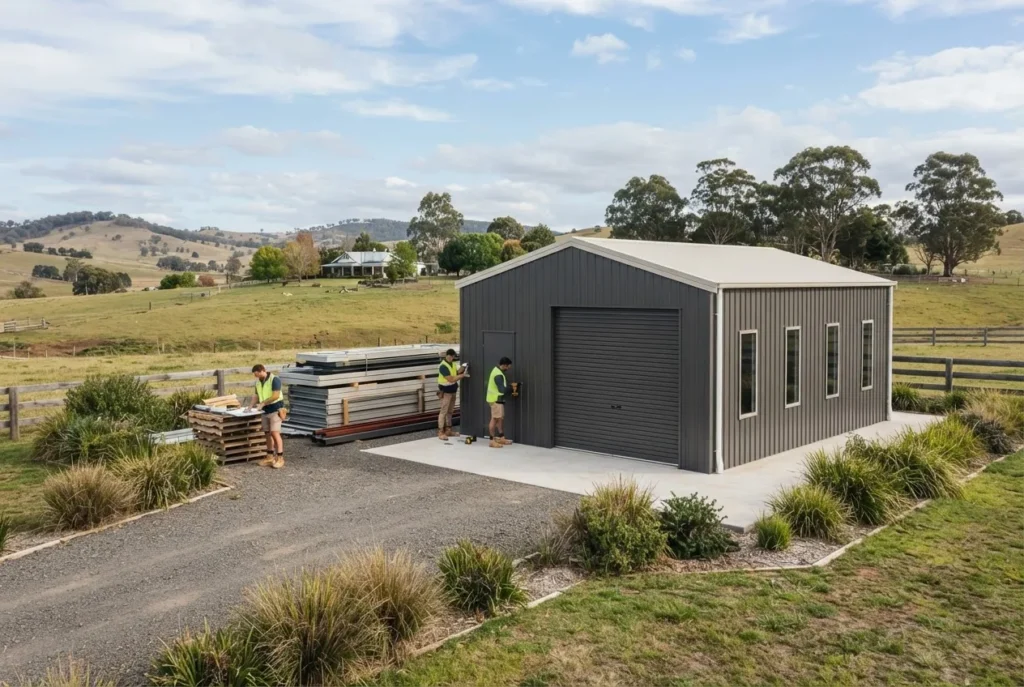
Step-by-Step Installation Guide for Colorbond and Pop-Up Sheds
- Site preparation: Ensure a level and stable surface, free of debris or obstructions. Compact soil or use concrete slabs if permitted.
- Inventory check: Verify all shed components and hardware are available per manufacturer checklist.
- Assembly of frame: Follow manufacturer instructions; for Colorbond sheds use pre-drilled steel panels and secure with provided fasteners.
- Wall and roof panel installation: For Colorbond, attach panels securely to frame, ensuring proper overlaps and seals to prevent water ingress.
- Anchoring: Secure structure with ground anchors or bolts per wind rating specifications to prevent uplift.
- Final inspections: Check seals, door functions, and structural stability.
- Pop-up sheds: Unfold frame, lock in place, and attach fabric cover tensioned tightly; stake or weight corners appropriately.
Tools and Equipment Needed for Efficient Setup
- Power drill with screwdriver bits
- Spirit level and tape measure
- Hammer and/or rubber mallet
- Wrench or socket set
- Personal protective equipment (PPE)
- For pop-up sheds, lightweight stakes or sandbags may be needed
Common Installation Challenges and Solutions
- Uneven ground: Use leveling pads or create a compacted base to prevent building distortions.
- Panel misalignment: Tighten fasteners gradually and verify frame squareness before final securing.
- Strong wind during setup: Work in calm weather; anchor partially as assembly progresses.
Installation considerations become more complex with multi-level designs, as covered in our two-storey and loft storage Colorbond shed installation tips guide.
Having established installation competencies, next we analyse how Australian climate zones impact portable shed design choices.
Climate Considerations and Their Impact on Shed Design and Materials
Australian Climate Zones and Their Influence on Portable Shed Selection
Australia’s diverse climate zones—from tropical north to temperate south and arid interior—significantly affect storage building performance. The Bureau of Meteorology’s climate mapping helps identify risks such as:
- High UV and temperature extremes requiring UV-resistant coatings
- Coastal salt spray demanding superior anti-corrosion materials
- Bushfire risk zones mandating fire-resistant designs and materials certified to AS 3959
- Wind-prone areas influenced by cyclone codes
For detailed climate zone information, visit the Bureau of Meteorology Australian climate zones.
Weather Resistance Features in Colorbond and Other Materials
Colorbond steel offers superior weather protection with zinc-aluminium-magnesium coatings resisting coastal corrosion better than galvanised steel. Ventilation systems reduce moisture build-up. Pop-up sheds and temporary fabric models incorporate UV-stabilized materials but are less suited for cyclone or bushfire prone regions without additional measures.
Maintenance Tips for Prolonged Durability in Harsh Conditions
- Regular washing of steel surfaces to remove salt and dirt build-up
- Frequent inspection of fabric coverings for tears and UV degradation
- Ensuring proper drainage and ventilation to avoid moisture-related corrosion
- Applying touch-up paints on scratched Colorbond surfaces promptly
These maintenance steps prolong lifespan and performance of portable sheds across Australian environments.
Next, we explore tailored commercial and residential applications for these various portable storage solutions.
Commercial and Residential Applications of Portable Storage Buildings
Tailoring Portable Sheds for Different Industry Needs
Commercial users leverage portable sheds for:
- Construction site material storage requiring durable Colorbond or temporary sheds
- Event management for equipment and merchandise storage with quick-deploy pop-up solutions
- Agricultural applications like tool storage and produce handling in temporary fabric or Colorbond units
Residential Uses: Garden Storage and Seasonal Needs
Homeowners favour pop-up garden sheds for easy, portable potting spaces and tool storage, while Colorbond sheds provide secure, weather-resistant garages or workshops. Seasonal storage needs such as pool accessories and holiday equipment are well served by temporary or portable structures.
For smaller-scale storage requirements, our guide on compact 10 sqm storage sheds tailored for Australian needs explores sizing and options.
Residential users interested in multi-functional sheds can review our detailed 2 bedroom shed home plans and approvals in Australia guide.
Event and Temporary Site Storage Solutions
Temporary structures are invaluable for short-term storage supporting festivals, markets, and construction projects, offering quick assembly, adaptability, and compliance with changing site regulations.
Next, we profile key Australian manufacturers producing leading portable storage options today.
Leading Australian Manufacturers and Suppliers of Portable Storage Solutions
Profiles of Top Brands: Stratco, Bluescope Steel, and Others
Leading players in Australia’s portable shed market include:
- Stratco: Offers a wide range of Colorbond steel sheds, including portable and temporary options with custom sizing.
- Bluescope Steel: The manufacturer of Colorbond steel, heavily invested in innovation and sustainability.
- Local and specialist suppliers focused on pop-up storage and garden sheds, offering lightweight, easy-to-assemble products.
Innovation Trends Among Suppliers in 2025
Manufacturers are emphasizing:
- Modular designs allowing easy expansion or downsizing
- Recycled and eco-friendly materials integration
- Enhanced coatings for Bushfire and coastal resilience
- Smart features like solar-powered lighting for temporary sheds
How to Choose a Reliable Supplier: Factors to Consider
- Product range and customisation options
- Compliance and certification with Australian standards
- After-sales support and documentation for permits
- Reputation for quality and durability
Explore more on leading suppliers and manufacturers of commercial sheds in Australia to find the best Colorbond options available.
For region-specific suppliers, our profile of custom Colorbond sheds and garages in Tasmania by Shed Corp highlights local expertise.
Cost Considerations and Budgeting for Portable Storage Buildings in 2025
Price Ranges for Colorbond, Temporary, and Pop-Up Sheds
| Type | Size Range (sqm) | Price Range (AUD) | Installation Cost (AUD) |
|---|---|---|---|
| Colorbond Steel Sheds | 8 – 20+ | $3,000 – $10,000+ | $500 – $1,500 |
| Temporary Steel Frame Sheds | 5 – 15 | $1,000 – $4,000 | $300 – $800 |
| Pop-Up Storage Sheds | 3 – 10 | $150 – $1,000 | Generally DIY, minimal |
Factors Affecting Costs: Size, Material, Installation, and Customization
Major cost drivers include:
- Building footprint and height
- Material quality (premium Colorbond vs fabric)
- Installation complexity and site preparation
- Additional features such as windows, shelving, or security locks
Cost-Benefit Analysis: Long-Term Investment vs Short-Term Use
While initial outlays for Colorbond sheds are higher, longevity and reduced maintenance costs can justify investment for long-term needs. Temporary and pop-up options offer affordability and flexibility but may incur replacement or repair costs more frequently. Decision makers should weigh duration of use against budget constraints.
Next, we turn to innovative and sustainable solutions shaping the future of Australian portable storage.
Sustainable and Innovative Solutions in Portable Storage for 2025
Environmentally-Friendly Materials and Modular Designs
Manufacturers increasingly adopt recycled steel and sustainable practices in production. Modular designs enable part reuse, reducing waste. Lightweight materials reduce transport emissions and simplify installation.
Innovations Enhancing Portability and Ease of Installation
- Snap-fit panels reducing tool needs
- Advanced fabric technologies with fire retardant and UV resistance
- Integrated solar lighting and ventilation options improving energy efficiency
Future Trends: Smart Storage Solutions and Eco-Conscious Manufacturing
Emerging trends for 2025 include smart storage buildings with IoT sensors monitoring temperature, humidity, and security, alongside eco-certified manufacturing methods aligned with Australian Circular Economy goals.
These developments mark a new era of portable sheds combining functionality with environmental stewardship.
FAQs and Addressing Content Gaps: What Typical Guides Miss
Are Portable Storage Buildings Suitable for All Australian Climate Zones?
Portable structures vary in suitability; Colorbond sheds with premium coatings accommodate most zones, including bushfire areas. Pop-up sheds are better for mild climates due to fabric limitations. Always consult local zone ratings and standards.
What Are the Limitations of Pop-Up Garden Sheds Compared to Fixed Options?
Pop-up sheds offer convenience but have lower durability, reduced security, and limited size options compared to permanent or Colorbond sheds.
How Do Portable Storage Solutions Comply With Changing 2025 Australian Regulations?
Manufacturers and suppliers adapt designs frequently to comply with updated NCC and local amendments; staying current with council requirements is essential for legal installations.
Can Portable Colorbond Sheds Be Customized for Specialized Commercial Uses?
Yes, many providers offer custom sizes, door configurations, and interior fittings, balancing portability with commercial demands.
What Are the Environmental Impacts of Temporary vs Permanent Storage Buildings?
Temporary buildings typically generate less embodied energy and produce less waste when reused, but may require more frequent replacements. Permanent buildings, if sustainably constructed, offer better long-term efficiency.
For further practical compliance insights on council approvals related to site offices, refer to portable office hire and site office council approvals in Australia.
Additionally, understanding site-specific compliance can be enhanced by reviewing site sheds and steel shed council approval processes in Australia.
Finally, for regionally specialized supplier insights, explore custom Colorbond sheds and garages in Tasmania by Shed Corp.
With a comprehensive grasp of your portable storage options in Australia for 2025, you can now confidently select, install, and maintain the perfect shed tailored to your needs.
Portable storage buildings are more than just temporary shelters; they are adaptable, durable, and increasingly sustainable assets for homes and businesses alike. Whether opting for the robust protection of Colorbond sheds or the nimble convenience of pop-up solutions, 2025 offers a wealth of choices that address Australian climate demands, regulatory frameworks, and innovation-driven lifestyles.
Take the next step to secure your storage needs by consulting reputable suppliers and expert installers, ensuring your investment delivers versatility and peace of mind for years to come.
Frequently Asked Questions
What distinguishes portable storage buildings from traditional fixed sheds?
Portable storage buildings are designed for easy relocation, assembly, and disassembly, prioritizing mobility without sacrificing durability. Unlike fixed sheds, they typically use lightweight materials and modular components, making them ideal for short to medium-term storage and adaptable to varying site requirements.
How do pop-up storage sheds compare to temporary sheds in terms of installation and durability?
Pop-up storage sheds offer rapid, tool-free setup and highly portable fold-flat designs, suited for mild climates. Temporary sheds require longer assembly with frame and panel construction, providing better durability and weather resistance for short-term commercial or event use.
Why is Colorbond steel preferred for portable storage buildings in Australia?
Colorbond steel is preferred due to its lightweight strength, superior corrosion resistance, UV protection, and longevity in diverse Australian climates. Its enhanced 2025 formulations also improve sustainability with recycled content and fire-resistance, making it ideal for portable sheds.
Can temporary and pop-up sheds be customized for specific commercial or residential applications?
Yes, many temporary and pop-up sheds can be customized with size, door placement, shelving, and accessories to suit both commercial site needs and residential uses, balancing portability with functional requirements.
Which Australian climate factors most influence the choice of portable storage buildings?
Key climate factors include UV exposure, coastal salt spray, bushfire risk, and wind loads. Colorbond sheds excel in extreme zones with corrosion and fire-resistant features, while pop-up fabric sheds suit mild, low-risk environments.
How do costs for pop-up storage sheds compare to Colorbond and temporary sheds in 2025?
Pop-up sheds have the lowest upfront cost ($150–$1,000 AUD) with minimal installation expenses, while temporary sheds range from $1,000 to $4,000 AUD. Colorbond sheds cost significantly more ($3,000–$10,000+ AUD), reflecting their durability and longer lifespan.
Is a permit always required to install portable storage buildings in Australia?
Not always. Small portable and pop-up sheds under specific size limits often do not require permits. However, regulations vary by local council, size, and permanence, so verifying local requirements before installation is essential.
What maintenance is recommended to extend the life of portable sheds in harsh Australian conditions?
Regular cleaning of steel surfaces to remove salt and dirt, inspecting and repairing fabric for tears, ensuring proper ventilation, and applying touch-up paints to scratches help prolong durability and performance across all portable shed types.