

When searching for large sheds for sale in Australia, industrial and commercial Colorbond sheds stand out as premier choices offering unmatched durability, design flexibility, and compliance with stringent local standards. Whether you need large shed kits for easy assembly or fully customised builds tailored to your operational needs, this article serves as the ultimate Australian buyer’s guide and marketplace overview for big, massive, and warehouse-style sheds. You’ll learn everything from material benefits to regulatory essentials, enabling well-informed decisions that protect your investment and streamline your industrial or commercial projects.
Understanding Large Industrial and Commercial Sheds in Australia
Defining Industrial vs Commercial Sheds — Key Differences and Overlaps
Industrial sheds primarily support manufacturing, heavy equipment storage, or processing operations, typically requiring robust structural elements designed for high load capacities and specialised needs. Commercial sheds, while similar in size, tend to focus on business applications including warehousing, logistics, and retail stockrooms.
The line between industrial and commercial sheds often overlaps, as many facilities combine functions – for example, a manufacturing hub with accompanying distribution centre. Both types demand compliance with Australian building regulations for sheds to ensure safety, resilience, and legal certification.
Common Uses and Applications of Large Sheds in Australian Industry
- Warehousing and inventory storage
- Workshop and machinery housing
- Loading docks and freight handling
- Vehicle and equipment storage
- Agricultural bulk storage and processing
- Industrial manufacturing or assembly
Each application places unique demands on shed design, size, and materials, underscoring why choices need careful alignment with intended industrial or commercial use.
Standards and Australian Building Codes Relevant to Large Sheds
All large industrial and commercial sheds in Australia must comply with the National Construction Code (NCC), referencing standards such as AS/NZS 1170 for structural design and wind loading. State and territory councils impose additional requirements, often requiring engineering certification and professional approvals for sizable builds.
This regulatory framework guarantees that large sheds withstand local conditions like cyclonic winds, seismic activity, and heavy rain, protecting assets and occupants alike.
With this foundational understanding of shed types and compliance, let’s explore the core material used in many leading Australian sheds – Colorbond steel.
Colorbond Steel for Large Sheds: Features, Benefits, and Suitability
What is Colorbond Steel? Composition and Brand Overview
Colorbond steel is a pre-painted, high-tensile steel product manufactured predominantly by BlueScope Steel. It combines a Zincalume base layer of zinc and aluminium alloy that provides corrosion resistance, topped with a durable painted finish available in multiple colours.
Its engineered composition offers superior strength-to-weight ratio, making it an ideal choice for large commercial and industrial applications.
Durability and Weather Resistance in Australian Climates
According to manufacturer data and independent testing, Colorbond sheds excel against harsh Australian weather — from coastal saline air to interior dust storms and cyclonic conditions. The Zincalume core effectively prevents corrosion, while the polymer paint finish resists fading, chipping, and cracking over decades.
For example, Colourbond steel coatings have been shown to perform with minimal rust for over 20 years under typical Australian conditions (BlueScope Steel Technical Bulletin, 2023).
Colorbond Coat Options and Aesthetic Choices for Industrial Sheds
Large industrial sheds benefit from Colorbond’s variety of colours and finishes including Matt, Classic, and Metallic ranges, allowing visual integration with corporate branding or environmental aesthetics without compromising durability.
This versatility also extends to trim options and cladding profiles that accommodate functionality such as ventilation and structural reinforcement.
Sustainability and Environmental Considerations
Colorbond steel is 100% recyclable and has low embodied energy compared to other building materials. The steel industry in Australia has strong sustainability certifications and initiatives to reduce environmental impact, which supports greener building practices for large commercial sheds.
With the advantages of Colorbond steel clearly established, the next step in your shed journey is deciding between prefab kits and custom builds.
Types of Large Sheds: Prefabricated Kits vs Custom-Built Solutions
Large Shed Kits: Modular Design, Sizes, and Installation Ease
Large shed kits offer a ready-to-assemble modular approach, providing standardised options for dimensions typically ranging from 9m x 12m up to 18m x 30m or larger. Kits usually include pre-cut Colorbond panels, steel frames, and assembly hardware with engineering details tailored to Australian codes.
Installation is quicker and often less costly, suitable for businesses prioritising upfront budget control and faster turnaround.
Custom Builds: Tailoring Dimensions, Features and Structures
Custom sheds provide flexibility to specify exact dimensions, structural reinforcements, door and window placements, internal fittings, and additional features such as insulated cladding or integrated office areas. This option suits complex or unique industrial requirements.
Customisation usually involves consultation with engineers and architects to meet precise operational needs, which may extend lead times and costs but results in a perfectly tailored facility.
Cost Comparison: Kits vs Custom Fabrication
| Aspect | Large Shed Kits | Custom Builds |
|---|---|---|
| Initial Cost | Lower to moderate, standard pricing (Approx. $150-$250 per m²) |
Higher, based on bespoke specifications |
| Lead Time | 4-8 weeks typically | 8-16 weeks or more / project dependent |
| Design Flexibility | Limited to kit options/variations | Highly flexible, tailored to needs |
| Installation Complexity | Designed for streamlined assembly | Complex, may require specialist trades |
| Compliance Handling | Typically managed by supplier | Requires client coordination with engineers |
Lead Times and Availability in the Australian Market
Both kits and custom large sheds may face lead times influenced by material supply chain conditions, particularly steel availability and council approvals. Ordering well in advance is advisable, especially in peak construction seasons or in regions subject to cyclone seasons.
Understanding size and design parameters is next, helping define what really qualifies as a ‘large’ or ‘massive’ shed in Australia.
Large Shed Sizes, Dimensions, and Design Considerations
Typical Dimensions and What Qualifies as a “Large” or “Massive” Shed
Industry benchmarks consider sheds larger than 9m x 12m (approx. 110m²) as large, with massive sheds exceeding 18m x 30m (540m²) common in warehousing. However, definitions vary based on use and local council guidelines.
When large sheds Australia are discussed, they often refer to industrial facilities with portal frame spans of 9m to 24m and heights ranging from 5m to 8m clearances. Barn shed design options and size comparisons in Australia.
For smaller-scale storage needs, see our detailed guide on the 10×10 Colorbond garden and storage shed guide in Australia.
Explore our comprehensive 10×20 Colorbond steel storage building guide for mid-sized shed options.
The 10×6 Colorbond garden and storage shed guide covers popular mid-range shed dimensions suitable for various needs.
For compact storage options, see the 2×2 premium Colorbond garden shed guide in Australia.
The 3 x 3 meter garden shed Australian buyer’s guide offers detailed specs ideal for smaller backyard sheds.
Learn more about medium-sized sheds in our 4 x 3 meter colorbond storage shed buyer’s guide Australia.
For premium-sized sheds, consult our 5×5 Colorbond garden shed premium guide Australia.
Check the 6mx3m custom Colorbond shed pricing and approval guide for insight on custom shed dimensions and compliance.
The 6×4 Colorbond garden shed and workshop guide Australia details versatile shed options for garden and workshop use.
Portal Frame and Steel Frame Structural Elements Explained
Portal frame construction is the backbone of large Colorbond sheds, consisting of rigid steel frames connected by braces that resist bending and shear, akin to the structural ‘skeleton’ of the building. This technique allows wide clear spans without internal columns, ideal for flexible interior use.
Steel frame components are hot-dipped galvanized for corrosion protection, combining strength and longevity.
Maximal Size Capabilities and Space Optimization
While theoretically, portal frame Colorbond sheds can be engineered for spans exceeding 30m, practical limits are set by transport and assembly logistics. Modular sections and sectional additions can be employed to achieve very large warehouses or manufacturing halls.
Optimizing interior space zoning—separating storage, loading, and operations—maximizes efficiency and workflow.
Interior Layout and Functional Zoning for Industrial & Commercial Use
- Dedicated storage aisles and racking systems
- Loading/unloading docks with access clearances
- Vehicle or machinery pathways
- Office or break area segmentation if required
- Compliance with workplace safety zones
For those interested in alternative uses, such as residential or office spaces within large sheds, explore our comprehensive guide on living in a shed in Australia, covering legal and safety considerations.
If your needs include premium and luxury storage options, our dedicated guide on luxury storage sheds in Australia details features and design inspiration for high-end industrial use.
Large sheds can also be customised as summer houses or garden studios; our summer houses Australia guide showcases premium Colorbond designs with council-approved plans.
Beyond industrial use, large sheds are often converted into man caves or hobby studios; find ideas, designs, and regulatory guidance in our man cave shed guide.
With a grasp of sizes and designs, let’s explore the unique world of warehouse and massive sheds tailored for significant industrial storage.
Warehouse Sheds and Massive Sheds: Large-Scale Storage Solutions
Defining Warehouse Sheds and Their Functional Role
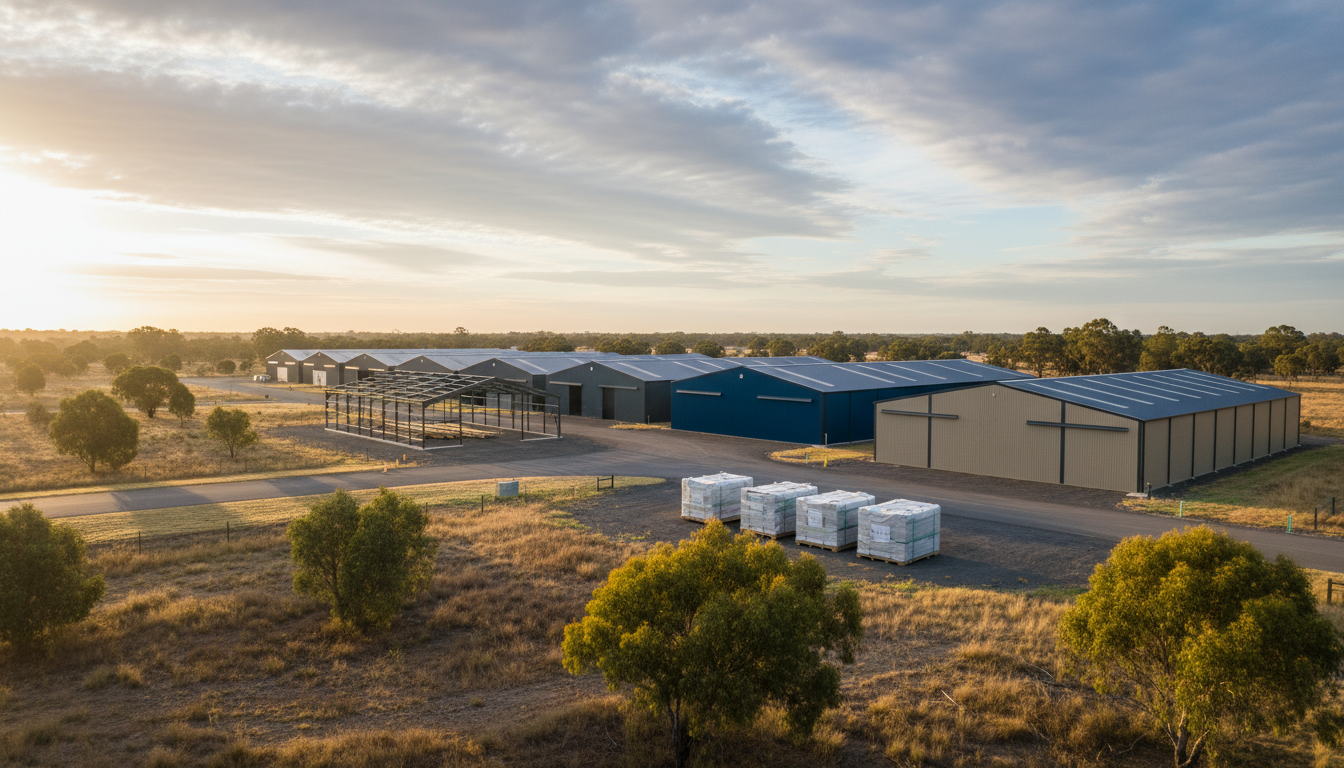
Warehouse sheds specialize in large-scale storage applications, enabling efficient bulk materials handling, inventory management, and logistics support. Their designs prioritize open clear spans, high vertical storage capacity, and durability against frequent vehicular traffic.
Features Unique to Huge and Massive Sheds for Industrial Needs
- High-capacity roofing for snow or heavy rain loads (where applicable)
- Heavy-duty flooring foundations suited for forklifts and cranes
- Reinforced walls for impact resistance
- Advanced ventilation and lighting systems capability
- Integration with fire protection systems and sprinklers as per regulation
Load-Bearing and Floor Foundation Requirements
Massive sheds often require reinforced concrete slabs or piers with thickened edges to support concentrated loads from racking systems and machinery. Engineering surveys typically precede installation to ensure soil stability and load capacity meet building standards (AS 2870 for residential slabs and AS 3600 for concrete design).
Integration with Industrial Operations and Logistics
Warehouse sheds must be designed to accommodate delivery truck turning radii, container unloading, and operational workflows. Customised roller doors and bay sizing options facilitate seamless logistics operations.
Next, navigating the maze of compliance and approvals is critical for lawful and successful shed projects.
Compliance, Council Approvals, and Regulatory Considerations for Large Sheds in Australia
Navigating Australian Building Codes for Industrial & Commercial Sheds
Construction of large sheds mandates compliance with the Australian Building Codes Board (ABCB) and National Construction Code (NCC), which incorporates:
- Structural integrity per AS/NZS 1170 series
- Fire safety regulations
- Energy efficiency and insulation standards
- Accessibility and workplace safety
Wind, Weather, and Cyclone Ratings for Shed Durability
Depending on geographic location, sheds must satisfy cyclone rating or wind classification (N2, C1, C2, C3 zones under NCC). Coastal and northern Australia enforce stricter standards due to cyclone risks.
Engineering certifications ensure structural elements withstand these forces, with modifications to frame sections and fixings common in higher hazard zones.
Local Council Approval Processes and Documentation Needed
Councils typically require:
- Site plans
- Structural engineering drawings
- Planning permits where shed height or footprint exceeds thresholds
- Soil and foundation reports
- Stormwater and environmental impact assessments (where applicable)
The process varies by jurisdiction but engaging professionals early accelerates approvals.
Importance of Professional Engineering Certification
Engineering certification validates compliance with relevant Australian Standards and NCC provisions. It protects stakeholders by certifying safety and build quality and is often a mandatory submission for permits.
For more detailed advice on regulatory matters, see Barn sheds regulations, design options, and approval processes.
Refer to our 12×8 Colorbond shed buying and council approval guide for insights on mid-sized sheds and approval steps.
Check the 6mx3m custom Colorbond shed pricing and approval guide for insight on custom shed dimensions and compliance.
Preparing for installation requires clear understanding of foundations and assembly techniques.
Installation Process for Large Colorbond Sheds: Foundations to Assembly
Site Preparation and Foundation Options for Industrial Sheds
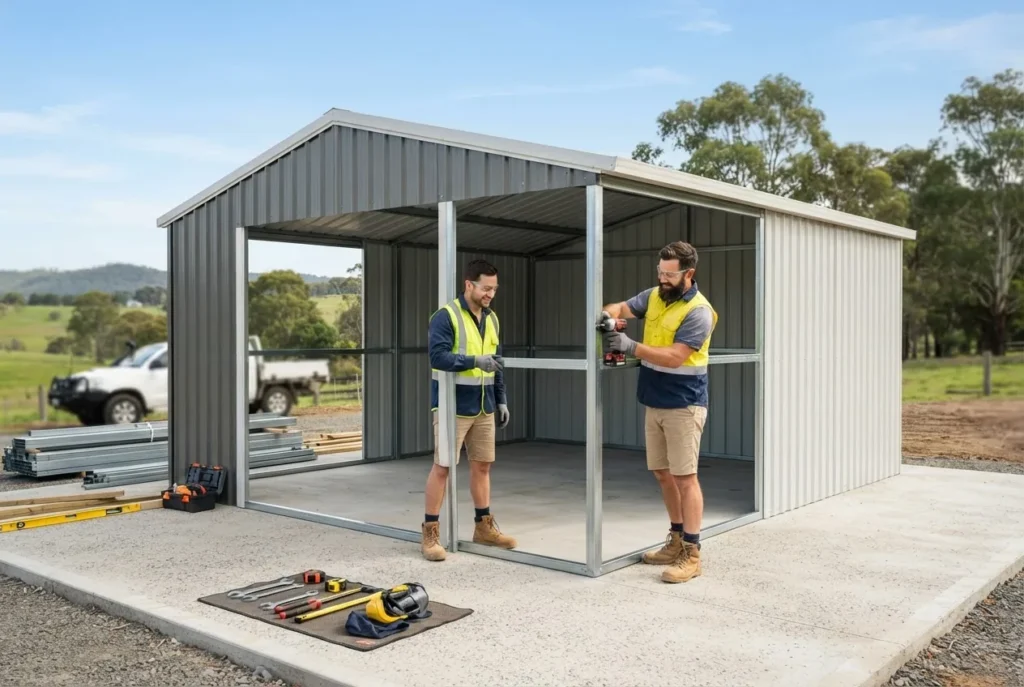
Installation begins with clearing and levelling the site, followed by foundations which may include:
- Concrete slab foundations with appropriate thickness and reinforcement
- Strip footings or piers supporting portal frame loads
- Drainage planning around foundations to prevent water pooling
Geotechnical surveys often determine exact foundation design.
Assembly Steps for Prefab Kits vs Custom Builds
- Delivery and staging of steel frames and Colorbond panels
- Installation of anchor bolts and base plates onto foundations
- Erection of portal frames using cranes or lifting equipment
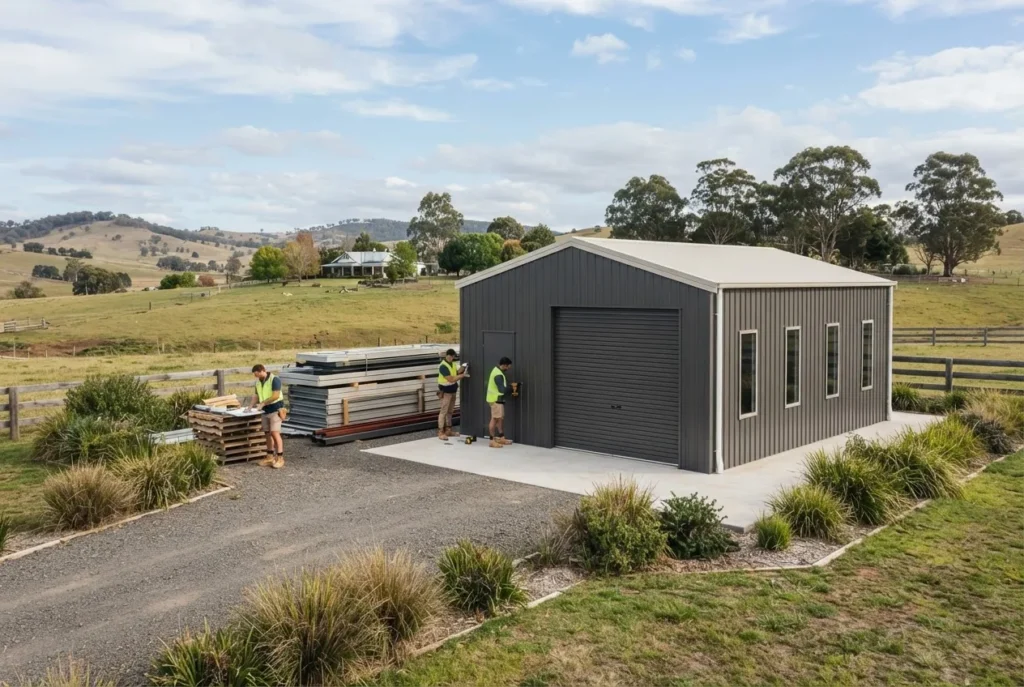
- Fixing roof and wall Colorbond cladding
- Installation of doors, windows, and additional fittings
- Final inspection and compliance sign-off
Prefab kits generally have streamlined instructions suited for faster assembly. Custom builds may involve phased assembly with multiple trades on site.
Tools, Equipment, and Professional Installation vs DIY
Professional installation uses specialised lifting gear, torque wrenches for bolts, and cutting equipment calibrated to engineering tolerances. Large sheds are rarely DIY projects due to safety, complexity, and compliance.
Timeframes and Common Installation Challenges
Installation can take from a few days to several weeks depending on size and complexity. Common challenges include weather delays, site access restrictions, and coordination of specialised contractors.
Proper foundations are critical — see our concrete floor specifications and council approval for garden sheds guide.
Installation quality strongly correlates with longevity and warranty adherence.
Top Suppliers and Manufacturers of Large Sheds in Australia
Leading Australian Brands Specializing in Industrial & Commercial Sheds
- Stratco — Extensive range of Colorbond industrial sheds and custom solutions nationwide
- Credence Building Solutions — Known for tailored commercial and warehouse Colorbond sheds with engineering certification
- Steel-Smart Buildings — Specialising in modular large sheds and prefabricated kits
- Austral Sheds — Focus on industrial and agricultural purpose sheds with Colorbond cladding
Comparing Product Ranges, Warranty, and Customer Support
Most reputable manufacturers offer:
- Warranty periods typically ranging 10-20 years on Colorbond coatings and structural steel
- Comprehensive support with site inspections and engineering consultations
- Optional maintenance plans and post-installation service
Pricing Overview and Value Considerations
Prices vary widely by size, customisation, and site conditions. Generally, expect from $150 to $400+ per square meter depending on specifications. Investing in warranty-backed products and experienced installers reduces long-term risk and maintenance costs.
Customer Testimonials and Case Studies
Positive reviews highlight on-time delivery, adherence to specifications, and professional service. Refer to independent review platforms for detailed user experiences.
For supplier comparisons and product reviews, see our 2025 reviews of the best garden sheds available in Australia.
Choosing the right shed supplier is essential, but so is clarifying your own project requirements.
Choosing the Right Large Shed: Buyer’s Guide and Decision Factors
Analyzing Use-Case Requirements and Future Growth
Consider your immediate operational needs alongside potential business growth. Prefabricated kits offer less flexibility to expand, whereas custom builds can include provisions for future modular additions or extensions.
Budget Planning and Financing Options
Establish a clear budget that encompasses purchase, installation, and ongoing maintenance. Some suppliers and financiers offer payment plans or leasing options tailored to commercial buyers.
Customization Possibilities vs Stock Models
While stock models reduce lead times and may lower costs, customization allows optimising functionality and compliance with unique operational demands or site restrictions.
Longevity, Maintenance, and After-Sales Service
Investigate warranty scopes and average maintenance routines — for Colorbond sheds, regular inspections for paint integrity and fixing tightness preserve lifespan. Access to reliable after-sales support ensures timely repairs and parts availability.
Consider unique options like bar storage sheds with full compliance and design inspiration.
For those interested in alternative uses, such as residential or office spaces within large sheds, explore our comprehensive guide on living in a shed in Australia, covering legal and safety considerations. If your needs include premium and luxury storage options, our dedicated guide on luxury storage sheds in Australia details features and design inspiration for high-end industrial use.
FAQs and Additional Resources for Buyers of Large Industrial and Commercial Sheds
Frequently Asked Questions on Sizing, Compliance, and Costs
- What is the typical lead time for a large Colorbond shed?
Generally 4–12 weeks depending on size, customisation, and council approvals. - Are large shed kits expandable?
Many kits allow modular additions but with design limitations compared to custom builds. - What warranties typically cover industrial Colorbond sheds?
Warranties include 15–20 years for Colorbond coatings and 10 years structural in most premium products. - Do I need council approval for large sheds?
Almost always yes, especially over defined size thresholds or in urban zones. - Can I install a large shed myself?
Due to complexity and compliance, professional installation is highly recommended.
Downloadable Brochures, Spec Sheets, and Planning Tools
Many suppliers publish detailed Colorbond steel technical specifications, engineering design templates, and sizing calculators online.
Industry Expert Advice and Contact Points for Quotes
Contact certified shed manufacturers or qualified structural engineers early to gain customised quotes and site-specific advice for your large shed project.
For visual sizing and design options, see also Barn shed design options and size comparisons in Australia.
In summary, choosing large sheds for sale in Australia that leverage industrial & commercial Colorbond steel provides strength, durability, and regulatory confidence critical for major business operations. Weighing kit versus custom builds, adhering strictly to Australian construction codes, and partnering with reputable suppliers ensures a robust investment capable of supporting your industrial or commercial needs for decades. Ready to secure your ideal large shed? Reach out to leading Australian manufacturers today for inquiries, quotes, and bespoke solutions tailored precisely to your operational demands.
Frequently Asked Questions
What are the advantages of Colorbond sheds over traditional steel sheds?
Colorbond sheds offer superior corrosion resistance, variety in colours, and enhanced durability against harsh Australian climates. Their pre-painted finish prevents rust and fading longer than untreated steel sheds, ensuring lower maintenance and longer lifespan for industrial and commercial applications.
How do prefab large shed kits compare to custom-built sheds in terms of scalability?
Prefab large shed kits offer modular designs that allow some expansion but are limited by fixed configurations. Custom-built sheds provide greater scalability with tailored designs that accommodate future extensions and evolving operational needs more effectively.
Why is portal frame construction preferred for large industrial sheds?
Portal frame construction provides wide clear spans without internal columns, maximizing unobstructed space. Its rigid steel frames resist bending and shear, making it ideal for heavy-duty industrial use where flexibility and strength are critical.
When should a business choose a massive shed over a regular large shed?
A massive shed is suitable when operational needs require extensive floor space, higher vertical storage, or specialized heavy-duty features like reinforced flooring and advanced ventilation, often essential for large warehousing or manufacturing facilities.
Can large sheds be constructed in cyclone-prone areas without additional structural costs?
Construction in cyclone zones requires enhanced structural reinforcements and specific engineering to meet wind ratings, which typically increase costs. Compliance with local regulations ensures safety but often involves higher investment compared to standard zones.
Which factors influence the total installation time for large Colorbond sheds?
Installation time depends on shed size, complexity of design, weather conditions, site access, and availability of specialized contractors. Prefabricated kits usually install faster, while custom builds require more time for phased assembly and inspections.
Is professional engineering certification mandatory for all large sheds in Australia?
Yes, engineering certification is generally mandatory for large sheds to verify compliance with Australian Standards and building codes. It ensures structural safety and is often required by councils for building approvals.
How do commercial sheds differ from industrial sheds in their design and use?
Commercial sheds focus on warehousing, logistics, and retail stock storage with designs optimized for accessibility and organization. Industrial sheds prioritize heavy equipment housing, manufacturing processes, and structural robustness to support intensive operational demands.