

Finding the perfect caravan shelter kit in Australia requires balancing cost, design, and legal compliance. As the market evolves toward 2025, caravan owners want trusted guidance on shade sheds, council approval processes, and innovative storage solutions that protect their investment and suit diverse Australian climates. This comprehensive guide covers everything you need to know from prices and types to design trends and regulatory hurdles across states.
Understanding Caravan Shelter Kits in Australia: Types and Features
What Are Caravan Shelter Kits and Their Key Components?
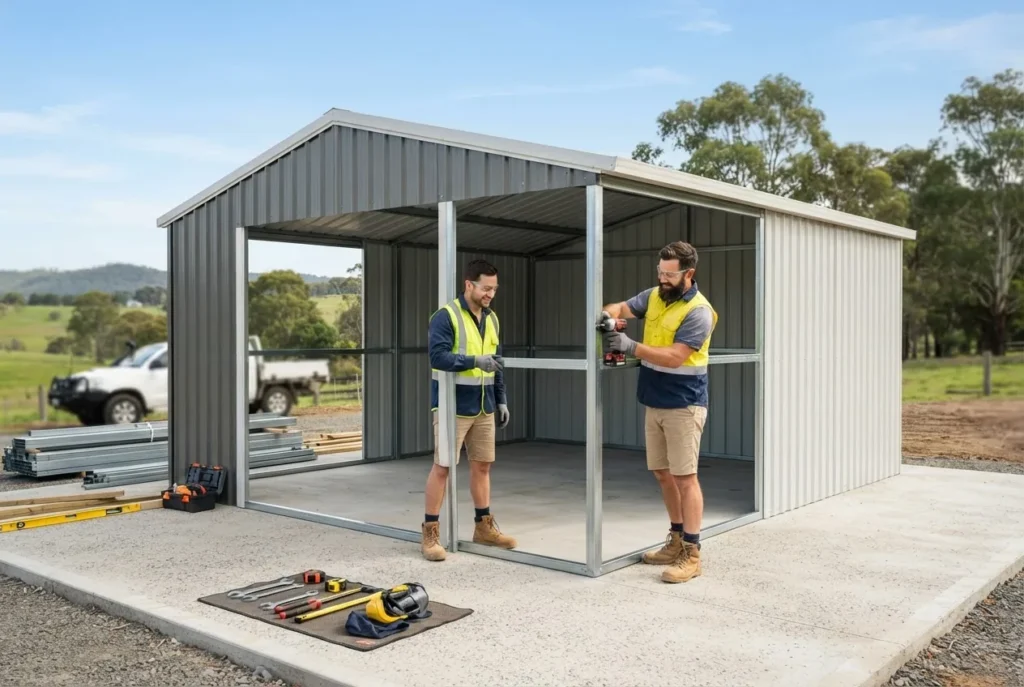
Caravan shelter kits Australia generally include prefabricated components designed to be assembled onsite, offering protection from sun, wind, rain, and debris. Core components typically consist of:
- Structural framing (usually steel or aluminium)
- Roof panels or shade cloths
- Anchoring hardware suitable for various ground types
- Optional side panels or gates for enhanced security and weather protection
The self-assembly nature speeds up installation while providing flexibility in sizing to fit different caravan dimensions and block sizes.
Types of Shade Sheds: Fixed, Portable, and Temporary Options
The principal types of shade sheds in Australia include:
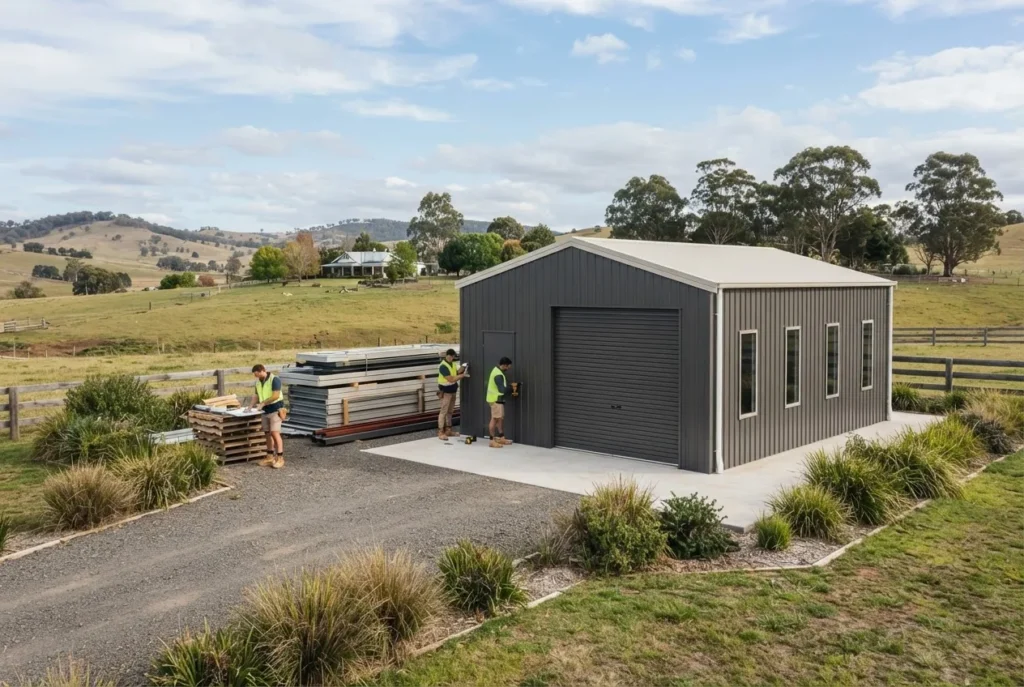
- Fixed shade sheds: Permanently installed structures with Colorbond steel or durable materials offering robust protection. Best for long-term use.
- Portable shade sheds: Lightweight and movable solutions, often using tent-like frameworks or modular Colorbond panels, ideal for flexibility and temporary needs.
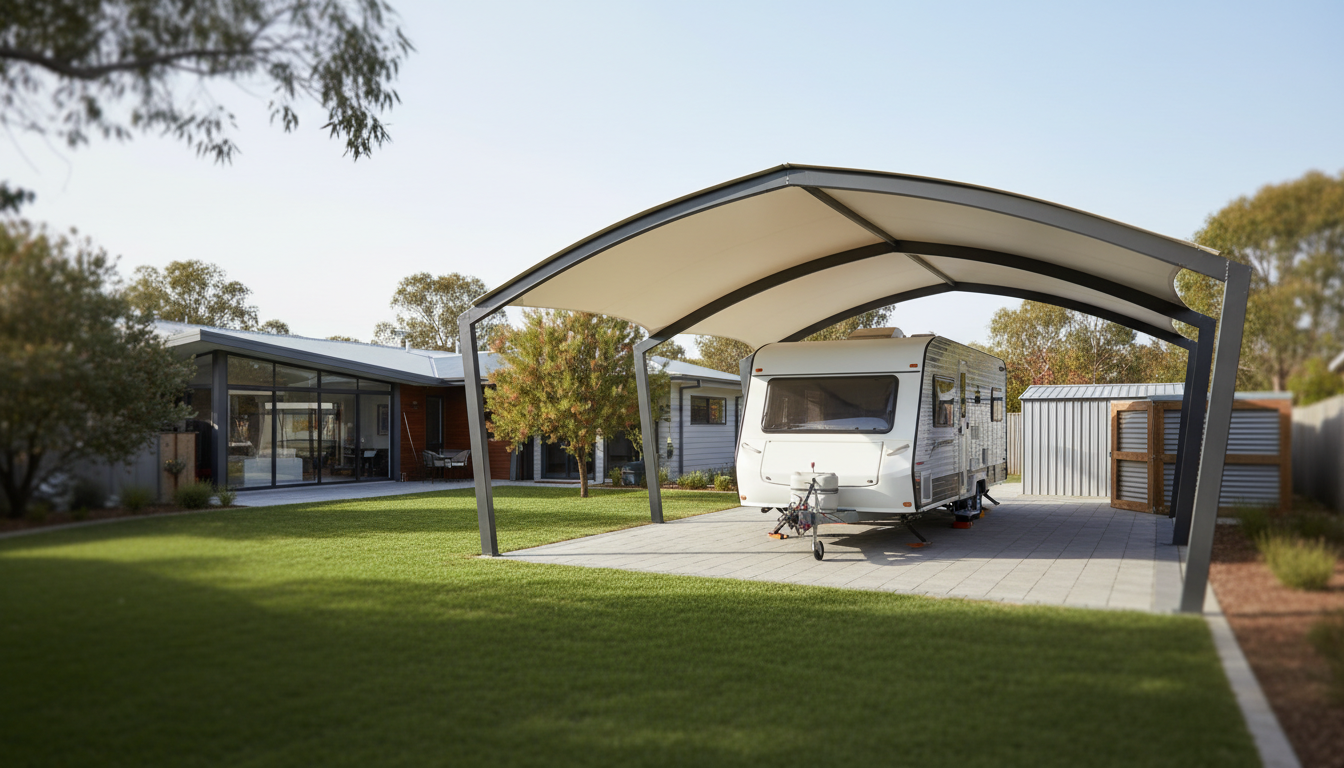
- Temporary caravan shelters: Typically fabric-based with metal frames, designed for seasonal protection or short-term storage, easy to dismantle.
Each option caters to different needs, whether prioritising permanence, mobility, or cost-efficiency.
Key Features to Look for in Caravan Shade Sheds
- UV resistance: Essential for harsh Australian sun exposure.
- Wind rating: Verify shelter can withstand local wind speeds.
- Waterproofing and drainage: To prevent water pooling and caravan damage during rains.
- Ease of assembly: Kits with clear instructions and modular parts.
- Size options: Customisable to caravan dimensions and space constraints.
Materials Overview: Why Colorbond Steel Dominates the Market
Colorbond steel is favoured due to its superior corrosion resistance, lightweight strength, and excellent thermal insulation properties suitable for various Australian climates—coastal salt air, arid interiors, or tropical humidity.
BlueScope Steel’s 2023 specs highlight Colorbond’s durability in elevated UV and marine environments compared to galvanised steel alternatives. Additionally, Colorbond’s diverse colour range allows for aesthetic blending with home exteriors and landscapes.
Understanding these types and materials provides a foundation for comparing
Colorbond steel sheds and other options suitable for your caravan.
Caravan Shelter Kit Prices in Australia: 2025 Market Overview and Regional Variations
Typical Price Ranges for New Caravan Shelter Kits
As of early 2025, new caravan shelter kits in Australia generally range from $2,500 to $12,000 AUD, depending on size, materials, and fixed versus portable types. For example:
| Caravan Shelter Type | Typical Size (m²) | Price Range (AUD) | Notes |
|---|---|---|---|
| Small fixed shade sheds | 12–20 | $3,000 – $6,000 | Mostly steel frame, Colorbond roof |
| Medium fixed shade sheds | 20–35 | $6,000 – $10,000 | Includes optional side panels, enhanced wind rating |
| Portable shade sheds | 10–25 | $2,500 – $5,500 | Modular, tent-style or foldable aluminum frames |
| Temporary caravan shelters | Approx. 15–25 | $1,500 – $3,500 | Fabric covers, seasonal use |
For those interested in sheds of various sizes for additional storage or dual-use facilities, check out our size-specific shed guides such as the
12 x 8 shed and
3 x 3 garden shed Australia buyer’s guides.
Shade Sheds QLD Prices: Regional Pricing Insights
Queensland, with its subtropical climate, often demands higher wind ratings and UV resistance for shade sheds QLD prices. Local suppliers generally price fixed shade sheds about 8-15% higher than southern states due to these requirements and freight logistics. For instance, a 25m² fixed Colorbond caravan shelter in Brisbane averages around $7,500 to $11,000 AUD, including installation.
Used Shade Sheds for Sale: What to Expect and How to Evaluate Offers
The secondary market for used shade sheds for sale offers budget-conscious buyers options typically priced 30-50% below new kits. When evaluating used options, consider:
- Structural integrity — check frames for rust, warping, or damage
- Completeness — verify all components and hardware are included
- Warranty status — often void for used kits
- Compatibility — ensure size and design matches caravan dimensions
- Installation condition — easier if dismantled professionally
Cost Factors Influencing Caravan Shelter Prices
- Material quality and thickness (heavier gauge Colorbond commands premium pricing)
- Design complexity and customization
- Installation services versus DIY kits
- Transport and delivery fees depending on remoteness
- Local council compliance modifications (e.g. fire retardants)
For comparison with general steel shed options, consider exploring detailed guides to
10×10 Colorbond garden sheds in Australia to evaluate supplementary storage needs.
Navigating Local Council Approval for Caravan Shelter Kits Across Australian States
Overview of Council Approval Requirements for Outdoor Structures
Council approval for caravan shelter kits depends on structure size, permanence, and local zoning laws. Generally, smaller, temporary, or portable shelters under specified size thresholds may be exempt from approval, while fixed structures usually require a planning permit.
- Exemptions: Often apply to shelters under 10m² or temporary installations.
- Permits required: For structures exceeding size or height limits or located within heritage or bushfire-prone zones.
All Australian states adopt variations of the National Construction Code (NCC) but augment with their own building regulations.
Step-by-Step Guide to Planning Permits for Caravan Shelters in Major States (NSW, QLD, VIC, WA, SA, TAS, ACT, NT)
| State/Territory | Permit Requirements | Typical Size Limits (Exemptions) | Key Steps for Compliance |
|---|---|---|---|
| New South Wales (NSW) | DA or CDC required for fixed shelters over 10m² | Under 10m² usually exempt | Submit plans to local council; check BASIX requirements for energy efficiency |
| Queensland (QLD) | Development permit for permanent structures over 10m² | Portable shade shelters often exempt | Compliance with Queensland Development Code (QDC); engage private certifiers |
| Victoria (VIC) | Building permit required for fixed shelters >10m² | Less than 10m² exempt with conditions | Liaise with council building surveyor; meet Bushfire Management Overlay if applicable |
| Western Australia (WA) | Building permit always needed for fixed shelters | No exemption for permanent sheds | Submit documentation to council and private certifiers; consider wind load standards |
| South Australia (SA) | Planning approval needed for shelters over 10m² | Temporary shelters exempt | Engage council early; comply with Development Plan policies |
| Tasmania (TAS) | Building permit required for permanent structures | Temporary shelters less than 10m² usually exempt | Consult local council early; comply with bushfire hazard management if relevant |
| Australian Capital Territory (ACT) | DA required for fixed shelters | Temporary shelters may be exempt | Submit to Access Canberra; follow Building Code of Australia |
| Northern Territory (NT) | Permit required for all fixed structures | Temporary structures often exempt | Check local council zoning; comply with NT Planning Scheme |
Common Compliance Challenges and How to Avoid Them
- Lack of documentation or incomplete permit applications delays approvals
- Incorrect sizing leading to non-compliance with exemption thresholds
- Failure to meet bushfire or flood zone regulations
- Using non-compliant materials or improper structural anchoring
- Ignoring local council bylaws on setback and height restrictions
Working with a Caravan Storage Shed Builder to Ensure Approval
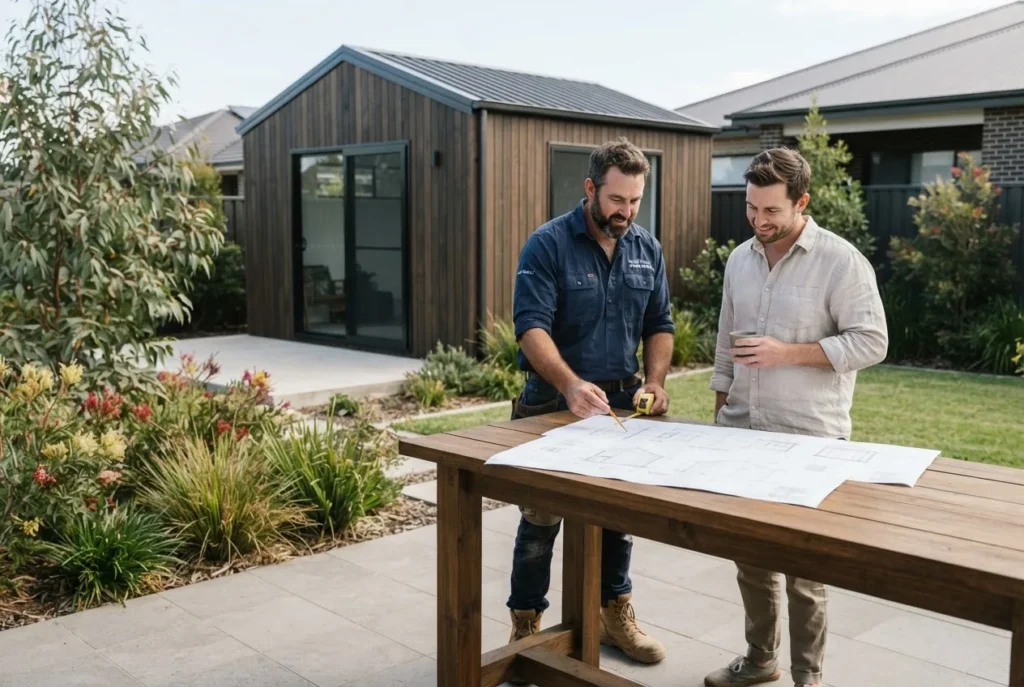
Engaging a qualified caravan storage shed builder can simplify compliance by providing professionally engineered plans and navigating council procedures. Builders familiar with caravan sheds expedite approval and ensure shelters meet
custom shed council approvals in Sydney and other jurisdictions.
They often preempt common pitfalls by:
- Confirming allowable size before fabrication
- Meeting Australian Standards for outdoor structures
- Advising on required anchoring and wind resistance
Innovative Caravan Shelter Ideas and Designs for Optimal Protection and Functionality
Space-Saving Caravan Shelter Ideas for Small Blocks
- Vertical storage walls: Combining caravan shelter with wall-mounted storage to maximise limited ground space.
- Collapsible or retractable shade shelters: Allow flexible use of space for caravan and outdoor activities.
- Multi-use shelters: Integrating caravan and ancillary equipment (bikes, trailers) under one roof.
- Custom-fit modular panels: Adapt shape to match block contours and caravan size.
Design Trends in Caravan Shade Sheds for 2025
- Hybrid materials: Combining Colorbond steel with enhanced shade cloths for airflow.
- Smart shelters: Solar-powered lighting and automated awnings.
- Eco-friendly coatings: Reflective paints reducing heat absorption.
- Lightweight modular designs: Easy transport and assembly without compromising shelter strength.
Innovative caravan shelter ideas often overlap with
awning shed designs and council approvals — see our full guide on awning shed designs and council approvals for inspiration.
Combining Shade Shelters with Caravan Storage Solutions
Integrating shelter kits with storage units creates multifunctional structures. Ideas include:
- Lockable side compartments for tools or accessories
- Built-in racks for bicycles and camping gear
- Installing workbenches or maintenance bays adjacent to shelters
This approach optimises property footprint, ideal for urban and regional caravan owners.
Portable Shade Sheds and Temporary Caravan Shelter Innovations
- Improved portable shade sheds with quick-lock systems
- Lightweight carbon-fibre framing reducing weight by 20% compared to aluminium
- Weatherproof fabrics that resist UV and mildew for at least 5 years
- Foldable panel kits fitting into compact storage bags
Selecting Between Permanent and Portable Shade Sheds: Pros, Cons, and Use Cases
Advantages of Permanent Shelter Sheds for Caravans
- Stronger protection against extreme weather events
- Lower maintenance costs over time
- Better security; often lockable
- Higher property value addition
Benefits of Portable and Temporary Caravan Shade Shelters
- Flexibility to relocate or dismantle as needed
- Lower upfront investment
- Exemption from some council permits depending on region
- Ideal for seasonal use or rental properties
Case Examples: When to Choose Portable Shade Shelters over Permanent Ones
- Caravans stored at a secondary residence or seasonal location
- Small blocks where permanent installation is impractical due to zoning
- Temporary protection during renovations or travel
- Budget constraints or testing shelter needs before permanent investment
Maintenance Considerations for Both Options
- Permanent shelters require periodic checks for rust, joint fatigue, and roof integrity
- Portable shelters need fabric replacement and frame inspections, especially after storms
- Both benefit from cleaning debris and checking anchor points annually
Best Practices for Installing and Maintaining Caravan Shelter Kits in Australia
Essential Installation Tips for Safety and Longevity
- Prepare a level, well-compacted base; concrete slabs recommended for heavy shelters
- Follow manufacturer instructions meticulously to avoid warranty issues
- Use appropriate fasteners for Australian weather conditions (stainless steel or treated)
- Ensure correct anchoring, particularly in wind-prone areas
- Engage professionals where council certification or engineering sign-offs are required
Installing on a compliant and durable base is critical; learn more with our complete Australian guide on
concrete floors for garden sheds.
Maintaining Shade Sheds and Caravan Shelters for Harsh Australian Conditions
- Regularly inspect for corrosion and treat promptly
- Clean roof gutters and remove debris to prevent water damage
- Apply protective sealants or corrosion-resistant coatings as recommended
- Check and replace damaged anchors or ties after storms
- Lubricate any moving or sliding components yearly
Common Mistakes to Avoid During Installation
- Skipping council approval when required
- Poor site preparation leading to uneven settling
- Using improper fasteners or inferior materials
- Neglecting local wind and weather loading factors
- DIY installation without adequate skill leading to structural instability
Professional installation improves longevity and council compliance – refer to our comprehensive
garden shed installation guide for expert tips.
Expert Advice from Caravan Shelter Builders and Suppliers
Consult industry professionals specializing in caravan shelters for tailored advice on local compliance, best materials, and installation methods. Their experience with shelter sheds and state regulations ensures a smoother approval process and durable shelter build.
2025 Buyer’s Guide: How to Choose the Right Caravan Shelter Kit for Your Needs
Defining Your Needs: Size, Mobility, and Usage Frequency
Assess your caravan dimensions plus additional clearance for opening doors and awnings. Decide if the shelter needs to be portable for travel or fixed for long-term storage. Consider frequency of use and anticipated weather exposure.
Budget Planning and Prioritizing Features
Set a realistic budget factoring in purchase, installation, maintenance, and possible council fees. Prioritize features like UV resistance, durability, or portability based on your environment and use case.
Questions to Ask Suppliers and Builders Before Purchase
- Is council approval assistance included?
- What materials and wind ratings do you offer?
- Are warranties provided, and what do they cover?
- Can the shelter be customised to specific caravan sizes?
- Do you offer professional installation or DIY kits?
For comprehensive guidance, consult a
comprehensive garden shed buyer’s guide Australia.
Future-Proofing Your Caravan Shelter Kit Purchase
- Choose modular designs allowing expansion or reconfiguration
- Select materials with extended warranties and proven durability
- Ensure compliance with updated Australian Standards
- Consider multi-use designs supporting other vehicles or equipment
Frequently Asked Questions (FAQs) About Caravan Shelter Kits in Australia
Do I Need Council Approval for a Portable Caravan Shelter?
Portable shelters under certain size limits (usually under 10m²) are often exempt from council approval, but regulations vary by council and state. Always check with your local council to confirm.
Can I DIY Install a Caravan Shelter Kit?
Many kits are designed for DIY assembly; however, complex or fixed shelters may require professional installation to meet safety standards and ensure council compliance.
Are Shade Sheds Durable Enough for Coastal Conditions?
Yes, especially those made from Colorbond steel with marine-grade coatings. Regular maintenance is essential to combat salt spray corrosion.
What Are the Typical Lead Times to Get a Caravan Shelter Delivered and Installed?
Lead times vary, but expect 4-8 weeks for custom fixed shelters, shorter for portable or off-the-shelf models. Installation may add 1-3 days depending on complexity.
How to Check If a Used Shade Shed Will Suit My Caravan?
Measure your caravan’s dimensions and compare against the used shed’s size. Inspect structural integrity, completeness of hardware, and compatibility with your site conditions.
Frequently Asked Questions
What factors affect the durability of caravan shelter kits in different Australian climates?
Durability depends on materials like Colorbond steel with UV and corrosion resistance, appropriate wind ratings, waterproofing, and maintenance. Coastal, tropical, and arid regions require specific coatings and designs to withstand salt spray, humidity, or heat exposure effectively.
How do portable shade sheds compare to permanent shade sheds for caravan protection?
Portable sheds offer flexibility, lower cost, and easier installation, ideal for temporary use. Permanent sheds provide stronger weather protection, greater security, and add property value, making them better suited for long-term caravan storage.
What is the typical lifespan of a caravan shelter kit made from Colorbond steel?
Caravan shelter kits using Colorbond steel typically last 15 to 25 years with proper maintenance, benefiting from strong corrosion and UV resistance suited for Australia’s diverse climates.
When should caravan owners seek professional advice for shelter installation?
Professional advice is crucial for fixed shelters requiring council approval, complex designs, compliance with local building codes, or in extreme weather zones to ensure safety and regulatory adherence.
Which features improve the security of caravan shelter kits?
Lockable side panels, reinforced frames, durable materials, and secure anchoring systems enhance security, protecting caravans from theft and weather damage.
Why is council approval stricter for fixed caravan shelters compared to portable ones?
Fixed shelters impact land use permanently, affecting zoning, setbacks, and safety regulations. Portable shelters are temporary, smaller, and removable, often exempting them from stringent approval processes.
How do caravan shelter kits support multi-use functionality?
Many kits include modular storage, built-in racks, and adaptable designs that integrate equipment storage and maintenance space to optimise property use and convenience.
What are the main differences between temporary caravan shelters and shade sheds?
Temporary shelters are usually fabric-based, lightweight, and designed for seasonal use or easy dismantling, while shade sheds are sturdier, often steel-framed, intended for long-term protection.