

Corner garden sheds are transforming the way Australian homeowners utilise their backyard nooks and crannies in 2025. Specifically, custom Colorbond steel corner sheds offer a seamless blend of durability, design flexibility, and local climate resilience—ideal for optimising limited garden corner spaces. This definitive guide unpacks everything you need to know about these innovative structures, from material benefits to council approval nuances, ensuring your corner shed perfectly suits your backyard and complies with all standards.
Understanding Corner Garden Sheds – Design and Spatial Benefits
What Defines a Corner Garden Shed? Unique Shape & Purpose
A corner garden shed is a specialised outdoor storage solution designed to fit snugly into garden corners, typically where traditional rectangular sheds fall short. Unlike standard sheds with four right angles and uniform footprints, corner sheds leverage angled walls, L-shapes, or polygonal forms to conform precisely to garden contours. This unique design principle allows for the utilisation of previously awkward or neglected spaces, turning unusable corners into valuable storage or utility areas.
Maximizing Awkward Garden Corners: Spatial Advantages in Australian Backyards
Australian backyards often face spatial constraints due to irregular fencing, slopes, or garden landscaping. By embracing corner shed layouts, homeowners can:
- Free up central garden areas for recreational use by shifting storage into corners
- Make efficient use of triangular or trapezoidal patches traditionally seen as ‘dead space’
- Enhance overall backyard flow and aesthetics through thoughtful corner garden shed design principles
- Reduce obstruction of sunlight or garden views compared to bulky rectangular sheds
These benefits are documented in Australian landscape design reports, which note up to a 25% improvement in space utilisation when corner garden shed principles are applied effectively.
Common Corner Shed Dimensions and Design Strategies for Tight Spaces
While sizes vary, typical corner garden sheds in Australia range from compact 1.5m to 3m wall lengths per side, often configured at 45 to 90-degree angles to fit standard fencing arrangements. Common spatial strategies include:
- Utilising pentagonal or hexagonal footprints for smoother corner fits
- Incorporating modular components that allow incremental expansions
- Employing sloping roof styles that follow garden slopes or fence lines
For comparison, our guide on 3m x 3m Colorbond garden sheds provides additional sizing insights applicable to corner configurations.
Innovative Corner Fit Techniques: Angles, Roof Styles, and Modular Components
Innovations in corner shed design include using:
- Angled walls set between 45° and 135° to the fence for a flush finish
- Custom roof pitches like skillion or gable styles with cutaways to maximise head height while maintaining drainage
- Modular assembly, allowing seamless joins between multiple shed units or extensions
Illustrative diagrams show how these techniques optimise corner shed footprint optimisation and provide flexibility for various backyard layouts.
With a clear understanding of corner shed design benefits, let’s explore why Colorbond steel is the preferred material for these unique structures in 2025.
Why Choose Colorbond Steel for Your Corner Garden Shed in 2025?
Introduction to Colorbond Steel: Material Technology and Construction Benefits
Colorbond steel is a pre-painted, pre-finished steel product engineered by BlueScope Steel, specifically tailored to withstand Australia’s harsh climates. Its composition involves a high-tensile steel base coated with a protective layer combining aluminium and zinc (forming the “Zincalume” core) phosphate coatings, and finishes with durable, fade-resistant paints. This sophisticated layering provides:
- Excellent structural rigidity to withstand wind and impact
- Resistance to corrosion and rust, particularly critical for coastal Australian environments
- Low maintenance needs due to smooth, non-porous surfaces
This proprietary construction makes Colorbond a superior choice over traditional steel or timber options, notably for complex corner shed shapes.
Environmental Durability: UV Resistance, Corrosion Protection, and Heat Management in Australian Climates
Colorbond steel’s UV protection is rated to sustain prolonged exposure without fading or chalking—a key advantage under intense Australian sun. Its anti-corrosive zinc-aluminium coating offers resistance even when faced with salt air near coastal regions. Moreover, thermal management coatings reflect heat, helping reduce internal shed temperatures, increasing occupant comfort and protecting stored goods.
CSIRO climate studies (2024) confirm that Colorbond’s heat management in garden sheds outperforms bare metal sheds by reducing peak internal temperatures by up to 15°C.
Comparison with Competitor Materials: Zincalume, Timber, and Traditional Metals
| Material | Durability | Maintenance | Cost (Average Australia 2025) | Climate Suitability |
|---|---|---|---|---|
| Colorbond Steel | High (UV, corrosion, impact resistant) | Low | $$$ | Coastal, Inland, Bushfire Prone |
| Zincalume Steel | Moderate (less UV resistant, prone to chalking) | Medium | $$ | Inland, Moderate Coast |
| Timber | Moderate (subject to rot, pests) | High (regular sealing, painting) | $$$ | Varied but limited near coast or humid regions |
For a deeper dive into these differences, see our Timber Frame vs Colorbond garden sheds in Australia guide.
Colorbond’s Fit-for-Purpose 2025 Color Palettes: Woodland Grey, Surfmist, and More
Colorbond offers an extensive palette adapted for environmental compatibility and aesthetic harmony with Australian landscapes. Popular 2025 shades for corner garden sheds include:
- Woodland Grey: blends naturally with garden greenery
- Surfmist: bright, reflective, suited for warmer climates
- Basalt and Wallaby: earthy neutrals complementing natural stone and wood
Explore all current options with detailed colour schemes in our 2025 Colorbond shed colour palettes and schemes guide.
For a comprehensive comparison between Colorbond and Zincalume materials, including their performance in Australian conditions, see our detailed guide on Colorbond vs Zincalume.
With an understanding of why Colorbond steel excels in Australian conditions, the next step is tailoring your corner shed to your garden’s unique requirements.
Customizing Your Colorbond Corner Garden Shed: Design and Color Options
Tailoring Shapes and Dimensions for Your Specific Garden Corner
- Assess Corner Geometry: Measure angles and available wall lengths precisely, noting fence lines, slopes, and obstructions.
- Choose Shed Footprint: Select from L-shaped, pentagonal, or polygonal base designs matching your corner’s shape. Explore options in our L shaped garden shed designs for tricky corners guide for tailored layout ideas.
- Define Roof Style: Opt for gable, skillion, or a custom angled roof ensuring water runoff and no conflict with adjoining structures.
- Plan Expansion: Consider modular add-ons or detachable sections for future flexibility.
Choosing from Custom Colorbond Colors to Complement Australian Backyard Aesthetics
After shape finalisation, select your shed’s finish from the Colorbond 2025 palette. Factors influencing colour choice include:
- Heat Reflection: Lighter shades like Surfmist reduce solar heat buildup.
- Garden Integration: Earthy tones like Woodland Grey mimic natural textures.
- Neighbourhood Compliance: Some local councils restrict flashy colours—always verify before deciding.
Explore current popular shades and compliant colour schemes in our comprehensive Shed Colours Australia guide.
Accessorizing Corner Sheds: Sliding Doors, Corner Fitted Shelves, and Ventilation Solutions
Optimisation involves custom fittings to maximise usability within corners:
- Sliding doors mounted on angled tracks allow easy access without impeding garden pathways.
- Custom corner-fitted shelves or corner wardrobes utilise triangular spaces efficiently.
- Ventilation panels or ridge vents prevent condensation and heat accumulation.
Practical Custom Features: Security Enhancements and Storage Optimization
Adding secure locking systems tailored for angled walls and installing internal storage solutions like foldable workbenches or tool racks improves shed function without compromising space. For clever internal organisation, check our garden shed organization ideas designed for Australian homes.
Customization concludes with careful installation planning, the focus of our next section.
Installation of Corner Garden Sheds – Practical Considerations and Best Practices
Site Preparation and Foundation Types Suitable for Corners
Preparing an even and stable site is foundational. Corner sheds require particular attention due to irregular footprint shapes.
- Clear and level ground: Remove vegetation and debris; compact soil to prevent settling.
- Foundation Choices: Concrete slabs, compacted gravel bases, or timber stumps are common. For corner sheds, poured concrete pads sized to the shed’s polygonal base provide maximum stability.
A proper foundation is vital; refer to our detailed guide on concrete floors for garden sheds to ensure durability and compliance.
Installation Steps Tailored for Corner Shed Configurations
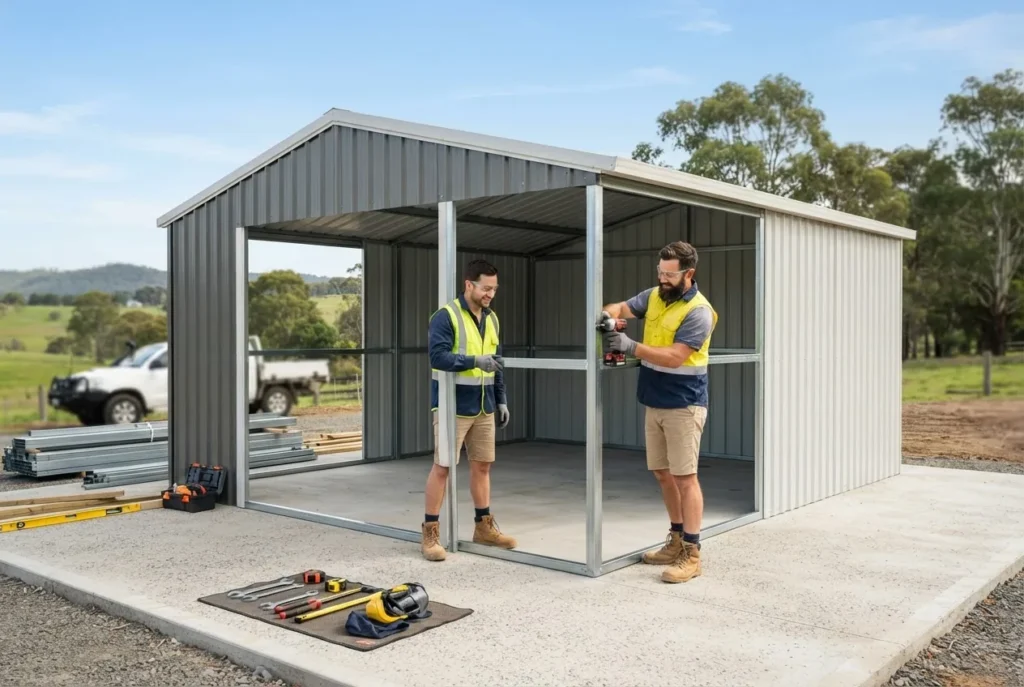
- Foundation preparation with exact corner dimensions to prevent misalignments.
- Structural frame setup prioritising wall junctions at angled corners to ensure rigidity.
- Wall panel installation made easier with prefabricated modular units.
- Roof placement ensuring proper drainage away from fence and property.
- Accessory fittings like sliding doors and vents installed as per corner geometry.
For practical installation and assembly guidance tailored to Australian backyards, refer to our corner garden shed installation guide.
Addressing Wind and Weather Ratings Specific to Australian Conditions
Corner sheds must meet region-specific wind load requirements. BlueScope Colorbond corner sheds are often engineered to meet cyclonic standards (up to AS 4055), necessary in northern and coastal Australia. Our cyclone rated Colorbond garden sheds guide elaborates on this critical consideration.
Hiring Professionals vs DIY: What to Expect for Corner Shed Installations
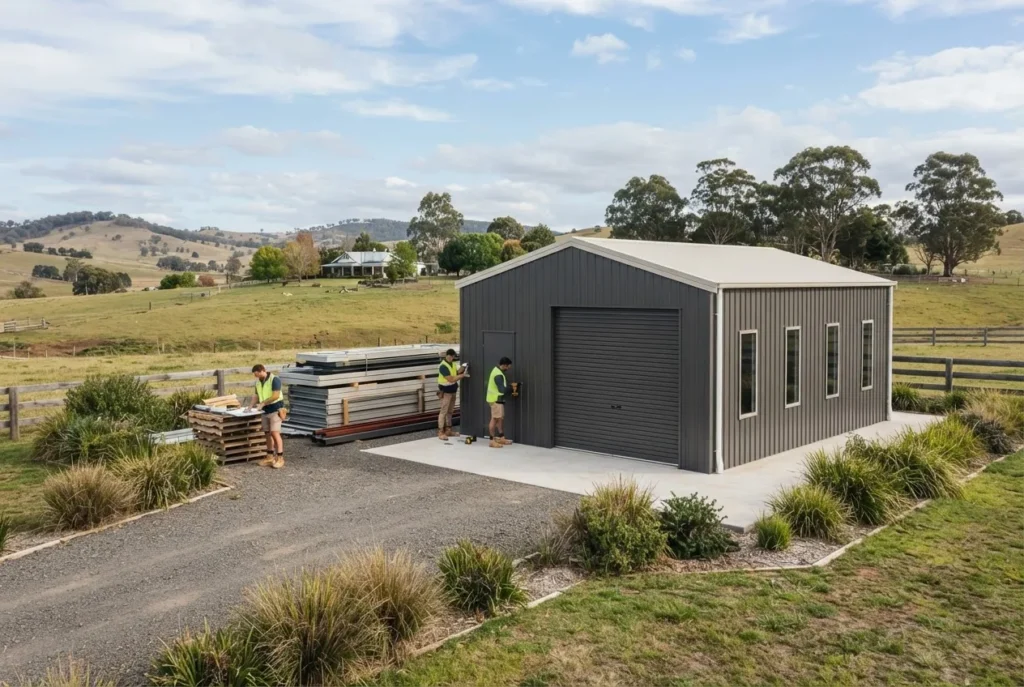
While DIY may appeal due to perceived cost savings, bespoke corner sheds’ complex joinery and foundations often require professional expertise to comply with Australian Standards AS 2870 for residential slab and footing work. Engaging licensed installers mitigates risks of poor alignment, leaks, and council non-compliance.
The following section covers council approval steps vital for legal compliance before installation.
Navigating 2025 Australian Council Approval and Compliance for Corner Garden Sheds
Overview of Australian Local Council Regulations Specific to Corner Sheds
Local councils regulate sheds as secondary structures, imposing rules on:
- Maximum height and floor area
- Setbacks from boundaries and neighbouring properties
- Construction materials and fire ratings depending on bushfire zones
Corner sheds’ irregular shapes may trigger additional scrutiny due to closer proximity to property boundaries or neighbour sight lines.
Permits and Approvals: What Australian Homeowners Must Know in 2025
- Sheds under 10m² are typically exempt but must still meet setback rules;
- Larger corner sheds or those with power connections generally require a Development Application (DA);
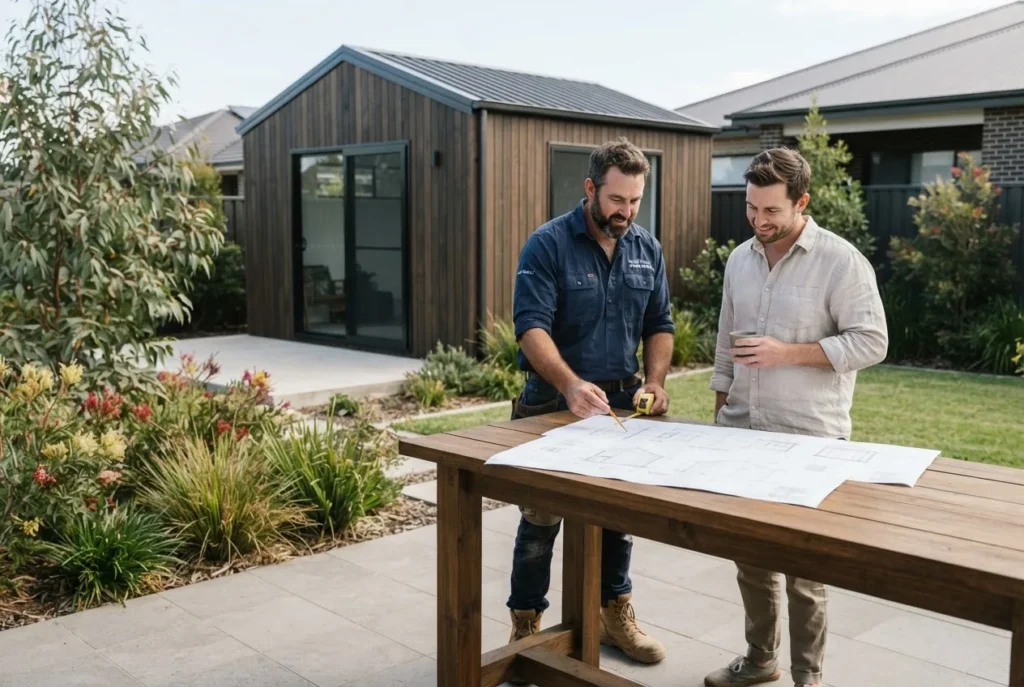
- Documentation must include site plans with precise corner shed footprint and elevation details;
- Consulting local council early is recommended to avoid costly redesigns.
Environmental and Neighbor Considerations: Setbacks, Height, and Privacy Rules
Setbacks often range from 0.9m to 1.2m depending on state. Bushfire-prone areas enforce strict construction material standards and vegetation clearance zones. Corner sheds can be designed with privacy screens height-adjusted to mitigate neighbour impact.
How Custom Corner Designs Impact Approval Processes Compared to Standard Sheds
Custom corner geometries may necessitate additional structural engineering certification due to non-standard load distributions. Approval times may extend, highlighting the importance of early council consultation and accurate technical drawings.
Understanding local council regulations and approval requirements is essential; further details can be found in our comprehensive article on Council Approvals for Barn Sheds in Australia.
Our Custom Colorbond garden shed buyer’s guide offers an overview of design personalization and regulatory steps that complement corner shed customization.
Cost Factors and Value Considerations Unique to Custom Colorbond Corner Sheds
Breakdown of Customization Costs: Size, Color, Fittings, and Installation
| Cost Component | Typical Range (AUD) | Notes |
|---|---|---|
| Colorbond Steel Material & Panels | $2,500 – $6,000 | Depends on thickness, color choice |
| Custom Corner Design / Engineering | $800 – $1,500 | Includes drawings and certifications |
| Foundation & Site Prep | $1,000 – $3,000 | Varies by site conditions |
| Installation Labor | $1,500 – $4,000 | Complexity of corner angles affects price |
| Accessories and Fittings | $500 – $1,200 | Sliding doors, shelves, ventilation |
Comparing Price Points with Other Shed Types and Materials
Custom Colorbond corner sheds generally range 15-25% higher than standard rectangular Zincalume sheds of equivalent floor area due to bespoke fabrication complexity. However, their spatial efficiency often offsets the price premium.
When considering costs and approvals for similarly sized sheds, see our detailed pricing guide for 18m² Colorbond garden sheds.
To aid your decision, compare top-rated garden sheds in Australia with our Better Sheds Reviews 2025, which evaluate features, material quality, and value for money.
Longevity and Maintenance Costs: Investment Analysis for Australian Buyers
Colorbond’s low upkeep translates into reduced lifetime maintenance expenses compared to timber, potential savings of $200-$400 per annum on repainting and repairs. This durability positively influences long-term value.
How Maximizing Corner Space Adds Functional Value and ROI
Effective utilisation of corners via custom sheds can increase usable backyard area by up to 20%, enhancing property appeal and resale prospects. A 2024 Housing Industry Association (HIA) analysis suggests that tailored backyard storage solutions can improve property ROI by 3–5% due to added functionality and visual appeal.
Next, we explore where to find the best suppliers specialised in these bespoke corner shed solutions.
Leading Australian Suppliers and Manufacturers Specializing in Custom Colorbond Corner Sheds
Profiles of Top Australian Brands with Corner Shed Expertise
- Austral Sheds: Renowned for bespoke steel sheds with custom corner designs and full engineering certification.
- Stratco: Offers modular Colorbond corner sheds with extensive colour options and accessory packages.
- BlueScope Steel Certified Fabricators: Specialised subcontractors with direct knowledge of Colorbond technology and council compliance.
Geographic Reach and Service Options Across Australia
Many suppliers provide nationwide service, with installation teams trained for site-specific challenges from metropolitan Sydney to Queensland coastal zones and Western Australian rural areas.
Customer Support, Warranty, and After-Sales Service Considerations
Reputable brands typically offer 10-15 year warranties on Colorbond finishes and structural components. Dedicated support includes design consultations, council compliance assistance, and tailored installation plans.
Case Studies: Successful Custom Corner Shed Projects
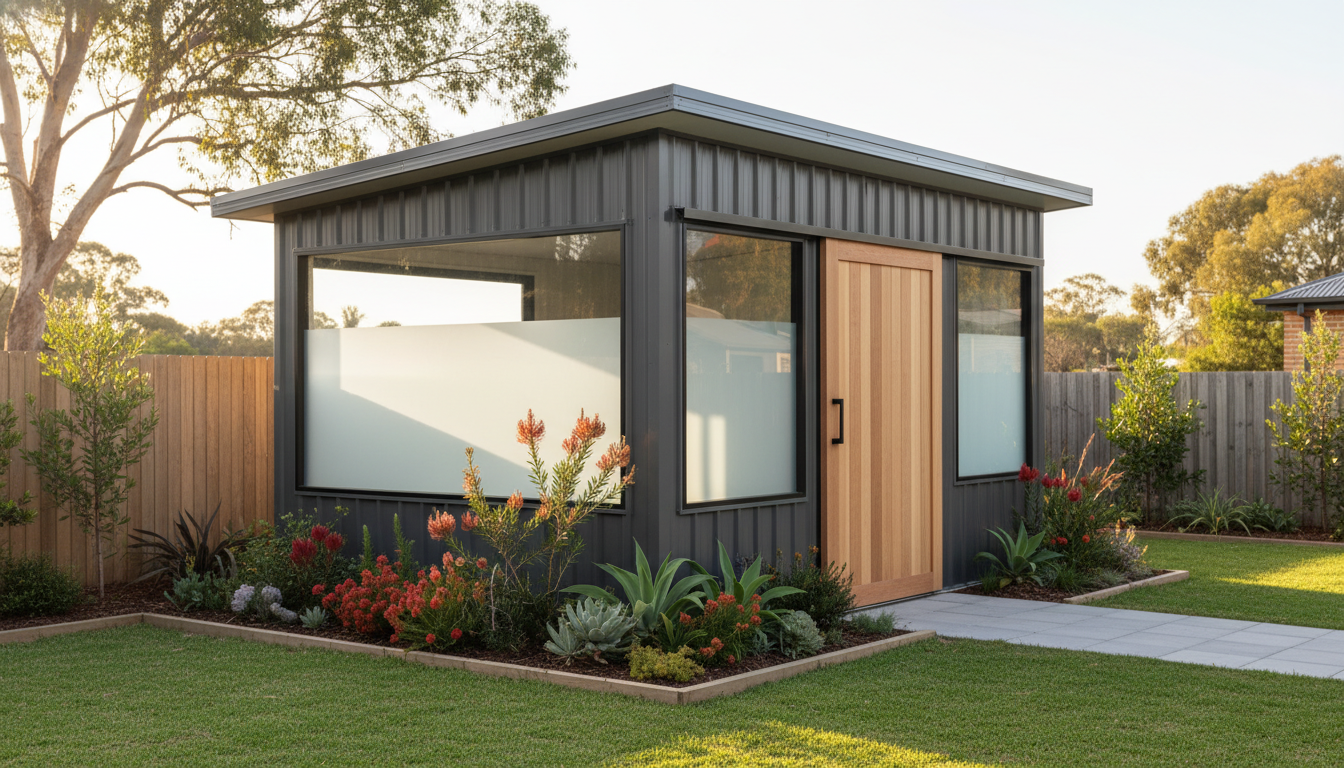
A Sydney homeowner converted a 2.5m x 2.5m triangular garden corner into a multi-functional storage and potting shed using Woodland Grey Colorbond steel, achieving a seamless fit that respected a neighbours’ privacy and met council setback rules. This project validated the space-saving benefits and structural durability discussed earlier.
Choosing the right manufacturer and installer backed by experience and product expertise is key for a successful corner garden shed investment.
Conclusion
A corner garden shed crafted from custom Colorbond steel is the ultimate 2025 solution for Australian gardens challenged by awkward corners and demanding climates. Its superior durability, array of tailored colour options, and flexible design possibilities enable optimal use of tight backyard spaces while meeting stringent local council standards.
From design to installation, factoring in spatial benefits, environmental resilience, regulatory compliance, and cost-effectiveness ensures your corner shed not only enhances backyard function but also adds lasting property value. To start your project on the right foot, consult expert suppliers with proven experience and review critical planning guides such as corner garden shed installation guide and custom Colorbond garden shed buyer’s guide.
Ready to transform your backyard corner into a functional, weatherproof oasis? Explore local suppliers today and request custom quotes tailored to your unique site.
Frequently Asked Questions
What are the key benefits of installing a corner garden shed over a traditional rectangular garden shed?
Corner garden sheds maximize awkward backyard corners, freeing central garden space and enhancing flow. Their angled or polygonal designs fit irregular fences and slopes better than rectangular sheds, improving spatial use and aesthetics in tight Australian yards.
How does Colorbond steel compare to Zincalume in terms of weather resistance for garden sheds?
Colorbond excels in UV resistance, corrosion protection, and heat management with its pre-painted surface, while Zincalume offers moderate corrosion resistance but tends to chalk and fade faster under harsh sun and coastal conditions.
Why is specialized foundation preparation important for corner garden sheds?
Corner sheds have irregular footprints requiring precise, level foundations like poured concrete pads tailored to angled walls, ensuring structural stability, preventing settling, and maintaining proper water drainage specific to unique corner geometry.
Can custom Colorbond corner sheds be expanded or modified after installation?
Yes, many custom Colorbond corner sheds use modular components allowing future expansions or detachable sections. This flexibility supports changing storage needs and adapts easily to evolving backyard layouts.
Which factors most influence the choice of Colorbond colors for corner garden sheds in Australia?
Key factors include heat reflection (lighter colors reduce heat buildup), visual harmony with garden landscapes, and compliance with local council colour regulations to ensure aesthetics and regulatory approval.
Is professional installation necessary for corner garden sheds, or can a homeowner manage DIY?
Due to complex angled joinery, foundation requirements, and council standards, professional installation is recommended for corner garden sheds to ensure compliance, structural integrity, and long-term durability.
How do council approval processes for custom corner sheds differ from standard garden sheds?
Custom corner sheds often require additional engineering certification and detailed site plans because of non-standard shapes and proximity to boundaries, potentially extending approval times and increasing scrutiny from local councils.
What security features are commonly integrated into custom corner garden sheds?
Security enhancements include tailored locking systems for angled walls, robust sliding door mechanisms, and secure ventilation covers, all designed to maximize protection without compromising shed usability.