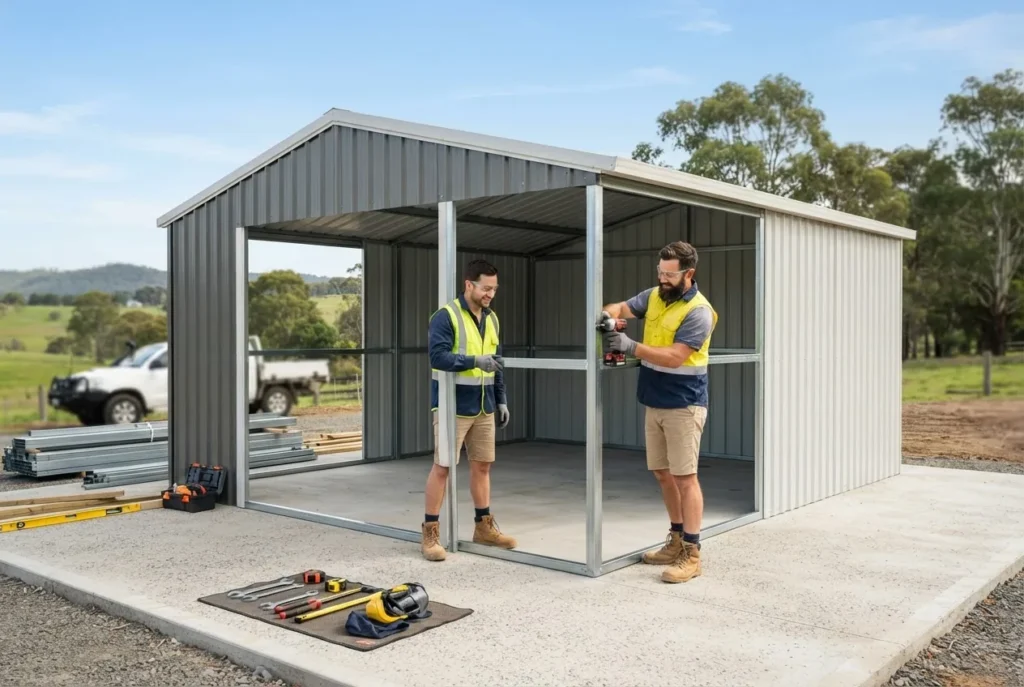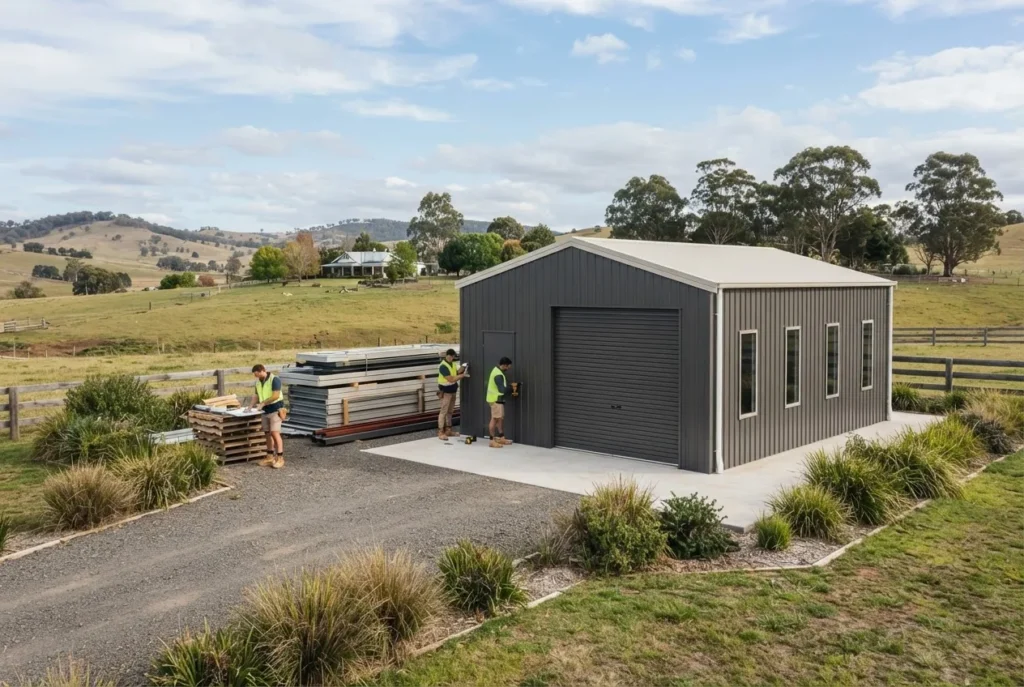

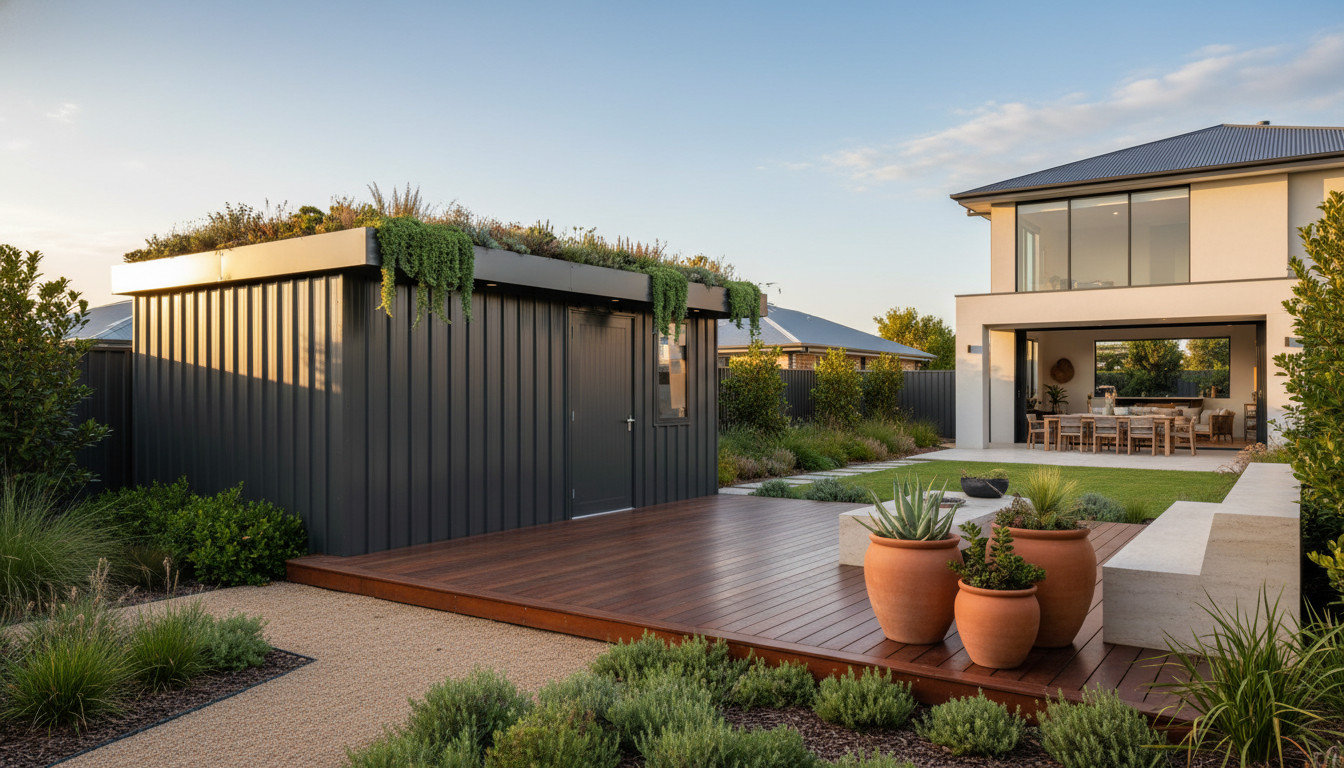

Choosing the perfect flat roof garden shed for your Australian backyard in 2025 means understanding a unique blend of material innovation, structural standards, and local council approval requirements. This guide breaks down everything from Colorbond steel variants to wind ratings under AS/NZS 1170.2, plus detailed pathways to secure council permits across the states.
Whether you’re upgrading storage or creating a weather-resistant garden retreat, this comprehensive resource arms you with expert insights and clear steps to navigate the complexity surrounding flat roof storage sheds in Australia’s varied climates and regulatory landscape.
Understanding Flat Roof Garden Sheds: Features and Benefits
Defining Flat Roof Garden Sheds vs Other Roof Styles
Flat roof garden sheds feature a horizontal or near-horizontal roof design, differing significantly from pitched options like gable or skillion roofs. While flat roofs may allow for minimalist aesthetics and easier blending into modern garden landscapes, they impose unique construction and drainage demands.
Unlike the sloped angles of gable or skillion roofs, flat roofs keep a low profile and can potentially offer space efficiency in garden layouts, but they require superior waterproofing and structural support to handle load and runoff.
To better understand how flat roofs compare to other roof types like gable roofs, visit our detailed article on different garden shed roof styles including flat roofs.
Typical Dimensions and Design Principles of Flat Roof Storage Sheds
Flat roof sheds in Australia commonly range from compact 1.5 m x 1.5 m storage units to larger custom sizes such as 3 m x 4 m. Design principles stress rigidity in framing and sufficient roof drainage despite the limited pitch.
Key design aspects include:
- Use of sturdy, lightweight framing materials to offset load stresses
- Roof procurement to prevent water pooling, often with parapet walls or concealed drainage
- Maximising internal storage volume with simple rectangular footprints
This contrasts with other sheds where roof pitch increases headroom but complicates construction.
For size comparisons, many buyers consider options like the 10×10 Colorbond garden sheds in Australia, which provide standard dimension benchmarks.
For alternative shed styles with partial roofing such as awnings or garaports, see our Australia Awning Shed Guide.
Advantages of Flat Roofs in Australian Residential Gardens
Flat roof garden sheds offer several intrinsic advantages especially suited to Australian backyards:
- Modern aesthetics: Their clean horizontal lines suit contemporary landscaping trends.
- Space optimisation: Easier to integrate beneath taller fences or alongside existing structures.
- Material efficiency: Simpler roofing panels and less waste in cutting typical for flat roofs.
- Installation speed: Easier ceiling and roofing assembly means quicker build times.
In dry, temperate regions, flat roofs are especially effective when combined with robust waterproofing solutions, but in high rainfall or cyclone-prone zones, particular design attention is required.
Common Materials Used in Flat Roof Shed Construction (Focus on Structural Framing)
Structural framing for flat roof sheds typically involves:
- Steel framework: Particularly galvanised or Colorbond steel for durability and strength.
- Timber components: Used selectively for internal joists or fascia but less common in harsh climates due to maintenance.
- Aluminium extrusions: Lightweight and corrosion-resistant, suitable for coastal locations.
The framing must accommodate a flat roof’s load distribution and be compatible with the outer cladding, predominantly Colorbond steel for Australian conditions.
Transitioning now to the key material choice that defines durability and compliance—Colorbond steel.
Colorbond Steel: The Ideal Material for Flat Roof Garden Sheds in Australia
Overview of Colorbond Steel: Composition and Variants
Colorbond steel is a pre-painted, galvanised steel product manufactured by BlueScope Steel, designed for outdoor structural applications. Its composition typically involves a steel base, zinc/aluminium alloy coating, and a high-performance topcoat.
Main variants suitable for flat roof garden sheds include:
- Activ®: Self-cleaning technology ideal for reducing dirt build-up in sheds.
- Matt and Satin finishes: Provide modern aesthetics with reduced glare.
- Galvanised Colorbond: Offers extra corrosion resistance in marine or high-humidity environments.
Choosing the right variant depends largely on local weather conditions and visual preferences.
While Colorbond steel is popular, some buyers prefer timber framing; our timber frame versus Colorbond garden sheds guide compares both approaches.
Colorbond’s Durability and Weather Resistance in Australian Climates
Australian weather presents challenges such as UV radiation, rain, hail, and coastal salt spray. Colorbond steel excels due to its:
- Multiple protective layers ensuring resistance to rust and corrosion.
- UV stability, preventing early colour fading.
- High impact resistance, improving durability against hail (often a major concern in Queensland and NSW).
As a result, Colorbond flat roof sheds maintain structural integrity and appearance over decades with minimal maintenance, delivering excellent long-term value.
Colour and Finish Options for Flat Roof Garden Sheds
Colorbond offers a broad palette tailored to Australian landscapes. Popular shades include:
- Classic Cream and Windspray for subtle, neutral tones.
- Deep Ocean and Woodland Grey for sophisticated darker roofs.
- Even vibrant tones like Cottage Green and Monument for bold statements.
The finish selected can influence heat retention, so in hotter regions, lighter colours may be preferred to reflect heat effectively.
Comparing Colorbond to Alternative Materials for Flat Roof Sheds
| Material | Durability | Weather Resistance | Maintenance | Cost |
|---|---|---|---|---|
| Colorbond Steel | High | Excellent (UV, corrosion, hail) | Low | Moderate |
| Zincalume Steel | Moderate | Good (corrosion resistant) | Moderate | Lower |
| Timber | Variable | Poor to Moderate (requires treatment) | High | Variable |
| Aluminium | Good | Excellent (corrosion resistant) | Low | High |
For a comprehensive comparison of Colorbond vs Zincalume materials and their suitability in various shed designs, see our detailed guide on Colorbond vs Zincalume materials for garden sheds.
Compatible Structural Materials and Framing for Colorbond Flat Roof Designs
Colorbond cladding integrates best with:
- Steel frames: Hot-dipped galvanised steel or structural steel tubes allow secure fixing and rigidity.
- Aluminium framing in coastal conditions to reduce corrosion.
- Treated hardwood battens for small spans but not recommended for high wind or wet zones due to shrinkage risks.
Ensure that framing is engineered to support the flat roof’s weight and withstand wind uplift forces as per local standards.
Next, we explore how to comply with Australian wind ratings and structural regulations crucial for flat roof garden sheds.
Complying with Australian Wind Ratings and Structural Standards
Understanding AS/NZS 1170.2 and Its Importance for Flat Roof Sheds
The Australian/New Zealand Standard AS/NZS 1170.2:2021 governs wind loading requirements on structures. For flat roof garden sheds, this standard determines the design pressures and forces the shed frame and cladding must withstand to ensure safety, especially in variable wind conditions prevalent across Australia.
Compliance minimises risk of structural failure during cyclones, heavy storms, or strong gusts, and is essential for insurance coverage.
Wind Rating Classifications Relevant to Australian Regions
Wind classifications under AS/NZS 1170.2 categorize buildings by terrain and regional wind speeds:
| Zone | Typical Wind Speed (km/h) | Locations |
|---|---|---|
| Low Wind Zone | up to 45 | Adelaide suburbs, inland Victoria |
| Medium Wind Zone | 45-60 | Sydney, Melbourne, Perth outer suburbs |
| High Wind Zone | 60-90 | Brisbane, coastal NSW, Northern NSW |
| Cyclone Zone C1 | up to 125 | Far North Queensland (FNQ) coast |
| Cyclone Zone C2 | up to 150+ | Top End NT, Cape York Peninsula |
Shed design and framing must adhere to the wind rating applicable in the installation area.
Design Considerations for Cyclone and High-Wind Zones
For flat roof sheds in cyclone-prone or high wind regions:
- Enhanced anchoring systems such as concrete footings with tiedowns and straps.
- Reinforced steel framing with cross-bracing and thicker gauge metal.
- Wind deflectors or parapets incorporated to reduce uplift forces on flat surfaces.
- Secure cladding fixing using specialist fasteners rated for high wind pressures.
Addressing these is critical to comply with cyclone design standards and prevent costly damage or council refusal.
If you live in high-wind or cyclone-prone areas, examining cyclone-rated Colorbond garden sheds in Australia is vital for compliance and safety.
Impact of Wind Ratings on Shed Sizing and Structural Framing
Higher wind ratings often limit maximum shed dimensions or require stronger structural members, which can impact cost and design flexibility:
- Smaller sheds (under 10m²) may qualify for exemptions or simplified compliance.
- Larger flat roof sheds must be engineered with thicker steel framing or additional bracing.
- Customised foundation solutions may be necessary in cyclone zones to distribute uplift.
Consult with manufacturers specialising in wind-rated flat roof garden sheds to ensure correct sizing and materials.
Certification and Testing Requirements for Wind Compliance
Sheds must be supplied with:
- Engineering certificates confirming structural design per AS/NZS 1170.2.
- Product warranties addressing material and installation quality.
- Third-party wind testing documentation where applicable, especially for cyclone-rated products.
Verification of these certifications simplifies council approval and insurance processes.
Navigating Local Council Approval Processes for Flat Roof Garden Sheds
Overview of Australian Building Approval and Permit Requirements (including Exemptions)
In Australia, local councils regulate structures including garden sheds. Approvals depend on the shed size, height, location, and construction materials. Common pathways are:
- Permit exemptions: Typically apply to small sheds under certain size limits (commonly 10m²) and non-habitable structures.
- Development approvals: Needed when sheds exceed set dimensions or are in sensitive zones—such as bushfire or heritage areas.
- Building permits: May be separate or combined with development approvals, covering structural and safety aspects.
Each state sets its own thresholds and conditions, often incorporating the National Construction Code (NCC).
State-By-State Council Procedures: Sydney, Brisbane, Melbourne, Perth Examples
| City/Council | Permit Triggers | Process Highlights | Typical Timeframe |
|---|---|---|---|
| Sydney City Council (NSW) | Sheds >10m² or height >2.4m | Online DA lodgement, BASIX if connected to services. | 2-4 weeks |
| Brisbane City Council (QLD) | Sheds >10m² or in flood zone | Pre-lodgement advice available; permit required for insulated sheds. | 3-6 weeks |
| Melbourne (VIC) | Sheds >9m² or >3m height | Planning permit required, building surveyor certification mandatory. | 3-5 weeks |
| Perth (WA) | Sheds >10m² or any roof alterations | Permit exemptions possible under R-Codes for certain areas. | 2-4 weeks |
Understanding council approvals for various shed types, including barn sheds and flat roof designs, is critical; refer to our in-depth resource on barn shed council approvals and design options for state-wise procedures.
Similar council approval steps apply for sheds such as the 12×8 Colorbond shed council approval process, making it essential to understand local nuances.
Localised guidance including Brisbane-specific procedures is available in our Garden Sheds Brisbane Guide.
Warrnambool buyers can also consult our Garden Sheds Warrnambool resource for region-specific shed options.
Key Documents and Compliance Certifications Required for Approval
- Structural engineering drawings complying with AS/NZS 1170.2.
- Product certification confirming Colorbond steel compliance and finish warranty.
- Site plan showing shed placement with setbacks and drainage.
- Foundation and anchoring design documentation.
- Proof of compliance with local planning overlays (e.g., bushfire, flooding).
Common Challenges in Securing Council Approval for Flat Roof Sheds and How to Overcome Them
Typical hurdles include:
- Exceeding size or height restrictions: Solution: Apply for variations or redesign to comply.
- Non-compliance with wind or cyclone ratings: Solution: Engage certified engineers and present proper certification.
- Neighbour objections on aesthetics or overshadowing: Solution: Provide detailed plans and consider compromises like colour matching.
- Incomplete documentation: Solution: Use council checklists and consult professionals early.
Illustrated Flowchart: Step-by-Step Council Approval Process for Flat Roof Garden Sheds
(Visual flowchart here would depict steps such as: Initial Assessment → Exemption Check → Prepare Documentation → Submit Application → Review & Requests → Approval / Variation / Refusal → Construction)
Installation and Foundation Considerations Unique to Flat Roof Sheds
Suitable Foundation Types for Flat Roof Garden Sheds (Concrete Slab, Piers, etc.)
Foundation selection must address flat roof structural loads and terrain conditions. Common options include:
- Concrete slab: Provides a solid, level base ideal for medium to large sheds, especially in flood-prone or uneven soils.
- Concrete piers or footings: Suitable for smaller sheds or sloped sites, offering ventilation beneath the shed floor.
- Timber bearers on compacted gravel: Lightweight solution for temporary or relocated sheds in stable soils.
- Steel pier mounts: Used where minimal ground disturbance is permitted or for elevated flat-roofed structures.
Choosing the right foundation is critical; our shed foundation options in Australia guide explores concrete slabs, piers, and other bases.
Drainage and Waterproofing Strategies for Flat Roofs
Flat roofs rely heavily on engineered drainage to avoid water pooling:
- Incorporation of internal drains or scuppers directing water to downpipes.
- Use of high-grade waterproof membranes beneath Colorbond roofing.
- Slight roof pitch as little as 1–2° to assist water flow.
- Regular maintenance checks to clear gutters and debris.
Structural Framing Configurations to Support Flat Roof Loads
Flat roof framing requires:
- Closely spaced purlins and beams to distribute loads evenly.
- Reinforced ridge beams or cross-bracing to reduce flexing.
- Corrosion-resistant fasteners compatible with Colorbond steel.
- Engineering designed to withstand uplift and lateral forces per AS/NZS 1170.2 wind ratings.
Environmental and Weather Factors Impacting Installation Choice
Considerations include:
- Exposure to coastal salt spray necessitating additional corrosion protection.
- Sun and heat load impacting colour choice and insulation options.
- Bushfire zone classifications requiring non-combustible framing materials and conformity with AS 3959.
- Flood-prone areas demanding elevated foundations.
Manufacturer Installation Guidelines Specific to Flat Roof Models
Many manufacturers provide flat roof-specific installation manuals highlighting:
- Correct fixing patterns for Colorbond cladding.
- Roof drainage integration aligning with panel profiles.
- Foundation anchorage tie-downs matched to wind zone requirements.
- Recommended maintenance schedules ensuring warranty validity.
Installation specifics, including foundation choices and assembly methods, are detailed further in our guide on garden shed installation considerations in Australia.
Practical Buying Guide: Pricing, Sizing, and Manufacturers Specializing in Flat Roof Designs
Typical Price Ranges and Cost Drivers for Colorbond Flat Roof Garden Sheds
Costs vary depending on size, materials, and features:
- Small (up to 6m²) basic Colorbond flat roof sheds typically start from AUD 1,200–1,800.
- Medium sizes (6-12m²) can range from AUD 2,500–4,500 depending on wall height and accessories.
- High wind or cyclone-rated designs add 15–30% to base cost due to reinforced framing and engineered foundations.
- Additional costs come from council approvals, site preparation, and delivery.
Standard Flat Roof Shed Sizes and Customisation Options
Flat roof sheds are often available in standard increments such as 1.5m x 2m, 3m x 3m, and 4m x 3m, with options to customise:
- Door configurations (sliding, hinged, roller).
- Window placement and sizes.
- Colour selections from Colorbond palette.
- Internal shelving or workbench installations.
Standard sizes such as the 3m x 2m shed offer insight into sizing and regional compliance, as detailed in our 3m x 2m garden shed sizing and compliance guide.
Leading Australian Manufacturers and Suppliers of Flat Roof Colorbond Sheds
- DuraShed Australia: Specialises in cyclone-rated Colorbond flat roof models.
- Shed Boss: Offers custom steel-framed garden sheds with flat roof options.
- Fairdinkum Sheds: Known for affordable medium-sized flat roof designs with quick delivery.
- EziSheds: Nationwide supplier with range of flat roof and low-pitch designs.
Investigate manufacturer reviews, warranty coverage, and local service availability before purchase.
For creative uses such as man caves and hobbies, refer to our specialized man cave shed guide.
Warranty, After-Sales Support, and Certification Verification Tips
Buyers should ensure:
- Minimum 10-year warranty on Colorbond cladding and structural steel.
- Access to installation support or professional assembly services.
- Receipt of full compliance documentation including engineering certificates.
- Verification that warranty terms specify maintenance obligations to retain coverage.
For a broader perspective on choosing the right design and material, see our comprehensive garden shed buyer’s guide Australia 2025.
Case Studies: Popular Flat Roof Garden Shed Models in Australian Markets 2025
- Case 1: Brisbane homeowner installed a cyclone-rated 3m x 3m Colorbond flat roof shed with reinforced concrete piers, gaining council approval in 3 weeks.
- Case 2: Melbourne client chose a 2m x 4m flat roof design for a backyard studio; incorporated internal drainage per manufacturer guidelines and gained permit exemption.
- Case 3: Coastal Sydney residence replaced an old timber-framed flat roof shed with a Colorbond-clad unit featuring a high wind rating, avoiding corrosion issues.
Frequently Asked Questions and Common Buyer Concerns about Flat Roof Garden Sheds
Maintenance Requirements for Colorbond Flat Roof Sheds
Colorbond sheds require:
- Annual cleaning of downpipes and gutters to prevent blockages.
- Periodic washing of cladding to remove salt deposits and dirt, especially near coastal areas.
- Inspection of sealants and flashing to maintain waterproofing integrity.
- Touching up scratches with manufacturer-approved paint kits.
Are Flat Roof Sheds Suitable for All Australian Climates?
Generally yes, but suitability depends on:
- Climate zone wind rating compliance.
- Appropriate waterproofing and drainage engineered for local rainfall.
- Material finish selections e.g., lighter colours for hotter zones.
High rainfall or cyclone-prone areas require specifically designed flat roof sheds with enhanced anchorage and structural reinforcement.
How to Ensure Long-Term Structural Performance against Australian Weather Extremes
Follow these steps:
- Choose materials compliant with AS/NZS 1170.2 wind ratings.
- Install per manufacturer instructions, focusing on waterproof membranes and fixing patterns.
- Perform regular inspections, especially after storms.
- Engage professional engineers for modifications or retrofits to meet updated standards.
What Documentation Should Buyers Expect at Purchase and Installation?
- Warranty certificates for Colorbond steel and structural components.
- Engineering compliance certificates for wind loading.
- Installation manuals and maintenance guides.
- Council approvals and permit documents if applicable.
Troubleshooting Compliance Issues with Local Councils
Common issues often arise from missing or incomplete paperwork, non-compliant materials, or neighbour disputes. Remedies include:
- Engaging a planning consultant to clarify requirements.
- Resubmitting detailed structural calculations.
- Consulting builders experienced in local council processes.
- Requesting mediation for neighbour objections.
Standard steps and advice are often provided on council websites but tailored guidance from industry professionals smooths the process.
Frequently Asked Questions
What is a flat roof garden shed and how does it differ from other shed types?
A flat roof garden shed features a nearly horizontal roof design, offering a minimalist aesthetic and space efficiency. Unlike pitched roofs like gable or skillion, flat roofs require superior waterproofing and engineered drainage to manage water runoff effectively.
How does a Colorbond flat roof shed compare to a zincalume framed shed?
Colorbond sheds provide higher durability, better UV and corrosion resistance, and lower maintenance than zincalume. Zincalume is more cost-effective but typically requires more upkeep and has moderate weather resistance, making Colorbond preferable in harsh Australian conditions.
Which foundation types work best for flat roof garden sheds in coastal areas?
In coastal zones, concrete slabs or concrete piers paired with corrosion-resistant steel pier mounts offer optimal stability and protection against salt spray. These foundations reduce ground moisture impact and support structural integrity under flat roof load demands.
Why do flat roof garden sheds require special drainage solutions?
Because flat roofs have minimal pitch, water does not run off quickly, raising risks of pooling and leaks. Engineered internal drains, slight slopes, and waterproof membranes are essential to prevent water damage and maintain shed longevity.
Can flat roof garden sheds meet Australian wind rating standards in cyclone-prone areas?
Yes, flat roof sheds can meet AS/NZS 1170.2 wind ratings by using reinforced steel framing, secure anchor systems, and specialist fasteners. Cyclone-rated models incorporate design modifications to withstand extreme wind uplift and lateral forces safely.
How do local council height and size restrictions impact flat roof shed designs?
Council restrictions often limit shed height and footprint, which influences flat roof sheds to maintain low profiles and compact dimensions. Exceeding these limits may trigger permit requirements or redesigns to comply with regulations.
What are the advantages of aluminium framing over timber in flat roof sheds?
Aluminium framing is lightweight, corrosion-resistant, and low maintenance, making it ideal for coastal or humid environments. Timber, while cost-effective, requires more upkeep and may shrink or degrade under harsh weather conditions.
How do wind zones affect the cost and engineering of flat roof garden sheds?
Higher wind zones require stronger framing, advanced anchoring, and specialized fasteners, increasing construction costs by 15–30%. Engineering designs must address uplift and lateral forces, affecting material choice and shed size flexibility.