

The security and longevity of your garden shed in Australia hinge largely on the quality and suitability of garden shed brackets, anchors, tie-downs, and accessories designed for the unique challenges posed by Australian weather and regulations. This detailed guide unpacks everything you need to know about selecting, installing, and maintaining these critical components to ensure your shed remains stable, compliant, and durable under extreme conditions.
Understanding Garden Shed Brackets and Accessories Designed for Australian Conditions
Definition and Purpose of Garden Shed Brackets
Garden shed brackets are specialized hardware components used to anchor and reinforce garden or storage sheds by securely connecting shed walls, floors, and foundations to withstand environmental forces. These brackets serve as the critical links between the shed structure and its base, ensuring stability against wind uplift, shifting soils, and other stresses.
Beyond basic structural support, well-designed brackets protect sheds from damage by preventing movement or detachment during severe weather events common in Australia. Selecting the correct brackets can also increase the lifespan and safety of your garden storage solution.
Compatibility of brackets depends on common shed sizes like the 10×10 Colorbond garden shed sizes and specifications.
Key Types: Anchors, Tie-Downs, and Complementary Accessories
The main types of accessories include:
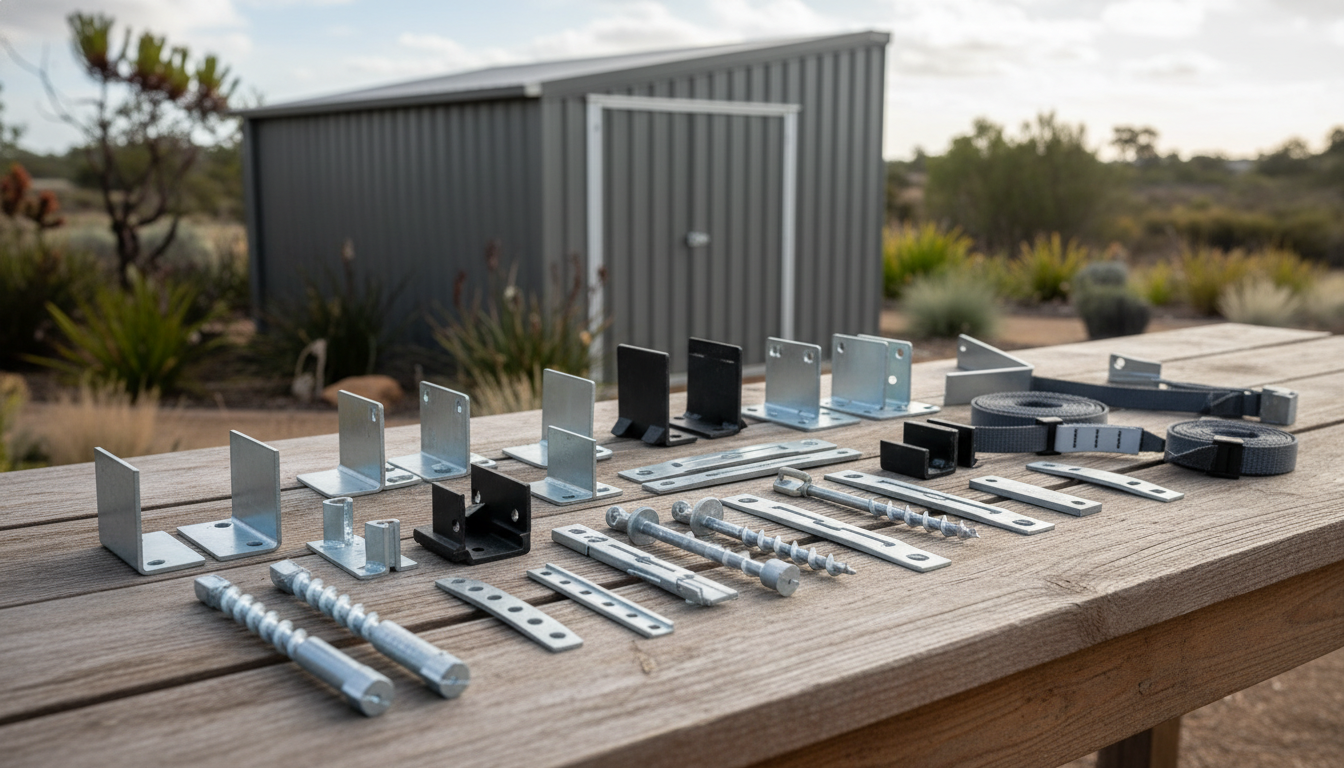
- Anchors: Fixed hardware, often bolts or screw-in anchors, that fasten shed bases to foundations (concrete slabs, timber floors).
- Tie-Downs: Straps or cables connected between the shed and ground anchors to prevent uplift caused by strong winds.
- Complementary Brackets: Corner brackets, joining plates, and reinforcement plates that support shed wall joints or shelving units.
Each accessory type plays a distinct role in maintaining shed integrity; combined properly, they deliver comprehensive resistance against Australian environmental challenges.
Importance of Using Locally Engineered Components in Australia
Australian engineered garden shed accessories account for unique factors such as cyclone winds, bushfire zones, and local soil types. Unlike generic global solutions, these components are tested to comply with Australian standards, such as AS1170.2 Wind Actions, and council building codes. Local manufacturing also ensures compatibility with popular shed materials like Colorbond steel.
Choosing these locally tailored products reduces risks related to corrosion, termite damage, and regulatory non-compliance, delivering peace of mind for homeowners and builders alike. Learn more about Colorbond vs Zincalume for Australian sheds in our pillar page.
Overview of Common Materials (including Colorbond steel) and Their Suitability
Colorbond steel is the predominant shed material in Australia due to its durability, corrosion resistance, and aesthetic finish. Accordingly, garden shed brackets designed to complement Colorbond sheds are typically made from galvanized steel or stainless steel with similar corrosion protection.
Material suitability hinges on factors such as:
- Corrosion resistance: Crucial for coastal environments prone to salt spray.
- Strength and tensile rating: To resist uplift and lateral forces typical in cyclone-prone regions.
- Termite resistance: Especially relevant for timber-based sheds and bracket interfaces.
Selecting the right combination of materials and coatings tailored to your site conditions is essential for shed longevity.
Understanding these fundamental concepts lays the groundwork for navigating Australian-specific challenges in hardware selection described next.
Australian Environmental Challenges and Regulatory Considerations
Impact of Extreme Weather: Cyclones, High Winds, and Rainfall Patterns
Australia experiences diverse and extreme weather conditions that directly impact shed stability. Coastal and northern regions are vulnerable to cyclones bringing winds exceeding 200 km/h, while southern parts face strong gusts and heavy rainfall that can erode foundations and accelerate corrosion.
These forces stress shed anchoring systems, requiring robust brackets and tie-downs engineered to maintain structural integrity without failure. Failure to use adequate fixings can lead to shed uplift, wall distortion, or collapse.
Australian Wind Rating Standards (e.g., AS1170.2 – Wind Actions)
The Australian Standard AS1170.2:2021 defines criteria for design wind speeds and classifications, which builders and DIYers must consider when selecting anchoring hardware. Shed brackets and anchors are assigned wind rating classes dictating their minimum strength and installation methods to safely resist predicted local wind forces.
Compliance with AS1170.2 is mandatory for council approvals in many regions, and accredited products will have certification indicating adherence. Understanding these standards is crucial for legal builds and insurance validity.
For material suitability and regulatory frameworks, see Colorbond vs Zincalume for Australian sheds for detailed guidance.
For areas prone to extreme winds, refer to the guide on Cyclone rated garden shed bracket and tie-down compliance.
Additional compliance requirements for similar-sized sheds are discussed in the 12 x 8 Colorbond shed guide.
For broader approvals and material standards, the Australian Garden Shed Buyer’s Guide is a useful resource.
Corrosion Risks in Coastal vs Inland Areas and Material Choices
Corrosion is a primary degradation mechanism for outdoor hardware:
- Coastal Areas: Salt from sea breezes accelerates galvanic corrosion, deteriorating unprotected metals rapidly.
- Inland Areas: Lower humidity and salt reduce corrosion rates but UV exposure and occasional flooding still pose risks.
Materials like highly galvanized steel or 316 marine-grade stainless steel provide superior protection near oceans, while standard galvanizing or powder coatings are sufficient inland. Choosing the correct material grade based on proximity to the coast extends your garden shed brackets lifespan dramatically.
Termite Exposure and Termite-Proofing Methods for Shed Brackets and Anchors
Termites present a constant threat in much of Australia, particularly for sheds with timber elements. While brackets themselves are metal, the points where they contact timber and soil can be termite entry points.
Termite-proofing methods include:
- Elevating sheds on concrete or metal piers to reduce soil contact.
- Using treated timber or termite-resistant materials at bracket interfaces.
- Employing stainless steel or corrosion-resistant coatings to prevent entry and degradation.
Integrated termite-proof design safeguards reduce long-term repair risks and align with council requirements.
Council Approval and Building Code Requirements for Shed Fixings
Most Australian councils mandate stringent building codes regulating shed anchoring to ensure public safety in adverse weather. These may require certified garden shed anchor kits, documented installation procedures, and evidence of compliance with standards like AS1170.2.
Obtaining council approval often involves providing technical specs from hardware manufacturers, demonstrating wind rating compliance, and sometimes submitting engineering certificates. Non-compliance can lead to costly rebuilds or fines.
Therefore, integrating regulatory knowledge into bracket selection and installation is non-negotiable for Australian sheds.
These environmental and regulatory factors strongly influence which shed brackets and accessories are appropriate — leading us into a detailed examination of the hardware types next.
Comprehensive Guide to Garden Shed Bracket Types and Anchor Kits
Storage Shed Brackets: Varieties and Their Specific Applications
Common varieties of storage shed brackets include:
- Corner Brackets: Reinforce 90-degree joints between walls or walls and roofs.
- Base Plates: Connect shed frames to concrete slab edges or timber floors.
- Joist Hangers: Support floor joists particularly in timber-framed shed bases.
- Tie Plates: Attach walls to floors, enhancing lateral resistance.
When selecting brackets, it’s important to consider your shed size, such as the popular 10×10 Colorbond garden shed, to ensure compatibility.
Larger storage buildings like the 10 x 20 Colorbond steel shed require specific heavy-duty anchoring solutions for optimal stability.
Accessory compatibility including shelving should be considered; see Garden Shelves for Australian Sheds for more.
Garden shed brackets and anchors must also accommodate the specific load and insulation requirements of home office sheds; see Home Office Garden Shed: The Australian Buyer’s Guide.
Garden Shed Anchor Kits: Components and How to Select the Right Kit
A typical garden shed anchor kit includes:
- Concrete anchors or screw anchors suitable for the foundation type.
- Heavy-duty tie-down straps with rated tension capacity.
- Fasteners such as bolts, washers, and nuts, often stainless or zinc-plated.
- Installation instructions custom-tailored for weather ratings.
Selecting the right kit depends on shed size, foundation type (concrete slab or timber floor), and local wind rating requirements. For example, cyclone-prone regions require kits with higher-rated tie-down straps and deeper embedment anchors.
Tie-Down Straps and Anchors: Options and Strength Ratings
Tie-down systems come in various forms:
- Strap Tie-Downs: Typically polyester webbing, tensioned between the shed frame and ground anchors.
- Wire Cable Systems: Stronger alternatives used for larger sheds or higher wind loads.
- Helical Screw Anchors: Screw into the soil or foundation for portable or timber floor installations.
Ratings are commonly expressed in kilonewtons (kN) indicating how much uplift force the tie-down can resist; ensure straps rated appropriately for your shed’s AS1170.2 assigned wind classification.
Compatibility with Different Shed Bases (Concrete Slab, Timber Floor)
Compatibility between brackets, anchors, and shed bases is critical:
- Concrete Slab: Use wedge or expansion anchors embedded into the slab, paired with metal brackets welded or bolted onto the shed base.
- Timber Floor: Use screw-in anchors or ground anchors combined with joist hangers and timber-specific brackets treated against corrosion and termites.
Proper anchoring on concrete floors is critical; see Concrete Floor for Garden Shed for detailed specifications and council approval considerations.
The choice of base and frame material affects bracket selection; compare timber frame and Colorbond options in Timber Frame Garden Shed vs Colorbond.
Having explored the available hardware options, next is a hands-on guide to installing these crucial components.
Step-by-Step Installation of Garden Shed Brackets and Anchor Systems
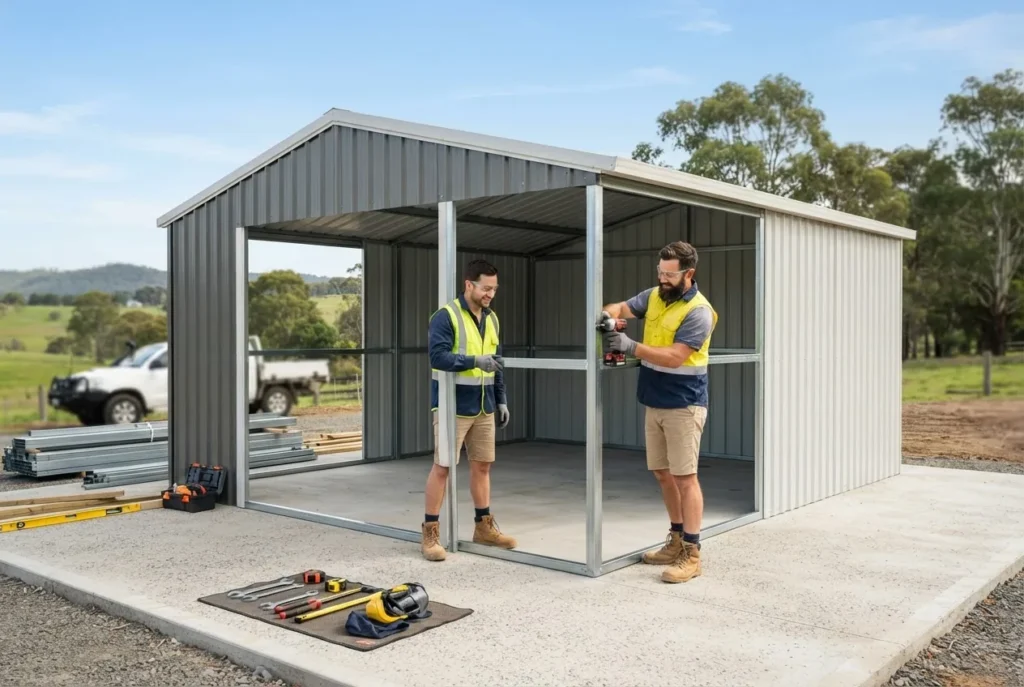
Tools Required for Installation: Fasteners, Drills, Measuring, and Anchoring Equipment
Installation requires:
- Power drill with masonry bits (for concrete slabs) or wood bits (for timber).
- Socket wrench set and screwdrivers for tightening bolts and fasteners.
- Measuring tape, chalk line or laser level for accuracy.
- Hammer and mallet for positioning anchors and brackets.
- Tensioning tools for properly tightening tie-down straps without over-torquing.
Using quality, corrosion-resistant fasteners (e.g., stainless steel bolts) ensures long-term durability of the installation.
Installing Brackets on Concrete vs Timber Foundations: Best Practices
Concrete Foundations:
- Mark anchor positions on the concrete slab per bracket layout plans.
- Drill holes with masonry bit to depth matching anchor length.
- Insert wedge anchors, leaving threaded ends exposed.
- Position metal brackets, attach bolts and tighten securely.
- Affix shed frame to brackets using appropriate self-drilling screws.
Timber Floors:
- Position joist hangers and base brackets aligning with timber joists.
- Use stainless steel screws to fix brackets to treated timber.
- Install screw or helical anchors in the ground adjacent to the shed.
- Attach tie-down straps between anchors and shed frame, ensuring tension is correct.
Effective shed installation strategies highlight the importance of correctly fitting tie-downs and anchors as outlined in the Professional garden shed installation and anchoring best practices.
Anchor systems should be compatible with shed modifications such as sliding door installations to maintain wind and security ratings; see Garden Shed Sliding Door: Australian Buyer’s Guide.
Proper Tie-Down Strap Setup for Wind Resistance
Tie-down straps must be installed under tension to counteract wind uplift:
- Attach straps evenly around the shed perimeter for balanced load distribution.
- Use turnbuckles or ratchets to apply correct tension; straps should be taut but not over-tightened.
- Anchor points must be inspected regularly to ensure no loosening occurs.
Improper tensioning can lead to strap failure or shed damage during high winds.
Ensuring Compliance with Australian Standards During Installation
Compliance tips include:
- Using only certified, AS1170.2 rated hardware.
- Documenting installation steps and materials used for council inspection.
- Engaging licensed installers or engineers when required by local laws.
- Consulting relevant building codes (e.g., local variations of BAL ratings in bushfire-prone areas).
Adhering to these guidelines prevents non-conformity penalties and guarantees shed safety during extreme weather events.
With installation complete, maintaining your shed’s hardware ensures it stays resilient for years.
Maintenance and Longevity of Garden Shed Brackets and Accessories in Australian Climates
Routine Inspection Checklist for Corrosion and Wear
Regular annual inspections should include:
- Checking brackets and anchors for visible rust or coating degradation.
- Examining tie-down straps for fraying, cracks, or UV damage.
- Verifying tension in straps and tightness of bolts.
- Inspecting timber around brackets for termite damage or rot.
Cleaning and Protective Treatments (anti-corrosion coatings, painting)
To prolong service life:
- Wash metal components with fresh water to remove salt deposits, especially in coastal areas.
- Apply anti-rust coatings or repaint with suitable exterior metal paints (adhering to standards like AS2312) every 2–3 years or as needed.
- Use rust converters on minor corrosion spots before repainting.
Repair and Replacement Guidelines
Damaged hardware should be addressed promptly:
- Replace brackets if bent, cracked, or exhibiting severe corrosion.
- Renew tie-down straps exhibiting significant wear or loss of tensile strength.
- Retighten or replace fasteners loosened by wind vibration.
Deferring repairs risks structural failure or reduced compliance with safety standards.
How to Extend Service Life in Harsh Conditions
Additional longevity tips include:
- Choosing stainless steel or marine-grade hardware for high corrosion areas.
- Using galvanic isolators to prevent electrochemical corrosion when brackets contact dissimilar metals.
- Installing physical barriers or damp-proof membranes between metal and soil contact points.
- Applying termite-resistant treatments on adjoining timber.
Brackets and accessories that support interior organizational elements need to be weatherproof and compliant with local standards; see Garden Shed Organization Ideas for Australian Homes for details.
This proactive maintenance approach maximizes the functional lifespan of your garden shed brackets and accessories in demanding Australian climates.
Selecting the Right Garden Shed Brackets and Accessories: Top Brands and Suppliers in Australia
Overview of Leading Australian Manufacturers Specialising in Shed Hardware
Top local brands known for reliable and compliant shed hardware include:
- Stratco: Offers a wide range of anchors and tie-down kits certified for cyclone regions.
- BlueScope Steel: Supplies Colorbond-compatible fixings boasting excellent corrosion resistance.
- Studco Building Systems: Specializes in steel framing brackets designed for Australian conditions.
- Ramset Australia: Provides heavy-duty concrete anchors and installation equipment.
For more on design and approval considerations, see our pillar page covering barn shed design options and council approvals.
For specialised storage needs such as outdoor bar sheds, suitable anchoring accessories must meet both steel compatibility and approval requirements; see Bar Storage Shed: Outdoor Bar Shed Ideas, Council Approvals, and Australian Steel Options.
Where to Buy: Retailers, Specialist Suppliers, and Online Options
Hardware can be sourced through:
- Major hardware chains (Bunnings, Mitre 10) offering standard bracket and tie-down kits.
- Specialist shed accessory suppliers providing customised solutions.
- Direct manufacturer ordering for certified products with extended warranties.
- Online Australian retailers with technical support to guide selection.
Product Certifications and Quality Marks (Compliance Indicators)
Look for the following:
- AS1170.2 certification or evidence of wind rating compliance.
- SAA or NATA approvals ensuring manufacturing quality.
- Manufacturer warranties typically ranging 5–15 years.
Certified products reduce risk at council approval stages and guarantee adherence to regulatory specs.
Price Ranges and Value Considerations
Prices vary by material and kit size. As a rough guide:
| Product Type | Price Range (AUD) | Notes |
|---|---|---|
| Basic corner bracket | $5 – $15 each | Galvanized steel; suitable for small sheds |
| Complete tie-down and anchor kit | $150 – $400 | Includes straps, anchors; price depends on wind rating and kit size |
| Heavy-duty stainless steel anchors | $50 – $150 each | Recommended for coastal or cyclone zones |
Investing in higher-quality, certified hardware generally saves money long-term by reducing maintenance and failure risks.
After choosing your hardware, it’s important to be equipped with solutions to common scenarios, explained in the FAQ section.
Frequently Asked Questions & Troubleshooting Common Issues
How to Identify If Your Shed Brackets Need Upgrading for Weather Resilience
Signs include:
- Visible rust, cracks, or bending of metal brackets.
- Loose or missing fasteners after storms.
- Straps that are faded, frayed, or lack tension.
- Local council updates mandating higher wind ratings affecting your area.
Consult an expert if you observe these; upgrading is often simpler than a full rebuild. See Garden Shed Buyer’s Guide Australia 2025 for detailed upgrade options.
What to Do When Facing Council Inspection Failures Regarding Anchors
Steps to address failures:
- Obtain a detailed inspection report citing non-compliance points.
- Engage a licensed installer or engineer for retrofit installation of compliant anchors.
- Use certified hardware meeting AS1170.2 and BAL ratings where applicable.
- Present evidence of corrective work and compliance for re-inspection.
Prompt action can avoid fines and permit cancellations.
Solutions for Corroded or Damaged Brackets in Coastal Areas
Address corrosion by:
- Replacing affected brackets with marine-grade stainless steel versions.
- Applying anti-corrosion coatings and regular washing to remove salt deposits.
- Installing physical barriers where metal contacts soil or treated timber.
Regular maintenance is vital to prevent re-occurrence.
Can Tie-Down Systems Be Retrofitted on Existing Garden Sheds?
Yes, retrofit is common when upgrading for wind compliance:
- Assess existing shed foundation and structure to select compatible anchoring points.
- Install ground anchors adjacent to shed perimeter without disturbing existing flooring.
- Use tensioning straps with adjustable ratchets for proper force application.
Consider professional consultation to ensure effectiveness; see Professional garden shed installation and anchoring best practices.
Best Practices for Termite Protection in Shed Anchoring
Include:
- Separating metal brackets from soil with concrete or treated timber piers.
- Using termite-resistant treatments on adjoining timber.
- Employing stainless steel hardware to prevent damage from termite nesting.
- Regular inspections for termite activity at critical junctions.
Combining hardware selection with integrated pest management assures structural resilience.
This thorough guide has built a complete understanding of essential garden shed brackets and accessories, revealing how to select, install, and maintain them for Australia’s tough conditions.
For compatibility of brackets and anchors with common sizes, consider popular options like the 10×10 Colorbond garden shed sizes and specifications.
When choosing materials, learn more about Colorbond vs Zincalume for Australian sheds, linked in our pillar page.
Planning a shed installation? See professional advice in Professional garden shed installation and anchoring best practices for deeper insights.
For high wind areas, visit our guide on Cyclone rated garden shed bracket and tie-down compliance.
Have more questions? Our various internal guides linked throughout this article will help you get it right the first time.
Invest in durable, compliant, and weatherproof garden shed brackets and accessories to protect your investment in Australian conditions. Secure your shed today and enjoy safety and durability for years to come.
Frequently Asked Questions
What are the key differences between galvanized steel and stainless steel for garden shed brackets?
Galvanized steel is coated to resist corrosion and suits most inland sheds, while stainless steel offers superior corrosion resistance, especially in coastal or cyclone-prone areas. Stainless steel typically costs more but provides enhanced durability against salt spray and harsh weather common in Australia.
How do garden shed anchor kits differ for concrete slab versus timber floor foundations?
Anchor kits for concrete slabs use expansion or wedge anchors drilled into the slab, whereas timber floor kits include screw-in or helical ground anchors combined with joist hangers. Selection depends on foundation type for secure attachment and optimal wind resistance.
Why is it important to use locally engineered garden shed accessories in Australia?
Local accessories are engineered to meet Australian standards, withstand regional weather such as cyclones, and comply with council regulations. They address unique problems like termite exposure and coastal corrosion, ensuring durable, compliant, and safer shed installations.
When should tie-down straps be replaced on a garden shed?
Replace tie-down straps if they show signs of fraying, cracking, loss of tension, or after severe storms. Regular inspections help identify wear early, preventing failure during high winds and maintaining shed stability.
Can different types of tie-down systems be combined to improve garden shed stability?
Yes, combining strap tie-downs with wire cables or helical anchors can enhance uplift resistance, especially for larger sheds or extreme wind zones. This hybrid approach provides balanced load distribution and increased structural security.
Which corrosion protection methods are best for garden shed brackets in coastal areas?
Marine-grade stainless steel brackets offer the best protection, supplemented by regular washing to remove salt deposits and applying anti-corrosion coatings or exterior metal paints every few years to prevent rusting.
What tools are essential for installing garden shed anchors on timber floors?
Essential tools include power drills with wood bits, stainless steel screws, socket wrenches, measuring tape, and tensioning ratchets for straps. Using corrosion-resistant fasteners ensures long-lasting, secure attachments.
How do Australian wind rating standards affect the choice of garden shed brackets and anchors?
Wind rating standards like AS1170.2 specify minimum strength and installation requirements for brackets and anchors based on local wind speeds. Compliant hardware ensures sheds resist uplift and lateral forces, maintaining safety and meeting council approvals.