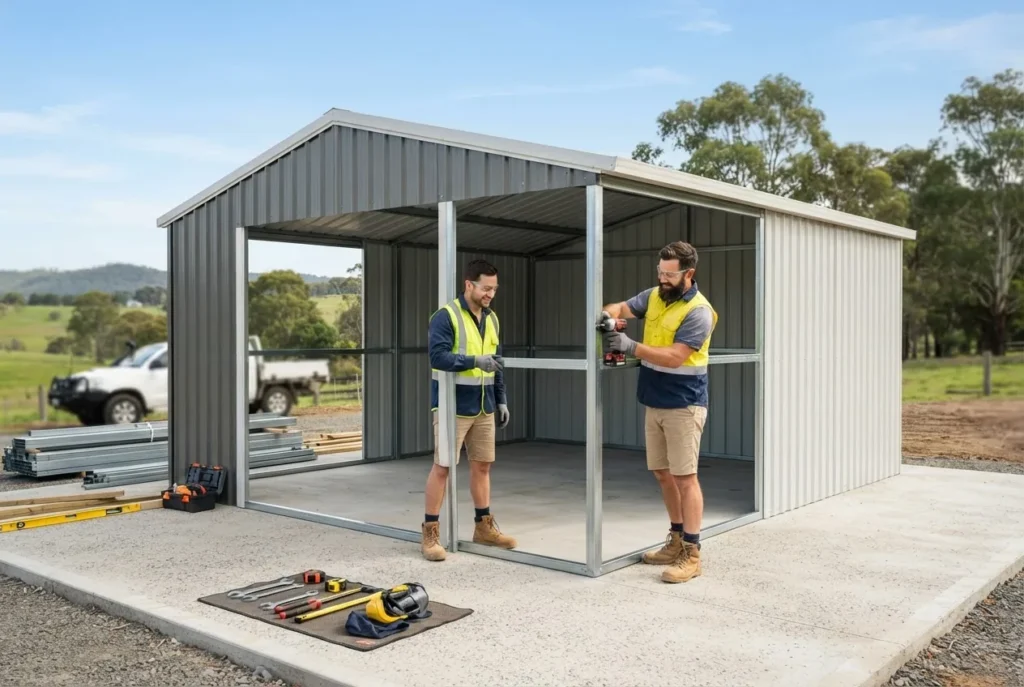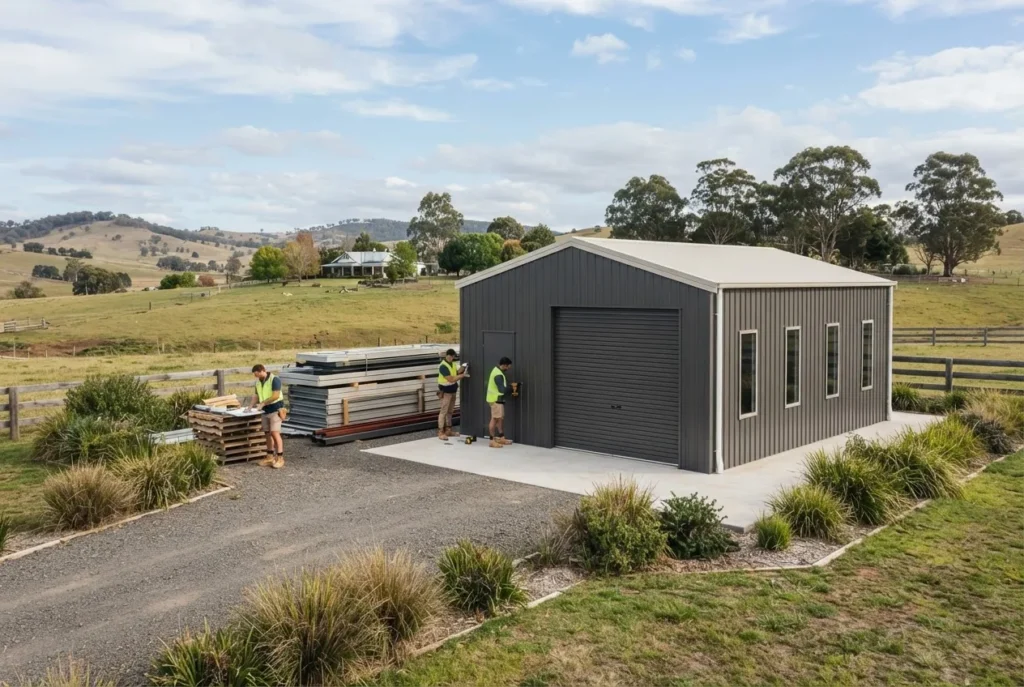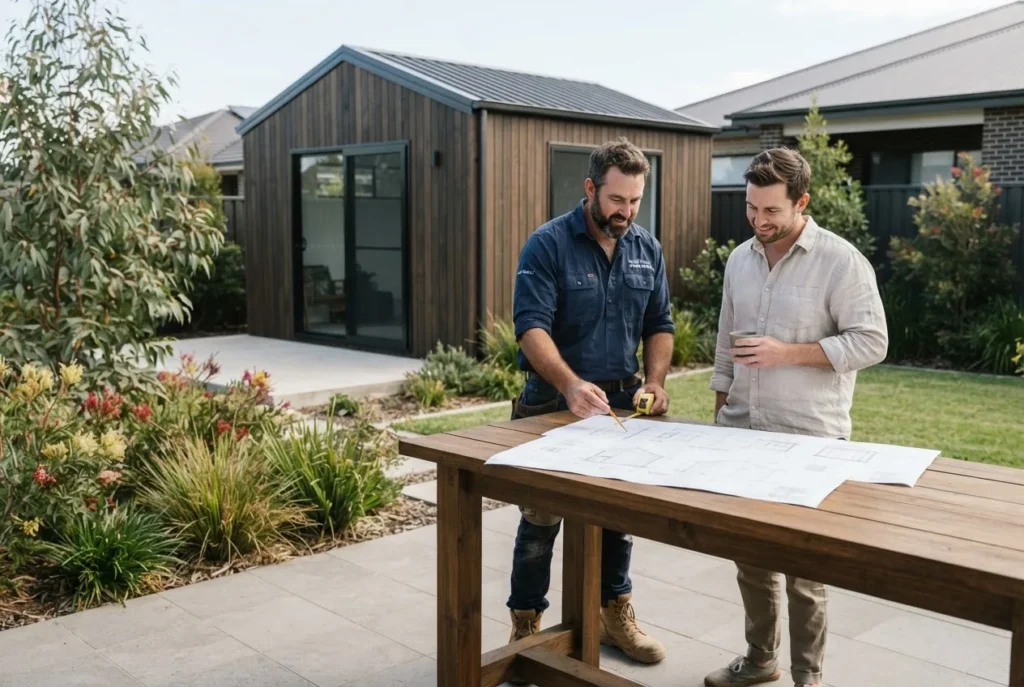

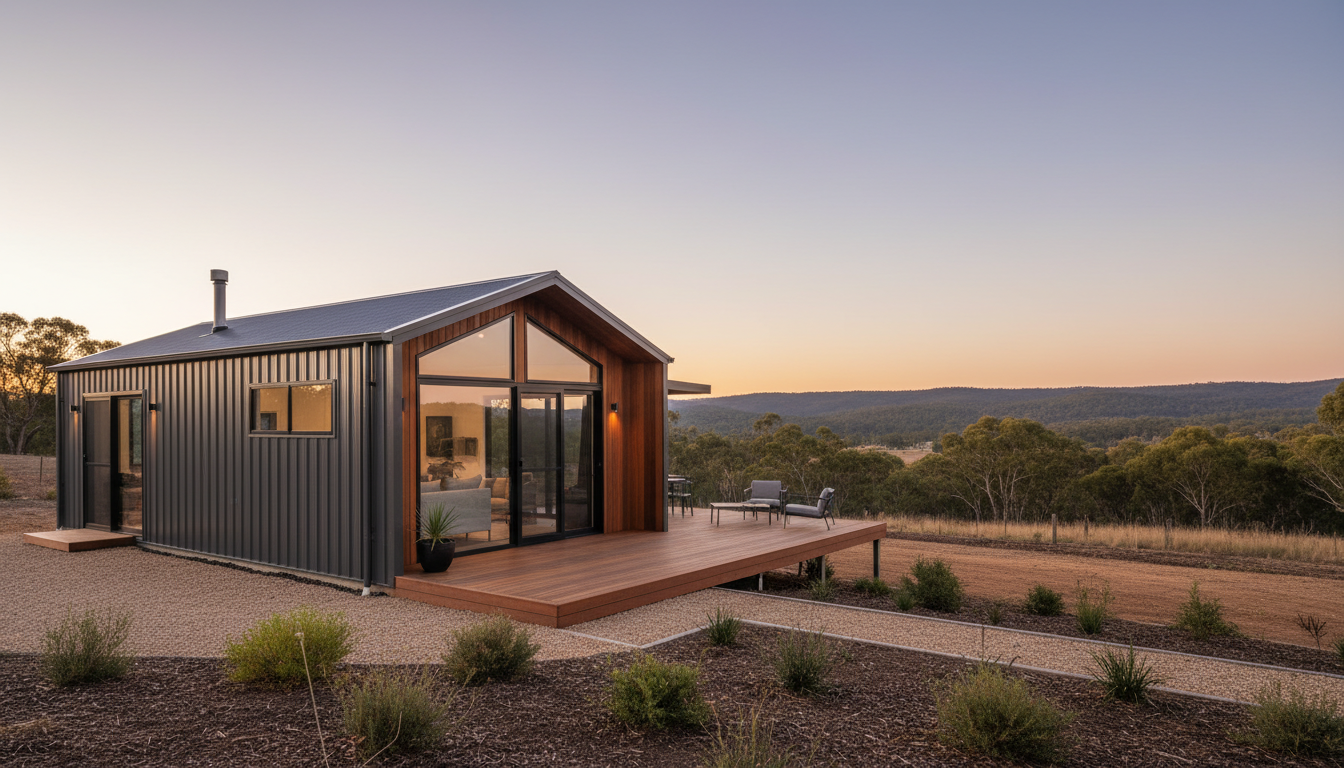

Introduction to Sheds Transformed into Homes in Australia
Transforming storage sheds into fully liveable homes is a growing response to housing affordability and changing lifestyle choices across Australia. As cities and regions wrestle with limited supply and rising costs, alternative housing solutions such as compact shed homes and liveable secondary dwellings provide pragmatic, affordable options for homeowners, investors and downsizers. Australian shed conversions range from backyard granny flats to fully serviced rural eco-homes; many are executed by owner-builders or specialist contractors and even as DIY shed homes where permitted by council rules.
This guide combines practical design advice, planning and regulatory pathways, material and structural specifics (with a focus on Colorbond steel), and sustainability measures relevant to 2025. It draws on ABCB/NCC guidance, state planning portals and industry technical notes to give actionable steps you can use when assessing feasibility, preparing council submissions and engaging engineers or builders.
The article covers: Design Principles and Interior Planning; Understanding Australian Building Codes and Regulations (including NCC guidance and R-value expectations); Navigating Local Council Approval Processes; The Role of Colorbond Steel; Planning and Zoning considerations; Structural Foundations and Utility Integration; Insulation, Ventilation and Climate Control; Sustainability and Energy Efficiency; Case Studies, Costs & Timelines; and a practical roadmap of next steps and resources.
Design Principles for Sheds Turned into Homes in 2025
Architectural Design Trends Specific to Shed-to-Home Conversions
Contemporary shed homes blend minimalist architecture with robust performance. Key trends for 2025 include open-plan living, skillion roofs for solar optimisation, integrated indoor/outdoor spaces, and industrial-chic interiors that celebrate exposed steel while adding tactile finishes. Designers increasingly treat shed envelopes as a platform for high-performance retrofit — improving thermal performance, acoustic control and moisture management without losing modular flexibility.
Practical stylistic moves: large north-facing glazing with adjustable shading, compact service cores (bath, laundry, kitchen) stacked to minimise plumbing runs, and lofted sleeping platforms to increase usable floor area. For compact solutions see our 2×2 and 3×3 shed guides for layout ideas and space-saving furniture strategies: 2×2 Colorbond garden sheds guide, 3×3 garden shed conversion case studies.
Interior Layout Planning and Space Optimization in Small Shed Homes
Space optimisation strategies for small shed homes include flexible zoning, built-in furniture, and stacking services (plumbing/electrical) to create continuous sightlines. Use multifunctional elements (murphy beds, fold-down tables), off-grid-ready kitchen modules, and vertical storage to maximise usability.
- Prioritise zones — living, sleeping, utilities — using furniture rather than fixed walls where possible.
- Loft or mezzanine sleeping to free floor area (ensure head-height and egress requirements meet NCC).
- Compact service core clustered to reduce installation and maintenance costs.
- High-performance operable windows for cross ventilation and night purging.
Incorporating Sustainable and Energy-Efficient Features
Design for low operational energy: orient for passive solar gains, specify high R-value insulation appropriate to your climate zone, design airtight yet ventilated envelopes and provision for rooftop PV and battery storage. Use durable low-VOC finishes and recycled-content insulation to meet indoor environmental quality targets and improve council application outcomes.
Modern Finishing and Interior Fit-Out Inspirations
Industrial-chic interiors often combine Colorbond cladding with warm floor finishes (timber-look LVT), plasterboard-lined internal walls for acoustic performance, and exposed steel beams left as painted features. Choose fixtures for low water use and efficient appliances; specify finishes that withstand condensation cycles, especially where metal elements contact internal linings.
Expert insight: Architectural consultant Emily Thorne notes, “Shed homes can deliver high quality living when design, thermal performance and council compliance are treated as integrated parts of the project.” (Contact via her published work and project case studies referenced in this guide.)
Understanding Australian Building Codes and Regulations for Shed-to-Home Conversions
Converting a shed to a legally habitable dwelling requires compliance with the National Construction Code (NCC) and applicable state/territory building and planning instruments. The ABCB (Australian Building Codes Board) publishes the NCC and guidance material — see the NCC home page: ABCB / NCC. Always check the latest NCC version and state adaptations before lodging applications.
Relevant National Construction Code (NCC) Provisions
The NCC Volume 2 (Housing Provisions) is the primary reference for single-dwelling and low-rise residential work. Key performance areas for shed conversions include structural adequacy, fire safety, energy efficiency, sanitary facilities and ventilation. Below is a practical clause table for common conversion issues — each entry includes where to verify text in the official NCC resources.
| NCC Clause / Topic | Practical Requirement | Application to Shed Conversions | Where to find |
|---|---|---|---|
| Volume 2 — Part 3 (Structural) | Performance requirements for structural adequacy, wind and imposed loads | Requires site-specific design, wind classification and foundation design to AS 1170, AS 2870. | ABCB NCC Volume 2 |
| Part 2.5 — Fire Safety & Smoke Alarms | Smoke alarm positions, egress requirements, fire separation where needed | Install mains-linked or photoelectric alarms per NCC and local requirements; ensure egress windows and exit paths meet dimensions. | ABCB fire safety guidance |
| Part 3.12 — Energy Efficiency | Minimum thermal insulation and verification methods (Deemed-to-Satisfy or Performance Solution) | Requires minimum R-values for roof, walls, and floors per climate zone; may require NatHERS or approved simulation for performance solutions. | NCC energy provisions |
| Part 3.8 — Sanitary Facilities & Ventilation | Minimum plumbing fixtures, natural or mechanical ventilation rates | Must supply compliant toilet, basin, bath/shower and mechanical exhaust where natural ventilation insufficient. | NCC plumbing and ventilation |
| Referenced Standards | AS 2870 (slabs & footings), AS 3600 (concrete), AS 3959 (bushfire construction) and AS/NZS 3000 (electrical) | Determines foundation design, seismic/wind tie-downs, bushfire construction levels (where applicable) and electrical safety compliance. | SAI Global / Standards |
Are there NCC changes in 2025 that affect small dwellings? Check ABCB release notes for the latest amendments. As of the 2022–2025 NCC cycle there were updates to energy efficiency pathways and performance requirements — if no new 2025 changes apply to small dwellings in your state, the ABCB will state this in their release notes (see ABCB updates).
Sample R-value Minimums by Climate Zone (Indicative)
R-value requirements are climate-zone dependent and may be specified as part of NCC or state variations. The table below gives indicative minimums commonly applied using Deemed-to-Satisfy provisions — always verify with ABCB/state guidance or your certifier.
| Climate Zone (Indicative) | Walls (min R) | Ceiling/Roof (min R) | Floor (min R) |
|---|---|---|---|
| Hot (Zone 1–2) — e.g. northern Qld | R1.5–R2.0 | R2.5–R3.0 | R1.0–R1.5 |
| Temperate (Zone 3–4) — e.g. coastal NSW, VIC | R2.5–R3.0 | R4.0–R5.0 | R1.5–R2.0 |
| Cold (Zone 5–8) — alpine/Tasmania | R3.5–R4.0 | R5.0–R6.0 | R2.0–R3.0 |
Note: These are indicative. Councils or certifiers may require higher R-values or a NatHERS assessment for performance solutions. See ABCB energy provisions and state energy efficiency pages for specifics.
State and Territory Specific Building Requirements and Links
State planning and building portals publish local variations, pathways and fee schedules. Quick links:
Navigating Local Council Approval Processes for Residential Shed Conversions
Early engagement is critical. Below is a standard workflow and required-document checklist you can use when preparing an application. This subsection is presented under Building Codes because approvals hinge directly on compliance with NCC and local planning instruments.
Pre-application & Checklist (Step-by-step)
- Pre-lodgement meeting with council or private certifier to confirm permit pathway (DA/CDC/Complying Development).
- Prepare architectural drawings: site plan, floor plans, elevations and sections showing rooflines, drainage, setbacks and adjoining context.
- Engineering structural report: footing, slab, frame, tie-downs, wind/seismic rating and connection details.
- Energy efficiency report: Deemed-to-Satisfy R-values or NatHERS/approved simulation for performance solutions.
- Plumbing & drainage plan, stormwater management and onsite wastewater design (if not connected to reticulated sewer).
- Heritage impact statement (if in a heritage overlay), bushfire assessment (AS 3959) or flood risk report if site affected.
- Service provider approvals (electricity, gas, water) and requirement documentation for metering and electrical switchboards.
- Owner-builder declarations or builder’s licence details and insurance certificates.
Required documents checklist (for submission):
- Site plan and locality map
- Floor plans & elevations
- Structural engineer’s drawings & certificate
- Energy efficiency compliance report
- Plumbing & drainage designs
- Stormwater & erosion control plan
- Heritage or environmental statements (where applicable)
- Proof of ownership and fee payment
Exact processes vary by council. Use the following internal resource to review more detailed council pathways: barn sheds council approvals.
The Role of Colorbond Steel in Shed-to-Home Transformations
Advantages and Technical Properties of Colorbond Steel
Colorbond is a pre-painted steel product developed for Australian conditions. Technical highlights (source: Bluescope Colorbond technical literature): typical substrate thickness ranges 0.42 mm to 0.75 mm (base metal thickness depending on profile and application). Colorbond’s multilayer coating system improves corrosion resistance and durability; service life expectancy commonly quoted as 25+ years subject to environment and maintenance. Colorbond panels are lightweight, enabling smaller foundations compared to masonry.
Thermal and reflective behaviour: Colorbond coatings have varying Solar Reflectance Index (SRI) and emissivity values — lighter colours (e.g., Surfmist) have higher reflectance reducing heat gain, while darker colours increase solar absorption. Because steel conducts heat, a complete wall/roof assembly must include appropriate insulation and vapour control to avoid thermal bridging and condensation.
Authoritative technical reference: Bluescope / Colorbond technical.
Installation Best Practices for Residential Use
- Substrate & linings — use battens or purlins with a continuous thermal break where possible; specify plasterboard or rigid insulation behind Colorbond where internal lining is required.
- Condensation control — include a vapour barrier on the warm side, cavity ventilation and an appropriate breathable membrane to NSW/AS guidance.
- Fasteners — use corrosion-resistant, colour-matched fasteners; typical screw spacing is 300–450 mm along sheets depending on span and profile (follow manufacturer guidance).
- Sealing & flashings — ensure sealed laps and water-tight penetrations; provide ventilated ridge/eave details per roofing tables.
- Colour selection — choose lighter colours in hot climates to reduce thermal loads; darker colours may be suitable in cooler climates for passive solar gains.
Color Options, Finish Durability and Climate Suitability
Colorbond offers a palette with finishes from matt to metallic. Bluescope provides expected performance and maintenance schedules — coastal or industrial environments may require additional corrosion allowances and maintenance intervals.
Colorbond vs Timber vs Brick — Indicative Comparison
| Material | Pros | Cons | Indicative Cost (AUD/m²) |
|---|---|---|---|
| Colorbond Steel | Lightweight, durable, fast to install, recyclable | Requires thermal break/insulation, potential condensation risk | $120–$250/m² (cladding & linings, indicative) |
| Timber | Warm aesthetic, natural insulation | Maintenance, termite/rot risk, fire vulnerability | $150–$300/m² (cladding & linings) |
| Brick/Block | Thermal mass, acoustic, durable | Heavy — higher foundation costs, slower build | $250–$500/m² |
Costs are indicative and depend on design complexity, transport, and site access. See supplier technical pages for exact product performance: Bluescope.
Planning, Zoning and Legal Considerations for Shed Homes
Overview of Zoning Categories Permitting Residential Use
Zoning instruments (LEPs, planning schemes) determine whether a shed can be used as a dwelling. Look for permissibility under terms like “secondary dwelling”, “accessory dwelling unit (ADU)”, “rural residential” or specific exemptions in local development controls. If in doubt, request written advice from your council via a pre-lodge meeting.
State-by-State Variations and Quick Links
Local controls vary — for example NSW may allow secondary dwellings under certain floor area caps, while Victoria often requires a full permit process. Consult each portal earlier in this article and engage a private certifier for precise advice.
Impact on Property Value and Legal Occupancy
A legally approved secondary dwelling generally increases property value and marketability. AHURI (2023) and other market analyses indicate secondary dwellings can improve yield and rental returns; however, unapproved conversions can create legal and insurance risks. Always obtain final Occupation Certificate or equivalent to validate legal occupancy.
Foundation and Structural Considerations for Converting Sheds into Livable Homes
Assessing Existing Shed Structure Suitability
Begin with a structural survey: check footings, slab condition, frame corrosion, roof bracing and load paths. Many kit sheds are designed as outbuildings with light footings; these typically require upgrading for residential loads and service penetrations.
Foundation Upgrade Options, Suitability and Indicative Costs
- Concrete slab-on-ground with reinforced mesh — suitable for stable sites; indicative cost $120–$200/m² (including reinforcement & slab finishing).
- Screw piles — ideal for sites with poor access or weak soils; indicative cost $150–$300 per pile installed (site-dependent).
- Pier footings with suspended floor — used for sloping sites; indicative cost $150–$350/m² depending on finishes.
Selection depends on soil report results (suitable classification under AS 2870). A geotechnical report should be commissioned where subsidence or expansive clays are suspected.
Engineering Certificates & Common Structural Solutions
An engineering certificate for approval typically includes: scope of works, design loads, reference standards (AS 1170, AS 2870, AS 3600), footing details, connection details and inspection schedule. Common engineered solutions include tie-down steel straps for uplift, reinforced edge beams to transfer loads and corbelled supports for heavy roof loads where PV arrays are installed.
Link to standards: AS 2870 and AS 3600.
Insulation, Ventilation and Climate Control Solutions
Best Insulation Materials for Steel Sheds
Common options and pros/cons (indicative $/m²):
- Reflective foil + bulk batts — Pros: low cost, easy install; Cons: needs cavity and good sealing; Indicative cost $15–$35/m².
- Spray polyurethane foam — Pros: excellent airtightness, high R per thickness; Cons: higher cost, requires specialist installer; Indicative cost $60–$110/m².
- Rigid foam board (XPS/PIR) — Pros: good moisture resistance, stable R-values; Cons: joint sealing required; Indicative cost $40–$80/m².
R-value Table by Climate Zone (Practical Guidance)
| Zone | Walls (Min R) | Ceiling (Min R) |
|---|---|---|
| Zone 1–2 (Hot) | R1.5–R2 | R2.5–R3 |
| Zone 3–4 (Temperate) | R2.5–R3 | R4–R5 |
| Zone 5–8 (Cold) | R3.5–R4 | R5–R6 |
Ventilation Methods and Inspector Checkpoints
Recommended ventilation and compliance checkpoints:
- Whole-home ventilation: minimum continuous trickle vents or mechanical ventilation where natural ventilation insufficient — inspectors check for operable openings and fan exhaust capacities.
- Bathroom/kitchen exhaust: minimum capacities per NCC and AS 1668; ensure duct termination away from openings.
- Roof and ridge ventilation: provide eave-to-ridge airflow to reduce condensation — verify ventilator free area vs roof area.
Sustainability and Energy Efficiency in Shed Conversions
Sustainable Materials and Passive Measures
Combine Colorbond roofing with recycled-content insulation, low-VOC paints and sustainably certified timber to reduce lifecycle impacts. Passive measures such as shading, thermal mass (e.g., internal concrete slab), and cross-ventilation cut energy demand.
Solar PV, Battery and Hot Water Guidance
Sample PV sizing guidance (indicative, based on Clean Energy Council guidance):
- Single occupant / small shed-home: 3 kW PV + ~5 kWh battery (enables basic loads, evening use);
- Two-person home or higher appliance use: 5–6 kW PV + 10–13 kWh battery recommended.
See Clean Energy Council for installer lists and system design guidance: Clean Energy Council.
Rainwater Harvesting & Wastewater Options
Rainwater tank sizing rule-of-thumb: allocate 100–200 L/person/day and size tanks based on roof catchment and desired autonomy (e.g., 5,000–10,000 L for small household that wants significant off-mains supply). Greywater reuse and composting toilets can reduce potable demand; local council rules vary — include these systems in planning documentation.
Case Study Summaries (Sustainability Outcomes)
Case study summaries (referenced later in Case Studies section) show average heating/cooling bills reduced by 40–60% with improved insulation, smart shading and a modest PV+battery system. See AHURI and ASBEC reports for policy context: AHURI, ASBEC.
Real-Life Examples and Case Studies of Sheds Transformed into Homes in Australia
Case Study A — Rural 36 m² Eco-Home (Victoria)
Project: 36 m² Colorbond shell converted into a 1-bedroom eco-home. Materials: 0.48 mm Colorbond roofing, insulated plasterboard, reinforced concrete slab. Approvals: DA + building permit with Bushfire Attack Level (BAL) assessment. Timeline & costs:
- Design & pre-application: 4 weeks
- DA submission & approval: 10 weeks
- Construction: 18 weeks (foundations, envelope, finishes)
- Costs (approx): design & approvals $8,500; foundation & slab $14,000; shell & cladding $22,000; services (electrical, plumbing, PV) $18,000; fit-out $12,500 — total ~$75,000–$90,000.
Lessons: invest in upgraded slab and insulation; early bushfire assessment avoided redesign delays.
Case Study B — Urban Prefab Shed Home (Brisbane)
Project: 48 m² prefabricated Colorbond kit with modular fit-out. Approvals: complying development certificate (CDC) route used; structural certificate from engineer. Timeline & costs:
- Design & procurement: 3 weeks
- CDC + service approvals: 8–12 weeks
- Assembly & fit-out: 10–14 weeks
- Total cost: ~$110,000–$135,000 (includes higher transport/urban access costs).
Lessons: prefabrication reduces on-site time; ensure transport constraints considered early.
Case Study C — NSW Backyard Secondary Dwelling (Hypothetical Detailed Example)
Project brief: 30 m² secondary dwelling using an existing 10x3m Colorbond shed shell.
Line-item costs (indicative):
- Preliminaries & permits: $6,000 (including engineering & energy report)
- Foundation upgrade (screw piles + suspended floor): $12,500
- Envelope upgrade (insulation, lining, windows): $16,000
- Electrical & plumbing (connection to services): $10,000
- Kitchen & bathroom fit-out: $14,000
- External works & landscaping: $5,000
- Contingency (10%): $6,350
- Total estimate: $69,850 (approx)
Timeline: 12–24 weeks from permit to occupation depending on council turnarounds. Lessons: detailed scope and early service provider quotes reduce contingency.
Costs & Timelines — Typical Ranges and What to Expect
Typical conversion cost ranges (indicative):
- Low budget (owner-builder, small retrofit, DIY heavy): $50,000–$85,000 for 20–40 m²
- Mid-range (professional builder, full services): $85,000–$150,000 for 30–60 m²
- High-spec (custom finishes, high sustainability targets): $150,000+ for similar sizes
Typical timelines:
- Pre-application & design: 2–8 weeks
- Council/approval period: 6–20 weeks (varies by council and whether DA/CDC required)
- Construction: 8–26 weeks depending on complexity
Next Steps, Resources and Internal Links
If you are ready to proceed, start with a pre-application meeting with your local council and obtain a structural engineer’s feasibility report. Use these internal guides and exact anchors for detailed assistance:
- sheds transformed into homes — this page (project checklist and overview)
- Australian building codes for sheds — pillar resource on approvals and materials
- Council approval processes for shed homes
- Shed foundation and structural upgrades
- Colorbond steel benefits
Visual Aids & Downloads


Author & Disclaimer
About the author: James Carter is a Senior Construction Auditor with 12 years’ experience in residential compliance, building approvals and sustainable retrofit projects.
Disclaimer: This guide is for informational purposes only. Building approvals and requirements vary — consult your local council, a registered building surveyor or structural engineer before construction.
If you would like a project assessment or tailored checklist, consult a private certifier or contact a local licensed builder. Good preparation and professional advice will increase your chance of a smooth approval and a comfortable, durable shed home.
Frequently Asked Questions
What defines a shed turned into a house in Australia?
A shed turned into a house is a former storage/outbuilding repurposed and upgraded to a legally habitable dwelling with compliant foundations, services (electrical, plumbing), insulation, ventilation and final occupancy certification under local planning and the NCC.
What are the key design trends for sheds converted into homes in 2025?
Key trends: minimalist open-plan design, skillion roofs for solar, industrial-chic finishes, passive-solar orientation, and integrated renewable energy systems—paired with high-performance insulation and smart ventilation for comfort and compliance.
Which Australian building codes apply to shed-to-home conversions?
The NCC Volume 2 (Housing Provisions) applies alongside referenced standards (AS 2870, AS 3600, AS/NZS 3000). State building acts and local planning instruments also apply — check ABCB and your state planning portal for specifics.
How do I obtain council approval to convert a shed into a legal residence?
Start with a pre-application meeting, submit architectural drawings, structural engineer’s report, energy compliance and plumbing plans. Lodge a DA/CDC depending on council rules and address any conditions until an approval/building permit and Occupation Certificate are issued.
What makes Colorbond steel ideal for shed home construction?
Colorbond provides lightweight, durable, low-maintenance cladding with strong corrosion resistance and a broad colour palette. When combined with appropriate insulation and condensation control it performs well across Australian climates.
What insulation materials best suit steel shed homes in Australia?
Common choices: reflective foil + bulk batt combination (cost-effective), rigid foam boards (moisture resistant) and spray foam (high performance). Selection depends on climate zone, condensation risk and budget; check R-value requirements with your certifier.
How does converting a shed into a home affect property value?
Legally approved secondary dwellings commonly add value and rental income potential; studies suggest uplift can be 10–20% depending on location and quality. Unapproved conversions risk devaluation, insurance issues and enforcement action.
Can any storage shed be legally converted into a home in Australia?
Not necessarily. Conversion feasibility depends on zoning, structural condition, services access and council requirements. Conduct a feasibility assessment and consult council and a structural engineer before proceeding.