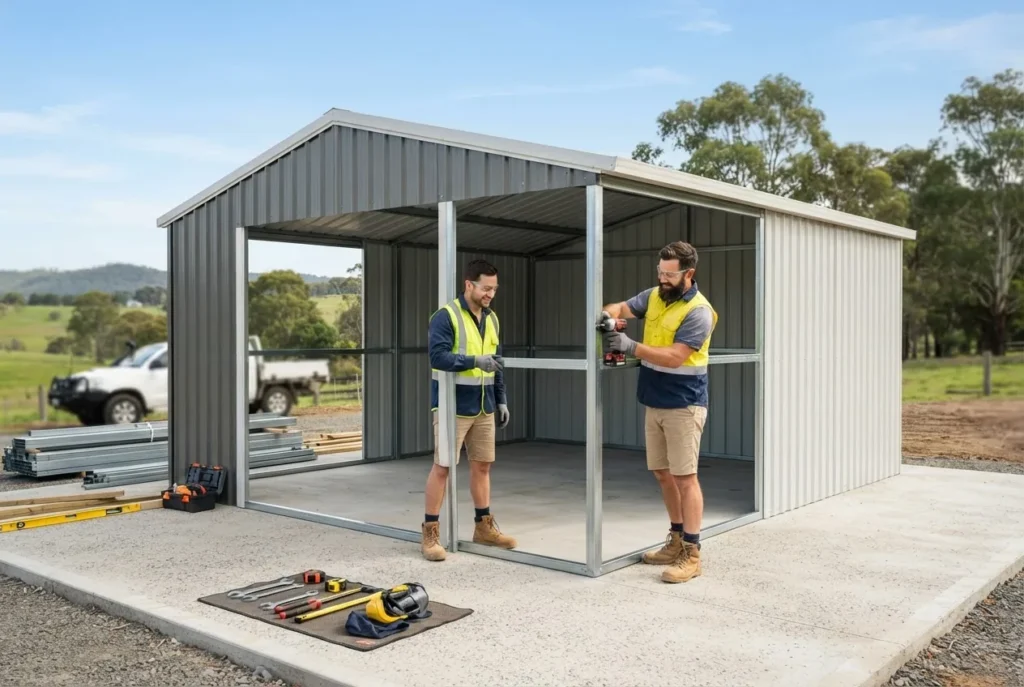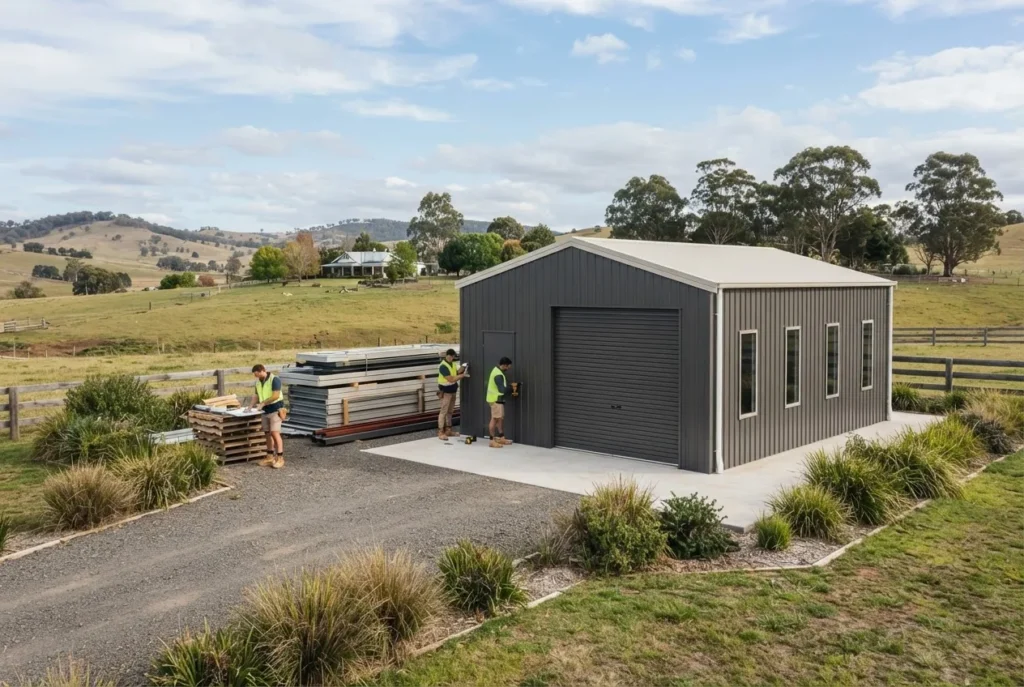

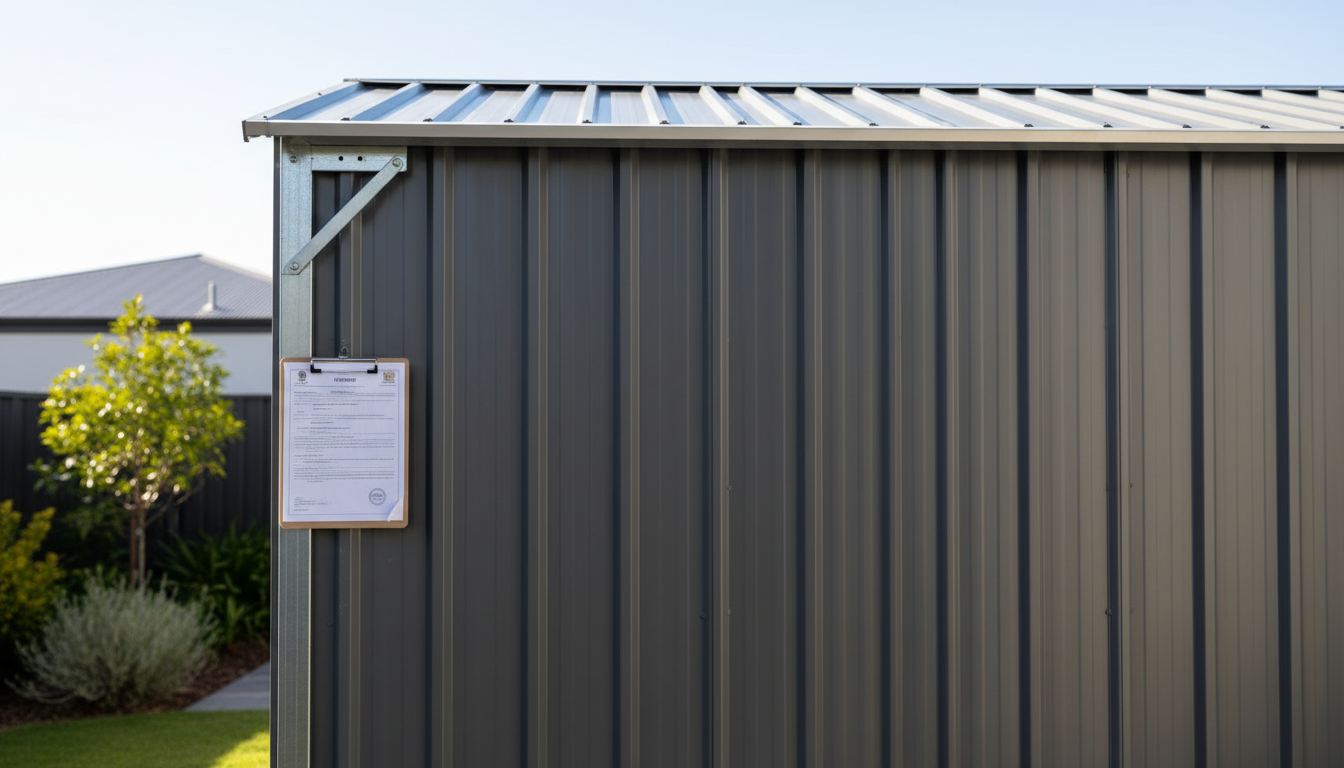

Shed Wall Panels: Colorbond Cladding, Wind Ratings & Council Approvals (Australia, 2025) are vital for ensuring your shed withstands the harsh Australian climate while meeting all legal requirements. This guide dives deep into technical and regulatory aspects of using Colorbond steel for shed wall panels, focusing on wind resistance and council approvals current for 2025. Whether you’re constructing a new sheet shed or upgrading garden shed cladding, understanding these factors protects your investment and guarantees compliance.
Quick expert perspectives:
“Verify local wind-zone maps and have wind-load calculations stamped by a registered engineer before you order panels. It’s the single most effective way to avoid council variation requests.” — Jane Smith, MIEAust, CPEng — Principal Structural Engineer, Brisbane.
“On coastal projects we specify Class 4 corrosion fasteners and stricter spacing. Installation quality is as important as material selection.” — Tom Nguyen — Senior Builder, Coastal Sheds Pty Ltd, Cairns.
Introduction to Shed Wall Panels and Colorbond Cladding in Australia
Definition and Importance of Shed Wall Panels in Modular/Sheet Shed Construction
Shed wall panels are the primary vertical elements in sheet shed construction, forming the external barrier against weather and structural loads. Unlike roofing, wall panels must resist lateral forces, especially wind loads, while providing a durable and weatherproof envelope. In modular or sheet sheds, these panels are often pre-engineered steel sheets designed for ease of assembly and reliability. Choosing the right panels influences the longevity and performance of your shed, particularly in wind-prone Australian regions.
Overview of Colorbond Steel Technology: Composition and Benefits for Sheds
Colorbond cladding by BlueScope Steel is a pre-painted steel product engineered for Australian environments. Typical construction is high-tensile steel substrate with a Zincalume® (zinc–aluminium) base coat and a protective paint system providing corrosion resistance, UV stability, and weatherproofing. BlueScope publish technical datasheets and solar reflectance values useful for compliance and thermal design (see BlueScope technical datasheets: https://www.bluescope.com.au/).
For awning designs and integration with Colorbond shed walls see our awning shed guide.
Why Choosing the Right Wall Panels Matter for Wind Resistance and Structural Integrity
Not all cladding performs equally under wind pressure. Wall panels must accommodate lateral and uplift forces defined by AS/NZS 1170.2 (wind actions) and be fastened/installed to resist local design pressures. Improper selection or installation leads to failure, warranty voidance, and council non-compliance. Matching Colorbond panel grade and fixing schedule to the site wind rating is essential for a durable, compliant shed.
Understanding Australian Wind Ratings and Their Impact on Shed Wall Panels
An Introduction to Australian Wind Classifications and AS/NZS 1170.2 Standards
The primary reference for wind-related design in Australia is AS/NZS 1170.2 — Engineering design actions: Wind actions. This standard provides wind maps, basic wind speeds, directional and seasonal factors, terrain/height modifiers and pressure coefficients for cladding (see Standards Australia: https://www.standards.org.au/). Designers use these inputs to calculate design pressures for walls and roofs at the ultimate limit state (ULS).
Key terms (defined):
- Basic wind speed (Vr or Vb): map value for location used in calculations.
- Gust factor / importance factors: account for dynamic effects and building importance.
- Terrain category: describes surroundings (open coast, suburban) and modifies pressures.
- Pressure coefficient (Cp): dimensionless number describing how wind pressure acts on a surface (positive or negative).
Where the guide refers to clause guidance, consult the current AS/NZS 1170.2 edition for clause-level rules (e.g., wind map tables, directional factors and Cp tables).
Classification of Cyclone, Severe, and Medium Wind Zones Across Australia
Practically, shed projects fall into these wind zones:
- Cyclone zones: Northern coastal belts (e.g., parts of QLD, NT, and WA) with very high basic wind speeds and specialised design rules.
- Severe wind zones: Coastal or elevated areas outside cyclone regions with high gusts.
- Medium wind zones: Majority of inland and urban areas with moderate wind forces.
Council or certifier requirements and insurance often specify minimum panel thickness, fastener grade, and foundation restraint according to the zone.
How Wind Ratings Influence Structural Engineering Requirements for Shed Wall Panels
Engineers use AS/NZS 1170.2 outputs to set allowable pressures and then select sheet thickness, section sizes and fixing schedules to resist those loads. For cladding this process typically references AS 1562.1 (design and installation of sheet roof and wall cladding) and AS 4040 series (wind pressure testing). Suppliers such as BlueScope provide performance data for COLORBOND® products that help match panels to required loads.
Worked example: wind load calculation (worked example)
Below is an illustrative worked example. This is for guidance only — a registered engineer must produce project-specific calculations for permit use.
Project: 6.0 m wide × 4.0 m high single-storey garden shed in Melbourne (medium wind zone). Assume terrain category 2 (suburban), roof height 4 m.
Step 1 — Adopt basic wind speed: Vr = 39 m/s (example based on AS/NZS 1170.2 wind maps; verify actual site value from the standard or local authority).
Step 2 — Compute reference dynamic pressure q0 = 0.5 * rho * Vr^2.
– Use rho (air density) ≈ 1.25 kg/m3.
– q0 = 0.5 * 1.25 * 39^2 = 0.625 * 1521 = 950.6 Pa ≈ 0.951 kPa.
Step 3 — Apply gust/importance/terrain factors to get qz (simplified): use combined factor ~1.5 (G * Cp * other modifiers are handled per AS/NZS 1170.2); qz ≈ 0.951 × 1.5 = 1.43 kPa (ultimate design pressure).
Step 4 — Design lateral pressure on wall: pressure × wall area.
– Wall area = 6.0 m × 4.0 m = 24 m2.
– Total lateral force ≈ 1.43 kPa × 24 m2 = 34.32 kN.
Step 5 — Convert to per-metre load for fastener sizing:
– Force per metre width = 1.43 kPa × 4.0 m = 5.72 kN/m.
– If a chosen self-drilling screw has conservative shear capacity ~1.0 kN (check AS 3566 tests and manufacturer capacity), you would require ~5.7 screws per metre of panel height = spacing ≈ 175 mm between screws along each fastening line (illustrative).