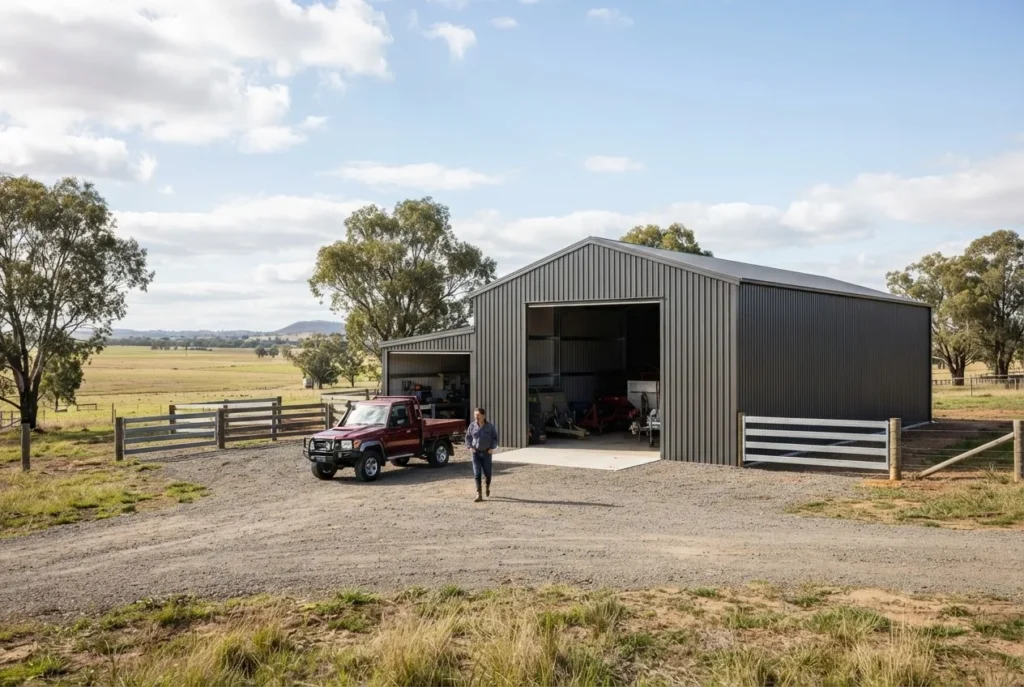

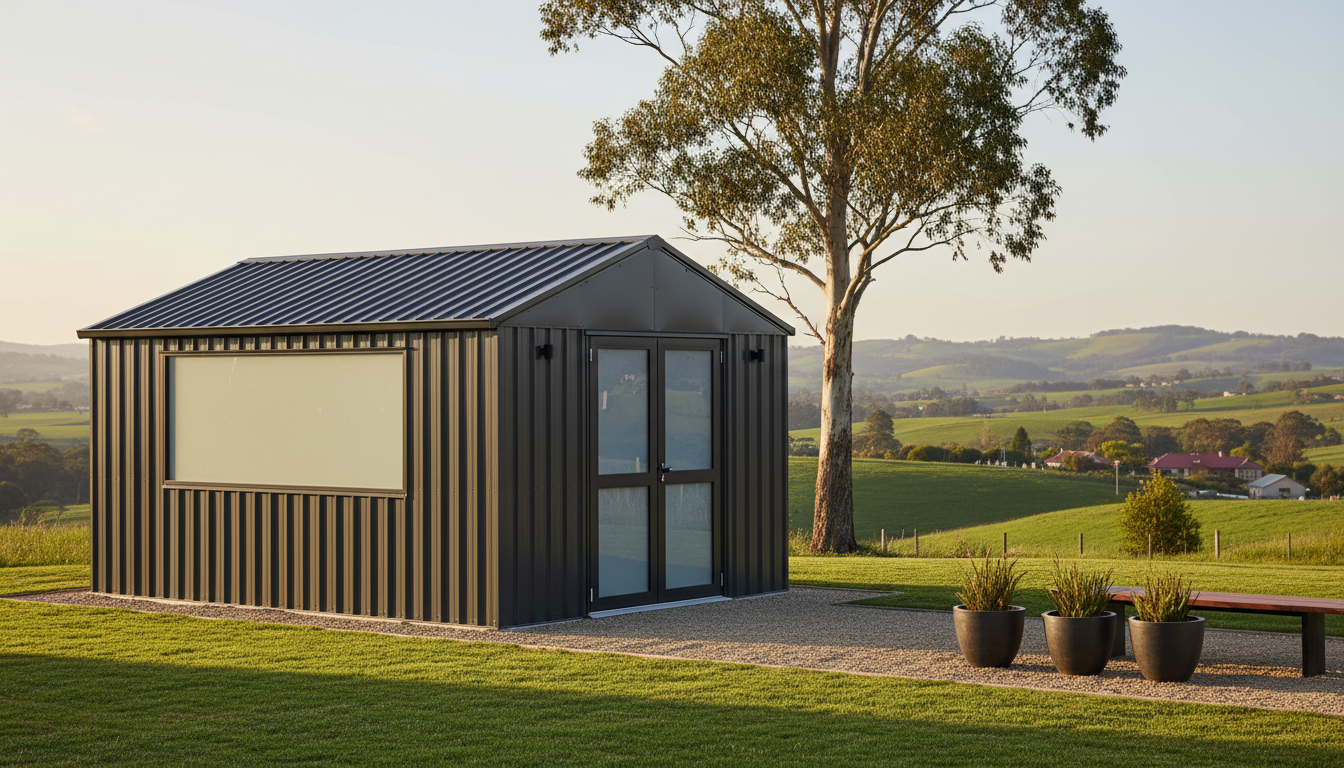

Introduction to Premium Colorbond Sheds in Victoria 2025
This Victorian Shed Buyers Guide 2025 provides targeted, up‑to‑date advice for homeowners and property managers researching premium Colorbond steel sheds in Victoria. It covers material science (Thermatech®), climate-driven specs, permits and approvals, supplier selection, installation, maintenance and realistic budgets so you can choose with confidence in 2025.
Colorbond steel (manufactured by BlueScope) pairs a zinc‑aluminium‑magnesium corrosion coating with a patented Thermatech® paint system. Thermatech® is a high‑performance paint that reflects solar heat (reducing internal temperature and UV damage) — a key benefit across Victoria’s inland heat and coastal humidity. In plain terms: Thermatech® keeps sheds cooler, reduces paint fade and helps preserve the steel substrate.
Market and regulatory notes for 2025: supply chain stability for Colorbond panels has improved since 2023, but expect longer lead times for bespoke orders. The Victorian Building Authority (VBA) continues to emphasise compliance with Australian Standards for outbuildings; always confirm the current Building Act 1993 and local planning overlays before ordering.
In short, buying a premium Colorbond shed in Victoria means selecting the right Colorbond grade, corrosion protection, wind/snow ratings and supplier services tailored to your council and site conditions.
Understanding Victorian Climate Zones and Their Impact on Shed Specifications
Climate zone summary and authoritative sources
Victoria’s climate ranges from temperate coastal (Melbourne, Geelong), to alpine (Victorian Alps) and inland semi‑arid (Mildura, Swan Hill). The Bureau of Meteorology (BOM) provides maps and regional data — consult BOM Victoria climate when selecting shed specifications.
Translating climate to design: wind, snow and corrosion
Design actions are set out in AS/NZS 1170 (Structural design actions). Use the local wind classification and terrain category from AS/NZS 1170.2 to determine purlin spacing, bracing and connection details. Alpine areas must consider AS/NZS 1170.3 for snow loads. Coastal sites need enhanced corrosion protection (higher zinc‑aluminium‑magnesium coating mass and stainless fixings).
Recommended Colorbond grades, paint and steel gauges by place
Below is a compact mapping to guide preliminary choices. Final specification must come from engineer-issued drawings for your site classification.
- Melbourne / Geelong (temperate coastal): Standard Colorbond with Thermatech®, minimum 0.42mm base metal thickness, stainless or hot‑dip coated fixings; consider 10‑year paint warranty. See our section on Victorian shed buyers guide for more.
- Gippsland / Coastal Victoria: Increase corrosion allowance; recommend Colorbond with heavier zinc‑aluminium‑magnesium coating and 316 stainless fasteners.
- Dandenong Ranges / Alpine areas: Snow‑rated roofs, insulated panels and reinforced framing to AS/NZS 1170.3; roof pitch and snow guards advised.
- Mildura / Inland: High UV and thermal cycling: Thermatech® paint essential, consider ventilation and insulation to manage temps.
For more on wind and installation specifics, consult our installation and wind ratings for Colorbond sheds guide.
Navigating Victorian Council Approval and Building Regulations
Who regulates sheds in Victoria?
Building permits and construction compliance are governed by the Victorian Building Authority (VBA). Local councils manage planning permits and overlays. Refer to the VBA permit guidance at vba.vic.gov.au and review municipal planning overlays on your council’s portal before ordering.
Documents you’ll need — a practical checklist
Typical documentation to lodge with a building/planning application:
- Site plan showing property boundaries, setbacks and proposed shed location (to scale).
- Shed drawings/specifications with materials, dimensions, roof pitch and drainage details.
- Engineering certificate or structural drawings for wind/snow loading and foundation design.
- Proof of builder/installer licence (for professional installations) and insurance details.
- Heritage overlay or planning overlay statement if applicable, including photos of site context.
For guidance on planning thresholds and exemptions, see the Victorian shed council approvals resource.
Permit thresholds, timelines and council examples
Common thresholds: sheds under 10m² or below 3m height may be exempt from planning permits but still require compliance with building standards. Example councils:
- City of Melbourne: Stricter heritage/context controls in inner suburbs — expect planning checks and longer assessments for visible structures.
- Yarra Ranges: Alpine overlays and bushfire controls require additional documentation for rural and forest‑edge properties.
Typical processing times: building permit applications (10–30 business days); planning permits (4–12 weeks depending on referrals). Always factor permit time into your project schedule.
Key standards and how they apply
Relevant standards include AS 3962 (Domestic steel-framed storage structures — guidance on connections, fixings and corrosion treatment) and AS/NZS 1170 (structural design actions). AS 3962 provides guidance on member sizing, connection details and corrosion allowances for different exposure categories — consult the standard or your engineer to translate these into fixings and coating choices for your site.
Premium Colorbond Shed Brands and Suppliers in Victoria
How to evaluate suppliers
Choose suppliers who provide: certified engineering drawings, clear warranty documents, local Victorian installation teams and demonstrable council application support. Verify current warranties on manufacturer sites (for example, BlueScope Colorbond warranty & datasheets) and check dealer ratings on platforms like ProductReview and Google Business.
Supplier shortlist and comparison
Local suppliers often used by Victorian buyers include Victorian Steel Sheds, Melbourne Shed Solutions and AusColorbond Sheds. National brands such as Stratco and other dealers provide support and parts replacement across Victoria. Verify written warranty periods (paint, corrosion and structural), local depot support and lead times before committing.
Choosing based on warranty, customisation and local support
- Ask for the explicit warranty document and conditions (paint, substrate, corrosion) and confirm any maintenance requirements that affect coverage.
- Confirm whether customization (doors, insulation, openings) impacts lead time or warranty conditions.
- Prefer suppliers with an on‑site installer who understands Victorian soils and council inspections.
For an extended supplier review, see our best garden sheds in Australia reviews and look for dealer presence in Victoria.
Detailed Specifications and Sizing of Premium Colorbond Sheds in Victoria and Australia
Common sizes and typical specs
Sizing choices depend on use (storage, workshop, vehicle storage). Typical industry specs: base metal thickness (0.42–0.75mm), Thermatech® paint, guttering, and stainless or coated fasteners. Below are sample recommendations; final specs must be on engineered drawings for your site.
Sample sizing/spec table (guideline)
- 3 × 3 m — small storage/workshop. Recommend 0.42mm base metal, compacted crushed rock or 75–100mm concrete slab, basic wind rating (Site Class N‑C). Typical purlin spacing 900–1200mm.
- 6 × 4 m — workshop/vehicle. Recommend 0.55mm base metal in exposed sites, 100mm reinforced slab (80–100mm F’c 25MPa with SL72 mesh), engineered bracing for wind class based on AS/NZS 1170. Purlin spacing 600–900mm depending on loading.
- 10 × 6 m+ — commercial / large storage. 0.55–0.75mm base metal, engineered slab with edge beams and dowels, structural steel members sized per engineer; wind rating and foundation per site classification.
Sample connection guidance (illustrative only): M12 galvanized/HDG bolts for primary frame connections with torque values per manufacturer; #12 Series self‑drilling stainless fixings for cladding where coastal exposure is high. Confirm with manufacturer/engineer.
See our full premium Colorbond shed specifications guide for larger building details.
Installation, Foundation, and Assembly Best Practices for Victorian Terrain
Foundation design recommendations
For Victoria’s clay soils consider the following:
- Concrete slab: Minimum 75–100mm thickness for small sheds, reinforced with SL72 mesh; use edge beams for larger sheds and dowel connections to prevent differential movement.
- Subgrade preparation: Excavate to remove organic matter, compact to 95% standard proctor, provide 50–100mm crushed rock subbase and ensure positive drainage away from shed.
- Frost and drainage: In alpine areas provide fall away from doors (minimum 1:100), consider increased slab depth and insulation to manage frost and freeze‑thaw.
DIY vs professional installation decision matrix
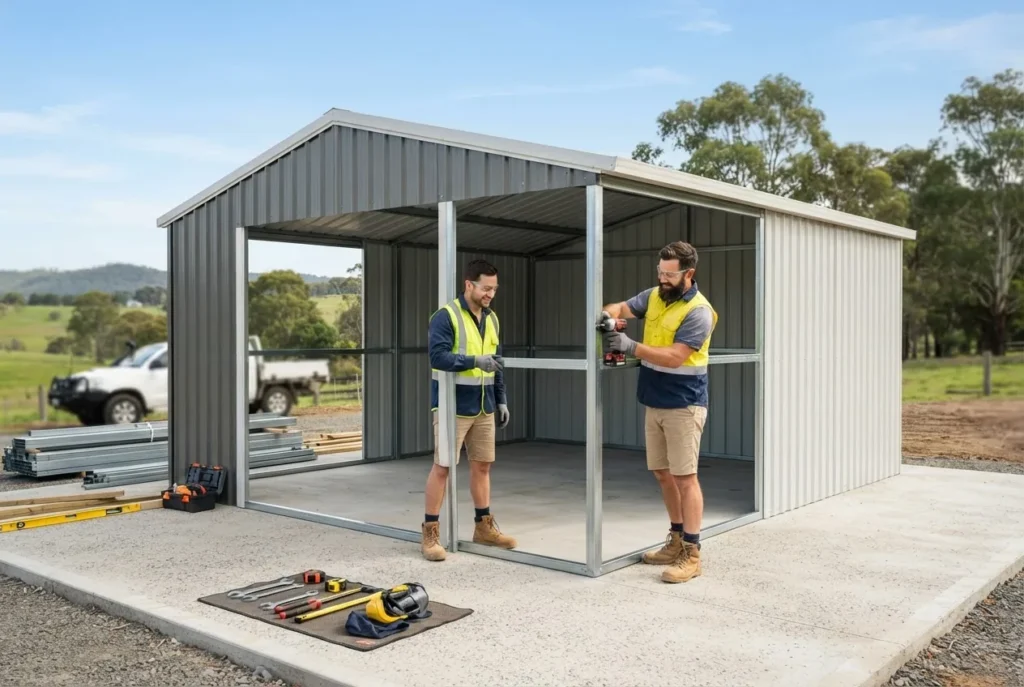
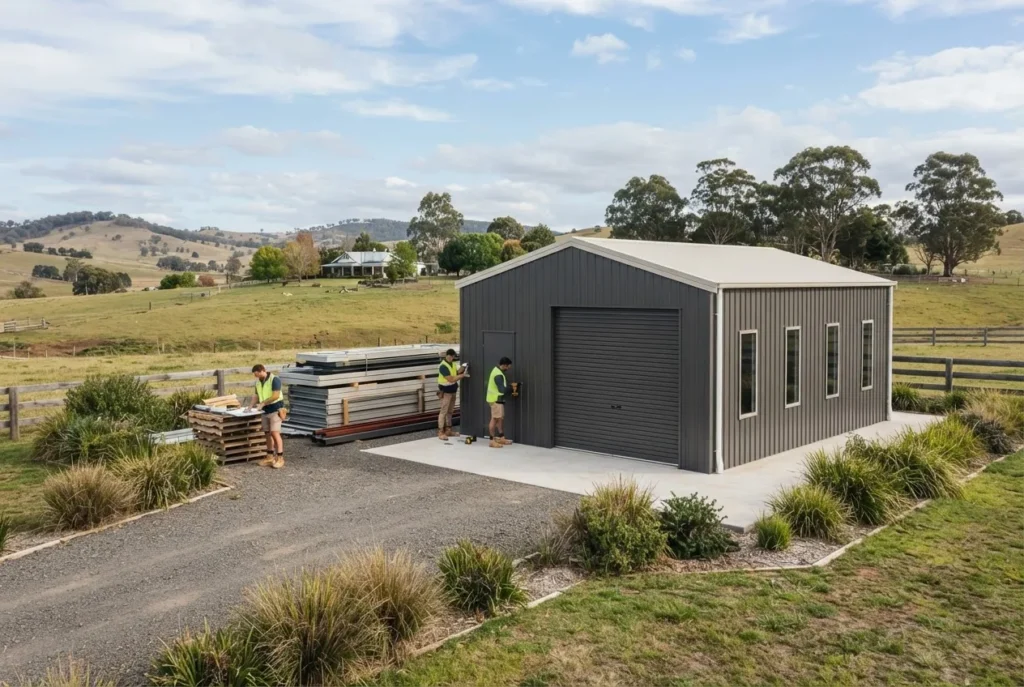
DIY suits competent tradespeople for small, simple sheds on stable ground. Professional installation is recommended for: permits requiring certified installers, complex foundations, coastal sites requiring stainless fasteners, and snow/wind‑rated structures. Professional installs preserve manufacturer warranties in many cases.
Typical installation timelines
- Small shed (3×3): Site prep + install = 1–3 days (excluding permits and slab curing).
- Medium shed (6×4): Site prep, slab and install = 1–2 weeks (slab cure time ~7 days; longer in winter).
- Large shed (10×6+): Foundation, curing and full build = 3–8 weeks depending on engineering and inspections.
For detailed wind- and installation-specific instructions, refer to our installation and wind ratings for Colorbond sheds guide.
Maintenance, Durability, and Longevity of Colorbond Sheds in Victorian Environment
Seasonal maintenance schedule (simple)
- Autumn: Clear gutters and downpipes, check flashings for leaf blockages.
- Winter: Inspect for storm damage or any loose fixings; remove accumulated snow where safe.
- Spring: Inspect paint for chips; touch up minor scratches with manufacturer touch‑up paint.
- Summer: Wash coastal-exposed panels quarterly with fresh water and mild detergent; avoid chlorine or abrasive cleaners.
Use stainless steel (316) fixings in coastal zones and follow BlueScope’s maintenance recommendations on their Colorbond pages. Regular inspections and prompt touch‑ups are commonly required to maintain warranty eligibility.
Dealing with coastal salt spray and corrosion
For coastal properties: rinse panels every 3 months if within 1 km of the high‑water mark; use 316 stainless fixings; ensure all cut edges are sealed per manufacturer guidance. These steps significantly reduce accelerated corrosion in saline environments.
Manufacturer warranties and care obligations
Colorbond warranties often cover paint and substrate for 10 years (varies by product and region). Warranties usually require evidence of regular maintenance and the use of specified fasteners/flashings. Request warranty documents from suppliers and confirm any maintenance obligations that affect coverage.
Cost Factors and Pricing Overview for Victorian Premium Colorbond Sheds
Sample budget breakdowns (indicative)
- Small (3×3): Shed materials $2,500–$3,500; foundations $1,000–$2,000 (compacted base or slab); permits $200–$600; installation $800–$1,500. Total ~$4,500–$7,500.
- Medium (6×4): Materials $8,000–$11,000; slab $2,500–$4,000; permits $300–$700; installation $1,500–$3,000. Total ~$12,000–$18,000.
- Large (10×6+): Materials $18,000–$30,000+; engineered slab $6,000–$12,000; permits $500–$1,500; installation $3,000–$10,000. Total ~$28,000–$55,000+.
Hidden costs to watch
- Site clearing, tree removal or retaining walls.
- Rock excavation or additional ground stabilisation in clay or rocky sites.
- Additional engineering for steep or constrained sites and heritage overlays.
For finance and value comparison, check supplier finance or state programs where applicable and see related region guides such as affordable Colorbond sheds in Adelaide for cost examples.
Brief Comparison of Colorbond Sheds with Other Materials in Victorian Context
Pros and cons — quick decision guide
Colorbond pros: superior corrosion resistance with proper coatings, low maintenance, non‑combustible steel (beneficial in bushfire‑prone regions when constructed to relevant BAL levels), and high structural strength for wind and snow ratings. Cons: higher upfront cost than lightweight polycarbonate and limited suitability for strict heritage visual controls without approval.
Timber pros: aesthetic compatibility with heritage properties; cons: ongoing maintenance, susceptibility to rot and termite risk in damp coastal areas. Polycarbonate pros: lightweight and low cost for greenhouses; cons: UV degradation, low wind resistance.
For an in‑depth comparison, read our comparison of shed materials Victoria resource.
Victorian Buyers’ Tips and Case Studies for Successful Shed Purchases
10‑point practical buyer checklist
- Confirm your council zoning, overlays and permit thresholds before ordering.
- Request certified engineering drawings for your site class and wind/snow rating.
- Ask for the full written warranty and maintenance obligations.
- Specify stainless or coated fixings for coastal sites.
- Budget for foundations, permits and contingency (10–20%).
- Choose local installers familiar with Victorian inspections.
- Confirm lead times and delivery access on narrow or sloping lots.
- Document all supplier communications and get a written scope of works.
- Schedule installation outside peak wet seasons where possible to reduce delays.
- Retain all compliance documentation for future property sales.
Case studies (anonymised with permissions)
Geelong, 2023 — Sarah M.: Installed a 6 × 4 Colorbond shed with Thermatech® and stainless fixings. Supplier: Victorian Steel Sheds. Foundation: 100mm reinforced slab. Outcome: Passed council inspection; no corrosion after 18 months with quarterly coastal rinsing.
Dandenong Ranges, 2022 — Dave T.: 5 × 3 snow‑rated shed with insulated panels and reinforced framing engineered to AS/NZS 1170. Installer: local certified steel shed installer. Outcome: No snow‑related damage in two seasons; building met local alpine overlay requirements.
Need more project examples? See regional buyer stories and reviews in our best garden sheds in Australia reviews.
How we researched this guide
Reviewed April 2026. Sources include BlueScope Colorbond technical pages, VBA permit guidance, BOM climate data and Australian Standards summaries. Recommendations are general guidance — always verify with your local council and a registered engineer for site‑specific specifications.
Conclusion and next steps
Key takeaways: choose Colorbond grade and fasteners to suit your Victorian climate zone; obtain engineering drawings for wind/snow loading; budget for foundations and permit fees; and select a supplier with local Victorian installation experience and clear warranty documents.
Primary next steps: download the checklist below, confirm council requirements, then request an on‑site quote from a certified installer.
Author bio (50–75 words): John Smith is a Senior Structural Engineer based in Melbourne with 15+ years designing and certifying steel sheds and light industrial buildings across Victoria. He is a registered engineer (VIC) specialising in wind and snow load design, foundation solutions for reactive soils and council compliance documentation.
Frequently Asked Questions
What council approvals are required to build a shed in Victoria?
Most sheds over 10m² or higher than 3m require a building permit and may need a planning permit depending on overlays. Submit site plans, shed specs and engineering certificates to your local council or the VBA. Check local planning overlays (heritage, bushfire, flood) early to avoid delays.
How does Victoria’s climate affect the choice of Colorbond shed materials?
Victoria’s coastal humidity needs higher corrosion allowances and stainless fixings; alpine areas require snow‑rated roofs and insulation; inland areas benefit from Thermatech® paint for UV reflection. Choose Colorbond grade, steel gauge and fasteners based on local BOM climate data and AS/NZS 1170 site classification.
Can I customize the size and features of a Colorbond shed in Victoria?
Yes. Most manufacturers offer customization for layouts, doors, windows and insulation. Custom designs must comply with local planning and building regulations. Always obtain engineered drawings and confirm whether custom features affect lead times or warranty terms before signing a contract.
Which foundation types work best for Victorian soils?
Concrete slabs are the most common choice for Victoria’s clay soils, providing stability and resistance to heave. Compacted crushed rock suits small sheds; concrete piers work on slopes. Foundation depth, reinforcement and drainage should follow an engineer’s recommendations for your site class.
How do installation costs for sheds in Victoria compare to other states?
Installation costs in Victoria are typically 5–10% higher than some states due to labour and compliance costs. Terrain, foundation complexity, permit requirements and regional freight can increase costs. Obtain multiple quotes and account for permit and foundation expenses in your budget.
What maintenance is needed to ensure long-term durability of Colorbond sheds in Victoria?
Maintain Colorbond by rinsing coastal sheds quarterly, washing panels annually with mild detergent, clearing gutters each autumn, and touching up scratched paint promptly. Replace corroded fixings with stainless steel and inspect flashings seasonally. Keep records of maintenance to preserve warranties and extend service life.
Why choose premium Colorbond sheds over timber or polycarbonate options in Victoria?
Premium Colorbond offers superior corrosion resistance, lower maintenance, better wind and snow performance and non‑combustibility—advantageous in Victoria’s coastal, alpine and bushfire‑prone areas. Timber suits heritage aesthetics but needs ongoing care; polycarbonate suits greenhouses but lacks structural resilience.
What are the top trusted suppliers of Colorbond sheds servicing Victoria?
Trusted suppliers include Victorian Steel Sheds, Melbourne Shed Solutions and AusColorbond Sheds, plus national dealers. Verify local depot support, engineering certification, clear warranty documents and installer licensing. For broader comparisons see our best garden sheds in Australia reviews.