
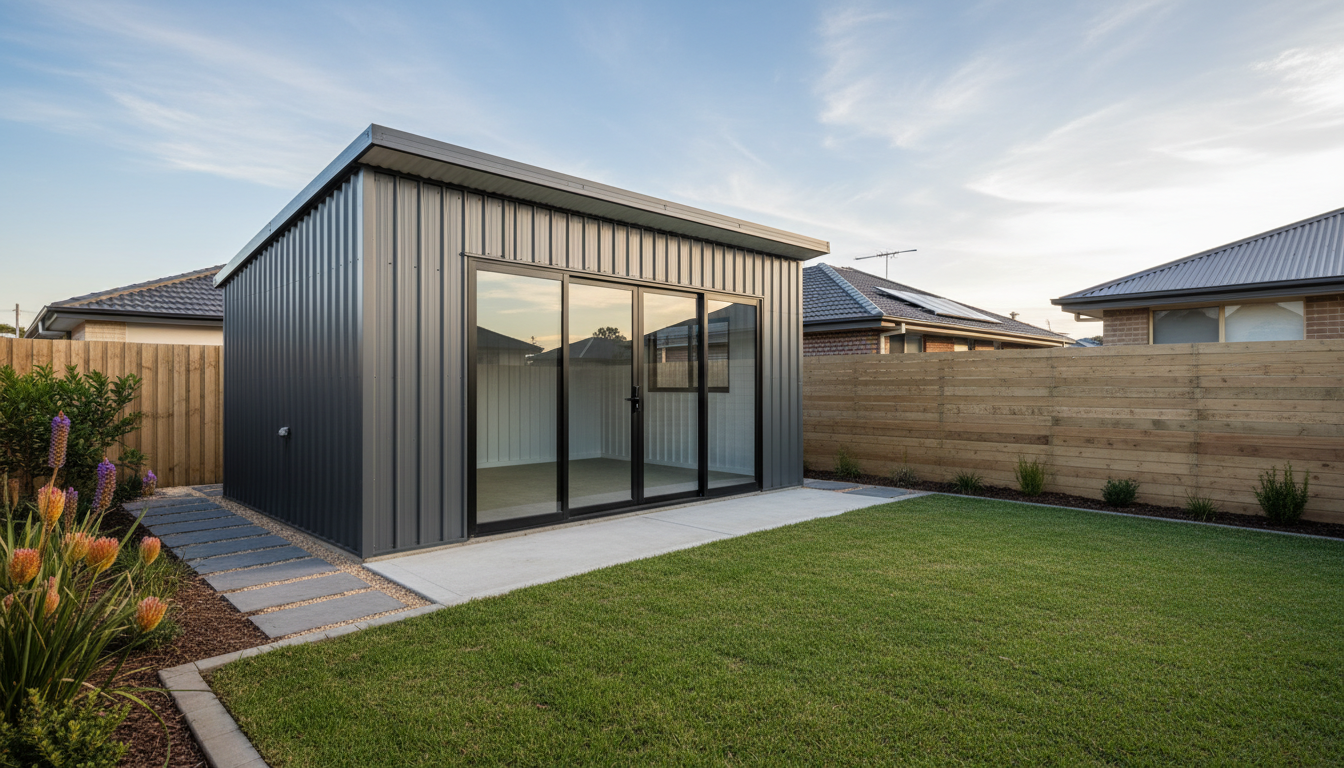

What Happens If You Build a Shed Without Council Approval?
Building a shed can add useful storage or workspace, but constructing one without council approval can expose you to legal, financial and insurance risks. This 2025 guide explains current national and state rules, enforcement options, how councils detect unauthorised sheds, step‑by‑step routes to remediate works (including a retrospective approval checklist) and practical risk mitigation for DIY builders.
Introduction to Council Approval Requirements for Sheds in Australia
Overview of Council Approval and Building Permits
“Council approval” and “building permits” are different but complementary checks. Council planning permission assesses land use, setbacks, heritage and neighbourhood amenity; a building permit or compliance certificate verifies structural safety and adherence to the National Construction Code (NCC). Some small outbuildings are classified as exempt development under state planning rules, but exemptions vary by state and local government area (LGA).
Key definitions
- Council approval (planning consent): Permission from the local council for land use, siting and visual/amenity impacts of a structure.
- Building permit / compliance certificate: Certification that the structure meets the NCC and structural requirements (issued by council or private certifier).
- Exempt development: Low‑impact building work that does not require a planning application if strict conditions are met (size, height, setbacks, use).
Examples: exempt vs non‑exempt sheds
- Exempt: A 2m x 2m garden tool shed on a concrete slab, set behind the house, no utilities — commonly exempt in many LGAs.
- Non‑exempt: A 6m x 4m workshop with power, dual‑access roller doors and concrete pad — often requires both planning consent and a building permit.
Before building, follow this mini‑checklist:
- Check state planning guidance and your LGA’s planning portal (links below)
- Confirm exempt development rules for your address
- Discuss intended use (storage vs workshop vs habitable space)
- Engage a certifier for structural and NCC advice if >10m² or if utilities are involved
For national guidance on construction standards see the Australian Building Codes Board (ABCB): abcb.gov.au.
Legal Framework Governing Shed Construction and Council Approval (2025 Updates)
Relevant Australian Building Codes and Standards
The National Construction Code (NCC) sets minimum safety and structural standards that apply nationally. State planning acts and local planning schemes determine when planning consent is required. For NCC guidance, see the ABCB technical resources: NCC resources.
Summary of 2025 updates (what changed)
In 2025 several jurisdictions clarified thresholds and enforcement expectations for outbuildings. Key changes include:
- ABCB technical guidance updates to clarify when small outbuildings must meet NCC accessory building provisions (ABCB guidance note, 2025) — see ABCB.
- NSW: amendments to SEPP/exempt development guidance tightened criteria for outbuildings in certain zones and clarified certifier responsibilities (see NSW Planning updates: planning.nsw.gov.au).
- Victoria and Queensland issued updated practice notes in 2025 clarifying exemptions for outbuildings in bushfire‑prone and flood overlay areas
All changes emphasise clearer documentation requirements for certifiers and stronger enforcement pathways for unauthorised works. Always review the linked official notices for full wording.
State and Territory variations (overview with authoritative links)
State planning acts and local planning schemes control exemptions and approvals. The table below summarises typical thresholds and links to each jurisdiction’s planning authority.
- NSW — Typical exemption for small outbuildings under ~10m² if meeting SEPP conditions; variations by LGA and overlays (heritage, flood, bushfire). See NSW Planning: planning.nsw.gov.au.
- Victoria (VIC) — Exemptions more restrictive in some zones; Planning and Environment Act 1987 sets framework.
- Western Australia (WA) — Local planning schemes control outbuildings; consult Department of Planning, Lands and Heritage: wa.gov.au. Internal:
- South Australia (SA) — Development Act and local council schemes apply;nternal:
- Australian Capital Territory (ACT) — ACT planning rules and exemptions detailed at planning.act.gov.au.
- Northern Territory (NT) — Territory planning framework at nt.gov.au.
Relevant legislation and how it interacts
Key Acts include the Planning and Environment Act 1987 (VIC), Planning Act 2016 (QLD), Local Government Act 1993 (NSW) and the Planning and Development Act 2005 (WA). These Acts give councils enforcement powers (compliance notices, fines, demolition). The NCC sets technical standards — both planning consent and a building permit may be required to meet both statutory and technical obligations.
What this means in practice: check the ABCB for NCC technical rules, then your state planning portal for exemption thresholds and your council website for LGA‑specific overlays or heritage rules. If in doubt, a private certifier can advise whether your shed is exempt or requires approvals.
Shed Size Thresholds and When Council Approval Is Required
Shed size and exemption criteria explained
Exempt development commonly depends on four criteria: size (area), height, setbacks from boundaries, and intended use. While many jurisdictions use a 10m² rule of thumb, exact thresholds and additional conditions (e.g., not in a heritage area or bushfire zone) determine exempt status.
Common exemption criteria (with examples)
- Size: often ≤10m² (e.g., 3x3m) but may vary by LGA — verify local rules.
- Height: frequently limited to ~3m for exempt status.
- Setbacks: minimum distance from boundaries (e.g., 0.9–1.0m) or behind the primary dwelling.
- Use: storage only; no habitable use, no significant trade/commercial activity.
State examples and internal links
NSW: Sheds under ~10m² that meet SEPP conditions and are not in overlays (flood, heritage, coastal) are commonly exempt. See NSW Planning and also review your LGA page.
VIC: Some exemptions exist for small outbuildings but the Planning and Environment Act requires checking overlays; consult Planning Victoria.
QLD: Accessory buildings are guided by the Queensland Development Code
For other jurisdictions see links above and the respective state planning sites. For practical comparisons, check our guides on 10×10 sheds and 12×8 sheds for how size affects approvals.
Mini case study — 3x3m shed in suburban NSW (decision flow)
- Measure: 3m x 3m = 9m² — below common 10m² threshold.
- Check overlays: heritage, flood or bushfire? If none, proceed.
- Check setbacks: is it behind primary dwelling and meets setback rules? If yes, likely exempt.
- Utilities: no power or plumbing — exemption more likely. If adding power, a building permit/certifier required.
- Confirm with LGA — call council or check LGA planning portal before building.
Anchor: For detailed state rules see our Barn Sheds Australia guide and specific Man Cave Shed pages.
Consequences of Building a Shed Without Council Approval
Types of penalties and fines (with sourced examples)
Consequences escalate depending on scale and local policy. Typical enforcement actions include:
- Fines — can range from a few hundred dollars to tens of thousands for serious breaches. Example enforcement pages: City of Sydney compliance information .Brisbane City Council penalty notices (Brisbane City Council).
- Compliance notices — a formal direction to rectify, modify or remove the structure under the relevant planning Act.
- Stop work orders — immediate halt to construction to prevent further offences.
- Demolition or removal orders — council can remove the structure and recover costs if non‑compliance persists.
Real case study — council enforcement example
Case study (summarised): In 2023 a Sydney LGA issued an enforcement notice requiring removal of a large unapproved workshop after neighbour complaints and an inspection. The owner was fined and required to remove the structure; council recovered removal costs. See City of Sydney compliance pages for similar historic notices: This example shows removal costs and fines can exceed the original build cost plus lost use of the land.
Civil and financial risks beyond fines
Unapproved sheds can create civil exposure: breach of easements, neighbour disputes, covenant violations and issues at resale (mandatory disclosure). Mortgage lenders and valuers may require removal or retrospective approval before refinancing or sale. Insurance companies may decline claims for unapproved structures — see insurer guidance and the Australian Securities & Investments Commission (ASIC) consumer advice on home insurance.
How Councils Detect and Respond to Unauthorized Shed Construction
Detection methods
Councils detect unauthorised sheds via:
- Complaints from neighbours via online portals or phone.
- Routine inspections related to other applications or building works.
- Automated aerial imagery and rates/valuation data cross‑checks.
- Private certifier referrals where certification is missing or documents conflict.
Some councils publish complaint and enforcement procedures; check your LGA’s compliance page.
Role of private certifiers and building inspectors
Private certifiers issue building approvals and inspect works. If a certifier finds unapproved work, they are obliged to report or require rectification. Using a certified practitioner reduces detection risk and helps with smoother retrospective applications if needed.
Enforcement timeline — typical stages and caveats
Timelines vary by council and case complexity. Typical stages:
- Initial complaint & inspection — days to weeks
- Compliance notice issued — owner usually given 14–30 days to respond
- Opportunity to apply for retrospective approval — variable (30–90 days to prepare documents)
- Follow up inspections and escalation to court or removal — potentially months if disputed
Always treat council timelines as indicative; specific dates are set in the compliance notice and are legally binding.
Options to Rectify Building a Shed Without Approval
Disclaimer: This article provides general information only — consult your local council or a qualified building certifier for site‑specific advice.
Is retrospective approval possible?
Yes, in many cases councils allow retrospective approvals if the structure can be shown to meet current planning controls and NCC requirements. Retrospective approval is discretionary and may require modifications, engineering certification, or removal.
Step‑by‑step retrospective approval walkthrough
- Engage a qualified, local private certifier or building inspector to assess the shed and identify non‑compliances.
- Prepare supporting documents: scaled site plan, elevations, structural engineer’s certificate, photos of existing works, and a statutory declaration explaining circumstances.
- Lodge a retrospective application with your council including application forms, fees and all supporting documents.
- Respond promptly to council requests for additional information, provide modifications or submit amended plans as required.
- Obtain any required permits (electrical/plumbing certificates) and finalise compliance inspections to receive a compliance certificate.
Typical supporting documents (exact deliverables)
- Site plan (to scale) showing shed location, setbacks and dimensions
- Floor plan and elevations
- Structural engineering certificate or design drawings
- Photos of the existing shed and foundation
- Electrical and plumbing compliance certificates if services were installed
- Owner’s statutory declaration outlining date of construction and use
Sample timelines and fees
Best case: 4–8 weeks if minor non‑compliance and council processing is straightforward. Worst case: 3–6 months (or longer) if engineering, neighbour objections or legal proceedings arise. Application fees vary: from a few hundred dollars for minor retrospective lodgements to several thousand for complex cases — consult your council fee schedule (example: check your LGA website for specific fees).
Retrospective approval checklist
Use this 10‑item checklist to prepare your retrospective application .
- 1. Confirm LGA exemption status for your address
- 2. Engage a private certifier or building inspector
- 3. Obtain a scaled site plan and elevations
- 4. Commission a structural engineer’s certificate (if required)
- 5. Collect photos of existing works and surrounding context
- 6. Prepare statutory declaration explaining circumstances
- 7. Secure electrical/plumbing compliance certificates if services added
- 8. Lodge application and pay council fees
- 9. Respond to council requests promptly
- 10. Arrange final inspection and secure compliance certificate
When demolition is ordered — practical steps
- Review the demolition/order notice and deadlines carefully.
- Seek immediate advice from a certifier or planning lawyer if you intend to appeal.
- If removal is required, obtain competitive quotes from licensed demolition contractors and document costs.
- Comply within the order timeframe or risk council contractors removing the structure and recovering costs from you via rates or court enforcement.
Retrospective approval can legalise a structure, but prepare for costs and time. If removal becomes necessary, prompt and documented action helps contain additional penalties.
Risk Mitigation Strategies for DIY Shed Builders and Homeowners
Pre‑construction 10‑point checklist
- Confirm zoning and overlay restrictions on your LGA planning portal
- Check exempt development criteria for your state
- Measure and record proposed shed area and height
- Plan setbacks to comply with neighbour boundaries
- Decide intended use (storage only vs workshop/habitable)
- Engage a private certifier for clarification if >10m² or services involved
- Order a structural plan or engineer cert for non‑standard spans
- Obtain written quotes and confirm supplier compliance records
- Keep all correspondence with council and trades for records
- Verify insurance coverage before works begin
Where to spend money — trusted trades and checks
- Independent certifier or building inspector (early)
- Structural engineer for spanning or non‑standard designs
- Surveyor if siting is close to boundaries or easements
- Licensed electrician/plumber for any services
Sample questions to ask suppliers/installers:
- “Do you build to NCC and provide compliance certificates?”
- “Can you supply references of previous council‑approved builds?”
- “Are you licensed for electrical/plumbing if installing services?”
Insurance note: Check your policy wording — many insurers exclude unapproved works. For general consumer advice on home insurance see ASIC’s guidance pages (asic.gov.au).
Anchor: For hands‑on builders see our DIY storage sheds guide and our concrete floor requirements for sheds.
Frequently Asked Questions (FAQs) and Common Reader Concerns
Below are concise answers to common questions. Each answer provides a quick reference and links to further authoritative sources.
Summary conclusion: Building a shed without approval carries risks including fines, demolished structures, insurance problems and resale complications. Do pre‑construction checks, engage a certifier when in doubt and use the retrospective checklist if you need to regularise existing works. For help, contact your council or a certified building inspector today.
Frequently Asked Questions
What are the risks of building a shed without council approval in Australia?
Building without approval can lead to fines, compliance or demolition orders, recovery of council removal costs, insurance exclusions and reduced resale value. Enforcement varies by state and LGA; check your council’s compliance pages and the NCC for technical requirements before building. See ABCB and local planning portals for guidance.
When is council approval required for shed construction?
Council approval is required when a shed exceeds local exempt development thresholds (area, height, setbacks), is in a regulated overlay (heritage, bushfire, flood) or includes services or habitable use. Check state planning portals and your LGA planning scheme to confirm requirements before any works.
Can I apply for retrospective approval if my shed was built without permits?
Yes, many councils accept retrospective applications if the shed can meet current planning and NCC standards. Prepare site plans, engineering certificates and statutory declarations. Retrospective approval is discretionary, may require modifications, and attracts fees — consult your council for the specific process.
How do penalties and enforcement actions work for unapproved sheds?
Penalties range from infringement fines to court action and demolition orders. Councils issue compliance notices with deadlines to respond or remediate; failure can result in forced removal and cost recovery. Enforcement powers derive from state planning Acts and local regulations — see your council’s enforcement pages.
What are the typical shed size limits before approval is needed?
Many jurisdictions use ~10m² as a common exemption benchmark, but exact limits vary by state and LGA and depend on height, setbacks and overlays. Always verify your local planning scheme and state guidance rather than relying on a single national threshold.
How do council inspections detect unauthorized sheds?
Councils detect unauthorised sheds via neighbour complaints, routine inspections, aerial imagery/rates data comparisons and certifier referrals. Detection timelines vary; some cases surface only at sale or during unrelated applications. Check your LGA’s compliance procedure for details.
Does not having council approval affect my property insurance or resale value?
Yes. Insurers may exclude claims for unapproved structures and lenders or valuers may require removal or retrospective approval before refinancing or sale. Unapproved sheds can complicate property transactions and reduce marketability — disclose issues early and seek remedial advice.
What steps should I take to avoid compliance issues when building a shed?
Before building: check state and LGA planning portals, confirm exempt development criteria, engage a private certifier for advice if uncertain, secure any required permits, document approvals and keep copies of all communications. Early professional input saves time and money.