

Wooden Outdoor Cabinet vs Steel Storage: 2025 Australian Buyer’s Guide
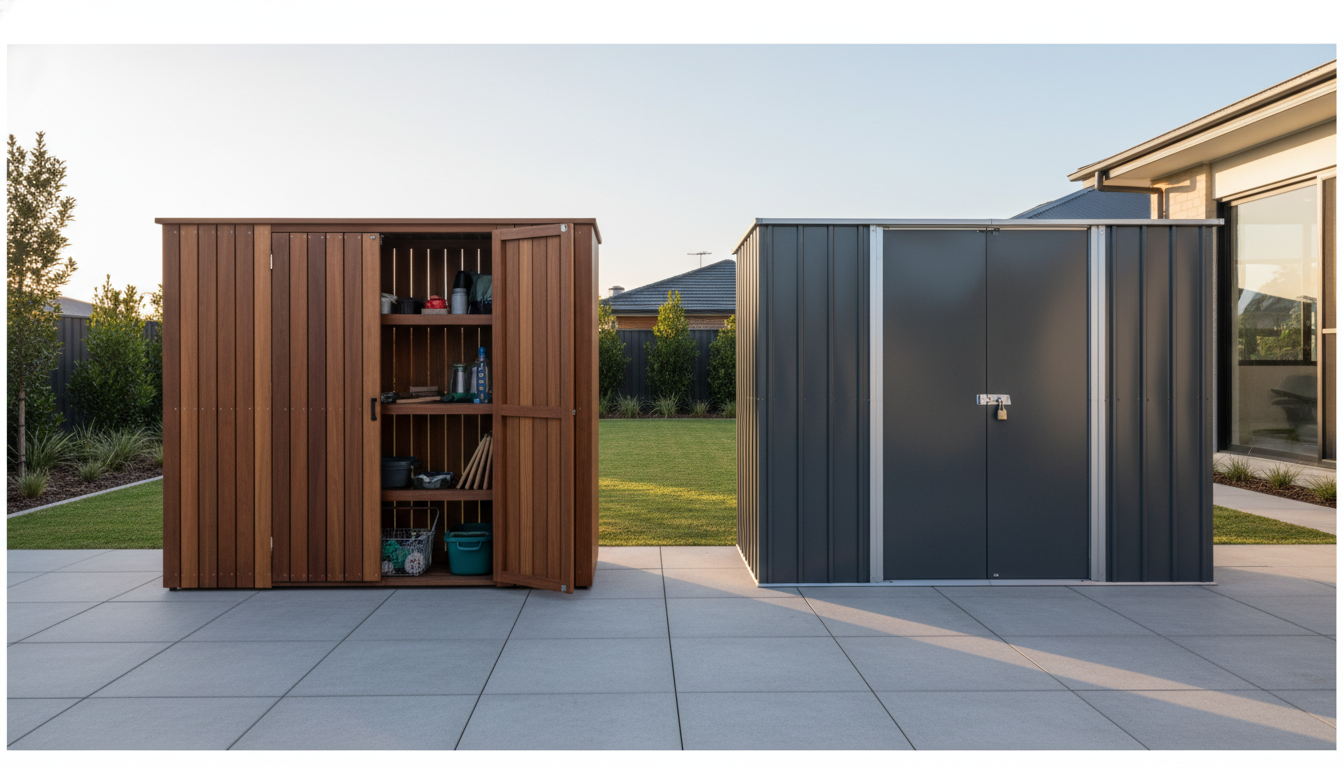
Choosing between a wooden outdoor cabinet and a steel storage unit often comes down to three priorities: security, aesthetics and climate suitability. This guide helps you choose the right cabinet for your climate and use-case by comparing durability, security, cost and maintenance for Australian conditions, with specific recommendations and installation tips.
Understanding Outdoor Locking Storage Cabinets in Australia
“Outdoor locking storage cabinets” are compact, lockable units designed to protect tools, pool chemicals, garden equipment and other valuables from theft and the elements. Compared with garden sheds, cabinets are generally smaller, modular and often portable; they fit patios, balconies and narrow yards. For quick reference, see our core resource on outdoor locking storage cabinets.
These units are sold in a mix of DIY kits and factory-built models. Typical cabinet dimensions range from 600 mm wide x 400 mm deep x 900 mm high for small cupboards to 1800 x 800 x 1800 mm for larger double-door models. Modular cabinets and portability options (skids, wheels, removable shelving) make them suitable where a full garden shed is impractical.
| Cabinet vs Garden Shed (quick) | Cabinet | Garden Shed |
|---|---|---|
| Size | Compact, 0.5–2.5 m² | Large, 4–20 m² |
| Installation | Often DIY, light base | Requires permits in some councils, substantial base |
| Use cases | Tools, pool gear, bin lockaway | Lawnmowers, workshop, bulk storage |
Common use-case examples: store a pressure washer and hand tools in a 1200 mm single-door cabinet; secure pool chemicals in a lockable elevated shelf cabinet (locked and ventilated); create a rubbish bin lockaway using a double-door steel cabinet with reinforced shelf supports. Retailers list load capacities by shelf—typical internal shelf ratings are 20–50 kg for small cabinets and 80–150 kg for heavy-duty units.
Defining Outdoor Locking Storage Cabinets and Their Uses
Outdoor locking storage cabinets are designed for accessible, secure storage without the footprint of a full shed. Vignettes: (1) A townhouse renter stores garden tools and fertilizer in a treated timber 900 mm cabinet on a raised timber platform; (2) a coastal unit owner uses a Colorbond steel 1200 mm cabinet with powder-coat touch-up kit and stainless fasteners for pool toys and cushions; (3) a hobby gardener installs a lockable cabinet with 4 shelves rated 50 kg each for pots and sprays.
Recommended internal shelf/loading capacities: small cabinets — 20–40 kg per shelf; medium units — 50–80 kg; larger or tool-specific cabinets — 100+ kg using reinforced shelving or steel racks.
Key Security Considerations for Outdoor Cabinets
Security depends on lock type, cabinet construction and placement. Attack vectors include prying doors, cutting hasps or shackles, hinge removal and panel penetration. Use hardware and installation strategies to mitigate these vectors:
- Lock selection: Use cylinder locks or padlocks with a shackle clearance under 8 mm to reduce bolt cutter access. Consider cylinders graded to AS 4145 where applicable (see note below).
- Hasp protection: Fit tamper-proof hasps with a shielded throat and recessed fixings—hasp throat < 8 mm reduces leverage.
- Hinge protection: Concealed hinges or coach-bolted hinge plates reduce hinge-pin removal risk.
- Structural reinforcement: Bolt-through reinforcement plates for wooden doors and weld-on plate lockboxes for steel doors are effective.
Relevant standards and guidance: AS/NZS 4145 covers mechanical security of locks and electro-mechanical devices—consult the Standards Australia summary and security industry guidance at Standards Australia and the ASIAL industry site for compliant products. For practical retrofit advice, follow manufacturer recommendations and use tamper-resistant fixings.
Typical Australian Climate Challenges for Outdoor Storage
Australia’s zones present specific failure modes and maintenance needs. Map of common issues and simple countermeasures:
- Coastal (salt‑laden air): rapid corrosion on mild steel — use Colorbond/316 stainless fasteners, hot-dip galvanised G350–G550 minimum, and annual anti-corrosion touch-ups.
- Humid subtropical: timber rot and fungal attack — use ACQ-treated or marine-grade preservative timber, raised base and ventilation.
- Arid/UV intense: UV bleaching and surface checking — use UV-stable coatings (Colorbond has UV-stable topcoats), UV-rated exterior paints for timber and regular re-coating.
- Temperate inland: moisture cycling causing seal failure — maintain door seals and inspect for expansion/contraction halting weatherproofing.
Preventative measures: raised base or paved footing, sealed joints with exterior-grade polyurethane sealant, stainless steel fasteners (316 in coastal zones), and biannual inspection in harsh zones. For more depth see our outdoor storage cabinet installation resource.
Material Analysis: Wooden Outdoor Cabinets vs Steel Storage Cabinets
Durability and Weather Resistance in Australian Conditions
Key material specs to consider:
- Timber treatments: ACQ (Alkaline Copper Quaternary) is a common non-arsenical preservative for above-ground timber. For marine/coastal uses, consider products specified for H3-H5 exposure (timber prescribed for high-risk environments). Avoid untreated softwood in humid or coastal zones.
- Steel finishes: Look for hot-dip galvanised substrate (G350–G550 zinc coating weight recommended for outdoor use) with a powder-coat top finish. BlueScope Colorbond is a coated steel system with a proprietary paint system designed for UV and corrosion resistance — review the Colorbond technical datasheet for specific warranties and maintenance guidance (BlueScope Colorbond).
- Fasteners and fittings: Use 316 stainless steel in coastal areas; 304 stainless is acceptable inland. Zinc-plated or mild steel fasteners will corrode faster near salt air.
Manufacturer guidance and real-world example: in coastal NSW, a study of local installations shows untreated mild steel can exhibit visible surface rust within 6–12 months; Colorbond or powder-coated steel with stainless fixings remained largely intact past two years with annual touch-ups. For timber, ACQ-treated hardwood with a sealed base showed minimal decay after five years when regularly maintained.
Maintenance Requirements and Longevity
Maintenance schedule (typical):
| Frequency | Wooden Cabinet Tasks | Steel Cabinet Tasks |
|---|---|---|
| Quarterly | Visual checks for cracks, seal failure, insect activity | Inspect for coating chips, remove debris |
| Biannual | Reapply oil/stain to joints; check base drainage | Apply rust inhibitor to chips; lubricate locks (graphite or silicone) |
| Annually | Full reseal or repaint as required; termite inspection in high-risk zones | Touch-up paint/sand and prime exposed metal; replace any corroded fasteners |
Approximate maintenance costs: timber sealing materials $50–$150 per year; rust touch-up kits and inhibitors $30–$100 per year for steel. Termite inspections vary by state; budget $80–$150 if in a high-risk area. Regular maintenance extends lifespans: well-maintained timber (H3/ACQ, sealed) can reach 10–15 years; steel (galvanised + powder coat) 15–25+ years depending on exposure and repairs.
Environmental Impact and Sustainability Factors
Environmental trade-offs are nuanced. Timber from FSC-certified forests (Forest Stewardship Council — FSC) has lower embodied energy and stores carbon during service life. Steel production has high embodied energy, but steel is almost entirely recyclable in Australia, and recycled content reduces lifecycle impact.
Qualitative lifecycle comparison: timber – lower upfront emissions, renewable but needs sustainable sourcing and preservative chemicals; steel – higher production emissions but superior recyclability and long service life which can offset initial impact. For buyers prioritising sustainability, choose FSC-certified timber or steel products with high recycled content and verified manufacturer declarations.
Aesthetic and Design Options for Outdoor Spaces
Definitions: Colorbond is a BlueScope-branded pre-painted steel product widely used in Australian roofing and sheds for UV and corrosion resistance. Powder coating is a dry finishing process providing a thicker, more durable finish than conventional paint. Tamper-proof hasp is a hasp design with shielded fixings and reduced shackle exposure.
Popular Colorbond colours include Surfmist, Monument and Dune—choose one that complements your roofline or fence. Timber finishes range from natural oil finishes to acrylic paint systems; consider micaceous iron oxide primers or high-quality acrylic exterior paints to extend life. Customisable shelving, slat-wall tool organisers and integrated ventilation kits are available for both materials.
Security Features and Locking Mechanisms Compared
Lock Types Suitable for Wooden and Steel Cabinets
Consider these lock types and recommended specs:
- Cylinder locks: Euro or Australian-profile cylinders with at least 5 pins; anti-snap and anti-drill features preferred. For outdoor use, choose weatherproof cylinder housings and use a bolt-through installation on wood with backing plates.
- Padlocks + hasps: Use laminated or boron-alloy shackle padlocks with shackle clearance < 8 mm, matched with shielded, recessed hasps that prevent cutting or prying.
- Smart/electronic locks: Select IP65-rated units for outdoor use (dust-tight and water-resistant). Ensure battery compartment is accessible for maintenance and that the lock has weather seals.
- Cam locks: Suitable for small drawer doors—choose heavy-duty cam locks with steel cams and reinforced mounting plates to resist forced entry.
Retrofitting notes for wooden cabinets: install a 3 mm steel backing plate behind the lock area, use M8 coach bolts with nyloc nuts, and fit an internal lockbox to deny direct access to the cylinder. For steel cabinets, prefer welded lockboxes or internal weld-on plates to prevent prying.
Tamper-Resistance and Reinforcement Components
Useful reinforcement techniques (practical steps):
- Recess lock housings into doors so the shackle is shielded—cut a 25–30 mm recess and fit steel escutcheon plates.
- Install a 3 mm steel plate (locked behind door lining) where the cylinder mounts; secure with M8 bolts into timber or welded studs on steel.
- Use concealed hinges or hinge bolts to prevent hinge-pin removal; on timber, fit hinge straps inside and coach-bolt them through to the base plate.
- For steel cabinets, weld a small internal plate across the door seam and use tamper-proof rivets on external hasps.
Integration of Outdoor Locking Storage Cabinet Best Practices
Maintenance & audit checklist: lubricate locks biannually (silicone or graphite), check for corrosion or paint loss quarterly, retorque anchor bolts annually, and test keypad batteries yearly. Conduct a simple security audit: verify lock functioning, examine hasp/shackle clearance, inspect hinge integrity, and ensure cabinet remains firmly anchored.
Installation and Practical Use Cases for Australian Homeowners
Site Preparation and Installation Methods for Wooden Cabinets
Step-by-step walkthrough:
- Select a level site with a slight fall away for drainage; avoid low points that collect water.
- Prepare a compacted crushed-rock base 75–100 mm thick, or lay a 50 mm concrete pad for heavier models. Use compacted 10–20 mm aggregate for drainage under timber sleepers.
- Place treated timber sleepers (H3/H4 as required) or galvanised angle supports under cabinet base; ensure a 25–50 mm clearance from soil to prevent moisture ingress.
- Use stainless steel (316) or hot-dip galvanised M10 or M12 anchor bolts into concrete pads; for timber platforms use stainless coach bolts through treated sleepers.
- Seal all joints with exterior polyurethane or polysulphide sealant and paint/stain all cut edges immediately after assembly.
Anchor recommendations: M12 stainless wedge anchors into concrete for exposed sites; use galvanised straps bolted to structural timber for deck installations. For step-by-step guidance, see our outdoor storage cabinet installation page.
Installation Considerations for Steel Storage Units
Pre-install checklist:
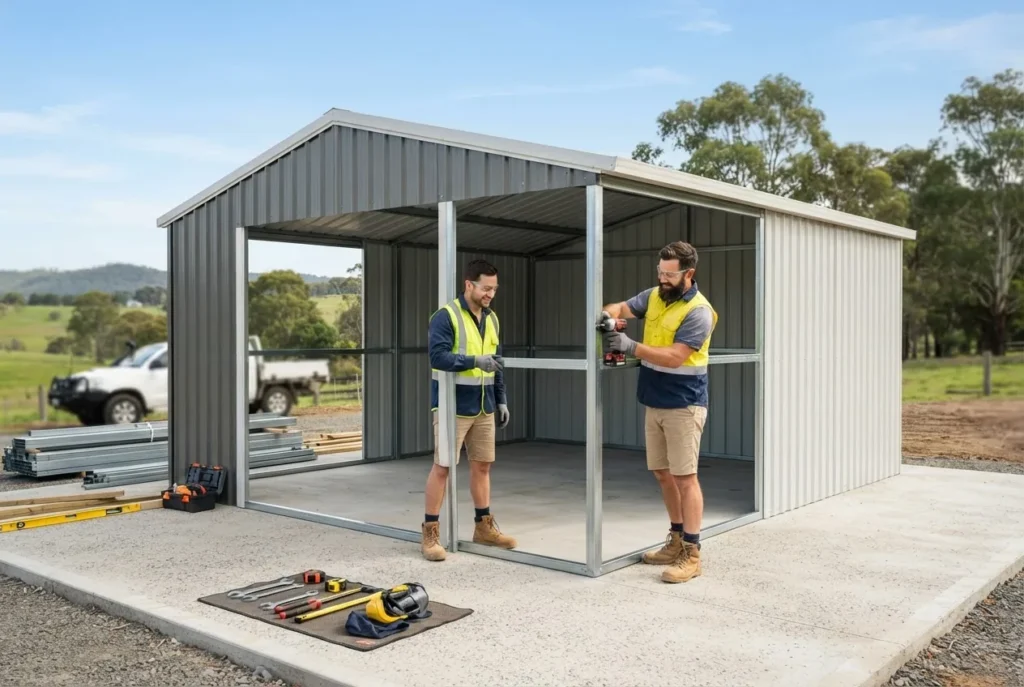
- Inspect galvanised finish and powder-coat for transit damage; touch up chips with zinc-rich primer and matching topcoat.
- Position on pavers or a concrete pad to avoid direct soil contact; use plastic or rubber feet to reduce corrosion at the base.
- Use manufacturer brackets where supplied; for retrofit anchoring use M12 galvanised or stainless anchors into concrete or timber plinths.
- Follow torque specs for self-drilling screws and ensure sealants are applied at seams in wet climates.
Avoid locating steel cabinets where continuous splash-back or lawn irrigation impinges on the base—this accelerates coating failure and corrosion.
Mobility, Space Efficiency, and Placement Tips
Mobility options: many modular cabinets are available with removable skids or towable bases—avoid dragging to prevent edge damage. Maintain 50–100 mm clearance at rear and sides to allow airflow and reduce condensation. For ventilation, fit discreet louver vents high on the back panel to provide passive airflow without allowing direct rain ingress.
Cost Breakdown and Value Over Time
Initial Purchase Prices and Material Costs
Typical Australian retail ranges (2025):
| Model | Wood (AUD) | Steel (AUD) |
|---|---|---|
| Entry-level | $300–$600 | $400–$800 |
| Mid-range (locking) | $700–$1,200 | $900–$1,500 |
| Premium/custom | $1,300–$2,500+ | $1,600–$3,000+ |
Prices sourced from Australian retailers and manufacturer listings. For example, Colorbond-based shed suppliers list small storage cabinets from $450 and premium powder-coated units from $1,400 — see product pages for 2025 pricing benchmarks at Colorbond steel sheds and our wood shed kits in Australia resource.
Maintenance and Repair Expenses
Five-year total cost example (illustrative):
- Budget wooden cabinet: purchase $500 + annual sealing $80, occasional repairs $150 over 5 years = ~$1,000 total.
- Mid-range steel cabinet: purchase $1,100 + annual touch-ups $60, one lock replacement $100 over 5 years = ~$1,500 total.
These scenarios show steel’s higher upfront cost but lower maintenance frequency can reduce unexpected repair expenses over a mid-term ownership horizon.
Warranty and Consumer Protection in Australia
Manufacturer warranties commonly run 2–10 years depending on product and material. Australian Consumer Law (ACCC) provides statutory consumer guarantees regardless of manufacturer warranty — Typical warranty exclusions include coastal corrosion exposure if the product was advertised for general use only; always register the product and retain purchase receipts and photos to support claims.
Choosing the Right Cabinet: Decision-Making Framework
Matching Cabinet Choice to Specific Needs and Climate Zones
| Climate Zone | Recommended Material & Finish | Anchoring & Maintenance |
|---|---|---|
| Coastal | Colorbond or stainless-steel components; 316 fasteners; powder-coat topcoat | Raised base, annual corrosion inspection, touch-up kit |
| Humid subtropical | ACQ-treated hardwood with sealed base or powder-coated steel | Elevate 25–50 mm from soil, biannual checks for rot/corrosion |
| Arid/UV intense | UV-stable paint on timber or Colorbond steel | UV-resistant coatings, annual recoat where finish degrades |
| Temperate inland | Either timber or steel; focus on proper sealing and ventilation | Annual seal check and moisture control |
General buyer flow: prioritise climate first, then security, then aesthetics. For coastal security + corrosion resistance choose Colorbond with stainless fixings; for garden integration and lower upfront cost choose FSC-certified timber with regular sealing.
Evaluating Security vs Aesthetic Priorities
If security is top priority: choose steel with welded seams, recessed hasps and hardened locks — expect an added $120–$250 for lockbox and reinforced hasp retrofits. If aesthetics are priority: choose timber and plan for extra maintenance budget. Consider hybrid approaches: steel doors with timber facings or timber cabinets with internal steel reinforcement.
Decision quick-check: Budget < $800 and aesthetic focus → treated timber; Need high security and coastal exposure → powder-coated Colorbond with 316 fixings; Balanced needs → mid-range steel with tamper-proof hasp and smart lock (IP65 rated).
Summary Comparison Table (with numeric ratings 1–5)
| Feature | Wooden Outdoor Cabinet | Steel Storage Cabinet |
|---|---|---|
| Security | 3/5 (with retrofits +1) | 5/5 |
| Weatherproofing | 3/5 (depends on sealant frequency) | 4/5 (5/5 if Colorbond + stainless fasteners) |
| Longevity | 3/5 (5–15 yrs with maintenance) | 4/5 (10–25+ yrs) |
| Environmental Impact | 4/5 (renewable if FSC) | 3/5 (recyclable but energy-intensive) |
| Cost (upfront) | 4/5 (lower upfront) | 2/5 (higher upfront) |