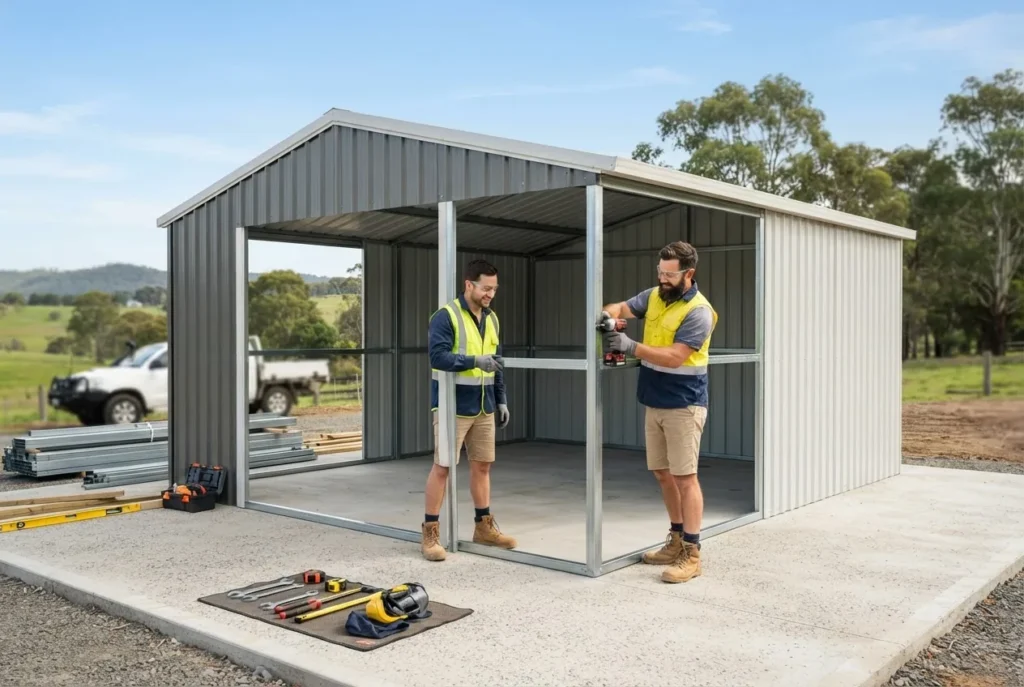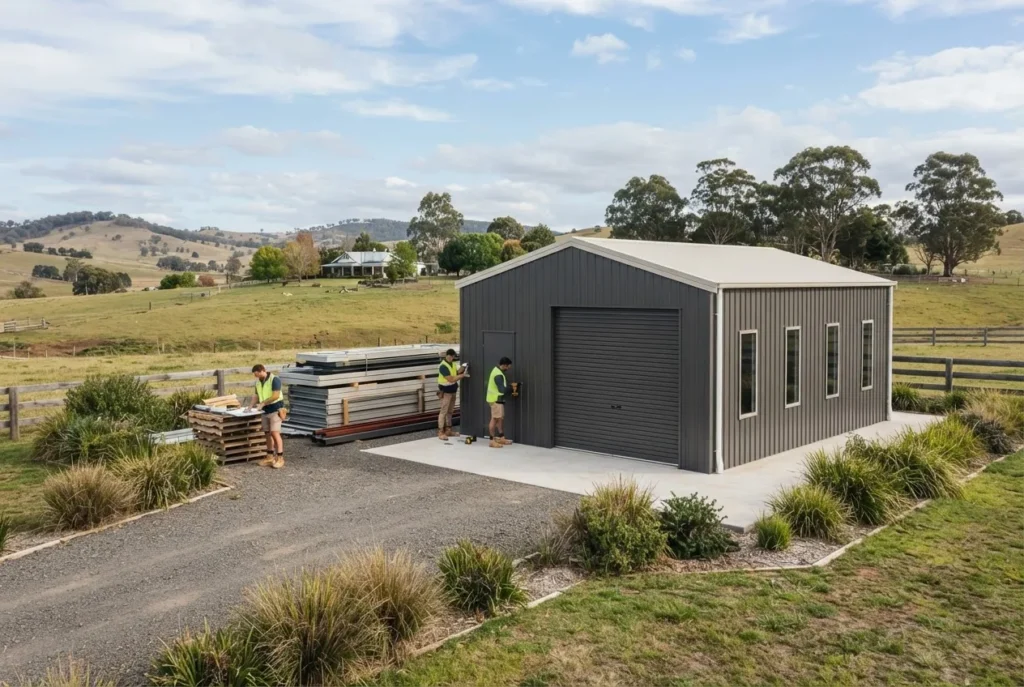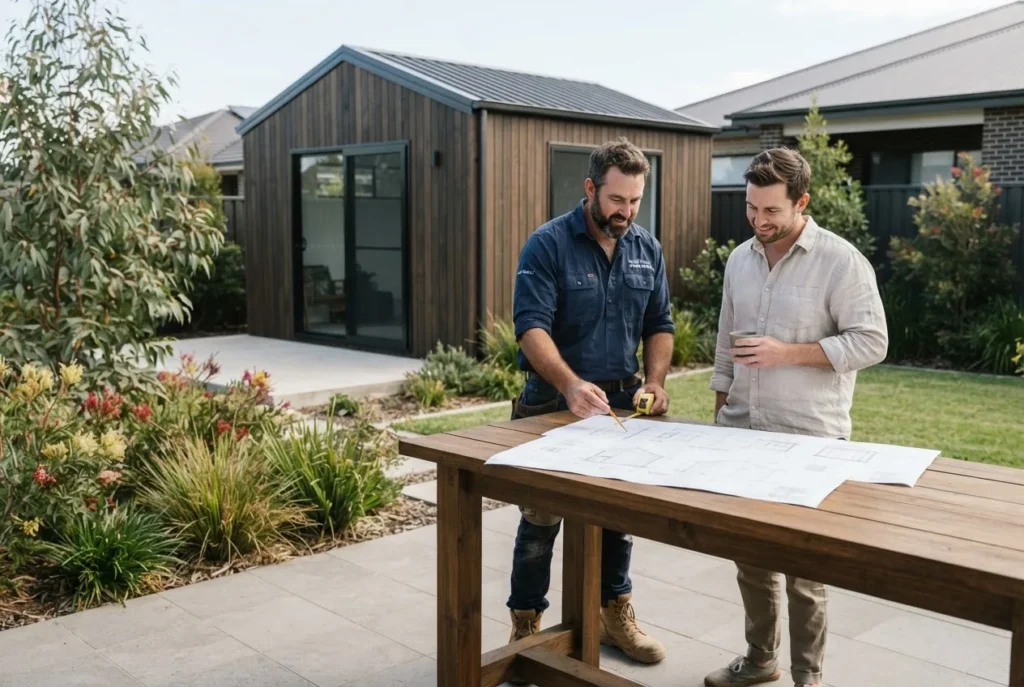

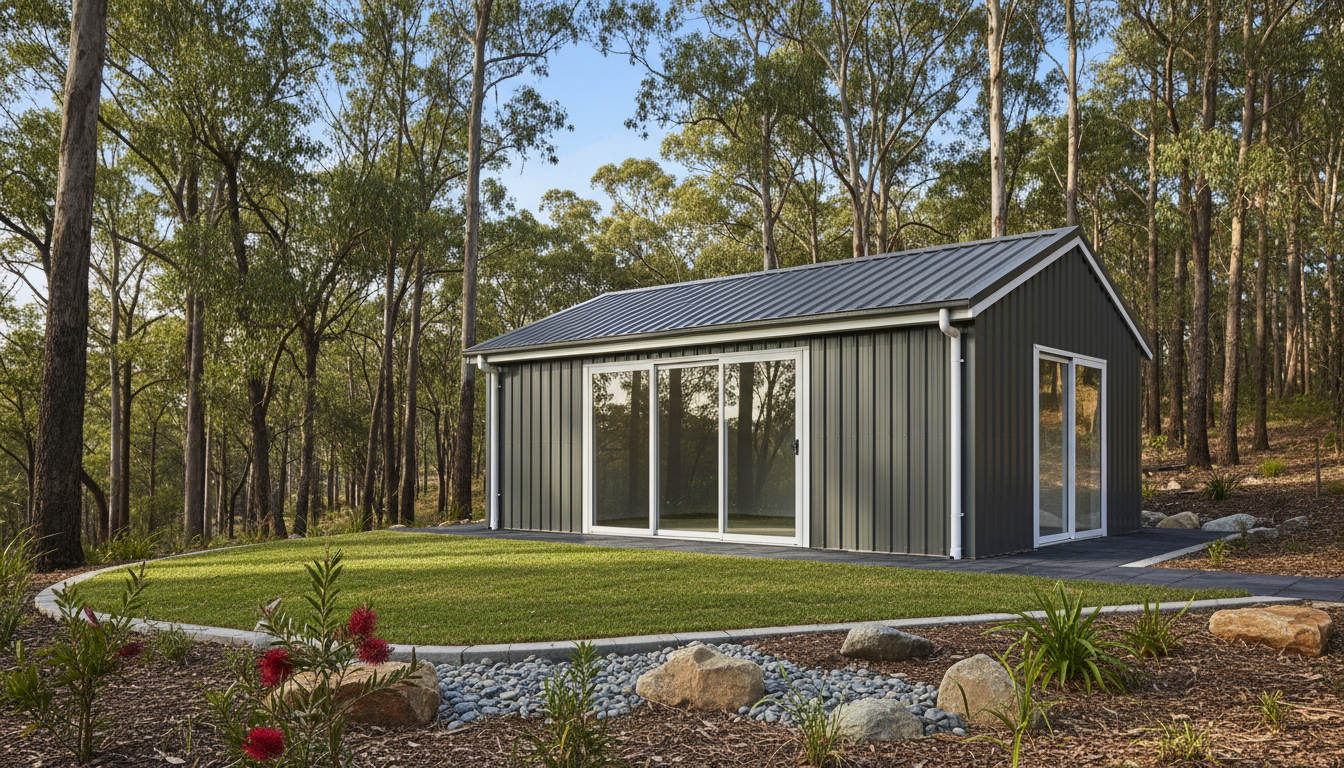

Introduction to Woodland Grey Colorbond Sheds
Key headlines: BlueScope technical data places Woodland Grey’s Solar Reflectance Index (SRI) at roughly 25–30 (see BlueScope datasheets linked below), and standard Colorbond warranties commonly range from 20–35 years depending on location and exposure. Read on for sourcing, council approval checklists, maintenance schedules and real homeowner case studies from Brisbane and coastal NSW.
- What Woodland Grey represents in 2025’s Colorbond palette
- The fundamentals of Colorbond steel for shed construction
- Why Woodland Grey is trending for garden sheds and how to buy one
Use the practical links in this guide (installation, buyer’s checklist, size guides) to move from research to a confident purchase.
What is Woodland Grey in the Colorbond Palette?
Woodland Grey is a mid-to-dark warm neutral grey added to BlueScope’s Colorbond palette and maintained in 2025 as a core colour option. It is formulated to provide a subdued, natural appearance that complements timber, stone and native planting while avoiding the starkness of pale neutrals like Surfmist.
BlueScope lists Woodland Grey among mid-tone neutrals with pigment and binder systems optimised for Australian UV conditions. You can view the official swatch and technical note on BlueScope’s Colorbond colour card and datasheets, which document reflectance and fade-resistance testing for each colour (see BlueScope Colorbond technical datasheet).
Overview of Colorbond Steel and Its Relevance to Sheds
Colorbond is a factory-coated steel product comprising a steel substrate, a protective metallic coating (commonly zinc-aluminium), a thermally-bonded primer, and a durable topcoat. For shed cladding this system delivers strength, consistent aesthetic finish and long-term corrosion protection when installed correctly.
Typical manufacturing stages are: hot-rolled steel substrate → metallic (Zn-Al) coat for galvanic protection → pre-treatment and primer → polyester or advanced polymer topcoat with UV stabilisers. These layers combine to resist corrosion, chalking and chalk streaking under Australian sun and salt-laden air (BlueScope technical datasheet).
For practical choices and steel cladding options for backyard buildings, see our Colorbond steel options for sheds and the installation guide to ensure compatible fasteners, flashings and flashings sealants are specified.
Why Woodland Grey is Trending for Australian Garden Sheds in 2025
Several market and practical factors underpin Woodland Grey’s popularity in 2025:
- Design neutrality: It pairs easily with timber, concrete and muted landscaping, suiting renovation and new-build contexts.
- Thermal balance: Mid-tone SRI provides lower heat gain than dark colours but more manageable glare than very light tones—helpful for uninsulated garden spaces.
- Regulatory acceptance: Its natural appearance typically clears neighbourhood aesthetic reviews more easily than stark or highly reflective alternatives.
- Buyer preference shift: Industry reports show steady growth in mid-tone neutrals for residential outbuildings (Australian Steel Institute market notes).
Two short homeowner scenarios illustrate practical adoption: urban renovators choosing Woodland Grey to match black window frames and timber screens, and coastal owners using it for low-contrast cladding that reduces visual bulk against dunes and native vegetation.
Color Characteristics and Benefits of Woodland Grey
Defining SRI and Delta E (quick definitions)
Solar Reflectance Index (SRI): a metric (0–100+) describing how much solar energy a surface reflects versus a standard black surface — higher SRI = more reflectance and less heat gain. Delta E: a colour-difference metric used in accelerated weathering and field tests; Delta E below ~3 is typically imperceptible to the untrained eye on exterior cladding.
Comparative Reflectance and Typical SRI Values
- Woodland Grey: SRI approx. 25–30 (BlueScope technical datasheet)
- Dune: SRI approx. 55–65 (lighter neutral; more reflective)
- Surfmist: SRI approx. 80–90 (very light, high reflectance)
- Dark colour example (Monument): SRI typically below 10 (high heat absorption)
Practically, a Woodland Grey shed will sit cooler than Monument but warmer than Surfmist under identical sun exposure. For workshops and storage where temperature-sensitive contents are kept, pairing Woodland Grey cladding with insulation or passive vents reduces overheating risk.
Visual and Finish Qualities
Woodland Grey uses a matte/mid-sheen finish that reduces specular glare while maintaining visible texture. Pigments and topcoat formulations include UV absorbers and HALS (hindered amine light stabilisers) to slow fade; Delta E testing in accelerated chambers is used to verify expected colour retention over years of exposure.
Durability and Steel Coating Technology Behind Woodland Grey Colorbond
Zinc-Aluminium Metallic Coating Explained
The metallic coating used in Colorbond is an aluminium-zinc alloy that combines the barrier protection of aluminium with the sacrificial protection of zinc. Typical commercial compositions are in the range named in BlueScope literature; the coating prevents direct contact of moisture with the steel core and provides galvanic protection at cut edges.
Paint System and Scratch/Impact Resistance
Topcoats are polyester or advanced polymer systems formulated with tough binders and abrasion-resistant fillers. This multi-layer system reduces visible scratching and improves resistance to chalking. For high-traffic or workshop environments, consider heavier-duty topcoats or protective over-plates on vulnerable areas.
Accelerated Weathering, Delta E and Field Performance
Accelerated weathering tests simulate years of UV and moisture exposure; results are reported as Delta E for colour change and gloss retention metrics. BlueScope and independent labs publish typical outcomes for Colorbond colours—Woodland Grey’s Delta E in early tests is usually below threshold values that denote noticeable fading under normal exposures (BlueScope technical datasheet; CSIRO corrosion and weathering studies).
Warranty, What Voids It and How to Maintain Coverage
BlueScope provides colour and substrate warranties; coverage length varies by product and exposure zone. Common exclusions: chemical or industrial exposure, installation with dissimilar metals that create galvanic corrosion, unauthorised cutting or coating, and failure to maintain gutters/fasteners. Always retain purchase invoices, follow manufacturer installation instructions and register warranties where required (BlueScope warranty page).
Climate Suitability and Environmental Considerations
Regional Guidance and Microclimate Notes
- Coastal properties: Standard Colorbond performs well up to typical coastal exposures, but in extremely close salt-spray conditions (within ~1 km in exposed locations) additional corrosion allowances or stainless fasteners may be advised—consult local council and installer.
- Subtropical/tropical: UV-stable pigments and regular wash-down reduce chalking and salt/dust build-up; ventilation helps moderate internal temperatures.
- Arid/Outback: Dust abrasion increases wear on topcoats; regular inspection and cleaning are recommended.
Refer to local council or manufacturer guidance for precise coastal distance recommendations and fastener selection; many councils provide technical notes on materials for coastal areas.
Sustainability, Recycled Content and End-of-Life
Colorbond steel typically contains recycled content (industry averages around 30% recycled steel in manufacture) and is 100% recyclable at end-of-life without loss of material quality. BlueScope publishes sustainability reporting on embodied energy and recycling pathways; choosing steel cladding supports circular-material strategies compared with some polymer alternatives.
Application and Design Ideas for Woodland Grey Garden Sheds
Integration with Property Styles
Woodland Grey works with rustic timber screens and native plantings for a natural look, or with black window frames, concrete paths and rendered walls for contemporary schemes. Consider timber accents to warm elevations and light-coloured liners inside to maximise reflectance and usable light.
See more material comparisons in our Timber Frame Garden Shed vs Colorbond guide for hybrid designs and detail options.
Suggested Colour Pairings and Material Notes
- Trims: Surfmist or Dune for soft contrast
- Frames: Deep charcoal or black for crisp edges
- Accents: Natural timber or corten-style planters to add warmth
Interior Fitout Tips
- Use light-coloured wall lining (off-white) to improve interior lighting
- Add ridge or soffit vents and simple solar-powered louvres to reduce internal heat
- Specify corrosion-resistant shelving and storage solutions for coastal or humid environments
Visual Case Studies
Case study — Brisbane (subtropical): An anonymised suburban installation by Coastal Shedworks (installer) in 2021 used Woodland Grey cladding on a 4×3m workshop with vapour-permeable insulation and ridge vents. Owner-reported interior temperatures reduced by ~6–8°C compared with an adjacent dark-clad garden room; colour Delta E measured at 1.8 after three years (owner/installer measurements).
Case study — Coastal NSW: A 6×3m storage shed installed 2019 near Wollongong used Stainless fasteners and sacrificial guttering. After four years exposure, minor surface chalking occurred but no substrate corrosion; the owner successfully registered a warranty claim for a damaged flashing and had prompt replacement via the supplier.
For more layout ideas and size-specific advice, review our 10×10 Colorbond garden sheds in Woodland Grey and other size guides.
Compliance, Council Approvals, and Building Regulations
Most councils allow sheds under specified size and setback thresholds without a full development application, but colour and material samples are commonly requested where properties are in heritage overlays or visually sensitive precincts.
Typical steps to lodge an application:
- Check local planning overlay and allowable shed footprint.
- Request the council’s checklist for material samples and elevation submissions.
- Provide manufacturer technical datasheet (Colorbond certification) and fastener/flashings spec.
- Submit structural drawings showing footings and wind rating; include site elevation photos.
Where a council asks for sample evidence, submit the BlueScope colour swatch and the Colorbond product certificate to speed approvals. For practical planning advice, see our Barn Sheds Australia guide and your local council planning pages for sample templates.
Maintenance Tips for Woodland Grey Colorbond Sheds
Seasonal Maintenance Checklist
- Spring: Clean gutters, rinse cladding to remove pollen and dust, inspect fasteners and sealant joints.
- Summer: Check for paint chalking and wash with pH-neutral detergent; clear vegetation away from the shed perimeter.
- Autumn: Inspect for loose flashings, re-torque fasteners and touch-up small scratches with manufacturer touch-up paint.
- Winter: Ensure drainage is clear and check for water ingress after heavy storms.
Repair and Touch-Up Guidance
For scratches, use BlueScope-authorised touch-up paint matched to Woodland Grey. Small scratches should be cleaned, treated with anti-corrosion primer if the substrate is exposed, then painted. For dents or structural damage, engage a qualified sheet-metal tradesperson to avoid voiding warranty.
Recommended cleaning products: mild pH-neutral detergent (e.g., diluted household cleaner recommended by the manufacturer), soft-bristled brush and low-pressure hose rinse. Avoid acids, abrasive powders and high-pressure washers on seams and seals.
Follow our practical installation checklist in the Garden shed installation Australia resource to ensure warranty and performance compliance.
2025 Updates and Trends in the Colorbond Palette Relating to Woodland Grey
BlueScope’s 2025 palette reaffirmed Woodland Grey as a core colour with pigment tweaks to improve chalk and fade resistance in accelerated testing. Industry interest in nanoparticle-reinforced polymer topcoats continues, offering future improvements in abrasion and UV durability.
Market analysts at the Australian Steel Institute predict continued steady demand for mid-tone neutrals as homeowners prioritise understated, lower-maintenance exteriors that integrate with landscaping and passive design strategies.
Choosing the Right Woodland Grey Shed: Buyer’s Guide
Buying Checklist
- Confirm size, usable floor area and intended use (storage, workshop, hobby space).
- Specify wind rating and structural certification for your postcode.
- Choose internal options: flooring, insulation, shelving and power supply needs.
- Select fastener types (stainless for coastal) and confirm warranty conditions.
- Ask for BlueScope product certification and colour swatch on order.
Price bands (2025, indicative): small 3×2–4×3 sheds from budget retailers; medium 4×3–6×3 bespoke builds; larger workshops 6×4 and up with higher structural and electrical fitout costs. Woodland Grey is typically a standard colour among BlueScope licensed distributors and national retailers; it may carry a modest premium in short-supply periods.
Trusted suppliers include BlueScope licensed distributors, national shed retailers and local bespoke fabricators. For an organised purchase process consult our Garden shed buyer’s guide and request a written quote and warranty certificate before deposit.
Conclusion: Why Woodland Grey Is Australia’s Best Choice for Colorbond Sheds in 2025
Woodland Grey strikes a practical balance between aesthetics and thermal performance, supported by proven Colorbond coating technology and robust warranty frameworks. When paired with appropriate ventilation and maintenance, Woodland Grey sheds deliver long service life and broad design compatibility across Australian climates.
Ready to proceed? Download the Woodland Grey spec sheet from BlueScope and request a free site quote from a licensed installer — start with our installation checklist and the Garden shed buyer’s guide to streamline approvals and ordering.
Frequently Asked Questions
What makes Woodland Grey Colorbond steel ideal for Australian outdoor conditions?
Woodland Grey uses Colorbond’s zinc-aluminium metallic coating and UV-stable paint system, giving corrosion protection and reduced fade in Australian sun and coastal salt air. Proper fasteners, ventilation and regular maintenance preserve performance; see BlueScope technical datasheets and warranty conditions for specifics.
How does Woodland Grey perform in heat management compared to other Colorbond colours?
With an SRI around 25–30, Woodland Grey reflects more solar energy than dark tones but less than very light colours like Surfmist, so it provides moderate heat gain. For workshops or insulated storage, combine with insulation and passive ventilation to maintain comfortable interiors.
Can Woodland Grey sheds be customized with timber or other materials?
Yes. Woodland Grey pairs well with timber cladding, stone and composite trims. Ensure materials and fixings are compatible to avoid galvanic corrosion and to maintain warranty; follow manufacturer guidelines for junctions and flashing details when mixing materials.
What maintenance is required to keep Woodland Grey Colorbond sheds looking new?
Wash panels twice yearly with a pH-neutral detergent, clear gutters and inspect seals and fasteners seasonally. Touch up minor scratches with manufacturer-approved paint and address dents promptly to prevent coating breach; these actions support warranty validity and long-term appearance.
What warranty coverage is available for Woodland Grey Colorbond steel in Australia?
Colorbond warranty lengths vary by product and exposure zone, commonly 20–35 years. Coverage depends on correct installation, approved fasteners and documented maintenance; always request the specific BlueScope warranty certificate from your supplier and register the product when required.
Are there any special council approvals or building regulations unique to Woodland Grey sheds?
Colour itself is rarely restricted, but heritage overlays and precinct controls may request sample swatches or impose compatible colour palettes. Submit the manufacturer colour card, technical datasheet and structural drawings with your application to avoid delays.
Which suppliers offer reliable Woodland Grey Colorbond garden sheds in Australia?
Reliable sources include BlueScope licensed distributors, established national shed retailers and reputable local fabricators who provide Colorbond certification and warranty paperwork. Request references, documented warranties and site installers’ accreditation before committing to purchase.
How do Woodland Grey sheds suit different Australian climate zones?
Woodland Grey is broadly suitable: its mid-tone moderates heat in temperate and subtropical areas, resists UV in arid regions, and with appropriate fasteners and detailing performs well in coastal zones. Adjust fastener type and maintenance frequency according to local exposure.