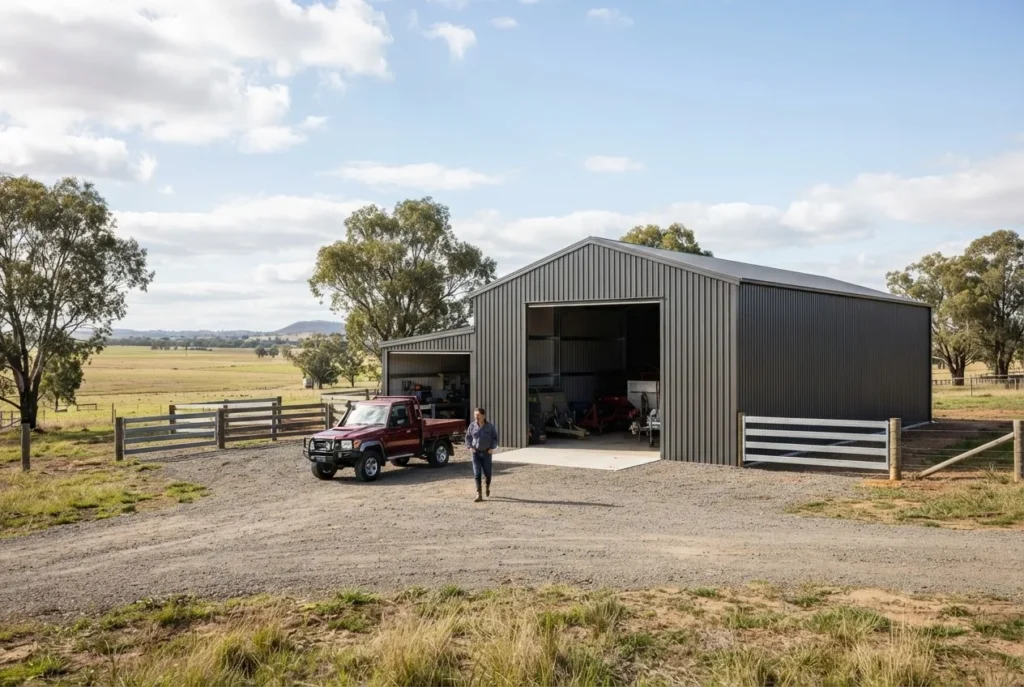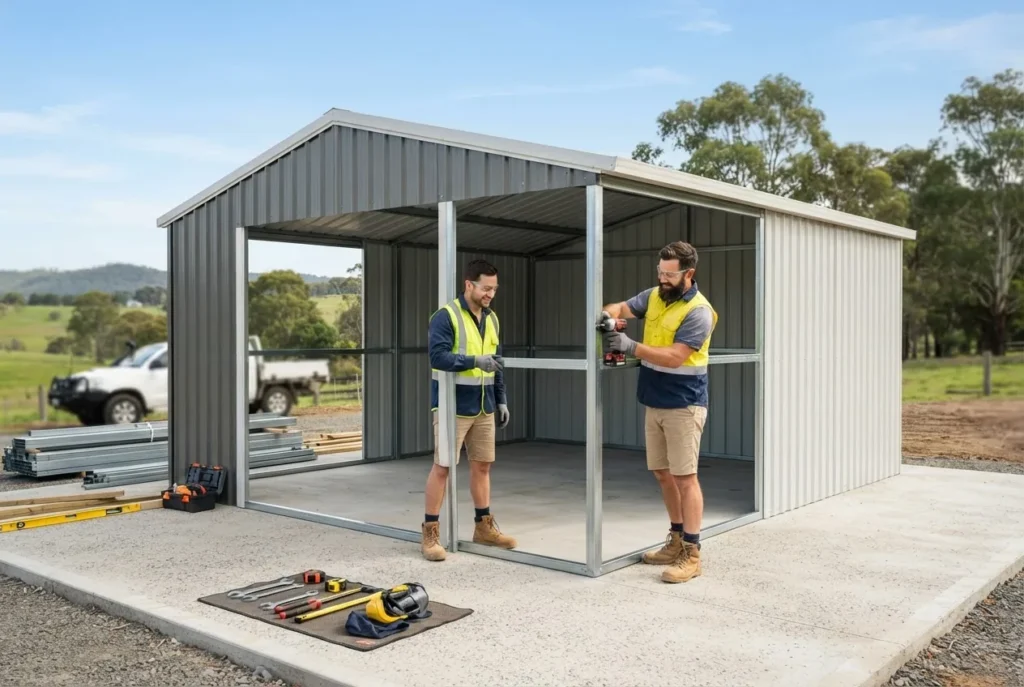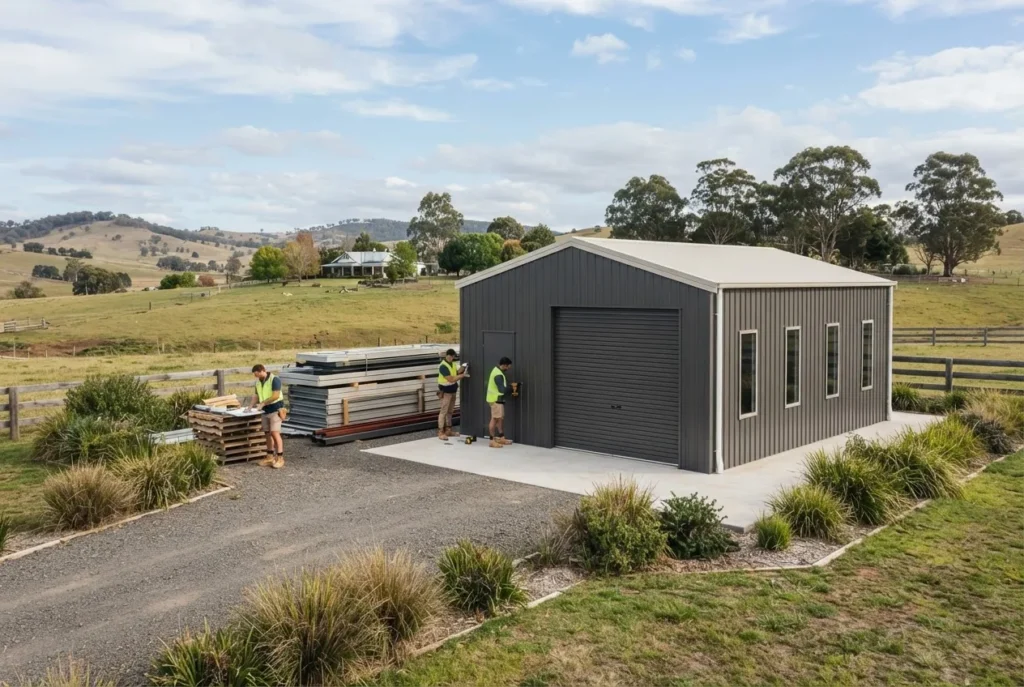


Framing a storage shed in Australia demands precision, a strong grasp of local regulations, and the right materials to ensure durability against diverse climate challenges. This pro guide dives deep into shed frame construction, focusing on practical use of Colorbond steel, adherence to wind rating standards, and navigating council approvals seamlessly for compliant, resilient sheds.
Whether you’re planning the frame from scratch or upgrading existing knowledge, this comprehensive walkthrough equips you with expert techniques, engineering insights, and regulatory know-how tailored to the Australian environment.
Understanding the Australian Context for Shed Frame Construction
Overview of Australian Building Codes Relevant to Shed Framing (National Construction Code – NCC)
The foundation of any shed frame project in Australia begins with compliance to the National Construction Code (NCC) administered by the Australian Building Codes Board (ABCB). The NCC outlines mandatory requirements for structural adequacy, fire safety, and energy efficiency that directly influence shed design and framing.
Particularly relevant are the NCC clauses covering lightweight structures where sheds are categorized under Class 10 buildings. These stipulate minimum material strengths, structural connections, and anchoring methods while referencing standards such as AS 1684 (residential timber framing) and AS/NZS 4600 (cold-formed steel structures).
Builders must ensure shedding framing respects these codes, incorporating proper load resistance and durability. Structural designs must also consider the local context of exposure—whether coastal, inland, or cyclone-affected zones—with the NCC providing conditional requirements accordingly.
Key Wind Rating Standards and Their Application (AS/NZS 1170.2)
Wind forces are a critical driver in framing design. The standard AS/NZS 1170.2: Structural design actions – Wind actions sets out comprehensive wind loading criteria tailored to varying wind classification zones across Australia.
This standard provides wind speed maps and parameters to inform engineering of lateral and uplift loads that a shed frame must withstand. It segments regions into zones—ranging from low-wind inland areas to high-wind cyclone-prone coastal belts—necessitating region-specific framing approaches to resist prescribed wind pressures effectively.
Applying these wind ratings is essential not only for safety but also for council approval processes since non-compliance can result in expensive rework or denial of permits. Thus, accurate wind classification and incorporating wind load-resistant framing features like bracing and tie-downs are fundamental in Australian shed construction.
Council Approval Processes and Local Government Requirements in Australia
Local councils govern building approvals and permits according to state and territory legislation. Approval requirements vary widely but generally mandate adherence to NCC standards, wind rating compliance, and environmental considerations.
Typical documentation includes framing plans, engineering certifications, and foundation details submitted through council portals. Certain jurisdictions permit exemptions for smaller garden sheds, but most larger or commercially purposed storage sheds require formal approval.
Builders must familiarize themselves with local government authorities’ expectations, including building surveyors and private certifiers’ roles in review and inspection. Common stumbling blocks include insufficient engineering detail and mismatches with wind rating codes, highlighting the importance of preparing robust documentation early.
Link to related foundational knowledge: Australian shed foundation requirements and best practices.
Understanding these contextual elements ensures shed frames are structurally sound, permitted legally, and resilient to Australia’s diverse environmental challenges.
Selecting Materials for Shed Frame Construction with a Focus on Colorbond Steel
Properties and Advantages of Colorbond Steel in Framing
Colorbond steel is the premier steel material choice for Australian sheds due to its exceptional durability, corrosion resistance, and aesthetic versatility. Manufactured by BlueScope Steel, Colorbond steel undergoes rigorous coating processes providing long-term UV protection and chemical resistance, ideal for harsh Australian climates.
The steel’s lightweight yet high tensile strength nature allows for slimmer framing profiles without sacrificing structural integrity, facilitating efficient portal frame or custom steel frame constructions. Its compatibility with a range of fasteners and accessories simplifies assembly while conforming to Australian building standards.
Colorbond’s color options also offer residential and commercial sheds an appealing finish preventing premature fade or corrosion common in untreated metals. For broader cladding and design options, explore the Barn shed design options in Australia and Colorbond vs Zincalume steel sheds to see how material choices influence frame and exterior paneling strategies.
Comparing Colorbond Steel Frames to Timber Frames: Structural and Compliance Considerations
| Aspect | Colorbond Steel Frames | Timber Frames |
|---|---|---|
| Durability | High resistance to rot, termites, and warping | Susceptible to moisture damage and pest infestation if untreated |
| Structural Strength | Superior tensile strength enabling slender, longer spans | Good strength with proper treatment; may require larger profiles |
| Compliance Ease | More straightforward in meeting NCC wind load requirements | Requires careful design under AS 1684 and treatment for longevity |
| Maintenance | Low maintenance due to corrosion-resistant coating | Moderate; requires periodic sealing, pest control |
| Environmental Factors | Better suited for coastal and high humidity areas | Better for temperate, less aggressive weather zones |
The choice between steel and timber framing must balance cost, site conditions, and required approval pathways, with Colorbond steel frequently preferred for cyclone and high-wind zones due to superior compliance with AS/NZS 1170.2. For detailed comparison, see Timber vs Colorbond steel framing for Australian garden sheds.
Role of Colorbond Cladding Panels Post-Frame Installation
Following framing completion, Colorbond cladding panels are installed to create the external envelope of the shed. They contribute additional structural rigidity, enhance weatherproofing, and provide a finished aesthetic aligned with building standards.
Cladding must align perfectly with framing to avoid gaps or weak points vulnerable to wind uplift or water ingress, common failure modes in inadequately framed sheds. Proper installation ensures the cladding’s UV resistance and corrosion protection perform as intended over the shed’s lifecycle.
Preparing Your Site for Framing a Storage Shed
Site Selection and Layout Planning
Careful site selection is the first critical step. Choose locations with minimal slope and good drainage to facilitate stable framing foundations.
Layout planning must consider shed orientation relative to prevailing winds, sunlight, and access points. Planning includes marking exact shed boundaries with pegs while respecting local setback requirements per council regulations.
When planning site layout and foundation size, options such as the 10×10 Colorbond garden and storage sheds in Australia offer efficient footprint choices, while larger sizes like 10 x 20 Colorbond steel storage buildings are common for expansive property layouts.
Ground Preparation and Concrete Slab Foundations as Framing Bases
Foundation integrity is paramount to framing success. Generally, a concrete slab foundation is preferred, providing a level, load-distributing base resistant to soil movement and moisture ingress.
Follow best practices by excavating the site to required depths, compacting the subgrade soil, and forming reinforced slabs typically at least 100mm thick for sheds under 20m², per current NCC and council guidelines.
Curing time of at least 7 days under moist conditions is standard before commencing framing to ensure slab strength stability.
For detailed foundational requirements and preparation steps, refer to the Australian shed foundation requirements and best practices.
Ensuring Compliance with Safety Standards during Site Prep
Safety at this preparatory stage involves hazard identification (uneven ground, buried utilities), provision of Personal Protective Equipment (PPE) such as gloves, helmets, and eye protection, and adherence to safe operating procedures for excavation and concrete work.
With a level, properly prepared site, the framing process can proceed smoothly and in compliance with building regulations and safety standards.
Step-by-Step Guide to Framing a Storage Shed in Australia
Essential Framing Tools and Equipment (nail guns, levels, saws)
Equipping yourself or your team with appropriate tools streamlines the framing process. Recommended tools include:
- Nail guns — pneumatic or battery-powered models improve speed and fastening precision, especially for steel framing.
- Spirit levels and laser levels — essential for ensuring framing is plumb, level, and square.
- Circular saws or metal cutting saws — appropriate for timber or steel materials.
- Measuring tapes and framing squares — for accurate measurements and right-angle cuts.
- Drills and impact drivers — for pre-drilling and screw fastening in steel frames.
Using the correct fasteners and connectors outlined below in combination with these tools is crucial for structural integrity.
Choosing the Right Shed Frame Construction Technique (e.g., Portal Frame, Timber Frame)
The two primary framing systems viable for Australian sheds are:
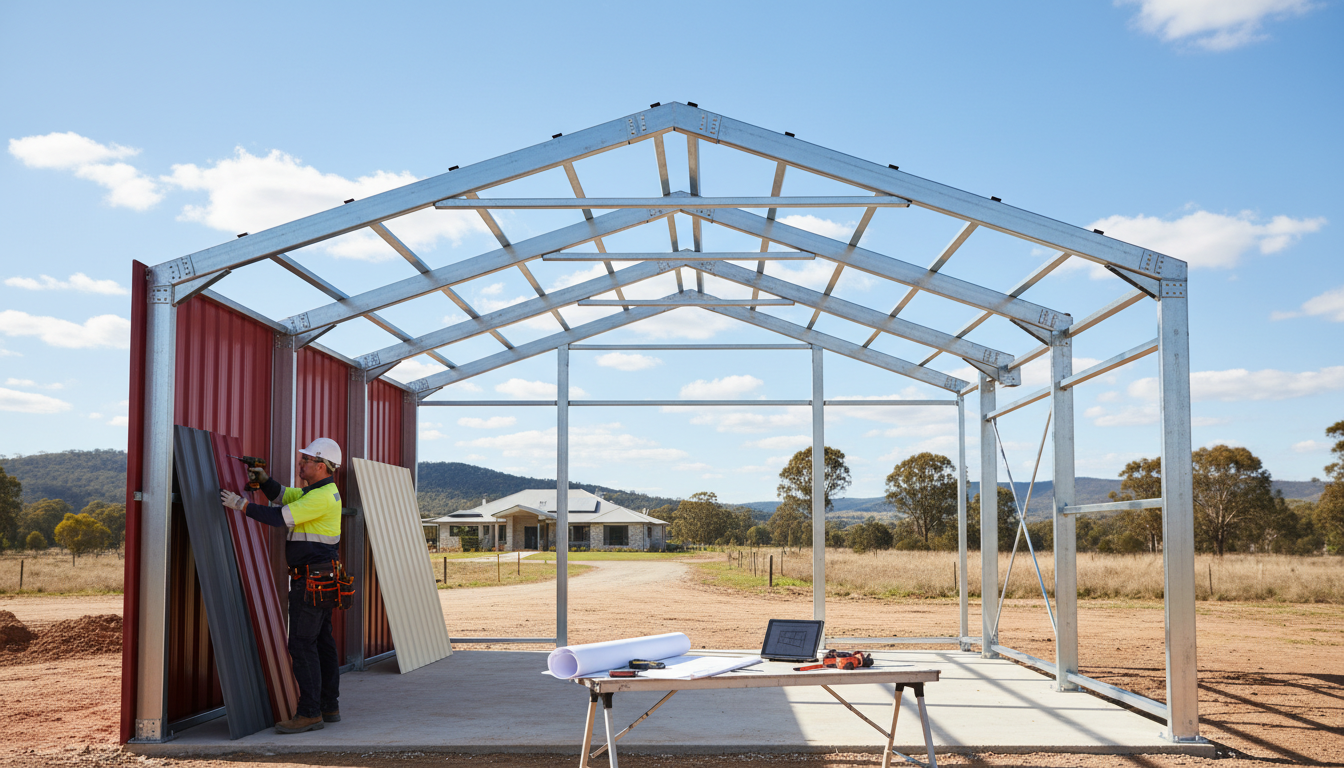
- Portal Frame Construction: A steel frame system using rigid joints allowing large clear spans without internal supports. Ideal for storage sheds requiring open internal space and highly suitable for Colorbond steel framing.
- Timber Frame Construction: Traditional method using treated timber posts and rails. This remains popular for smaller sheds and those seeking a more budget-friendly alternative, though timber requires more maintenance and protection from elements.
Steel portal frames generally provide superior wind resistance and easier compliance with NCC and AS/NZS 1170.2, making them preferable in high wind areas.
For pre-engineered options, steel frame shed kits with portal frame construction in Australia offer turnkey framing solutions.
Fasteners and Connectors: Brackets, Anchors, and Tie-Downs for Structural Integrity
Fastening elements ensure the frame holds together under stress, especially wind loads. Essential components include:
- Metal brackets and joist hangers – connect framing members and transfer loads efficiently.
- Anchor bolts – secure framing posts and base plates firmly to concrete foundations.
- Tie-down straps and hold-downs – resist uplift forces from wind, crucial in cyclone-prone zones.
- Self-drilling screws and rivets – used specifically for steel elements securing cladding and internal framework.
Use anchors and brackets rated to Australian Standards; improper fastening is a common cause of frame failure under stress.
For guidance on Australian fasteners and accessories, see anchors and tie-down brackets for Australian garden sheds.
Practical Stepwise Assembly Process with Best Practices
- Mark and secure layout: Double-check foundation dimensions and mark out positions for frame posts and beams.
- Install base anchors: Set anchor bolts or base plates into the concrete slab per engineer specifications.
- Assemble frame members: Cut and pre-drill steel or timber components as per design; dry-fit to ensure alignment.
- Raise and fix frame: Use appropriate lifting tools or manual assistance for larger frames; secure with brackets and screws.
- Install cross bracing: Incorporate bracing elements to resist lateral movement in accordance with wind rating prescriptions.
- Check for square and level: Repeatedly verify alignment and structural plumbness throughout assembly.
- Tighten all connections: Use torque-controlled tools where relevant to ensure fastener integrity.
- Consult engineer for inspection: Have structural engineers or certifiers review the frame prior to cladding installation.
For more detailed framing techniques matched to shed models, review framing for 10×6 Colorbond garden shed framing techniques in Australia and similar guides.
This hands-on sequence backed by professional standards ensures a structurally sound base ready to face Australian conditions. For professional framing and installation advice, see professional garden shed installation and framing in Australia.
Integrating Wind Ratings into Shed Frame Design and Construction
Understanding Wind Classification Zones in Australia
Australia’s varied climate zones, from temperate south to cyclone-prone north, require differential wind design considerations. Wind classification maps in AS/NZS 1170.2 categorize areas into Risk Categories and Terrain Categories affecting wind force calculations.
For example, cyclone-rated zones (e.g., Queensland coastal regions) demand higher framing stiffness, heavier anchors, and increased bracing compared to low-wind inland zones.
Engineering Best Practices for Wind-Resistant Shed Frames
Key methods to meet wind rating demands include:
- Robust bracing: Diagonal steel cross bracing to distribute lateral wind loads.
- Secure foundation anchorage: Embed high-strength anchors capable of resisting uplift.
- Use of portal frames: Engineered rigid connections enhance frame stiffness.
- Minimizing openings and gaps: Proper cladding attachment reduces wind penetration and suction forces.
- Over-engineering in high-risk zones: Increasing section sizes and fastener grade as guided by engineers.
Periodic consultation with structural engineers is strongly advised to certify compliance, especially in high wind rating classifications. Engineers perform calculations validating that shed frames safely resist applicable wind forces. Explore sheds designed for extreme conditions with reference to cyclone rated Colorbond garden sheds in Australia.
Consulting Structural Engineers for High Wind Rating Compliance
Collaboration with structural engineers involves providing detailed site plans, soil reports, and shed specifications. They generate engineering reports certifying that framing design meets AS/NZS 1170.2 and NCC regulations.
These reports form part of council approval submissions and are required for insurance and legal assurance.
Maintaining clear communication and early engagement with engineers avoids costly redesigns and approval delays, ensuring that shed frames remain safe under design wind speeds.
Navigating Council Approvals and Compliance for Shed Frames
Documentation and Applications Required for Shed Frame Approval
Successful council approval hinges on comprehensive documentation. Key requirements include:
- Site plan showing shed location respecting boundary setbacks
- Engineering structural reports detailing framing design and compliance
- Material specifications, including Colorbond steel certifications
- Construction method statements covering framing sequences and safety measures
- Completed council application forms with applicable fees
Each local council may additionally require soil test results or environmental impact statements based on site sensitivity.
Role of Structural Engineers and Building Surveyors in Council Processes
Structural engineers provide the technical certification assuring shed frames meet NCC and AS/NZS standards, while building surveyors conduct inspections pre- and post-construction embodying compliance verification.
Surveyors may impose specific conditions or require remedial actions before final sign-off, underpinning the importance of robust engineer-supplied framing designs and record keeping.
Common Pitfalls to Avoid in the Approval Process
- Incomplete or unclear engineering documentation
- Failure to recognize and apply local wind rating requirements
- Ignoring precise site setbacks and size limits
- Use of non-compliant or uncertified materials
- Poor communication with council officers delaying responses
Being methodical in documentation and early liaison with local authorities mitigates these risks, smoothing the pathway to approval.
For insights tailored to specific local approval issues, consider the 12 x 8 Colorbond shed council approvals in Australia for practical examples.
Further, read Timber vs Colorbond steel framing for Australian garden sheds to understand how material choice impacts approval complexities.
For broader barn shed approvals context, visit Council approvals for barn sheds in Australia.
Safety and Quality Assurance during Shed Frame Construction
Applying Australian Safety Standards on Site
Framing work must conform to Safe Work Australia regulations, including hazard assessment, PPE use (helmets, gloves, eye protection), and machinery operation protocols. Regular safety toolbox talks should occur to reinforce risk awareness.
Key hazards include manual handling injuries, tool-related incidents, and exposure to environmental elements.
Quality Control Checks Throughout the Framing Process
Consistent inspections verify:
- Correct dimensions and squareness of framing components
- Compliance of fasteners and connection torques with engineering specs
- Proper anchor embedment and foundation integrity
- Appropriate bracing installation and alignment
Checklists should be utilized systematically to document progress and flag issues early. For advice on essential fasteners and accessories supporting structural quality, see anchors and tie-down brackets for Australian garden sheds.
Final Inspection and Sign-Off Procedures
Before cladding installation, a final frame inspection by the builder and/or inspector validates compliance with design and safety standards. Documentation is prepared for council and engineer approval to obtain official sign-off certification.
For additional quality and safety gear recommendations, refer to professional garden shed installation and framing in Australia guides.
The integration of safety and quality assurance measures ensures longevity and legal compliance of framed sheds across Australia’s demanding conditions.
Conclusion
Mastering framing a storage shed in Australia requires marrying practical construction techniques with a sound understanding of Colorbond steel advantages, regional wind rating standards, and the often complex council approval landscape. This pro guide has laid out the essential steps—from regulatory frameworks and material selections through site prep, framing assembly, wind-resistant design, and official compliance—to empower builders with confidence and clarity.
By applying these expert strategies and collaborating with engineers and local authorities early, you ensure your shed frame not only stands firm but also meets all legal and safety benchmarks. Begin your project well-informed and build for lasting structural success.
Frequently Asked Questions
What is the best framing method for sheds in high wind areas of Australia?
Portal frame construction using Colorbond steel is best for high wind zones in Australia. It offers rigid joints and superior stiffness, enabling large clear spans and strong resistance to lateral wind loads, compliant with AS/NZS 1170.2 wind rating standards.
How does Colorbond steel framing compare to timber framing for Australian storage sheds?
Colorbond steel frames are more durable, corrosion-resistant, and better suited for coastal or cyclone-prone areas, while timber frames may require more maintenance and treatment. Steel framing also simplifies meeting wind rating requirements under Australian Standards compared to timber.
What types of fasteners are essential for securing shed frames in Australia?
Critical fasteners include metal brackets, anchor bolts, tie-down straps, and self-drilling screws. These components ensure structural integrity by resisting wind uplift and lateral forces, and must comply with Australian Standards for framing durability.
When should a structural engineer be consulted during shed frame construction?
Consult a structural engineer early when designing frames for high wind zones or unusual site conditions. They provide certified framing designs, verify wind load compliance, and produce reports required for council approvals and legal assurance.
Which council documents are typically required to approve storage shed framing in Australia?
Councils usually require site plans, engineering structural reports, material certifications for framing, construction method statements, and completed application forms with fees. Some councils may also request soil tests or environmental impact assessments.
Is it necessary to install a concrete slab foundation before framing a storage shed?
A concrete slab foundation is generally necessary as it provides a stable, level base that resists soil movement and moisture. It ensures proper load distribution to support framing and maintain structural integrity over time.
How do wind rating zones influence shed frame design in Australia?
Wind rating zones dictate required frame stiffness, anchorage strength, and bracing methods. Coastal cyclone-prone zones require stronger frames with heavy anchors and robust cross bracing to resist uplift and lateral wind forces, following AS/NZS 1170.2.
What is framing a storage shed?
Framing a storage shed is constructing the skeletal structure that supports the building’s walls and roof. It involves assembling posts, beams, and braces, typically from steel or timber, forming the base framework before exterior cladding is applied.