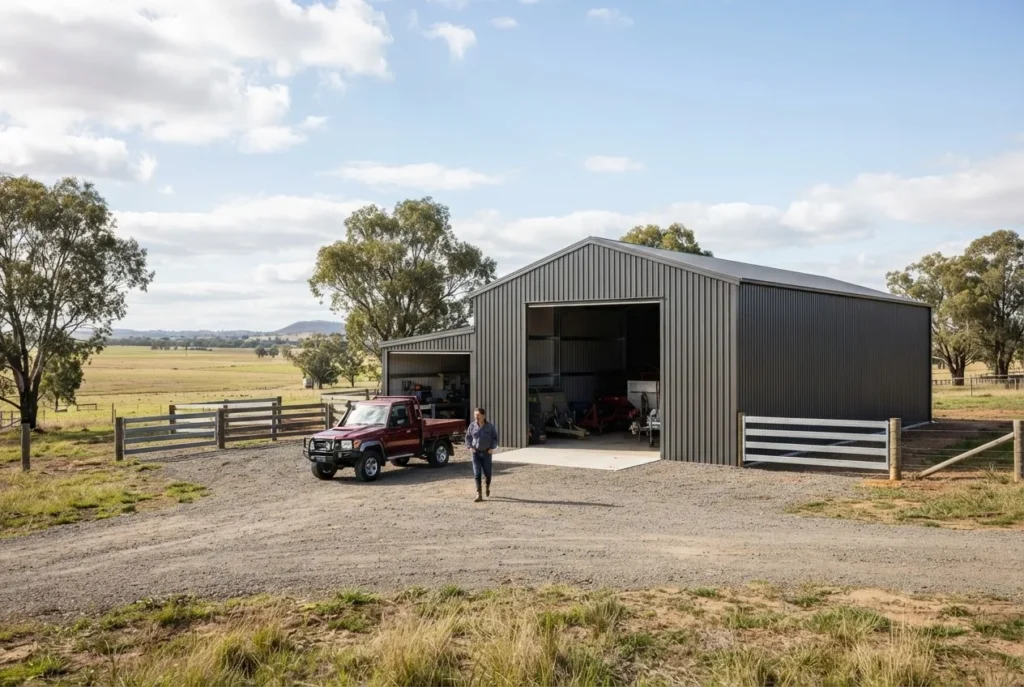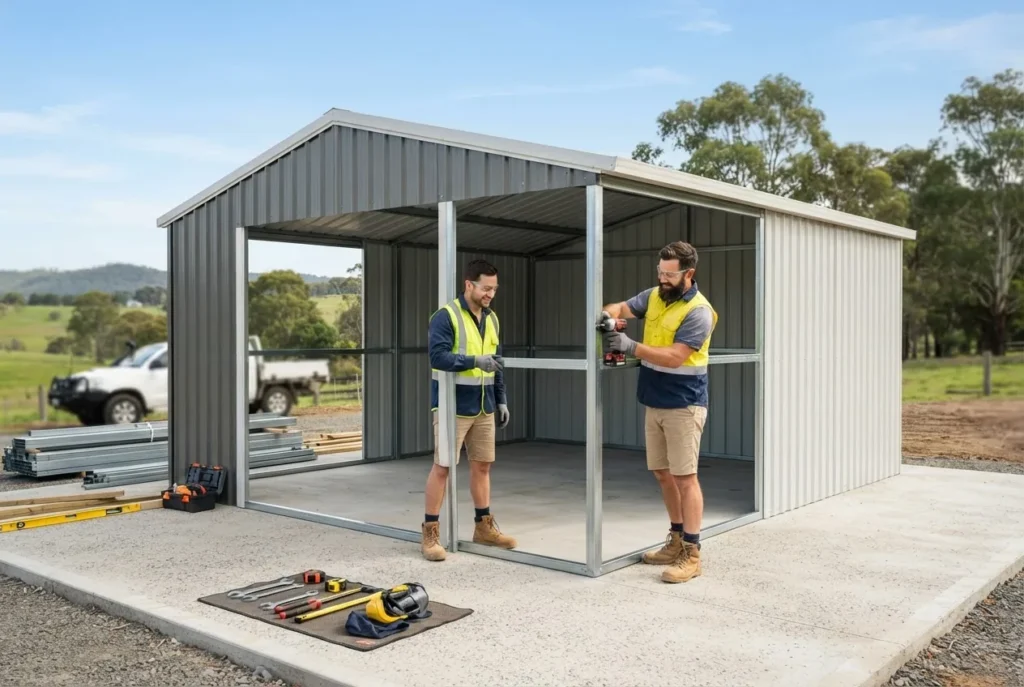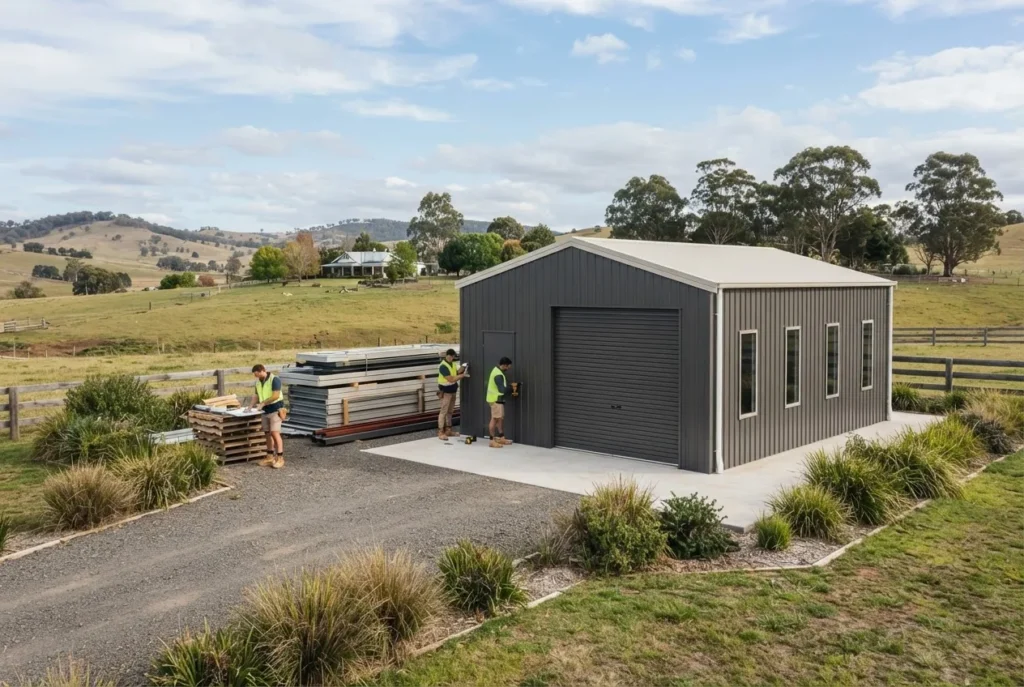


If you’re choosing a storage shed floor in Australia, your base isn’t just a platform — it’s the structural foundation that drives durability, wind performance and long-term waterproofing. This guide distils best practice for shed flooring, council approvals, and site-specific choices (from Perth’s summer heat to QLD’s cyclones), with practical options for DIY shed kits and engineered builds.
Planning a 6×9 footprint? Review door heights, wind classes and budget ranges in our 6×9 storage shed guide before finalising your slab.
What Is the Best Storage Shed Floor for Australian Conditions?
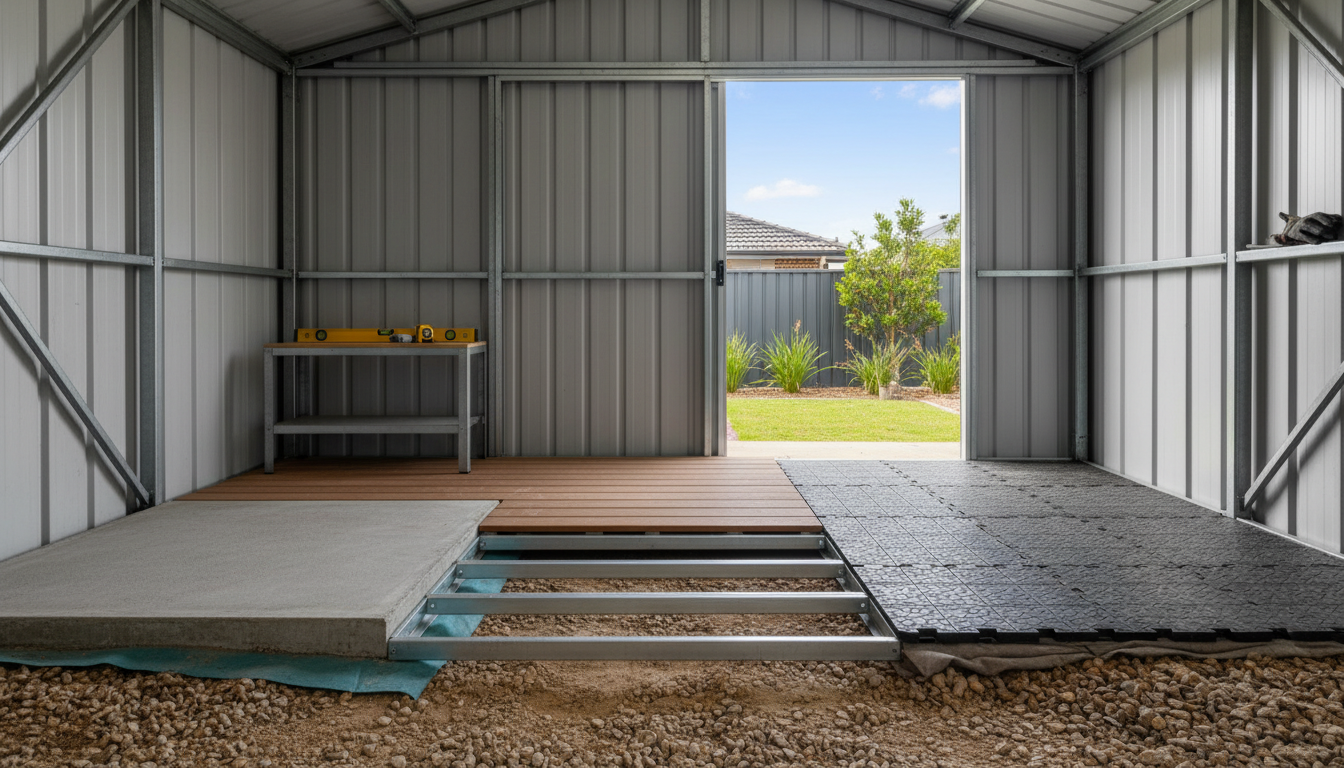
The “best” storage shed floor depends on weight, exposure, council rules, and budget. For most Colorbond steel sheds (3×3 m to 6×6 m), a reinforced concrete slab with correct tie-downs gives the longest lifespan and the best wind performance. For small garden sheds and renters, modular options like a plastic shed floor or pavers can be fast and affordable. Timber bases work well where access limits concrete or where you need a raised floor above splash zones.
Option 1: Reinforced concrete slab (AS 2870)
- Typical use: Permanent floors for garden sheds, rural sheds, custom Colorbond garages in Perth and regional WA.
- Thickness: Commonly 100 mm for light storage; 125 mm+ for heavier loads or vehicle storage (engineer to confirm).
- Reinforcement: SL72 mesh typical for small sheds; thickenings/beams at edges; dowels at joints as specified by engineer.
- DPM: 200 μm polyethylene under slab; lap and tape per good practice.
- Anchors: Cast-in hold-down bolts or M12–M16 chemical anchors sized to your wind-rated shed design.
- Pros: High durability, excellent tie-down resistance, pest-resilient, cleanable, easy to seal.
- Cons: Higher upfront cost, requires formwork and curing time, council or certification may be required.
- Standards: AS 2870 (residential slabs), AS 3600 (concrete), AS/NZS 1170.2 (wind actions).
Option 2: Garden shed timber base (AS 1684)
- Typical use: Sloping or reactive sites; where access limits a concrete truck; raised garden shed timber base for airflow.
- Material: H3/H4 treated pine or hardwood bearers and joists, hot-dip galvanised stirrups/posts.
- Design: Sized spans to AS 1684; allow 150 mm min ground clearance for ventilation; use decking or sheet flooring (exterior grade).
- Termites: Incorporate termite barriers and regular inspection zones for QLD, NT, northern NSW and WA.
- Anchoring: Connect shed base rails to joists with brackets and engineer-specified hold-downs (especially in Regions C/D).
- Pros: Faster on tight sites, raised for drainage, adjustable, repairable.
- Cons: Requires maintenance; ensure clearances; watch corrosion at fixings in coastal areas.
Option 3: Plastic shed floor / modular grid
- Typical use: Renters, small garden shed base up to ~3×3 m, fast DIY.
- System: Interlocking recycled plastic grids filled with compacted crusher dust; or fully-moulded plastic panels.
- Base prep: Geofabric, 75–100 mm compacted road base, screeded level; edge restraint for stability.
- Anchoring: Use manufacturer-approved anchors into the grid or perimeter beams; check wind rating limits.
- Pros: Light, quick, permeable (good drainage), no wet trades.
- Cons: Lower point-load capacity; verify UV stability and load rating; not ideal for vehicle loads.
Option 4: Pavers on compacted base
- Typical use: Easy shed floor ideas for light storage and small sheds.
- Build-up: Excavate; geofabric; 75–100 mm road base compacted; 20–30 mm sand; lay pavers; sweep jointing sand.
- Anchors: Screw-in ground anchors or perimeter sleepers to fix shed down; check uplift design for your wind region.
- Pros: Affordable, DIY friendly, removable.
- Cons: Movement over time; keep flat for door thresholds; plan drainage around the edge.
Using a shed flooring kit or base kit
A shed flooring kit or storage shed base kit bundles the frame, fasteners, and sometimes grid tiles. For a typical garden shed floor kit 3×3, expect perimeter channels, cross-members, and adjustable feet or pegs. Check that the storage shed floor kit has:
- Load rating and maximum shed size
- Anchor details for your wind region (A/B vs C/D)
- Corrosion protection (galvanised or powder-coated)
- Compatibility with your shed brand’s base rails
Not sure which base to start with? Our shed base kit guide compares plastic grids, timber subfloors, steel piers and engineered slabs.
What Are the Best Shed Materials for Perth’s Climate?
Perth sees high summer heat, coastal air in many suburbs, and occasional strong easterlies. Materials and coatings matter for longevity and comfort. For walls and roofs, most premium systems use Colorbond steel; for bases, prioritise corrosion-resistant fixings and moisture control to keep your storage and tools dry.
Colorbond vs Zincalume — Which Is Better for WA Conditions?
| Feature | Colorbond | Zincalume |
|---|---|---|
| Coating | Pre-painted steel (multiple layers) | Aluminium/Zinc alloy coating |
| Coastal suitability | Use Colorbond Ultra near severe marine zones; stainless fixings recommended | Good general performance; avoid very close marine exposure |
| Heat performance | Cooler colours can reduce heat gain; pair with insulation | Reflective in new condition; still benefits from insulation |
| Aesthetics | Wide colour range to match WA homes | Metallic silver appearance only |
| Typical use | Premium residential sheds, custom Colorbond garages in Perth | Rural sheds NSW/WA, farm machinery storage where appearance is secondary |
Tip: For coastal WA (per AS 4312 corrosivity categories), specify galvanised or stainless anchors for the shed and base, and seal slab edges to minimise corrosion.
How to Choose the Right Shed and Base for Your Site
5-Step Buying Guide for Custom Sheds in Australia
- Define use and loads: bikes vs ride-on vs farm machinery storage; confirm door thresholds and ramp needs.
- Check wind region and terrain: use AS/NZS 1170.2; select wind-rated sheds for cyclonic areas in QLD/WA.
- Pick the base: concrete slab (most durable), garden shed timber base, plastic grid, or pavers. Ensure a compatible shed and base anchor detail.
- Materials and coatings: Colorbond vs Zincalume comparison; fixings class; termite and moisture barriers.
- Council and compliance: planning overlays, setbacks, NCC, ShedSafe accreditation, and engineer’s certificate.
If you’re leaning DIY, this DIY garden shed kit guide covers materials, wind ratings and approvals to match your chosen base.
How to Get Council Approval for Your Custom Shed in WA
Rules vary by local government. Many small garden sheds can be exempt if under certain size/height limits, but wind tie-downs and setbacks still apply. For larger or custom steel sheds in Perth and regional WA:
- Confirm planning requirements: check setbacks, open space, and any estate covenants.
- Choose application path: BA1 (certified) or BA2 (uncertified) under the WA Building Act. A registered building surveyor can certify your documents.
- Supply documents: site plan, slab/base detail, framing drawings, engineer’s wind certification to AS/NZS 1170.2, and tie-down schedule.
- Allow time: approvals can take days to weeks depending on council workload.
Added 2024 WA wind-rating compliance notes: Many coastal and northern WA sites fall into higher wind regions (B or C). Ensure your slab hold-downs, anchor spacings, and shed frame are certified for your exact wind region and terrain category.
Anchoring, Drainage and Durability Essentials
- Anchors: Use cast-in or chemical anchors sized by an engineer. In cyclonic regions (C/D), hold-down rods and additional bracing may be required for cyclone-rated sheds QLD and northern WA.
- Moisture: Install DPM under slabs; seal edges; raise thresholds above finished ground; add sills for roller doors.
- Drainage: Grade the base pad to fall away (1:60 is a good rule of thumb); consider spoon drains or ag drains where needed.
- Termite management: Combine treated timber, stainless or galvanised barriers, and inspection zones in termite-prone regions.
- Bushfire: In BAL areas, reduce ember entry with sealed floor gaps and metal mesh to AS 3959 guidance.
- Corrosion: Near marine or industrial zones, use higher class coatings and compatible fasteners.
Shed Floor Ideas and Real-World Examples
Looking for shed floor ideas that balance performance and cost?
- Premium finish: 100–125 mm slab with epoxy sealer for a custom-built double garage in Perth; quiet, dust-free, easy to clean.
- DIY budget: Pavers on compacted base with perimeter sleepers for small floors for garden sheds.
- Rental-friendly: Modular plastic shed floor tiles on geofabric and road base; disassemble and take with you.
- Sloping block: Raised garden shed timber base with H4 posts and H3 joists, mesh lining for vermin protection.
- Rural NSW: For rural sheds NSW storing quad bikes, opt for a 125 mm slab with thickened edge beams and Class 4 fixings.
Frequently Asked Questions
Do I need a concrete slab for a small garden shed?
No. For small sheds, a garden shed base using pavers, a plastic shed floor, or a shed flooring kit can work well. For heavier storage, longevity, or cyclonic areas, a slab with certified anchors is recommended.
Is a shed flooring kit council-approved?
Councils don’t “approve kits” — they approve your building application. Your storage shed base kit or storage shed floor kit must meet the engineer’s design and tie-down requirements for your wind region and site.
How thick should a slab be for a 3×3 shed?
Many 3×3 sheds perform well on a 100 mm slab with SL72 mesh and proper edge thickenings, but always follow your engineer’s design and the shed supplier’s anchor schedule.
Can I anchor to an existing patio slab?
Yes, if the slab is adequate in thickness, reinforcement and edge thickenings, and you can install compliant anchors. Have an engineer verify capacity and cracking risk before drilling.
What about condensation?
Use DPM under slabs, seal edges, add ventilation, and consider roof insulation or anti-condensation blankets to reduce drips.
Related Projects We Design and Supply Across Australia
- Steel sheds Perth and custom Colorbond garages Perth
- Custom carports Melbourne and affordable carports for Australian homes
- Rural sheds NSW and farm machinery storage solutions
- DIY shed kits and council-approved sheds WA
- Cyclone-rated sheds QLD for Regions C/D
- Colorbond vs Zincalume comparison for coastal and inland sites
- Portal frame barns and gable or skillion roof options
Specifications Checklist for Your Shed and Base
- Wind region and terrain category to AS/NZS 1170.2
- Base selection (slab/timber/plastic/pavers) and DPM
- Anchor type, size and spacing from engineer
- Corrosion category (AS 4312) and compatible fixings
- Termite and drainage design; door thresholds and ramps
Standards, Climate and Industry Resources
- Housing Industry Association (HIA) — guidance on approvals and building processes
- Master Builders WA — local approval and construction advice
- Bureau of Meteorology — rainfall and wind data for site planning
- Australian Steel Institute — steel design and durability guidance
- CSIRO Building & Construction — research on moisture, durability, and materials
Industry outlooks such as the “2025 Australian Steel Market Outlook” and the “2025 HIA Outdoor Structures and Home Improvement Report” indicate strong ongoing demand for quality steel sheds and outdoor structures, reinforcing the value of choosing compliant, long-life bases and materials.