
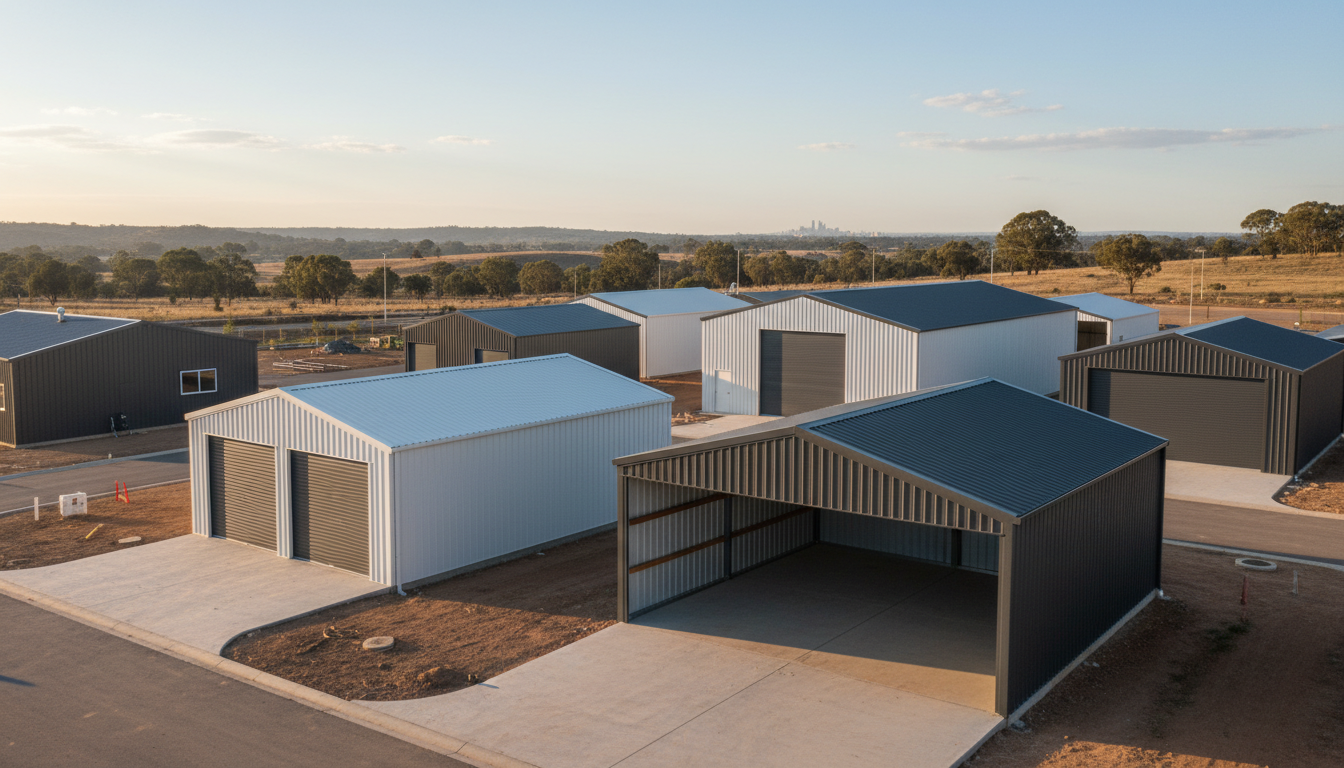

Your 2025 guide to Australian warehouse-style shed pricing
Asking “how much does a warehouse cost?” Whether you’re planning a Colorbond steel shed for regional WA, a custom-built double garage in Perth, or a rural machinery shed in NSW, this guide breaks down real Australian costs, specs, and council rules so you can buy once and buy right.
What drives warehouse cost in Australia?
Warehouse-style sheds (portal frame steel buildings) vary widely in price. Your final cost per square metre depends on:
- Dimensions and span: Larger clear spans, higher eave heights, and wider portal frame bays increase steel tonnage.
- Wind region and terrain: AS/NZS 1170.2 wind actions (Regions A–D) and cyclonic design uplift can add heavier members, extra hold-downs and wind-lock roller doors.
- Site classification: Soil class and slab design, bushfire BAL ratings, and coastal corrosion category (C1–C5).
- Cladding and finish: Colorbond vs Zincalume, standard vs Ultra for marine zones, Colorbond Matt, or hot-dip galvanised columns.
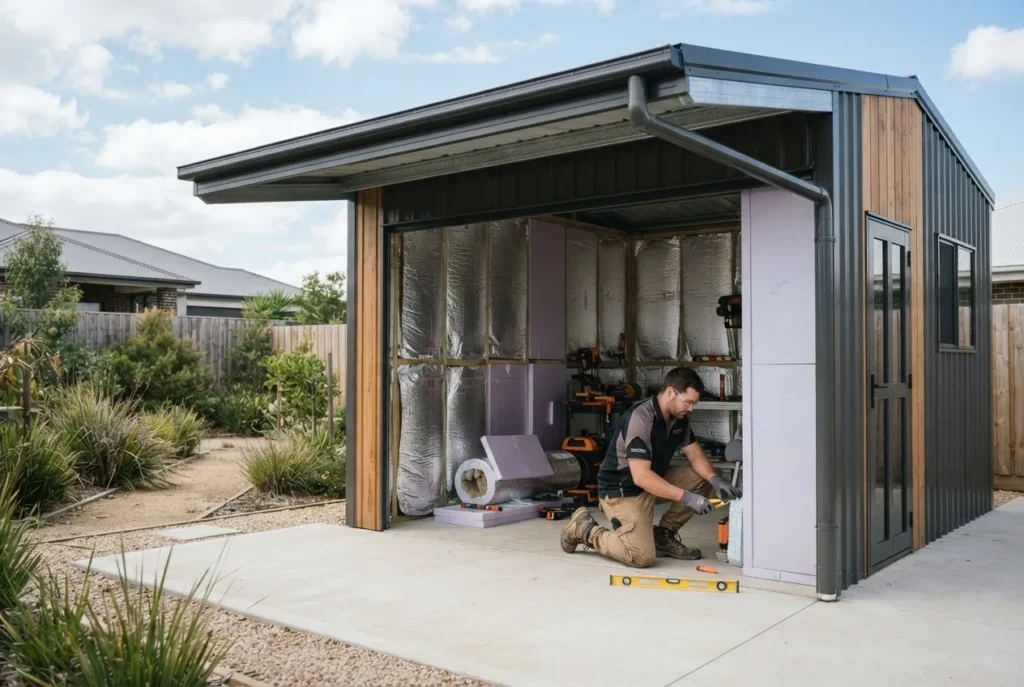
- Thermal control: Anticon blanket vs insulated roof panels, ridge vents and whirlybirds.
- Open front vs enclosed: Enclosed walls, fire separation, personnel doors, windows and insulation add cost.
- Openings and automation: High-cycle, wind-rated roller doors, motorisation, and safety sensors.
- Fit-out: Mezzanine floors, electrical, lighting, racking loads (UDL), plumbing, and office pods.
- Install method: DIY shed kits vs supply-and-install vs turnkey build (earthworks, services, slab, drainage).
- Compliance: NCC 2022, AS/NZS 4600 (cold-formed steel), AS 4100 (steel structures), engineer’s certification, and local council permits.
How much does a warehouse cost in Australia in 2025?
Use these ballpark figures as a planning tool. Pricing is GST-inclusive and assumes common specs; remote sites, severe wind ratings (Region C/D), or marine environments trend higher.
Typical per‑m² ranges (steel portal-frame sheds)
- Kit only (non-cyclonic, Region A/B): $90–$160 per m² for Zincalume; $110–$190 per m² for Colorbond.
- Kit only (cyclonic, Region C/D): $140–$220 per m² Zincalume; $160–$250 per m² Colorbond, with wind-rated doors and extra fixings.
- Install labour (frame and cladding): $80–$150 per m² depending on height, access and complexity.
- Concrete slab and footings: $120–$180 per m² (100 mm), or $180–$300 per m² for thicker/heavy-duty forklift/racking loads.
- Turnkey allowances (earthworks, drainage, services): $5,000–$25,000+ depending on site falls and stormwater management.
To benchmark supplier categories and kit vs turnkey comparisons, review Fairdinkum shed prices.
Blended benchmarks for a fully enclosed warehouse-style shed:
- Basic enclosed storage shed (non-cyclonic): $350–$700 per m² installed (excludes complex fit-out).
- Up-specced with insulation, mezzanine, high-cycle doors: $600–$950 per m² installed.
- Industrial/DA-heavy builds with office fit-out and fire compliance: $1,000–$2,000+ per m² turnkey.
Worked examples
Example 1: 12 m x 9 m enclosed Colorbond shed (Region A, 3.6 m eave, 2 roller doors, anticon, slab)
- Kit: ~$18k–$23k
- Install: ~$10k–$15k
- Slab: ~$13k–$17k
- Doors, electrical lite, council: ~$5k–$10k
- Indicative total: $46k–$65k ($425–$600 per m²)
Example 2: 18 m x 12 m workshop (Region C, 5 m eave, wind-lock doors, insulation, heavier slab)
- Kit: ~$45k–$65k
- Install: ~$25k–$40k
- Slab (150 mm + thickenings): ~$35k–$50k
- Services, approvals, drainage: ~$12k–$25k
- Indicative total: $117k–$180k ($540–$830 per m²)
For open‑front rural storage comparisons, see pricing and design on hay sheds in Australia.
Colorbond vs Zincalume — which is better for WA conditions?
WA combines hot summers, coastal salt spray and high UV. Here’s how the cladding choices compare.
| Feature | Colorbond steel | Zincalume steel |
|---|---|---|
| Finish | Painted, high UV resistance, many colours incl. Matt | Metallic alloy coating (no paint), silver appearance |
| Coastal performance | Colorbond Ultra recommended in C4–C5 marine | May require more maintenance in marine zones |
| Heat reflectivity | Thermatech technology available for cooler roofs | Good natural reflectivity, less control over aesthetics |
| Cost | Typically +10–20% over Zincalume | Lower upfront cost |
| Best for | Premium homes, custom Colorbond garages Perth, coastal sheds | Budget-focused rural sheds and DIY shed kits |
What are the best shed materials for Perth’s climate?
For steel sheds Perth owners love, prioritise:
- Colorbond Ultra near the coast; galvanised purlins/girts and hot-dip galvanised base plates to combat C3–C5 corrosion.
- Anticon blanket or insulated panel roofing to handle summer heat and winter condensation.
- Quality fasteners with Class 4 coating; avoid galvanic corrosion by matching metals.
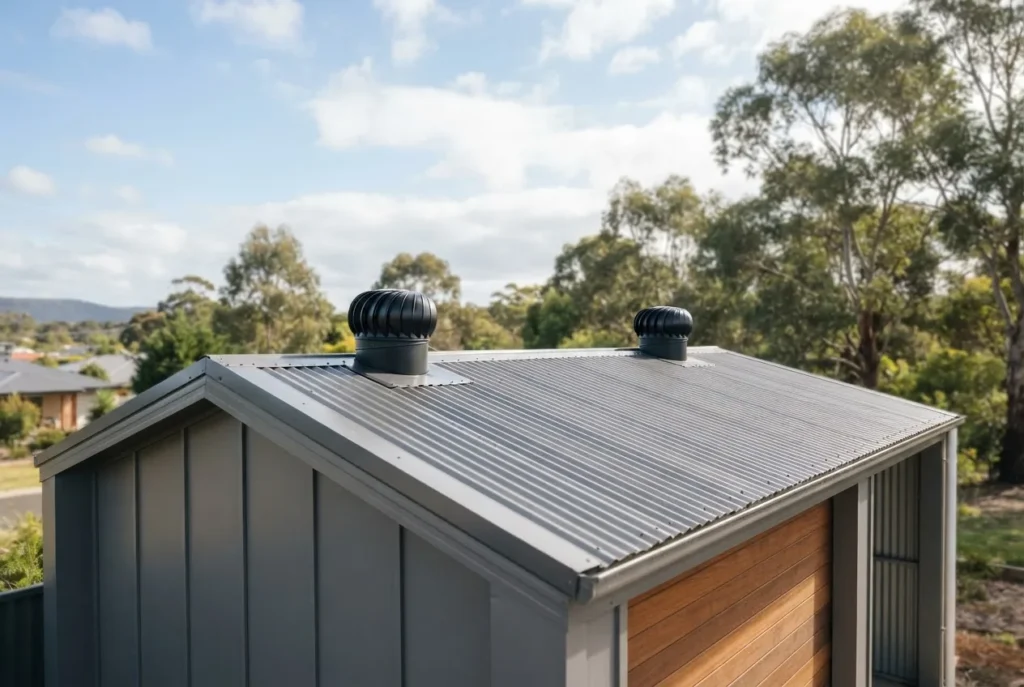
- Ventilation: ridge vents or whirlybirds plus eave inlets keep workshops comfortable.
For inland WA, Zincalume is a solid budget pick, but Colorbond still wins if you want heat-reflective colours and a premium look.
Added 2024 WA wind-rating compliance notes: In coastal Perth and the Peel region, check your exact wind region and terrain category under AS/NZS 1170.2; many suburbs require Region A ultimate wind speeds with local topographic effects. Taller sheds and skillion roof sheds may need upgraded hold-downs.
Regional cost modifiers across Australia
- Perth and WA Southwest: Heat/UV and coastal air push many buyers to Colorbond Ultra and insulated roofing. Slab prices are stable but check soil reactivity.
- North QLD: cyclone-rated sheds QLD (Region C/D) need wind-rated doors, extra connections, and thicker sheeting—allow +15–35% on kits.
- SE QLD and Northern NSW: Summer storms and high humidity—spec ventilation and anti-condensation blanket.
- Regional/rural NSW and VIC: rural sheds NSW often choose open-front bays for farm machinery storage; lower install cost on flat, accessible sites.
- Tasmania: Cold, wet winters—insulation and condensation control pay back quickly.
- Metro Sydney/Melbourne: Tight access increases labour; consider panelised erection or crane time for taller buildings.
Council approvals, engineering and compliance
Most enclosed sheds and custom carports Melbourne, Sydney and Perth-wide require planning and/or building approvals. You’ll typically need engineered plans, a site plan, slab/footing design, and evidence of stormwater management compliant with NCC 2022 and local policies.
How to get council approval for your custom shed in WA
- Confirm zoning and setbacks with your local council (council-approved sheds WA are easier with compliant siting).
- Obtain site plan, elevations, engineering (AS/NZS 1170.2, AS/NZS 4600), and slab drawings.
- Lodge a Building Permit application (BA2 or BA1) with energy compliance if required; coastal or BAL areas may need extra details.
- Arrange inspections (footings/slab as specified). Keep Delivery Dockets and Certificates of Compliance on file.
- Finalise stormwater connection; some councils require on-site retention for large roof catchments.
Tip: Where applicable, compare Colorbond vs Zincalume appearance requirements in estate design guidelines—some estates specify colours and gable roof sheds over flat skillion roof shed designs.
Real-world build examples
Case study A: Custom-built double garage in Perth (6 m x 7 m)
- Spec: Colorbond Matt roof/walls, 2.7 m eave, insulated roof, single high-cycle roller door, PA door, slab.
- Outcome: Low-glare finish suited to modern homes; insulation lowered summer heat gain significantly.
- Budget: $32k–$42k installed, including approvals and electrical pre-wire.
Case study B: Farm machinery storage, regional NSW (15 m x 9 m open-front)
- Spec: Zincalume walls/roof, 4.5 m eave, three 5 m bays, gravel floor, end wall enclosed for tool lock-up.
- Outcome: Cost-effective cover for headers and tractors; open bays simplify access.
- Budget: $38k–$55k supply-and-install (no slab).
Case study C: Wind-rated sheds for cyclonic areas, NQ (12 m x 12 m)
- Spec: Region C, wind-lock roller doors, upgraded purlin spacing, hold-downs to engineer’s detail, 150 mm slab.
- Outcome: Fully compliant with AS/NZS 1170.2, insurer-approved specification.
- Budget: $85k–$120k installed.
5-step buying guide for custom sheds in Australia
- Define use and loads: Cars, boat and caravan storage, home workshop, or small business warehouse? Note door clearances, mezzanine loads and forklift traffic.
- Pick the spec: Span, eave height, bays, gable vs skillion, cladding (Colorbond or Zincalume), insulation, ventilation.
- Engineer for location: Confirm wind region (A–D), terrain category, BAL, and corrosion category; request certified calculations.
- Get apples-to-apples quotes: Ensure quotes include doors, gutters, downpipes, flashings, fasteners class, and slab thickness.
- Plan approvals and schedule: Allow time for council, slab cure, and lead times for roller doors and insulated panel roofing.
Common questions on warehouse cost
Is DIY cheaper than supply-and-install?
Yes—DIY shed kits can save on labour, especially for smaller double garage kit projects. For tall buildings, cyclonic areas or complex sites, professional install often delivers better compliance and fewer delays.
What roof is cheaper—skillion or gable?
Skillion can be cost-effective for small footprints, but gable roof sheds often span wider and shed water symmetrically—handy for gutters and solar.
What adds the most cost quickly?
Height (eave over 4.5 m), wide door openings, cyclonic ratings, mezzanines, and heavy-duty slabs drive the biggest jumps.
If you’re weighing ongoing rent vs building, compare the true cost of storage units in Australia.
Can I use solar and insulation to cut running costs?
Yes—light-colour Colorbond, insulated roof panels or anticon, plus PV on a north-facing roof can reduce heat and bills. See guidance from Energy.gov.au.
Local compliance and durability checklist
- Confirm wind region (AS/NZS 1170.2) and ensure engineering matches your terrain category and topography.
- Choose corrosion protection for your distance from surf: consider Colorbond Ultra and galvanised base plates near the coast.
- Specify wind-rated roller doors and extra tie-downs in Regions C/D.
- Include anticon or insulated roofing to manage condensation per CSIRO guidance (CSIRO).
- Document NCC 2022 compliance and keep your certificates for insurers and resale.
Industry-specific keywords you’ll encounter
Expect to see terms like steel sheds Perth, custom carports Melbourne, rural sheds NSW, American barn style shed, gable roof sheds, skillion roof shed, DIY shed kits, affordable carports for Australian homes, farm machinery storage, boat and caravan storage, wind-rated sheds for cyclonic areas, council-approved sheds WA, cyclone-rated sheds QLD, and custom Colorbond garages Perth.