
![Wooden Barns in Australia: Timber Barn Kits vs Colorbond Steel Sheds [2025 Guide]](https://smalltrades.com.au/wp-content/uploads/2026/01/wooden-barns-in-australia-timber-barn-kits-vs-colorbond-steel-sheds-2025-guide.png)

Wooden Barns in Australia: Timber Barn Kits vs Colorbond Steel Sheds [2025 Guide] help Australian property owners navigate the crucial choice between two popular barn building options. Whether you’re building for livestock housing, storage, or workshops, this guide arms you with material science, regulatory insights, cost comparisons, maintenance expectations, and environmental considerations tailored to Australia’s diverse climates and standards in 2025.
Introduction to Wooden Barns in Australia – Timber Kits and Colorbond Steel Sheds
Overview of Barn Types in Australia (Timber vs Steel)
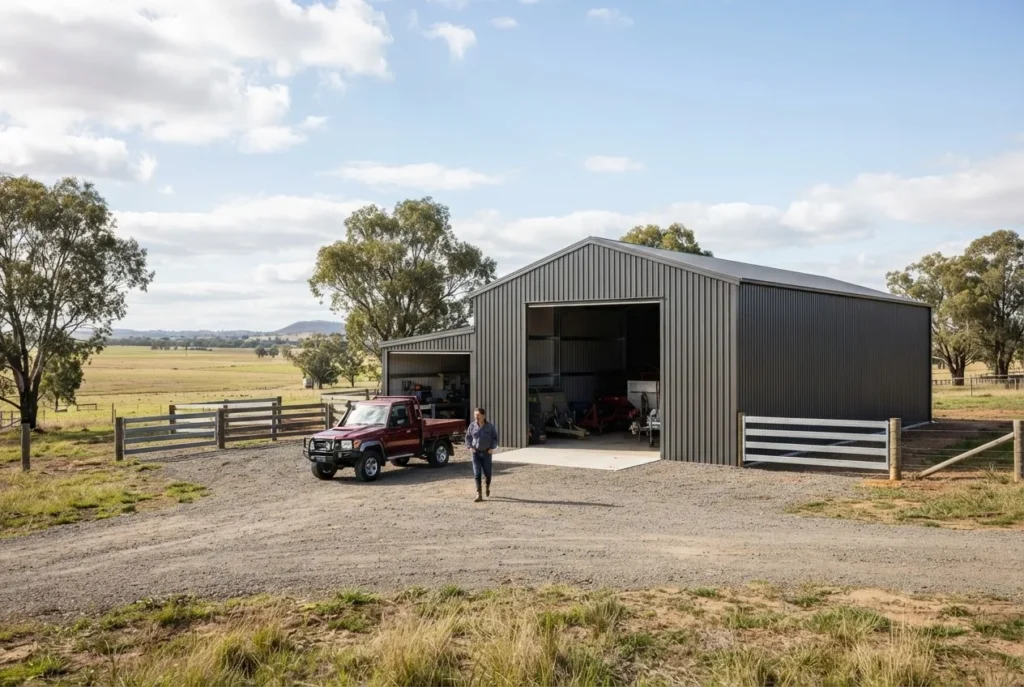
A wide range of barn constructions are available across Australia, but two dominant choices stand out: timber barn kits and Colorbond steel sheds. Timber barn kits often feature pre-cut lumber frames and panels designed for easy assembly, offering a natural aesthetic that complements rural settings. In contrast, Colorbond steel sheds are constructed primarily from engineered steel sheets coloured with durable coatings, prized for their strength and low maintenance.
This material differentiation underpins numerous decisions relating to durability, environmental impact, and cost-efficiency in barn construction tailored to Australian applications.
The Growing Popularity of Barn Kits and Steel Sheds in 2025
In 2025, Australian agricultural and rural property owners increasingly favour barn kits and steel sheds for their modularity, speed of construction, and compliance with evolving building codes. Advances in manufacturing mean timber kits now include engineered wood options with enhanced strength, while Colorbond steel innovations provide superior corrosion resistance aligned with Australian environmental demands.
The expanding market recognises both as legitimate contenders, prompting nuanced comparisons to inform buyer decisions amid diverse use cases.
Why Material Choice Matters for Australian Barn Owners
Selecting between timber and steel impacts more than appearance. It influences the barn’s longevity, thermal performance, bushfire resistance, and ecological footprint. This decision is further complicated by Australia’s vast climate zones — from arid areas to humid coastal regions — where both materials behave differently.
Understanding these implications upfront helps barn owners optimise their investment, ensuring functionality and compliance with relevant codes in 2025 and beyond.
Material Characteristics: Timber Barn Kits vs Colorbond Steel
Timber Barn Kits – Types, Sources, and Quality Standards
Timber barn kits commonly use a selection of Australian-grown hardwoods (e.g., spotted gum, ironbark) or treated softwoods such as radiata pine. Timber undergoes intensive grading systems and treatments to meet standards like AS 1684 for timber framing. Kits might offer solid timber posts, laminated beams, or engineered wood products like LVL (Laminated Veneer Lumber) providing enhanced strength and consistency.
Quality certification schemes such as FSC (Forest Stewardship Council) ensure sustainability credentials as well as assure pest and decay resistance with chemical or natural treatments suited to local conditions.
Specialised designs such as Quaker barn sheds Australia guide 2025 focus on distinct timber and steel materials and construction techniques.
Colorbond Steel – Manufacturing, Properties and Australian Adaptations
Colorbond steel is an Australian invention produced by BlueScope Steel featuring high-tensile steel coated with a thin, durable paint system designed specifically for Australia’s harsh UV radiation and salt-laden coastal air. It complies with AS 1397 for steel sheet performance with resistance to corrosion, fading, and chipping.
The material combines lightweight benefits with structural robustness, making it an effective solution for low-maintenance barn envelopes in locations vulnerable to extreme weather.
Comparative Analysis: Structural Strength, Thermal Performance, and Aesthetics
| Property | Timber Barn Kits | Colorbond Steel Sheds |
|---|---|---|
| Structural Strength | Strong in compression and tension when engineered; flexibility absorbs some movement | High tensile strength; excellent resistance to impacts and wind loading |
| Thermal Performance | Natural insulator, reducing heat transfer; benefits from added insulation | High thermal conductivity; requires effective insulation to reduce heat gain |
| Aesthetics | Warm, natural appearance suited to rustic settings; customizable finishes | Modern finish, wide colour palette available; sleek and uniform look |
| Durability in Australian Climate | Good with treatments; vulnerable to termites, decay, and bushfires if unprotected | Excellent corrosion resistance; warps less but can heat up rapidly in sun |
Understanding these fundamental differences enables buyers to tailor barn selection to their specific needs and local environmental conditions, ensuring optimal performance.
Colorbond steel’s performance compared to alternatives like Zincalume is outlined in detail in our Colorbond vs Zincalume steel sheds Australia guide.
Compliance & Regulatory Framework for Barn Construction in Australia (2025)
Building Codes Relevant to Timber Barns and Steel Sheds
The National Construction Code (NCC) governs structural, fire, and energy efficiency requirements for barns. Timber barns must adhere to AS 3959 for construction in bushfire-prone areas, including treatments and design modifications. Steel barns must meet structural warranties under AS/NZS 5131 and appropriate corrosion classifications.
Local Council Approval Processes and Environmental Considerations
Approval procedures vary across councils but generally require submitting detailed plans including compliance with zoning codes, bushfire risk assessments, and environmental impact statements. Some councils impose stricter conditions on timber barns in high-risk bushfire zones, necessitating flame retardants or alternative construction materials.
For a comprehensive overview of barn sheds council approvals in Australia, see our guide.
For readers interested specifically in American-style barn sheds in Australia, our comprehensive American barn sheds guide Australia 2025 provides pricing, kits, and council approval insights.
Impact of Australian Climate Zones on Regulatory Requirements
Australia’s climate zones—from tropical north to temperate south—directly influence building requirements. Coastal salt air accelerates steel corrosion if unprotected, while inland bushfire risk dictates timber treatments and fire buffers. Regulatory frameworks embed these nuances requiring tailored material selection and construction practices according to each zone.
Local government websites and ABCB resources offer climate zone maps that inform these regulatory distinctions.
Installation and Assembly: Timber Barn Kits vs Colorbond Steel Sheds
Step-by-Step Installation Processes for Timber Barn Kits
- Site preparation, including levelling and foundation laying (concrete pads or piers)
- Delivery and layout of pre-cut timber components
- Frame assembly using bolted or nailed connections, with potential for custom on-site adjustments
- Installation of cladding, roofing, and finishing elements like windows or doors
- Final treatments such as stains, sealants, or fire retardants
Timber kits typically require skilled labor or experienced DIYers due to alignment precision and joinery skills, often taking 2–4 weeks depending on size and complexity.
Assembly and Erection of Colorbond Steel Sheds
- Foundation preparation similar to timber (concrete slab or footings)
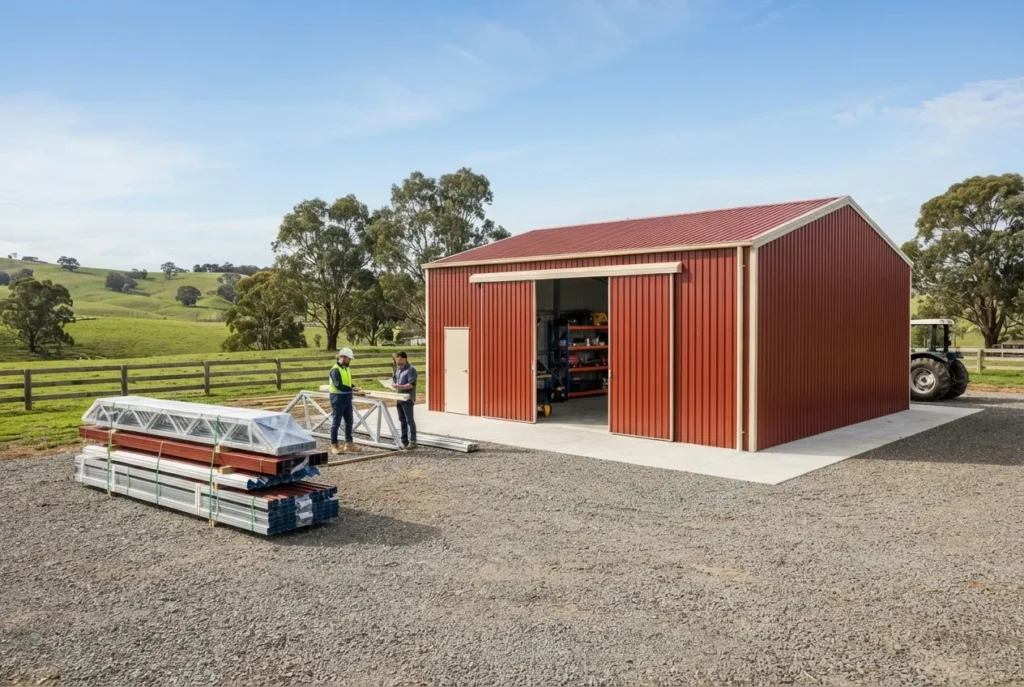
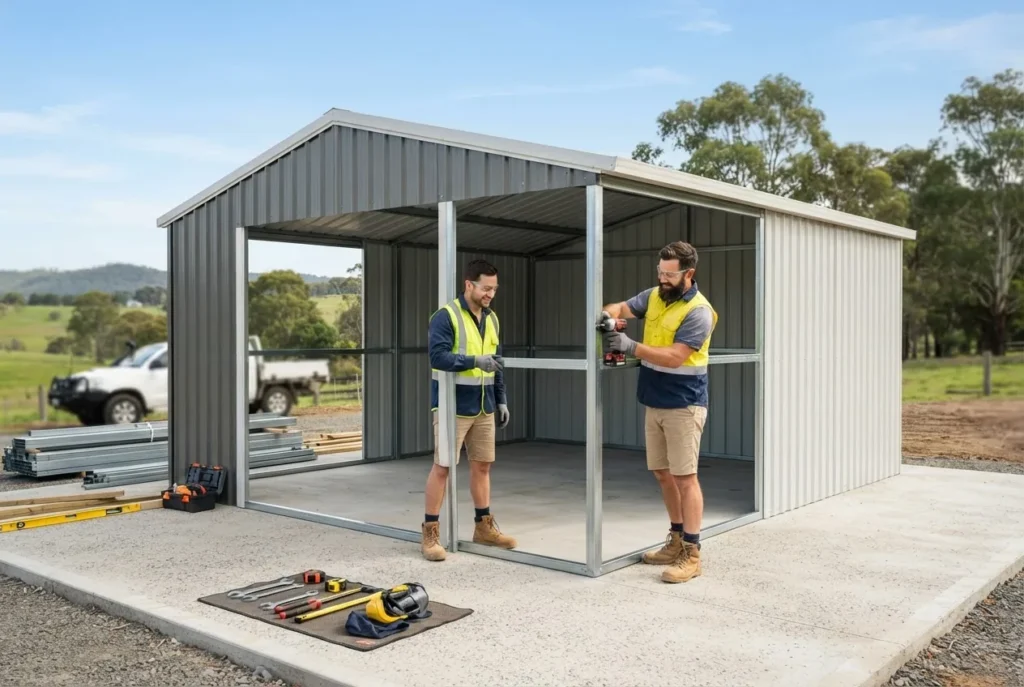
- Unfolding and bolting pre-fabricated steel frame sections
- Attaching Colorbond wall and roof panels using specialist fasteners
- Installing insulation, doors, and ventilation systems
- Final inspection and touch-ups
Steel sheds are often quicker to erect, typically 1–3 weeks, and may require specialised equipment (e.g., screw guns, lifts).
Skills, Timeframes and Labour Costs Comparison
- Timber Barn Kits: Moderate to high labour input; skilled carpentry advantageous; potential for higher labour costs due to assembly time
- Colorbond Steel Sheds: Faster assembly with specialised crews; moderate labour cost; fewer finishing trades required
Labour rates across rural Australia vary, but timber installations tend to command a premium given skilled trade requirements.
Door installations represent a critical phase in barn assembly; consult our sliding barn doors Australia 2025 guide for materials, wind ratings, and cost considerations.
Cost Analysis: Upfront and Long-Term Expenses
Material and Kit Pricing Trends for 2025
2025 prices reflect rising global timber costs due to supply chain disruptions, with typical Australian timber barn kits ranging from AUD 20,000 to 60,000 depending on size and timber grade. Colorbond steel sheds generally start from AUD 15,000 for smaller structures, extending beyond AUD 50,000 for larger, custom designs.
According to a 2025 industry price index survey, timber kit prices have increased 8% year-over-year, while steel shed pricing rose approximately 4%, factoring in raw material costs and manufacturing efficiencies.
Labour and Installation Costs for Timber and Steel Barns
Labour costs for timber barn kit installations average AUD 60–100 per hour for skilled carpenters, while steel shed assembly can be slightly less due to modular components and faster erection times, averaging AUD 50–90 per hour. Overall labour may constitute 25–35% of total project costs for timber barns and 15–25% for steel sheds.
Maintenance and Repair Costs Over Barn Lifespan
Timber barns typically incur higher maintenance costs, including annual pest treatments, re-staining, and structural inspections, potentially costing AUD 1,000–3,000 over 10 years. Steel sheds, despite lower routine maintenance, may require panel repainting or rust repairs especially in coastal areas, averaging AUD 500–1,500 over a decade.
Ultimately, lifetime costs depend heavily on local environment and upkeep regimen.
Durability and Maintenance: Timber vs Colorbond Steel in Australian Conditions
Timber Barn Maintenance Requirements and Common Issues
- Frequent inspections for termite activity and moisture damage
- Reapplication of protective sealants every 3–5 years
- Potential warping, splitting, or checking over time under extreme weather
- Fire retardant treatments mandatory in bushfire risk zones
Expert opinion from Australian timber frame builders advises implementing proactive weatherproofing and using naturally durable hardwoods to extend service life, especially in high-UV zones.
Colorbond Steel Durability, Rust Resistance, and Warranty Terms
Colorbond steel is resistant to rust and fading due to advanced coatings, with warranties often extending up to 20 years depending on the supplier and environment. Nevertheless, maintenance includes cleaning to remove corrosive salts and debris and repairing any damage to the protective paint layer promptly to avoid rust.
Effects of Australian Environmental Factors (UV, Humidity, Bushfire Risk)
UV exposure can degrade timber finishes rapidly without protection. Steel can absorb heat leading to increased interior temperatures unless insulated. Bushfire zones pose significant challenges; while timber must meet AS 3959 construction standards, steel inherently provides better fire resistance but must be paired with non-combustible roofing and surrounds.
Environmental Impact and Sustainability of Barn Materials
Timber Sourcing, Carbon Footprint and Recyclability
Sustainably sourced timber is renewable, with a lower embodied carbon footprint than steel when harvested under certification schemes like FSC. Disposal at end-of-life is also less environmentally burdensome due to biodegradability, with opportunities for reuse and repurposing framing components.
Colorbond Steel Manufacturing Energy and Environmental Certifications
Steel manufacturing consumes more energy and emits higher embodied carbon but Colorbond’s lifecycle includes recyclability and long service life offsets environmental costs. BlueScope Steel provides environmental product declarations (EPDs) validating their steel products’ carbon footprint and adherence to Australian Green Star principles.
Sustainable Practices and Recommendations for Australian Barn Owners
- Preference for FSC-certified timber and locally milled wood where feasible
- Incorporation of energy-efficient insulation in both timber and steel barns
- Use of non-toxic stains and paints for timber preservation
- Design for durability to minimise replacement and reduce material waste
Use Cases and Suitability: Which Material Fits Australian Needs?
In addition to traditional barns, many buyers are exploring barndominiums—barns with integrated living spaces. For a deeper dive into pricing, kits, plans, approvals, and materials associated with barndominiums in Australia, refer to our dedicated guides on Barndominium Australia prices and kits and barndominium homes design and costs Australia.
Storage Applications – Timber vs Steel Performance
For dry storage requiring controlled environments, timber barns provide natural breathing and temperature moderation, whereas steel sheds benefit from airtight seals and easier pest control. Steel sheds are commonly preferred in coastal or humid zones due to moisture resistance.
Livestock Housing Considerations and Animal Welfare
Timber structures generally offer better thermal comfort for animals with natural insulation. However, steel barns enable easier cleaning and termite control. Ventilation design is critical for both, but timber buses may naturally facilitate airflow if constructed with Dutch doors or open eaves.
Workshops, Hobby Farms and Mixed Uses in Barn Construction
Workshops favour steel sheds for durability against machinery impact and ease of electrical integration. Hobby farms may prefer timber for aesthetic and integration with landscaping. Hybrid barn concepts combining timber frames with Colorbond roofs/cladding are emerging for balanced performance.
Barn sheds with mezzanine floors offer added functional space; explore detailed specs and prices in our barn sheds with mezzanine floors Australia guide.
Modern barn house plans Australia offer the latest compliance and cost insights for contemporary barn homes, complementing our timber and steel barn analysis, detailed in the modern barn house plans Australia guide.
Leading Australian Suppliers and Brands in 2025
Top Timber Barn Kit Manufacturers and Their Specialties
Leading timber barn kit suppliers include companies such as Timber Barn Kits Australia, Wilson Timber Frames, and Eco Barns Australia. They offer a range of FSC-certified hardwood frames, customisable designs, and on-site support packages. Their product lines vary from economical softwood kits to premium hardwood engineered solutions designed for long-term durability.
Prominent Colorbond Steel Shed Providers and Product Ranges
Major Colorbond steel shed suppliers include Stratco, BlueScope Steel, and Metalcraft Sheds. These companies provide a wide spectrum of sizes and specifications, underpinning warranties of 15–20 years covering paint durability and structural integrity. Advanced engineering options like insulated panel systems and cyclone-rated frames are also offered.
Customer Support, Warranty, and After-Sales Services Comparison
Timber kit suppliers typically provide detailed installation guides, warranty coverage on materials ranging from 5–10 years, and post-sale support for pest or treatment queries. Steel shed providers often supplement warranties with rust and fading guarantees and professional installation services.
Case Studies and Expert Insights
Real-World Timber Barn Kit Implementation in Australian Farms
A 2023 case study of a Queensland cattle farm demonstrated effective longevity and thermal comfort with a hardwood timber barn kit incorporating solar ventilation. The owner noted increased livestock wellbeing during summer temperatures exceeding 40°C, attributing this to timber’s natural insulation properties.
Successful Colorbond Steel Shed Installations and User Experience
A New South Wales vineyard reported excellent durability of Colorbond steel sheds despite proximity to the ocean. Minor repainting was required after 7 years, but the shed maintained structural integrity through multiple storms and was praised for ease of maintenance and pest resistance.
Expert Opinions on Material Choice for Different Applications
Construction engineers recommend timber barn kits for applications prioritising aesthetics and moderate climate zones, whereas steel sheds are advocated in high-risk bushfire zones and corrosive environments. Hybrid designs combining timber structural elements with Colorbond cladding present promising middle-ground solutions.
Conclusion and Decision-Making Framework for 2025 Buyers
Summary of Key Differences and Buying Criteria
Timber barn kits excel in natural insulation, aesthetics, and traditional appeal, though they demand ongoing maintenance and careful bushfire mitigation. Colorbond steel sheds provide superior durability, lower upkeep, and resistance to pests and fire but require insulation solutions for temperature control.
Decision-Making Checklist Based on Use Case, Cost, and Environment
- Consider timber kits if prioritising natural ventilation and rustic aesthetics in moderate climates.
- Select Colorbond steel for coastal or high bushfire risk zones emphasizing durability and low maintenance.
- Assess budget for upfront versus lifetime maintenance costs.
- Review council approval requirements in your locality.
- Factor in installation skill availability and timeframe preferences.
Final Recommendations and Future Trends in Barn Construction
Combined timber-steel hybrid barns are increasingly popular in Australia as they harness strengths of both materials. Innovations in engineered timber and high-performance coatings continue to improve durability. Staying informed on regulatory changes and emerging products will empower buyers to make increasingly cost-effective, sustainable, and compliant choices in 2025 and beyond.
FAQs – Addressing Common Unanswered Questions
How do timber barn kits handle extreme bushfire zones compared to Colorbond steel?
Timber barns must be treated and constructed per AS 3959 bushfire regulations, often requiring fire-retardant coatings and non-combustible buffer areas. Colorbond steel inherently provides better resistance due to its non-combustible nature but should be paired with non-combustible roofing and supports to maximize safety.
Can Colorbond steel sheds be customised as easily as timber kits?
While timber kits offer greater flexibility for on-site adjustments and custom joinery, Colorbond steel sheds can be customised through manufacturer options such as wall height, colour, door types, and insulation add-ons. Complex structural changes, however, are more challenging with steel.
What is the resale value comparison between timber barns and steel sheds?
Resale values depend on condition and location, but timber barns are often perceived as premium due to natural aesthetics, potentially commanding higher prices when well-maintained. Steel sheds offer strong resale value based on durability and low maintenance reputation, particularly in harsh environments.
How do warranties compare in terms of coverage for Australian weather damage?
Typical timber kit warranties cover structural defects for 5–10 years but exclude damage from pests or weathering. Colorbond steel warranties, often 15–20 years, cover paint fading, rust, and structural integrity under normal weather exposure, reflecting robust material performance.
Are there hybrid barn solutions combining timber and steel for optimized performance?
Yes, hybrid barns featuring timber frames and Colorbond steel cladding or roofing are gaining traction, balancing timber’s insulation and aesthetic qualities with steel’s durability and low maintenance. Such designs often best address the diverse Australian environmental and regulatory demands.
Frequently Asked Questions
What are the key differences in insulation properties between timber barns and Colorbond steel sheds?
Timber barns naturally insulate better due to wood’s low thermal conductivity, helping moderate internal temperatures. Colorbond steel requires additional insulation since steel conducts heat, which can cause higher heat gain or loss without proper thermal barriers.
How do maintenance routines differ between timber barn kits and Colorbond steel sheds in Australia?
Timber barns need regular pest inspections, resealing, and fire-retardant treatments every few years, especially in bushfire zones. Colorbond steel sheds require routine cleaning to prevent corrosion and occasional repainting but generally demand less intensive upkeep.
Why might a property owner choose timber barn kits over Colorbond steel sheds for livestock housing?
Timber barns offer better natural ventilation and thermal comfort for animals, creating a cooler, more breathable environment. These qualities can improve animal welfare compared to steel sheds, which often need added ventilation and insulation adaptations.
Can Colorbond steel sheds withstand Australia’s coastal environments better than timber barns?
Yes, Colorbond steel sheds have superior resistance to salt corrosion and moisture common in coastal areas. Timber barns are more vulnerable to decay and termite damage in these environments unless heavily treated and maintained.
When installing a barn, which material generally allows faster assembly: timber kits or Colorbond steel sheds?
Colorbond steel sheds typically assemble faster due to their modular prefabricated panels and bolted frames. Timber kits require more time for precise joinery and alignment, often taking longer depending on complexity and skills available.
What defines a timber barn kit in the context of Australian barn construction?
A timber barn kit is a pre-cut, engineered wood package including frames, beams, and panels designed for relatively easy on-site assembly. It uses Australian hardwoods or treated softwoods and meets relevant quality and sustainability standards.
Which is more cost-effective over the long term: timber barn kits or Colorbond steel sheds?
Colorbond steel sheds generally incur lower long-term maintenance costs, making them more cost-effective despite often higher upfront labour savings. Timber barns may have higher ongoing expenses due to pest control and treatments but can add value through aesthetics.
How do environmental factors like UV exposure and bushfire risk influence barn material choice in Australia?
UV exposure accelerates timber finish degradation, requiring protection, while steel heats up without insulation. Bushfire-prone areas favor steel for its non-combustibility, though treated timber can meet fire safety standards when properly constructed.