

Why Ipswich homeowners choose Colorbond steel sheds and garages
When people search “sheds Ipswich” they’re usually comparing strength, approvals, and price. In Ipswich and Greater Brisbane, the winning combo is typically a Colorbond steel shed or custom double garage engineered to AS/NZS 1170.2 for Wind Region B, with smart summer heat control, and a simple approvals pathway via a private certifier.
- Built for Ipswich conditions: hot summers, severe thunderstorms and hail, occasional flood overlays, and high termite pressure.
- Easy to approve: Class 10a buildings assessed to the NCC (BCA), usually via a private certifier with site plans, engineering, and slab design.
- Durable finishes: Colorbond or Zincalume cladding over a cold-formed galvanised steel frame, with ShedSafe-compliant engineering.
Outgrowing the home garage? Compare options in our small warehouse for sale Brisbane walkthrough.
What are the best shed materials for Ipswich’s climate?
For most suburban and acreage sites around Ipswich, choose Colorbond cladding on a galvanised portal frame with an anticon blanket (or insulated roof panels) to reduce heat and condensation. Zincalume is cost-effective for rural or industrial applications, but Colorbond resists chalking and looks sharper on residential blocks.
- Roof profiles: Trimdek or Monoclad handle storms well; add sarking or insulation.
- Frames: Cold-formed, high-tensile galvanised steel to AS/NZS 4600 with hot-dip galvanised brackets for coastal or flood-exposed zones.
- Fasteners: Cyclone-rated screws with neoprene washers improve performance in summer storms.
Pro Tip: Did you know using insulated roof panels can reduce internal shed temperatures by up to 10°C in summer? Pair them with whirlybirds or ridge vents for the best result.
How to get council approval for sheds and garages in Ipswich (QLD)
Step-by-step approvals pathway
- Confirm overlays: Check flood, bushfire, and character overlays for your lot in Ipswich City Council mapping. Overlays can affect siting, height, and materials.
- Choose certified plans: Get engineering certified to AS/NZS 1170.2 (Wind Region B, typical Terrain Category 2–3) and NCC (Class 10a).
- Private certifier: Most sheds need building approval through a private certifier even if planning is “accepted development.” They’ll assess setbacks, site coverage, and structural compliance.
- Slab and footing design: Provide a soil test (site classification often ranges from Class M to H in Ipswich). The engineer will size slab thickness, edge beams, and hold-down anchors.
- Final inspection and Form 21/Certificate of Occupancy (as applicable): After construction, the certifier signs off the work.
Tip: If you’re close to boundaries or in flood-prone pockets near the Bremer River, discuss siting relaxations and flood-resilient detailing with your certifier early.
Useful resources: HIA approvals guidance and overlays mapping (see links below).
Design options: Ipswich sheds and garages that fit how you live
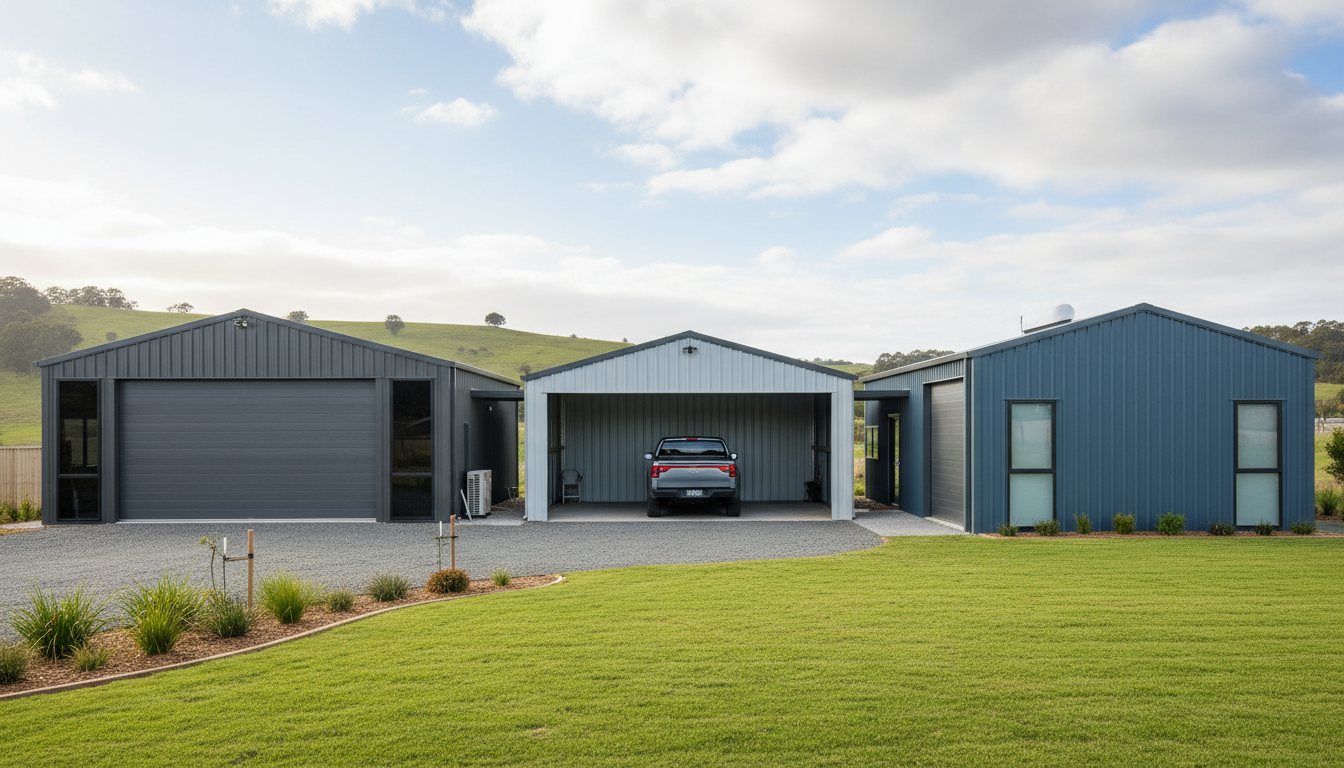
- Single, double or triple garages: Roller doors or sectional doors, 2.4–3.0 m eave heights, workshop bay add-ons.
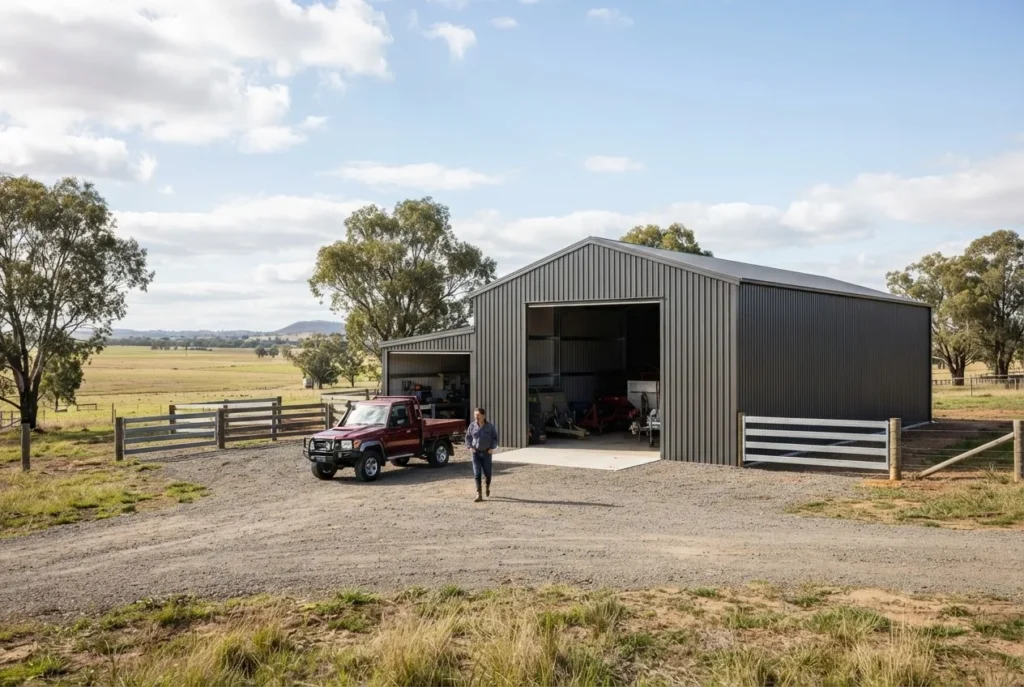
- American barns and rural sheds: Great for acreage—farm machinery storage, hay, and tack rooms.
- Boat and caravan storage: Extra height portals, wider openings, wind-rated door systems.
- Custom carports: Skillion or gable roof carports for driveways—affordable carports for Australian homes.
- Workshops and hobby sheds: Fit-outs with power, insulation, windows, and whirlybirds.
- Industrial sheds: Larger portals, mezzanines, and commercial door hardware.
Common LSI uses: DIY shed kits, farm machinery storage, workshop sheds, portal frame sheds, American barns, and custom Colorbond garages. For detailed layouts, insulation options and approvals, see our Ultimate Work Shed Guide.
Technical specs that matter in SEQ
- Wind design: Ipswich is typically Wind Region B, Terrain Category 2–3. Require certified portal frames, bracing, and tie-down schedules to AS/NZS 1170.2.
- Corrosion: Inland sites are often Category C2–C3. Galvanised frames, quality paint systems, and proper flashings boost lifespan.
- Termites: High termite zone—ensure slab penetrations are sealed and include termite management per AS 3660.
- Thermal comfort: Add sarking, insulation, or insulated roof panels; consider light Colorbond colours for lower heat gain.
- Drainage: Gutters, leaf-guards, and legal stormwater discharge protect slabs and prevent undermining during summer downpours.
If you need heavier‑duty frames or a garage‑plus‑workshop, the industrial building guide shows residential‑grade specs that borrow from commercial design.
Real builds: Ipswich shed and garage case studies
Springfield Lakes – Custom double garage with workshop (7 m × 9 m)
- Spec: Colorbond Monument walls/roof, 2.7 m eaves, 2× 2700 mm roller doors, insulated roof panels, 100 mm slab with thickened edges.
- Outcome: 6-week build after approvals; internal temps reduced ~8–10°C with insulation and ridge venting.
Rosewood acreage – Rural machinery shed (6 m × 12 m)
- Spec: Zincalume walls/roof, open-front bay, extra eave overhangs, heavy-duty hold-downs for storm gusts, gravel hardstand.
- Outcome: Cost-effective kit with local erection crew; practical clearance for tractor and slasher.
2025 pricing guide: Sheds for sale in Ipswich
Pricing varies by size, height, door systems, insulation, and slab/footings. As a ballpark for SEQ in 2025:
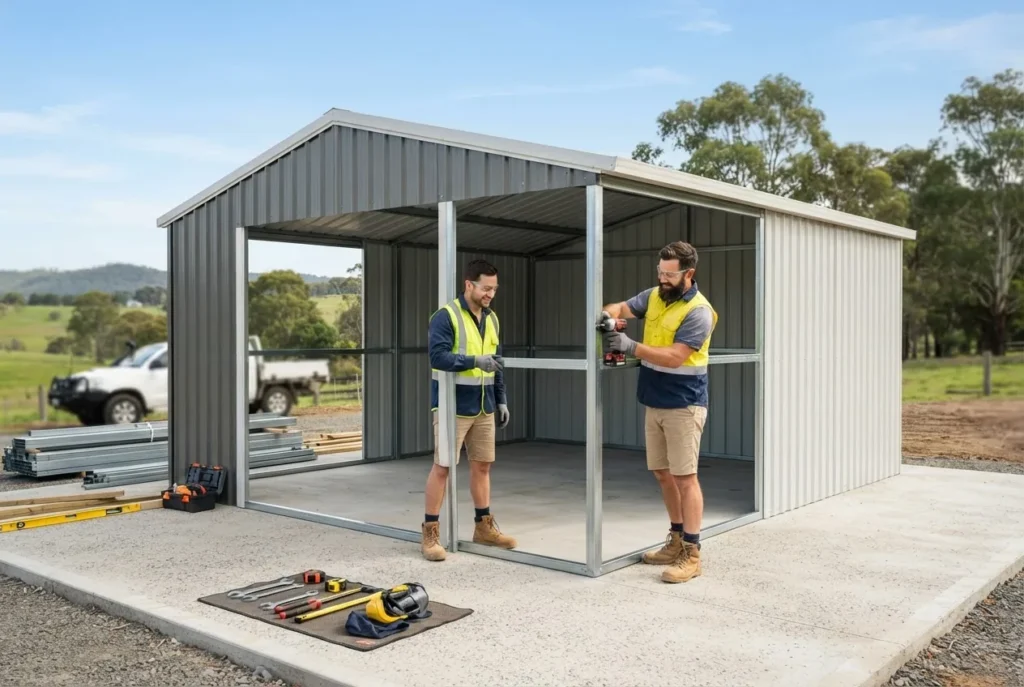
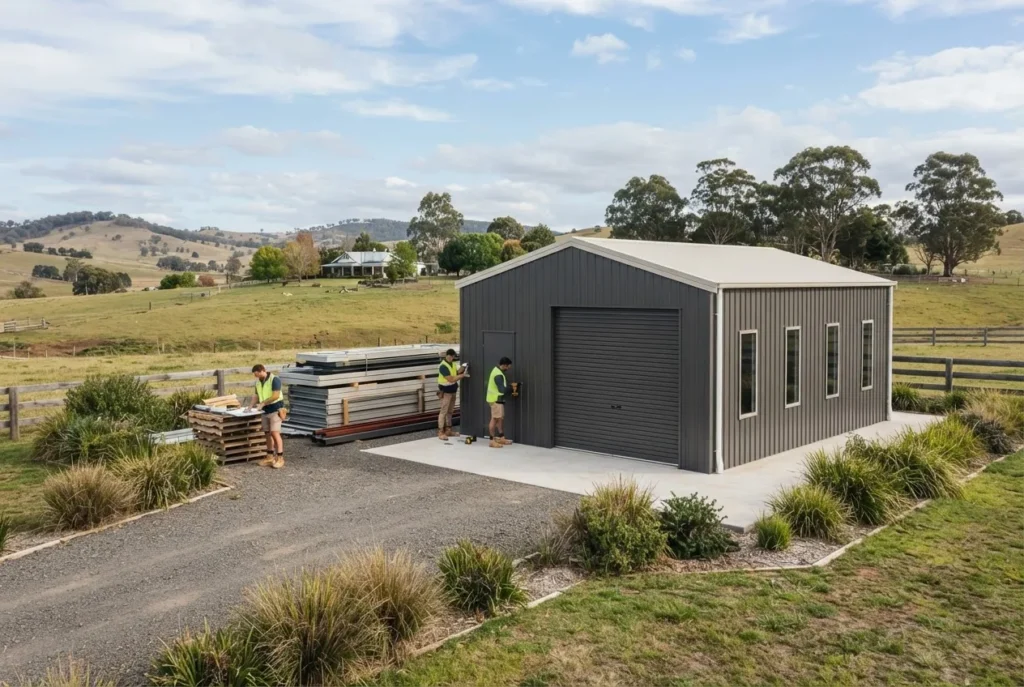
- DIY shed kits (small workshop 3×6 to 6×6): Kit-only from a few thousand; installation and slab are additional.
- Custom double garage (about 6×6 to 7×7): Installed with slab often lands in the mid-teens to mid-twenties (thousands) depending on spec.
- Rural/large sheds (9 m+ spans): Highly variable—engineering, doors, and site access drive cost.
Ask for a full inclusions list (steel grade, coating, doors, insulation, fasteners, engineering certificates) to compare quotes apples-for-apples.
Colorbond vs Zincalume — Which is better for WA conditions?
While this page focuses on Ipswich, many buyers compare materials nationally. Here’s a quick look tailored to hot, coastal-influenced WA regions—and how that insight still helps SEQ buyers.
| Feature | Colorbond | Zincalume | What it means for WA (and lessons for QLD) |
|---|---|---|---|
| Finish | Painted, colour-fast | Metallic, no paint | Colorbond resists chalking; better street appeal. In QLD, lighter colours reduce heat gain. |
| Coastal performance | Excellent with correct grade | Good but watch salt spray | Near WA coasts use marine grades; in SEQ coastal corridors, upgrade coating and wash-down schedule. |
| Cost | Higher upfront | Lower upfront | Colorbond typically pays back in aesthetics and durability in both WA and QLD. |
| Availability | Wide colour range | Readily available | Both are easy to source; check current lead times in the 2025 Australian Steel Market Outlook. |
Added 2024 WA wind-rating compliance notes: For WA’s cyclonic regions, specify wind-rated sheds for cyclonic areas with certified connections. The same principle applies in North QLD. For Ipswich (non-cyclonic), Region B engineering still demands robust tie-downs.
5-Step Buying Guide for custom sheds in Australia
- Define use-case: Storage, workshop, farm machinery, boat/caravan, or industrial.
- Lock in engineering: Ask for ShedSafe-compliant design to the NCC and relevant Australian Standards.
- Material choices: Compare Colorbond vs Zincalume, insulation, and fasteners; request Bluescope warranties in writing.
- Approvals plan: Confirm if planning is accepted development; engage a private certifier for building approval.
- Total cost view: Include slab/footings, site cuts, stormwater, power, and lead times to avoid surprises.
FAQs: Ipswich sheds and garages
How long do approvals take?
With complete documents, private certification can be a few weeks. Add time for overlays, siting relaxations, or flood checks.
Are DIY shed kits worth it?
Yes for straightforward blocks and smaller spans. For larger spans, sloping sites, or high wind exposures, a supply-and-install package can be cheaper in the long run.
What slab do I need?
Commonly a 100 mm slab with thickened edge beams, sized by an engineer from your soil test. Ensure proper vapour barrier and termite management.
Do I need insulation?
In Ipswich, yes—an anticon blanket or insulated panels improve comfort, reduce condensation, and protect stored items.
What warranties should I ask for?
Bluescope steel warranty (Colorbond/Zincalume), frame/coating warranty, door hardware warranties, and workmanship warranty from the installer.
Beyond Ipswich: National notes for sheds and carports
Planning a build elsewhere? Here’s how this guidance translates nationally:
- QLD North: Choose cyclone-rated sheds QLD with certified connections. Ask for “wind-rated sheds for cyclonic areas.”
- WA: Seek council-approved sheds WA and confirm region-specific wind categories. Added 2024 WA wind-rating compliance notes.
- VIC: Consider custom carports Melbourne with snow/wind combinations in alpine fringes.
- NSW: Acreage buyers opt for rural sheds NSW with livestock and machinery access in mind.
- Perth buyers: Steel sheds Perth and custom Colorbond garages Perth need UV and sea-breeze corrosion strategies.
These considerations also help when comparing lifestyle options like DIY shed kits, affordable carports for Australian homes, American barns, and industrial workshops.
Key standards, climate and industry references
- Australian Standards: AS/NZS 1170.2 (wind), AS/NZS 4600 (cold-formed steel), AS 3660 (termite), AS 3959 (bushfire where applicable).
- Bureau of Meteorology data informs Ipswich’s heat, thunderstorm, and rainfall profiles.
- 2025 industry outlooks note steady steel availability with localised lead-time variability.
External references:
Ready to design your Ipswich shed?
Whether you need a backyard workshop, boat storage, or a custom-built double garage in Ipswich, start with engineered plans, smart materials, and a clear approvals pathway. Ask for a fixed inclusions schedule and a site-specific wind and footing design so your shed performs when SEQ weather turns wild.