

Planning a warehouse building or premium steel shed in Australia isn’t just about a good-looking Colorbond skin. It’s about engineering for wind, heat, corrosion and council compliance—then matching your budget to the right delivery model, from DIY shed kits to turnkey builds by a specialist warehouse builder.
Based on the top-ranking Australian pages for this topic, the must-haves are clear: custom design options, Colorbond steel quality, council approvals, durability, and local wind ratings. This guide goes deeper with WA, QLD and NSW specifics, cyclone notes, and a practical buying checklist.
What Are the Best Shed Materials for Perth’s Climate?
For Perth and regional WA, long hot summers, coastal salt and afternoon sea breezes mean your cladding choice matters. Most warehouse and shed envelopes use either Colorbond steel or Zincalume.
Colorbond vs Zincalume — Which Is Better for WA Conditions?
| Feature | Colorbond steel | Zincalume steel |
|---|---|---|
| Coating | Painted, pre-finished alloy coating with durable topcoat | Aluminium-zinc alloy (AZ150) metallic coating |
| Heat reflectivity | Excellent with lighter colours (e.g., Surfmist, Shale Grey) | Good, metallic finish reflects well initially |
| Corrosion resistance | High with proper grade; better near coast when specified correctly | High inland; extra caution required within coastal spray zones |
| Colour range | Wide Colorbond palette for architectural match | Limited (metallic finish only) |
| Typical cost | Higher material cost, lower repaint/maintenance | Lower upfront cost |
| Best-fit for WA | Coastal and suburban sites; heat and salt management | Rural/inland where salt exposure is low |
Tip: For Perth and coastal WA, specify marine-appropriate fasteners, gutter guards and flashings, and ask your supplier for the correct Colorbond grade for coastal zones.
How Do I Choose the Right Warehouse Builder and Design for My Site?
If you’re comparing a construction warehouse, a factory building, or a premium backyard workshop, start with engineering, not paint colour. Align the portal frame, bay spacing and hold-down details to your wind region and terrain category.
Site and engineering first
- Wind region and terrain: AS/NZS 1170.2 wind regions A–D. Added 2024 WA wind-rating compliance notes: NW coastal WA can be Region D (cyclonic). Perth metro is generally Region A with Terrain Category 2–3.
- Importance level: IL1–IL4 under NCC 2022. Most domestic sheds/garages = IL2; larger public-access warehouses may be IL3.
- Corrosion category: C2–C5 (coastal and industrial areas climb fast). Choose galvanised purlins/zeds and marine-grade fasteners for C4/C5.
- Soil and slab: Geotechnical site class (e.g., Class A, S, H1) informs slab thickness and footing. Many sheds use 25–32 MPa concrete with N12 bars and M12–M16 hold-down bolts.
Span and access planning
- Portal span and bay spacing: Common bays 6 m to 8 m; widen bays to reduce columns but check purlin sizes and deflection.
- Eave height: Set eave height by your tallest vehicle plus door headroom; many “farm machinery storage” buildings use 4.2–5.4 m eaves.
- Openings: Roller, shutter or sliding doors sized to plant/ute clearance; check wind locks and serviceability limits for cyclonic regions.
Roof style selection
- Gable roof: Efficient spans, classic look; good water shedding.
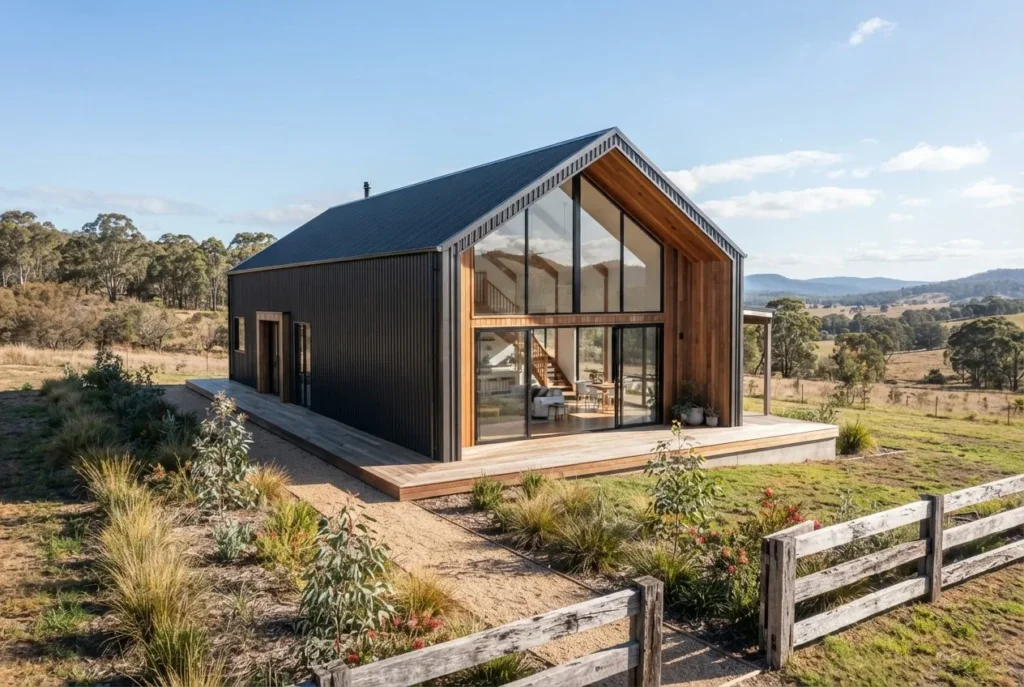
- Skillion roof: Modern look, simple drainage, great for solar orientation.
- Flat roof carports: Cost-effective for “affordable carports for Australian homes,” but watch ponding and uplift in high wind.
How to Get Council Approval for Your Custom Shed in WA
Actionable steps to fast-track approval
- Confirm planning rules: Check local setbacks, site coverage, and height limits via your council’s R-Codes or scheme.
- Prepare engineering: Provide certified drawings to AS/NZS 1170.2 (wind), AS/NZS 4600 (cold-formed steel), AS 4100 (steel structures), and NCC 2022.
- Bushfire and flood checks: If in a BAL area, note cladding/mesh requirements. Confirm flood overlays and finished floor levels.
- Lodge building permit: In WA, submit BA3/BA1 forms with structural certificate. Many suppliers offer “council-approved sheds WA” as a service.
- Inspections and final sign-off: Slab, frame and final inspections per permit conditions.
Other states: QLD often needs cyclone documentation for Regions C/D (“cyclone-rated sheds QLD”). NSW uses CDC/DA pathways; rural sheds NSW can be streamlined if ancillary and compliant with LEP/SEPP provisions.
Cyclone, Fire and Heat: Designing for Australian Conditions
Wind-rated sheds for cyclonic areas
- For Regions C/D, specify C2–C4 tie-downs, additional frame bracing, heavier purlins/girts, and wind-locked doors.
- Check corner and edge zones for local pressure factors; fastener spacing tightens significantly.
Bushfire (BAL) considerations
- In BAL-12.5 to BAL-40, expect ember protection, metal gutter guards and non-combustible cladding/linings near openings.
Thermal comfort and condensation
- Use anti-condensation blanket or roof sarking, add thermal breaks, and consider insulated roof panels to control heat and noise.
Pro Tip: Did you know using insulated roof panels can reduce internal shed temperatures by up to 10°C in summer? Pair with light Colorbond colours and whirlybirds for best results.
DIY Shed Kits vs Custom-Built: Which Suits Your Budget?
| Aspect | DIY shed kits | Custom-built/turnkey |
|---|---|---|
| Cost | Lowest upfront; you manage slab and install | Higher, but includes slab, erection and project management |
| Speed | Fast delivery; install depends on your availability | Predictable schedule run by the builder |
| Complex sites | Challenging (slopes, tight access, cyclonic ties) | Handled by the builder/engineer |
| Compliance | You coordinate approvals and inspections | Builder handles “council-approved sheds WA/NSW/QLD” |
| Customisation | Limited options, fixed spans/bays | Fully custom portal frames, mezzanines, canopies |
Recent Build Examples (Australia)
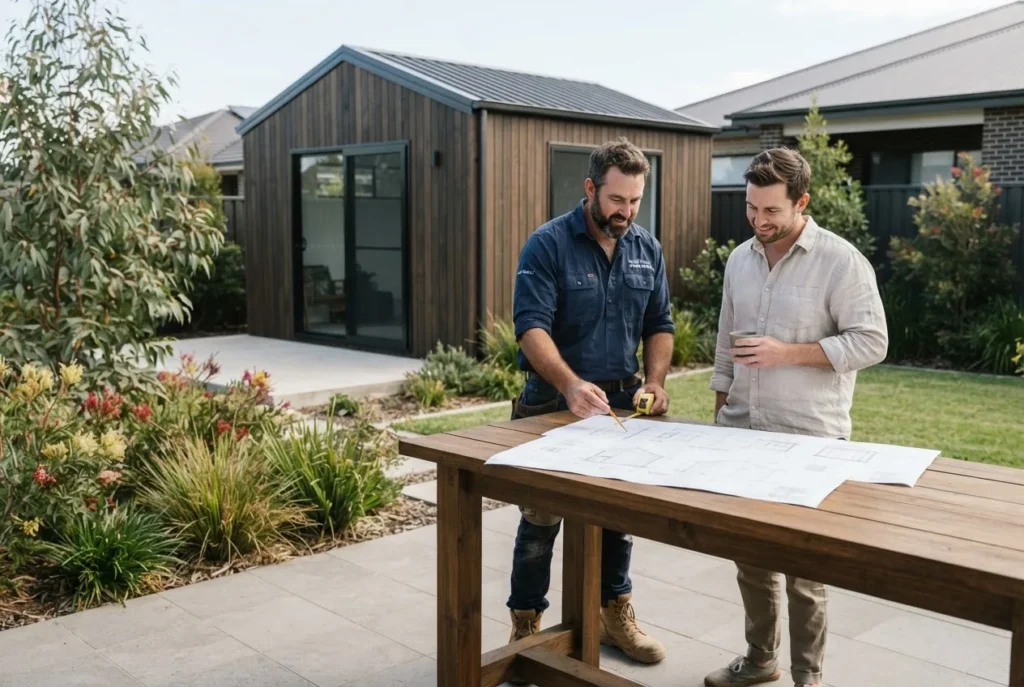
Perth: Custom-built double garage + workshop
- 6 m × 9 m, 3 m eave, Colorbond Surfmist walls/roof, insulated roof panels
- Region A, Terrain Cat 3, N2 wind classification
- Roller door with wind locks; 100 mm 25 MPa slab with thickened edges
Regional QLD: Farm machinery storage shed
- 12 m × 18 m × 5 m eave, open front, Zincalume roof, Colorbond walls
- Region C (cyclonic), C2 design, extra knee/rafter bracing
- Hot-dip galvanised columns; cyclone-rated hold-downs
NSW rural sheds: Hay and equipment combo
- 9 m × 21 m, 7.5° gable, rural sheds NSW style
- Grit-blasted and galvanised structural steel; bird-proof flashings
How Much Does a Warehouse Building Cost in 2025?
Indicative ranges only—always get an engineered quote:
- Premium backyard sheds/double garages: Often from the low tens of thousands installed, depending on slab, insulation, and doors.
- Farm or light industrial sheds (10–24 m spans): Commonly scale from mid to high tens of thousands into low six figures as spans, heights and wind ratings increase.
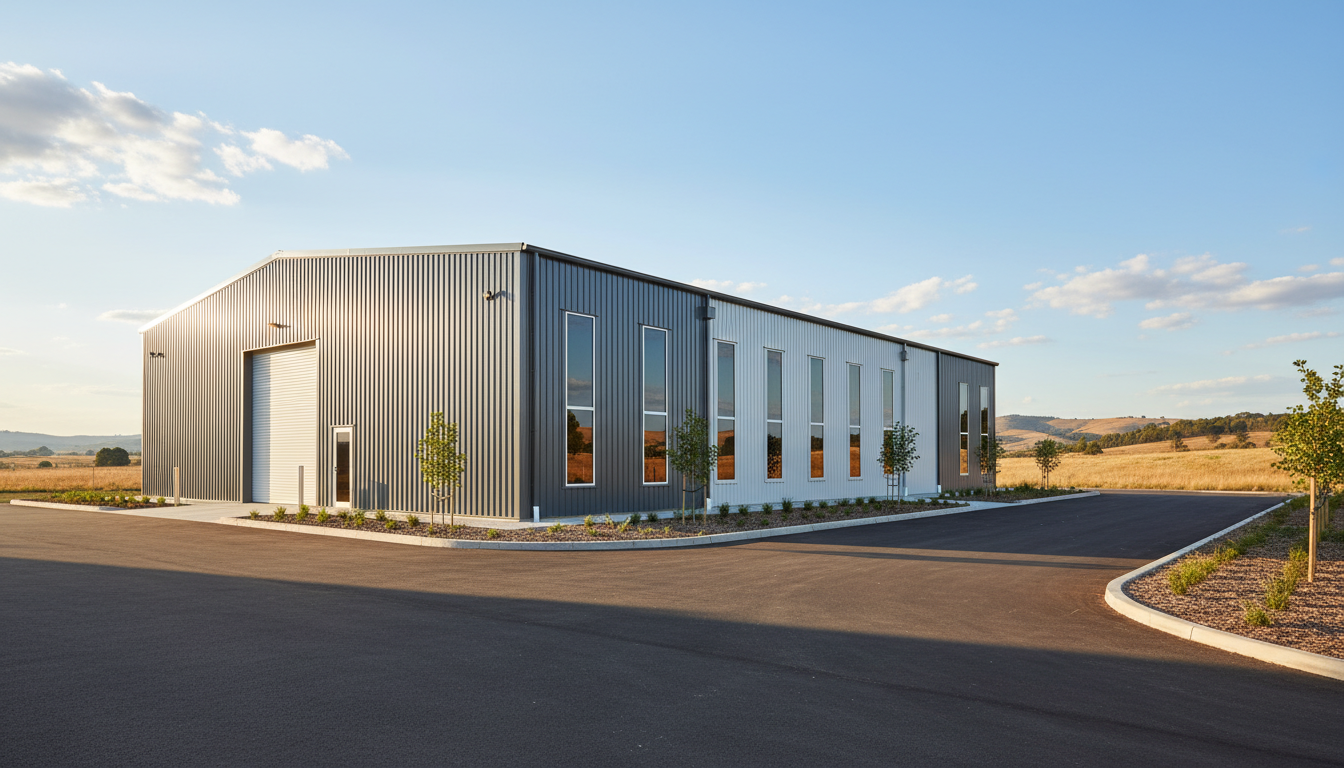
- Small to mid-size factory buildings/warehouses: Typically six figures with fit-out (offices, amenities, mezzanine, fire services) pushing higher.
Drivers: wind region (C/D costs more), steel market pricing, eave height, door count, insulation, corrosion category, and site works (earthworks, stormwater, power).
5-Step Buying Guide for Custom Sheds in Australia
- Define use: Workshop, farm machinery storage, boat/RV, or construction warehouse? This sets span, door sizes and eave height.
- Confirm site and wind data: Wind region, terrain, BAL, flood, and soil class. Ask for an AS/NZS 1170.2 certificate.
- Choose materials: Colorbond vs Zincalume, galvanised frame, insulation, anti-condensation blanket.
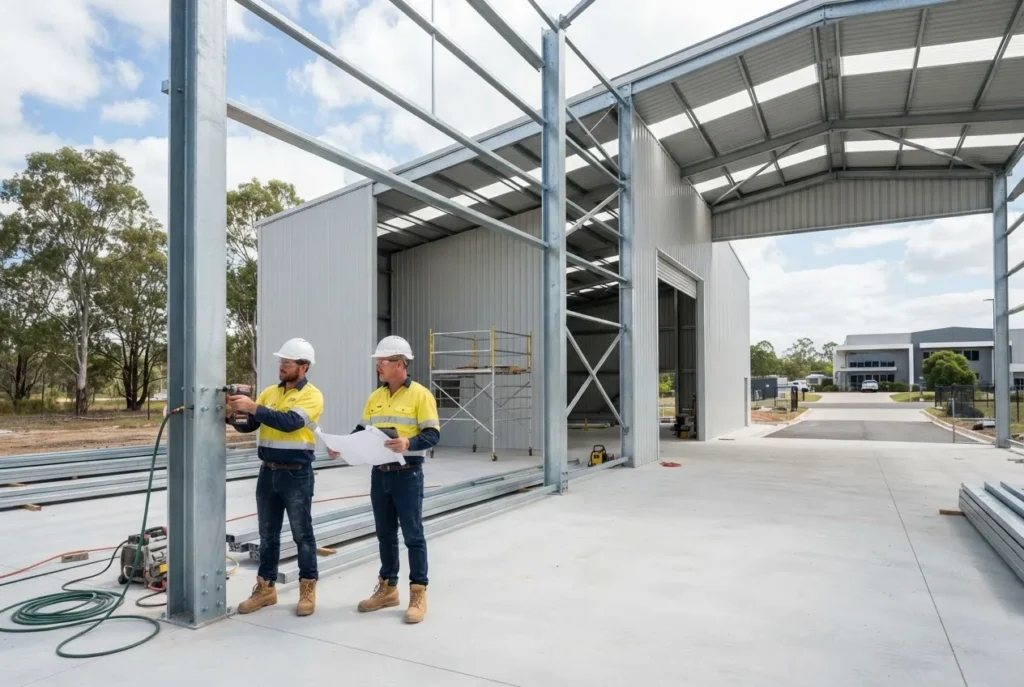
- Pick delivery model: DIY shed kits vs turnkey build. Factor slab, erection, approvals and warranties.
- Lock approvals early: Provide engineering, site plan, stormwater, and energy/thermal notes (where applicable).
Quick Definitions
Frequently Asked Questions
Is Colorbond or Zincalume better near the coast?
Colorbond (with correct grade and detailing) usually outperforms Zincalume in coastal spray zones. Use marine-grade fasteners, sealed laps, and regular washdowns.
Do I need council approval for a 6 × 6 m shed in WA?
Generally yes, unless exempt under local planning rules. Most councils require a building permit with certified engineering and site plan.
What does “cyclone-rated sheds QLD” actually mean?
It means the shed is engineered to Region C or D with C2–C4 tie-downs, stronger purlins/girts, wind-rated doors and compliant fixings per AS/NZS 1170.2.
Can I extend a warehouse building later?
Yes—design for future bays now: match bay spacing, footing loads and roof pitch to allow easier extensions.
What warranties should I look for?
Base metal and paint system warranties for cladding, structural warranty on the frame, and installation warranty if the builder erects it.
Keyword Clusters and Local Solutions
- steel sheds Perth; custom Colorbond garages Perth; custom-built double garage in Perth
- custom carports Melbourne; affordable carports for Australian homes
- rural sheds NSW; farm machinery storage; hay sheds and machinery sheds
- council-approved sheds WA; cyclone-rated sheds QLD; wind-rated sheds for cyclonic areas
- factory building expansions; mezzanine floors; construction warehouse fit-outs
- DIY shed kits; Colorbond vs Zincalume comparison
For SEQ specifics, our Brisbane industrial sheds guide covers eave heights, Region B wind design and approval steps.
Heading west? See the Industrial Real Estate Perth guide for materials, wind regions and suburb-by-suburb notes.
Standards, Climate Data and Further Reading
Check current codes and local climate when specifying:
- Bureau of Meteorology climate data for wind and rainfall.
- Housing Industry Association (HIA) for approvals and market insights, incl. the 2025 Outdoor Structures report.
- Australian Steel Institute for the 2025 Australian Steel Market Outlook and design resources.
- CSIRO for bushfire and corrosion research.
- Energy.gov.au for insulation and energy advice in sheds and workshops.
- Master Builders Australia for industry updates.
Note: Always reference AS/NZS 1170.2 (wind actions), AS/NZS 4600 (cold-formed steel), AS 4100 (steel structures), and NCC 2022 for compliance.
Why This Guide Beats the Basics
- Deeper on wind ratings, cyclone and coastal corrosion than generic shed pages.
- Localised council pathways and engineering speak.
- Real-world build examples and a clear buying checklist.