

Planning to build a carport shed in Australia in 2025? This Carport Shed Guide Australia: Buy, Design and Council Approval (2025) delivers the essential roadmap you need. From selecting the best materials and designs to navigating complex council approvals across states and territories, this guide equips you with practical steps and expert insights for a smooth, compliant project.
Introduction to Carport Sheds in Australia (2025 Context)
What Defines a Carport Shed?
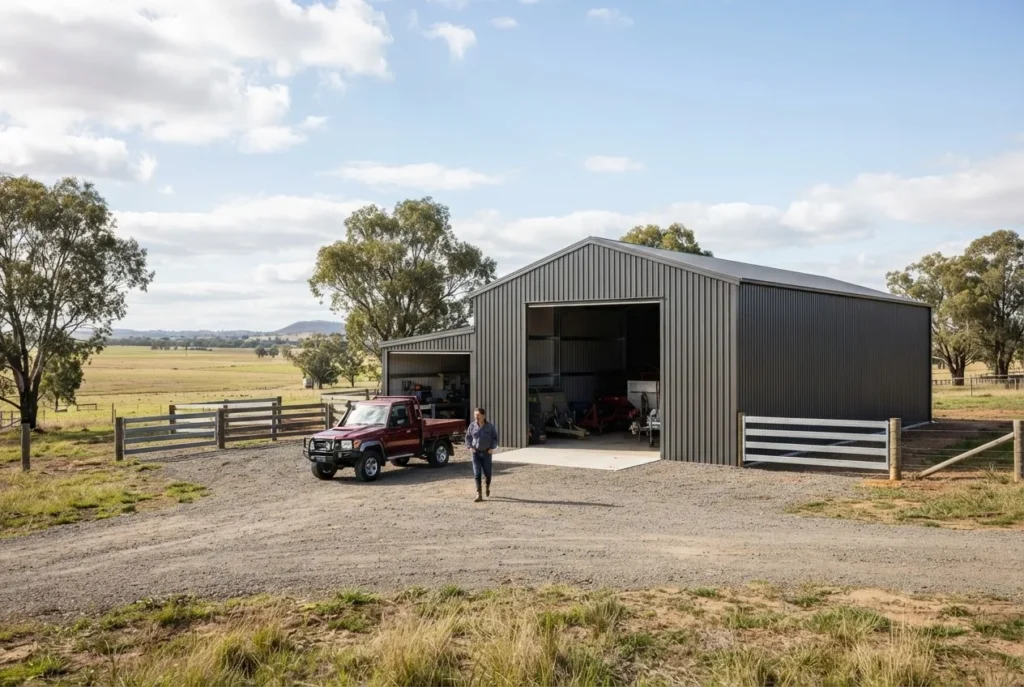
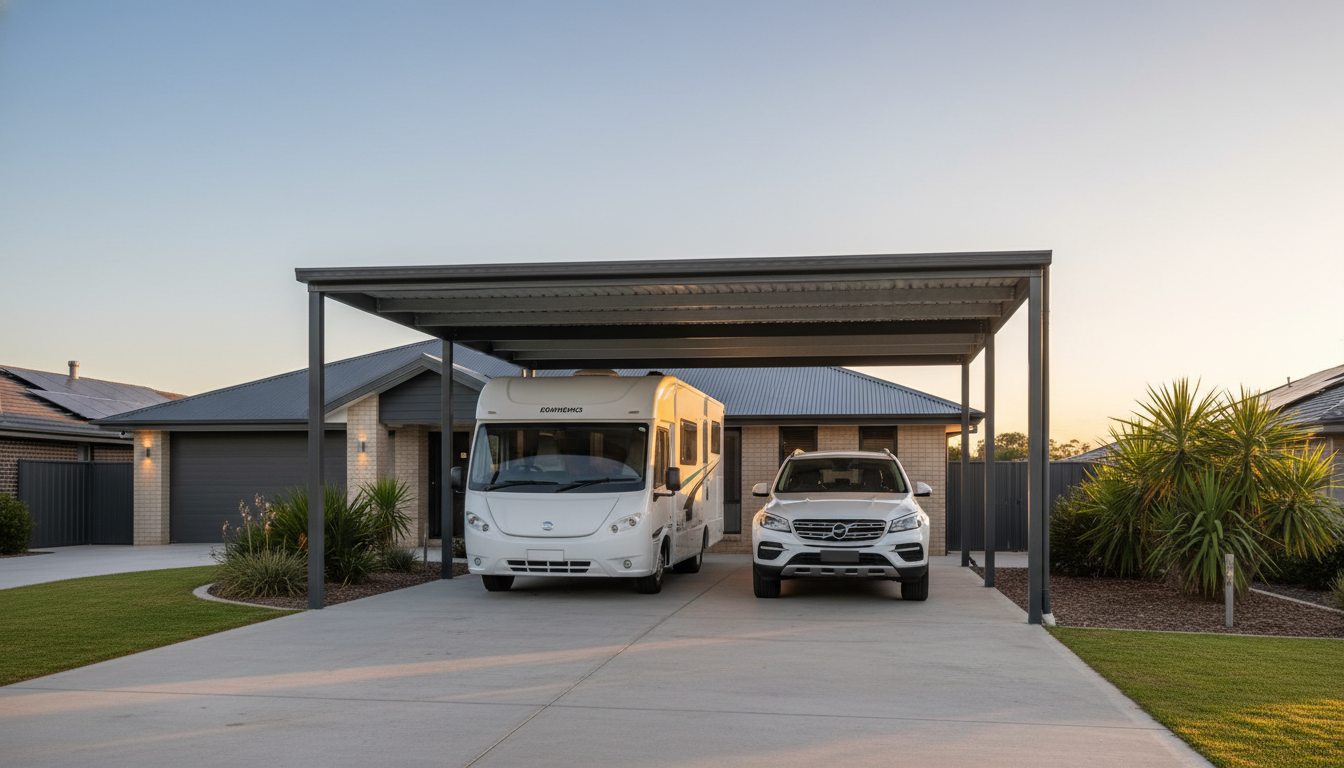
A carport shed in the Australian context is a purpose-built outdoor shelter designed primarily for protecting vehicles from the elements, combining structural robustness with functionality. Unlike fully enclosed garages, carport sheds may be attached or free-standing, featuring roofs and partial walls or open sides, offering flexible coverage with ease of access. These structures typically fall under Australian Building Codes Board (ABCB) classifications as Class 10a buildings, which include non-habitable structures such as sheds and carports.
Understanding the definition is key as it influences material choice, design parameters, and council approval requirements.
Why Choose a Carport Shed Over Other Shelter Types?
Compared to traditional garages or open shelters, carport sheds balance affordability, quick installation, and compliance with local planning regulations. Their semi-enclosed nature reduces construction complexity and cost while providing robust protection against sun, hail, rain, and dust. Additionally, Australian homeowners increasingly prefer carport sheds for their versatility to accommodate vehicles, storage needs, or outdoor covered workspaces without the full investment or footprint of a garage.
Trends and Innovations in Carport Sheds for 2025
Modern carport sheds in Australia integrate aesthetic design enhancements, sustainable materials, and improved structural resilience. Innovations include:
- Use of Colorbond steel in a broad palette of contemporary colours that resist corrosion and fading.
- Enhanced wind ratings complying with updated Australian Standards (e.g., AS/NZS 1170.2 for wind actions), crucial for cyclone-prone regions like Queensland and Northern Territory.
- Environmentally conscious designs incorporating shading calculations conforming to Australian regulations for reducing heat gain adjacent to neighbouring properties.
- Hybrid designs combining timber elements with metal roofing for a premium look adhering to structural compliance detailed in AS 1684 (Residential Timber Framing Standard).
- Integration of photovoltaic-ready roofing panels for solar power solutions, anticipating growing homeowner interest in energy efficiency.
Such trends reflect the evolving demand for both durability and style in carport sheds, making 2025 a pivotal year for innovative shelter design in Australia.
With this foundational understanding, let’s explore how to buy the right carport shed tailored to your needs.
How to Buy the Right Carport Shed in Australia
Carport Shed Types and Popular Materials (Colorbond, Zincalume, Timber)
The market offers diverse carport shed materials catering to varying budgets and aesthetic preferences:
| Material | Characteristics | Advantages | Considerations |
|---|---|---|---|
| Colorbond Steel | Pre-painted, corrosion-resistant steel with multiple colour options. | Highly durable, low maintenance, superior weather resistance. | Higher upfront cost; requires professional installation for warranty compliance. |
| Zincalume Steel | Galvanised steel coated with zinc and aluminium for rust protection. | Cost-effective, strong, suitable for frames and roofing. | Less colour variation; may develop surface oxidation if scratched. |
| Treated Timber | Pressure-treated hardwood or softwood framing and cladding. | Natural look, easy to modify, better insulation properties. | Requires regular maintenance; vulnerable to termites and weathering. |
Choosing between Colorbond vs Zincalume materials for sheds is crucial, balancing budget with longevity. For detailed comparisons, see our Barn Sheds Australia guide to understand optimal material choices.
Choosing Between Pre-fabricated and Custom-built Carport Sheds
Pre-fabricated carport sheds offer standardized dimensions and rapid installation, ideal for common vehicle sizes and typical applications. They are generally more affordable and sourced from established suppliers.
Custom-built carports, in contrast, allow tailored dimensions, unique roof designs, and integration with existing structures for aesthetic harmony and site-specific constraints. This option is especially beneficial when dealing with irregular block shapes or strict council regulations.
Consider the trade-offs carefully — pre-fab sheds provide cost and time efficiency while custom sheds enable precise adherence to complex design and regulatory requirements.
Top Australian Carport Shed Suppliers and Builders
Australia hosts numerous reputable suppliers and builders specialising in carport sheds, including:
- Local manufacturers offering Colorbond carport shed kits with warranty-backed steel products.
- Custom builders experienced in complying with local council regulations for various states and wind classifications.
- Specialist retailers focused on both residential and commercial carport solutions, often with design consultation services.
Engaging suppliers that demonstrate strong knowledge of regional regulations (e.g., Queensland’s cyclone codes or Victoria’s shading requirements) ensures your installation complies with 2025 legislation. Supplier reviews, certifications, and after-sales support are critical factors. Residents in Western Australia can also benefit from specialized advice on caravan parts and shed advice specific to Western Australia.
Budgeting and Cost Considerations for 2025
Costs vary widely based on size, materials, design complexity, and council approval fees. In 2025, Australian homeowners can expect approximate base costs ranging from:
- Small single carport shed: AUD 4,000 – 7,000
- Double or attached carport sheds: AUD 8,000 – 15,000
- Large or custom carports: AUD 15,000 – 30,000+
Additional expenses include:
- Site preparation and foundation work
- Council application and permit fees
- Professional installation or labour costs
- Optional extras such as gutters, downpipes, or lighting
Prudent budgeting accounts for contingencies and post-approval modifications.
With clear understanding of purchasing options and budgeting, mastering design considerations is the next step. For more details on steel options, see our steel carport buyer’s guide Australia 2025 covering Colorbond and wind ratings.
Design Considerations for Carport Sheds
Size and Capacity Planning Based on Vehicle and Storage Needs
Planning the right size for your carport shed is foundational. Standard dimensions vary by vehicle type:
- Single carport: Minimum 3 m width x 5.5 m length
- Double carport: 6 m width x 5.5–6 m length
- Larger or specialist vehicles (e.g., SUVs, camper trailers): Adjust lengths up to 7–9 m
Beyond vehicle clearance, consider storage needs (bicycles, gardening tools), driveway access, and turning radii. A space buffer of at least 0.3 m around vehicles supports ease of use.
Review standard dimensions and regulations for single car carports to better plan your own carport shed, ensuring compliance and proper sizing.
Referencing local council rules (often specifying maximum allowable floor area for outbuildings) is critical to avoid application rejection.
Roof Designs, Styles, and Structural Compliance (AS 1684)
Popular roof styles for carport sheds include:
- Flat roofs – Modern, minimalist but require waterproof membrane and adequate drainage.
- Gable roofs – Classic pitched roofs providing better rainwater runoff and attic ventilation.
- Skillion roofs – Single slope, economical for water drainage and solar panel installation.
All designs must comply with AS 1684 Residential Timber Framing Standard or relevant steel framing standards, ensuring strength and stability against wind loads and climatic conditions. Designers should use cross-bracing, appropriate fixing methods, and wind-rated materials meeting at least N3 or N4 classifications for coastal or cyclone-prone areas.
Attachment vs. Free-standing Carport Sheds: Pros and Cons
| Type | Pros | Cons |
|---|---|---|
| Attached Carport Shed |
|
|
| Free-standing Carport Shed |
|
|
Incorporating Environmental and Shading Regulations in Design
Australian councils increasingly mandate compliance with environmental controls, including shading laws, to protect neighbouring properties from excessive shadowing. Most states require new carport sheds to follow shading**, overshadowing, and stormwater runoff standards. This can affect:
- Setback distances from property boundaries
- Maximum allowable height (often 3 to 3.6 meters)
- Orientation and placement to limit neighbour impact
- Use of permeable surfaces or water-sensitive design features
These factors must be integrated early in the design to ensure approval success and reduce costly redesigns.
To explore innovative caravan shelter options, see our dedicated guide on caravan carport design ideas and council approvals in Australia.
The next section navigates the crucial council approval pathways mapped for each Australian state and territory.
Council Approval Process for Carport Sheds Across Australian States and Territories
Understanding Building Permits and Planning Approvals (Overview)
In Australia, erecting a carport shed generally requires building permits and possibly planning approvals depending on size, location, and local laws. The main approval pathways include:
- Exempt Development: Small structures meeting pre-set criteria that do not require a permit (vary highly by council).
- Complying Development Certificate (CDC): Fast-tracked approval where the design meets all specified standards.
- Development Application (DA): Traditional council assessment process for larger or non-standard projects.
Most councils require detailed documentation including site plans, design drawings, material specifications, and compliance checklists aligned with the National Construction Code (NCC) and applicable Australian Standards.
State-Specific Council Requirements and Variations (NSW, QLD, VIC, WA, SA, TAS, ACT, NT)
| State/Territory | Key Approval Requirements | Height & Size Restrictions | Additional Considerations |
|---|---|---|---|
| New South Wales (NSW) | DA or CDC via NSW Planning Portal. Comply with standard setbacks and 3.6m height limits. Must adhere to local environmental plans. | Up to 60m² and <3.6m height may be exempt. | Consider neighbour consultation and heritage listings. |
| Queensland (QLD) | CDC preferred via Queensland Development Code; stricter wind loading due to cyclone risk (N3-N4 wind classifications), especially in coastal areas. | Max 4m height, size varies by council. | Stormwater and shade regulations enforced. |
| Victoria (VIC) | Building permit required plus planning permit for certain zones. Typical height limit 3.6m and area restrictions apply. | Max 36m² for exempt structures commonly. | Includes overshadowing controls and tree removals. |
| Western Australia (WA) | Council approval varies; many councils require building permits for structures above 10m². Cyclone rating requirements in north. | Variable height limits, usually 3m–3.6m. | Know local laws for stormwater and heritage overlays. |
| South Australia (SA) | Typically requires development approval and building permits. Height capped at 3m for exempt development. | Usually <20m² exempt area. | Shading and site coverage restrictions. |
| Tasmania (TAS) | Building and planning permits usually required. Complying Development Certificates an option pending council. | Height often limited to 3m; size varies. | Environmental overlays apply in some zones. |
| Australian Capital Territory (ACT) | Assessment through territory-wide planning scheme; CDC or DA options exist. | Generally max 3m exempt sheds. | Water sensitive urban design increasingly mandated. |
| Northern Territory (NT) | Building permits mandatory. Cyclone wind ratings critical. | Height limits typically 3.6m. | Fire safety and bushfire-prone considerations significant. |
How to Prepare and Submit Your Application: Documentation and Checklists
Successful applications include:
- Completed application forms (DA or CDC formats)
- Site plan showing exact location and setbacks
- Elevations and floor plans with dimensions
- Materials and colours specification (often requiring Colorbond or similar durable finish details)
- Compliance certificates referencing Australian Standards (e.g., AS 1684 framing compliance)
- Engineering certifications for wind and structural ratings
- Proof of neighbour consultation if required
Use councils’ online planning portals or local government websites to download checklists and application guidance.
Common Reasons for Rejection and How to Avoid Them
- Incomplete or inaccurate documentation – use council checklists diligently.
- Non-compliance with size, height, or setback rules – verify local planning schemes early.
- Ignoring environmental or shading regulations – demonstrate compliance explicitly in plans.
- Failing to address neighbour concerns – conduct pre-application discussions where possible.
- Using non-approved materials or unlicensed builders – always purchase from trusted suppliers and hire accredited contractors.
Homeowner Responsibilities During the Approval Process
Owners must:
- Ensure all documentation is compliant and submitted on time.
- Track application status and respond promptly to council requests or objections.
- Engage qualified professionals if needed for plans and engineering certification.
- Gain written approval before starting construction to avoid fines or forced demolition.
For a broader understanding of shed types and their council approvals, readers may also explore our detailed comprehensive council approvals and shed design resource covering prices, approvals, and design options.
If considering modular shelter kits, check our detailed caravan shelter kits, pricing, and council approvals Australia-wide guide including pricing, shade options, and compliance.
For innovative shelter designs, see also our guide on caravan carport design ideas and council approvals in Australia.
If you need boat storage options, explore our comprehensive guide on carports for boats: material comparisons, cyclone ratings, and approvals.
If considering a temporary carport, refer to our dedicated temporary carports, permits, and Colorbond options in Australia guide.
Now that approvals are demystified, let’s turn to practical construction and installation considerations.
Installation and Construction of Carport Sheds
Timeline Expectations and Scheduling for Installation
Typical installation timelines vary:
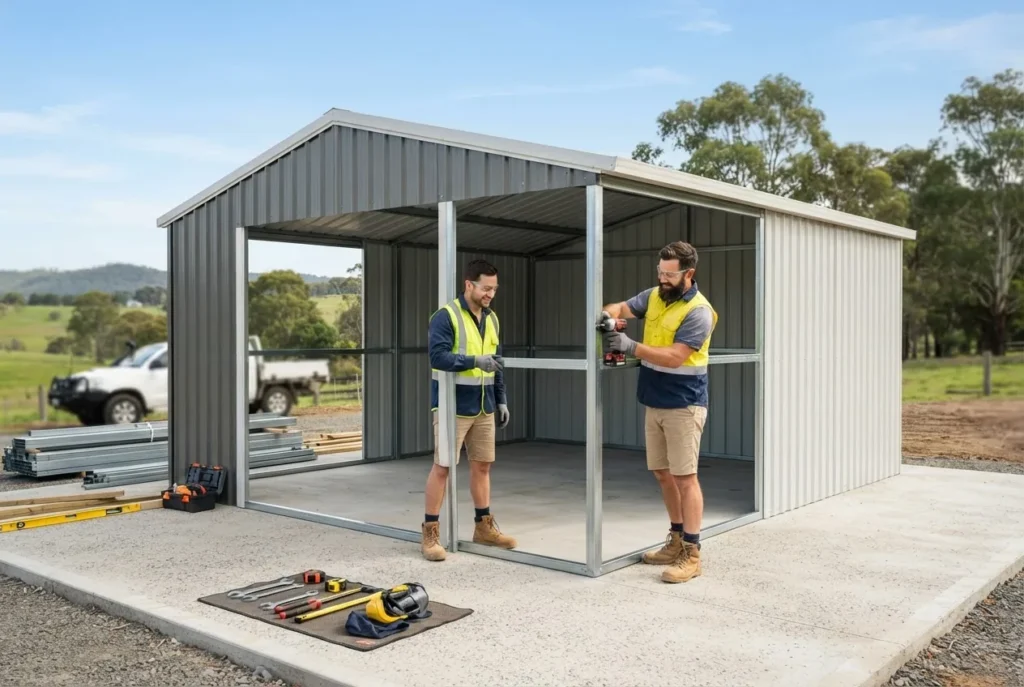
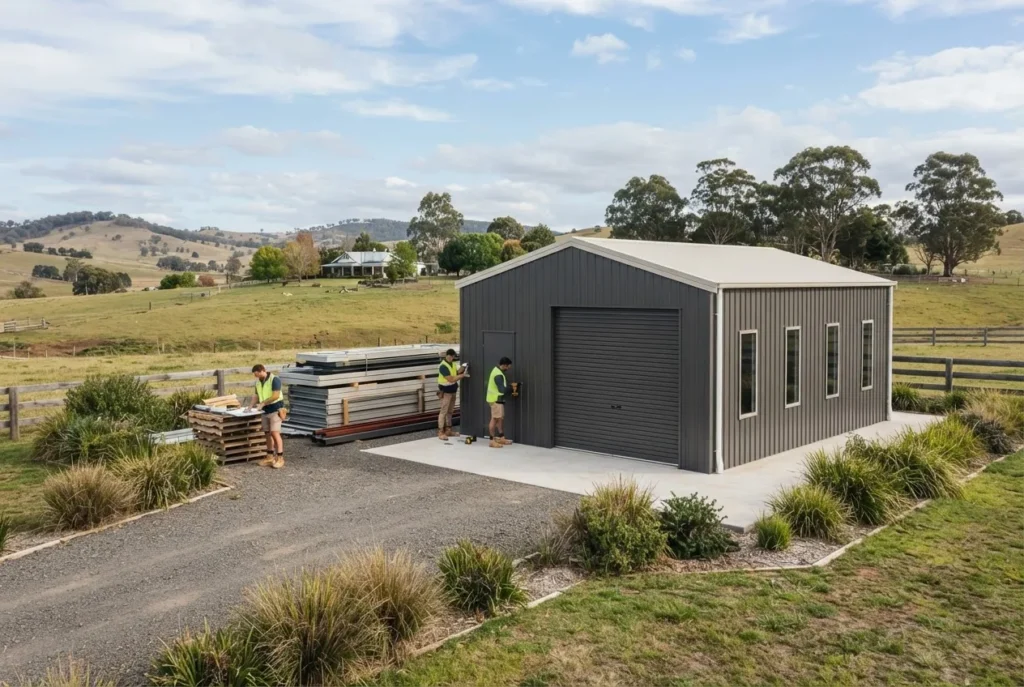
- Pre-fabricated sheds: 1–3 days site assembly after foundation preparation.
- Custom-built carport sheds: Several weeks to months depending on complexity, supplier lead times, and council approval timelines.
- Site preparation (excavation, footings) may add 1–2 weeks.
Early scheduling with suppliers and builders is critical given 2025 market demand and supply constraints in Australian building materials.
DIY Installation vs. Hiring Professional Builders
DIY installation may be feasible for experienced home builders on smaller structures with clear manufacturer instructions. However, risks include:
- Non-compliance with local building codes.
- Incorrect structural installation compromising wind rating compliance.
- Lack of warranty coverage if not installed professionally.
Most Australian homeowners are advised to hire professional builders with licences compliant with state construction authorities to ensure quality and certification. This also facilitates smoother council inspections.
Structural and Wind Rating Compliance During Construction
Builders must adhere to engineering specifications ensuring compliance with 2025 updated wind ratings per Australian Standards AS/NZS 1170.2. Key considerations include:
- Use of certified steel or timber materials.
- Proper anchoring and bracing per design wind speed zones.
- Regular supervision by qualified structural engineers or building inspectors.
Post-Installation Inspection and Certification
After construction, a mandatory inspection verifies structural integrity and code compliance. Homeowners receive a final occupation certificate or compliance certificate required by councils before use.
In some states, periodic audits ensure ongoing safety, especially in cyclone zones.
Maintenance supports longevity — the next section covers care and updating your carport shed.
Maintaining and Upgrading Your Carport Shed
Routine Maintenance Tips to Ensure Longevity
- Regularly clean gutters and downpipes to prevent water damage.
- Repaint or touch up Colorbond or timber finishes to prevent corrosion or rot.
- Inspect for loose fasteners or damage after storms; tighten or repair promptly.
- Maintain adequate site drainage to avoid structural undermining.
- Check roof sheeting for rust or displacement; replace as needed.
For ongoing maintenance or repair of carport sheds in WA, our guide on caravan repairs and premium steel sheds in Perth, WA provides practical solutions.
Compliance with Updated Australian Standards and Local Council Policies
Stay informed of changes to building codes or local regulations, especially those relating to structural upgrades or environmental compliance. Many councils publish annual updates online, and professional audits can identify retrofit opportunities to improve wind rating compliance or energy efficiency under 2025 guidelines.
Options for Future Expansion or Modifications
Adding walls, increasing storage or upgrading roofing materials often requires retrospective council approval. The process usually involves:
- Submitting amended plans reflecting new designs.
- Engineering certification if structural changes affect safety ratings.
- Ensuring modifications still comply with shading and environmental considerations.
Consult your local council early to avoid violations and associated penalties.
For additional storage beyond vehicle shelters, our garden storage guide covers premium outdoor shed solutions suited for Australian conditions.
Frequently Asked Questions (FAQs)
Frequently Asked Questions
What is the difference between a carport shed and a traditional garage in Australian home design?
A carport shed is typically semi-enclosed with open sides for ventilation and easier access, while a traditional garage is fully enclosed. Carports are generally more affordable, quicker to build, and subject to less stringent council regulations compared to garages in Australia.
How do Colorbond and Zincalume steel compare for carport shed roofing in terms of durability and maintenance?
Colorbond steel offers pre-painted, corrosion-resistant surfaces with multiple colour options and requires less maintenance. Zincalume is a galvanised steel with zinc and aluminium coating, more cost-effective but prone to surface oxidation if scratched, requiring occasional upkeep.
Why is council approval essential before building a carport shed in Australia?
Council approval ensures the carport shed complies with local planning laws, building codes, environmental and safety standards. It prevents legal issues, costly modifications, and guarantees structural safety, especially in regions with specific restrictions like cyclone zones or heritage overlays.
When is choosing a free-standing carport shed more advantageous than an attached design?
Free-standing carports offer greater flexibility in site placement and design, easier council approval, and simpler future modifications. They are ideal when existing home structures or council rules restrict attachments or when larger or irregular locations are used.
Which roof style is best suited for incorporating solar panels on a carport shed?
Skillion roofs, with their single-sloped design, are best suited for solar panels due to optimal angles for sunlight exposure and efficient water drainage, making them popular for energy-efficient carport sheds in Australia.
Can pre-fabricated carport sheds be customised to fit irregular block shapes and specific council requirements?
Pre-fabricated sheds generally offer limited size and design flexibility. For irregular blocks or strict council controls, custom-built carport sheds are preferred as they allow tailored dimensions and design adaptations to meet site and regulatory demands.
How does ongoing maintenance impact the lifespan of a carport shed in Australian climates?
Regular maintenance such as cleaning gutters, repainting, and inspecting structural components prevents corrosion, rot, and weather damage. This prolongs the carport shed’s lifespan, maintains safety, and ensures warranty compliance in varied Australian climates.
What environmental considerations should be prioritized in carport shed placement to comply with Australian regulations?
Placement should minimise overshadowing of neighbouring properties, ensure proper stormwater drainage, maintain setback distances, and incorporate permeable surfaces to reduce environmental impact and meet council shading and water-sensitive urban design requirements.