

Looking for the perfect temporary carport in Australia? Whether you need a portable shelter for your caravan, want compliance tips on permits, or are curious about Colorbond steel options, this definitive buyer’s guide has got you covered. Delve into mobility advantages, installation insights, legal requirements, and material choices tailored for the Australian climate.
Understanding Temporary and Portable Carports in Australia
Defining Temporary Carports: Features and Benefits
Temporary carports are lightweight, non-permanent structures designed to provide shelter for vehicles and equipment for limited time spans. Typically, they feature modular frames—often steel or aluminum—and fabric or Colorbond roof panels that can be erected and dismantled without major groundwork.
Benefits include:
- Quick setup and takedown, ideal for seasonal needs or short-term projects
- Portability, allowing relocation to different sites on your property or new locations
- Cost-effectiveness compared to permanent garages
- Protection from sun, rain, and hail which is vital in Australia’s diverse climatic conditions
Temporary carports are especially popular among caravan owners, event organisers, and homeowners needing flexible vehicle protection without zoning hassles.
Portable vs. Semi-Permanent Carports: Key Differences and Use Cases
Though often used interchangeably, portable carports and semi-permanent carports differ in rigidity, installation, and legal status.
- Portable carports: Lightweight, usually prefabricated with modular frames, designed for easy assembly and movement. Limited or no fixed foundation required. Perfect for renters or those needing monthly or seasonal shelter.
- Semi-permanent carports: Installed with footings or anchored to concrete pads for stability. Usually require council permits and may involve longer-term commitments. Apt for homeowners wanting a robust shelter without full garage build costs.
Choosing between them depends on factors such as intended use duration, local council regulations, and mobility requirements. For example, caravan owners often prefer portable options that can move seasonally or between campsites.
Mobility and Relocatable Structures: Advantages for Caravan Owners and Seasonal Storage
Relocatable structures offer immense flexibility. Caravan enthusiasts benefit from:
- Easy transport and reassembly at different locations
- Seasonal protection without permanent property alterations
- Avoiding costly and time-consuming council approvals that permanent structures demand
Seasonal vehicle shelters using portable carports ensure vehicles stay protected during harsh weather conditions like intense sun, heavy rain, or hailstorms—common across Australian regional zones.
For more inspiration on caravan-specific shelter options, see our Caravan carport design and council approvals ideas Australia.
With clear distinctions and benefits mapped out, understanding legal requirements next is crucial for compliant and hassle-free installation.
Navigating Australian Local Council Permits for Temporary Carports
Understanding Permit Requirements Across Major States and Territories
Permit regulations for temporary carports vary widely across Australia’s states and territories. Generally, portable structures under certain size thresholds (<10m² in some states) may not require permits, but local council rules differ considerably.
Key points include:
- New South Wales: Portable carports under 10m² and no fixed footings usually exempt from approval. Larger or anchored setups require Development Applications (DA).
- Victoria: Temporary structures under 10m² typically excluded, but some councils enforce permit processes for wind-rated or permanent foundations.
- Queensland: Structures with footings or larger than 10m² require building permits and compliance with the Queensland Development Code (QDC).
- Western Australia, South Australia, TAS, ACT, NT: Permits often hinge on size, anchorage, and intended duration. Check local council portals for specific rules.
Always consult councils directly or their online portals—local nuances can affect compliance significantly.
Step-by-Step Guide to Applying for a Temporary Carport Permit
- Determine classification: Is your carport temporary or semi-permanent? Is it portable or fixed?
- Check size and footings: Measure footprint and whether it needs anchorage per council rules.
- Visit your local council website: Download and review permit application forms and guidelines.
- Prepare necessary documentation: Include site plans, structural details, and material specifications (e.g., Colorbond steel details).
- Submit permit application: Follow online submission or in-person process per council.
- Await approval or request feedback: Typical processing time varies; some councils offer fast-tracked decisions for minor structures.
- Comply with any permit conditions: Including cyclone and wind ratings, installation methods, and notification requirements.
For detailed council resources and up-to-date permit info, refer to official portals such as the Australian Building Codes Board, and state-specific planning authorities. Also, understanding the Council approvals process for Australian sheds and carports is crucial for smooth application.
Compliance with Australian Building Codes and Wind/Cyclone Ratings
Under the National Construction Code (NCC) 2022 and related standards (AS/NZS 1170 series), temporary carports must meet minimum structural safety requirements, especially in cyclone-prone or high-wind zones.
Many portable carports come with certified cyclone and wind ratings, essential for approval in northern Australia and exposed coastal areas. These ratings guide design modifications like material thickness, anchorage type, and roof pitch configured to withstand forces outlined by local authorities.
Non-compliance risks structural failure and heavy fines. Engaging suppliers with certified designs significantly eases approvals and enhances safety.
Common Permit Challenges and How to Avoid Them
- Submitting incomplete documentation: Double-check councils’ document checklists.
- Mismatched structure classification: Ensure to clarify temporary vs semi-permanent status upfront.
- Ignoring local zoning overlays or heritage restrictions: Verify if your property has special conditions.
- Using unapproved materials or designs: Always procure Colorbond or other materials with Australian certifications.
- Underestimating compliance timelines: Apply well before your intended installation date.
Thorough planning prevents permit rejection, costly delays, or legal issues. For broader context on approvals, refer to our Council approvals process for Australian sheds and carports.
Additional useful resources include the Caravan shelter kits pricing and approvals Australia and Carport shed buying and council approval guide Australia for nuances specific to temporary structures.
Next, understanding material choices, especially Colorbond steel options tailored for portability and climate, adds crucial buying confidence.
Exploring Colorbond Steel Options for Temporary Carports
Overview of Colorbond Steel: Durability and Suitability for Portable Structures
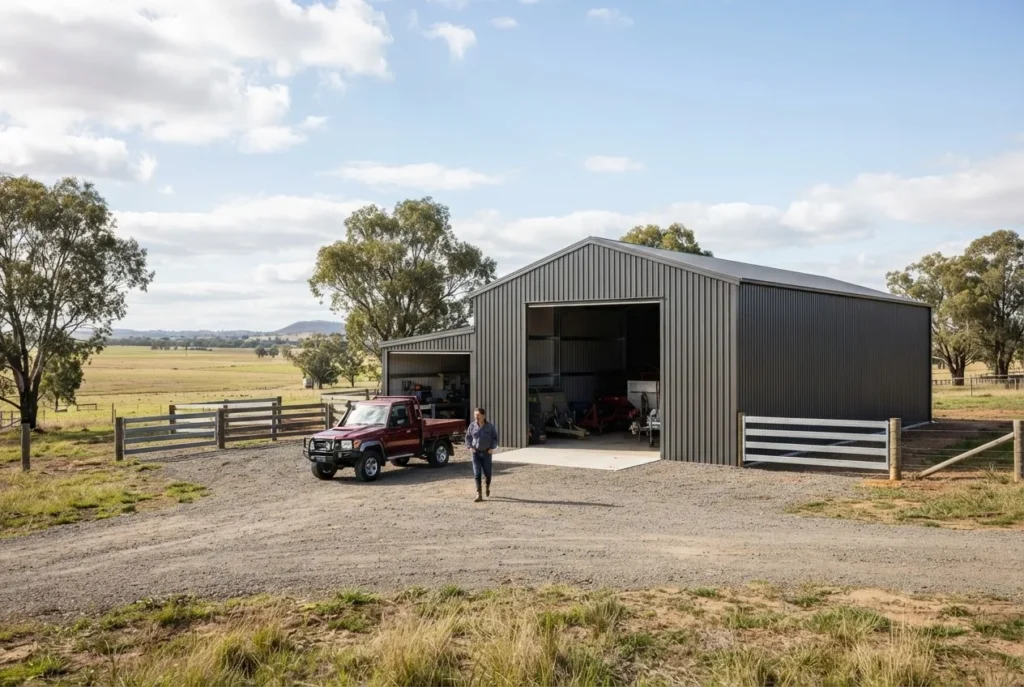
Colorbond steel is a pre-painted steel product renowned in Australia for its durability, corrosion resistance, and vibrant colour range. Manufactured by BlueScope Steel, it offers excellent resistance to harsh Australian sun, coastal salt spray, and hail impacts—key considerations for temporary carports exposed to varied environments.
Compared to fabric or polycarbonate roofs, Colorbond delivers a low-maintenance, longer-lasting shelter with superior structural strength—often a decisive factor for portable yet robust temporary carports.
Colorbond Colours Tailored to Australian Climatic Zones
Australia’s climatic zones—ranging from tropical north to temperate south, coastal to arid inland—affect material performance and heat retention. Colorbond’s palette includes specialised colours engineered for energy efficiency and regional suitability:
| Climate Zone | Recommended Colorbond Colours | Benefits |
|---|---|---|
| Tropical/Coastal | Pale Eucalypt, Surfmist, Shale Grey | Reflects heat, minimizes corrosion from salt air |
| Temperate (South NSW, Victoria) | Classic Cream, Woodland Grey, Monument | Balances heat absorption and thermal expansion |
| Arid/Inland | Territory Red, Deep Ocean | Heat tolerant, UV resistant |
Choosing the right colour boosts longevity and user comfort. Consult BlueScope’s official Colorbond resources for full technical datasheets and colour charts.
Comparison: Colorbond vs. Alternative Materials for Temporary Carports
| Material | Durability | Weight & Portability | Maintenance | Cost |
|---|---|---|---|---|
| Colorbond Steel | High (Corrosion & impact resistant) | Moderate (Steel panels add weight) | Low (Occasional cleaning) | Mid to High |
| Fabric Canopies (Polyester PVC) | Low to Moderate (Susceptible to tears & UV fade) | Lightweight (Easiest to move) | High (Frequent replacement) | Low |
| Aluminum Panels | Moderate (Corrosion resistant but dents easily) | Light (Good portability) | Low | Moderate |
Colorbond is often preferred for users seeking longevity and weather resistance, especially in cyclone-rated or coastal zones where corrosion is a concern. For a comprehensive comparison of Colorbond vs Zincalume options including pricing and design variations, see our Barn Sheds Australia guide.
For an in-depth overview of steel carports including Colorbond, council and wind ratings, refer to our Steel carport buyers guide Australia 2025.
While this guide focuses on temporary carports, for boat-specific carports see our Boat carports Colorbond vs Zincalume comparison Australia.
Maintaining Colorbond Carports for Longevity and Mobility
To prolong Colorbond carport lifespan and functional mobility:
- Regularly wash with mild detergent to remove salt residues
- Inspect roof sheets for scratches or dents compromising protective coatings
- Ensure anchorage is detachable and bolts are not corroded
- Apply protective sealants if near heavily corrosive environments
Proper upkeep ensures your temporary carport remains structurally sound and visually appealing for years.
For an expanded comparison of roofing materials, see our Colorbond vs Zincalume options overview in the Barn Sheds Australia guide.
With the right material selected, mastering installation best practices is the next step toward a successful temporary carport setup.
Installation Processes and Setup Tips for Temporary and Portable Carports
Preparing Your Site: Considerations and Measurements
Before installation, preparing your site is essential:
- Clear and level the ground to prevent water pooling and structural stress
- Measure dimensions precisely—consider vehicle size plus clearance for opening doors and manoeuvring
- Mark out boundaries clearly to comply with council setback rules and ensure safe assembly
- Check soil type—sandy, rocky, or clay soils affect anchoring methods
These steps reduce installation time and improve safety and durability.
DIY Installation vs. Professional Setup: Pros and Cons
| Aspect | DIY Installation | Professional Setup |
|---|---|---|
| Cost | Lower upfront cost (only tools and time investment) | Higher cost, includes labour and expertise |
| Time | Longer, learning curve possible | Faster and efficient |
| Quality and Compliance | Risk of errors impacting safety and permit compliance | Expert handling ensures adherence to codes and standards |
| Tools and Skills | Requires appropriate tools and moderate skills | Professionals bring specialised equipment and experience |
Decide based on confidence, budget, and council permit conditions.
Step-by-Step Installation Procedures for Portable Carports
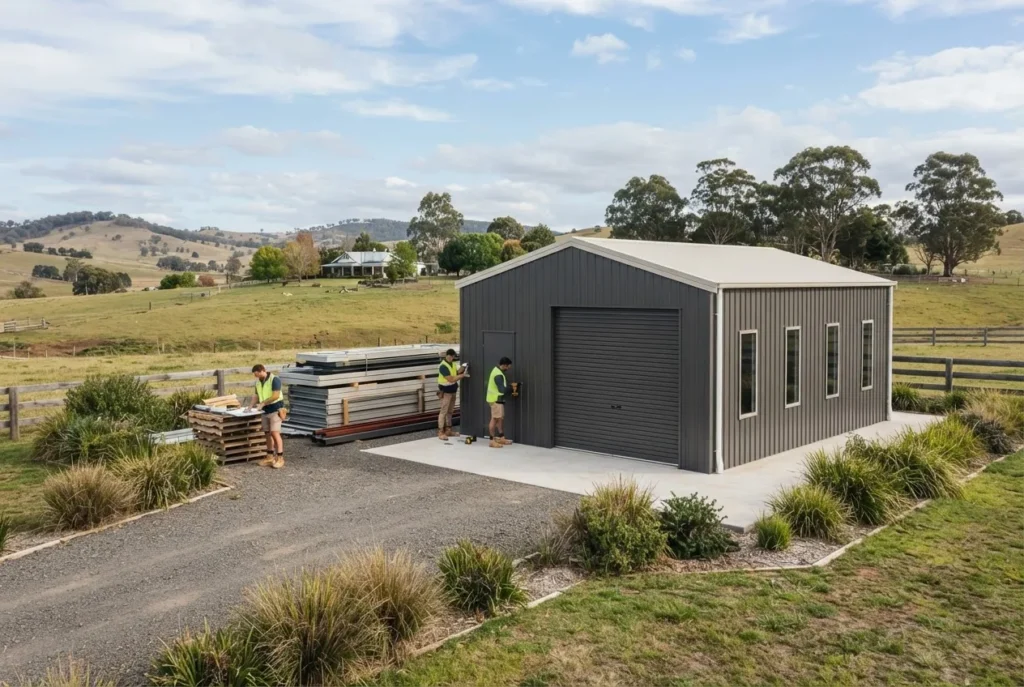
- Unpack components and verify all parts per supplier checklist.
- Prepare and mark the installation site footprint.
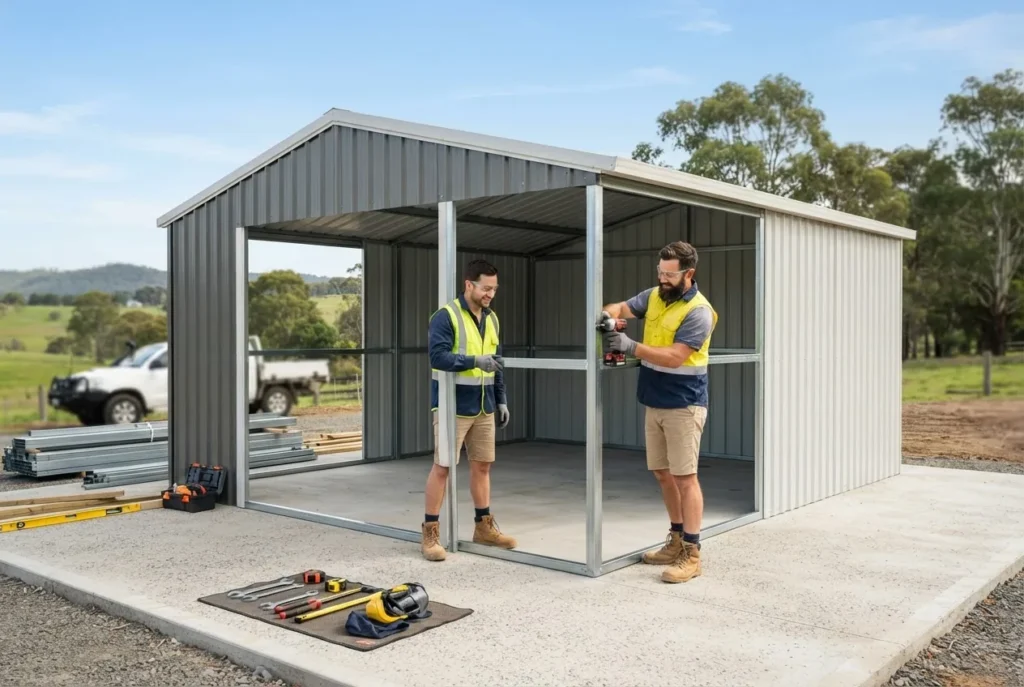
- Assemble frame sections per manufacturer instructions, ensuring structural connections are secure.
- Fix the frame to the ground using appropriate anchors (stakes, screw anchors, or concrete pads if permitted).
- Attach roof panels, starting from one corner and ensuring proper overlap and fastening for weather tightness.
- Secure sidewalls or additional coverings if applicable.
- Perform final safety checks and adhere to any local council inspection requirements.
Seasonal Setup and Relocation Best Practices
- Store components in a dry, shaded area when disassembled to prevent weather damage
- Carefully dismantle and label parts to streamline seasonal takedown and reassembly
- Use a team for safe handling of heavy panels or large frames
- Regularly inspect anchorage points and steel integrity before each reinstallation
Following these practices maximises the life of your carport and makes mobility seamless.
For additional guidance and installation advantages, see our Steel carport buyers guide Australia 2025.
Having set up your carport, understanding cost structures supports smart budgeting and value assessment.
Cost Analysis and Commercial Considerations for Temporary Carports
Breakdown of Typical Costs: Materials, Installation, Permits
Costs vary based on carport size, material, site conditions, and local permit fees. Typical price components include:
- Materials: Steel frames and Colorbond panels range from AUD 1,200 to 4,500 for standard single to double carports.
- Installation: DIY can reduce labour costs; professional setup may add AUD 500 to 1,500 depending on the complexity.
- Permits: Application fees vary—minor permits often under AUD 200, but detailed approvals can exceed AUD 1,000.
Warranty coverage generally spans 10–20 years for Colorbond steel roofing, though portable carports’ mobility may slightly reduce lifespan.
Comparing Price Points: Portable vs. Semi-Permanent Carports
| Carport Type | Avg. Price Range (AUD) | Typical Installation Costs | Permit Fees |
|---|---|---|---|
| Portable Carports | 1,200 – 3,000 | DIY or low-cost professional | Often exempt or minimal |
| Semi-Permanent Carports | 3,000 – 7,000+ | Professional required | Moderate to high (permits mandatory) |
Portable carports offer better flexibility and lower upfront cost but may require more upkeep and have shorter warranty periods.
Value for Money: Assessing Longevity, Warranty, and After-Sales Support
Consider:
- Warranty coverage on roofing and structural frames
- Supplier reputation and availability of replacement parts
- Longevity expectations based on local climate exposure
- After-sales service responsiveness for repairs and advice
Investing in reputable brands with verified warranty policies, such as those using BlueScope Colorbond steel, enhances long-term value.
Budgeting Tips Specifically for Caravan Owners and Seasonal Users
- Factor in seasonal assembly/disassembly costs and storage solutions
- Prioritise lightweight materials for ease of transport
- Check insurance implications—some policies treat portable structures differently
- Look for supplier package deals combining carport and caravan shelter kits
Detailed pricing and permit considerations are elaborated in our guide to 3 bay garage sizes and cost guide Australia for broader context.
Next, real-world buyer scenarios showcase practical applications of temporary carports across Australia.
Real-World Use Cases and Buyer Scenarios
Caravan Owners: Seasonal Storage and Transportable Protection
John, a caravan enthusiast in Queensland, opted for a portable Colorbond carport to protect his vehicle during the rainy season. The structure’s cyclone rating enabled smooth council approval. He disassembles it during off-season and stores components in a dry shed, making it a cost-effective, compliant solution.
For caravan owners located in Western Australia, additional resources covering essential caravan parts and repair services, as well as local steel sheds and carports, are available. See our guides on Caravan parts and WA shed advice and Caravan repairs and premium steel carports Perth for detailed advice.
Homeowners Seeking Temporary Shade and Vehicle Protection
Sarah from Victoria needed quick shade for her second vehicle during home renovations. She chose a portable carport in Woodland Grey Colorbond finish, balancing aesthetics and compliance. The structure required no permit and was set up over a weekend.
Many homeowners also combine temporary carports with dedicated garden storage solutions to maximize outdoor utility. Our Premium garden storage solutions Australia guide highlights options that complement carport setups.
Temporary Carports for Event or Construction Site Use
Builders and event managers use portable structures to protect vehicles and equipment temporarily at worksites and outdoor events. Lightweight designs and fast assembly reduce downtime and meet occupational health requirements efficiently.
Case Studies: Successful Temporary Carport Installations in Various Regions
| Location | Carport Type | Primary Use | Key Outcome |
|---|---|---|---|
| North Queensland | Portable Colorbond | Caravan cyclone rating storage | Council compliant, durable in cyclone season |
| South Australia | Fabric portable canopy | Event vehicle cover | Cost-effective, easy relocation |
| Western Australia | Semi-permanent steel frame | Home vehicle shelter | Long lifespan, high stability |
These scenarios illustrate how temporary carports meet a broad range of needs—from seasonal shelters to semi-permanent, code-compliant installations.
Let’s wrap up by answering common questions and sharing insider tips that can save you time and money.
FAQs and Insider Tips on Temporary Carports in Australia
Do I Always Need a Permit for Temporary Carports?
Not always. Many portable, small-scale temporary carports under specified sizes and with non-permanent anchorage are exempt. However, permit requirements vary by state and council. Check local rules before purchasing.
How to Choose the Right Size and Style for My Needs?
Consider vehicle dimensions, intended duration, and site constraints. For multiple vehicles or large caravans, opt for larger, sturdier designs. For quick, seasonal uses, lightweight portable frames suffice.
What Are the Most Durable Portable Carports Under Australian Conditions?
Carports made with Colorbond steel roofing and galvanised steel frames with certified wind ratings offer the best durability, especially in coastal, tropical, or cyclone-prone zones.
How Quickly Can I Relocate a Portable Carport?
Relocation time varies with size and skill, but many portable carports can be dismantled and moved within a day by a small team following manufacturer guidelines.
What Are the Legal Implications of Ignoring Permit Regulations?
Ignoring permit requirements exposes owners to fines, forced removals, and insurance voidance. Always verify and comply with council approvals to avoid costly disputes.
Actionable Tips:
- Contact your council early to clarify permit requirements
- Choose materials suited to local climate zones for longevity
- Keep assembly manuals and compliance certificates handy for inspections
- Consult professionals for structures in high-wind or cyclone zones
This guide equips you to confidently select, install, and maintain your temporary carport. Remember, compliance and quality materials like Colorbond steel are key for lasting protection.
For further reference, review government building codes and local regulations linked within this guide.
Ready to find the ideal temporary carport to protect your vehicle or caravan in Australia? Start with reliable suppliers offering certified Colorbond options and council-approved designs. Invest wisely in flexible, durable shelter solutions that meet your unique storage needs and weather challenges.
Frequently Asked Questions
What defines a temporary carport compared to other vehicle shelters?
Temporary carports are lightweight, modular structures designed for short-term use without permanent foundations, allowing easy assembly and relocation. Unlike permanent garages or sheds, they provide flexible, cost-effective shelter ideal for seasonal or project-based needs.
How do portable carports differ from semi-permanent carports in installation and use?
Portable carports require no fixed foundations and allow quick relocation, suitable for renters or seasonal use. Semi-permanent carports are anchored to concrete footings, requiring permits and offering more stability but less mobility, ideal for longer-term residential shelter needs.
Which factors affect choosing between Colorbond steel and fabric canopy materials?
Colorbond steel offers superior durability, weather resistance, and low maintenance but is heavier and costlier. Fabric canopies are lightweight and cheaper but have shorter lifespans and require frequent replacement under harsh Australian conditions.
When is a permit generally required for installing a temporary carport in Australia?
Permits are usually needed if the carport exceeds local size limits (often around 10m²), uses fixed footings, or is semi-permanent. Small, unanchored portable carports often qualify for exemptions, but rules vary by state and council, so checking local regulations first is essential.
Can temporary carports withstand Australia’s diverse climate zones and severe weather?
Yes, temporary carports made with cyclone-rated Colorbond steel and proper anchorage can resist harsh sunlight, heavy rain, hail, and high winds common in Australian climates, particularly in coastal and tropical regions.
How quickly can a portable carport be dismantled and relocated?
Most portable carports can be disassembled and moved within a day by a small team following manufacturer instructions, making them ideal for seasonal relocation or temporary site use without permanent installation hassles.
What maintenance is needed to extend the life of Colorbond temporary carports?
Routine washing to remove salt and dirt, inspecting and repairing protective coatings, checking for structural damage, ensuring detachable anchorage integrity, and applying sealants in corrosive environments help maintain Colorbond carports’ longevity and appearance.
Why are cyclone and wind ratings important for temporary carports in Australia?
Cyclone and wind ratings ensure the carport’s structural design can withstand local weather forces, crucial for safety and legal compliance in cyclone-prone or high-wind areas. Certified ratings facilitate council approvals and reduce risk of damage or liability.