

What Are the Best Shed Materials for Perth’s Climate?
If you’re building a steel metal garage in WA—say, a custom-built double garage in Perth—you need materials that handle heat, UV and sea spray. Colorbond steel in 0.42–0.48 BMT cladding over galvanised cold-formed frames (Z and C sections) is the industry workhorse. In coastal zones, upgrade to Colorbond Ultra and marine-grade fasteners.
- Wall and roof cladding: Colorbond (standard or Ultra) or Zincalume 0.42–0.48 BMT
- Frames: G450–G550 galvanised purlins and rafters, typically 1.5–2.0 mm thickness
- Fixings: Class 4 self-drilling screws; stainless in splash zones
- Thermal control: Anticon blanket or insulated roof panels to reduce summer heat
- Drainage: Gutters and downpipes sized to AS/NZS 3500.3 with leaf-guard in gumtree areas
Why this matters in Perth: Bureau of Meteorology data shows frequent summer days above 35°C. Light roof colours (e.g., Surfmist) plus insulation can keep internal temps far lower than dark roofs. Coastal suburbs from Yanchep to Rockingham benefit from marine upgrades due to salt-laden winds.
Colorbond vs Zincalume — Which Is Better for WA Conditions?
Both perform well. Choice depends on coastal exposure, budget and aesthetics.
| Factor | Colorbond | Zincalume |
|---|---|---|
| Coating | Painted over alloy-coated steel | AZ150 aluminium/zinc alloy coating |
| Best use | Residential garages, custom Colorbond garages Perth, architectural finishes | Budget-friendly rural sheds NSW, farm machinery storage |
| Coastal performance | Use Colorbond Ultra within ~200–400 m of surf | Good, but paint topcoat recommended near coast |
| Heat/UV | Excellent UV stability; cool colours available | Reflective; can be glarey if left bare |
| Price | $$ to $$$ | $ to $$ |
| Warranty | Typically 20–25+ years (conditions apply) | Comparable substrate warranty (conditions apply) |
Tip: If you’re after a premium, matching look with your home’s Colorbond roof and gutters, choose Colorbond cladding and flashings on the garage.
What Wind Rating Does My Steel Metal Garage Need?
Australian sheds and garages are designed to AS/NZS 1170.2 (Wind Actions) and the NCC 2022. Your engineer will specify Region (A–D), terrain, shielding and topography to generate design pressures. For housing estates in Perth, designs often fall under Region A (non-cyclonic). Northern WA and coastal QLD can be Region C or D (cyclonic).
- Non-cyclonic: N1–N6 equivalent pressure ranges (common in VIC, SA, TAS, much of NSW and metro WA)
- Cyclonic: C1–C4 pressures (Far North QLD, Pilbara, Kimberley)
- Components: Door wind-locks, extra hold-downs, closer frame spacing, heavier purlins, and cyclonic-rated roller doors
Added 2024 WA wind-rating compliance notes: Metro Perth generally Region A; coastal headlands and escarpments may require higher pressures. Ask for site-specific engineering and a certificate from a registered structural engineer for council-approved sheds WA.
Do I Need Council Approval for a Steel Garage?
Most custom steel sheds Perth, Melbourne, Brisbane and beyond need approvals unless very small and exempt. You’ll usually need site plans, engineering, slab details and drainage notes. For a full build budget with approvals and examples, see the cost of building a shed in Australia guide. ([smalltrades.com.au](https://smalltrades.com.au/steel-metal-garage-australia-guide/))
How to Get Council Approval for Your Custom Shed in WA
- Check your R-Codes and LPS for setbacks, wall heights and street presentation.
- Obtain site-specific engineering to AS/NZS 1170.2 and AS/NZS 4600 for cold-formed steel.
- Prepare stormwater plan to AS/NZS 3500.3 with soakwells or legal point of discharge.
- Lodge BA2/BA3 (certified) or BA1 (uncertified) with your local council/building surveyor.
- For bushfire areas, confirm BAL rating and specify non-combustible cladding and ember-proof vents.
In QLD and NT, cyclone-rated sheds QLD require Region C/D engineering and compliant doors/windows. In Victoria, overlays may apply for heritage or flood. Always verify with your local council planning team.
DIY Shed Kit vs Custom-Built Garage: Which Way to Go?
| Aspect | DIY Shed Kits | Custom-Built by Licensed Installer |
|---|---|---|
| Cost | Lower upfront; you supply labour | Higher upfront; turnkey delivery |
| Engineering | Standard designs; optional upgrades | Site-specific engineering as standard |
| Speed | Lead times vary; build at your pace | Faster once scheduled; pro crew |
| Finish | Good with skills/tools | Consistent, premium finish |
| Warranty | Material warranty only | Material + workmanship warranties |
| Best for | Small DIY shed kits, basic single garages | Custom carports Melbourne, large workshops, premium double/triple garages |
How Big Should My Steel Metal Garage Be?
Popular footprints in 2025:
- Single garage: ~3.2–3.6 m wide x 6–7 m deep (roller door 2.4–2.7 m high)
- Double garage: ~6–7 m wide x 6–7.5 m deep with 2 doors or a single wide
- Triple/Workshop: 9–10.5 m wide x 7–12 m deep; add a 3 m skillion lean-to
- Height: 2.7–3.6 m eave for 4WDs, roof racks, small boats or a mezzanine
Allow clearances for eaves, downpipes, vehicle swing, workbenches and storage. For farm machinery storage, go wider bays (e.g., 4–6 m) and taller doors.
Roof Style: Flat, Skillion or Gable?
| Roof | Pros | Considerations |
|---|---|---|
| Gable | Classic look, strong spanning, good airflow | Slightly more height at ridge |
| Skillion (Mono) | Modern profile, easy to add solar, simple drainage | Check height at boundary for setbacks |
| Flat | Low profile, carports and tight sites | Needs careful drainage; lower spans |
Estimated Costs in 2025 (Australia)
Pricing varies by wind rating, site access, slab, doors and insulation. As a ballpark:
- Single steel garage kit (Colorbond): from $4,500–$8,500 (materials only)
- Custom-built double garage in Perth: typically $15,000–$28,000 installed (excl. slab)
- Slab (100–120 mm with thickenings): often $120–$180/m² depending on site and region
- Cyclone-rated upgrades (QLD/WA north): +10–25% for frames, fixings and doors
Obtain fixed quotes with full inclusions (doors, windows, vermin seals, gutters, flashings, engineering and delivery). For a broader national view of kits and custom builds, see Shed Prices Australia 2025. ([smalltrades.com.au](https://smalltrades.com.au/steel-metal-garage-australia-guide/))
Case Studies: Real-World Builds
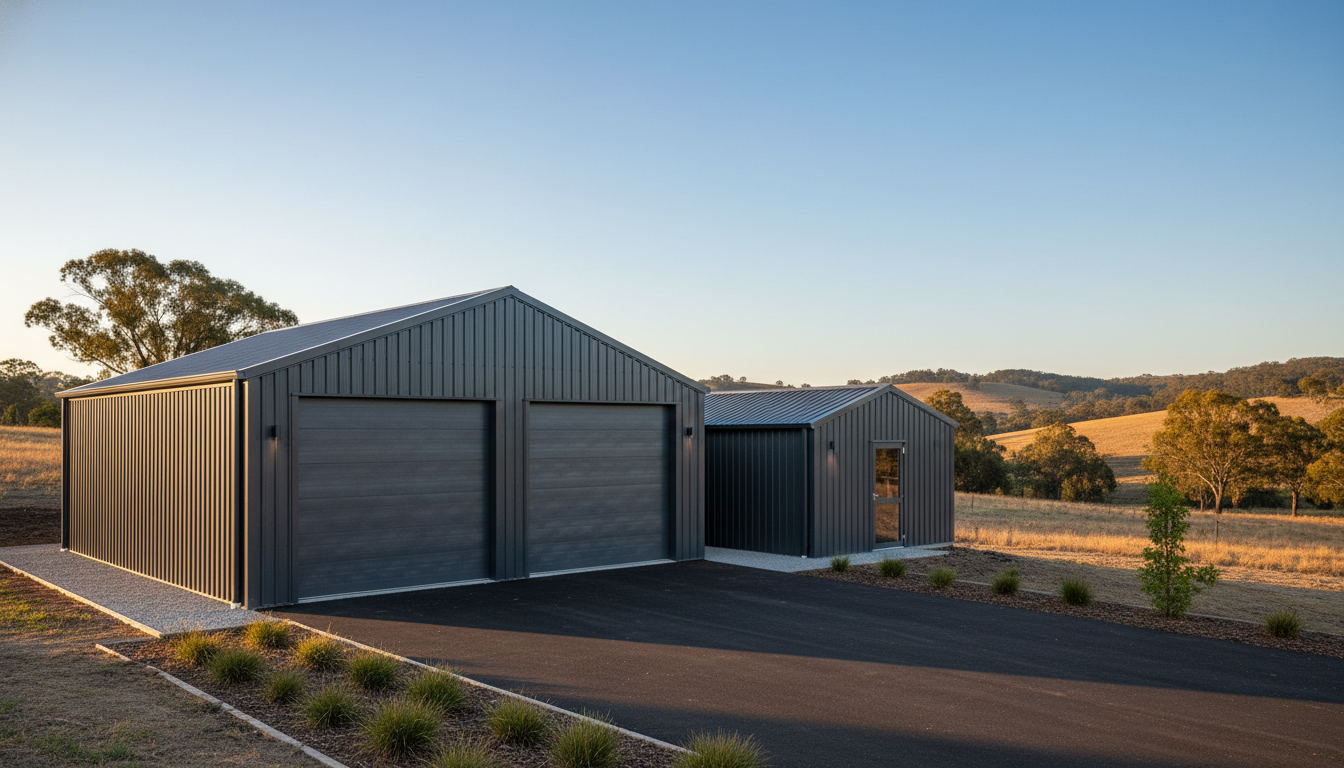
Perth: Custom Colorbond Double Garage, Bayswater
- 6.5 m x 7 m x 3 m eave, gable roof, Colorbond Surfmist walls/roof
- Site-specific Region A engineering; vermin-proofing and anticon insulation
- Outcome: Cooler summer temps, seamless look with home roof and gutters
Townsville: Cyclone-Rated Shed for 4WD and Boat
- 7 m x 9 m x 3.6 m eave, skillion roof, Region C engineering
- Cyclonic roller doors with wind-locks, upgraded hold-downs
- Outcome: Council-approved, insurance-compliant cyclone-rated sheds QLD
Dubbo: Rural Machinery Storage
- 12 m x 6 m x 3.6 m eave, Zincalume cladding, wide 6 m central bay
- Gutter capacity to AS/NZS 3500.3; whirlybirds for ventilation
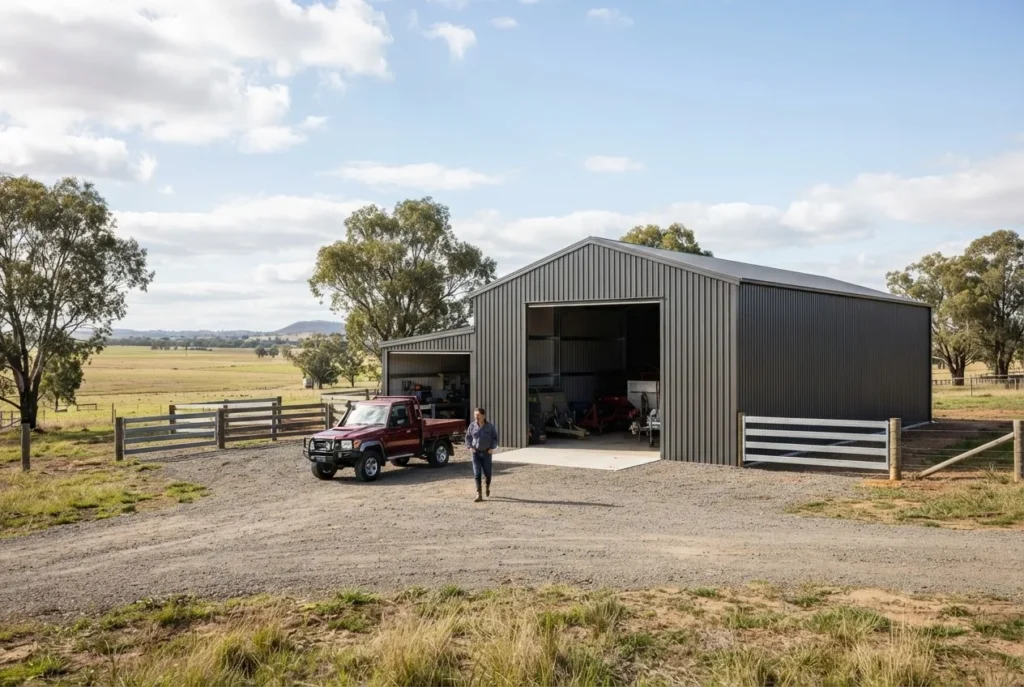
- Outcome: Affordable, durable rural sheds NSW for tractors and implements
5-Step Buying Guide for Custom Sheds in Australia
- Define use-case: parking, workshop, storage, farm machinery storage or mixed-use.
- Confirm site constraints: setbacks, easements, driveway grades, power/water routing.
- Select materials: Colorbond vs Zincalume; choose BMT, insulation and door hardware.
- Get engineering and quotes: wind-rated sheds for cyclonic areas where required.
- Plan the slab and drainage: engineer’s slab design, termite barrier and stormwater.
Specifications Checklist (What Good Suppliers Include)
- Engineering to AS/NZS 1170.2, AS/NZS 4600; connections per manufacturer test data
- Cladding 0.42–0.48 BMT; frames G450–G550; bolt-together portal frames
- Wind-rated roller doors, wind locks, proper mullions and jambs
- Door seals, vermin flashing, sarking or insulation blanket under roof sheets
- Gutters, downpipes and overflow paths to AS/NZS 3500.3
- Comprehensive drawings: plan, elevations, sections, footing/slab and hold-down schedule
Installation and Comfort Upgrades
- Insulation: Anticon blanket or insulated panel roof/walls for heat and condensation control.
- Ventilation: Ridge vents, whirlybirds, and louvres; cross-ventilation beats stale air.
- Lighting/Power: LED high-bays, skylights, dedicated circuits and RCDs by a licensed sparkie.
- Flooring: Sealed slab, epoxy, fall to door; allow for hoists or mezzanine loads.
- Security: Wind-rated doors, keyed-alike locks, motion sensors and cameras.
Pro Tip: Did you know using insulated roof panels can reduce internal shed temperatures by up to 10°C in summer? Combine pale Colorbond hues with ridge ventilation for best results.
Local Considerations Across Australia
- Perth/WA Coast: Salt exposure—specify Colorbond Ultra and stainless fixings; ensure soakwells sized for intense downpours.
- Brisbane/QLD Tropics: Cyclone detailing (Region C/D), door wind-locks, additional hold-downs; consider higher eaves for boats/utes.
- Regional NSW/VIC: Frost and condensation—use sarking and ventilation; check BAL requirements near bushland.
- SA/TAS: Cool climates—insulate walls as well as roof for workshop comfort.
Frequently Asked Questions
Do I need a permit? In most councils, yes—especially for garages above minor exempt sizes. You’ll need engineering and site plans.
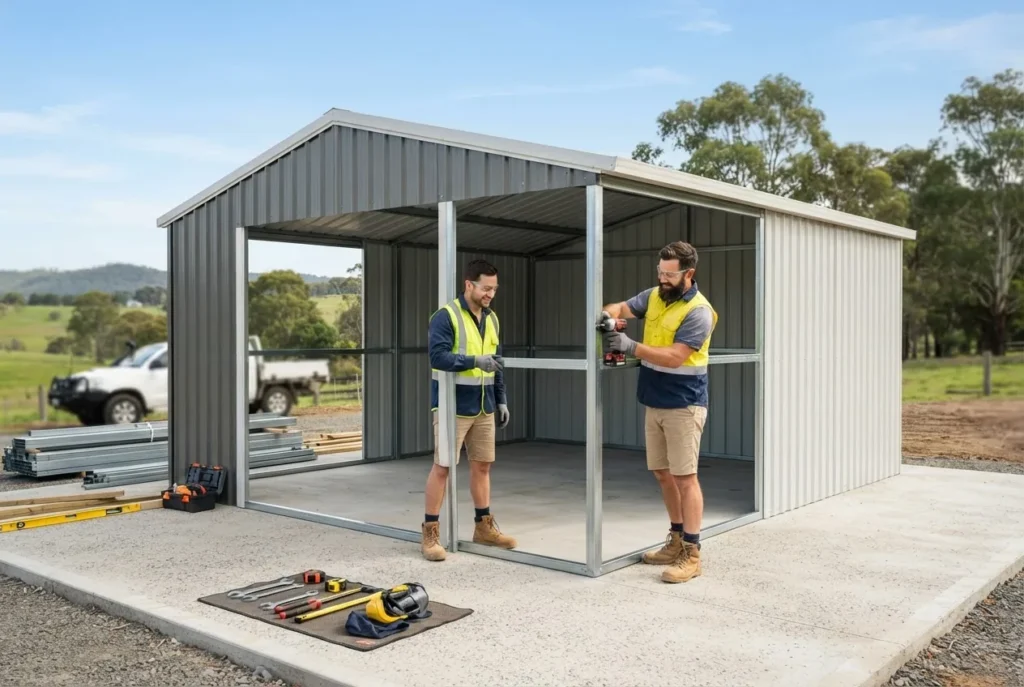
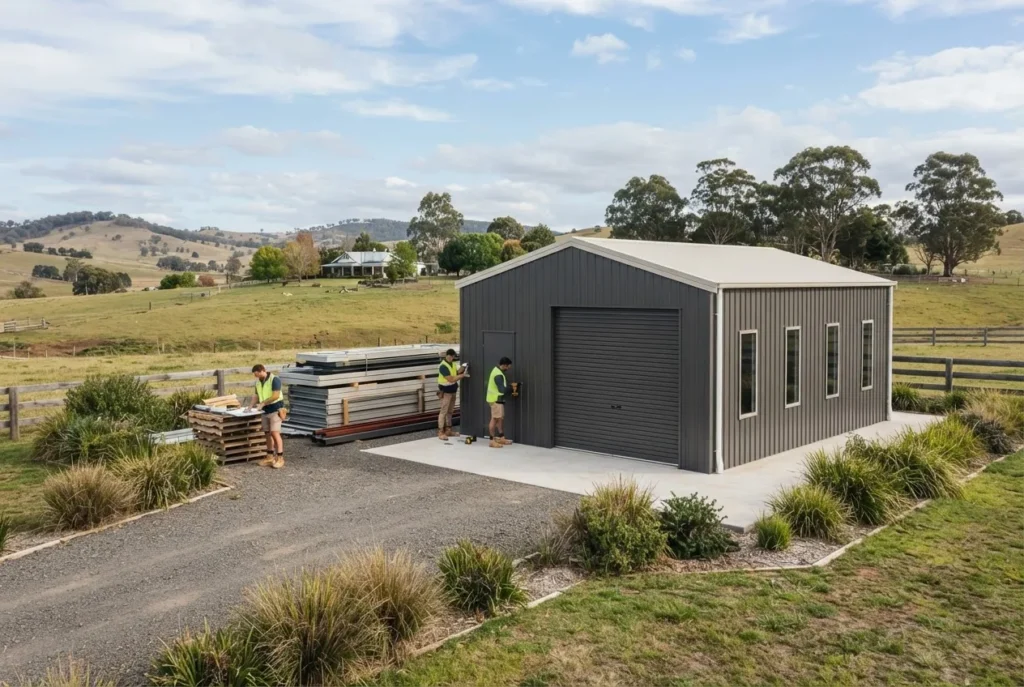
How long does it take? Typical lead times are 2–6 weeks for materials after approvals; installation 2–5 days for standard double garages.
Can I DIY? Competent DIYers can erect smaller garages with clear instructions. Larger or cyclonic builds are best left to licensed installers.
What about warranties? Expect cladding warranties of 20–25+ years (conditions apply) and workmanship warranties from pro installers.
What’s the best metal for garage doors? Wind-rated steel roller doors with wind-locks in cyclonic regions; consider insulated sectional doors for thermal comfort.
Where to Learn More (Standards, Climate and Industry)
- Housing Industry Association (HIA) resources for permits and building processes.
- Bureau of Meteorology climate data for rainfall and wind patterns.
- Australian Steel Institute for steel specification guidance.
- CSIRO on building science and condensation management.
- Energy.gov.au for insulation and energy efficiency tips.
Local Gap Mentions You Asked About
council-approved sheds WA — Include certified engineering and BA forms.
cyclone-rated sheds QLD — Region C/D designs with compliant doors and fixings.
custom Colorbond garages Perth — Heat-smart colours, marine-grade options, and WA wind compliance.