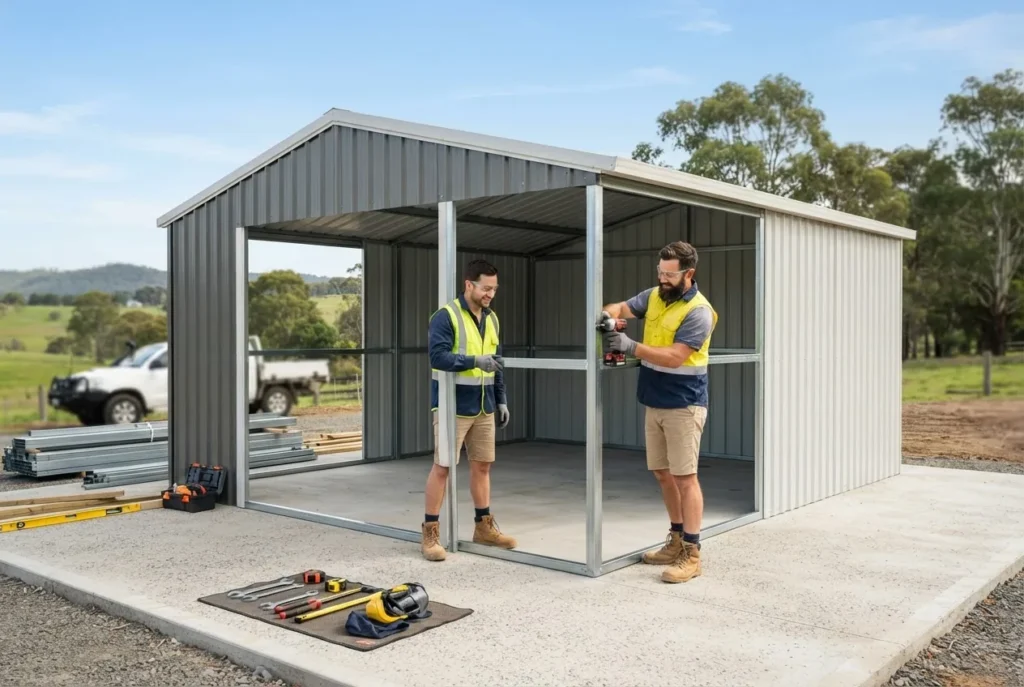

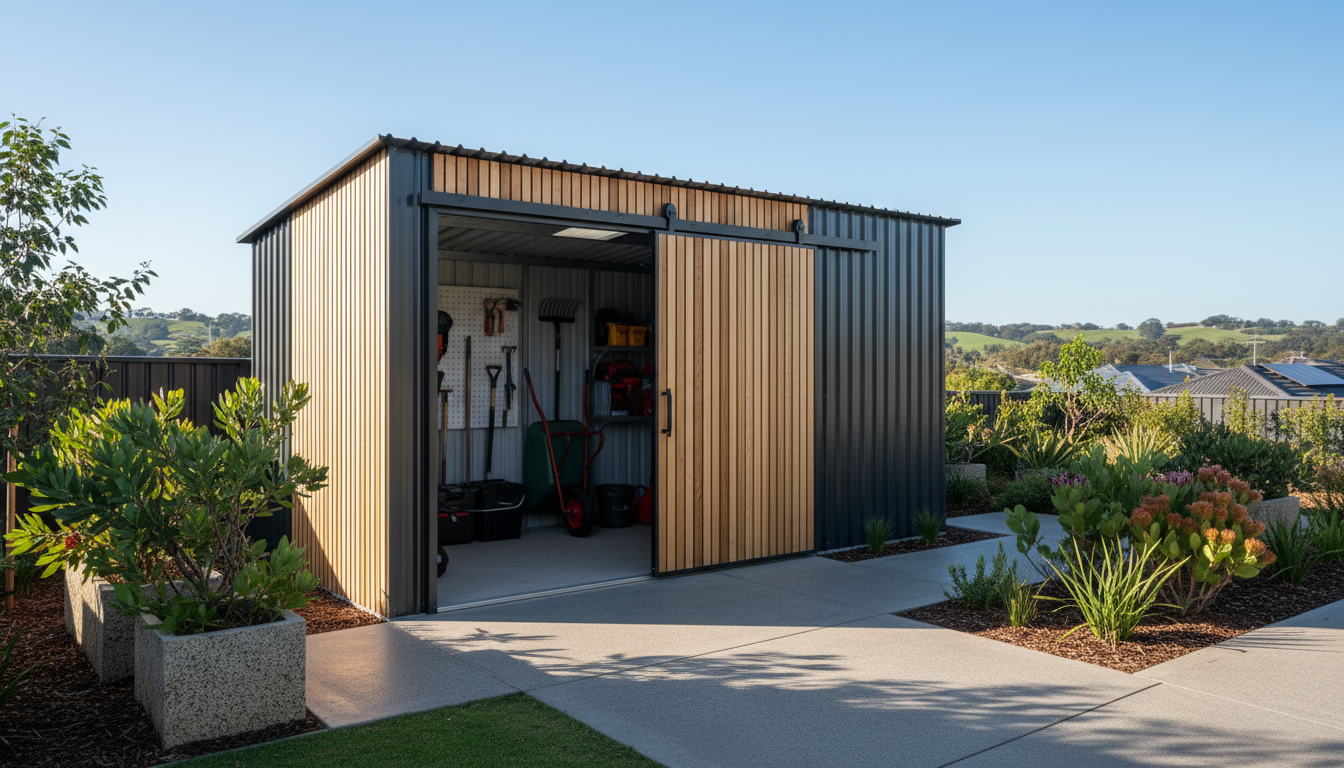

Choosing the perfect sliding door for your garden shed is a crucial step that blends functionality with style, security, and compliance with Australian regulations. This comprehensive buyer’s guide unpacks all you need about garden shed sliding doors, covering detailed specifications, materials, installation tips, and navigating complex council approvals unique to Australia’s varied states and climates.
Understanding Garden Shed Sliding Doors in Australia
What Defines a Garden Shed Sliding Door?
A garden shed sliding door is a door system designed to slide horizontally along a track rather than swinging open, saving space and providing easy access to your shed. Unlike roller or hinged doors, sliding doors are particularly popular in Australian garden sheds due to their practicality and adaptability to limited backyard spaces.
These doors consist of panels mounted on rollers, sliding over single or multiple tracks. They often incorporate robust materials such as Colorbond steel, delivering durability and Australian weather resistance.
Key Benefits of Sliding Doors for Garden Sheds
- Space Efficiency: Sliding doors do not require clearance to swing open, ideal for tight backyard areas.
- Ease of Access: A wide opening can be made using single or double sliding panels, perfect for transferring large garden equipment.
- Weather Resistance: When combined with quality materials like Colorbond, sliding doors offer excellent protection against harsh Australian weather.
- Security: Advanced locking mechanisms can be integrated into sliding door systems to deter theft and vandalism.
- Aesthetic Appeal: They offer a sleek, modern look compatible with many garden shed designs common in Australia.
Common Materials Used in Australian Sliding Doors (inc. Colorbond Steel)
The primary material in Australian garden shed sliding doors is Colorbond steel, a pre-painted steel renowned for its corrosion resistance and colour durability in local climates. Other materials include:
- Aluminium: Lightweight and corrosion-resistant, good for coastal environments but generally less secure.
- Timber Frame with Steel Panel: Combines aesthetics and strength but requires additional maintenance in humid or coastal zones.
- Composite Materials: Emerging options with weatherproofing benefits, though less common in DIY setups.
Colorbond sliding doors are widely preferred, referenced in the Garden Shed Buyer’s Guide Australia 2025: Premium Colorbond Options, due to their adaptability and compliance with Australian standards.
With a clear understanding of what constitutes a garden shed sliding door and the benefits of materials like Colorbond steel, the next step is to explore the diverse types and specifications available.
Types of Garden Shed Sliding Doors and Their Specifications
Single-Track vs Double-Track Sliding Doors – Features and Suitability
| Feature | Single-Track Sliding Door | Double-Track Sliding Door |
|---|---|---|
| Description | One sliding panel moves along a single track, opening to one side. | Two panels slide independently on two parallel tracks, allowing opening from the centre or both sides. |
| Space Efficiency | Requires space on one side of the shed for door panel. | More flexible; often better for wider openings. |
| Access Width | Limited to about half the door width. | Can open the full width, improving accessibility. |
| Installation Complexity | Simpler installation and lower cost. | More complex, requiring precise alignment and stronger frame support. |
Choosing between single-track and double-track systems depends on shed size and how you intend to use the door. For larger garden sheds, especially those designed for storing large equipment, double-track sliding doors are typical as seen in the 10 x 20 Colorbond Steel Storage Building Guide.
Standard Dimensions and Custom Sizing Options in Australia
Typical sliding door heights for garden sheds range between 1800mm to 2100mm, matching common shed wall heights. Widths vary:
- Single Panel: 800mm to 1200mm wide
- Double Panel: 1600mm to 2400mm combined width
Custom sizing is available to meet non-standard shed dimensions or accessibility needs. Precise measurements are essential to ensure smooth track operation and sufficient clearance.
Hardware Components: Tracks, Rollers, Handles, and Locks
The quality and specification of hardware directly impact door longevity and ease of use. Key hardware elements include:
- Tracks: Typically galvanized or stainless steel tracks, sized for the door weight and length.
- Rollers: Nylon or steel rollers with precision bearings, designed to travel smoothly without jamming. Suitable for outdoor and dusty environments common in Australian backyards.
- Handles: Flush or recessed handles prevent snagging and enhance security.
- Locks: Sliding door locks come in keyed barrel, deadbolt, or hasp-and-padlock styles, offering varying security levels.
Wind Ratings and Structural Compliance for Different Climates
Sliding doors must comply with wind ratings specified in Australian standards based on their geographic location and exposure:
- Coastal and Cyclone Zones: Doors may require cyclone-rated hardware and reinforced frames to resist wind loads exceeding 45 m/s (162 km/h), as detailed in the Cyclone Rated Garden Sheds Guide.
- Inland Regions: Typically face moderate wind loads; standard hardware and frame strength usually suffice.
Proper wind rating compliance is critical to prevent structural damage and council approval rejections. Next, we will examine the legal framework grounding these requirements across Australia.
Australian Building Codes and Legal Requirements for Sliding Doors on Garden Sheds
Overview of Relevant Australian Building Codes (NCC) Regarding Garden Shed Doors
The National Construction Code (NCC) 2024 provides the overarching technical standards for building components, including garden sheds and their doors. While garden sheds under certain size thresholds (<10m²) may be exempt from full compliance, sliding doors generally fall under these categories:
- Structural Integrity: Doors must withstand wind loads specified in AS/NZS 1170.2.
- Glazing and Safety: If fitted with glass or plastic panels, safety glazing standards apply.
- Access and Egress: Sliding doors must allow safe and easy access consistent with use type (storage vs workspace).
The NCC clarifies these through volume two, which is relevant for Class 10a buildings (non-habitable structures like garden sheds).
Compliance Criteria for Sliding Doors Specific to Garden Sheds
Key compliance points include:
- Material Certification: Use NCC-compliant materials such as Colorbond steel for durability and weather resistance.
- Structural Attachment: Doors and frames must be securely anchored to the shed structure to resist wind uplift and lateral forces.
- Hardware Standards: Locking systems and rollers must meet Australian standards for outdoor use to prevent corrosion and failure.
Wind Loading and Structural Standards Across Australian States
Wind classification maps differ across states but generally follow NCC guidelines. For example:
- Queensland and Northern NSW: Higher wind loading applies, often requiring cyclone-compliant doors.
- Victoria and Tasmania: Lower wind loads but still require compliance verification.
- Western Australia and South Australia: Diverse zones from moderate to high wind standards demanding variable door specs.
Understanding these codes aligns your sliding door choice with legal standards and enhances safety. To assist homebuilders and renovators in meeting council criteria, the article now turns to the approval process across Australian jurisdictions.
Navigating Council Approval Processes for Garden Shed Sliding Doors
When Is Council Approval Required?
In Australia, councils typically mandate approval for sliding door installations on garden sheds when:
- The shed exceeds a certain size threshold (commonly over 10m²).
- The sliding doors modify the structural integrity or façade.
- The shed is located in a heritage zone or a bushfire-prone area.
- Changing door types affects access or fire egress compliance.
Consult your local council for exact triggers; these can vary widely.
Step-by-Step Compliance Checklist for Sliding Door Installations
- Check Thresholds: Confirm if your garden shed sliding door installation requires council approval based on shed size and location.
- Prepare Documentation: Gather detailed plans, door specifications (material, size, hardware), and structural support details.
- Review NCC Compliance: Ensure door meets NCC and relevant Australian Standards for opening, wind load, and materials.
- Submit Application: Lodge the development application (DA) or building permit to local council with all required documents.
- Address Council Queries: Respond promptly to requests for additional information or changes.
- Receive Approval: Obtain written consent before commencing installation.
- Post-Installation Inspection: Arrange for council inspection if mandated.
This checklist guards against common pitfalls such as insufficient structural details or omission of wind rating data, which often cause delays or rejections.
State-Specific Council Approval Nuances: NSW, VIC, QLD, SA, WA, TAS
| State | Council Requirement Highlights | Approval Process Tips |
|---|---|---|
| New South Wales (NSW) | Typically requires Development Application for sheds >10m² or if door changes external elevations. | Use state planning portal; check NSW Planning Portal for local rules. |
| Victoria (VIC) | Building permit often needed if sliding doors affect structural elements or exceed class 10a size limits. | Refer to Victorian Building Authority for guidance. |
| Queensland (QLD) | Stricter requirements with cyclone rating and bushfire zone considerations impacting door designs. | Engage with council early; building certifiers are commonly used. |
| South Australia (SA) | If door installation affects structural integrity, a building rules consent is necessary. | Check local council planning schemes and compliance pathways. |
| Western Australia (WA) | Approval depends on size and location, with cyclone region rules similar to QLD. | Consult WA Department of Planning, Lands and Heritage. |
| Tasmania (TAS) | Generally requires building permits for major modifications including door replacements with performance criteria. | Use Tasmania’s planning schemes for specific council info. |
Common Pitfalls and How to Avoid Council Rejections
- Incomplete Documentation: Submit fully detailed plans including NCC compliance and wind load data.
- Ignoring Local Variations: Research state and municipal differences—one-size-fits-all strategies often fail.
- Underestimating Wind Ratings: Failing to specify or meet wind load standards causes delays or non-approval.
- Skipping Professional Advice: Engage a building certifier or professional installer early for compliance checks.
- Neglecting Security and Safety Provisions: Sliding door locks and installation techniques must meet safety criteria.
For detailed sheds advice related to council approvals, readers can benefit greatly from 12 x 8 Colorbond Garden Shed Council Approval Guide. This leads naturally to selecting the right sliding door considering these compliance factors.
Additionally, the comprehensive Barn Sheds Australia: Prices, Council Approvals, Colorbond vs Zincalume, and Design Options guide offers in-depth insights into the broader regulatory landscape impacting garden shed designs and sliding door compliance.
Selecting the Right Sliding Door: Buyer Considerations and Security Features
Material Choices and Their Pros & Cons for Australian Conditions
| Material | Pros | Cons |
|---|---|---|
| Colorbond Steel | Durable, resistant to corrosion and Australian UV, easy to maintain, good security. | Can dent if struck hard, heavier than aluminium. |
| Aluminium | Lightweight, corrosion-resistant (especially in coastal areas), easy to slide. | Lower security, softer; can warp if exposed to heat. |
| Timber with Steel Cladding | Attractive natural finish, excellent insulation. | Requires regular maintenance, prone to termite damage in some areas. |
For a broader perspective on shed door material choices and security, consult Australian Shed Door Ideas: Colorbond Security and Approval Tips.
Security Options: Locks, Reinforcements, and Anti-Theft Mechanisms
- Keyed Locks: Common and provide basic security; recommended to upgrade to weather-resistant designs.
- Deadbolts and Bolt Locks: Extra engagement points enhance tamper resistance.
- Security Bars: Internal bars provide reinforcement while maintaining door function.
- Lock Boxes and Cover Plates: Protect locking mechanisms from fishing or forced entry.
Security must be balanced with accessibility and compliance, particularly for councils requiring specific safety features.
Installation Compatibility with Existing Shed Frames
Not all sliding doors fit every garden shed frame. Considerations include:
- Frame Material Strength: Steel frames handle heavier doors better than timber.
- Structural Reinforcements: Older sheds might need bracing or retrofitting to support sliding door hardware.
- Fit and Clearance: Ensure door tracks can be mounted without obstruction from eaves, gutters, or uneven ground.
Maintenance Practices for Longevity and Weatherproofing
- Regular Cleaning: Remove debris from tracks to prevent jams and roller damage.
- Lubrication: Apply suitable grease or spray lubricant to rollers and tracks to ensure smooth operation.
- Painting and Coating: Repaint or touch up Colorbond where scratches occur to avoid corrosion.
- Weatherproof Seals: Maintain or replace seals to keep out moisture and pests.
- Corrosion Checks: Frequent inspections in coastal climates reduce rust risks.
A thorough maintenance guide complements buying decisions to ensure your sliding door remains fully functional in Australia’s diverse environments.
For specialised shed types such as awning sheds, sliding door specifications may vary; see our detailed Awning Shed Guide Australia for tailored advice on custom Colorbond designs and council approvals.
Installation Insights: DIY vs Professional Approaches in Australia
Tools and Techniques for Sliding Door Installation
The key tools for sliding door installation in Australian garden sheds include:
- Electric drill and impact driver
- Spirit level and tape measure
- Metal saw or tin snips
- Screwdriver set and wrenches
- Hammer and chisel for frame adjustments
- Lubricants for rollers and tracks
Installation involves fixing the track securely to the shed frame, fitting rollers to the door panels, hanging the door, then adjusting rollers for a smooth slide. Australian manufacturers often provide regional installation manuals aligned with local conditions.
Pros and Cons of Professional Installation vs DIY
| Aspect | Professional Installation | DIY Installation |
|---|---|---|
| Cost | Higher upfront cost but includes compliance checking. | Lower cost but risks errors causing delays or damage. |
| Expertise | Experienced installers understand local compliance and weatherproofing. | Requires adequate tools, skills, and research effort. |
| Time | Faster due to experienced techniques. | Can take longer, especially first-timers. |
| Warranty | Often includes workmanship warranty. | May void manufacturer warranty if installation guidelines aren’t followed. |
For a deeper understanding of costs and pro assembly tips, see Garden Shed Installation in Australia: Costs and Pro Assembly Tips.
Cost Implications and Timeline Expectations
Professional installation typically ranges from $600 to $1500 AUD depending on door size and complexity, while material costs for sliding doors (Colorbond single-track) vary between $400 and $1200 AUD. DIY may reduce labour costs but could require additional tools or rework if mistakes occur.
Installation timelines range from half a day for experienced installers to 1-2 days for DIYers factoring in measurements and adjustments.
Frequently Asked Questions and Troubleshooting for Garden Shed Sliding Doors
Addressing Common Reader Doubts and Expert Answers
- Q: Can I retrofit sliding doors onto my existing shed frame?
- A: Yes, but ensure your shed frame can support the door weight and check council approvals for modifications. Reinforcements or framing adjustments may be needed.
- Q: What causes sliding doors to jam frequently?
- A: Dirt/debris in the tracks, worn rollers, misalignment, or bent tracks are common causes. Regular cleaning and timely roller replacement help prevent jams.
- Q: Are sliding doors secure enough for storage with valuable equipment?
- A: When fitted with quality locks and reinforced hardware, sliding doors can be very secure. Consider additional security bars and heavy-duty lock boxes for high-risk areas.
Troubleshooting Sliding Door Issues (Track Jams, Alignment, Locks)
- Track Jams: Clean tracks with brush and mild detergent, lubricate with silicon spray.
- Door Misalignment: Adjust rollers using manufacturer’s screws; check frame squareness.
- Lock Malfunctions: Lubricate keyholes, inspect for rust or wear, replace if compromised.
Advice on Upgrading Existing Doors to Sliding Systems
Upgrading from roller or hinged doors involves removing existing doors and possibly altering the shed wall or frame. Verify structural compatibility and council requirements before installation. Engage professional advice if unsure.
This completes the comprehensive look at garden shed sliding doors specifically for Australian buyers, blending precision specs, legal compliance, and practical installation considerations.
Choosing the right sliding door begins with understanding your shed’s needs, local building codes, and your council’s approval criteria. Prioritise durable materials like Colorbond steel, ensure wind rating compliance, and factor in security. Whether you hire a pro or DIY, meticulous installation and maintenance will extend the life of your sliding doors and protect your investment.
For detailed information on related shed building aspects, explore resources such as the Barn Sheds Australia guide, which offers in-depth coverage of approvals and design considerations that complement your sliding door choices. Start your project with confidence and build a garden shed that meets Australian standards and your lifestyle needs perfectly.
Frequently Asked Questions
What is a sliding door system and how does it differ from other garden shed door types?
A sliding door system consists of one or more panels that move horizontally on tracks, saving space compared to hinged or roller doors that swing or roll vertically. Sliding doors provide easier access in tight areas and typically require less clearance than other door types for garden sheds.
How do double-track sliding doors compare to single-track doors in terms of accessibility and installation?
Double-track sliding doors allow two panels to slide independently, enabling full-width openings and better access. Single-track doors move one panel along a single track, limiting opening width. Installation for double-track doors is more complex, requiring stronger frames and precise alignment.
Why is Colorbond steel preferred for garden shed sliding doors in Australia?
Colorbond steel is preferred due to its durability, corrosion resistance, and colour retention under Australian UV exposure. It provides strong weather protection and security, making it ideal for sliding doors exposed to harsh Australian climates and varying regional conditions.
When should I seek council approval before installing garden shed sliding doors?
Council approval is usually required if the shed exceeds 10m², if sliding doors alter the structure or façade, if located in heritage or bushfire zones, or if egress regulations are affected. Approval requirements vary by state and local council regulations.
Can aluminium sliding doors offer the same security and durability as Colorbond steel doors?
Aluminium doors are lightweight and corrosion-resistant but generally less secure and durable than Colorbond steel. They are better suited for coastal areas where rust is a concern but may require additional reinforcements to meet security needs.
Which security features are most effective for garden shed sliding doors?
Effective security features include keyed locks, deadbolts, internal security bars, and lock boxes protecting locking mechanisms. Combining these enhances tamper resistance while maintaining ease of access and complying with safety standards.
How does the local climate influence hardware choices for garden shed sliding doors?
Local climate affects the choice of materials and hardware. Coastal or cyclone-prone areas require corrosion-resistant, cyclone-rated tracks, rollers, and locks, while inland climates can use standard hardware. Proper selection ensures durability and compliance with wind load standards.
Is professional installation necessary for garden shed sliding doors, or can it be a DIY project?
Professional installation ensures compliance with Australian standards, proper fit, and secure hardware, reducing risks of errors and warranty issues. DIY installation is possible with adequate tools and knowledge but may require more time and carries a risk of mistakes.