

When it comes to durable, versatile, and customisable outdoor structures that suit the varied Australian climate, prefab sheds Australia buyers hold a distinct advantage with steel sheds, garages, and carports. In 2025, the combination of prefabrication efficiency and custom steel design has never been stronger, offering an array of solutions tailored to local conditions, council compliance, and lifestyle needs. Whether you’re in NSW, Victoria, or beyond, this buyer’s guide walks you through everything from the basics of prefabricated steel sheds to advanced customisation, top manufacturers, installation pathways, and maintenance tips—helping you make smart, confident decisions for your property.
Understanding Prefab Sheds in Australia: Basics and Benefits
What Are Prefabricated Steel Sheds?
Prefabricated steel sheds are structures manufactured off-site in controlled factory environments and delivered ready for assembly, streamlining construction timeframes and ensuring quality consistency. These buildings range from simple storage buildings for sale to larger custom garages and steel carports. Using high-grade steel components, often crafted and cut with precision machinery, prefab sheds reduce on-site errors compared to traditional builds. They can be shipped in modular kits or largely assembled sections, ready for fast installation.
Key Advantages of Prefab Steel Sheds over Traditional Builds
Compared to conventional site-built sheds, prefab steel sheds offer multiple benefits:
- Speed of Construction: Factory fabrication leads to accelerated build times when compared to traditional framing and cladding onsite, helping you get your shed operational fast.
- Quality Control: Consistent manufacturing processes in climate-controlled settings reduce defects and ensure precision in steel gauge and weld quality.
- Cost Efficiency: Bulk material procurement and lean manufacturing workflows keep costs competitive and predictable.
- Compliance Assurance: Prefab sheds are designed to meet Australian steel standards such as AS 4100 and wind loading regulations, providing peace of mind.
- Durability: Steel resists termites and rot, and with modern coatings like Colorbond steel, offers long-lasting resistance to Australian weather extremes.
These strengths make prefab steel sheds ideal for those seeking a balance of quality, speed, and customisation.
Why Choose Custom Steel Garages and Carports?
Customisation unlocks the potential to tailor structures exactly to your needs—whether for vehicle storage, workshop space, or multi-purpose domestic sheds. Custom steel garages provide enhanced security, weather protection, and aesthetic harmony with your property. Carports can be crafted from metal or steel, offering durable vehicle shelters that withstand harsh UV exposure and substantial rainfall. Choosing custom options also allows inclusion of features like insulated walls, specific door styles, and ventilation solutions, all compliant with Australian building codes.
Overview of Australian Steel Standards Applicable in 2025
Australian sheds built with steel must align with nationally recognised structural standards. which defines acceptable steel grades, fabrication quality, and design loads, including wind actions per NCC codes. Additionally, AS/NZS 1170.2 regulates wind loading values that must be factored into shed construction, important for cyclone-prone zones and high-wind areas common in Australia. Prefab manufacturers adhere strictly to these standards, which serve as a baseline for council approvals and insurance validation.
Understanding these benefits and standards sets the foundation for exploring how you can customise prefab sheds to Australia’s unique needs and conditions.
Customization Options for Steel Sheds, Garages, and Carports
Design Flexibility: From Simple Sheds to Complex Modular Kits
Modern prefab sheds range from simple sheds designed for straightforward storage to fully modular shed kits that enable complex, multi-room garages or combined shed and carport configurations. Buyers can select:
- Size and footprint tailored to their property
- Roof styles—from gabled to skillion designs that match house aesthetics
- Modular components such as partition walls, mezzanine floors, and adjoining verandahs
- Expandability with future-proof modular design to add rooms or sections
This variation is facilitated by precision manufacturing that enables bolt-together modular construction while still accommodating custom trimming, door placements, and window sizes.
Material Choices: Colorbond Steel, Zincalume, and Alternatives
Colorbond steel remains the premium choice for Australian prefab sheds due to its durable finish, UV resistance, and extensive colour palette that suits all regional environments. Manufactured by BlueScope, Colorbond provides protection against corrosion and requires minimal maintenance.
Alternatively, Zincalume steel offers a cost-effective, corrosion-resistant solution with a distinctive metallic finish. While less colourful, its galvanized coating makes it suitable for utility sheds or areas where budget constraints exist.
Some manufacturers also provide options of alternative cladding like weatherboard-style Colorbond and weatherboard cladding board options for sheds.
Custom Features: Doors, Windows, Insulation, and Ventilation
Choosing a custom steel prefab shed lets you specify your preferred door and window styles, from roller doors to french or sliding types. Insulation options are critical for comfort and temperature control, especially for domestic sheds or garages used as workshops. Buyers can select wall and roof insulation with specific R-values to meet Australian climate demands.
Ventilation features such as ridge vents, louvres, or mechanical extraction systems maintain air quality and prevent condensation, enhancing shed longevity and usability.
Modular Shed Kits vs Fully Custom Builds: Comparison and Use Cases
| Feature | Modular Shed Kits | Fully Custom Builds |
|---|---|---|
| Build Complexity | Pre-designed modules, quick assembly | Tailored design, more architectural input required |
| Cost | Generally lower due to standardisation | Higher, reflecting custom plans and finishes |
| Lead Time | Shorter, components ready-stocked | Longer, accommodating bespoke fabrication |
| Flexibility | Limited to available module options | High, specific to owner’s requirements |
| Use Case | Storage, basic domestic needs | Garage workshops, combined sheds and carports |
Deciding between modular kits and custom builds depends on your timeline, budget, and specific use cases.
More on tailored design options can be found in our design options for barn sheds in Australia guide.
Next, discover the leading Australian shed manufacturers who make these options available in 2025.
Leading Australian Shed Manufacturers and Companies in 2025
Overview of Top Shed Companies and Their Specialties
Australia boasts a robust network of shed companies specialising in prefab steel products designed for local conditions and regulations. Some focus on modular kit sheds with quick installations, while others deliver fully custom metal garages and carports. Key specialties include:
- Weather-resistant domestic sheds tailored for diverse climates
- Industrial-grade storage buildings for commercial use
- Custom steel garages with insulation and security options
- Carport manufacturers offering modular and fixed roof designs
These manufacturers ensure compliance with current Australian standards and offer warranty-backed products certified for up to 50-year durability under typical conditions.
Australian Made Sheds: Quality and Compliance Advantages
Choosing Australian made sheds guarantees adherence to local building codes and steel quality standards such as AS 4100. Local manufacturing also results in faster delivery times and easier access to customer service and installation support. Australian shed designs often incorporate features tailored to regional weather patterns like cyclonic wind bracing, UV-resistant coatings, and termite-proof steel framing.
Regional Availability: Sheds NSW, Victoria, and Nationwide
Major shed manufacturers have warehouse and display centres across key regions, including Sydney, Melbourne, and Brisbane. Availability of different shed designs or finishing options may vary regionally based on demand and supply chain logistics. For example, buyers searching for sheds for sale NSW have access to a broad range of models from simple domestic sheds to custom garage sheds Sydney builders favour.
Finding Trusted Shed Contractors and Installation Services
Many shed companies work with approved shed contractors who are licensed, insured, and experienced in assembling prefab kits according to Australian code requirements. Selecting professional installation helps streamline council approvals and guarantees warranty validity. When searching for shed contractors or shed and garage builders near me, look for references, completed projects, and compliance documentation.
With your manufacturer shortlist in hand, the next step is to evaluate buying considerations like costs, warranties, and quality factors.
Buying Considerations: Costs, Warranties, and Quality Factors
Typical Price Range for Custom Prefab Steel Sheds and Garages
Prices for prefab steel sheds in Australia vary broadly, influenced by size, customisation level, material grade, and features. As a benchmark:
- Simple steel storage sheds: $3,000 to $8,000 for basic 6m x 3m models
- Custom steel garages: $12,000 to $30,000 depending on complexity and finishes
- Modular carports: $5,000 to $15,000 based on roof style and vehicle capacity
Cost comparisons should include delivery and installation fees, as well as council permit expenses. For further price insights, see affordable garden sheds in Adelaide with Colorbond and Zincalume options and 2025 reviews of the best garden sheds in Australia.
Warranty and After-Sales Support: Industry Standards
Most Australian prefab steel shed manufacturers offer warranties ranging from 10 to 20 years on steel cladding and structural frames. Coverage often includes protection against corrosion and manufacturing defects but excludes damage from improper maintenance or extreme weather events. Australian Consumer Law (ACL) mandates that buyers receive fair warranty terms and clear documentation.
Durability and Maintenance of Steel Sheds in Australian Climates
Steel sheds fare exceptionally well in various Australian zones, from coastal humidity to inland heat. However, maintenance is essential to preserve the finish and structure:
- Regular cleaning to remove salt deposits in coastal regions
- Inspection for paint chipping or scratches that expose bare metal
- Clearing gutters and drainage around the shed base
- Maintaining weather seals on doors and windows to prevent moisture ingress
With routine care, a prefab shed’s lifespan can exceed 30 years.
Comparing Prefabricated vs Site-Built Sheds: What to Expect
Prefabricated steel sheds usually have lower total build costs and shorter completion timelines. Site-built sheds may allow more on-the-spot customisation but typically incur higher labour expenses and variability in build quality. The factory-controlled process of prefab assemblies also lowers your risk of site delays and inclement weather impacts during construction.
Understanding costs and quality helps prepare you for compliance, permits, and installation steps ahead.
Compliance, Approvals, and Installation in Australia
Navigating Council Building Approvals and Permits (Focus on NSW & VIC)
Local council regulations require building permits for most prefabricated australian sheds exceeding specific size thresholds or used as habitable spaces. In NSW and Victoria:
- Structures over 10m² typically need Development Application (DA) or Complying Development Certificate (CDC).
- Applications must include engineered plans detailing compliance with AS 4100 and wind ratings.
- Some smaller sheds may be exempt if meeting pre-set height and setback criteria.
Wind Ratings, Cyclone Compliance, and Australian Structural Codes (AS 4100)
Wind rating categories dictate the steel gauge, bracing, and fastening needed for sheds in cyclone-prone areas such as northern Queensland or exposed coastal NSW. Compliance with AS 4100 and wind codes from AS/NZS 1170.2 is mandatory. Prefab sheds are engineered with these standards in mind, and manufacturers provide certification documentation for council submission and insurance purposes.
For example, larger custom sheds like 6m x 3m Colorbond sheds with pricing and approval details require specific wind ratings and compliance documentation.
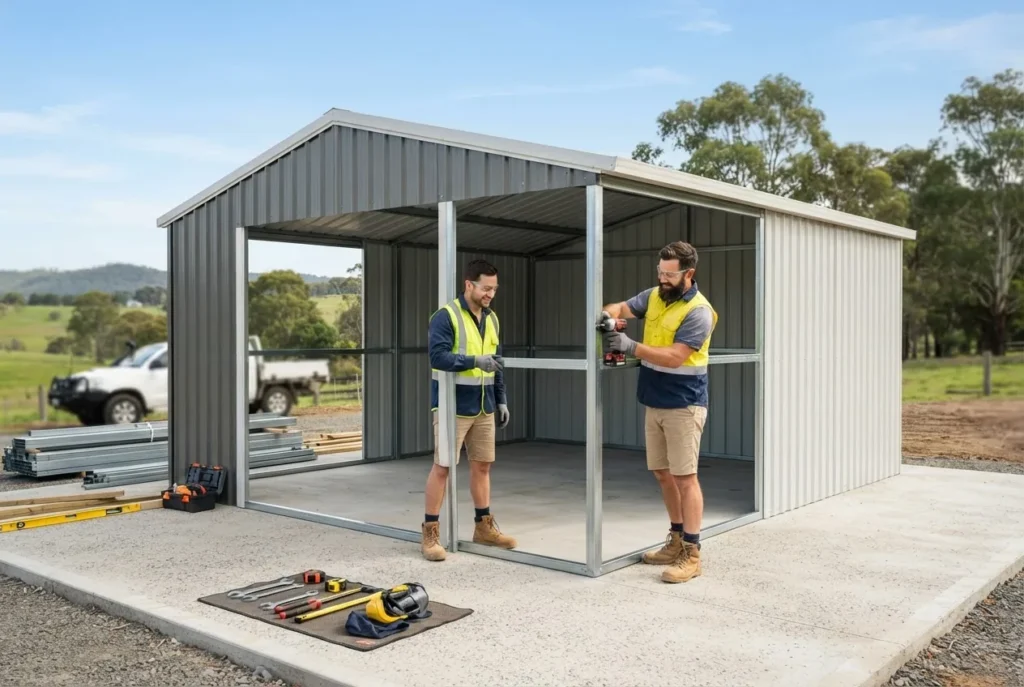
Installation Pathways: DIY Modular Kits vs Professional Installation
If budget and skills allow, some buyers opt for modular shed kits with DIY assembly. These kits come with detailed manuals, pre-cut parts, and fastening systems designed for homeowners with moderate construction experience.
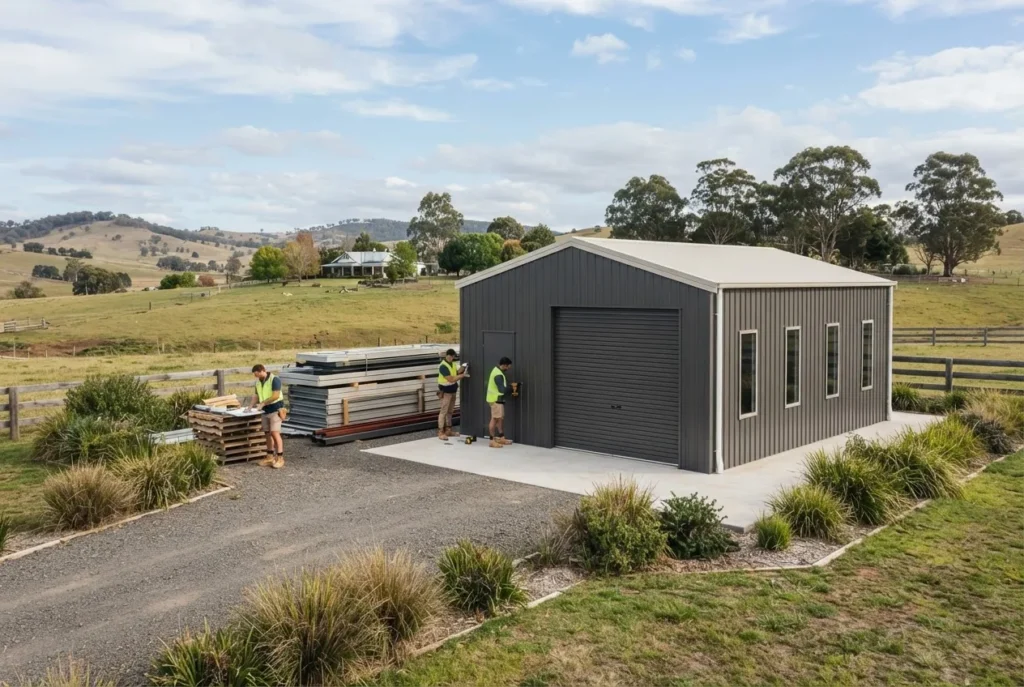
Professional installation is recommended for larger garages or complex builds where structural integrity and council compliance are critical. Professional installers ensure correct site preparation, foundation levelling, and secure fastening to resist wind loads.
Site Preparation and Delivery Logistics for Prefab Sheds
Site preparation involves clearing vegetation, establishing compacted gravel bases or concrete slabs, and marking shed footprints. Delivery of prefab components requires accessible driveways and sufficient overhead clearance. Manufacturers typically coordinate logistics and recommend pre-installation inspections to avoid last-minute delays.
Following compliance and installation, the focus naturally turns to practical applications and the most popular shed designs across Australia.
Practical Applications and Popular Shed Designs in Australia
Domestic Sheds: Storage Buildings, Garages, and Service Sheds
Typical domestic sheds serve crucial roles for homeowners:
- Secure storage buildings for sale to house garden tools, bikes, and seasonal equipment
- Custom steel garages that double as workshops or hobby spaces
- Service sheds for pool equipment, water tanks, or maintenance gear
For those interested in specific sized sheds, the 10×10 Colorbond garden and storage sheds in Australia offer a popular, versatile option.
Garage Sheds Sydney and Other Regional Usage Trends
In metropolitan hubs such as Sydney, demand for garage sheds leans toward compact, multi-purpose designs combining parking with workshop or studio spaces. The rise of garage sheds Sydney builders highlights trends such as integrated home office pods or secure bicycle storage, reflecting urban space optimisation.
These trends are explored further in our Custom Sheds Sydney guide.
Carports for Vehicles: Metal vs Steel Options
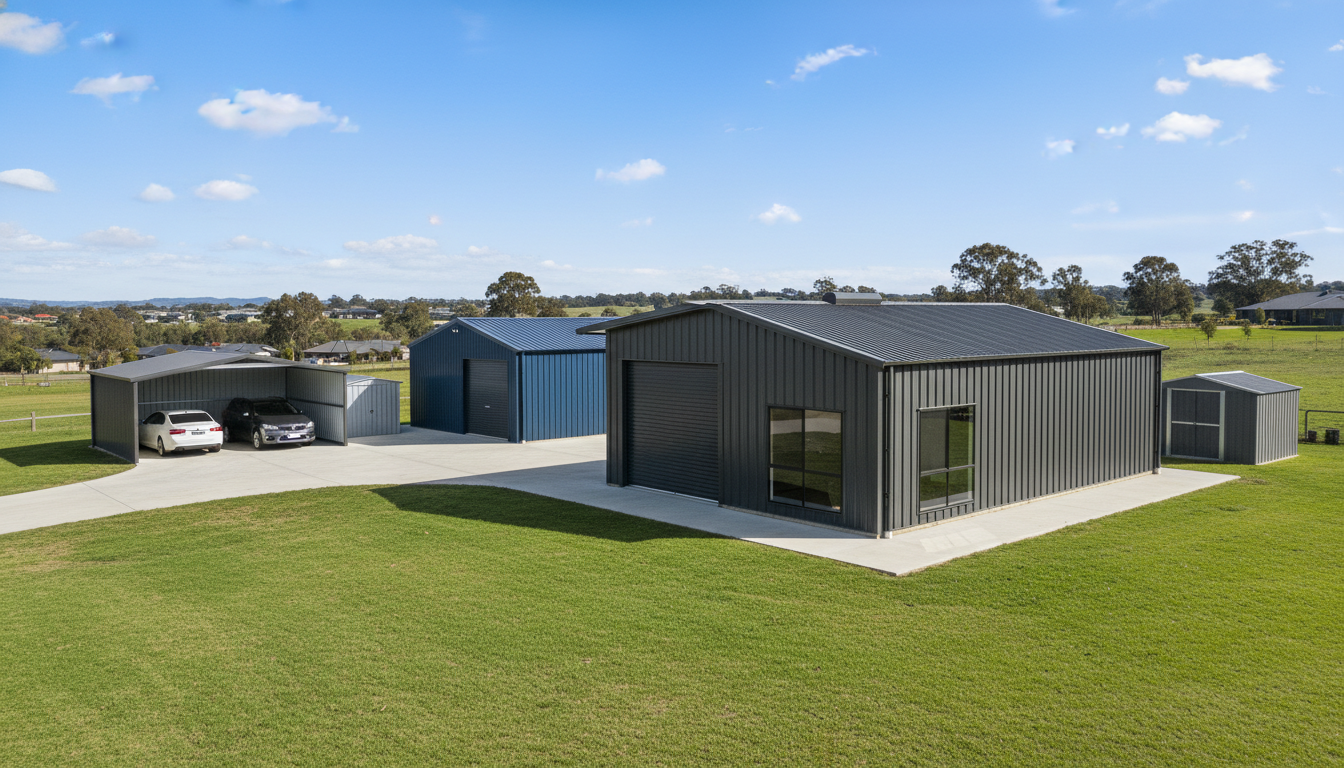
Carports, often constructed from light-weight metal or robust steel, provide sheltered parking at lower cost than fully enclosed garages. Steel carports deliver superior wind and weather resistance, while metal variants are sometimes preferred for temporary or semi-permanent applications.
Choosing between metal and steel involves trade-offs of strength, longevity, and design matching with existing structures.
Vehicle protection options including carports and caravan shelter kits with council approvals and pricing offer additional choices for Australian buyers.
Latest Trends in Australian Shed Designs for 2025
2025 Australian shed trends lean towards modular, eco-conscious designs incorporating:
- Climate-smart ventilation and insulation solutions
- Colour and panel finishes blending with modern home aesthetics
- Integration of solar-ready roof panels or rainwater collection systems
- Smart security features like remote locking and lighting systems
Explore specific size options in our reference articles such as 10×10 Colorbond garden and storage sheds in Australia, 6 x 4 Colorbond garden sheds and workshop options, and custom Colorbond awning sheds and garaport designs.
Beyond traditional storage and garages, many Australians are transforming sheds into livable spaces such as home offices, man caves, or even full living quarters. For inspiration and compliance guidelines, see our Living in a Shed in Australia guide, as well as resources on man cave sheds and shed house blueprints. These niches offer exciting new ways to maximize shed utility.
Having selected and installed your perfect prefab shed, upkeep and potential upgrades prolong its functional life and value.
Maintaining and Enhancing Your Prefab Steel Shed
Routine Maintenance Tips for Australian Conditions
Maintain the value and durability of your prefab steel shed by:
- Washing and inspecting the steel cladding annually, especially in coastal or high-pollution zones
- Touching up minor paint scratches promptly to prevent corrosion
- Checking and clearing gutters and downpipes
- Lubricating moving parts on doors and windows
- Ensuring ventilation paths remain unobstructed
Upgrading and Expanding Existing Sheds and Garages
Modular construction facilitates easy upgrades, such as adding extra bays, extending roofed areas, or installing mezzanine platforms. Many manufacturers offer expansion kits or retrofit parts aligned with original builds, allowing incremental investment over time.
Security Enhancements and Accessory Options
Adding security cameras, reinforced lockboxes, motion-detecting lights, and steel security doors bolsters shed protection. Interior shelving, workbenches, and power installations also enhance usability.
Sustainable Practices and Material Recycling for Steel Sheds
Steel sheds are inherently recyclable; when upgrading, old panels can be recycled to reduce environmental impact. Incorporating solar panels, water tanks, or sustainable insulation aligns with green building practices gaining traction in Australia.
Knowledgeable maintenance and enhancements cement your shed as a long-term asset.
FAQs and Expert Insights for 2025 Buyers
Common Buyer Questions About Prefab Sheds in Australia
Q: How long does it take to install a prefab steel shed?
A: Installation time varies by size and complexity but typically ranges from a few days for simple modular kits to several weeks for custom garages requiring foundation work.
Q: Do I need council approval for my shed?
A: Most sheds above 10m² require approval, but rules differ by state and municipality. Checking with your local council early can save delays.
Expert Advice on Choosing the Right Shed Contractor
Choose installers with proven track records in prefab steel construction and valid licenses. Request references, confirm warranty coverage, and ensure you receive detailed contracts. Professionals familiar with shed display near me options can help you evaluate quality firsthand.
Tips for Maximizing Value and Longevity of Your Shed
- Invest in quality materials like Colorbond steel to resist corrosion
- Plan for future expansion during initial design
- Schedule maintenance annually, adapting to your specific climate zone
- Engage professionals for complex installation or renovations
Emerging Innovations in Prefab Shed Technology
Advancements in digital design platforms allow buyers to visualise customised sheds in 3D before ordering. New steel coatings with enhanced anti-corrosion properties and integrated smart-home security features are entering the market, improving performance and user experience.
Armed with this knowledge, your prefab shade journey is ready for 2025 and beyond.
Ready to choose your perfect prefab steel shed? Explore trusted options from leading manufacturers and find expert installers near you to get started with your custom steel garage or carport project today.
Frequently Asked Questions
What is the difference between prefab sheds and modular shed kits?
Prefab sheds are factory-made structures delivered as pre-assembled sections or kits, while modular shed kits are specific sets of pre-designed components for DIY assembly. Prefab sheds often allow more customisation and faster installation, whereas modular kits limit flexibility but are cost-effective and quicker to build.
How do custom steel garages improve security compared to standard sheds?
Custom steel garages offer reinforced structures, lockable doors, and options for security systems. Their robust steel framing and tailored design provide enhanced protection against break-ins and environmental damage, unlike typical storage sheds that may offer minimal security features.
Why is Colorbond steel preferred for prefab sheds in Australia?
Colorbond steel is popular for prefab sheds because it offers superior corrosion resistance, UV protection, and a broad colour range. Manufactured to suit Australia’s climate, it requires minimal maintenance and provides long-lasting durability against harsh weather conditions.
Can I install a prefab shed myself, or should I hire a professional?
DIY installation is feasible with smaller modular kits if you have moderate construction skills. However, professional installation is recommended for larger or custom steel sheds to ensure structural integrity, compliance with Australian standards, and valid warranties.
Which Australian standards regulate the construction of prefab steel sheds?
Prefab steel sheds in Australia must comply primarily with AS 4100 for steel structures and AS/NZS 1170.2 for wind loading. These standards ensure quality fabrication, structural safety, and resilience to local weather conditions, including cyclones and high winds.
How do prefab steel sheds compare to traditional site-built sheds in cost and durability?
Prefab steel sheds generally cost less and offer better durability due to controlled manufacturing and high-quality steel. Traditional site-built sheds allow more onsite customisation but often have higher labour costs and greater vulnerability to site delays or construction defects.
When do I need council approval for installing a prefab shed in Australia?
Council approval is typically required for sheds over 10m² or those used as habitable spaces. Requirements vary by state and local council, so early consultation with local authorities is essential to understand permit necessities and streamline approvals.
What are the main maintenance tasks to extend the life of a prefab steel shed?
Key maintenance includes annual washing, promptly repairing paint damage, clearing gutters, lubricating doors and windows, and ensuring proper ventilation. These tasks prevent corrosion and structural issues, significantly extending the shed’s lifespan.