

Choosing the right shed door is crucial for Australian homeowners who want a perfect blend of durability, security, and style. This guide delves into Shed Door Ideas for Australian Homes: Colorbond Options, Security, Council Approvals, providing expert advice on selecting and installing Colorbond steel doors that resist local weather extremes, offer robust security, and comply with council regulations.
Understanding Shed Door Types Suitable for Australian Homes
A wide range of shed door ideas exists, but Australian climate and usage dictate which are most suitable for home sheds. The four most common shed door types are sliding, roller, hinged, and overhead, each offering distinct advantages and challenges.
Overview of Common Shed Door Types (Sliding, Roller, Hinged, Overhead)
- Sliding Doors: Operate on rails and slide sideways, saving space externally. Ideal for tight garden areas.
- Roller Doors: Roll up vertically into a compact coil above the doorway—popular for storage sheds featuring wide access.
- Hinged Doors: Traditional swing doors, either single or double. Require clearance but provide excellent sealing and security.
- Overhead Doors: Pivot or tilt upwards, commonly used in larger workshop sheds for easy vehicle or equipment access.
Pros and Cons of Each Door Type in Australian Climate
| Door Type | Pros | Cons | Climate Suitability |
|---|---|---|---|
| Sliding | Space-saving, easy access | Rails prone to debris, occasional track maintenance | Works well except in heavy rain or sandy areas without maintenance |
| Roller | Compact, wide opening, good weather seal | Mechanical parts may wear under salty coastal influence | Good in varied climates with regular servicing |
| Hinged | Simple, secure, versatile | Requires clearance space | Excellent for harsh sun and dust, easy to seal |
| Overhead | Wide access, space-efficient | Requires professional installation, complex mechanism | Best for urban or sheltered locations |
Best Door Types for Different Shed Uses (Storage, Garden, Workshop)
For general storage shed door ideas, roller and sliding doors offer convenient access without taking up much ground space. Garden shed doors that complement landscaping often use hinged or sliding designs allowing controlled ventilation. Workshop sheds benefit from overhead or double-hinged doors to facilitate equipment movement and maximise security.
Material Compatibility with Door Types (Focus on Colorbond Steel)
Colorbond steel is widely compatible across these door types due to its lightweight yet strong profile. It pairs exceptionally well with roller and sliding mechanisms because its flat, durable panels resist common faults like warping or rust. Hinged doors benefit from Colorbond’s stiff structure, enhancing security and long-term durability under Australia’s extreme UV conditions.
Sliding doors are a popular choice among Australian garden sheds due to their space-saving benefits, as explained in our garden shed sliding doors guide. For a full overview of various door mechanisms, see our overview of shed door types in Australia. When selecting shed door types, matching them to popular sizes like the 3x3m Colorbond garden shed options ensures functional compatibility.
Australian conditions, from coastal salt exposure to inland heat, impact material choice — the Bureau of Meteorology notes that UV radiation peaks vary across regions, influencing door material longevity. Understanding these factors will help you choose the best door type and Colorbond finish for your environment. For more insights on climate impacts and garden shed organisation linked to door types, see our garden shed organization ideas.
Exploring Colorbond Steel Options for Shed Doors
What is Colorbond Steel? Key Features and Benefits
Colorbond steel is a premium Australian-manufactured pre-painted steel developed by BlueScope Steel. It features multiple protective layers, including a zinc/aluminium alloy, and a baked-on paint system providing exceptional resistance to corrosion, fading, and chipping. Colorbond is known for:
- High durability in Australian sun, rain, and coastal conditions
- Lightweight strength ideal for easy door operation and extended lifespan
- Excellent weatherproofing properties reducing maintenance needs
- Wide variety of colours designed specifically with Australian palettes and trends in mind
Popular Colorbond Colour Palettes and Aesthetic Choices for Shed Doors
Colorbond doors come in numerous colour options specifically suited to Australian homes, ranging from bold modern hues to classic neutrals. Popular colours include:
- Classic Cream and Monument – for timeless garden sheds that blend well with green landscapes
- Paperbark and Woodland Grey – soft natural tones perfect for coastal or bush settings
- Surfmist and Woodland Grey – lighter colours that reflect heat, helping with temperature control
- Deep Ocean or Ironstone – dramatic shades for contemporary or industrial-style sheds
For a detailed guide on Colour palettes, see our Colorbond colour palettes for sheds, which explain colour trends and compliance considerations. Larger sheds such as the 10×20 Colorbond steel shed design considerations demand careful colour choice relative to size and exposure.
Durability, Weatherproofing, and Suitability for Australian Conditions
Colorbond’s proprietary paint system includes UV stabilizers and weatherproofing that withstands harsh Australian sun and prevents corrosion from rain or salty coastal air. The steel core meets Australian Standards AS 1397, ensuring compliance with quality and durability testing.
This makes Colorbond shed doors ideal for a broad range of Australian zones, including coastal, inland, and high UV regions. Among Australian homeowners, Colorbond is favoured for its minimal maintenance and proven lifespan exceeding 20 years in many cases.
Colorbond Steel Door Warranty and Maintenance Tips
BlueScope Steel provides robust warranties for Colorbond products, typically covering colours and substrate rust protection for up to 25 years, subject to normal usage and regional conditions. Regular washing and inspection for scratches or dents can prolong door life.
Maintenance tips include:
- Periodic cleaning with mild detergent to remove dirt and corrosive residues
- Quick touch-ups with manufacturer-approved paints for minor damage
- Ensuring gutters and drainage around doors are clear to prevent water pooling
- Lubricating moving parts like hinges and rollers to prevent wear
For comprehensive details, consult BlueScope Steel’s official warranty documentation at BlueScope Steel.
Security Features and Hardware for Shed Doors in Australia
Common Security Threats Facing Australian Garden Sheds
According to 2023 Australian Bureau of Statistics data, more than 15% of backyard sheds fall victim to break-ins annually, primarily motivated by theft of tools and equipment. Common threats include forced entry via weak locks, door panels, or hinges. For detailed Australian security statistics, refer to the Australian Security Industry Association and related sources.
Security Locks, Bolts, and Reinforcements for Shed Doors
- High-security padlocks: Use hardened steel shackles and weatherproof bodies.
- Deadbolts and slide bolts: Reinforce doors with multi-point locking for added tamper resistance.
- Hinge security: Use non-removable pins or hinges on internal side to prevent door removal.
- Steel reinforcement plates: Add backing to lock areas especially on Colorbond doors, which are strong but thinner than solid steel doors.
Retrofit options exist for existing Colorbond doors to boost security without full door replacement, including installing additional lock bars and internal steel braces.
Integrating Security with Colorbond Doors without Compromising Design
Colorbond’s sleek surface allows concealed lock installations, maintaining clean aesthetics. Custom locking hardware can be powder-coated to match door colours, preserving visual appeal while enhancing security. Motion sensor lighting and alarm sensors can be mounted discretely around the door frame without damage.
Advanced Security Innovations (Smart Locks, Alarm Integration)
Modern options include:
- Bluetooth and keypad smart locks permitting keyless entry and real-time monitoring
- Wireless alarm systems integrated into door frames tied to mobile alerts
- Magnetic reed switches that trigger alarms on forced entry attempts
This combination of traditional and tech security elements can help Australian homeowners protect their sheds effectively.
Navigating Council Approval Processes for Shed Doors in Australian Localities
When and Why Council Approval is Required for Shed Doors
In Australia, council approval for shed doors is typically required when the door installation results in structural alterations, size increases, or modifies fire safety features. Replacement of existing doors matching current specifications may be exempt in some localities but always verify with your local council. Understanding council approval processes is crucial when installing any shed door, much like the regulations outlined in our Council approval processes for garden sheds guide to ensure your project meets local compliance.
Overview of Australian Building Codes Relevant to Shed Doors (including BCA)
The Building Code of Australia (BCA) specifies requirements for structural safety, materials compliance, and fire resistance concerning shed doors. Pertinent sections include:
- Material standards ensuring weatherproofing and build integrity
- Compliance with bushfire construction requirements (AS 3959) for high-risk zones
- Local variations in fire egress or setback rules depending on shed size and location
Applicants should consult the Australian Building Codes Board and local council resources for exact codes applicable.
Documentation and Application Processes for Local Council Approvals
Typical documentation includes:
- Site plan showing existing and proposed door locations
- Technical specifications of the door material and mechanism
- Compliance certificates or manufacturer warranties for building code conformity
- Application forms for development approval or complying development certificates where applicable
Timelines vary but generally expect a 2–4 week processing period. Some councils offer expedited approvals for door replacements without size alterations. Cross-referencing your plan with our Council approval processes for garden sheds guide will help streamline your submission. For broader compliance issues, see the garden shed approvals and compliance guide. Also, for understanding exemptions or failures in approvals, refer to our What Happens If You Build a Shed Without Council Approval? guide for cautionary advice.
Common Pitfalls and How to Ensure Compliance Efficiently
- Missing documentation or incomplete applications
- Neglecting to check if special local development zones impose stricter rules
- Assuming door replacements never require approvals (exceptions exist)
- Ignoring fire safety compliance, especially in bushfire-prone areas
Installation Best Practices for Shed Doors with Colorbond Steel
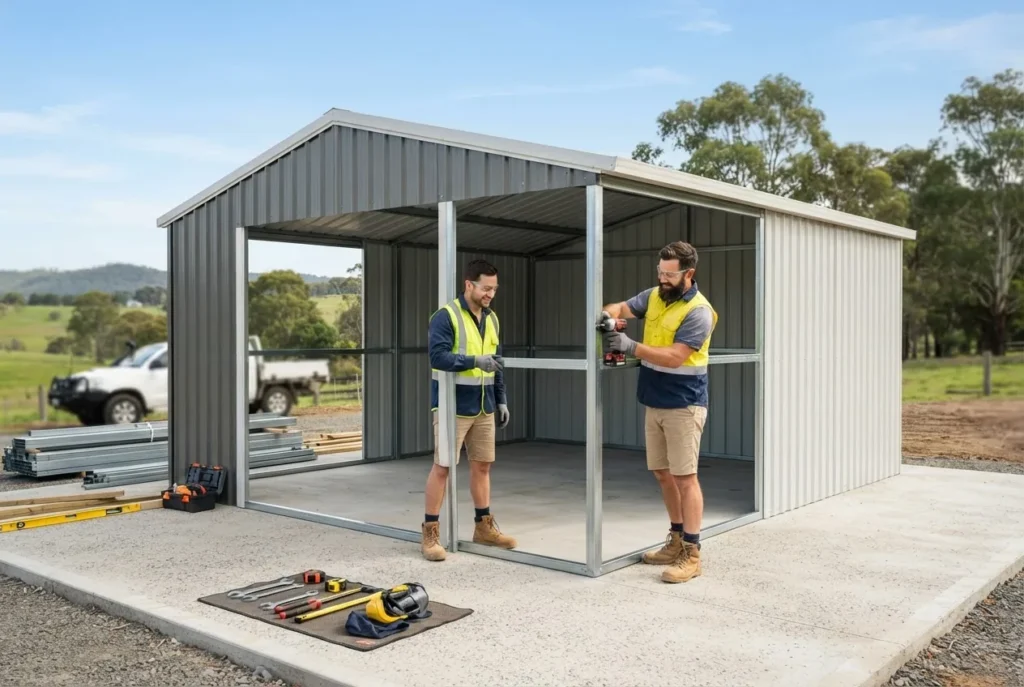
Tools and Materials Needed for Installing Colorbond Shed Doors
- Power drill with metal drill bits
- Heavy-duty screwdrivers and impact driver
- Weatherproof silicone sealant
- Heavier grade hinges suitable for steel doors
- Tamper-proof screws and bolts
- Measuring tape and spirit level
- Protective gloves and eye protection
Step-by-Step Installation Guide for Different Door Types
- Measure the door opening precisely ensuring level and plumb conditions.
- Assemble the door frame or track system according to instructions, using galvanised steel components.
- Position and hang the Colorbond door carefully; pre-drill holes to avoid steel cracking.
- Install the locking hardware and reinforce with steel plates where needed.
- Apply weatherproofing seals around edges and at the base to prevent water ingress.
- Test door operation and adjust rollers or hinges for smooth movement.
- Inspect all fixings for tightness and secure tamper-proof screws to deter theft.
Weatherproofing and Ensuring Longevity During Installation
Apply continuous weather seals, especially at the door bottom and side jambs. Use Colorbond-compatible sealants to retain the integrity of the finish. Installing a threshold or raised sill can prevent water pooling at the base.
Hiring Professionals vs DIY: What Australian Homeowners Should Consider
| Aspect | DIY Installation | Professional Installation |
|---|---|---|
| Cost | Lower upfront costs, requires tool investment | Higher cost, includes expertise |
| Skill Required | Intermediate carpentry and metalwork skills | Expertise ensures correct fit and compliance |
| Time | Longer, risk of mistakes and rework | Faster, with warranty on workmanship |
| Compliance | Homeowner responsible for council and code compliance | Installer handles approvals and certifications |
| Warranty | May affect manufacturer warranty if improperly installed | Maintains warranty validity, often guarantees installation |
Combining Aesthetics and Functionality: Design Inspiration and Practical Tips
Garden Shed Door Ideas: Balancing Visual Appeal and Practical Needs
Garden sheds benefit from doors that complement landscaping while offering easy access and security. Popular styles include:
- Classic panelled hinged doors with timber accents against Colorbond steel
- Sliding doors with frosted glass inserts for light without privacy loss
- Bi-fold Colorbond doors for flexible entry and space-saving
- Custom painted doors matched to flora or house exterior
Coastal homeowners in NSW have opted for lighter Colorbond shades paired with powder-coated locking hardware to combat salt corrosion while maintaining style.
Exploring Colour Combinations with Surrounding Garden and Exterior
Select colours that harmonise with greenery and home palettes. Muted earth tones for bushland settings; brighter creams and whites near beach homes reduce heat absorption; dark charcoal or navy complement modern brick or tile exteriors. For inspiration on colour matching, see our Shed Colours Australia.
Customising Colorbond Doors for Unique Australian Home Styles
Colorbond can be combined with timber cladding or metal trims to create bespoke designs aligned with heritage, contemporary, or industrial aesthetic goals. Paint combinations and hardware can be customised to integrate smart security discreetly.
Maintenance, Longevity, and Warranty Considerations for Shed Doors
Routine Maintenance Tips for Colorbond Shed Doors
- Wash doors with water and mild detergent bi-annually to remove salt and dirt build-up
- Inspect for chips or scratches promptly and seal with matching paint
- Lubricate locking mechanisms and hinges twice a year with appropriate grease
- Maintain clear drainage paths to prevent water accumulation around door bases
Addressing Common Wear and Tear Specific to Australian Environment
UV-fading on surface paint, salt-induced corrosion near coasts, and dust abrasion in arid inland areas are common. Colorbond steel is engineered for these conditions, but wear is inevitable; timely maintenance reduces effects.
Understanding Manufacturer Warranties and When to Claim
BlueScope’s warranty covers peeling, flaking, or perforation caused by corrosion but excludes damage from impact or improper maintenance. Claiming requires documented proof of purchase and evidence of adherence to recommended maintenance.
Cost-Benefit Analysis of Investing in Quality Doors vs Repairs
Investing upfront in well-finished Colorbond doors with security features can result in savings by reducing burglary risk and maintenance costs, compared to frequent repairs or replacements of inferior materials.
Our Garden Shed Buyer’s Guide covers detailed warranty and maintenance planning.
Frequently Asked Questions about Shed Doors in Australia
Do All Colorbond Shed Doors Require Council Approval?
No, not all. Replacement doors that match existing doors and do not change the shed footprint usually do not require new approval. However, confirm with your local council as rules vary. See our comprehensive garden shed approvals and compliance guide for details.
Which Door Type Offers the Best Security for Garden Sheds?
Hinged doors with reinforced Colorbond panels and multi-point locking systems typically provide the highest security level, though roller doors with advanced locks are also effective.
Can I Install a Colorbond Door Myself or Should I Hire an Expert?
If you have intermediate DIY skills and proper tools, self-installation is possible. However, professional installers ensure compliance with council codes and maximised warranty coverage.
How to Choose the Right Colourbond Finish for My Garden Shed Door?
Consider local climate, house exterior, and garden palette to select colours that balance aesthetics and UV resistance. Lighter colours reduce heat absorption; darker hues may require more maintenance. Refer to our Colorbond colour palettes for sheds to explore options.
What Are the Latest Security Innovations Available for Shed Doors?
Smart locks with Bluetooth connectivity, wireless alarms integrated with door frames, and tamper-proof fixings represent the forefront of shed security technologies in Australia, as discussed in the security section above.
Frequently Asked Questions
What factors should I consider when choosing between sliding and roller shed doors in Australia?
Consider space availability, weather exposure, and maintenance needs. Sliding doors save external space but require track upkeep, while roller doors offer wider access with good weather sealing but need regular servicing, especially in coastal environments.
How does Colorbond steel enhance the durability of shed doors compared to traditional materials?
Colorbond steel features protective layers and baked-on paint that resist corrosion, UV damage, and fading, outperforming traditional materials like timber or untreated metal, resulting in longer lifespan and less maintenance in harsh Australian climates.
Why is council approval often required for shed door installations in Australia?
Council approval is needed when door installations alter the shed’s structure, increase size, or impact fire safety. It ensures compliance with building codes, local zoning, and safety standards to protect property and occupants.
Can advanced security features like smart locks be integrated into Colorbond shed doors without affecting aesthetics?
Yes, smart locks and wireless alarms can be discreetly installed on Colorbond doors. Customized powder-coated hardware matches door colors, maintaining a sleek appearance while enhancing security.
Which shed door type generally provides better security: hinged or roller doors?
Hinged doors with reinforced Colorbond panels and multi-point locking typically offer stronger security. However, roller doors equipped with advanced lock systems can also provide effective protection when properly installed.
When is it advisable to hire a professional installer for a Colorbond shed door instead of DIY?
Hire a professional if you lack intermediate metalworking skills, need to ensure compliance with council codes, want to maintain warranty validity, or prefer faster, guaranteed installation.
What maintenance steps are essential to prolong the life of a Colorbond shed door in coastal areas?
Regularly wash the door to remove salt deposits, promptly repair scratches, lubricate locks and hinges bi-annually, and ensure good drainage around the door to prevent corrosion and water damage.
How do Australian bushfire regulations impact shed door selection and installation?
Shed doors in bushfire-prone areas must comply with AS 3959 standards, requiring fire-resistant materials, secure sealing, and proper setbacks to reduce ember penetration and increase safety.