
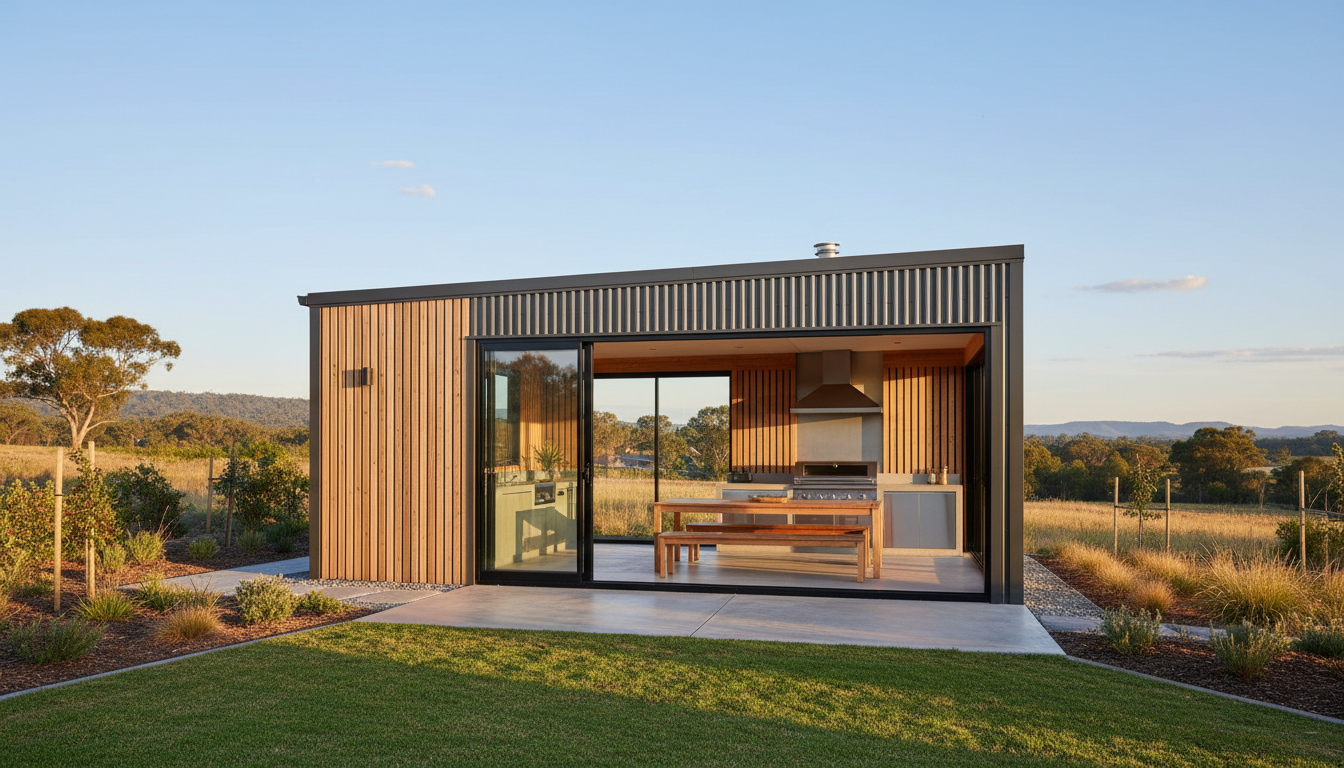
Thinking about a BBQ shed that looks premium, handles Aussie weather, and passes council first go? This guide covers materials (Colorbond vs Zincalume), wind ratings, BAL (bushfire) design, ventilation, and costs—plus buying checklists and real build examples for Australian homeowners, renovators, and property investors.
What is a BBQ shed and why are Australians upgrading outdoor cooking spaces?
A BBQ shed is a purpose-built or modified Colorbond steel shelter designed for outdoor cooking, dining, and storage. Compared with a basic patio, a BBQ shed offers weather protection, smoke management, compliant clearances around appliances, optional screening, and secure storage. Demand is being driven by year‑round entertaining, smaller block sizes needing smarter covered zones, and the rise of premium outdoor kitchens across capital cities and regional areas.
Industry reports in 2024–2025 from housing and steel bodies indicate steady investment in outdoor structures despite tighter budgets, with homeowners prioritising durable, low‑maintenance finishes and energy‑smart roofs. Recent heatwaves and intense rainfall events noted by the Bureau of Meteorology are pushing designs that stay cooler and drain better in storms.
What Are the Best Shed Materials for Perth’s Climate?
Perth summers are hot and dry, with coastal corrosion near sea spray. The winning combo for most BBQ sheds in WA is a Colorbond steel roof and walling, Zincalume structural purlins, and insulated roof panels (or anticon blanket) to cut heat and drumming. If you’re within a few kilometres of the coast, upgrade fasteners and flashings to marine‑grade where practical.
Colorbond vs Zincalume — Which Is Better for WA Conditions?
| Feature | Colorbond steel | Zincalume steel |
|---|---|---|
| Finish | Pre-painted colours; excellent UV stability | Metallic coating; no paint as supplied |
| Best use | Roofing, walling, visible cladding | Purlins, girts, framing, hidden surfaces |
| Heat reflectivity | High (select light colours for cooler roofs) | High reflectivity; can glare if exposed |
| Coastal suitability | Good with correct grade and maintenance | Good, but protect exposed edges near surf |
| Cost | Higher upfront; lower maintenance | Usually lower; often used structurally |
Also consider:
- Insulation: Anticon blanket or insulated sandwich panels reduce heat and condensation.
- Gutters and downpipes: Oversize for storm events; connect to soak wells or tanks.
- Fasteners and flashings: Match coating systems to coastal or industrial corrosion categories.
How big should your BBQ shed be?
Typical footprints for BBQ sheds range from 3×3 m (compact grill station) to 6×4 m (BBQ, prep bench, dining for 8). Height matters for smoke dispersion—2.4–3.0 m eave height with a high‑point ridge or skillion rise promotes draw. Plan for storage and traffic flow, and allow non‑combustible walls or splashbacks behind hot zones.
Do BBQ sheds need ventilation and fire‑safe clearances?
Yes. Plan fresh air in, smoke out, and safe distances to combustibles.
- Ventilation: Combine high‑level louvres, open gables, or ridge vents with mechanical extraction for enclosed or semi‑enclosed layouts. Comply with relevant parts of AS 1668 for mechanical ventilation principles where applied.
- Clearances: Follow BBQ/appliance manufacturer clearances. Add non‑combustible linings (fibre cement, stainless) behind and beside cookers.
- Gas: For plumbed gas, follow AS/NZS 5601; locate cylinders in ventilated areas away from ignition sources.
- Electrical: All wiring to AS/NZS 3000, with weather‑rated GPOs and proper RCD protection.
- BAL: In bushfire‑prone areas, align materials and ember protection to AS 3959 BAL rating.
Which roof style works best: flat, skillion, or gable?
- Skillion (single pitch): Great for smoke draw and simple guttering. Ideal for narrow side yards.
- Gable: Classic look, peak for hot air; suits larger spans and integrated alfresco.
- Flat: Low profile and cost‑effective but needs careful fall and drainage; add vents.
How to get council approval for your custom shed in WA
Most BBQ sheds beyond exempt sizes or with services require approval. Process varies by council (City of Stirling, Joondalup, Cockburn, etc.) but commonly involves:
- Confirm planning exemptions: Check setbacks, open‑space ratios, height limits, and lot coverage.
- Prepare documents: Site plan, elevations, engineering (wind actions per AS/NZS 1170.2), footing/slab detail, and specifications.
- Bushfire and wind: Provide BAL report if applicable and nominate wind region/category (e.g., N2/N3; Region D in cyclonic north).
- Lodge Building Permit (BA2 or BA1): Include owner’s consent and energy/lighting notes where needed.
- Inspections: Final inspection for footings, frame, and services as required by the certifier.
Added 2024 WA wind-rating compliance notes: Perth metro is typically non‑cyclonic (Regions A–B), but coastal sites and hilltops can attract higher terrain/category multipliers. For northern WA or exposed sites, specify wind‑rated sheds for cyclonic areas with certified connections and bracing.
For other states, similar rules apply. In Queensland, cyclone‑rated sheds (C1–C4) are mandatory in many coastal zones. In NSW, rural sheds may be exempt or complying but still need engineering for wind and snow (tablelands).
Should you buy a DIY shed kit or go custom‑built?
- DIY shed kits: Fast lead times, cost‑effective, perfect for simple, open BBQ shelters. Ensure kit options for louvres, whirlybirds, and non‑combustible linings.
- Custom‑built: Tailored to site, BAL, and council constraints. Better integration with decks, retaining walls, and outdoor kitchens.
Design ideas for a BBQ shed with door (privacy, storage, and weather control)
Interested in maximising vertical space? Discover options in our detailed Tall Garden Shed guide.
If you want a BBQ shed with door, consider:
- Wide sliding doors to close off wind and rain without blocking smoke flow.
- Perforated infill or mesh screens for airflow with insect control.
- Lock‑up storage bays for BBQ tools, smokers, and gas cylinders (vented at high/low levels).
- Polycarbonate skylight panels above prep zones for daylighting.
- Non‑combustible splashbacks and benchtops adjacent to cookers.
Costs and specifications: what to expect in 2025
Indicative budgets (supply and install):
- Open skillion BBQ shelter (3×3 m): From $4,500–$7,500 depending on wind category and finishes.
- Mid‑size BBQ shed with door (5×3 m) and louvres: $9,000–$15,000 including slab and electrical rough‑in.
- Premium outdoor kitchen shed (6×4 m) with insulated roof and stone tops: $18,000–$35,000+.
Note: Pricing varies with wind rating (N2 vs N3/C regions), BAL upgrades, cyclonic detailing, and coastal corrosion protection. Recent market outlooks from steel and housing bodies point to stable but elevated steel pricing into 2025; plan contingencies for lead times on custom colours and insulated panels.
Real‑world build examples
- Perth coastal skillion, 5×3 m: Colorbond Monument roof/walls, anticon blanket, stainless splashbacks, sliding screen door. Outcome: Cooler summer temps; compliant setbacks; quick BA2 approval with site‑specific wind certificate.
- Far North QLD gable, 6×4 m: Cyclone-rated shed (C2), extra hold‑downs, louvred gable vents, BAL‑Low site. Outcome: Survived severe storm season; smoke disperses via ridge vent; doors rated to design pressure.
5‑Step Buying Guide for Custom Sheds in Australia
- Site and size: Measure clearances, wind exposure, bushfire overlays, and drainage.
- Structure: Choose Colorbond cladding with Zincalume framing; specify wind category and bracing.
- Safety: Lock down appliance clearances, ventilation strategy, gas/electrical compliance.
- Approvals: Confirm exempt status or lodge a complete set—engineering, BAL, and site plan.
- Build and finish: Pour a sealed slab, fit insulated roofing, add doors/louvres, and certify.
For premium recommendations, explore the Best Sheds Ad for Colorbond sheds, carports, and garages.
Pro Tip: Did you know using insulated roof panels can reduce internal shed temperatures by up to 10°C in summer? This also cuts condensation over benchtops and bar fridges.
Local compliance and technical references (Australia‑wide)
- NCC (Building Code of Australia) and AS/NZS 1170.2 for wind actions; AS/NZS 4100 for steel structures.
- AS 3959 for bushfire construction where applicable; AS/NZS 5601 for gas; AS/NZS 3000 for electrical; AS 1668 for ventilation principles.
- Bureau of Meteorology climate data for local wind/heat context; Australian Steel Institute guidance for steel detailing.
Frequently asked questions
Do I need council approval for a BBQ shed?
Often yes, especially if roofed area exceeds exempt limits, sits near boundaries, or includes plumbing/gas. Many councils in WA, NSW, and QLD accept certified, council-approved sheds with engineering.
Can I fully enclose a BBQ shed?
You can, but ensure compliant ventilation and exhaust. Semi‑enclosed designs (doors plus louvres) are popular to balance smoke control and weather protection.
What wind rating do I need?
Non‑cyclonic metros are commonly N2/N3. Northern WA and QLD coasts may require Cyclone (C1–C4). Engage an engineer or shed supplier to nominate wind actions from AS/NZS 1170.2.
How close can I build to the boundary?
Varies by council. Fire‑resisting construction and height limits apply. Check local planning codes and provide non‑combustible walls where required.
Which roof colour runs cooler?
Lighter Colorbond colours reflect heat better. Combine with insulation for best results.
What slab do I need?
Commonly 100 mm reinforced slab with thickenings or footings to engineering. Seal the slab against grease and spills.
Related Australian shed and carport solutions
- Steel sheds Perth and custom Colorbond garages Perth
- Rural sheds NSW and farm machinery storage
- Custom carports Melbourne and affordable carports for Australian homes
- DIY shed kits vs engineered wind-rated sheds for cyclonic areas
- Cyclone-rated sheds QLD and council-approved sheds WA
Jargon buster: quick definitions
Where to learn more (Australian sources)
Deepen your research using trusted Australian references:
- Housing Industry Association (outdoor structures trends)
- Master Builders Australia/WA (building guidance)
- Bureau of Meteorology climate data
- Australian Steel Institute technical notes
- Energy.gov.au on cool roofs and efficiency
- CSIRO materials and bushfire research
Planning checklist for your BBQ shed
- Choose Colorbond cladding grade and colour; specify Zincalume framing.
- Confirm wind region/category and BAL rating; design fixings/bracing accordingly.
- Ventilation plan: louvres, ridge vent, or fan/exhaust; non‑combustible linings.
- Services plan: gas to AS/NZS 5601, electrical to AS/NZS 3000, GPO locations.
- Approvals: site plan, elevations, engineering, and any bushfire report.
Whether you’re adding a compact grill station or a full outdoor kitchen, a properly engineered Colorbond steel BBQ shed—sized for your site, wind‑rated, and council‑ready—will deliver long life, low maintenance, and year‑round entertaining comfort.