
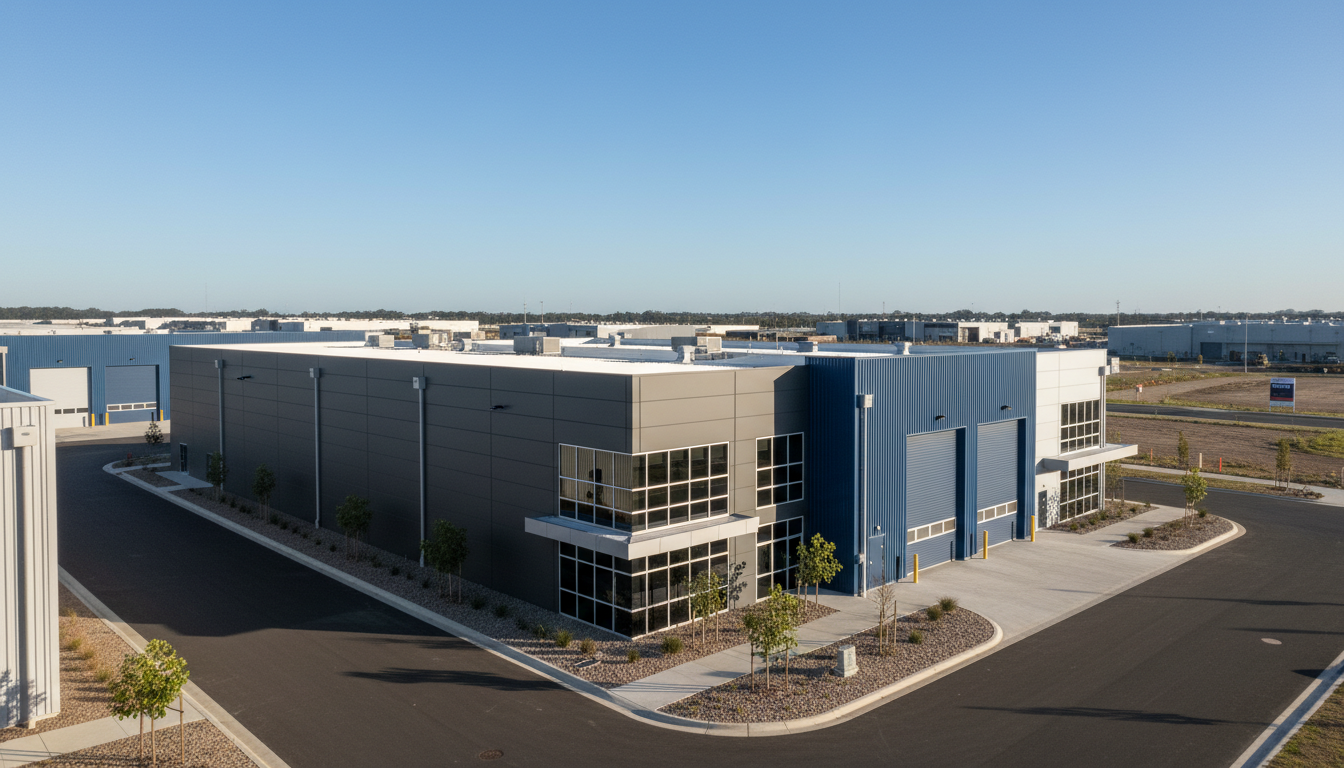
If you’re searching for a Brisbane warehouse for sale—whether a compact strata unit, a freehold industrial shed, or industrial land for a new build—this guide gives you the essentials and a snapshot of the Brisbane warehouse market today. Whether you’re an investor or business owner, reviewing the broader Warehouse for Sale in Australia guide will give you additional insights into nationwide options, market trends, and what to expect across states.
Primary search terms covered: brisbane warehouse for sale, small warehouse for sale brisbane, industrial land for sale brisbane, industrial sheds for sale brisbane.
What types of Brisbane warehouses are for sale right now?
- Strata-titled small warehouses (80–350 m²): Ideal for tradies, e-commerce, or secure “toy box” storage. Look for clear-span portal frames, 3-phase power, and mezzanine-ready design.
- Freehold industrial sheds (350–2,000 m²+): Suits growing businesses. Often steel portal frame with Colorbond cladding or tilt-up concrete panels.
- Industrial land for sale (serviced or raw): Build a custom, wind-rated shed to suit truck access, crane rails, and racking layouts from day one.
- Hybrid showroom/warehouse: Glazed street frontage with a high-clearance storage bay, perfect for trade retail.
- Logistics/last-mile units: High roller doors, B-double access, ESFR/fire compliance depending on size and use.
Only need a domestic workspace? Our work shed guide explains layouts, costs and approvals for home workshops.
Constructing Your New Warehouse
Looking for expertise in shed construction or garage design? The Industrial Building Guide covers everything from planning new projects to sourcing materials.
What Are the Best Shed Materials for Brisbane’s Climate?
Brisbane is humid subtropical with summer storms, high UV, and sea-air exposure in bayside suburbs. Your shed envelope should balance corrosion resistance, thermal control, and lifecycle cost.
- Colorbond steel cladding: Pre-painted, oven-baked finish over zinc/aluminium-coated steel. Excellent UV stability and colour retention in Queensland sun.
- Zincalume steel cladding: Zinc/aluminium/magnesium alloy coating with a metallic finish. Great base corrosion resistance; often chosen for roofs in non-coastal zones.
- Hot-dip galvanised purlins and columns: Enhances durability in higher corrosion zones (C3–C4). Consider HDG base plates and hold-downs near slab edges.
- Roof insulation and anti-condensation: Combine an anti-condensation blanket with glasswool or PIR panels to reduce heat gain and manage NCC 2022 condensation provisions.
For bayside sites or near corrosive environments, consider higher-spec coatings, additional wash-down zones, and specified maintenance plans endorsed by an engineer or Australian Steel Institute member.
Colorbond vs Zincalume — Which Is Better for WA Conditions?
While this article focuses on Brisbane, many readers compare sheds Australia-wide. Here’s a quick comparison often referenced for coastal or high-UV regions (also relevant if you’re weighing steel sheds Perth or regional builds).
| Feature | Colorbond | Zincalume |
|---|---|---|
| UV resistance | Excellent colour stability in high-UV climates | Good; metallic finish can reflect heat but no colour layer |
| Corrosion resistance | Very good with paint system; specify appropriate category | Very good base alloy; care near salt spray zones |
| Visual appeal | Wide Colorbond palette for brand matching | Sleek metallic look; industrial aesthetic |
| Cost | Typically higher than bare alloy | Often more economical |
| Maintenance | Wash-down reduces dirt/chalk; repaint decades later if required | Periodic wash-down limits white rust in pollutants/salt |
Tip: For bayside Brisbane, many buyers prefer Colorbond for wall cladding and Zincalume or Colorbond for roofing. Always match to your site’s corrosion category and wind region per AS/NZS 2312.1 and AS/NZS 1170.2.
DIY Shed Kits vs Custom-Built vs Buying an Existing Warehouse
| Option | Pros | Cons | Best for |
|---|---|---|---|
| DIY shed kits | Fast lead times, lower cost, standard portal frames | Limited customisation; owner coordination of approvals and trades | Small workshops, farm machinery storage, budget builds |
| Custom-built industrial shed | Optimised for truck turning, cranage, mezzanine, future expansion | Longer program; needs DA/BA management and strong GC | Owner-occupiers with specific workflow or racking layouts |
| Buy existing warehouse | Immediate use; known location; rental income potential | Compromises on height, fire, or power; retrofit costs | Investors, time-poor operators needing quick occupancy |
Comparing new build vs buy? Our warehouse building in Australia resource details specs, engineering and council pathways.
How to Get Council Approval for Your Warehouse or Industrial Shed in Brisbane (and SEQ)
- Check zoning and overlays: Use Brisbane City Council City Plan mapping for industry zones, flood, stormwater, bushfire, and acoustics. Some minor works may be code assessable; larger warehouses may need development approval.
- Engage a private certifier: In Queensland, building approval is typically via a licensed building certifier. You’ll need engineering, site plan, slab design, and energy/condensation documentation to suit NCC 2022.
- Engineering and wind design: Brisbane is generally Region B (AS/NZS 1170.2) with common Terrain Categories 2–3. Confirm importance level, shielding, and topography multipliers. Specify fixings, purlin spacing, door wind locks, and tie-downs accordingly.
- Fire and services: Depending on use and size, NCC Volume One fire requirements may trigger hydrants, hose reels, or sprinklers. Confirm with a fire engineer early to avoid redesign.
- Paperwork: Typical QLD documents include Form 15 (design), Form 16 (inspection), QBCC-licensed builder details, soil test, and site-specific stormwater management (on-site detention if required).
Queensland cyclones? While Brisbane itself is non-cyclonic, if you’re buying or building further north, ensure cyclone-rated sheds QLD (Region C/D) with upgraded cladding, fixings, and roller door wind-locks.
5-Step Buying Guide for Custom Sheds in Australia
- Define use-case: racking layout, forklift clearances, pallet counts, door size, and future mezzanine loads.
- Pick your envelope: Colorbond vs Zincalume, roof profile (gable vs skillion), insulation R-values, ridge ventilation, translucent skylights, and vermin flashing.
- Engineer for site: Wind region, corrosion category, slab thickness, piering, and drainage to suit soil type.
- Plan approvals: Zoning due diligence, building certifier, fire consultant, and services upgrade (3-phase power, water, comms).
- Total cost view: Include civil works, crossover/driveway, security bollards, LED high-bays, epoxy floors, and maintenance schedule.
Popular shed and garage keyword clusters to explore
- Urban: custom-built double garage in Perth, custom Colorbond garages Perth, affordable carports for Australian homes, custom carports Melbourne
- Rural: rural sheds NSW, farm machinery storage, hay sheds, open-front machinery bays
- Coastal/cyclone: wind-rated sheds for cyclonic areas, council-approved sheds WA, steel sheds Perth
- Owner-builder: DIY shed kits, Colorbond vs Zincalume comparison, insulated roof panels
Brisbane build examples (real-world specs)
Case Study 1 — Small Warehouse, North Brisbane
- Size: 18 m x 10 m (180 m²), 6.0 m eave, clear-span portal frame
- Envelope: Colorbond walls, Zincalume roof with 60 mm anti-condensation blanket
- Features: 5 m high roller shutter, 3-phase power, mezzanine-ready columns, LED high-bays
- Compliance: AS/NZS 1170.2 Region B, NCC 2022 condensation management, AS/NZS 4600 cold-formed steel
- Use: Tradie workshop + parts storage; designed for future 40 m² mezzanine
Case Study 2 — Industrial Shed, Logan Corridor
- Size: 35 m x 12 m (420 m²), 7.5 m ridge height
- Envelope: Colorbond Monument walls/doors for branding; HDG columns and purlins near wash bay
- Siteworks: Heavy-duty slab for 5 t point loads, truck turning circle, on-site stormwater detention
- Services: 200 A 3-phase upgrade, compressor line, data backbone
- Fire: Hose reels and alarm per fire engineer; exit doors and travel distances per NCC
Investor checklist: what drives warehouse value in Brisbane
- Height and volume: 6 m+ eaves, clear-span bays, mezzanine potential
- Access: Drive-through or back-to-back roller doors, B-double access where possible
- Power and services: 3-phase capacity, NBN fibre, gas (if needed)
- Compliance: Current approvals, fire services certification, asbestos-free, up-to-date Form 16s
- Location: Proximity to Gateway/Logan Motorways, labour catchments, and customers
- Low opex: Durable claddings, LED lighting, insulated roofs that cut cooling loads
Frequently asked questions
What is a typical size for a small warehouse for sale in Brisbane?
Common strata sizes range from 80–350 m². Look for 5–6 m eave height to allow racking and a future mezzanine without forklift clearance issues.
Do I need a mezzanine approval?
Yes. A mezzanine changes building classification and loads. You’ll need engineering, fire egress assessment, and a building approval through a certifier.
Flat roof vs gable roof for industrial sheds?
| Roof type | Pros | Considerations |
|---|---|---|
| Gable | Classic look, good drainage, natural ridge ventilation options | Slightly more structural steel at ridge in some spans |
| Skillion (mono) | Sleek profile, simple guttering, easy PV orientation | Watch wind uplift on high edges; detail gutters carefully |
What standards apply to Brisbane industrial sheds?
- NCC 2022 (BCA) Volume One
- AS/NZS 1170.2 (wind actions)
- AS 4100 (steel structures), AS/NZS 4600 (cold-formed steel)
- AS 1562.1 (roof/cladding), AS/NZS 2312.1 (corrosion protection)
Pro Tip
Did you know? Using insulated roof panels can reduce internal shed temperatures by up to 10°C in summer, improving comfort and cutting cooling loads. Combine with ridge vents and light-coloured roofs for best results. See guidance on building energy efficiency at Energy.gov.au.
Local codes, climate data and industry resources
- Weather and wind: Bureau of Meteorology (site-specific wind and rainfall)
- Standards and steel design: Australian Steel Institute
- Building industry guidance: Housing Industry Association and Master Builders Australia
Industry outlook: The 2025 Australian Steel Market Outlook and the 2025 HIA Outdoor Structures and Home Improvement Report indicate continued demand for metal buildings and outdoor improvements, with lifecycle durability and energy performance being key buyer drivers in Queensland.
Notes and cross-state gaps we solve
council-approved sheds WA | cyclone-rated sheds QLD | custom Colorbond garages Perth | Added 2024 WA wind-rating compliance notes
We design for local wind regions, from Brisbane’s Region B to WA regional sites and cyclone-prone QLD zones, ensuring cladding, fixings and doors are specified for compliance and longevity.
Why buyers choose engineered steel sheds for Brisbane
- Fast build times compared with masonry
- Clear spans for flexible fit-outs
- Lower maintenance with Colorbond or Zincalume cladding
- Easy to extend bays as your business grows
Next steps
Shortlist properties by location and eave height, assess power and fire compliance, and get a preliminary wind and corrosion check from a structural engineer. If you’re weighing “industrial land for sale Brisbane” to build new, a custom, wind-rated portal frame can deliver the exact access, racking and mezzanine capacity you want from day one. For national context on materials, wind regions and approvals, read our Warehouse for Sale in Australia guide.
- Warehouses in Logan
- Warehouses in Ipswich
- Warehouses in Redlands
For buyers looking west of Brisbane, our Sheds Ipswich resource features local steel and Colorbond shed insights.