
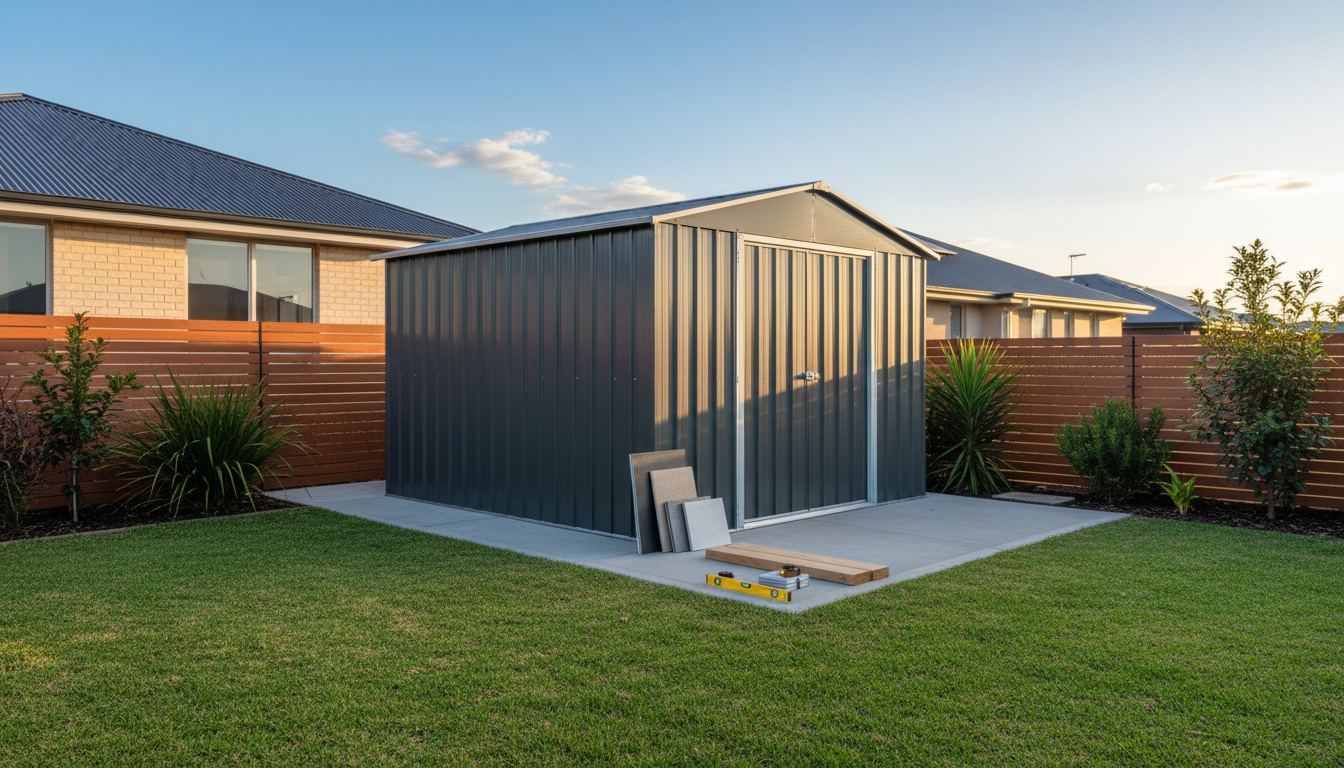
Garden Shed 3m x 2m in Australia: Design, Approvals, Costs, and Materials
For Australian homeowners, renovators, and investors, a 3m x 2m shed (3×2 garden shed, 2mx3m shed) is the sweet spot for secure storage without eating up your yard. Here’s how to get it right the first time—materials, wind ratings, council rules, and long-term value.
What fits inside a garden shed 3m x 2m?
At roughly 6m² footprint, a 3m x 2m shed suits lawn equipment, bikes, garden tools, a small workbench, or a compact backyard workshop setup. Typical layouts include:
- One wall of racking plus a 1.8m bench
- Two adult bikes, mower, whipper snipper, and storage tubs
- Potting bench and vertical gardening storage
Pro tip: Choose a 2.1m+ wall height if you want overhead storage or to swing long-handled tools without scuffing the roof.
What are the best shed materials for Perth’s climate?
Australia’s UV, salt, and heat punish low-grade steel. For longevity, most premium 3×2 sheds use high-tensile, coated steel panels with hot-dip galvanised anchors. The two common cladding options are Colorbond steel and Zincalume.
Colorbond vs Zincalume — Which is better for WA conditions?
| Criteria | Colorbond | Zincalume |
|---|---|---|
| Finish | Pre-painted, baked-on colour (e.g., Surfmist, Woodland Grey) | Silver/metallic aesthetic (no colour) |
| Corrosion Resistance | Excellent; strong choice for coastal and urban WA | Very good; can require extra care near surf/coast |
| Heat Reflection | Light colours reflect heat better; combine with insulation | Good reflectivity; still benefits from insulation |
| Maintenance | Low; washdown near coast extends life | Low; washdown recommended near coast |
| Cost | Higher | Lower |
| Best For | Premium look, coastal/performance, matching house colours | Budget-conscious builds, rural/low-salt areas |
In hot Perth summers, select lighter Colorbond colours and add an anti-condensation blanket or insulated roof panel to reduce heat load.
How much does a 3m x 2m shed cost in Australia (2025)?
Indicative ranges only—final price depends on wind rating, slab, doors, and upgrades:
- Budget DIY shed kits (thin gauge): $650–$1,800
- Engineered steel DIY kits (Colorbond/Zincalume): $2,000–$4,500
- Installed custom build (incl. slab and approvals): $3,500–$7,500+
2024–2025 industry commentary indicates steel lead times have normalised for many suppliers (approx. 2–6 weeks), though coastal and cyclonic engineering can add cost and time.
Which roof style is best for a 3×2 shed: gable or skillion?
| Roof Style | Pros | Considerations | Best For |
|---|---|---|---|
| Gable Roof | Classic look, good airflow, extra headroom at centre | Slightly higher cost, ridge capping required | Matching house aesthetic; taller storage |
| Skillion (Mono) | Sleek, modern, easy to drain to one side | Lower headroom on low side; gutter sizing crucial | Narrow setbacks; stormwater control to boundary |
Do you need council approval for a 3m x 2m shed in WA, QLD, NSW, VIC?
Many councils exempt small sheds up to a certain size if they meet setbacks, height limits, and drainage rules. However, engineering for wind loads still applies.
How to get council approval for your custom shed in WA
- Check your local Planning Scheme and R-Codes for setbacks and height.
- Confirm whether your 3m x 2m qualifies as exempt development. If not, lodge a Building Permit (BA2) with engineering certification (AS/NZS 1170.2).
- Provide a site plan, elevations, and slab details (AS 2870).
- Address stormwater: gutters, downpipes, and lawful point of discharge.
- If in bushfire-prone area, check BAL and cladding requirements.
Added 2024 WA wind-rating compliance notes: Most Perth metro sites are non-cyclonic (N2–N3), but coastal exposure, terrain category, and topography can push design pressures higher—ensure your supplier’s engineering covers your specific site conditions.
Gap coverage: council-approved sheds WA and custom Colorbond garages Perth can streamline approvals because documentation is ready for certifiers. For North QLD, prioritise cyclone-rated sheds QLD to meet Region C/D design winds.
What wind rating and engineering does a 3×2 shed need?
Wind design in Australia follows AS/NZS 1170.2. Your shed should be engineered to your site’s wind classification (e.g., N2, N3 non-cyclonic; C or D for cyclonic regions). Key engineering details include:
- High-tensile framing and adequate sheet fixings
- Bracing to prevent racking under gusts
- Hot-dip galvanised hold-down anchors and edge thickening in slab
- Door wind locks for roller doors (if fitted)
Coastal WA and QLD cyclone zones demand corrosion protection (e.g., stainless fixings in severe marine zones) and higher design pressures. Always ask for the engineering certificate before you buy.
Should you buy a DIY shed kit or go custom-built?
| Option | Pros | Cons | Who It Suits |
|---|---|---|---|
| DIY Shed Kits | Lowest upfront cost, quick delivery, weekend project | Thin-gauge options can dent; approvals/slab on you | Confident DIYers with basic tools, non-cyclonic sites |
| Custom-Built | Engineered for site, better hardware, install handled | Higher cost, lead time for permits | Busy homeowners, coastal/cyclonic or tight-access sites |
Many clients mix both: an engineered DIY kit with a local concreter for the slab and a licensed installer for erection.
How to choose doors, colours, and upgrades for a 2mx3m shed
- Doors: Single PA door for security; add a small roller door if storing bikes or mowers.
- Ventilation: Ridge vent or louvres to reduce condensation.
- Insulation: Anti-condensation blanket or insulated roof panels.
- Colours: Colorbond Surfmist, Shale Grey, or Woodland Grey to match modern homes.
- Hardware: Stainless or galvanised fixings for coastal durability.
- Guttering/Stormwater: Direct to a soakwell or rainwater tank where allowed.
Pro Tip: Did you know using insulated roof panels can reduce internal shed temperatures by up to 10°C in summer? Combine with light-colour Colorbond and a ventilated ridge for maximum comfort.
Real Australian build examples (3m x 2m)
- Joondalup, WA: Colorbond gable 3×2 with PA door, anti-con blanket, N3 wind rating; slab thickened edges; gutters to soakwell. Use: garden storage + small bench.
- Townsville, QLD: Cyclone-rated skillion 2×3, stainless fixings, door wind locks; engineered to Region C; PA door on leeward side. Use: bikes and beach gear.
- Wagga Wagga, NSW: Zincalume gable 3×2 on rural block; cross-bracing for open terrain; whirlybird vent. Use: mower and farm tools.
5-Step Buying Guide for Custom Sheds in Australia
- Define use-case: tools, bikes, backyard workshop, or garden storage solutions.
- Confirm site and wind: get your N rating (or C/D if cyclonic), site classification, setbacks, and services.
- Choose materials: Colorbond vs Zincalume; pick roof style (gable or skillion) and ventilation.
- Plan compliance: council/permit pathway, slab engineering, stormwater, BAL if relevant.
- Compare quotes apples-to-apples: steel gauge, fixings, inclusions (gutters, PA door), warranty, and lead time.
Australian standards, climate, and local notes that matter
- Standards: AS/NZS 1170.2 (wind loads), AS 4100/AS/NZS 4600 (steel structures), AS 1562.1 (sheet roof/wall), AS 2870 (slabs/footings).
- Climate: Perth heat and UV; QLD cyclones; NSW rural winds; coastal corrosion zones.
- Construction: Termite-resistant steel framing and correct slab vapour barriers improve lifespan.
For energy and comfort, insulated roofs and crossflow ventilation beat heat build-up, especially on west-facing fences.
Keyword clusters and use-cases for 3m x 2m sheds
You’ll see these terms when comparing suppliers and quotes:
- Local intent: steel sheds Perth, rural sheds NSW, custom carports Melbourne, custom Colorbond garages Perth
- Technical: Colorbond vs Zincalume comparison, wind-rated sheds for cyclonic areas, concrete slab engineering, hot-dip galvanised anchors
- Lifestyle: DIY shed kits, backyard workshop, farm machinery storage, affordable carports for Australian homes
- Compliance: council-approved sheds WA, cyclone-rated sheds QLD, BAL ratings, N2/N3 wind classification
FAQs
Is a 3m x 2m shed big enough for a mower and bikes?
Yes. Store a mower, two adult bikes, and shelving with smart layout. Add a roller door for easier access if space is tight.
Do I need a slab?
A reinforced concrete slab is best for durability, anchoring, and keeping dust out. Pavers or timber bearers can work for light-duty storage but may affect wind tie-downs.
What wind rating do I need?
Most metro sites are N2–N3; coastal/headland or cyclonic regions require higher ratings (Region C/D). Always request engineering for your address.
How long does install take?
DIY kits can be erected over a weekend with two people. Custom builds generally complete in a day after the slab cures (typically 7 days minimum).
Relevant resources (Australia)
- Bureau of Meteorology climate data for wind and heat insights
- Housing Industry Association for outdoor structures trends and advice
- Master Builders Australia for building and permit guidance
- Australian Steel Institute for steel market outlooks and best practice
- Energy.gov.au — insulation for thermal comfort considerations
- CSIRO — BAL ratings to understand bushfire requirements
Note: The “2025 Australian Steel Market Outlook” and “2025 HIA Outdoor Structures and Home Improvement Report” indicate steady demand and a focus on engineered, compliant sheds. Always confirm current local rules via your council website.