
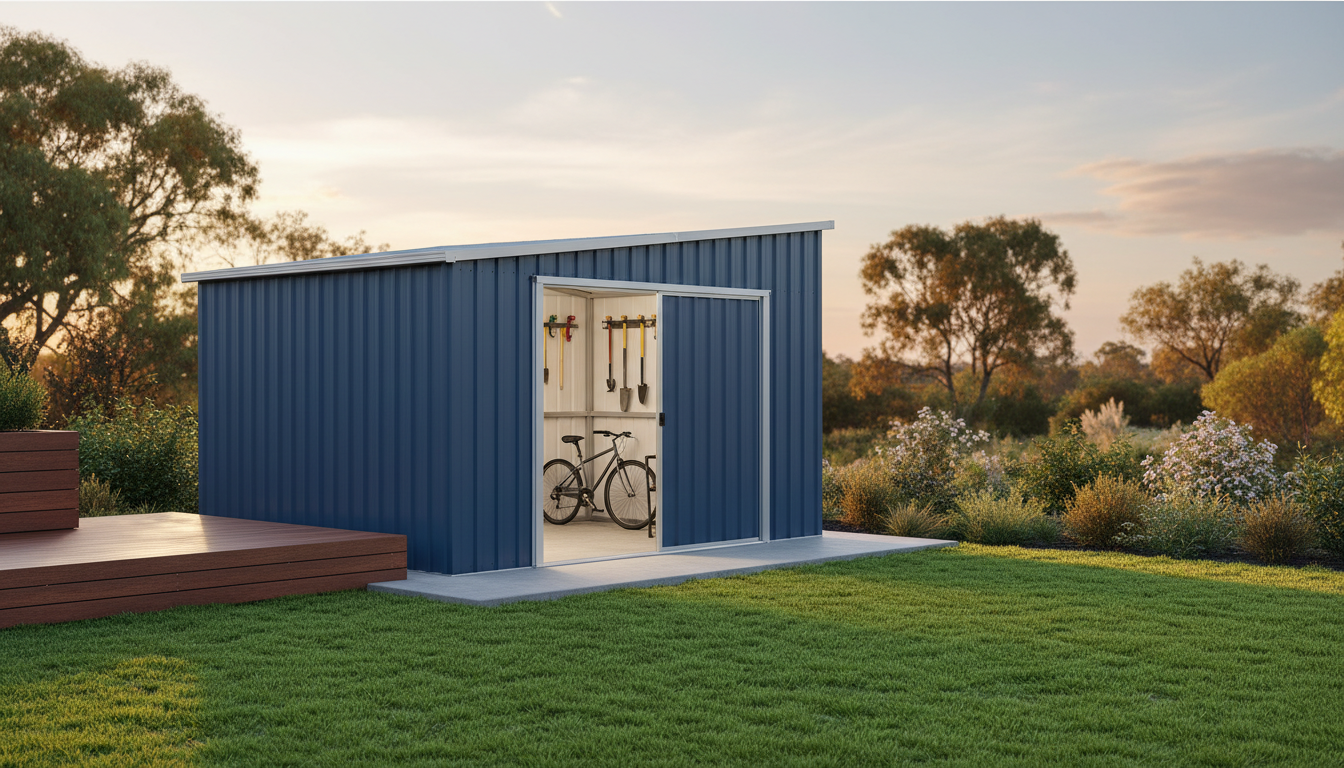
If you’re an Australian homeowner, renovator, or investor, the right Colorbond steel shed adds secure storage and value. This guide brings together everything you need for a smooth garden shed installation—from selecting wind-rated panels for coastal WA to arranging shed assembly in Melbourne’s tight-access lanes. We’ll compare DIY shed kits vs a shed assembly service, break down garden shed installation cost, and show how to get council-approved sheds in each state.
What Are the Best Shed Materials for Perth’s Climate?
Perth’s hot summers, high UV, and coastal sea spray mean material choice matters. Most quality garden shed installers recommend either Colorbond steel or Zincalume sheeting on a galvanised steel frame. For Fremantle-to-Mandurah coastal belts, opt for marine or ultra coatings and additional corrosion protection.
Colorbond vs Zincalume — Which Is Better for WA Conditions?
| Feature | Colorbond (WA focus) | Zincalume (WA focus) |
|---|---|---|
| Corrosion resistance (coastal) | Excellent with Ultra/Marine grades; ideal within a few km of coast | Good inland; may need extra protection near salt air |
| Heat & UV performance | High; lighter colours reflect heat, durable paint system | High base performance; may heat up more without reflective colour |
| Aesthetics | Wide range of Colorbond colours to match home | Silver finish unless post-painted |
| Cost | Higher upfront | Typically lower upfront |
| Best for | Premium look, coastal zones, value-adding projects | Budget-friendly inland or rural installs |
Pro Tip: Did you know using insulated roof panels can reduce internal shed temperatures by up to 10°C in summer? Pair light Colorbond colours with ceiling insulation and anticon blanket for best comfort.
How Much Does Garden Shed Installation Cost in Australia (2025)?
Pricing varies by size, wind rating, slab, access, and whether you choose DIY shed kits or a professional shed assembly service.
- Small garden shed (e.g., 2.3 × 2.3 m): $1,100–$2,000 for a kit; $450–$900 for assembly; concrete slab $700–$1,200.
- Popular 3 × 3 m Colorbond shed: $1,600–$3,000 for kit; $600–$1,100 install; slab $1,100–$1,700.
- Larger 3 × 4.5 m workshop shed: $2,800–$5,000 for kit; $900–$1,600 install; slab $1,800–$2,900.
- Upgrades: cyclone tie-downs (+15–35%), insulation (+$25–$60/m²), windows/doors (+$250–$900 each), guttering/water tank connection (+$350–$1,200).
- Permits: $0–$900 depending on council/state complexity; site engineering (if needed) $350–$1,200.
Indicative slab-on-ground pricing is commonly $120–$190/m² for 100 mm thick reinforced concrete with mesh in metro areas (higher for small pours or difficult access). In Melbourne, “garden sheds Melbourne installed” packages by shed installers Melbourne can bundle slab, kit, and assembly to save site visits.
These ranges reflect current materials and labour in 2024–2025 per industry commentary from the Housing Industry Association and Australian Steel Institute.
Professional Garden Shed Fitters vs DIY Shed Assembly
DIY shed kits are popular for smaller sheds, but many owners prefer professional storage shed installers to guarantee square, plumb, and watertight results—especially on sloping blocks or windy sites.
When to choose a shed assembly service
- Wind-rated sheds for cyclonic areas (C1–C3).
- Coastal WA or Far North QLD sites needing corrosion and tie-down detail.
- “Garden shed builders near me” for tight access, laneways, or boundary setbacks.
- Upgrades like power, insulation, windows, and custom roller doors.
DIY shed assembly tips
- Check your kit’s wind classification and fastener schedule before you start.
- Lay out panels on a clean slab, pre-drill where specified, square the frame, then sheet in order.
- Use butyl tape or foam infill at ridges; fit sarking or anticon to reduce condensation.
- Anchor per engineering: chemical anchors or cast-in bolts, not “just dynabolts” on cyclonic edges.
Approvals: Council, Permits, and Standards You Must Meet
Garden sheds are Class 10a non-habitable structures under the National Construction Code (NCC). Requirements vary by state and council.
How to Get Council Approval for Your Custom Shed in WA
Added 2024 WA wind-rating compliance notes In WA, most sheds require a Building Permit (Building Act 2011). Provide certified drawings, site plan, engineering for wind region (often N3 around Perth; higher in coastal or exposed sites), and tie-down details. Some small sheds may be exempt, but check your local shire. “Council-approved sheds WA” marketing typically means the supplier provides certified engineering for your address.
NSW: Exempt Development or DA?
Under the NSW Exempt Development Code, many small garden sheds are exempt if they meet height, size, and setback limits on lots with a dwelling. If not exempt, you’ll need a Development Application and Construction Certificate. “Rural sheds NSW” on acreage may face different rules; always confirm with council.
VIC: Planning vs Building Permit
In Victoria, a Registered Building Surveyor issues building permits; some garden sheds are exempt based on size/height and distance from boundaries, but many still need a building permit. Check overlays (heritage, bushfire) before proceeding. Shed installers Melbourne often manage permits for “garden sheds Melbourne installed” packages.
QLD: Cyclone regions and certification
In Queensland, a building certifier assesses your shed; North Queensland typically requires C-category cyclone-rated sheds. “Cyclone-rated sheds QLD” need engineered hold-downs, specific sheeting screws, and edge detailing per AS/NZS 1170.2.
- Core standards to reference: AS/NZS 1170.2 (Wind actions), AS/NZS 4600 (Cold-formed steel), AS 4100 (Steel structures), AS/NZS 1562.1 (Roof & wall cladding), AS 3600 (Concrete), NCC 2022/2025.
Design Choices That Matter for Longevity and Usability
Roof styles: flat, gable, or skillion
- Flat roof: lowest profile, cheapest; ensure drainage and 1:40 fall minimum.
- Gable roof: classic look, better runoff, allows whirlybirds and skylights.
- Skillion roof: modern look, ideal near boundaries to throw water to one side.
Doors, access, and security
- Wider double doors for ride-on mowers and farm machinery storage.
- Roller doors for custom-built double garages in Perth or “custom Colorbond garages Perth”.
- Upgrade to galvanised hinges, deadbolts, and anti-jemmy frames.
Foundation: slab-on-ground vs piers
- Slab: best for dust-proofing and anchoring; add damp-proof membrane and termite protection where required.
- Piers/bearers: useful on sloping blocks; ensure compliant tie-down to frame.
Condensation, ventilation, and insulation
- Add sarking or anticon under roof sheets to limit condensation drips.
- Ridge vents and whirlybirds improve airflow; mesh soffit vents reduce pests.
- Insulated roof/wall panels boost comfort and reduce heat load in Perth and Adelaide summers.
Use-Cases and Shed Types (Keyword Clusters)
- Garden tool storage sheds with adjustable shelving and secure doors.
- Workshop sheds with power, benches, and insulation for noise control.
- Rural sheds NSW for machinery, hay, or mixed-use bays.
- Steel sheds Perth for heat and coastal corrosion resistance.
- Custom carports Melbourne and affordable carports for Australian homes.
- DIY shed kits vs “shed and installation” bundles with accredited garden shed fitters.
- Wind-rated sheds for cyclonic areas (e.g., Townsville, Cairns) with C-category engineering.
Real Build Examples (2024–2025)
Perth, WA — 3 × 3 m Colorbond garden shed, coastal street
- Spec: Colorbond Ultra sheeting, N3 wind classification, insulated roof panels.
- Outcome: 12% lower internal peak temps vs uninsulated comparator; zero corrosion after first summer wash-down schedule.
Melbourne, VIC — Narrow access inner-north install
- Spec: 2.3 × 3 m gable, Zincalume walls, Colorbond roof, slab via micro-pump.
- “Shed installers Melbourne” completed in 1 day; lane-only carry-in solved access issue.
Cairns, QLD — Cyclone-rated garden storage
- Spec: 3 × 4.5 m C2 cyclone rating, upgraded screw schedule, extra hold-downs, sarking + whirlybird.
- Compliance: AS/NZS 1170.2 and certifier-approved tie-down plan.
Hunter Valley, NSW — Rural hobby workshop
- Spec: 3.5 × 5 m skillion, Colorbond walls/roof, slab with termite barrier, rainwater gutter to tank.
- Exempt Development achieved by staying within height and setbacks.
5-Step Buying Guide for Custom Sheds in Australia
- Confirm site rules: Check if you’re exempt or need permits (height, area, boundary). Get wind rating and Bushfire Attack Level if relevant.
- Choose materials: Colorbond for premium and coastal, Zincalume inland; pick roof style and ventilation.
- Pick foundation: Slab with membrane and mesh for most suburban installs; piers for slopes.
- Decide on assembly: DIY shed assembly for simple kits; or book a garden shed assembly service for complex, windy, or tight sites.
- Lock in inclusions: Insulation, windows, security, gutters/tank, electrical rough-in, and warranties (materials and workmanship).
FAQs: Garden Shed Installation
What’s the average garden shed installation cost?
For a 3 × 3 m shed, expect $1,600–$3,000 for a quality kit, $600–$1,100 for assembly, and $1,100–$1,700 for a slab. Cyclone upgrades, permits, and insulation add to the total.
Do I need a concrete slab?
It’s best for durability, anchoring, and dust control. Where slabs aren’t practical, use engineered piers and anchors suitable to your wind rating.
How long does installation take?
Most small sheds: 3–6 hours for pros; 1 day including slab cure time excluded. Larger or cyclonic builds: 1–2 days for assembly after slab cure (usually 7 days minimum before heavy loads).
What wind rating do I need?
Depends on your address exposure per AS/NZS 1170.2. Non-cyclonic zones use N ratings (N1–N6); North QLD uses C ratings (C1–C4). Ask your supplier to certify engineering for your site.
Can I DIY a kit?
Yes for simple sheds on flat slabs. Use PPE, follow the screw schedule, and respect edge distances for anchors. Consider pro fitters for cyclonic or coastal specs.
Do you handle council permits?
Many storage shed installers and garden shed fitters offer permit assistance or certified plans—often marketed as “council-approved sheds WA” or “garden sheds Melbourne installed”.
What colours and profiles are available?
Most suppliers offer a full Colorbond palette and multiple profiles (corrugated and trapezoidal). Mix-and-match walls and roof for heat performance and style.
What about electrical and plumbing?
Use licensed trades. Add conduits before the slab pour where possible. Lighting and GPOs transform a shed into a functional workshop.
How do I maintain my shed near the coast?
Rinse with fresh water quarterly, clean gutters, touch up scratches promptly, and consider marine-grade coatings. Keep soil and mulch clear of wall sheets.
Get the Right Team: Finding Garden Shed Builders Near Me
- Ask for proof of engineering to AS/NZS standards and site wind classification.
- Check recent local installs and photo evidence of neat flashings and sealed penetrations.
- Confirm inclusions: slab thickness, mesh, termite barrier, anchor type, sealants, and warranty.
- In Melbourne, look for end-to-end “shed and installation” packages with reliable after-sales service.
Standards, Climate Data, and Industry Resources
- Housing Industry Association — Outdoor structures updates
- Master Builders Australia — Building advice
- Bureau of Meteorology — Local wind and climate data
- Australian Steel Institute — Steel performance and market outlooks
- CSIRO — Building science and condensation guidance
- Energy.gov.au — Insulation basics
Why This Guide Beats the Usual Results
- Localised details: wind classifications, corrosion choices, and council pathways for WA, VIC, NSW, and QLD.
- Technical depth: AS/NZS references, slab specs, and tie-down approaches for cyclonic and non-cyclonic areas.
- Actionable buying steps, cost breakdowns, and real Australian case studies.
Ready to plan your shed? Whether you want DIY shed kits or a full garden shed assembly service, start by confirming your wind rating, set your budget, and lock in a compliant slab and anchoring plan. From steel sheds Perth to custom carports Melbourne and rural sheds NSW, this approach delivers a durable, council-compliant result the first time.