
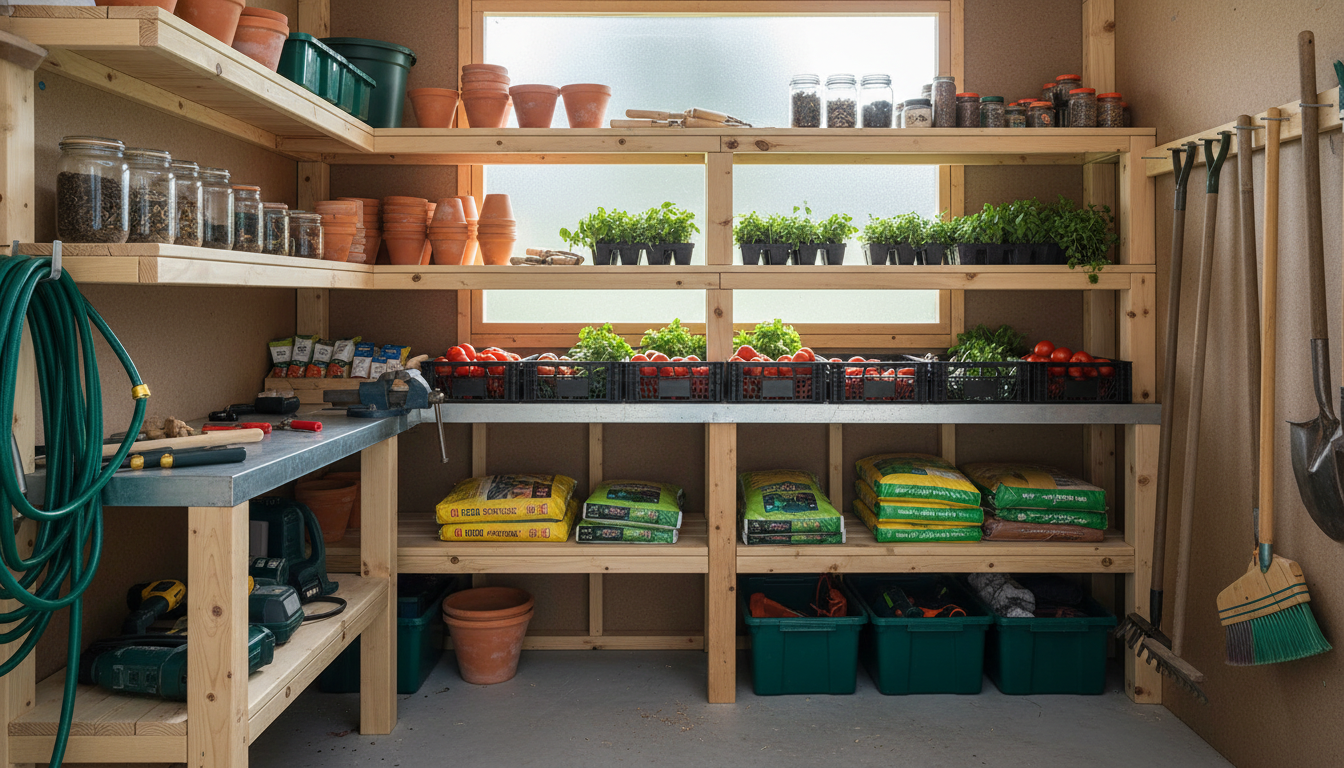
Smart garden shelves turn an ordinary Colorbond steel shed into a tidy, productive space—whether you’re storing potting mix, tools, or setting up a mini workshop. This guide compares materials, shows how to plan safe loads and anchoring, and adds the local detail Australian homeowners, renovators, and property investors need: wind ratings, corrosion zones, and council processes. We’ll reference standards and shed jargon used across custom steel sheds Perth, custom carports Melbourne, rural sheds NSW, and cyclone-rated sheds QLD, so you can buy once and buy right.
To maximise your storage, check out our comprehensive guide on Inside Shed Ideas for clever organisation and layout inspiration.
What are the best garden shelves for Australian conditions?
Outdoor shelves for the garden need to handle heat, moisture, and corrosion. In and around a Colorbond shed, the usual choices are:
- Hot-dip galvanised steel shelving (AS/NZS 4680): Tough, high load capacity, ideal for garden rack systems and industrial racking. Choose powder-coated finishes for extra UV and scratch resistance.
- Zincalume steel shelves: Good value, excellent in dry inland areas. Combine with Class 4 self-drilling screws to minimise bimetal corrosion.
- Colorbond-clad, steel-frame shelving: Aesthetic match for a Colorbond steel shed, with durable baked-on paint. Great in suburban settings.
- Aluminium and marine-grade stainless frames: Best for coastal WA and QLD where corrosion category C4–C5 applies (per AS 4312). Use 316 stainless fasteners.
- ACQ-treated hardwood slatted shelves: Good for potting benches and damp soils. Keep timber clear of slab moisture with plastic feet or stainless stand-offs.
- Recycled-plastic/HDPE shelving: Impact-resistant, easy to wash down, no rot or termites—useful in high humidity or around chemicals.
Target load ratings of 80–200 kg per shelf (evenly distributed). For heavy farm machinery storage spares or bulk soils, choose 300 kg+ per shelf and anchor frames to your slab.
How do garden shelves fit into a custom Colorbond shed layout?
Plan your garden shelf outdoor layout with the shed’s bracing, doors, and services in mind:
- Bay widths: 900 mm and 1200 mm are common; shelf depths 450–600 mm suit most tools and tubs.
- Clearances: Keep 50–100 mm from wall cladding to avoid moisture traps and allow airflow. Maintain access to wall bracing and vermin-proofing flashings.
- Wall-mount vs freestanding: Wall-mount to structural members (purlins/girts or Unistrut channel), never to sheeting alone. Freestanding bays can be chemical-anchored to the slab (M10 or M12 anchors).
- Door zones: Leave 300–500 mm clear beside roller doors and PA doors to avoid door interference.
- Future add-ons: If you might add a mezzanine storage platform, lighting, or workshop benches, pre-plan power circuits, task lighting, and head heights.
This approach scales from DIY shed kits to fully engineered custom Colorbond garages Perth and industrial workshops Brisbane.
How to plan shelf loads and anchoring safely
- Estimate loads per shelf: soils/fertilisers are 900–1200 kg/m³; 60 L of potting mix ≈ 20–30 kg when damp. Multiply by storage volume.
- Check manufacturer ratings: Look for evenly distributed load (EDL) per shelf and total bay rating. Choose 1.5× safety margin for gardening liquids and soils.
- Design to AS/NZS 1170.1 (actions on structures): Total up permanent + variable loads. For a 1200×600 mm bay at 150 kg per shelf × 4 shelves = 600 kg total.
- Anchor to slab: Use M10–M12 expansion or chemical anchors with ≥70 mm effective embedment into a 100 mm slab (25–32 MPa concrete). Maintain edge distances per manufacturer data.
- Allow for wind suction if near doors: In wind-rated sheds for cyclonic areas, tie freestanding racks to walls via anti-topple brackets.
What Are the Best Shed Materials for Perth’s Climate?
Perth’s hot, dry summers and coastal air favour durable cladding and fixtures. Here’s the quick Colorbond vs Zincalume comparison many steel sheds Perth buyers ask for.
| Feature | Colorbond | Zincalume |
|---|---|---|
| Finish | Pre-painted baked-on coatings (wide colour range) | Metallic alloy coating (silver-grey) |
| Heat resistance | Excellent; lighter colours reduce heat gain | Good; can be reflective but may glare |
| Coastal performance | Use Colorbond Ultra or Stainless near surf coasts | Good inland; add extra maintenance near coast |
| Cost | Higher upfront, strong long-term value | Generally lower upfront |
| Best use | Custom sheds, visible areas, premium projects | Utility buildings, rural interiors, budget-sensitive |
For shelving and fixings in Perth: consider powder-coated galvanised racks and Class 4 screws. If you’re within ~1 km of breaking surf, step up to Colorbond Ultra and marine-grade fasteners.
Do I need council approval for garden shelves or outdoor shelves?
Garden shelves inside an existing shed rarely need approvals. But a new shed, carport, or structural fit-out can. Rules vary by state and council.
- WA: Small sheds may be exempt if under size/height limits, but most custom steel sheds require permits and engineering. Added 2024 WA wind-rating compliance notes
- QLD: Cyclone regions (C/D) require engineered wind design; cyclone-rated sheds QLD are standard for coastal areas north of Bundaberg.
- NSW/VIC: Complying development or minor works pathways exist, but boundary and stormwater rules still apply.
Shelving is considered non-structural unless it affects egress, fire safety, or forms part of a mezzanine. Always confirm with your local council or a certifier.
How to Get Council Approval for Your Custom Shed in WA
- Check R-Codes and local policies: Setbacks, heights, and site coverage. Ask your council’s planning team for any local variations.
- Obtain wind classification: Site-specific to AS/NZS 1170.2 (Region A/B for Perth metro; some coastal/exposed sites may require higher pressures). Engineer certifies the design.
- Prepare documents: Site plan, elevations, slab and footing details (AS 2870/AS 3600), engineering certification, drainage/stormwater plan, and colour schedule for council-approved sheds WA.
- Lodge BA application: Include structural calculations, tie-down details, and anchoring specs for doors, purlins, and any attached carports.
- Build to spec: Keep documentation onsite, capture photos of hold-down bolts and slab, and arrange inspections as required.
Which shelf types suit coastal, rural, and cyclonic regions?
- Coastal WA/QLD (C4–C5 corrosion): Marine-grade galvanised or aluminium frames, 316 stainless fasteners, sealed cut edges. Rinse with fresh water quarterly.
- Rural sheds NSW: Dust sealing, vermin-proofing flashings, and durable powder-coated racks. Consider lockable cabinets for chemicals.
- Cyclonic areas: Tie-down brackets for freestanding shelves, extra bracing, and anchorage designed alongside wind-rated sheds for cyclonic areas. Keep heavy items low.
Pro Tip: Did you know using insulated roof panels can reduce internal shed temperatures by up to 10°C in summer? This makes potting benches and seed storage far more comfortable and protects heat-sensitive gear. If you plan to store temperature-sensitive items, consider the benefits of an Insulated Garden Shed for reliable year-round protection.
Which roof style works best above your shelving bay?
- Gable roof: Better cross-ventilation and central height for tall garden rack units. Great for double-bay layouts.
- Skillion roof: Clean water flow to one side; maximise wall height on the high side for tall shelves. Add overhangs to reduce rain splash near doors. A Skillion Shed Guide offers insights into stylish rooflines and how they can enhance both form and function.
- Ventilation: Add ridge vents or whirlybirds and shade-friendly translucent sheets for daylighting without UV hotspots.
5-Step Buying Guide for Custom Sheds in Australia
- Define use-cases: Garden shelves, garage shelving, workshop benches, or mezzanine storage? List loads and chemicals.
- Pick materials: Choose Colorbond vs Zincalume based on budget and location; select galvanised/powder-coated racks for durability.
- Engineer for wind and loads: N- or C-class wind rating per AS/NZS 1170.2; shelf loads to AS/NZS 1170.1; cold-formed members per AS/NZS 4600/AS 4100.
- Plan slab and drainage: 100–120 mm slab (25–32 MPa), vapour barrier to AS 2870, falls to a legal point of discharge. Allow anchor points for racks.
- Sort approvals and warranties: Council/CDA where needed; ensure fasteners and coatings meet manufacturer specs to protect Colorbond warranties.
Real build examples from around Australia
- Perth metro: 3×3 m Colorbond shed with 1200 mm powder-coated steel shelves, Unistrut wall rails, and M10 anchors. Light colours to reduce heat gain.
- Townsville QLD: 6×4 m cyclone-rated shed with freestanding industrial racking bracketed to girts. Stainless roof screws and sealed cut edges.
- Regional NSW: 7×9 m rural shed: DIY shed kit with gable roof, vermin-proofing, and deep 600 mm garden shelf outdoor units for seedling trays and tools.
- Melbourne: Custom carports Melbourne project added an enclosed rear store with narrow 450 mm shelving for household maintenance gear—an affordable carports for Australian homes upgrade.
Maintenance: how to keep your garden shelves rust-free
- Wash-down: Rinse salt and dust quarterly; more often within 1 km of surf.
- Fasteners: Use Class 4 or 316 stainless in coastal zones; avoid mixing dissimilar metals.
- Touch-ups: Seal scratches on powder coat; treat cut edges with approved sealants.
- Floor protection: Raise timber shelves off the slab; use rubber feet to stop wicking.
- Safety: Store heavy soils low; strap tall bays; keep clear of egress and electricals.
FAQs
Can I fix shelves directly to Colorbond wall sheets?
Don’t. Fix to structural members (studs/girts/Unistrut) or use freestanding bays anchored to the slab.
Will shelving void my shed warranty?
Not if installed to manufacturer guidance: correct fasteners, no cutting that exposes bare metal without sealing, and no direct chemical exposure to cladding.
What’s a good shelf height for potting?
Bench-top at 850–900 mm suits most adults; top shelves at or below 1800 mm for safe reach.
Is plastic shelving OK in hot sheds?
Use UV-stable HDPE/PP. Avoid overloading; plastics can creep in high heat. Metal racks perform better above 40°C.
Does BAL rating affect shelving?
In BAL-12.5 and above (AS 3959), prefer non-combustible racks (steel/aluminium). Keep flammables in metal cabinets.
Are shelves included in DIY shed kits?
Usually optional. Many DIY shed kits offer compatible garden rack add-ons; check load ratings and anchor kits.
Keyword clusters to explore
Colorbond vs Zincalume comparison; wind-rated sheds for cyclonic areas; council-approved sheds WA; cyclone-rated sheds QLD; custom Colorbond garages Perth; steel sheds Perth; custom carports Melbourne; rural sheds NSW; DIY shed kits; farm machinery storage; affordable carports for Australian homes; gable roof vs skillion roof; vermin-proofing flashings; slab and footings; mezzanine storage; industrial racking; hot-dip galvanised shelving; powder-coated steel shelving; marine-grade stainless fixings; load rating per AS/NZS 1170.1.
Sources and further reading
- Housing Industry Association (HIA) – Outdoor structures guidance
- Master Builders Australia – Standards and building news
- Bureau of Meteorology – Climate data for wind and temperature
- Australian Steel Institute – Steel design resources
- CSIRO – Materials, corrosion, and building research
- Energy.gov.au – Cooling and insulation insights
Industry data referenced: “2025 Australian Steel Market Outlook” and “2025 HIA Outdoor Structures and Home Improvement Report”.