
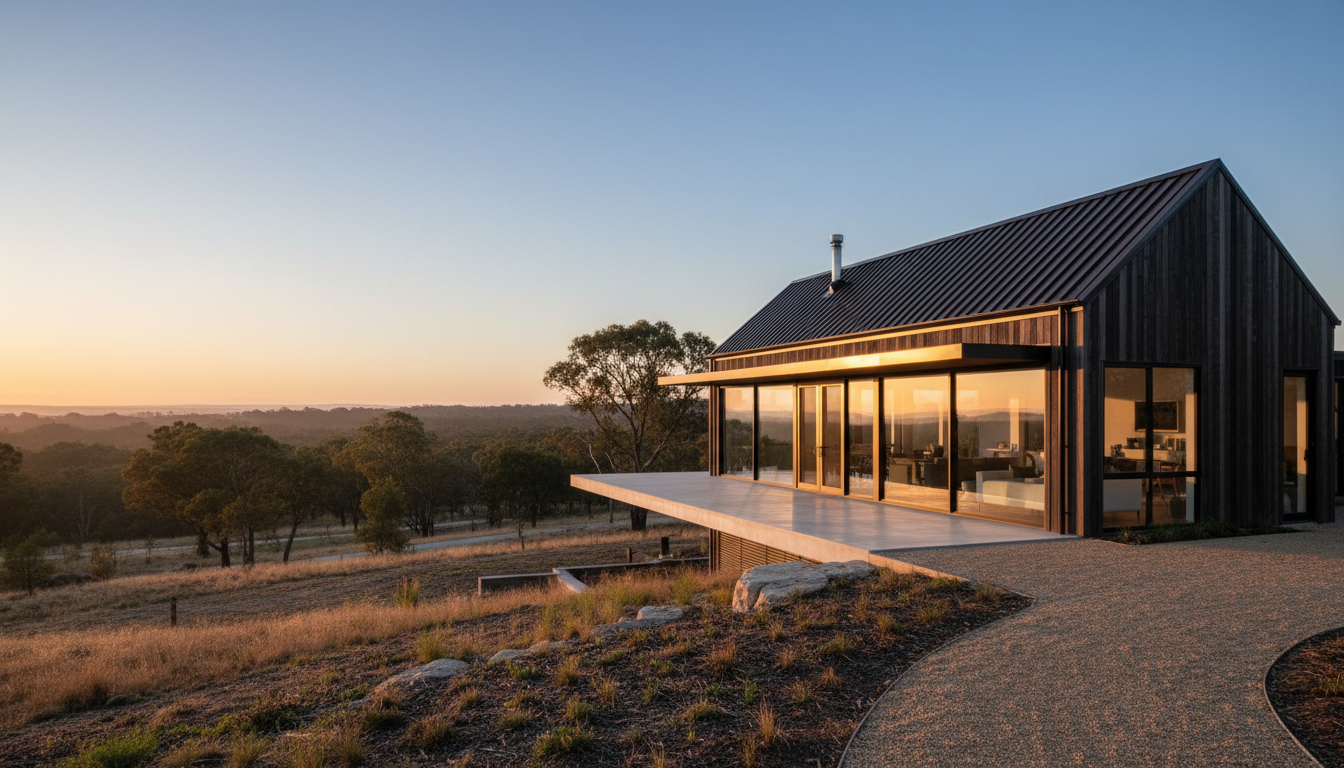
Modern Barn House Plans in Australia: Design, Compliance, Materials and Cost Guide (2025)
Modern barn house plans blend country practicality with contemporary lines, steel efficiency and low running costs. For Australian conditions—heat, cyclones, salt air and bushfire—getting the plan, materials and approvals right from day one is critical. This guide distils what top builders use on premium Colorbond steel shed homes, rural barns, and barn-style cabins across WA, QLD, NSW and VIC. For additional inspiration and product options, see American Barn Sheds.
What are modern barn house plans and why choose them in Australia?
- Flexible barn house layout: tall open span for living, mezzanine bedrooms, side wings for a double garage workshop or farm machinery storage.
- Fast build: pre‑engineered steel frames and DIY shed kits reduce site time.
- Durability: Colorbond steel resists chipping and peeling; Zincalume excels for bare-metal economy; termite-resistant framing suits regional Australia.
- Climate smart: easy to insulate, ventilate and seal against dust, embers and vermin with proper detailing.
Flexible layouts, fast build and climate‑smart detailing are key advantages. Learn more about Barndominium design and costs to see how they compare to other builds.
What are the best materials for Perth’s climate?
Perth’s long, hot summers and coastal air make coating choice and insulation key.
- Colorbond (including Ultra/Marine) roofing and walling for UV and corrosion resistance.
- Insulated roof panels or blanket + anti‑condensation fleece to reduce heat transfer.
- Light-colour roofs (Surfmist or Shale Grey) for passive cooling.
- Hot-dip galvanised or ZAM coated structural members for coastal exposure zones.
- Well‑sealed eaves, ember guards and gutter guard for summer bushfire and leaf load.
Perth’s long, hot summers and coastal air make coating choice and insulation key… Prefer a heritage timber aesthetic? Compare costs and maintenance for wooden barns in Australia.
Colorbond vs Zincalume — Which is better for WA conditions?
| Feature | Colorbond (painted steel) | Zincalume (aluminium-zinc alloy) |
|---|---|---|
| Corrosion near coast | Use Colorbond Ultra/Steel for Marine; better paint protection | Good, but visible patina; may need higher grade near surf |
| Heat/UV resistance | Excellent UV stability; light colours reflect heat | Good; bare metal heats quickly without insulation |
| Aesthetics | Wide colour range for modern barn style | Industrial look; can be painted later |
| Price | Typically higher than Zincalume | Often the most economical |
| Maintenance | Low; wash-down in coastal areas | Low; wash-down in coastal areas |
| Best use | Premium facades, coastal suburbs, bushfire-prone areas | Sheds inland, budget farm buildings |
How do wind ratings and bushfire rules affect modern barn home plans?
Engineering in Australia follows the National Construction Code (NCC) and AS/NZS Standards. Your barn house design plans must match site wind region, terrain and topography, and any bushfire attack level (BAL).
- Wind actions: AS/NZS 1170.2 (non‑cyclonic N1–N6; cyclonic C1–C4). Roller doors need wind‑lock guides in higher categories.
- Steel design: AS/NZS 4600 (cold‑formed) and AS 4100 (structural steel).
- Roof/wall cladding: AS 1562.1 installation and fastener edge distances critical at eaves and ridges.
- BAL (AS 3959): plan cladding, ember guards, decking and glazing for BAL‑12.5 to BAL‑40/Flame Zone where applicable.
Regional notes
- WA: Perth is usually non‑cyclonic Region B (N-class). Exmouth, Karratha, Onslow are Region D (C-class). WA wind-rating compliance should be confirmed by a site-specific wind report and engineer’s certificate.
- QLD: Northern coastal zones fall under Region C/D. Specify cyclone-rated sheds QLD with additional hold-downs, closer purlin spacing and cyclonic doors/windows.
- NSW/VIC: Many rural areas are N2–N3, but escarpments or ridge tops can increase pressure; check topographic multiplier.
Modern barn house layout ideas that actually work
- Central nave 8–12 m wide with raking ceilings; lean‑to wings 3–4.5 m for bedrooms, pantry and mudroom.
- Mezzanine storage or sleeping loft over kitchen/living, using LVL or steel purlins.
- Integrated double garage workshop with internal door and spill‑over tool wall.
- Covered breezeway/carport for boat and caravan cover with 3.0–3.3 m clear height.
- Passive cooling: high-level louvres, ridge vent, shaded north verandah, minimal west glazing.
Complete your space with Sliding barn doors Australia for function and style.
Roof shapes: flat vs gable for barn style
| Option | Pros | Cons | Best for |
|---|---|---|---|
| Gable (classic barn) | Iconic profile, easy water shedding, mezzanine-ready | Taller ridge may need extra bracing in high wind | All climates, snow-free zones, rural aesthetics |
| Mono/Skillion | Modern look, simple gutters, easy solar array | Wind uplift at high edges; careful flashing | Urban blocks, modern barn style house plans |
DIY shed kit vs custom-built barn home
| Approach | What you get | Time/skills | When to choose |
|---|---|---|---|
| DIY shed kits | Pre‑engineered frame, cladding, fasteners, drawings | Owner‑builder or licensed tradies; organise slab and services | Budget builds, equipment sheds, barn style cabin plans |
| Custom-built | Design, engineering, approvals, turnkey construction | Minimal owner time; single point of accountability | Modern barn house plans with bespoke interiors or BAL/cyclonic needs |
How much do modern barn house plans and builds cost in 2025?
Indicative ranges only; always obtain site‑specific quotes:
- Concept + certified barn house design plans and engineering: from $4,000–$14,000+ depending on complexity, wind/BAL, energy modelling.
- Enclosed shell (steel frame, Colorbond roof/walls, doors, windows) by licensed installer: commonly $600–$1,100 per m² of under‑roof for non‑habitable; habitable fitouts add significant cost.
- Turnkey modern barn homes with services and fitout: often $1,900–$3,200 per m² depending on region, finishes and BAL/cyclonic requirements.
Drivers: wind region (N vs C/D), BAL rating, soil class (slab thickness), cladding grade (Colorbond Ultra near coast), span/height, and glazing area.
How to choose the right steel, doors and insulation for your barn home
- Steel: Select AZ150 or AM coating grades to AS 1397 for durability. Consider Colorbond Ultra within 200–400 m of surf.
- Roller doors: Wind‑locked guides and wider mullions in Region C/D. Consider motorised doors with battery backup.
- Insulation: Blanket R2.5–R3.2 plus thermal breaks; add insulated panel roofing for low-pitch skillions.
- Windows: BAL-compliant screens and metal frames where required; low‑E glazing in hot zones.
- Water: Wide gutters, overflows, and leaf‑shedding profiles; integrate 22,500 L+ tanks in rural sheds NSW sites.
Council and approvals: what you need across Australia
How to get council approval for your custom shed in WA
- Planning check: Some councils require Development Approval for setbacks, height and use.
- Building Permit: Submit BA1 (certified) or BA2 (uncertified). A registered building surveyor issues a Certificate of Design Compliance.
- Include: site plan, slab design (with soil classification), structural engineering, energy report, truss/frame certificates and bushfire assessment if applicable.
- Inspections: Footings/slab, frame, final. Keep engineer’s compliance certificates on file.
NSW: Consider CDC or DA; QLD: private certifier system; VIC: building surveyor issues permit. Always verify local overlays (bushfire, flood, coastal).
Real-world build examples
- Perth Hills modern barn home (N3, BAL‑19): 10×22 m gable with 3.6 m lean‑to, insulated Colorbond roof, mezzanine, custom carports Melbourne equivalent spec for front awning style; ridge vent + ceiling fans for passive cooling.
- Far North QLD barn home (Region C): Cyclone ties, closer batten spacing, wind‑rated roller doors, fully sarked walls; exemplifies wind-rated sheds for cyclonic areas.
- Mid‑North Coast NSW shed-home hybrid: 3-bay barn with living fitout, rainwater + bushfire water supply, vermin flashing and ember‑resistant vents.
5-step buying guide for custom sheds in Australia
- Site data: wind region, terrain, topography, BAL, soil class, flood/stormwater.
- Scope: modern barn home plans vs barn style cabin plans; list rooms, spans, heights and door sizes.
- Materials: Colorbond vs Zincalume comparison, insulation, door wind rating, guttering and fasteners.
- Compliance: engineer’s certificate, NCC energy report, bushfire measures, stormwater plan; aim for council-approved sheds WA simplicity.
- Quotes: compare DIY shed kits to turnkey. Check inclusions: slab, windows, electrical, painting, approvals.
Keyword clusters to help you plan
- Location: steel sheds Perth, custom carports Melbourne, rural sheds NSW, carport kits Brisbane.
- Technical: Colorbond vs Zincalume comparison, wind-rated sheds for cyclonic areas, roller door wind‑lock, termite-resistant steel framing.
- Lifestyle: farm machinery storage, boat and caravan cover, mezzanine storage, affordable carports for Australian homes.
- Design: modern barn house, barn house design plans, barn house layout, modern barn style house plans, modern barn home plans.
- Extras: skylight panels, ridge vent and whirlybirds, insulated panel roofing, vermin flashing.
Frequently asked questions
Are barn houses legal as dwellings?
Yes—when designed to the NCC and relevant AS/NZS standards, with a Building Permit/Approval. A shed is not habitable by default; your plan must document energy, fire safety, light/ventilation and sanitation to be classed as a dwelling.
Can I convert an existing shed into a barn home?
Often yes, but you’ll need new engineering, energy compliance and possibly slab upgrades. It can be more cost‑effective to start with barn house design plans engineered for habitation.
What’s the best cladding near salt air?
Colorbond Ultra or Stainless elements in severe marine zones; upgrade fasteners and wash-down schedules. Consider non‑combustible wall wraps in BAL areas.
Do I need cyclone tie-downs in Brisbane?
Most of SEQ is non‑cyclonic, but always get a site wind report. Northern QLD requires cyclone-rated sheds QLD with enhanced fixings, door ratings and tighter batten spacing.
Standards, climate and industry references
- National Construction Code (ABC Board)
- AS/NZS 1170.2 wind actions, AS 3959 bushfire, AS 4100/AS/NZS 4600 steel
- Bureau of Meteorology climate and wind region maps
- Housing Industry Association (HIA) resources
- Australian Steel Institute
- Energy.gov.au on insulation and cooling
For market sentiment and activity, consult recent Australian reports such as “2025 HIA Outdoor Structures and Home Improvement Report” and “2025 Australian Steel Market Outlook.” Always verify local council requirements before purchasing.
Get started: custom modern barn house plans
From Perth heat to QLD cyclones and NSW bushfire overlays, we design and engineer barn house plans that pass council first time. Ask about council-approved sheds WA, custom Colorbond garages Perth, and rural sheds NSW with BAL and wind certificates.
Talk to an expert: Request a free concept sketch, wind/BAL check and Colorbond vs Zincalume material schedule for your block.