
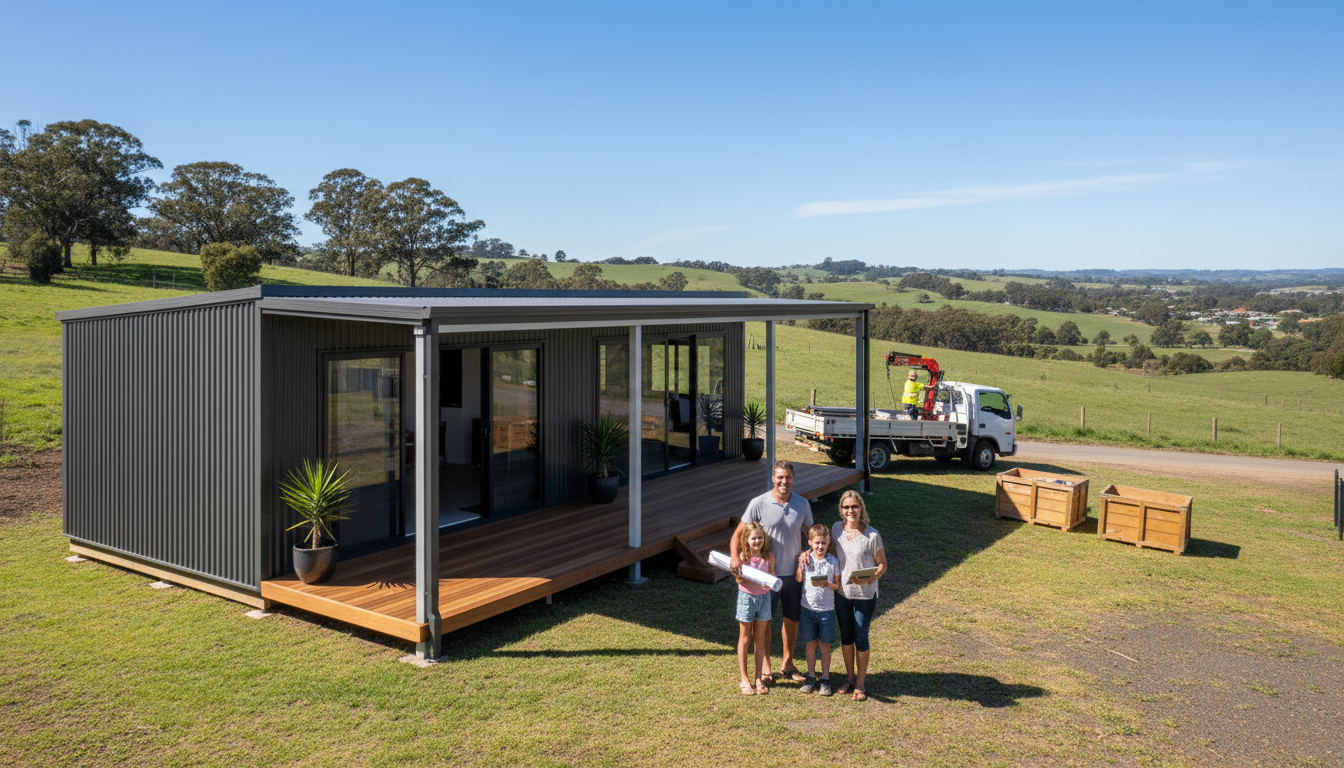
Australia’s 2025 Guide to Portable Storage Buildings, Pop-Up Sheds, and Custom Steel Options
If you’re weighing up portable storage buildings, a temporary shed for a reno, or a pop up garden shed for weekend projects, this guide compares your options against custom Colorbond steel sheds for long-term value. We’ll cover wind ratings, council approval, and how to spec a shed that survives Aussie conditions.
What Are the Best Shed Materials for Perth’s Climate?
Perth summers are hot and dry, with high UV. For a Colorbond steel shed in Perth, prioritise:
– Genuine BlueScope Colorbond (high UV resistance, baked-on paint) in light colours to reduce heat gain.
– Anticon or insulated roof panels to limit radiant heat.
– Hot-dip galvanised purlins/girts where coastal salt-mist applies (C3–C4 corrosion zones).
– Ventilation: whirlybirds and openable louvres.
Portable Storage Buildings vs Pop-Up Sheds vs Custom Steel Sheds
Quick comparisons at a glance
| Option | Best for | Pros | Cons | Wind/Cyclone readiness |
|---|---|---|---|---|
| Portable storage buildings (demountable steel) | Projects, events, rental properties, mining sites in WA | Fast install, relocatable, engineered frames | May still require permits; anchoring is critical | Can be engineered to N3–N4; cyclonic C2–C3 if specified |
| Pop up storage shed / pop up garden shed | Short-term garden cover, bikes, tools | Lowest cost, DIY, packs down | Limited durability; not for high winds or heavy rain | Generally not wind-rated; tie-downs only |
| Custom Colorbond steel shed | Long-term workshop, farm machinery storage, boat/caravan | ShedSafe engineering, high durability, add-ons (insulation, solar) | Higher upfront cost; slab and approvals needed | Engineered to site (N1–N5, C1–C3) per AS/NZS 1170.2 |
Colorbond vs Zincalume — Which Is Better for WA Conditions?
| Feature | Colorbond | Zincalume |
|---|---|---|
| Finish | Painted steel in classic/matte colours | Spangled metallic coating (no colour) |
| Heat & UV resistance | Excellent; light colours lower heat load | Good, but can run hotter than light Colorbond |
| Corrosion performance | Strong across inland/coastal; choose correct grade | Strong; may need extra care near surf coasts (C4–C5) |
| Aesthetics | Architectural range incl. Colorbond Matt | Industrial look only |
| Typical use | Residential sheds, custom Colorbond garages Perth | Rural sheds NSW, industrial roofs/walls |
| Price point | $$ | $ |
Source guidance: Australian Steel Institute; BlueScope technical datasheets.
How Do Wind Ratings and Codes Affect Your Shed?
Every steel shed, from DIY shed kits to large workshops, must be engineered to your site’s wind region and terrain category under AS/NZS 1170.2. Common ratings are N1–N5 (non-cyclonic) and C1–C3 (cyclonic). In North QLD, specify cyclone-rated sheds (e.g., C2 or C3) with appropriate hold-downs and door bracing. On the WA coast, select corrosion-resistant coatings and high-strength fasteners.
Added 2024 WA wind-rating compliance notes Ensure your engineer checks local wind region (e.g., Region D for Exmouth/Onslow) and topographic acceleration near escarpments. For Perth’s metro (often N2–N3), confirm edge zones, internal pressure coefficients, and door ratings—roller door failure is a common weak point.
How to Get Council Approval for Your Custom Shed in WA
Step-by-step for council-approved sheds WA
- Confirm zoning and setbacks on your property map (R-Codes or local planning scheme).
- Order engineered drawings: portal frame layout, slab or footing design, tie-down schedule.
- Prepare a site plan with stormwater management (gutters/downpipes to soakwell or tank).
- Lodge a Building Permit application (BA2/BA1) with your local council; attach energy compliance if required for habitable spaces.
- Book inspections: slab, frame, and final. Keep delivery dockets for steel traceability (BlueScope).
Tip: Many suppliers handle approvals. Ask for “council-ready” packs and a windswept debris risk check if near open coastal areas. If you’re looking at permit-free portable sizes, see our 10 sqm shed breakdown for details.
State-by-State Essentials
QLD: Cyclone-rated sheds QLD
– Engineer to C2 or C3 if in cyclone-prone regions; specify high-cycle roller doors with wind-lock guides.
– Use additional roof screw patterns and heavier gauge sheeting on edges.
– Consider cyclone tie-down kits for portable storage buildings; ground screws may be preferred over pegs.
NSW: Rural sheds NSW
– Large openings for farm machinery storage; opt for gable roofs with higher ridge vents.
– BAL-rated cladding and ember seals in bushfire zones; keep 3–6 m asset protection zones clear.
VIC: Custom carports Melbourne
– Snow loads in alpine areas; check internal drainage capacity for skillion roofs.
– Urban overlays may restrict street-visible colours and heights.
Which Roof Style Should You Choose?
| Roof | Pros | Considerations |
|---|---|---|
| Gable roof | Classic look; good runoff; easy to ventilate | Slightly more steel than flat/skillion |
| Skillion (mono-pitch) | Modern; simple to build; solar-friendly angle | Check drainage and eave overhangs |
| Flat roof carport | Budget friendly; quick install | Lower headroom; watch ponding in heavy rain |
Portable and Temporary Shed Anchoring That Actually Works
For temporary shed installations, rely on calculated anchorage:
– Ground screws or helical anchors with engineered capacities
– Ballasted frames only for sheltered, low-wind sites
– Chemset anchors into existing slabs (verify slab thickness/strength; 100–125 mm typically; 25–32 MPa concrete)
Design references: AS/NZS 1170.2 (wind); AS 4100 / AS/NZS 4600 (steel design); AS 2870 (slab/site classification).
Doors, Openings, and Security
Roller doors must be wind-rated; add wind-locks in cyclonic areas. For workshops, use a 1200 mm PA door with three hinges and anti-jemmy lip. Consider steel mesh windows, keyed alike locks, and alarm cabling. Vermin-proof flashings keep dust and pests out of DIY shed kits and custom builds alike.
Insulation, Condensation & Energy
Combine an anti-condensation blanket under the roof with wall batts or insulated panels. In hot zones, ridge vents and whirlybirds help. Solar-ready purlins make it easy to add PV later; connect gutters to rainwater tanks for garden use.
Case Studies From Around Australia
Perth — Custom-built double garage
A 6 x 7.5 m custom Colorbond garage in Perth with Trimdek profile, N3 design, anticon blanket and 2 x 2.4 m wind-rated roller doors. Outcome: cooler interior, compliant with setbacks, neat match to house roof colour.
Townsville — Cyclone-rated farm shed
12 x 9 m farm machinery storage designed to C2 with heavier purlins, extra screw patterns and braced openings; roller doors upgraded to wind-lock guides. Outcome: insurance-compliant cyclone-rated shed.
Regional NSW — Portable storage building
Transportable 3.6 x 6 m site shed for a renovation, anchored with ground screws (engineered N2). Relocated after 8 months without slab damage.
Popular Sizes
Common portable and demountable footprints include 2 x 3 m garden sheds up to larger workshop footprints. A 5 x 5 Shed serves many storage purposes on temporary sites.
5-Step Buying Guide for Custom Sheds in Australia
- Purpose and size: garden storage solution, workshop, boat/caravan, or farm machinery storage?
- Site & climate: wind region, BAL rating, corrosion category (coastal C3–C5).
- Materials: Colorbond vs Zincalume comparison; hot-dip galvanised frames for coastal/rural.
- Approvals: council, estate covenants, boundary setbacks, stormwater design.
- Build path: DIY shed kits vs turnkey install; verify warranties and ShedSafe engineering.
DIY Shed Kits vs Turnkey Installation
| Approach | Pros | Who it suits |
|---|---|---|
| DIY shed kits | Lower cost; weekend build; fast delivery | Handy owners, simple garden or pop up storage shed replacements |
| Turnkey (supply + install) | One point of contact; council-ready; better finish | Time-poor renovators and investors; larger workshops |
For those after modular or demountable options, the 4 x 3 Storage Shed is a popular kit.
Pricing Signals for 2025
According to the 2025 Australian Steel Market Outlook and the HIA 2025 Outdoor Structures and Home Improvement Report, steel demand remains steady with modest lead times for residential sheds. Factor in transport to remote regions, upgraded wind-rated doors, and insulation. Zincalume is typically the budget pick; Colorbond offers durable curb appeal.
FAQ: Portable Storage Buildings and Sheds in Australia
Do I need council approval for a temporary shed?
Often yes—especially if the structure exceeds exempt development size, is near boundaries, or used longer than the allowed temporary period. Check with your local council; many provide fast-track permits for minor outbuildings.
Can a pop up garden shed survive coastal winds?
Not reliably. Use in sheltered backyards only. For coastal or exposed sites, upgrade to a wind-rated Colorbond steel shed with engineered anchorage.
What profiles are best for heavy rain?
High-rib profiles like Trimdek/Monoclad shed water well. Increase gutter capacity and downpipe size in tropical rainfall zones.
What about bushfire (BAL)?
Specify BAL-compliant doors, ember seals, and non-combustible wall/roof systems. Keep vegetation clear around the shed.
When a Portable Shed Makes Sense (and When It Doesn’t)
Choose portable storage buildings for short-term cover, rental properties, events, or when you plan to relocate. For long-term value, insurance compliance, and better resale, a council-approved, engineered Colorbond steel shed wins—especially for custom Colorbond garages in Perth and cyclone-rated sheds in QLD.
Spec Checklist: What Experts Include by Default
– BlueScope Colorbond or Zincalume sheeting with manufacturer warranty
– Galvanised portal frame, bolted connections, bracing bays
– Wind-rated roller doors and a 820–1200 mm PA door
– Vermin-proof flashing, insulated roof, sarking to walls where needed
– Proper flashing kit, gutters, downpipes, and overflow compliance
– Engineered footings: slab (100–125 mm) or piers with hold-down bolts
– Documentation pack: engineering certificate, drawings, maintenance guide
Local Considerations That Save You Money
In Perth, light-coloured Colorbond and insulated panels reduce summer heat load and power bills. In coastal QLD/WA, specify marine-grade fasteners and extra washdown access. For Melbourne carports, check overshadowing rules and consider skillion roofs oriented for solar PV.
Portable and Pop-Up Shed Best Practices
– Use rated ground anchors; avoid garden tent pegs in windy areas
– Keep canopies tensioned; check fabric UV ratings
– Regularly inspect zips, seams, and guy lines after storms
– Store away in extreme weather; insurance may exclude non-engineered shelters
Sustainability
Steel is recyclable and often contains recycled content. Add rainwater tanks for garden irrigation and pre-wire for rooftop solar. Smart ventilation reduces the need for mechanical cooling.
Common Keyword Use-Cases (to help you choose)
– Steel sheds Perth (workshops, garages) for heat and UV
– Custom carports Melbourne matching architectural styles
– Rural sheds NSW for hay and machinery
– Affordable carports for Australian homes with quick council approvals
– Wind-rated sheds for cyclonic areas (FNQ, WA northwest)
– DIY shed kits and kit shed prices for budget builds
– Boat and caravan storage with high clearance doors
Gaps We Solve That Competitors Miss
council-approved sheds WA with engineer-certified drawings and local wind notes; cyclone-rated sheds QLD with wind-lock doors; and custom Colorbond garages Perth designed to match house palettes and setbacks.
Technical Quick-Refs
– Standards: AS/NZS 1170.2 (wind), AS/NZS 4600 (cold-formed steel), AS 4100 (steel structures), AS 2870 (slabs), NCC compliance
– Components: purlins, girts, portal frames, bracing bays, ridge/hip capping, sarking, anticon blanket
– Finishes: Colorbond Matt, Ultra for coastal, Zincalume for budget/utility
Helpful Australian Resources
– Bureau of Meteorology climate data and wind regions: BoM
– Housing Industry Association on approvals and trends: HIA
– Australian Steel Institute for steel guidance: Australian Steel Institute
– Master Builders Australia for builder directories: Master Builders
– Energy.gov.au on insulation and efficiency: Energy.gov.au
Final Word: Which Shed Should You Buy?
If you need quick cover for tools or garden gear, a pop up garden shed is fine—use it in sheltered spots. For mid-term, relocatable needs, choose an engineered portable storage building with proper anchors. For best long-term value, durability, and insurance acceptance, a custom Colorbond steel shed—properly approved and wind-rated—wins every time.