
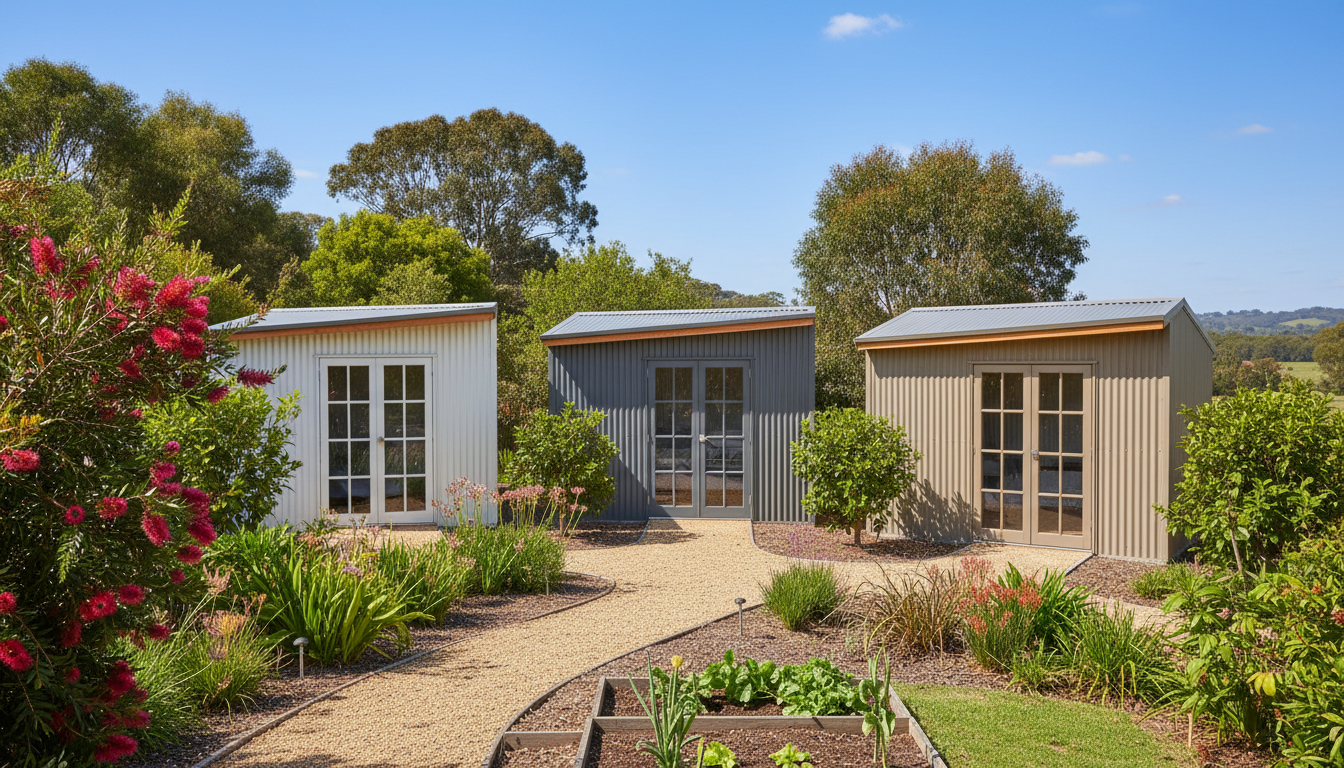
Design-Led Garden Sheds Built for Australian Conditions
Pretty garden sheds don’t just look good—they’re engineered to last. For Australian homeowners and investors, that means Colorbond steel cladding, wind-rated framing to AS/NZS standards, and details that tie in with existing architecture. Whether you’re after steel sheds Perth, custom carports Melbourne to match, or rural sheds NSW, this guide shows how to specify a beautiful shed without compromising strength, compliance, or value. For installation help in Victoria, visit Garden Sheds Mornington, specialists in custom and Colorbond sheds for local climates.
What Makes a Garden Shed “Pretty” and Durable in Australia?
- Architectural styling: Match your home with a gable, skillion, or Dutch-gable roof; add eaves, fascia, and colour-matched flashings.
- Colorbond palette: Coastal favourites like Surfmist or Shale Grey; heritage looks like Cottage Green; contemporary choices like Monument or Basalt.
- Feature elements: Slimline windows, louvres for crossflow, glass or polycarbonate skylights, and decorative barn doors.
- Integrated services: Concealed guttering, leaf-guard, downpipes to rainwater tanks, and motion-sensor LED lighting.
- Foundation finish: A well-finished concrete slab with bevelled edges, or a raised deck platform for sloping sites.
For tight or unusually shaped yards, an Off the Wall Garden Shed is a smart, space-saving addition to your pretty shed lineup.
Pretty sheds are even more functional with Outdoor Shelves for Australian Sheds, perfect for keeping garden tools neatly arranged.
Under the skin, specify a portal frame in hi-tensile galvanised steel, engineer-certified anchors, and cyclonic upgrades where required. That’s how pretty sheds keep their looks after summer heat, winter storms, and salty air.
What Are the Best Shed Materials for Perth’s Climate?
Perth’s hot summers and sea breezes demand finishes that handle UV, heat load, and salt. Here’s the practical comparison:
Colorbond vs Zincalume — Which Is Better for WA Conditions?
| Feature | Colorbond Steel | Zincalume Steel |
|---|---|---|
| Coating & finish | Painted, baked-on finish; broad colour range | Aluminium-zinc alloy finish; metallic appearance |
| Heat reflectivity | Light colours reduce heat gain; Thermatech technology | High reflectivity in raw finish; can glare |
| Coastal performance | Colorbond Ultra recommended within ~200–400 m of surf | Good corrosion resistance; still follow coastal exclusions |
| Aesthetics | Premium, architectural look; easy to match to house | Industrial look; paint or powder coat required for colour |
| Cost (WA market) | $$–$$$ | $–$$ |
| Best use | Residential sheds, custom Colorbond garages Perth, patios | Budget DIY shed kits, farm outbuildings |
Which Roof Style Suits Your Home and Council Area?
- Skillion roof shed: Clean, modern lines; easy water fall to one side; lower height profile near boundaries.
- Gable roof shed: Classic look; symmetrical; good airflow in hot climates; easy to tie into a custom-built double garage in Perth.
- Dutch-gable: Heritage aesthetic for federation homes.
- Flat roof: Budget-friendly, but check minimum fall and council height limits.
In cyclonic regions (north WA/QLD), gable roofs with correct bracing and upgraded fixings often perform best. Always confirm local planning rules for setbacks, maximum heights, and stormwater requirements.
What Size, Wind Rating, and Footing Do I Need?
Australia’s wind design uses AS/NZS 1170.2. Most metro areas are N-class (e.g., N1–N3). Cyclonic areas use C-class (C1–C4). QLD’s coast and north WA often require cyclonic upgrades, while inland NSW and VIC are typically N2/N3. Choose a shed engineered for your site class and exposure.
- Footings: Engineer-specified slab (typically 100–120 mm with thickened edges), chem-set anchors (e.g., M12/M16), or pier footings for sloping sites.
- Vermin and weather seals: Use vermaseal at the slab edge; specify sarking for dust and moisture control.
- Bushfire: In BAL-29 or higher, prefer non-combustible cladding, ember screens on vents, and sealed eaves.
Added 2024 WA wind-rating compliance notes – Many Perth suburbs are N2/N3, but pockets near the coast or escarpments can increase wind category. Ask for an engineering certificate stamped for your address, not just a generic “Region A” spec.
How Much Do Pretty Garden Sheds Cost in Australia (2025)?
Indicative installed pricing, based on recent market data and the 2025 HIA Outdoor Structures and Home Improvement outlooks:
- Small premium garden shed (2.3 × 2.3 m, Colorbond, slab): $2,800–$5,500
- Mid-size feature shed (3 × 4.5 m with window, power): $6,500–$11,000
- Showpiece workshop (6 × 4 m, gable, insulation, glass doors): $12,000–$22,000
- Regional/cyclonic upgrade (C1–C2): +10–25% depending on engineering and fixings
Allow extra for: council application ($250–$1,000), engineering certificates ($450–$1,200), site works (cut/fill, rubble removal), electrical, and rainwater tanks. Zincalume DIY kits can be significantly cheaper, but appearance and longevity may be compromised.
How to Get Council Approval for Your Custom Shed in WA
For council-approved sheds WA, you’ll typically need a site plan, elevations, engineering, and stormwater details. Many smaller sheds still require a Building Permit in WA even if planning approval is exempt.
Steps to approval
- Confirm zoning and setbacks with your local council or a private certifier.
- Order site-specific engineering (AS/NZS 1170.2 wind, AS/NZS 4600 cold-formed steel) with slab detail.
- Prepare drawings showing cladding, colours, heights, and stormwater discharge.
- Lodge Building Permit application (BA2 or via certifier) with fees and owner’s consent.
- Book mandatory inspections (if required) and keep your compliance documentation.
In QLD and north WA, specify cyclone-rated sheds QLD/C-class with upgraded connections, bracing, and sheeting screws. In VIC/NSW metros, many pretty sheds are exempt development if they meet height and boundary rules—check your state code.
DIY Shed Kit or Fully Installed? Which Is Right for You?
- DIY shed kits: Lowest cost, quick delivery, ideal for smaller Colorbond garden sheds. You’ll manage the slab, assembly, and compliance. Good tools and a mate help.
- Supply-and-install: Turnkey, easier approvals, pro finish, stronger resale appeal. Best for custom designs and where appearance matters.
Owner-builder permits may apply for larger structures. Check warranty terms—some suppliers require licensed installation for full structural coverage.
Case Studies: Pretty Sheds Across Australia
Perth Coastal Cottage, Fremantle
- Size: 3 × 3 m gable, Colorbond Shale Grey walls, Surfmist roof
- Spec: Anticon blanket, louvre window, timber-look battens on door