
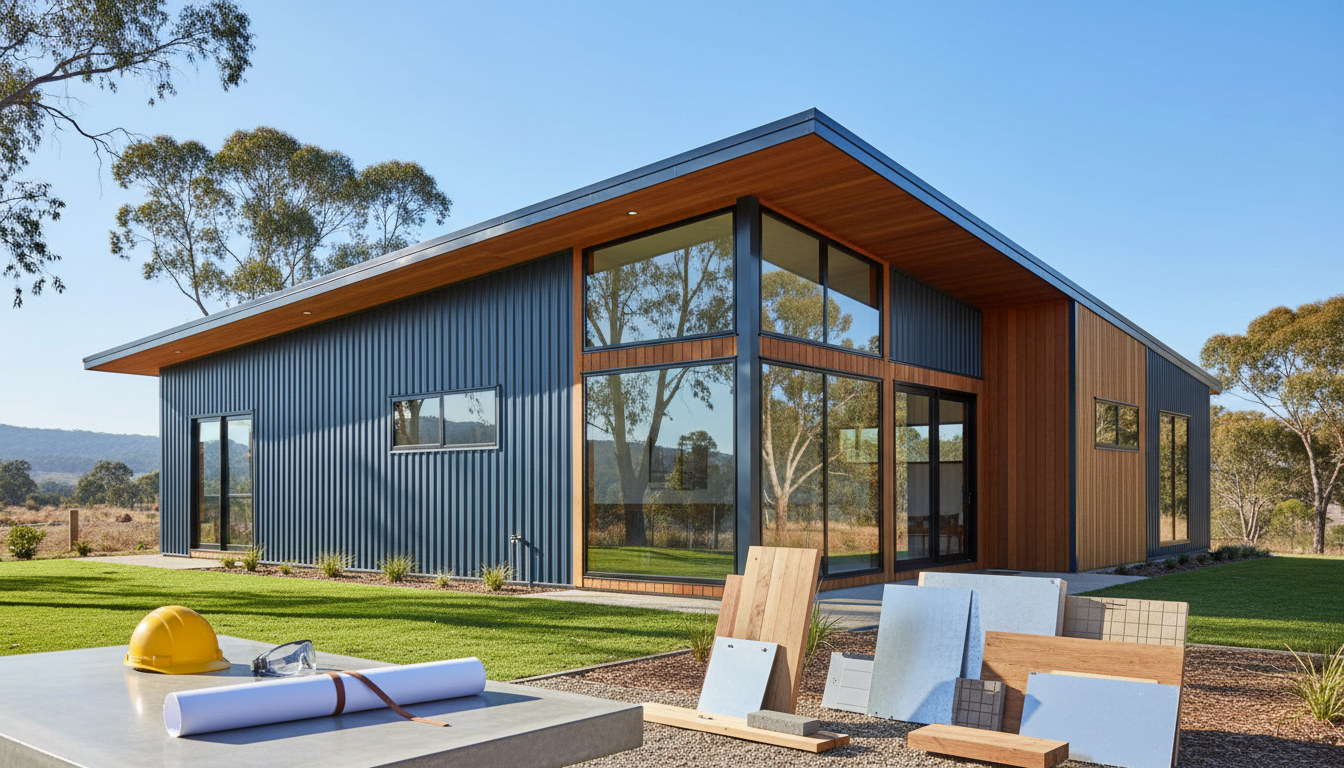
Build-ready shed house blueprints for Australian conditions
What exactly is a shed house blueprint and what does it include?
Shed house blueprints (also called shed house plans or shed home floor plans) are construction drawings and specifications for turning a steel-framed shed into a compliant, habitable dwelling. Unlike a basic Class 10a “shed,” a shed home is typically assessed as Class 1a under the NCC (National Construction Code), which adds requirements for energy, fire, waterproofing and amenity. Legal & Permit Guidance. And for more inspiration and practical tips, our shed house designs Australia resource compares costs, compliance and kit builds.
- NCC/BCA: National Construction Code/Building Code of Australia, minimum building requirements.
- AS/NZS 1170.2: Wind actions standard used to determine wind loads on sheds and homes.
- Colorbond: Pre-painted steel by BlueScope, widely used for roofing and wall cladding.
- Zincalume: Alloy-coated (zinc/aluminium) steel by BlueScope, typically unpainted base.
- BAL: Bushfire Attack Level per AS 3959, from BAL–Low to BAL–FZ (Flame Zone).
- Portal frame: Rigid steel frame system common in Australian steel sheds.
A complete shed house blueprint pack usually includes:
- Site plan with contours, setbacks, stormwater and vehicle access
- Floor plan(s) with room sizes, windows/doors and accessibility clearances
- Elevations and sections showing wall heights, roof pitch (skillion/gable) and finishes
- Structural framing layouts (portal frames, purlins, girts, bracing, tie-down schedule)
- Slab-on-ground or pier footings plan with soil class notes (e.g., Class M/H1) and termite protection
- Services: electrical layout, plumbing fixture diagram, hot water location and ventilation
- Energy compliance notes (insulation R-values, glazing specs, thermal breaks, sarking)
- BAL assessment and bushfire detailing (if applicable)
- Corrosion category notes for coastal or industrial environments
- Specification and materials schedule (Colorbond profile, thickness, fasteners, vermin flashing)
- Certification by a registered engineer (state-based RPEQ/CPEng/Reg. Building Practitioner as required)
What are the best shed materials for Perth’s climate?
For Perth and much of WA, high UV, sea breezes and coastal corrosion risk shape materials selection. Most premium builds use Colorbond steel cladding on cold-formed steel frames with galvanised components. In true coastal spray zones or industrial areas, upgrade to Colorbond Ultra and hot-dip galvanised base plates.
Colorbond vs Zincalume — which performs better for WA?
| Criteria | Colorbond | Zincalume |
|---|---|---|
| Coating & finish | Pre-painted, many colours; Colorbond Ultra for marine | AZ150 alloy coating; usually unpainted silver finish |
| WA sun & UV resistance | Excellent colour retention, durable finish | Very good corrosion resistance; heats quickly in sun |
| Coastal performance | Strong; Ultra recommended near surf coasts | Strong; consider paint system or powder coat near surf |
| Aesthetic/lifestyle | Premium look; blends with contemporary homes | Industrial look; cost-effective for rural sheds |
| Cost | Higher upfront | Usually lower upfront |
| Best fit | Custom Colorbond garages Perth, residential shed homes | Farm machinery storage, rural sheds NSW/WA |
Which shed house floor plans suit Australian living?
Start with your use case, block constraints and local climate. Here are proven shed house ideas and shed floor plans:
- 6 × 9 m skillion: One-bedroom studio with open-plan living; great for affordable carports for Australian homes paired beside.
- 7.5 × 12 m gable: Two-bedroom shed home with a central kitchen and a 1.5-bay workshop.
- 9 × 15 m barn-style shed: Three-bedroom “shouse” with mezzanine, perfect for farm machinery storage under the same roof.
- L‑shaped 10 × 12 m: Dual-use—home wing + custom-built double garage in Perth configuration.
For coastal QLD or the Top End, consider smaller spans with closer portal frame spacing for cyclonic wind actions and specify roller door wind locks.
- Skillion roof sheds: Single-pitch, modern look; fast water run-off.
- Gable roof sheds: Classic look with ridge ventilation options.
- Barn-style sheds: Central high nave with lean-tos; easy mezzanine.
- DIY shed kits: Pre-engineered frames and cladding; owner-builder friendly.
See real-life sheds transformed into homes for creative and compliant ways to upsize.
How do I make sure my shed house is wind-rated for my area?
In non-cyclonic regions (most of VIC, SA, TAS, ACT, much of NSW and southern WA), sheds are typically designed to N2–N3 (sometimes N4) wind classifications. For cyclonic regions (QLD coast, Northern WA), you’ll need wind-rated sheds for cyclonic areas designed to Region C or D with cyclonic detailing. Your engineer will use AS/NZS 1170.2 to determine design pressures based on terrain category, topography, shielding and importance level.
- Queensland: cyclone-rated sheds QLD with Region C/D tie-downs, extra bracing, cyclonic roller doors.
- WA North: upgrade fasteners, door ratings and cladding fixings; consider lower eaves and higher frame density.
- Perth metro: typically non-cyclonic; check local “N” rating and coastal corrosion notes.
Added 2024 WA wind-rating compliance notes WA councils often request an engineer’s wind design summary on drawings, showing region, terrain, topographic multiplier and ultimate design pressures for walls and roof.
How to get council approval for your custom shed in WA?
Step-by-step for council-approved sheds WA
- Planning checks: Confirm R-Codes/setbacks, site coverage and any design review triggers.
- Engineering: Engage a WA-registered engineer to certify frames, footings and tie-downs.
- Energy: Provide NCC energy compliance (roof/wall insulation, thermal breaks to steel frames).
- Application: Submit BA2/BA3 forms (as applicable), owner/builder details and builder’s BC number.
- Inspections: Book slab and final inspections; provide as-built photos of hold-down bolts and bracing.
Tip: In coastal suburbs, specify Colorbond Ultra or enhanced corrosion protection per AS/NZS 2312 guidance.
Do shed houses need special rules in QLD, NSW and VIC?
QLD (cyclonic and non-cyclonic)
- Use cyclone-rated details in Regions C/D: extra strap bracing, closer fastener spacing, door/wind lock certification.
- RPEQ certification generally required for structural drawings.
NSW
- Check bushfire overlays—BAL 12.5–FZ can change cladding, glazing and ember sealing.
- Rural sheds NSW can be exempt or complying development; shed homes (Class 1a) require full DA/CC.
VIC
- Energy efficiency and condensation management (sarking/air gaps) scrutinised in cooler regions.
- Registered Building Practitioner required for documents and permits in most cases.
How do bushfire, corrosion and condensation affect shed home design?
- BAL compliance (AS 3959): Upgraded ember sealing, toughened glazing, metal mesh screens and non-combustible claddings.
- Coastal corrosion: Choose Colorbond Ultra or marine-grade systems and hot-dip galvanised base plates. Increase maintenance frequency within 1 km of surf.
- Condensation control: Use breathable sarking, thermal breaks on steel frames, and ventilation. Anti-condensation blanket or insulated roof panels help in Perth heat and southern winters.
DIY shed kits vs custom-built shed homes — what’s the smarter option?
| Factor | DIY shed kits | Custom-built (turnkey) |
|---|---|---|
| Cost control | Lower upfront, owner-builder labour | Higher upfront, fewer surprises |
| Speed | Depends on your availability | Faster with experienced crew |
| Compliance | You coordinate engineer, energy and permits | Builder manages certification and inspections |
| Design flexibility | Standardised sizes, some options | Fully bespoke shed house plans and interiors |
| Best for | DIY shed kits on farms and weekenders | Urban/larger shed homes, tight timelines |
What roof style and frame system should I choose?
- Portal frame sheds with gable roofs: balanced spans, easy ridge vents, classic look.
- Skillion roof sheds: sleek modern look; ideal for solar orientation and simple water discharge.
- Barn-style sheds: central high bay with lean-to wings; flexible for workshop + living.
For cyclonic regions, opt for smaller bay spacings, thicker purlins/girts, and additional bracing. For cold climates, add thermal breaks between steel sheeting and framing to reduce thermal bridging.
Real-world shed home examples across Australia
Perth metro — custom Colorbond, non‑cyclonic
7.5 × 12 m gable, Colorbond walls/roof, slab-on-ground with termite barrier. N3 wind design, R4.0 ceiling + R2.5 wall insulation, skillion carport addition. Outcome: cool in summer with anticon blanket; fast approval with engineer’s certificate. Keywords: steel sheds Perth, custom Colorbond garages Perth.
Regional NSW — rural family shed home
9 × 15 m barn-style with mezzanine. Rural sheds NSW often allow generous heights; BAL 12.5 required ember sealing and metal screens. Large verandah reduces solar gain. Paired with custom carports Melbourne-style design cues for a modern rural feel.
QLD coastal — cyclone-rated shed house
6 × 10 m skillion in Region C. Cyclone-rated sheds QLD with wind-locked roller door, increased fastener density, and upgraded hold-downs. Energy strategy: cross-ventilation, light-colour roofing, insulated panel roof to cut heat load.
How should I design the shed house interior?
- Acoustic control: Add internal batts and resilient channels to quieten rain noise.
- Services: Position wet areas back-to-back to minimise plumbing runs through framing.
- Thermal comfort: North-facing glazing in cool climates; eaves/shading in hot zones.
- Storage: Use mezzanine floors and built-in cabinetry along portal bays.
- Finishes: Low-VOC paints and durable hybrid flooring suit workshop-adjacent homes.
How much does a shed home cost and how long does it take?
Pricing varies with size, wind region, fit-out level and site works. A small shell-only kit can start in the tens of thousands, while a fully fitted, compliant Class 1a shed home commonly reaches six figures. Typical timelines: 2–6 weeks design/engineering, 2–8 weeks approvals (council dependent), and 6–16 weeks construction depending on complexity and region.
5-step buying guide for custom sheds in Australia
- Define use and zone: home-only, workshop + living, or farm machinery storage needs.
- Check overlays: wind region, BAL, flood, coastal corrosion and easements.
- Select materials: Colorbond vs Zincalume, insulated roof, vermin flashing, door wind locks.
- Engineer + energy: AS/NZS 1170.2 wind design, NCC energy and condensation strategy.
- Permits + build: Submit council pack, book inspections, keep a site diary with photos.
Frequently asked questions about shed house blueprints
Are shed homes legal in Australia?
Yes—when designed, certified and approved as Class 1a dwellings under the NCC. A basic Class 10a shed is not habitable without upgrading to meet Class 1a requirements.
Can I convert an existing shed into a shed home?
Often yes, but it requires engineering checks, energy upgrades, waterproofing, smoke alarms and council approval. It may be cheaper to rebuild if the existing frame can’t meet wind or BAL loads.
How thick should my slab be?
Engineer-designed. Many residential slabs use 100–120 mm for habitable spaces, but thickness, reinforcement and beams depend on soil class, spans and loads.
Do I need Colorbond Ultra near the beach?
Within aggressive marine zones, yes. For surf coasts, specify Colorbond Ultra or enhanced systems and follow maintenance schedules to preserve warranties.
What’s better: gable or skillion?
Gable provides classic aesthetics and ridge ventilation; skillion offers a modern look, simple structure and easy solar orientation. Both can be engineered to suit your wind region.
Can I owner-build a shed home?
Possible in many states with an owner-builder permit. You’ll manage compliance, inspections and safety—factor in time and risk.
Where can I find reliable specs and approvals info?
- Housing Industry Association (HIA) — guidance on approvals and contracts
- Master Builders Australia — licensing and builder resources
- Bureau of Meteorology — cyclones and wind regions
- Australian Steel Institute — steel detailing and corrosion
- Energy.gov.au — energy efficiency tips and standards
- Australian Building Codes Board — NCC and condensation guidance
- CSIRO — building science and bushfire research
Industry outlooks such as the “2025 Australian Steel Market Outlook” and the “2025 HIA Outdoor Structures and Home Improvement Report” indicate continued demand for steel sheds, carports and shed homes across Australia.
Can you show shed house blueprints for common sizes?
Below are indicative layouts you can discuss with your engineer and designer:
- 6 × 9 m studio: 1 bed, 1 bath, combined living/kitchen, laundry nook, 3.0 m eaves, skillion roof, verandah to north.
- 7.5 × 12 m family: 2 bed, 2 bath, central kitchen, walk-in pantry, workshop bay with acoustic wall, gable roof 15° pitch.
- 9 × 15 m barn: 3 bed with mezzanine retreat, 2 bath, large mudroom, dual roller doors, lean-to carport for boat storage.
Each blueprint should annotate wind region, BAL rating, corrosion notes, bracing layout and tie-down schedule to satisfy certifiers quickly.
How do I compare shed providers and plans?
- Engineering depth: Is there a full AS/NZS 1170.2 wind design with cladding fastener schedules?
- Materials: Genuine Colorbond or Zincalume by BlueScope? Fastener class and vermin-proofing included?
- Detailing: Thermal breaks, sarking, anticon blanket, condensation notes, ventilation paths.
- Compliance: NCC energy report, BAL design, and council-specific requirements addressed.
- Warranty: Coating, structural and workmanship warranties in writing.