
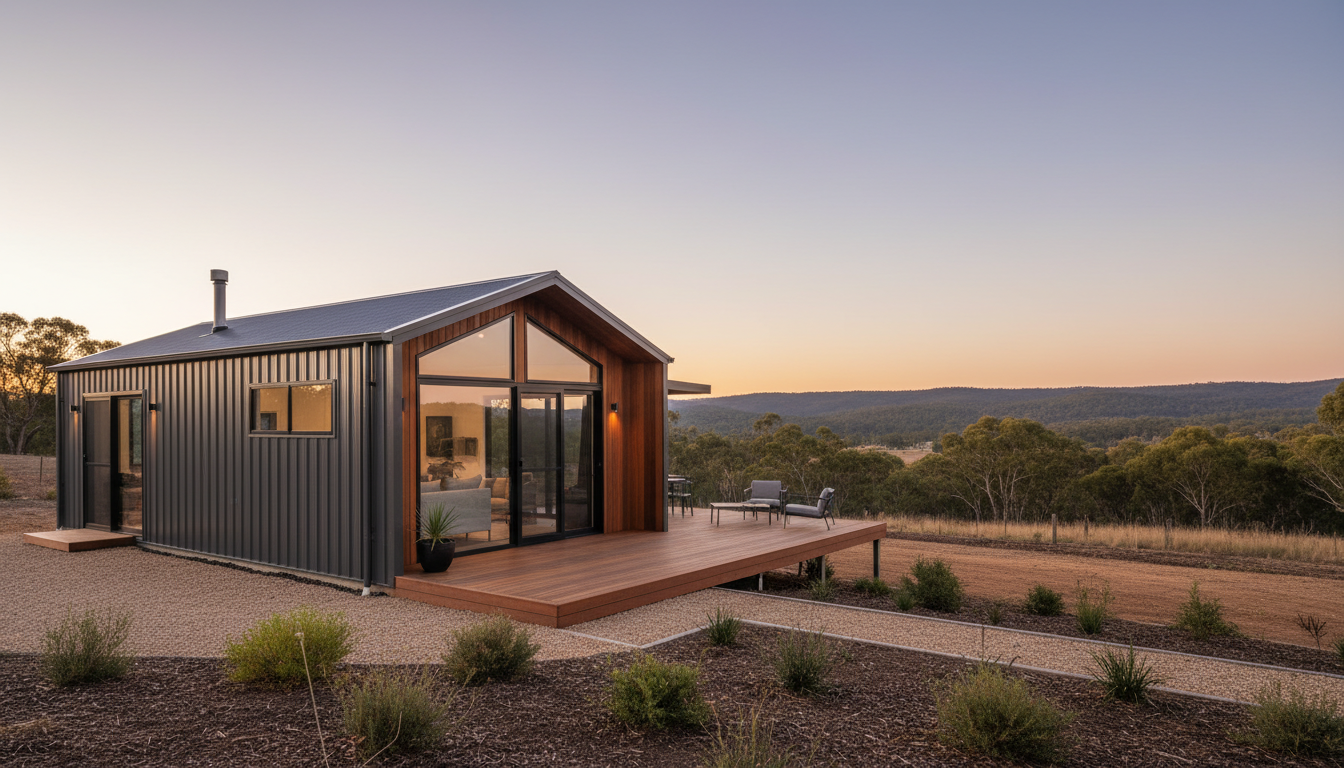
Thinking about sheds transformed into homes? Whether you’re eyeing a “shouse” (shed + house), barndominium, or a storage shed turned into a home studio, this guide explains the legalities, engineering, and the smartest material choices for Australia’s climate—from Perth’s heat to QLD’s cyclones.
What does “sheds transformed into homes” really mean in Australia?
In Aussie building-speak, a typical shed is a Class 10a non‑habitable structure. A liveable dwelling is Class 1a. Turning a shed into a home means reclassifying the building to Class 1a and meeting the National Construction Code (NCC 2022) requirements for structure, energy efficiency, fire, moisture, and health.
Most liveable “shed homes” are engineered steel buildings clad in Colorbond or Zincalume, designed from day one as Class 1a. Converting an existing shed is sometimes possible, but it often costs more than commissioning a new council-approved design.
Is it legal to live in a shed in Australia?
Yes—if your shed is approved and certified as a Class 1a dwelling. Simply moving into a Class 10a shed is illegal and risky for insurance. You’ll need planning approval (if required) and a Building Permit/Development Approval with engineering sign-off.
How to get council approval for your custom shed in WA
Added 2024 WA wind-rating compliance notes WA projects must be designed to AS/NZS 1170.2 wind regions (including coastal Region C pockets) with compliant tie-downs and footings. For council-approved sheds WA, you’ll typically need:
- Site plan, contour/survey, and setbacks
- Certified structural drawings (cold-formed steel to AS/NZS 4600)
- Wind region and terrain category calculations
- Energy efficiency compliance (NCC 2022; NatHERS star rating or DTS path)
- BAL assessment where applicable (AS 3959)
- Plumbing/drainage plan and termite management (AS 3660)
QLD specifics: cyclone-rated sheds for Class 1a
In Queensland’s Region C/D, “cyclone-rated sheds QLD” require higher design pressures, cyclonic connections, and engineered cladding fixings. Seek a builder who routinely delivers wind-rated sheds for cyclonic areas and understands QBCC and local planning overlays.
NSW and ACT: energy and BASIX/NatHERS
NSW dwellings require BASIX/NatHERS compliance (moving toward 7‑star), condensation management, and BAL if bushfire-prone. In the ACT, moisture and thermal bridging control is a strong focus due to winter performance.
Tip: Many top shed suppliers offer “Class 1a‑ready” designs for Perth, Brisbane, Sydney, Melbourne, and regional areas—search for steel sheds Perth, rural sheds NSW, or custom carports Melbourne bundled with engineering.
What are the best shed materials for Perth’s climate?
Perth demands heat, UV, and coastal corrosion resistance. Colorbond steel with a marine-grade coating system and sarking/insulation is the usual premium choice. Here’s the quick comparison.
Colorbond vs Zincalume — Which Is Better for WA Conditions?
| Feature | Colorbond Steel | Zincalume Steel |
|---|---|---|
| Coating | Painted, baked-on finish over zinc/aluminium/magnesium base | Zinc/aluminium/magnesium alloy metallic coating (no paint) |
| Heat/UV performance | High; Cool roof colours reflect heat | Good base durability, less heat-reflective choice range |
| Corrosion resistance (coastal) | Strong with right grade and detailing | Good; may need extra care closer to surf/salt spray |
| Maintenance | Low; periodic washdowns near coast | Low; watch for tea staining near marine zones |
| Aesthetics | Wide colour palette; premium look | Metallic grey; industrial look |
| Typical use | Custom Colorbond garages Perth, premium homes | Farm machinery storage, cost-conscious builds |
How much does a shed turned into a house cost in 2025?
Indicative ranges vary by region, wind rating, BAL, and internal spec:
- Engineered Class 1a shell (steel frame, slab, cladding, roof, windows/doors): from $1,200–$2,200 per m²
- Full fit‑out (services, insulation, linings, kitchen, bathroom): add $1,200–$2,000 per m²
- Total turnkey guide: $2,400–$4,200 per m² for most non-cyclonic sites; add 10–25% for Region C/D or high BAL
Allow for design/approvals, siteworks, rainwater/tanks where required, and contingencies. Costs shift with market steel prices (see the Australian Steel Institute and 2025 market outlooks) and local labour.
How to design a liveable shed that feels like a home
- Envelope: Use insulated roof panels or blanket/sarking with thermal breaks; detail flashings to avoid thermal bridging.
- Floor system: Slab to AS 2870 with moisture barrier and termite protection; consider polished concrete with insulation for comfort.
- Openings: High-performance glazing, shading, and cross-ventilation for summer; orientate for passive solar gain in cooler climates.
- Services: Plan plumbing stacks early; separate wet areas along one wall to simplify services in a steel frame.
- Acoustics: Add resilient mounts/linings to reduce rain and echo in large spans.
- Fire and BAL: Non-combustible claddings, ember screens, and compliant decking to meet AS 3959 where required.
- Condensation: Vapour-permeable membranes and mechanical exhaust in kitchens/baths as per NCC 2022.
Pro Tip: Did you know using insulated roof panels can reduce internal shed temperatures by up to 10°C in summer (site and spec dependent)? Combine light Colorbond colours, roof ventilation, and bulk insulation for the biggest gains. See general guidance at Energy.gov.au for summer heat control.
Case studies: storage sheds turned into homes (examples)
1) Coastal WA studio — custom Colorbond, 60 m²
Brief: Convert a compact design into a compliant Class 1a artist studio. Outcome: High-cyclonic fixings not required, but marine-grade detailing with sarking and anti-condensation blanket. Result: Quiet, cool space near the beach with minimal maintenance.
2) Regional QLD “shouse” — 12×18 m with mezzanine
Brief: Workshop plus 2‑bed home under one roof in Region C. Outcome: cyclone-rated sheds QLD detailing, extra tie-downs, and compliant glazing. Result: Fit‑for‑purpose with secure farm machinery storage and comfortable living.
3) Perth double garage to home office
Brief: A custom-built double garage in Perth specified to Class 1a from day one, so approvals were straightforward. Outcome: Air-tight envelope, acoustic linings, and premium Colorbond cladding matching the main dwelling.
5-Step Buying Guide for Custom Sheds in Australia
- Start with classification: Decide Class 1a (home) vs Class 10a (shed). Don’t “convert” later—design correctly upfront.
- Lock in your wind region/BAL: Ask for AS/NZS 1170.2 wind region and BAL certificate early. It changes cost and fixings.
- Choose the envelope: Colorbond vs Zincalume, roof form (gable/skillion), insulation system, windows, and doors.
- Pick the delivery model: DIY shed kits vs licensed builder vs hybrid (owner‑builder). Factor warranties and insurance.
- Confirm approvals path: Planning triggers, engineering sign-off, energy compliance, and inspections schedule.
Approvals and engineering: the compliance checklist
- AS/NZS 1170.2 wind actions (Region A/B/C/D) and terrain category
- AS/NZS 4600 cold-formed steel design; AS 4100 where applicable
- AS 2870 slabs/footings; AS 3660 termite management
- AS 3959 for BAL; NCC 2022 energy/condensation and ventilation
- Site drainage, gutters/downpipes sized for local rainfall intensity
Regional notes
- Perth/WA: Heat and coastal corrosion; specify marine-grade Colorbond, sarking, and roof ventilation. Added 2024 WA wind-rating compliance notes
- QLD North: Cyclonic fixings, door pressures, and debris protection; experienced cyclonic engineering is essential.
- NSW Coastal: BAL, corrosion categories (AS 4312), and condensation control with vapour-permeable wraps.
- TAS/VIC Alpine: Snow loads, thermal breaks, and winter condensation management.
DIY shed kits vs custom-built: which suits you?
- DIY shed kits: Lowest upfront cost, great for owner‑builders with time; ensure the kit is Class 1a engineered if you plan to live in it.
- Custom-built by licensed tradies: Faster approvals, turnkey warranties, simpler finance/insurance; ideal for premium results.
- Hybrid: Supplier provides engineered frame and cladding; you coordinate fit‑out with local trades.
Keyword clusters you’ll encounter in your search
Use cases and types: farm machinery storage, American barns, granny flat studios, barndominiums, custom Colorbond garages Perth, triple bay sheds, affordable carports for Australian homes, workshop with mezzanine, boat and caravan storage, steel sheds Perth, rural sheds NSW, custom carports Melbourne.
Frequently asked questions
Can I convert my existing shed to a home?
Sometimes, but retrofitting a Class 10a to Class 1a often needs new slab details, tie-downs, sarking/insulation, and compliant glazing—costing more than starting with a Class 1a design.
Do I need planning approval?
Often yes, depending on zoning, setbacks, overlays (bushfire, flood), and size. Then you’ll need a Building Permit/DA for Class 1a construction.
What wind rating do I need?
Your engineer determines wind region and terrain. Coastal WA/QLD may require higher tie-downs and cladding fixings. Ask for AS/NZS 1170.2 calculations in your quote.
What about insulation and condensation?
NCC 2022 mandates condensation control. Include sarking, vapour-permeable membranes, thermal breaks, and mechanical exhaust. Insulated roof panels improve comfort.
Can I finance and insure a shed home?
Banks and insurers generally require Class 1a approvals and completion certificates. Keep your paperwork and warranties in order to avoid issues.
How long does it take?
Design/approvals: 4–12 weeks depending on council. Construction: 8–20+ weeks based on size, siteworks, and weather.
Useful Australian resources
- Housing Industry Association (HIA) — building guidance and market reports
- Australian Steel Institute — steel design and market outlooks
- Bureau of Meteorology — regional wind and climate data
- CSIRO — building science and condensation resources
- Energy.gov.au — cooling, insulation and energy efficiency tips
- Standards Australia — find AS/NZS references (purchase required)
Ready to plan your project?
If you want a shed turned into a house with fewer headaches, start with a Class 1a design tailored to your wind region, BAL, and climate. Ask suppliers to itemise engineering, energy compliance, and inspections. Whether you’re in Perth, Brisbane, Sydney, Adelaide, or regional Australia, choose proven experience with council approvals and cyclonic/wind-rated details.