
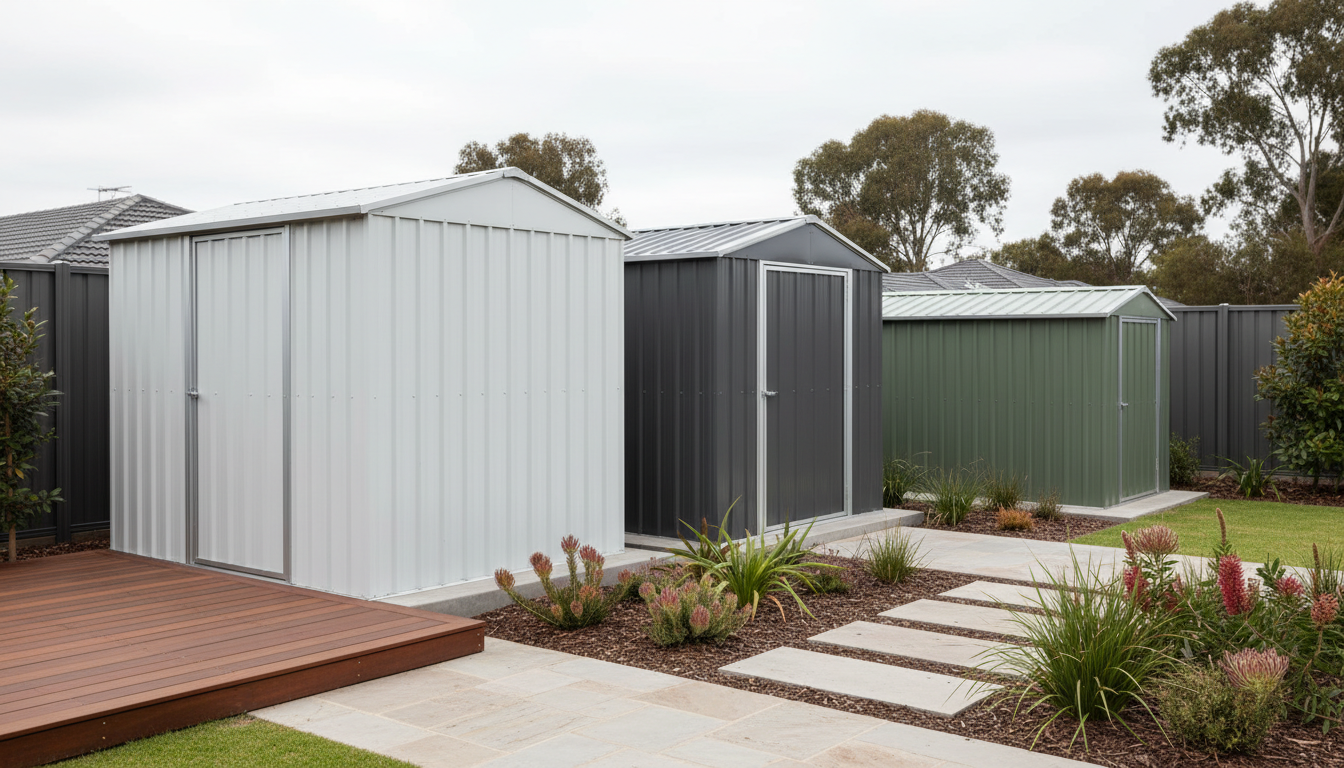
Space is tight on many Aussie blocks. That’s why small garden sheds—especially narrow, slimline, side‑entry, and long thin designs—are booming with homeowners, renovators and property investors. Below, we cut through the noise with practical specs, local council guidance, and wind‑rating know‑how so you can buy once and buy right.
Common terms you’ll hear (and we build all of them): small garden sheds, narrow shed, slim storage shed, garden sheds narrow, slimline shed, narrow storage shed, slim garden shed, slimline storage shed, slimline garden shed, small sheds for sale, thin storage shed, skinny shed, thin garden shed, side of house storage shed, small backyard shed, thin shed, long narrow shed, narrow sheds for side of house, long narrow garden sheds, long narrow storage sheds, shed with side door, skinny garden shed, slim line shed, side entry garden shed, side entry shed, garden shed side door, long thin garden sheds, narrow garden sheds Australia, narrow sheds Australia.
What Counts as a “Small” or “Slimline” Garden Shed?
- Typical narrow/small footprint: width 0.8–1.8 m, length 1.5–6.0 m, wall height 1.8–2.4 m.
- Popular “side of house” formats: 0.9 × 2.4 m, 1.2 × 3.0 m, 1.5 × 3.0 m, long narrow shed formats up to 6.0 m.
- Side entry shed options: single hinged side door, sliding door for tight clearances, or a compact roller door.
- Use cases: garden tools, push mowers, bikes, pool gear, bins, household overflow, and tradie materials.
What Are the Best Shed Materials for Perth’s Climate?
For Perth and coastal WA, choose corrosion‑resistant cladding and fasteners that handle heat, UV, and salt‑laden winds. In practice, that means Colorbond steel cladding, compatible coated screws, and proper wash‑down access. Zincalume is excellent too—especially inland—but Colorbond’s paint system adds protection and style.
Colorbond vs Zincalume — Which Is Better for WA Conditions?
| Factor | Colorbond | Zincalume |
|---|---|---|
| Coating system | Painted, multi‑layer system over zinc/aluminium/magnesium alloy | Unpainted zinc/aluminium/magnesium alloy |
| Corrosion resistance (coastal) | Excellent, with regular fresh‑water rinse near surf coasts | Very good inland; can dull faster near sea spray |
| Heat/UV performance | High UV stability; light colours reflect heat | Reflective initially; surface can weather to a patina |
| Aesthetics | Modern Colorbond palette (Monument, Surfmist, Woodland Grey) | Raw metallic look only |
| Cost | $$ (premium finish) | $ (budget‑friendly) |
| Best fit | Residential, coastal WA, premium builds | Rural/inland, budget DIY shed kits |
For technical background on coatings and durability, see the Australian Steel Institute and CSIRO guidance (Australian Steel Institute, CSIRO). Climate data for your site is available via the Bureau of Meteorology.
How Do You Choose the Right Narrow Shed for the Side of Your House?
Measure the corridor and plan clearances
- Allow 20–50 mm wall clearance to fences for assembly and wash‑down.
- Check eaves, taps, gas meters, downpipes, hot‑water units and stormwater fall.
- Confirm boundary fire and setback rules with your council (especially with solid walls).
Pick the right door type for tight spaces
- Side entry garden shed with hinged door: simple and secure, needs swing clearance.
- Sliding door: ideal for skinny garden shed corridors and long narrow storage sheds.
- Compact roller: great for bikes or mowers; consider lock height and lintel clearance.
- Ask for a shed with side door placement to suit obstructions and access paths.
Choose the roof profile for runoff and height limits
- Skillion (single fall): perfect for narrow sheds for side of house, easy guttering.
- Flat: minimalist look; ensure fall for drainage and anti‑ponding support.
- Gable: extra headroom, but watch ridge height near boundaries.
Ventilation, condensation control, and comfort
- Ridge or eave vents plus louvres reduce heat build‑up.
- Anti‑condensation blankets or insulated roof panels prevent drips on cold mornings.
- Consider daylight panels to avoid wiring where not needed.
Are Small Garden Sheds Council‑Approved in Your Area?
Many small or slimline garden sheds are exempt or fast‑tracked if they meet site, size and height rules. Always confirm locally—rules differ by council and state.
How to Get Council Approval for Your Custom Shed in WA
- Check exemptions: Small sheds may be exempt under local planning; verify dimensions and boundary offsets.
- Design to NCC and AS/NZS: Provide wind classification, tie‑downs, cladding specs, and slab details.
- Prepare documents: Site plan, elevations, engineering, Colorbond colour schedule.
- Lodge: Development and/or Building Application as required; allow 10–25 working days.
- Build: Use licensed installers; keep engineering on site for inspections.
Added 2024 WA wind‑rating compliance notes: Many councils now request AS/NZS 1170.2 wind region confirmation (A, B or D in WA) and N‑class hold‑down scheduling even for small sheds. If coastal within 1 km, specify marine‑appropriate fasteners and regular wash‑down access.
Quick notes for NSW, VIC, QLD
- NSW: “Exempt Development” can cover small sheds if under height/area thresholds and setbacks.
- VIC: “Siting” rules under the Building Regulations; some small sheds may avoid a permit if compliant.
- QLD: Use cyclone‑rated sheds (C1–C4 as applicable). Many regions require specific tie‑downs and door bracing; check with council/private certifier.
For general guidance on approvals and site safety, see HIA and Master Builders Australia.
Do You Need a Cyclone or High Wind‑Rated Shed?
Australia is divided into wind regions and terrain categories. Your shed must be engineered to your site’s classification.
- Perth metro: commonly N2–N3. Coastal headlands or hilltops may increase rating.
- Regional WA north coast (Region D): cyclonic—use C‑class designs with upgraded frames and door systems.
- QLD tropical coast: choose cyclone‑rated sheds QLD (C1–C3/C4 as advised by your engineer).
We supply wind‑rated sheds for cyclonic areas and council‑approved sheds WA with full engineering.
Foundations: Slab, Piers, or Plinth?
- Best practice slab: 100 mm concrete slab, SL72 mesh, 30 MPa concrete, vapour barrier, 20 mm perimeter rebate to keep water out. Chemset M12 or screw‑bolt anchors as per engineering.
- Piers/footings for narrow corridors: suit uneven ground; add a raised plinth to clear stormwater.
- Pavers/timber: okay for very small DIY shed kits, but not recommended in high wind or cyclonic regions.
DIY Shed Kits vs Custom‑Built
- DIY shed kits: fastest and cheapest for thin storage shed sizes; follow instructions, square the base, and seal edges.
- Custom‑built Colorbond: ideal for odd corridors, side entry shed doors, non‑standard lengths, and higher wind ratings.
- Timeframes (typical 2025): DIY supply 1–3 weeks; custom engineered 3–6 weeks; install 1–2 days.
Real Projects: Slimline Garden Shed Case Studies
Perth (Leeming) — 0.9 × 3.0 m Slimline, Skillion Roof
- Use: bins, garden tools, ladder.
- Spec: Colorbond Monument walls/door, Surfmist roof, N2 wind rating, anti‑condensation blanket, sliding side entry.
- Base: 100 mm slab with rebate; downpipe diversion maintained.
Melbourne (Brunswick) — 1.2 × 2.4 m Side‑of‑House Storage
- Use: bikes and pram in a skinny shed corridor.
- Spec: Colorbond Woodland Grey, hinged side door, security hasp, whirlybird vent.
- Outcome: cleared hallway inside the terrace; no planning permit required due to size and setback.
Cairns — 1.5 × 3.0 m Cyclone‑Rated Narrow Garden Shed
- Use: garden tools and pool chemicals.
- Spec: C2 rating, reinforced door mullions, extra hold‑downs, corrosion‑resistant fixings.
- Result: passed private certifier sign‑off; homeowner saved on off‑site storage.
Pricing: What Do Small Garden Sheds Cost in Australia (2025)?
- Entry DIY thin shed (approx. 0.8 × 1.5 m): $450–$900 supply‑only (Zincalume); $650–$1,200 in Colorbond.
- Popular slimline garden shed (1.2–1.5 × 3.0 m): $1,100–$2,400 supply‑only; installed $2,200–$4,200 (site dependent).
- Long narrow garden sheds (up to 6.0 m): $1,800–$3,800 supply‑only; installed $3,500–$6,500.
- Cyclone‑rated narrow storage shed (C‑class): $3,800–$9,000 installed depending on engineering and access.
Note: Steel pricing in 2024–2025 has been volatile per the “2025 Australian Steel Market Outlook”. Always seek a current quote and confirm inclusions (slab, delivery, council fees).
Maintenance and Warranty Tips
- Rinse coastal sheds with fresh water regularly and keep soil/fertilisers off wall bases.
- Clear gutters and ensure downpipes drain to stormwater, not footings.
- Use compatible accessories (no copper contact) to protect Colorbond coatings.
- Record serials/drawings for warranty claims. Check manufacturer’s coastal exclusions.
Energy‑wise, light roof colours and ventilation can reduce heat load; see energy.gov.au for general home efficiency guidance.
5‑Step Buying Guide for Custom Sheds in Australia
- Confirm your space: measure width, length, heights, services, drainage, and boundary setbacks.
- Select materials: Colorbond vs Zincalume, insulation, vents, door type, security hardware.
- Engineer for wind: get your site’s N or C rating; choose wind‑rated sheds for cyclonic areas if needed.
- Approvals: check exempt pathways or lodge a council/private building application with engineering.
- Build smart: specify slab/anchors, schedule delivery, and book a licensed installer for a 1–2 day fit‑off.
FAQs: Small, Slimline and Narrow Garden Sheds
How narrow can a shed be?
As narrow as 0.8 m, but 0.9–1.2 m is more practical for moving bins and bikes. Sliding doors shine in tight corridors.
Do I need gutters on a small shed?
Yes, in most cases. Direct water to stormwater to avoid damp along boundaries. Skillion roofs make this easy.
Can I put a shed on pavers?
For tiny DIY sheds, maybe. For longevity and wind resistance, a reinforced slab with proper anchors is better.
Will a side entry shed on the boundary need fire protection?
Often yes if near or on the boundary. Check local rules—non‑combustible walls and specific setbacks may apply.
What colours are popular?
Monument, Woodland Grey, Surfmist and Shale Grey lead nationwide. Lighter roofs lower heat load.
What’s the lead time?
DIY kits: 1–3 weeks. Custom Colorbond with engineering: 3–6 weeks. Install: 1–2 days, subject to weather and access.
Related Builds and Services We Provide
- Steel sheds Perth, council‑approved sheds WA, custom Colorbond garages Perth.
- Cyclone‑rated sheds QLD and wind‑rated sheds for cyclonic areas across northern Australia.
- Rural sheds NSW, farm machinery storage, and affordable carports for Australian homes.
- Custom carports Melbourne, double garages, and DIY shed kits shipped Australia‑wide.