
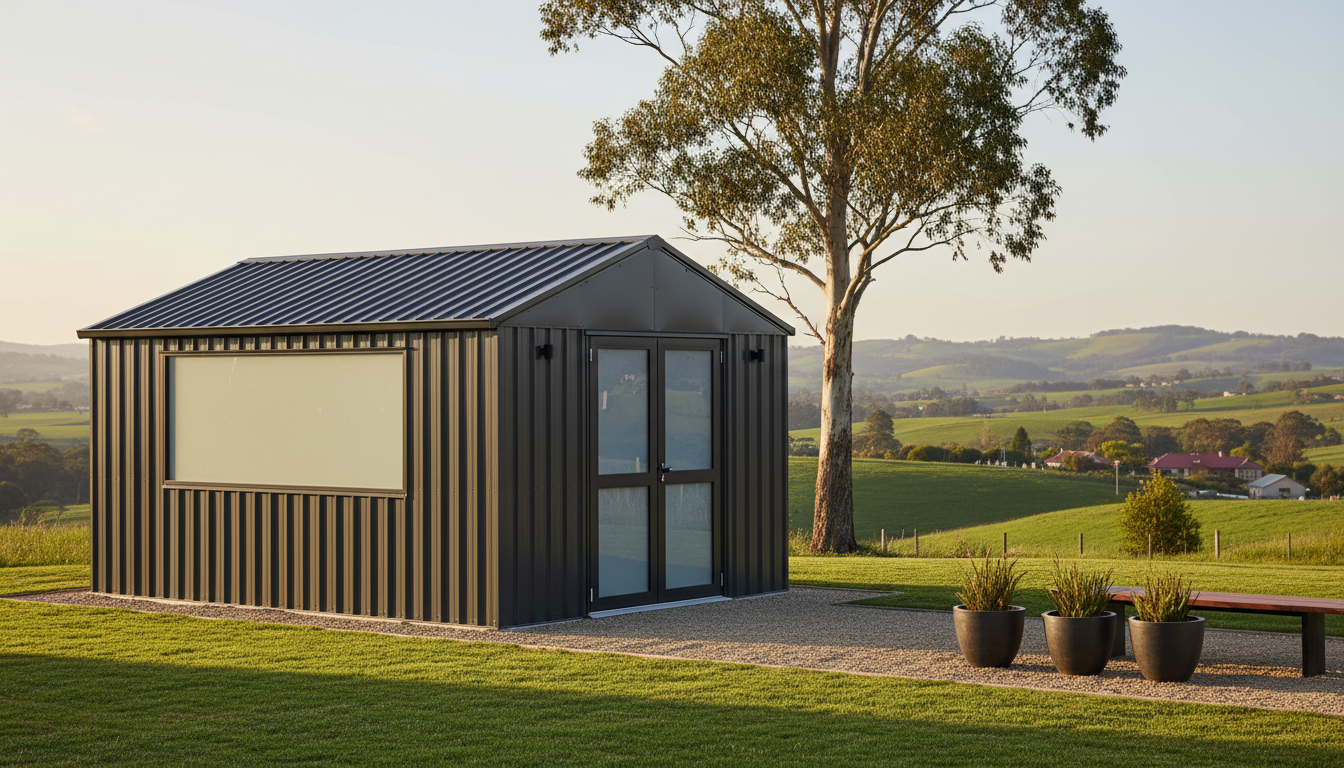
When Aussies search “victorian shed” they usually mean a premium steel shed in the state of Victoria (not Victorian‑era style). This guide focuses on VIC conditions and approvals, while also giving national engineering and climate advice so your investment is future‑proof anywhere in Australia.
What is a “Victorian Shed” and who is it for?
A Victorian shed is a site‑specific, wind‑rated Colorbond or Zincalume steel building engineered for Victoria’s planning rules and weather. Typical buyers include homeowners adding a backyard workshop, renovators upgrading storage, property investors adding compliant garaging, and farmers needing machinery or hay storage.
- Backyard workshop sheds and custom Colorbond garages
- Farm machinery storage and rural sheds VIC
- Custom carports Melbourne and double garages for urban blocks
- American barns and skillion roof sheds for multi‑bay usage
- Industrial sheds for light commercial (subject to Class 7/8 use)
Popular shed types in Victoria (use‑cases and specs)
Urban and suburban VIC
- Custom‑built double garage in Melbourne (roller doors, 2.7–3.0 m eave height, insulation, vermin flashing)
- Affordable carports for Australian homes (single/double, Colorbond roof, powder‑coated posts)
- Workshop sheds with acoustic and thermal lining for hobbyists
Regional and rural VIC
- Farm machinery sheds (open‑fronted bays, extra‑high openings for headers and tractors)
- American barns with mezzanine storage and tack rooms
- Hay sheds with proper ventilation and gable ends for airflow
Coastal VIC
- Colorbond Ultra or Zincalume with marine‑grade fasteners, added gutter guard, and sealed flashings
Materials that last in Victoria: Colorbond vs Zincalume
Both Colorbond and Zincalume are proven in VIC. Choose based on location, aesthetics, and budget:
- Colorbond: UV‑stable colour range, easy to match fascia/gutter, lower heat gain with lighter colours, great urban appeal.
- Zincalume: Bare‑metal look, typically sharper price point, popular for rural sheds VIC and agricultural sheds.
Near salt or industrial environments, prioritise corrosion resistance (coatings, fasteners, and closed‑cell foam seals). In bushfire zones, consider non‑combustible cladding, ember‑proofing at ridges/eaves, and compliant doors.
Engineering, wind ratings, and compliance across Australia
Every shed should be site‑specific engineered to AS/NZS standards and the NCC. Key technical references:
- AS/NZS 1170 series for structural design actions (wind, snow in alpine areas)
- AS/NZS 4600 (cold‑formed steel), AS 4100 (steel structures)
- AS/NZS 1562 for sheet roof and wall cladding
- AS 3959 for construction in bushfire‑prone areas (BAL)
Wind region and terrain category determine frame sizes, hold‑downs, and cladding fastener patterns. Melbourne and most of Victoria are non‑cyclonic; parts of WA and QLD are cyclonic (C/D) and require higher design pressures and specific door ratings. Added 2024 WA wind-rating compliance notes
Permits in Victoria: How approvals really work
In VIC, many sheds need a Building Permit. A Planning Permit may also be required depending on overlays (heritage, bushfire, flood), setbacks, and site coverage. Typical process:
- Confirm Planning Permit requirement with your local council.
- Engage a Registered Building Surveyor (RBS) for the Building Permit.
- Provide site plan, engineered drawings, truss/portal frame certification, and energy/siting details if needed.
- Footing/slab design to soil report (Class A–P). Common slabs are 100–120 mm with thickenings as engineered.
- Final inspections and Occupancy/Final Certificate (if applicable to class/use).
Rules vary by municipality, especially for shed size thresholds, height, and boundary setbacks. Always check with your council’s planning team before you buy “sheds for sale Victoria.”
What Are the Best Shed Materials for Perth’s Climate?
Perth’s hot summers, high UV, and sea breeze influence material choice. For “steel sheds Perth,” pick coatings and details that resist heat, UV, and salt.
- Roof colours: lighter Colorbond colours for lower heat gain; add sarking or insulated panels.
- Coastal installs: marine‑grade fasteners, sealed laps, and consider Colorbond Ultra near surf exposures.
- Frames: galvanised portal frames with proper anti‑condensation treatment under roof sheets.
How to Get Council Approval for Your Custom Shed in WA
- Check local planning codes (R‑Codes) for setbacks/height/streetscape.
- Confirm wind region (Perth is typically non‑cyclonic Region A) and get site‑specific engineering.
- Apply for a Building Permit with certified plans and specifications.
- Ensure “council-approved sheds WA” submissions include slab/footing details and tie‑downs.
- Book inspections; keep certificates for future sale or insurance.
Colorbond vs Zincalume — Which Is Better for WA Conditions?
| Aspect | Colorbond for WA | Zincalume for WA |
|---|---|---|
| Heat & UV | Lighter colours reduce heat load; proven UV stability. | Reflective surface helps; may still benefit from insulation/sarking. |
| Coastal exposure | Use enhanced grades and marine‑rated fasteners near surf. | Select with caution close to marine splash; upgrade fixings and detailing. |
| Aesthetics | Large colour palette to match homes and carports. | Classic bare‑metal rural look. |
| Budget | Typically a premium to Zincalume. | Often sharper upfront price. |
Cyclone and bushfire design across states
- QLD North: “cyclone-rated sheds QLD” need Region C/D engineering, high‑pressure door sets, and upgraded hold‑downs.
- VIC bushfire: BAL design (ember seals, screened vents, non‑combustible materials).
- NSW regional: “rural sheds NSW” often need snow or higher wind checks in highland areas.
Design choices that add value and comfort
- Roof styles: gable roof sheds for classic looks; skillion roof shed for modern lines and easy solar fall; hip roofs for carports.
- Insulation: roof sarking, anticon blanket, or insulated roof panels to cut heat and condensation.
- Ventilation: ridge vents, whirlybirds, and louvre panels for workshops.
- Access: 2.7–3.3 m eaves for 4WDs/boats; wind‑rated roller doors; PA doors with disabled‑access thresholds if needed.
- Water management: oversized gutters, leaf guards, first‑flush diverters, and tank connection points.
- Electrical: LED lighting, dedicated circuits for welders; pre‑wire conduits before slab pour.
DIY shed kits vs custom-built installations
- DIY shed kits: Efficient for straight‑forward single garages and small rural bays. Look for pre‑punched members, clear assembly manuals, and full engineering packs.
- Custom-built: Best for sloping sites, BAL overlays, tight urban setbacks, or complex openings. Faster on‑site and typically cleaner permit process.
- Owner‑builder vs licensed installer: Check state rules, insurance, and warranty implications before choosing DIY.
Pricing variables for sheds for sale Victoria
Final price depends on size, eave height, door numbers, cladding (Colorbond vs Zincalume), engineering (wind/BAL), slab specs, insulation, and site works (cut/fill, piers, drainage). Ask for an itemised quote so you can compare like‑for‑like inclusions.
Case studies: Built for Australian conditions
Geelong coastal workshop (VIC)
- 7 m x 9 m Colorbond “Monument” walls, lighter roof colour with anticon blanket
- Ember‑sealed ridges and vents for BAL‑rated area
- Oversized gutters tied to 5,000 L tank for garden use
Ballarat farm machinery shed (VIC)
- 12 m x 24 m three‑bay, open‑front, Zincalume cladding
- Portal frames with C‑purlin rails and knee bracing
- Site‑specific wind design to AS/NZS 1170 with engineered hold‑downs
Custom Colorbond garages Perth (WA)
- 6 m x 6 m “custom Colorbond garages Perth” brief with roller doors rated to local wind pressures
- Sarking + roof ventilators for heat control
- Marine‑grade fasteners specified within coastal influence
5‑Step Buying Guide for Custom Sheds in Australia (Checklist)
- Define use and clearances: vehicles, boat height, workshop bench space, door sizes.
- Confirm site constraints: overlays (BAL/flood/heritage), setbacks, services, soil class.
- Select materials and details: Colorbond vs Zincalume, insulation level, ventilation, gutters.
- Engineering & permits: wind region, terrain category, slab design, council or building surveyor approvals.
- Build plan: DIY shed kits vs installer, timeline, delivery access, and final inspections.
FAQs: Victorian shed and Australia‑wide steel building questions
Do I need a permit for a shed in Victoria?
Often yes. Many sheds require a Building Permit, and some need a Planning Permit. Check with your local council and a Registered Building Surveyor early.
How long does a custom shed take?
Design/permits can take a few weeks depending on council and overlays. Manufacture and install times vary with demand and season—book early before peak summer.
Colorbond vs Zincalume — which lasts longer?
Both are durable when correctly specified. Near coastal or industrial zones, upgrade coatings and fasteners. Maintenance and detailing are just as important as the sheet material.
Are doors wind‑rated?
Choose wind‑rated roller or sectional doors matched to your design pressure. Wider openings typically need wind‑lock guides or stiffer panels.
Can you do cyclone-rated sheds?
Yes. “Wind-rated sheds for cyclonic areas” require Region C/D engineering, upgraded connections, and specific doors. This is standard practice in northern QLD and WA.
What about energy and heat?
Use lighter roof colours, sarking or insulated panels, ventilation, and consider solar PV readiness. These improve comfort and running costs.
Where we supply and support
We design and supply Australia‑wide, including “steel sheds Perth,” “custom carports Melbourne,” “rural sheds NSW,” “cyclone-rated sheds QLD,” and industrial sheds in major centres like Brisbane and Adelaide. Ask about “council-approved sheds WA” and VIC‑specific permit packs.
Trusted references and industry guidance
- Housing Industry Association (HIA) guidance on residential building
- Master Builders Australia — building practice updates
- Australian Steel Institute — steel design resources
- CSIRO — building science and climate research
- Energy.gov.au — energy efficiency in buildings
- Bureau of Meteorology — climate and wind information
Recent reports like the 2025 Australian Steel Market Outlook and the 2025 HIA Outdoor Structures and Home Improvement Report indicate continued demand for premium outdoor structures and a focus on durability, energy comfort, and compliance. Always confirm the latest local requirements and site data.
Ready to start? Request an itemised quote with engineered drawings, wind region notes, door wind ratings, and a permit‑ready pack. It’s the fastest way to compare “sheds for sale Victoria” like‑for‑like and avoid surprises.