
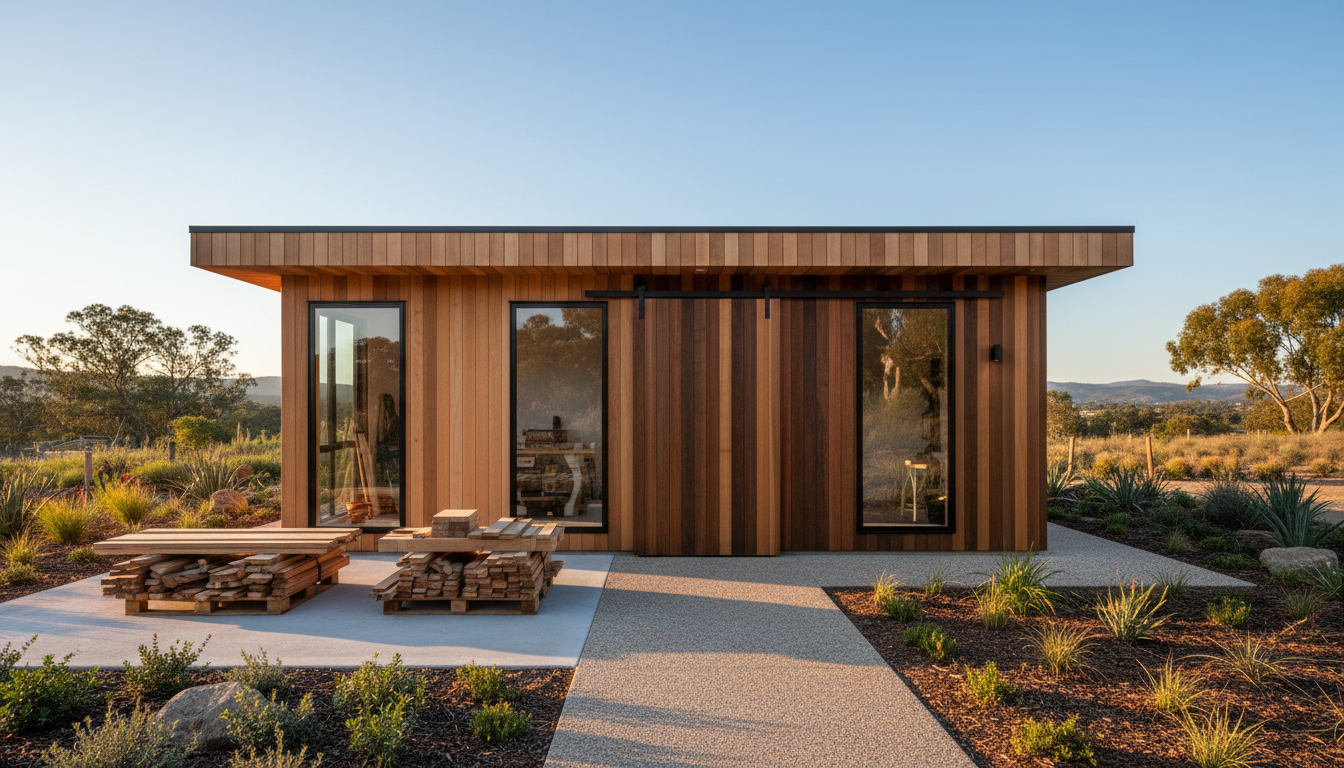
What Are Wood Shed Kits—and Are They Right for Australian Backyards?
Wood shed kits (also called wooden shed kits or timber shed kits) are pre-cut, pre-drilled packages for DIY or tradie install. Popular variants include cedar shed kits, timber garden shed kits, and garden sheds flat pack. They’re loved for natural looks, simple assembly and easy customisation (windows, skylights, shelves).
What Are the Best Shed Materials for Perth’s Climate?
Perth summers are hot and dry, with intense UV. Timber and cedar can perform well if you stay on top of sealing and shading. However, for low maintenance in high heat and coastal areas, many homeowners choose Colorbond steel cladding with a timber interior fit-out. This hybrid approach gives the classic look inside with durable external protection.
Timber vs Cedar vs Steel: Which Shed Kit Should You Choose?
- Timber garden sheds: Affordable, easy to modify, great for small timber garden sheds and shed storage wooden applications. Needs paint or oil and periodic maintenance.
- Cedar sheds (e.g., cedar storage shed, cedar garden shed): Premium look, naturally resistant to decay and insects. Best in suburban gardens where aesthetics matter. Popular: cedar sheds Australia, cedar sheds Victoria.
- Steel sheds (Colorbond/Zincalume): Highest durability and lowest maintenance, especially in WA coastal and regional climates. Ideal for larger spans, farm machinery storage, and wind-rated sheds for cyclonic areas.
Colorbond vs Zincalume — Which Is Better for WA Conditions?
| Feature | Colorbond Steel | Zincalume Steel |
|---|---|---|
| Coating & colour | Polymer paint system, many colours, high UV resistance | Al-Zn alloy coating, silver finish only |
| Best use | Homes, coastal suburbs, premium looks, low maintenance | Budget-friendly rural/behind-fence projects |
| Heat performance | Cooler roof colours reduce heat gain | Reflective but can still radiate heat internally |
| Cost | Higher | Lower |
| Corrosion resistance | Excellent with proper detailing and maintenance | Very good, but watch cut edges in salty air |
Are Timber Sheds Allowed in Bushfire and Cyclone Zones?
- BAL areas (VIC/NSW/WA): In BAL–29 and above, external timber cladding can be restricted or require specific species and detailing. Consider steel cladding over timber frame.
- Cyclone regions (QLD, WA North): Timber sheds need engineered tie-downs and rated fasteners to AS/NZS 1170. For cyclone-rated sheds QLD, most buyers go with steel frames and Colorbond cladding.
Added 2024 WA wind-rating compliance notes: For Perth and regional WA, confirm Wind Region (A/B/C/D), Terrain Category and shielding. Many metro blocks are N2–N3; coastal and ridge sites can be higher. Ask for site-specific certification.
How Much Do Wood Shed Kits Cost in 2025?
- Small timber shed (1.5 × 1.5 m): $900–$1,800 DIY, add $500–$1,200 for slab and install.
- Timber garden sheds Melbourne mid-size (3 × 2.25 m): $1,900–$3,800, plus $1,500–$3,000 for slab, delivery and install.
- Cedar shed (3 × 3 m): $3,800–$6,500 depending on doors, windows, and roofing.
- Hybrid steel shell + timber fit-out (3 × 6 m): $6,500–$10,500 including Colorbond, insulation, vermin flashing.
Guide only. Final pricing depends on wind rating, terrain, delivery distance, foundation, and options like insulation, skylights, shelving and electrical.
How to Get Council Approval for Your Custom Shed in WA
For most backyard sheds under certain sizes, you may be exempt or use a Building Permit with a certified set. Always check your local council’s planning rules (setbacks, heights, site coverage).
- Confirm zoning and overlays (e.g., heritage, bushfire).
- Get wind classification to AS/NZS 1170 and footing design. Ask for council-approved sheds WA documentation.
- Prepare site plan, elevations, engineering certificate, and slab details.
- Lodge Building Permit (BA1 certified or BA2 uncertified).
- Book final inspection where applicable.
Not in WA? Most states follow similar processes with local variations. In QLD cyclonic areas, ensure you’re buying a kit with certified wind-rated sheds for cyclonic areas engineering.
DIY Shed Kits vs Custom-Built: What’s Better for You?
| Aspect | DIY Shed Kits | Custom-Built |
|---|---|---|
| Cost | Lower upfront | Higher but turnkey |
| Speed | Fast delivery | Lead time for design, approvals, build |
| Approvals | You manage or use a certifier | Builder handles paperwork |
| Complexity | Great for small wooden garden sheds | Best for garages, larger spans, BAL/cyclone |
| Finish | Standard inclusions; upgrade as you go | Fully tailored (doors, insulation, power, storage) |
Technical Must-Haves Most Buyers Miss
- Moisture protection: Damp-proof course and ventilation to avoid rot in wooden sheds. Add eaves where possible.
- Termite management: Use treated framing or termite collars. Critical in QLD and NT.
- Corrosion detailing: For coastal WA and NSW, specify stainless screws at edges, sealed cut ends, and consider Colorbond Ultra if very close to surf.
- Roof choice: Skillion roof is cheaper; gable roof suits rain and storage. See below.
- Condensation control: Anti-con blanket, sarking, or insulated roof panels; add ridge vents.
- Safe and solid construction is critical; see our Framing a Storage Shed in Australia guide for expert planning.
Skillion vs Gable Roof: Which Works Best?
| Feature | Skillion (Flat) | Gable |
|---|---|---|
| Cost | Lower | Higher |
| Drainage | Single fall, bigger gutter | Two falls, good in heavy rain |
| Looks | Modern | Classic |
| Headroom | Higher at one end | Best central headroom |
Case Studies: Real Sheds, Real Conditions
1) Timber Garden Shed – Melbourne, VIC (2.4 × 3.0 m)
- Use: wooden garden sheds Melbourne for tools and potting.
- Spec: Treated pine frame, weatherboard-style cladding, Colorbond skillion roof, slab-on-ground 100 mm with mesh.
- Outcome: Warm, natural look; low noise in rain; annual oiling schedule.
2) Cedar Storage Shed – Bayside, VIC (3.0 × 3.0 m)
- Use: Bikes and surf gear; coastal environment.
- Spec: Western red cedar cladding, stainless fixings, Colorbond Ultra roof, vermin flashing.
- Outcome: Premium aesthetics with coastal-grade detailing for longevity.
3) Hybrid Steel Shell + Timber Fit-out – Perth, WA (3.0 × 6.0 m)
- Use: Home workshop; steel sheds Perth category with timber benches and storage.
- Spec: N3 wind-rated Colorbond walls/roof, insulated panels, timber shelving, 2.4 m eave height.
- Outcome: Cool in summer, minimal maintenance; council-approved.
- Need inspiration for fitting out your wooden shed? Our Inside Shed Ideas showcase flexible timber interior solutions.
5-Step Buying Guide for Custom Sheds in Australia
- Choose the structure: wood shed kits, timber garden sheds, wooden sheds Australia, or steel shell + timber interior.
- Check site and rules: Wind region, BAL, setbacks, easements, services.
- Lock in materials: Cedar vs treated pine; Colorbond vs Zincalume; roof type; insulation.
- Approvals package: Engineering to AS/NZS 1170; drawings; slab design; energy and bushfire notes if needed.
- Install and aftercare: Correct anchors, termite protection, scheduled maintenance (re-seal timber every 12–24 months).
Keyword Clusters to Help You Find the Right Product
- Timber: timber garden shed kits, timber sheds Australia, timber garden sheds for sale, small timber shed, timber sheds Melbourne, timber sheds Melbourne Victoria.
- Wood: wooden garden sheds Australia, wooden sheds for sale, wooden shed kits Australia.
- Cedar: cedar shed, cedar garden shed, cedar sheds Australia, cedar sheds Victoria.
- Steel alternatives: custom Colorbond garages Perth, custom carports Melbourne, rural sheds NSW, affordable carports for Australian homes, DIY shed kits.
FAQs: Wood Shed Kits in Australia
Do I need a slab?
For most sheds bigger than 2 × 2 m, a 100 mm concrete slab with SL72 mesh is recommended, especially in termite or high-wind regions. Timber subfloors can work if raised and ventilated.
What maintenance does cedar need?
Oil or stain every 12–24 months depending on sun exposure. Use stainless fixings near the coast. Keep vegetation off walls and maintain gutters.
Are timber sheds allowed in BAL–40?
Unlikely without specialist design. In higher BAL zones, consider a steel-clad exterior with a timber interior fit-out to meet the standard and keep the warm feel inside.
What wind rating should my kit meet?
Engineering to AS/NZS 1170 for your site’s wind region and terrain. In cyclonic areas (QLD north, WA north), specify C or D region compliance and certified hold-down systems.
Can I add power and plumbing?
Yes. Use licensed sparkies/plumbers and plan conduits before pouring the slab. Check council rules for sinks and wastewater if adding a workbench with a basin.
Standards, Approvals and References
- AS/NZS 1170 (Wind actions), AS 1684 (Residential timber framing), AS 4100 (Steel structures), NCC (Building Code of Australia).
- Bushfire: BAL assessments guide materials and detailing.
- Energy and condensation management: sarking/insulation and ventilation improve comfort and durability.
Helpful Australian Resources
- Housing Industry Association (HIA) – Shed permits and building guidance
- Master Builders Australia – Finding licensed builders
- Australian Steel Institute – 2025 Australian Steel Market Outlook
- Bureau of Meteorology – Climate data and wind regions
- CSIRO – Bushfire research and BAL information
- Energy.gov.au – Insulation guidance for sheds and outbuildings
- Looking for quality and value? Garden Sheds Warrnambool offers exceptional wooden kits for regional buyers.
Why Choose Us for Wood and Hybrid Shed Kits?
- Local engineering for WA, VIC, NSW and QLD—including council-approved sheds WA and cyclone-rated sheds QLD.
- Timber, cedar and Colorbond options with BAL and wind certification.
- Custom design: from wooden shed kits to custom Colorbond garages Perth and custom carports Melbourne.
- National delivery on flat packs and on-site install in major metros.