

What Are the Best Shed Materials for Perth’s Climate?
For hot, dry summers, salty sea breezes and occasional storms, the go-to for most steel sheds Perth is pre-painted Colorbond steel on a galvanised portal frame. Zincalume still has a place—especially inland—so choose to suit your microclimate.
Colorbond vs Zincalume — Which is Better for WA Conditions?
| Feature | Colorbond Steel | Zincalume |
|---|---|---|
| Coating | Pre-painted, baked-on paint system | Aluminium–zinc–magnesium alloy coating |
| Coastal resistance | Strong; check coastal warranties and distances | Good, but surface can dull near marine exposure |
| Heat reflectivity | High with lighter colours; cooler interiors | High in bare-metal finish; can glare |
| Looks | Modern, wide colour palette for matching home | Industrial/satin metallic look |
| Typical cladding thickness | 0.42 BMT wall, 0.42–0.48 BMT roof | Similar profiles and thicknesses available |
| Best fit | Premium garden workshops, coastal suburbs, design-led sites | Budget-friendly, rural/industrial settings |
Frame-wise, look for hot-dip galvanised columns and rafters, high-tensile bolts, and C/Z purlins sized to AS/NZS engineering loads. If you’re near the coast, talk to your supplier about paint systems, wash-down designs, and enhanced corrosion protection.
How Do You Plan a Garden Shed Workshop That Works?
Start with the work you’ll actually do. Then organise the building into “clean” and “dirty” zones, racks and benches, and allow for future storage like mezzanines.
Smart Layout and Fit-Out Ideas
- Orientation: Face roller doors away from prevailing rain; catch winter sun; shade west wall in Perth.
- Zones: Dusty tools and farm machinery storage one end; clean bench and parts storage the other.
- Flooring: 100 mm+ concrete slab with thickened footings; epoxy finish in clean zone.
- Storage: Over-bench shelving, French cleat walls, ceiling-suspended racks, mezzanine storage if height allows.
- Lighting: LED high-bays plus task lights over bench; add polycarbonate skylight strips carefully to manage heat gain.
- Power: Sub-board, 10 A and 15 A GPOs, dedicated circuits for welders and compressors.
- Ventilation: Ridge vent, eaves vents, or mechanical extraction for fumes/dust; louvre windows with insect mesh.
- Doors/windows: 2.7 m+ roller door for utes; PA door with viewing panel; security screens.
- Weathering: Vermin-proof flashing, scribed flashings, door seals, and adequate overhangs.
Case-Study Build Ideas
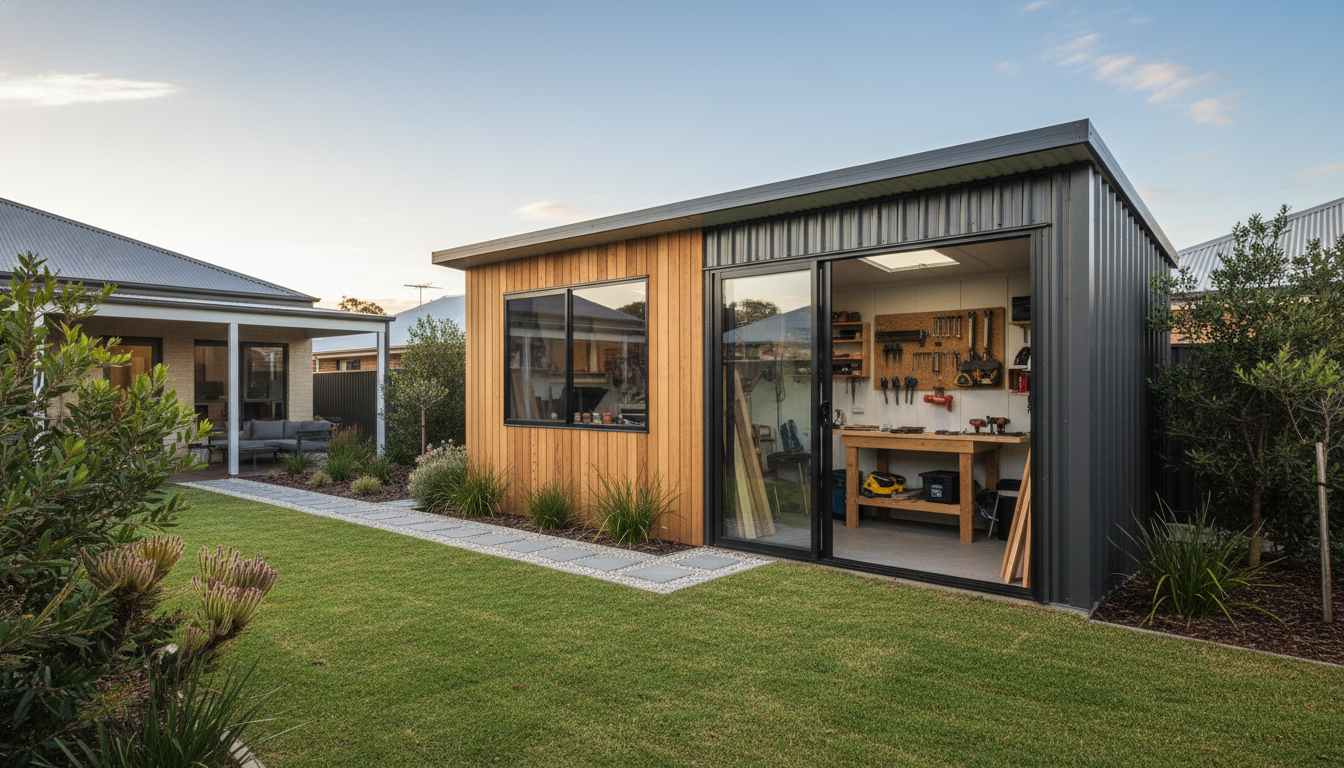
- Perth suburban maker shed: 6 × 6 m Colorbond, skillion roof shed, insulated roof blanket, epoxy floor, 2.4 m workbench, wall-mounted dust extraction, solar-ready wiring.
- Brisbane backyard workshop: 6 × 9 m gable roof, wind-rated sheds for cyclonic areas (Region C edge), extra hold-downs, insulated roof panels for heat, screened louvres.
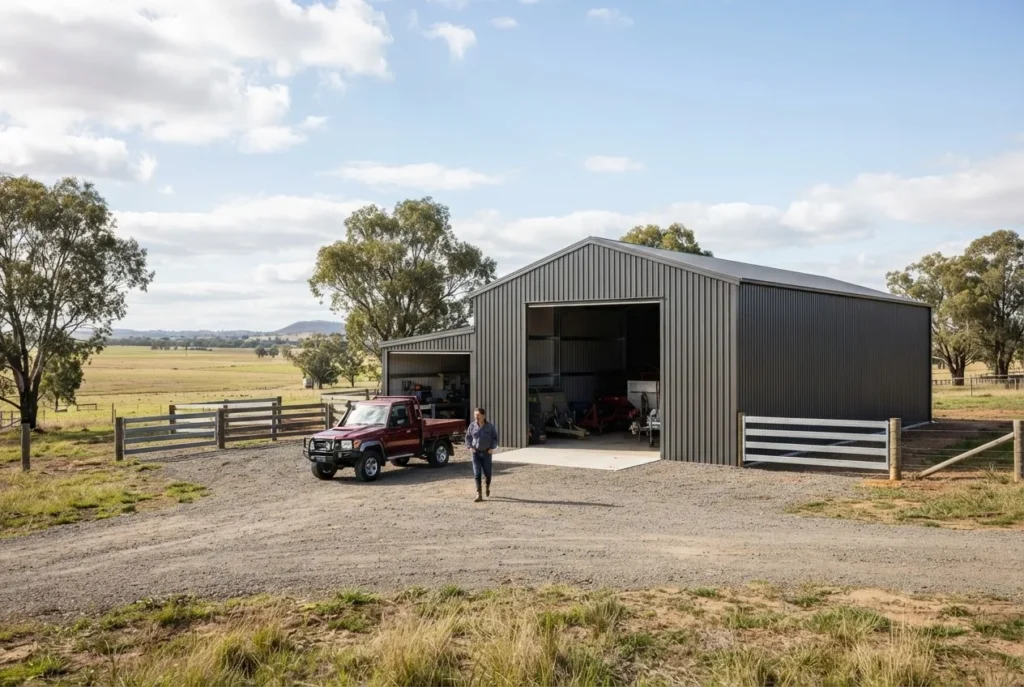
- Rural sheds NSW farm base: 9 × 12 m with 3 m awning for farm machinery storage, Zincalume roof, internal tool cage, diesel storage bay with spill matting.
How to Get Council Approval for Your Custom Shed in WA
In WA, most garden workshops larger than small exempt sizes need a Building Permit. The usual path:
- Site plan and setbacks checked against your local planning scheme.
- Engineer-certified drawings to AS/NZS codes (see below).
- Energy and bushfire notes if applicable (e.g., BAL in bushfire-prone areas).
- Submit application with fees; wait for permit before slab or erection.
Added 2024 WA wind-rating compliance notes: Design to AS/NZS 1170.2 wind region (A–D) for your locality, including terrain category and topographic multipliers. Many Perth suburbs are Region A; coastal and exposed sites may trigger higher pressures. Ask for council-approved sheds WA documentation from your supplier.
Other states are similar: check local planning overlays, boundary walls, stormwater, and driveway crossovers. For cyclonic QLD, engineering is stricter—see below.
Helpful references: HIA guidance on permits, Bureau of Meteorology climate info, Australian Steel Institute resources.
What Size and Roof Type Should You Choose?
Choose size and roof profile to suit use, access and rainwater management.
Roof Profile Comparison
| Roof Type | Pros | Considerations | Best for |
|---|---|---|---|
| Skillion (flat look) | Modern, simple guttering, easy solar on one pitch | Lower headroom on high wall; watch uplift at eaves | Compact garden workshops, affordable carports for Australian homes |
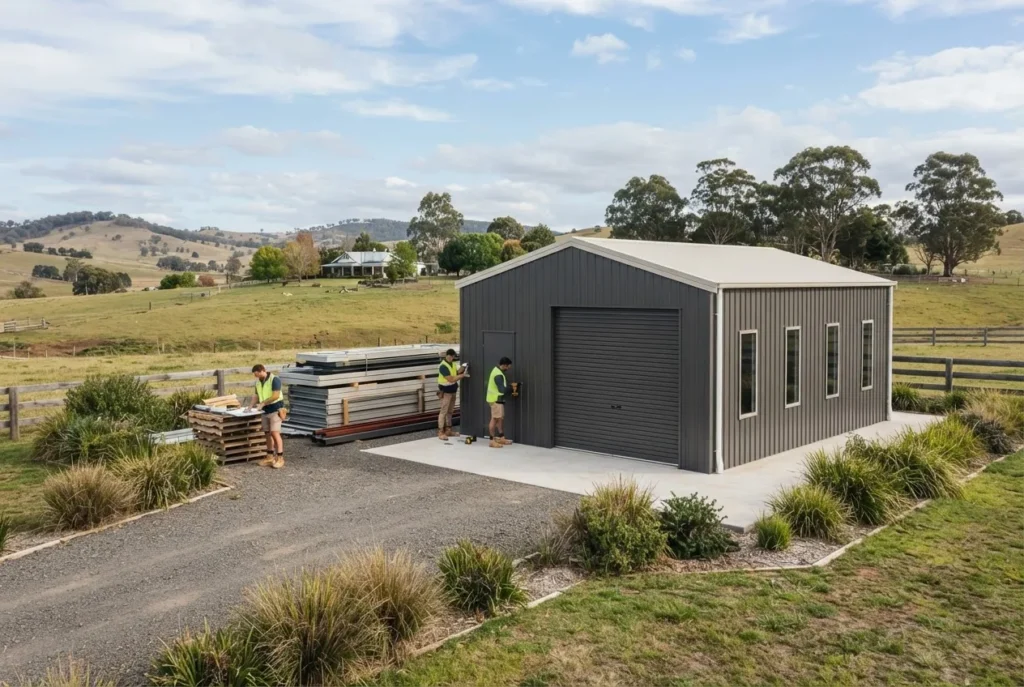
| Gable roof | Classic look, good headroom and airflow | More ridge/valley detailing; consider sarking | Larger hobby and vehicle workshops, custom Colorbond garages Perth |
| Dutch gable/hip | Architectural, blends with heritage homes | Higher cost, more flashing | Streetscapes with design controls |
DIY Shed Kits vs Turnkey Install — What Suits You?
| Option | What you get | Pros | Watch-outs |
|---|---|---|---|
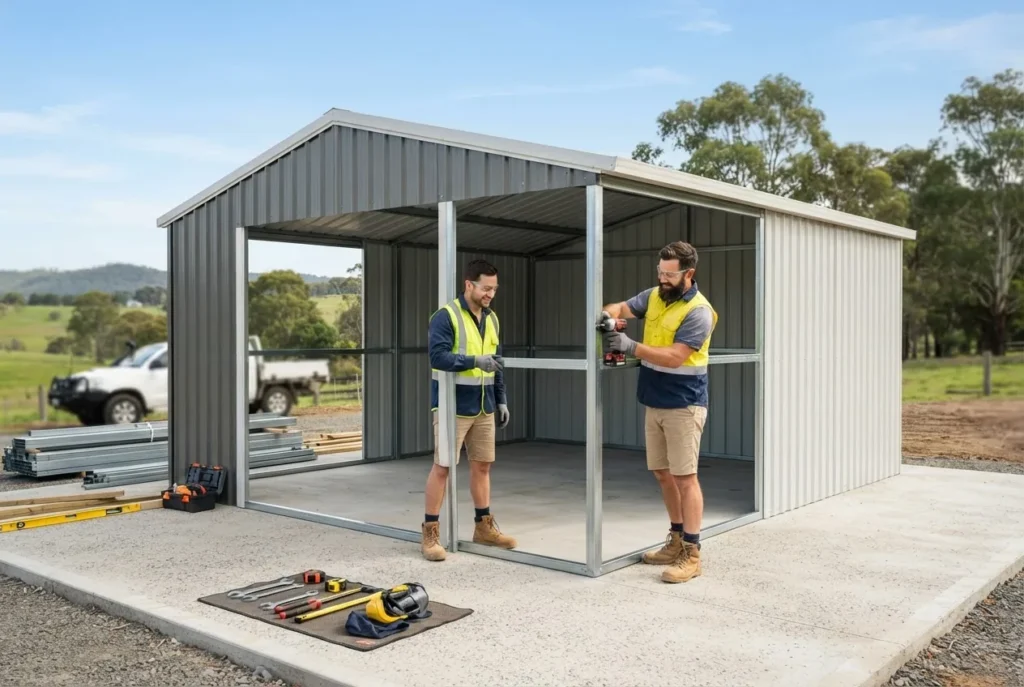
| DIY shed kits | Pre-engineered kit, drawings, fixings | Lower cost, flexible schedule | Time, tools, accuracy required; warranty depends on correct install |
| Owner-builder + contracted erector | You manage permits and slab; crew erects | Balanced cost-control | Project coordination and compliance rests with you |
| Turnkey custom build | Design, permits, slab, erection, fit-out | Fastest, single warranty, minimal hassle | Higher upfront cost |
Do You Need a Cyclone- or Bushfire-Rated Shed?
North QLD and exposed coastal areas often require cyclonic design; bushfire-prone zones may trigger BAL measures.
- cyclone-rated sheds QLD: Engineered to AS/NZS 1170.2 Region C/D. Expect heavier hold-downs, closer purlin spacings, cyclonic-rated roller doors, and upgraded connections.
- BAL (AS 3959): If your site has a Bushfire Attack Level, use ember-resistant vents, steel gutters, leaf guards, and non-combustible cladding and decking. Consider water supply for fire-fighting.
Useful reading: CSIRO bushfire building guidance.
Insulation, Cooling and Power: Make It Comfortable
- Roof insulation: Anticon blanket for condensation control or insulated roof panels for cooler interiors.
- Wall insulation: Bulk batts behind internal liner sheets in cooler climates.
- Ventilation: Ridge vents, eaves vents, powered exhaust; avoid negative pressure pulling dust through gaps.
- Cooling: Fans, evaporative coolers (dry regions), shade trees, and light roof colours.
- Electrical: RCD-protected sub-board, LED lighting, outdoor-rated GPOs, surge protection for tools.
- Solar: Skillion roofs simplify north-facing PV; battery-ready conduits at build stage.
Cost Guide for Australian Shed Workshops in 2025
Budgets vary by size, site access, wind/BAL ratings, cladding, slab thickness, doors, insulation, and whether you go DIY or turnkey. As a rule, complex sites and higher wind or bushfire categories increase engineering, fixings and erection time. Get at least three itemised quotes that separate slab, kit, erection, electrical and any council fees.
Current industry commentary (e.g., 2025 Australian Steel Market Outlook; HIA’s 2025 Outdoor Structures report) suggests steady demand and typical lead times for engineered kits and installers. Always confirm availability, steel specification, and warranties in writing.
References: HIA market updates, Australian Steel Institute commentary.
Popular Australian Use-Cases and Keyword Clusters
- Residential: garden shed workshop ideas, shed workshop ideas, Colorbond steel shed, insulated sheds Perth.
- Vehicle: custom Colorbond garages Perth, double garage + workshop, motorbike bays, tool rooms.
- Rural/Ag: rural sheds NSW, tractor bays, farm machinery storage, feed rooms.
- Coastal/Hot: heat-reflective roofs, coastal fasteners, anti-condensation systems, coastal paint systems.
- Urban value-add: custom carports Melbourne, affordable carports for Australian homes, small workshops for investors.
- Performance: wind-rated sheds for cyclonic areas, corrosion management, ventilation upgrades.
5-Step Buying Guide for Custom Sheds in Australia
- Define the job: tools, vehicles, materials and future needs; sketch zones and door clearances.
- Match materials: Colorbond vs Zincalume by climate; confirm 0.42–0.48 BMT, galvanised frames and compliant fixings.
- Engineer early: Confirm wind region, terrain category, and BAL; request stamped drawings to AS/NZS.
- Get approvals: Secure planning/Building Permit; coordinate slab drainage and stormwater to council rules.
- Fit-out for comfort: Insulation, ventilation, lighting, and power—plan conduits before the slab pour.
FAQs
Do I need a concrete slab?
For workshops, yes—slabs give level surfaces, anchorage and durability. Your engineer will specify slab thickness, mesh and footings for your wind region.
Can I add plumbing?
Usually, yes, subject to council and a licensed plumber. Plan trenching and waste points before the slab.
How long does it take?
Lead times depend on engineering, permits and installer availability. Factor design/approvals, slab cure, then erection and fit-out.
Can I DIY?
DIY shed kits suit experienced owners with time, tools and a helper crew. For many, a licensed erector or turnkey option protects warranty and speed.
What about condensation?
Use Anticon or insulated panels, ridge/eaves ventilation and door seals. Manage internal moisture from gas heaters and wet work.
Which standards apply?
Commonly referenced: AS/NZS 1170.2 (wind actions), AS 4100 (steel structures), AS/NZS 4600 (cold-formed steel), AS 3959 (BAL), and relevant parts of the NCC.
Real-World Specs Checklist to Discuss with Your Supplier
- Wind region and terrain category per AS/NZS 1170.2
- Frame finish (hot-dip galvanised) and connection details
- Cladding profile and BMT; Colorbond colour and warranty terms
- Roller door wind locks and PA door security
- Insulation/condensation strategy and ventilation
- Electrical plan, sub-board size, and lighting levels
- Stormwater, gutters, and downpipes sized to local rainfall
- Setbacks, maximum height and eave lines per council rules
Speak with an Australian Shed Designer
From compact garden workshops to large rural bays, we design and supply engineered, council-ready sheds across Australia—including steel sheds Perth and fully council-approved sheds WA. Ask us about insulated roof panels, BAL upgrades, and cyclonic tie-downs for northern projects.
Related searches we service: wind-rated sheds for cyclonic areas, DIY shed kits, custom carports Melbourne, rural sheds NSW, and custom Colorbond garages Perth.
Citations and resources (general): Bureau of Meteorology | CSIRO | HIA | Master Builders Australia | Standards Australia | Australian Steel Institute. Always verify current local council requirements and the latest Australian Standards.