

Build a resilient 12×6 steel shed for Aussie conditions
A 12×6 shed (12 m x 6 m, 72 m²) is a sweet spot for Australian homeowners, renovators, and property investors. It’s big enough for a custom-built double garage in Perth, a serious workshop, or a 6 x 12 storage shed on a regional block—without blowing out costs or approvals. Whether you want an open shed, a 6×12 garden shed, or a council-approved Colorbond steel shed for regional WA, this guide shows you how to specify, price, and build it right.
Explore a more compact 6×4 Shed for smaller blocks.
What can you fit in a 12×6 shed?
- Vehicles: two cars side-by-side (custom Colorbond garages Perth), or a 4WD plus trailer.
- Workshop: hoist bay, benchtops, compressor nook, and mezzanine storage.
- Recreation: home gym, hobby studio, or a DIY shed kit fit-out.
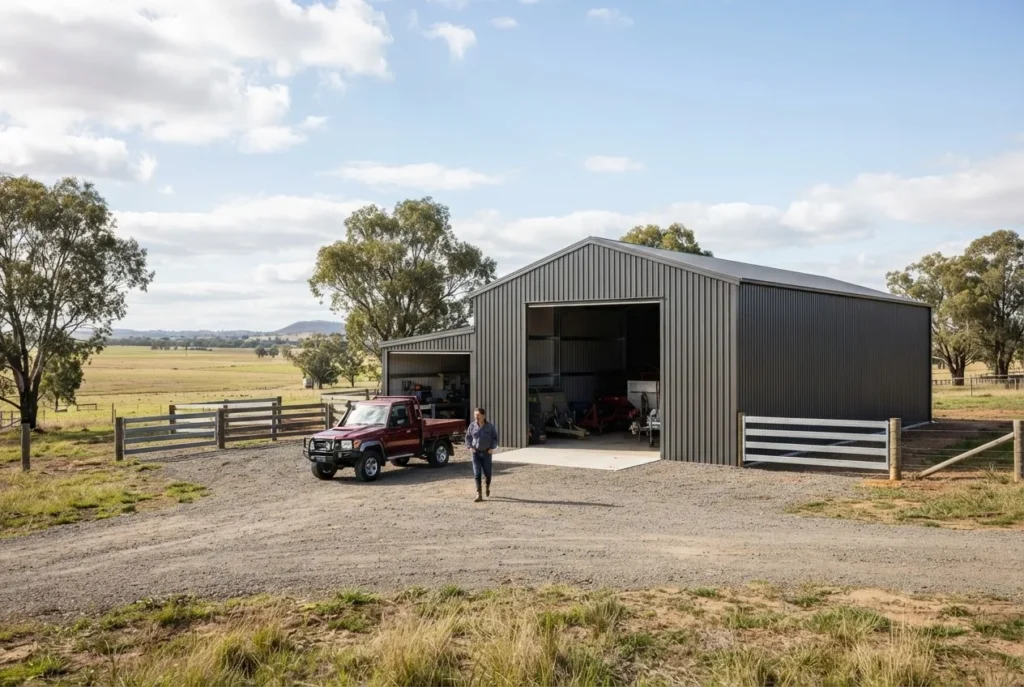
- Rural: farm machinery storage, ride-on mower bay, or a 6×12 open-front machinery shelter.
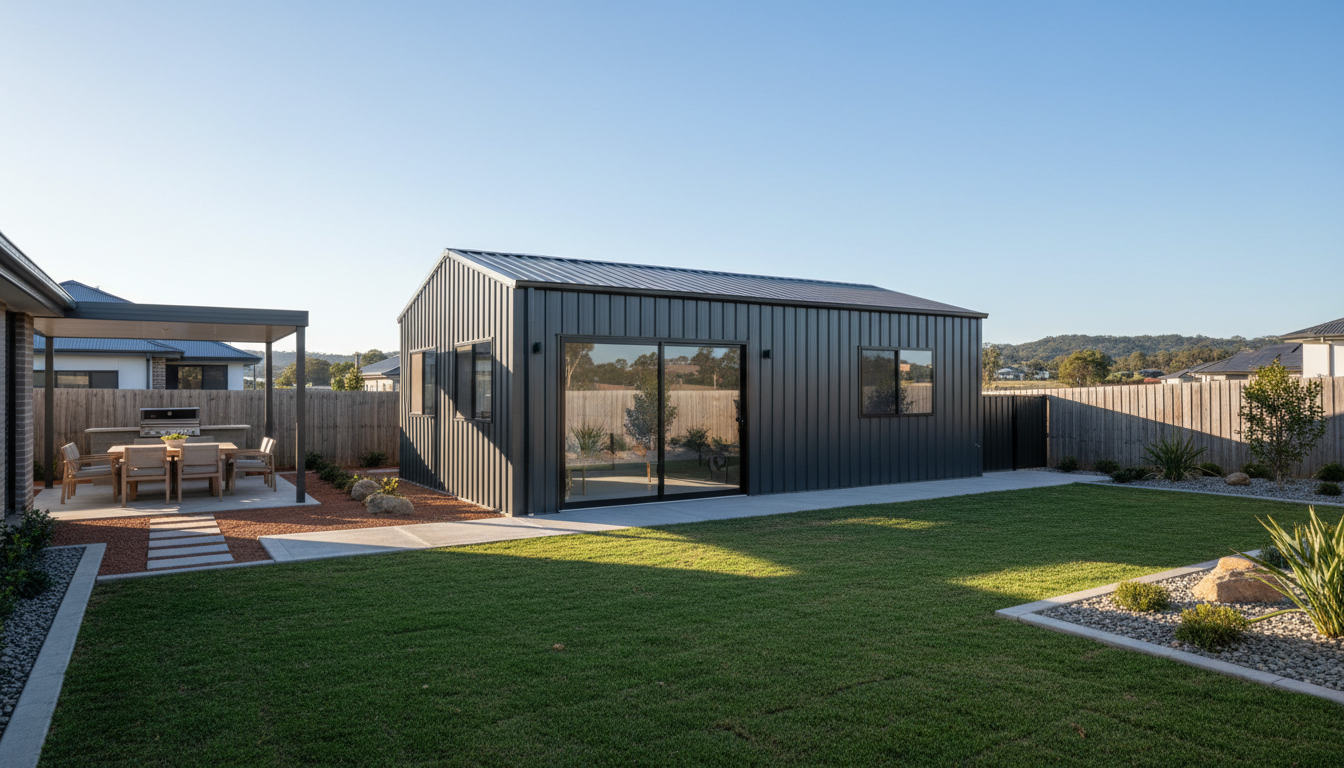
- Garden: 6×12 garden shed with racking, shelving, and secure PA door.
Tip on layout: for vehicle access, allow at least one 3.0 m–3.6 m wide roller door; for boat or van access, consider a 3.6 m–4.0 m opening and 3.0 m–3.6 m wall height for better clearance.
What are the best shed materials for Perth’s climate?
For Perth and much of WA, choose Colorbond steel cladding, galvanised purlins, and hot-dip galvanised brackets for longevity in high-UV, coastal, and semi-coastal zones. Zincalume is a solid, budget-friendly alternative inland. Below is a WA-focused comparison to help you decide.
Colorbond vs Zincalume — Which is better for WA conditions?
| Feature | Colorbond Steel | Zincalume Steel |
|---|---|---|
| Best use | Coastal/semi-coastal, high-UV, premium appearance | Inland, rural sheds NSW and WA Wheatbelt |
| Finish | Painted, high UV stability, wide colours | Metallic coating, silver tone only |
| Coastal performance | Strong, but maintain regular wash-down near surf | Good, but more frequent maintenance near salt |
| Warranty | Up to 20+ years with BlueScope conditions | Up to 20+ years with BlueScope conditions |
| Cost | Higher | Lower |
| Looks | Premium, matches Colorbond roofing & fencing | Utility aesthetic |
Energy and comfort: Add roof insulation or insulated roof panels to reduce radiant heat. Pro Tip below.
How much does a 12×6 shed cost in Australia (2025)?
Indicative pricing varies by wind region, cladding, height, doors, and inclusions. The 2025 HIA Outdoor Structures and Home Improvement Report notes steel and labour costs remain elevated versus pre-2020 levels.
- DIY shed kits (Zincalume, basic doors): approx $13,000–$22,000
- DIY shed kits (Colorbond, premium doors/windows): approx $17,000–$28,000
- Supply & install (non-cyclonic, 3.0 m eave): approx $26,000–$42,000
- Supply & install (cyclone-rated sheds QLD or WA North): approx $36,000–$58,000
- Concrete slab 100–125 mm with thickened edge (72 m²): approx $7,500–$12,000 depending on site and engineering
Expect higher costs in Region C/D (cyclonic), coastal C3/C4 corrosion zones, snow load areas (alpine VIC/NSW), and where Site-Specific Engineering (SSE) requires heavier frames.
Which roof style and height should you choose?
Roof profile affects capacity, cost, and water runoff. For a 12×6 shed, both skillion (flat mono-pitch) and gable work well.
| Roof type | Pros | Watch-outs | Best for |
|---|---|---|---|
| Skillion (mono) | Simpler build, modern look, easy solar-ready roof | Lower central height; check downpipe capacity | Side driveway access, urban blocks |
| Gable | Extra headroom, classic look, good airflow | More framing; ridge ventilation planning | Workshops, hoists, mezzanine storage |
Common wall heights: 2.7 m, 3.0 m, 3.6 m. For a hoist or tall 4WDs, 3.6 m is smart. Confirm roller door opening heights align with vehicle needs.
How to get council approval for your custom shed in WA
Most 12×6 sheds require a building permit. Your certifier or shed supplier can lodge plans with engineering.
Step-by-step approvals (WA)
- Check R-Codes and local planning rules for setbacks, height limits, and stormwater discharge.
- Order site plan, slab plan, and engineering (AS/NZS 1170.2 wind loads, NCC 2022). Added 2024 WA wind-rating compliance notes
- Provide specification for cladding (Colorbond/Zincalume), wind region, terrain category, and connection details.
- Submit Building Permit application (BA2 via private certifier or BA1 to council), including energy and BAL if applicable.
- On approval, book slab, frame install, door fit-off, and final inspection/compliance.
Other states are similar. For QLD, ensure Form 15/16 and Region C/D details are included; for NSW/VIC, check bushfire (BAL) and snow loads in alpine zones.
What wind rating does your 12×6 shed need?
Wind rating is critical to safety and insurance. Engineering follows AS/NZS 1170.2 with NCC 2022 rules and Site-Specific Engineering (SSE).
- Non-cyclonic (Regions A/B): most metro areas including Melbourne, Sydney, Adelaide, Canberra.
- Cyclonic (Regions C/D): North QLD, NT Top End, and WA’s northwest. Specify cyclone-rated sheds QLD and WA with appropriate hold-downs, connections, and cladding fixings.
- Terrain Category (TC): e.g., TC2 suburbia vs TC1.5 open terrain affects pressures.
Council-approved sheds WA and custom Colorbond garages Perth usually include SSE and documentation at order time—avoid generic, non-certified kits.
5-Step Buying Guide for Custom Sheds in Australia
- Define use: garage vs workshop vs farm machinery storage; list door sizes, power needs, and storage.
- Choose materials: Colorbond for coastal/appearance; Zincalume for inland value. Consider galvanised frames and C/Z purlins.
- Set dimensions: 12×6 footprint, wall height (3.0–3.6 m), roof type, and slab specification.
- Engineering & approvals: confirm wind region (A–D), terrain category, BAL, and NCC 2022 compliance.
- Install & finish: slab, frame, roller doors, insulation, gutters/downpipes to stormwater, lighting, and security.
DIY shed kits vs custom-built install
| Option | Pros | Cons | Who it suits |
|---|---|---|---|
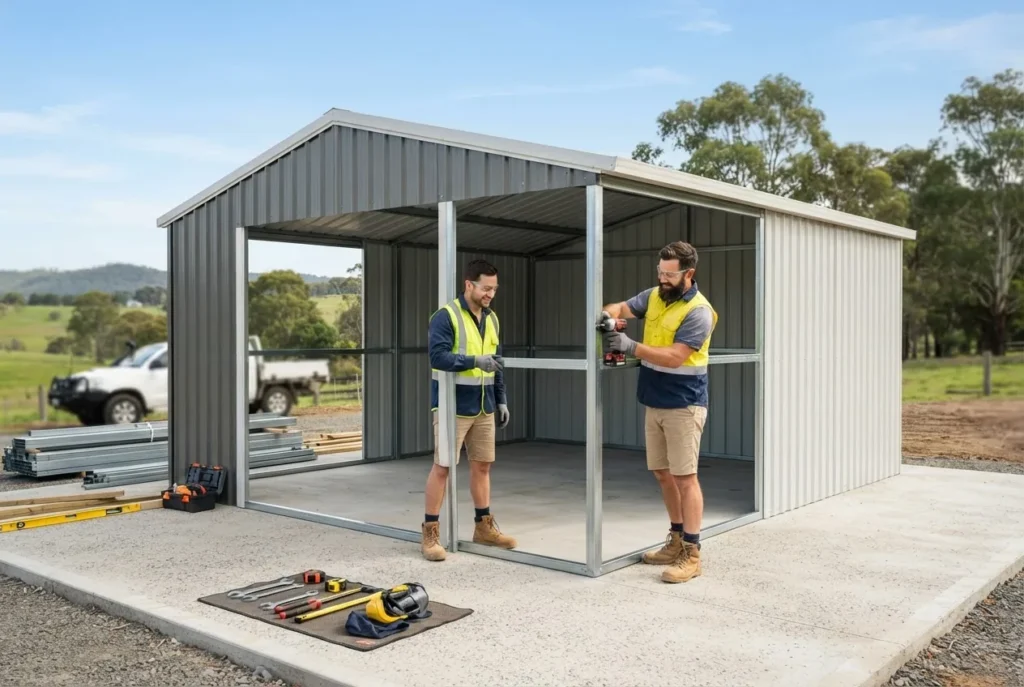
| DIY shed kits | Lower cost, flexible timing, great for capable owner-builders | Time-consuming; still need certified engineering and permits | Tradies, experienced DIYers |
| Custom-built install | Turnkey, faster, managed approvals and SSE | Higher cost | Time-poor homeowners and investors |
Smart inclusions for a 12×6 shed
- Doors: 2 x 3.0 m roller doors, 1 x PA door with deadbolt, window with security screen.
- Structure: 90–150 mm galvanised columns, C/Z purlins, cyclone ties where required.
- Thermal: roof and wall insulation, insulated roof panels, whirlybirds or ridge vent.
- Electrics: LED high-bays, GPOs, sub-board, EV-ready circuit.
- Water: gutters/downpipes sized to NCC; rainwater harvesting where allowed.
- Details: vermin flashing, sarking, anti-condensation blanket, lintels, and lintel stiffeners for wide openings.
- Finish: Colorbond colours to match house, or Zincalume for budget builds.
For higher-end finishes, see Luxury Storage Sheds Australia for inspiration.
Pro Tip: Did you know using insulated roof panels can reduce internal shed temperatures by up to 10°C in summer?
Case studies: 12×6 sheds built for Australian conditions
Perth workshop garage
12×6 gable, 3.6 m wall height, Colorbond Matt, 2 x 3.0 m roller doors, insulated roof panels, 6 kW solar-ready. Site-Specific Engineering for Region A, TC2. Result: year-round comfort and space for a hoist.
Regional NSW farm shed
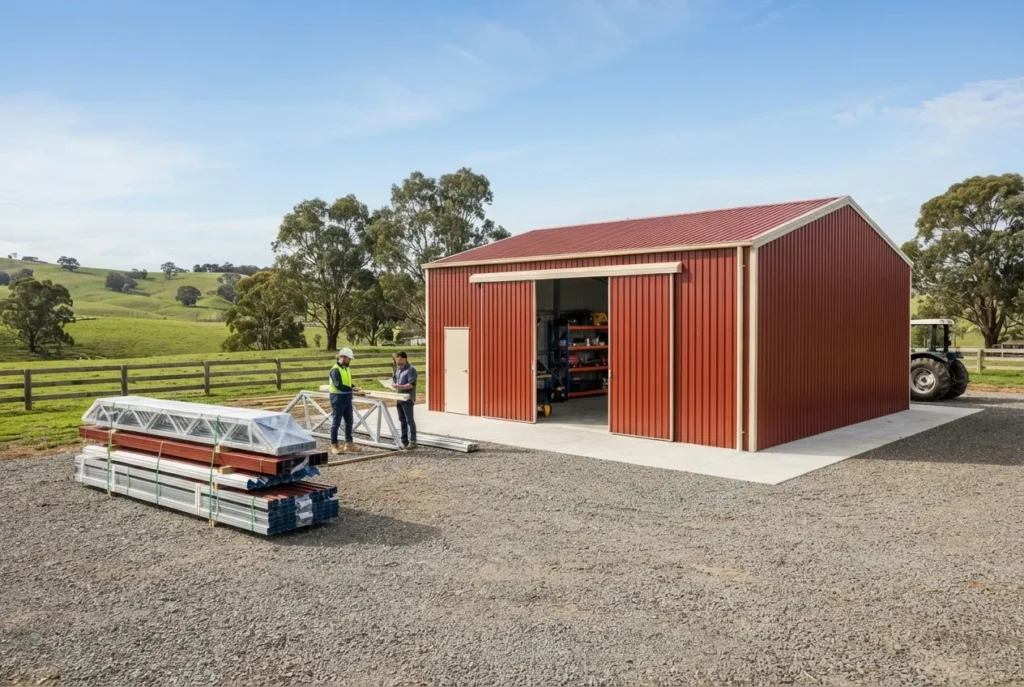
6 x 12 open shed with one enclosed bay, Zincalume cladding, 3.0 m wall height, gravel floor in open bays, slab only under enclosed bay. Designed for rural sheds NSW wind conditions; low-maintenance and practical.
Townsville (QLD) cyclonic build
12×6 skillion, Region C, upgraded hold-downs, tighter sheet fixing, cyclonic-rated roller doors. Delivered as a council-approved kit with local installer—robust performance in severe storms.
Safety, compliance, and longevity
- Standards: AS/NZS 1170 (wind/snow), AS/NZS 4600 (cold-formed steel), NCC 2022, and local council by-laws.
- Coastal care: for C3/C4 corrosion zones, specify marine-grade fasteners and schedule regular wash-downs.
- Bushfire: check BAL; add ember seals and non-combustible sarking if required.
- Stormwater: connect gutters and downpipes to legal point of discharge.
- Warranty: use BlueScope Steel for strong long-term warranties and documented maintenance.
Frequently asked questions
Is 12×6 big enough for two vehicles and a workshop?
Yes—park two cars and still retain a bench zone. If you want a hoist plus two cars, consider 3.6 m walls and good door placement.
What slab do I need?
Typically 100–125 mm reinforced slab with thickened edge beams. Final specification comes from engineering and soil report.
How long does approval and build take?
Design/engineering: 1–3 weeks; council/certifier: 2–6 weeks; fabrication: 2–5 weeks; install: 2–7 days plus concrete cure time.
Colorbond or Zincalume?
Colorbond for coastal and premium looks; Zincalume for inland value. See comparison above.
Can I get a cyclone-rated version?
Yes. Specify Region C/D, cyclonic doors, upgraded hold-downs, and SSE. This is essential for North QLD and WA’s northwest.
Do I need insulation?
Highly recommended for comfort and condensation control—especially in Perth summers and humid QLD. Consider roof insulation or insulated panels.
Australian references and further reading
- Housing Industry Association (HIA) – market updates on residential building and outdoor structures
- Bureau of Meteorology – wind regions, cyclones, and climate data
- Australian Steel Institute – guides on steel design and corrosion
Keyword clusters you might be searching for
- Local: steel sheds Perth, custom carports Melbourne, rural sheds NSW, council-approved sheds WA
- Technical: Colorbond vs Zincalume comparison, site-specific engineering, wind-rated sheds for cyclonic areas
- Usage: 6 x 12 storage shed, 6×12 garden shed, open shed, affordable carports for Australian homes