

Hay Sheds in Australia: Pricing, Kits, Wind Ratings and Council Approvals (2025 Guide)
Added 2024 WA wind-rating compliance notes • Optimised for Australian conditions: heat, corrosion and cyclonic regions.
Whether you’re storing round bales on a lifestyle block or feeding high-density square bales on a broadacre farm, the right hay shed protects feed, reduces spoilage and improves access for loaders and trucks. This guide covers hay shed prices, DIY shed kits vs custom builds, Colorbond vs Zincalume, wind ratings (including cyclone regions), and council approvals with clear Australian context.
How Much Do Hay Shed Kits Cost in Australia in 2025?
Indicative hay shed kit prices (frame, cladding, fasteners, engineering) vary by span, height, wind region and finish.
- Small acreage (e.g., 12 m x 9 m x 4.5 m, three-sided, Region A/B): $18,000–$28,000 kit only (Zincalume at the lower end, Colorbond at the higher end).
- Mid-size farm (e.g., 18 m x 12 m x 5 m): $35,000–$60,000 kit only; add $18,000–$45,000 for erection, footings and equipment.
- Large span (e.g., 30 m x 18 m x 6 m): $85,000–$160,000+ kit only; installed turnkey can reach $140,000–$250,000+ depending on wind upgrades (Region C/D), height, and site access.
Expect 10–25% more for cyclone-rated sheds (Region C/D), extra height (5.0–6.0 m eave), and heavy-duty portal frame designs. Turnkey pricing varies with concreting, crane time, and rural travel.
What Are the Best Shed Materials for Perth’s Climate?
Perth heat and coastal air demand high-performance coatings and smart ventilation. Here’s a quick Colorbond vs Zincalume comparison for WA conditions:
| Feature | Colorbond Steel | Zincalume Steel |
|---|---|---|
| Coating | Pre-painted (polymer) over zinc-aluminium alloy | Zinc-aluminium alloy (no paint) |
| Corrosion resistance (C2–C3 inland) | Excellent; proven in WA semi-coastal | Very good; best >= 2000 m from severe marine |
| Heat reflectance | Light colours with Thermatech can cut heat gain | Reflective when new; dulls over time |
| Aesthetics | Wide colours to match existing buildings | Classic silver finish only |
| Cost | ~5–15% higher than Zincalume | Budget-friendly |
| Best use in WA | Coastal, urban fringes, premium builds | Rural inland, value-focused hay barns |
Which Hay Shed Design Works Best: Open-Front, Enclosed or Hybrid?
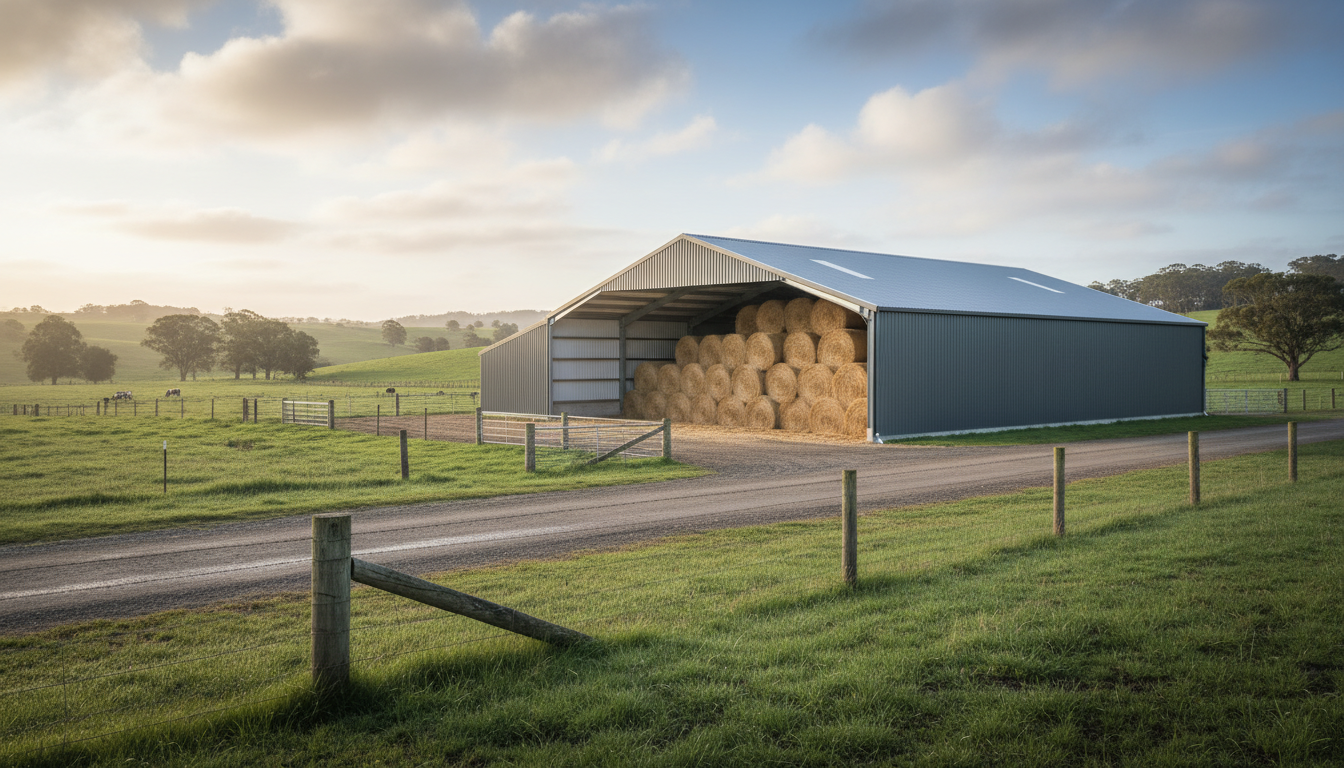
- Open-front (three-sided): Most common hay barn layout; excellent access for loaders and trucks; good passive ventilation.
- Enclosed with sliding doors: Better weather protection; consider ridge vents or whirlybirds for moisture control.
- Hybrid: Enclosed windward walls, open leeward bays; often ideal in high-wind corridors.
Popular bay widths are 6–8 m; eave heights 4.5–6.0 m for stacked big squares and tractor clearance. Consider 8–12 m spans for mixed farm machinery storage.
Need tidy storage for small equipment? See our mower shed buying guide (2025).
Do You Need a Cyclone-Rated Hay Shed in QLD or Northern WA?
Wind design is governed by AS/NZS 1170.2 (NCC 2022). Your engineer will specify Region (A, B, C, D), Terrain Category, shielding and importance level.
- Region C/D (cyclone-rated sheds QLD, Pilbara): closer purlin spacing, heavier connections, more hold-downs, and upgraded cladding fasteners.
- Region B (Perth metro fringe, SA gulf): still needs compliant tie-downs and bracing; common rating W41N–W50N.
WA owners: Added 2024 WA wind-rating compliance notes — Many councils now require job-specific certification for council-approved sheds WA referencing AS/NZS 1170.2:2021. Keep your certified drawings and Certificate of Design Compliance on file.
What Size Hay Shed Should You Build?
Work backwards from bale count and handling method:
- Round bales (1.2–1.5 m): 300–600 mm spacing from walls; plan stack stability and loader turning arcs.
- 8x4x3 big squares: Allow 5.0–6.0 m eave height; 8 m bays improve stacking and truck access.
- Mixing with farm machinery storage or equine shelters? Add a flexible bay with enclosed walls and sliding or roller doors.
How to Get Council Approval for Your Custom Shed in WA
Actionable steps for Perth and regional WA
- Confirm planning: Some rural zones allow farm sheds as exempt development. Check your Shire’s LPS and any scheme amendments.
- Wind region + engineering: Obtain site-specific engineering to AS/NZS 1170.2, AS/NZS 4600 (cold-formed steel), and where applicable AS 4100.
- Certified building permit (BA2): In WA, a Certificate of Design Compliance accompanies a BA2 application to the permit authority.
- Site plan and setbacks: Show stormwater management and rural fire access if required.
- Inspections: Footing and final inspection as directed by your certifier/council.
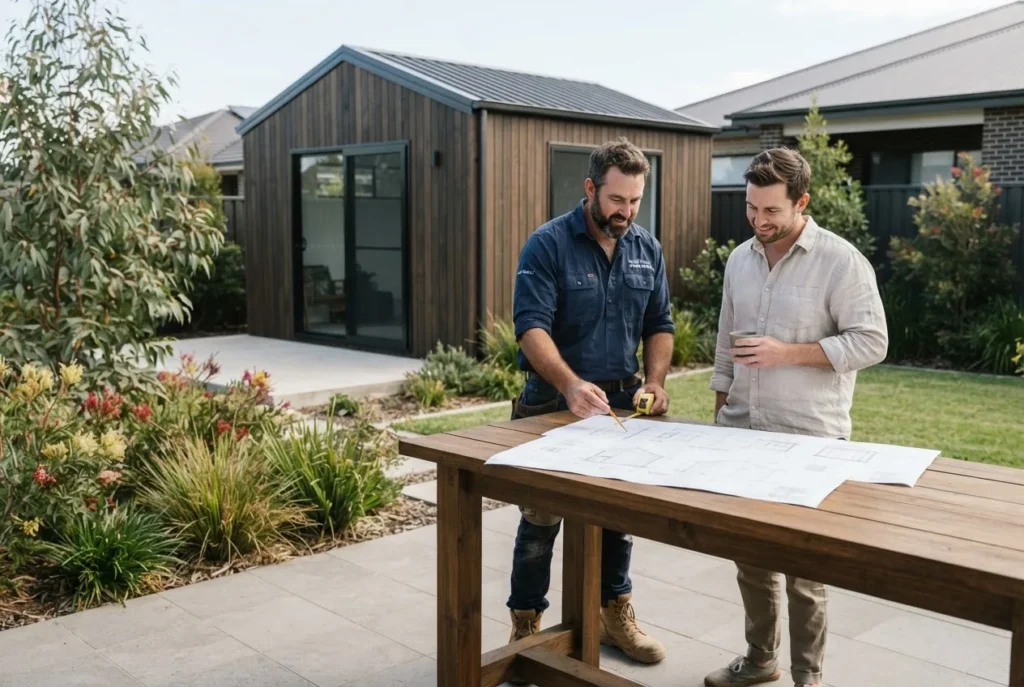
Other states: NSW may use a CDC (Complying Development) for rural sheds NSW; QLD needs region-specific cyclone details; SA/ VIC processes vary by council.
DIY Shed Kits vs Custom-Built: What’s Better for Your Property?
| Aspect | DIY Shed Kits | Custom-Built |
|---|---|---|
| Cost | Lower upfront (owner erects) | Higher, includes erect/or project management |
| Speed | Quicker delivery; install time depends on tools/crew | Turnkey timeline; fewer DIY delays |
| Engineering | Standard spans; upgrades for wind region available | Optimised portals, bay sizes, eave height |
| Risk | Owner manages compliance, OH&S | Builder covers QA, compliance, insurances |
| Best for | Experienced owner-builders; DIY shed kits in easy-access sites | Taller, wider, cyclonic, or complex sites |
What Else Should You Specify in a Premium Hay Shed?
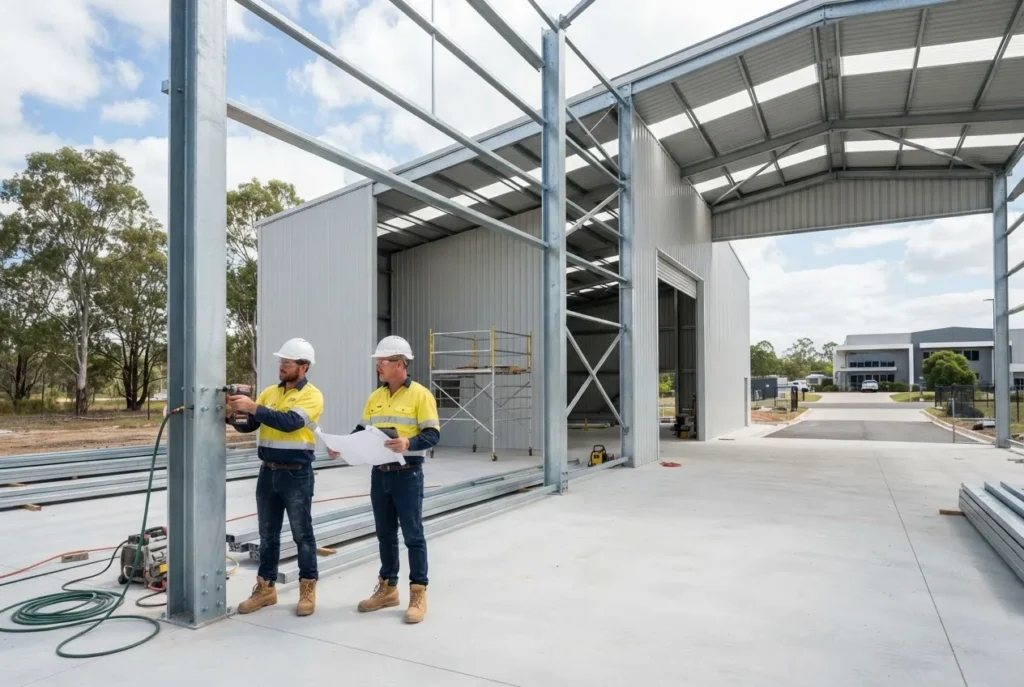
- Frame: Hot-dip galvanised columns/rafters, Z-purlins and girts sized for your wind region.
- Cladding: BlueScope Colorbond or Zincalume to AS 1397; check warranty conditions for distance from marine.
- Roof pitch: 10–15° sheds rain better than 5°; gable roofs enable ridge vents.
- Ventilation: Ridge vents, whirlybirds, and eave inlets help manage moisture from green or high-sugar hay.
- Drainage: Spoon drains and gravel aprons; protect slab edges to AS 2870 where relevant.
- Doors: Sliding doors for wide clear openings; roller doors for enclosed bays.
- Corrosion: Use class 4 fasteners in coastal zones; seal cut edges on Colorbond.
Real-World Build Examples
Wheatbelt WA — Open-Front Hay Barn
- Size: 24 m x 12 m x 5.0 m (3 bays @ 8 m)
- Spec: Zincalume roof/walls, hot-dip galvanised portals, 12° gable roof, ridge vent
- Design: Region B, Terrain Cat 2; engineered to AS/NZS 1170.2 (W50N)
- Outcome: ~720 big squares under cover; loader access through 8 m openings
- Cost: Kit ~$52k; installed with footings and labour ~$96k
Darling Downs QLD — Cyclone-Resilient Enclosed Shed
- Size: 18 m x 15 m x 6.0 m (enclosed)
- Spec: Colorbond Ultra roof/walls, extra hold-downs, class 4 fasteners
- Design: Region C fringe; additional bracing and closer purlin spacing
- Outcome: Reduced wind-driven rain ingress; dual-purpose hay + farm machinery storage
- Cost: Kit ~$88k; turnkey ~$158k
Where to Find a Quality Hay Shed for Sale (and What to Check)
When comparing hay sheds for sale across Australian suppliers, request in writing:
- Engineering certificates for your wind-rated sheds (Region, Terrain, Shielding).
- Steel grades (e.g., G450/G550), coating class, and brand (Colorbond/Zincalume).
- Connection details, bracing layout, and hold-down schedule.
- Inclusions list: flashings, gutters/downpipes, fixings, sealants, drawings, delivery.
- Lead times and crane/erection allowances.
5-Step Buying Guide for Custom Sheds in Australia
- Site + Wind: Confirm wind region, exposure and access; photograph site and mark services.
- Function: Nominate bale type, machinery, drive-through needs and future bays.
- Materials: Choose Colorbond vs Zincalume based on budget and proximity to coast.
- Compliance: Get certified engineering; plan for permits (WA BA2; NSW CDC/DA; QLD building approval).
- Install: Pick DIY shed kits if experienced; otherwise use accredited erectors with rural references.
Frequently Asked Questions
Are hay shed prices going up in 2025?
Steel markets remain steady but transport and labour are the big variables. The 2025 Australian Steel Market Outlook and HIA’s Outdoor Structures and Home Improvement Report suggest stable demand with regional variations. Allow a 5–10% contingency.
Is Colorbond worth the premium near the coast?
Often yes. The paint system, colour stability and coastal performance of specific grades (including Colorbond Ultra) provide better long-term value in C3/C4 zones than base Zincalume. Always check distance-to-marine warranty conditions.
Flat roof or gable roof for a hay barn?
Gable roofs (10–15°) shed rain better and support ridge ventilation. Skillion/flat designs are lower cost but need careful water management, especially on large spans.
Local and Technical References
- Housing Industry Association (HIA) — permits and industry trends.
- Australian Steel Institute — steel design and market outlooks.
- Bureau of Meteorology — wind regions, climate data for design.
- CSIRO — building science and corrosion research.
- Energy.gov.au — guidance on reflective roofs and heat management.
For small‑animal and bird housing near rural sheds, review sheds and aviaries in Australia for airflow and security tips.
Planning Your Next Project Beyond Hay
We also design and supply steel sheds Perth, custom carports Melbourne, rural sheds NSW, farm sheds Adelaide, shed kits Sydney, industrial sheds Victoria, and custom Colorbond garages Perth. Ask about cyclone upgrades for cyclone-rated sheds QLD and northern WA.
Quick Comparison: Roof Style Choices
| Option | Pros | Cons | Best Use |
|---|---|---|---|
| Gable 10–15° | Great water shedding; easy ridge vents; classic look | Slightly higher steel tonnage | Large hay barns; ventilated storage |
| Skillion 5–10° | Lower cost; simple structure | Careful drainage needed; less natural venting | Smaller sheds; lean-tos and extensions |
Hay Shed Tender Template (Copy/Paste)
Send this to suppliers for apples-to-apples quotes on a hay shed for sale:
- Size & bays: [width] x [length] x [eave], [bay spacing]
- Wind region/terrain: [A/B/C/D], [Cat]
- Cladding: [Colorbond colour or Zincalume]
- Open/enclosed sides: [list]
- Ventilation: [ridge, whirlybirds, eave vents]
- Doors: [sliding/roller], openings [width x height]
- Inclusions: gutters/downpipes, flashings, fasteners class, delivery
- Engineering: AS/NZS 1170.2, AS/NZS 4600, NCC 2022 compliance
- Install: kit only / supply & erect / turnkey (with slab/footings)
Key Terms at a Glance
Budget Snapshot (2025)
- Hay shed kit prices (typical range): $18k–$160k+ depending on size, wind rating and finish.
- Erection and footings: $15k–$90k+ by size, location and crane time.
- Upgrades: ventilation, doors, insulation, corrosion class fasteners, and cyclonic tie-downs.
Compliance: NCC 2022; AS/NZS 1170.2 (wind); AS/NZS 4600 (cold-formed); AS 4100 (steel structures as applicable); AS 1397 (steel coatings). Always rely on site-specific engineering and your local council’s requirements.