

Finding the perfect outdoor shelves for Australian sheds is essential for anyone looking to maximise storage while withstanding the harsh 2025 Australian climate. This comprehensive buyer’s guide delivers everything you need to compare options, understand materials, and ensure your shed shelving investment lasts.
Designed specifically for Australian shed owners, we dive deeply into shelving types, weather-resistant materials, load ratings, installation best practices, and compliance with local regulations. Whether upgrading a compact backyard shed or outfitting a large Colorbond structure, this guide arms you with expert insights to make the best decision in 2025.
Understanding Outdoor Shelves: Types and Designs for Australian Sheds
Overview of Common Outdoor Shelf Types (wall-mounted, free-standing, modular)
When selecting outdoor shelves for sheds, understanding the three primary types is crucial:
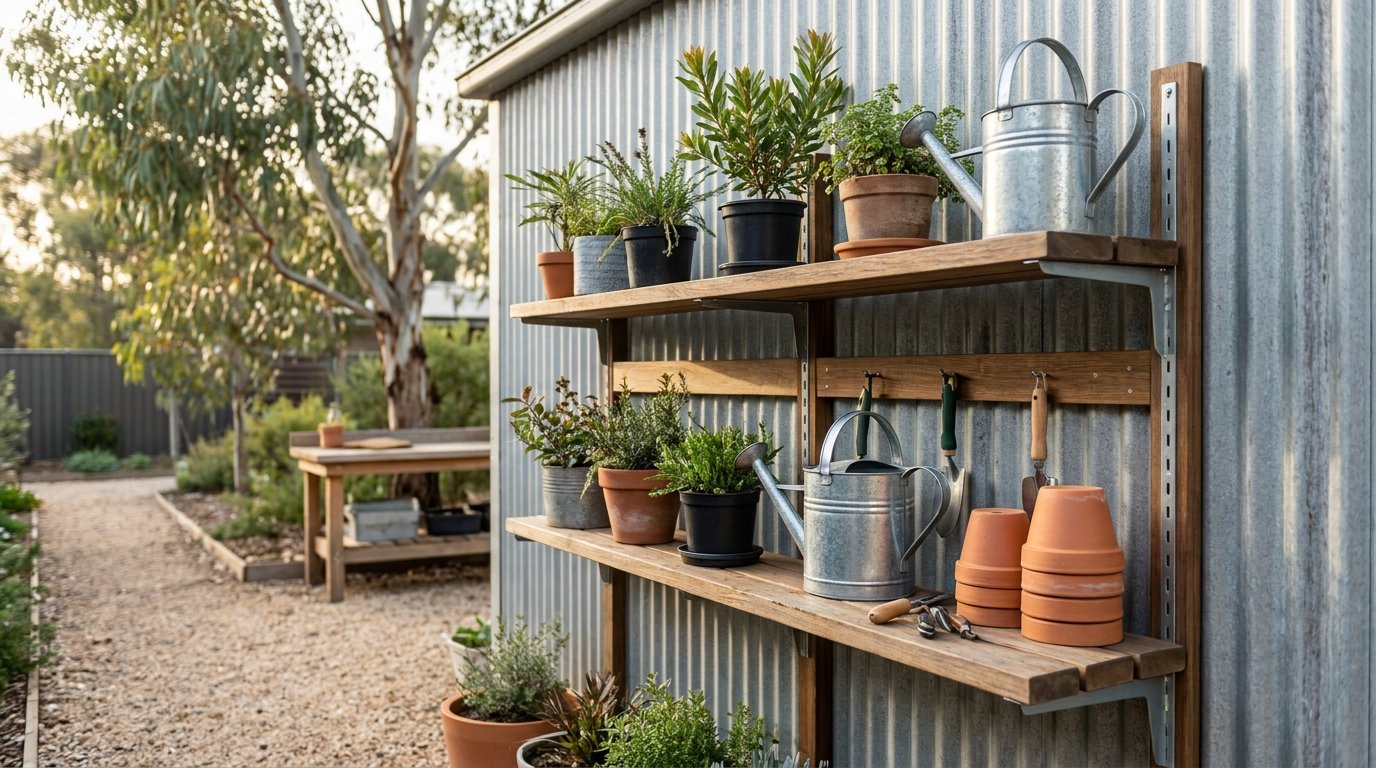
- Wall-mounted shelves attach directly to shed walls, ideal for saving floor space and providing easy access. They require strong anchors and are best suited for sturdier shed walls made of steel or timber.
- Free-standing shelves offer flexibility and relocation options. These units range from simple racks to heavy-duty shelving systems and are popular for sheds with limited wall support or uneven wall surfaces.
- Modular shelving units combine the benefits of both, allowing customisation and extension as storage needs evolve. Their parts can be mixed and matched to fit various shed sizes.
A comparison table summarises key features:
| Shelf Type | Installation | Flexibility | Space Optimization | Typical Load Capacity |
|---|---|---|---|---|
| Wall-Mounted | Fixed to wall with brackets | Low (fixed position) | High (floor kept clear) | Up to 100 kg per linear metre |
| Free-Standing | No wall fixings needed | High (rearrangeable) | Medium (footprint on floor) | Varies greatly, 50-200 kg per shelf |
| Modular | Partially fixed or mobile | Very high (customisable) | High | Up to 150 kg per component |
For a complementary perspective on shelving options, see our detailed guide on garden shelves for Australian sheds.
Design Features Tailored for Shed Compatibility
Design is more than aesthetics—the key is compatibility with shed structure and local conditions. Outdoor shelves for Australian sheds often feature:
- Corrosion-resistant finishes to match steel sheds
- Drainage gaps to prevent water pooling
- Reinforced brackets engineered for common wall types including Colorbond profiles
- Adjustable shelving heights to accommodate varied storage items
- UV-stabilised plastics or powder coatings to combat intense sun exposure
Popular Configurations for Different Shed Sizes
Sheds ranging from small 3x3m to larger 6x3m or more require shelving tailored for space efficiency. Lining walls with low-profile wall-mounted shelves suits smaller sheds, while modular units enable larger sheds to zone storage by type (tools, garden supplies, hardware). This approach prevents clutter and improves accessibility.
Outdoor shelves must fit the dimensions of common shed sizes like the popular 10×10 Colorbond garden sheds to optimise storage space effectively.
Innovations and Trends in Outdoor Shelving for 2025
2025 has introduced advances such as:
- Smart shelving units with integrated lighting or temperature sensors
- Eco-materials derived from recycled composites and sustainably harvested timber
- Tool-integrated storage walls for quick access and organisation
- Modular solar-powered shelves for remote or off-grid sheds
These innovations reflect evolving shed owners’ needs for convenience and sustainability.
Transitioning from types and designs, the next section explores how to choose durable materials suited to Australian outdoor conditions.
Materials and Weather Resistance: Choosing Shelves That Withstand Australian Conditions
| Material | Weather Resistance | Durability | Maintenance | Suitability for Australian Sheds |
|---|---|---|---|---|
| Steel (Galvanised/Colorbond Compatible) | High (with powder coat or galvanisation) | Very Durable | Low, but inspect for scratches | Excellent for Colorbond sheds and coastal areas |
| Aluminium | Rust-proof | Durable but softer than steel | Minimal | Good for humid or salty environments |
| Weatherproof Plastics & Composites | UV and waterproof | Moderate durability (depends on polymers) | Low | Ideal for light to medium storage, resistant to sun damage |
| Treated Sustainable Wood | Depends on treatment | Moderate, risk of warping if untreated | Regular sealing needed | Preferred for aesthetic but requires upkeep |
Steel Outdoor Shelves: Benefits and Drawbacks in Australian Climate
Steel shelving, particularly galvanised or powder-coated, stands up well to UV exposure, high temperatures, and rain common to various Australian climatic zones. It offers strong load support and excellent durability, especially when paired with finishes compatible with popular Colorbond shed compatibility. However, scratches or installation damage may lead to rust spots if not promptly repaired, making quality surface treatment critical.
Aluminium and Rust-Resistant Metals
Aluminium’s inherent rust resistance makes it suitable for coastal or humid regions where salt air accelerates corrosion. Despite being lighter and easier to install, aluminium shelves have slightly lower weight capacity than steel but provide excellent longevity without maintenance.
Weatherproof Plastics and Composite Materials
UV-stabilised plastic and composite shelves resist sun damage and do not corrode or rust. They are often lighter and easier to move but not always suitable for heavy tools or equipment. Advances in composite polymers have improved strength, making them viable for medium-duty outdoor shelving.
Treated and Sustainable Woods for Outdoor Shelving
For homeowners prioritising aesthetics and sustainability, treated hardwood or composite wood blends are an option but require regular maintenance such as sealing against moisture and UV. If untreated, wood may warp, crack, or attract termites in Australian environments.
UV Protection and Waterproof Finishes Specific to Australia
Applying waterproof polymer coatings, powder coating on metals, or UV inhibitors in plastics enhances durability significantly. According to CSIRO research, UV exposure in Australia is among the world’s highest, necessitating materials and finishes specifically rated for UV resistance.
Coordinating shelf finishes with shed colours can improve aesthetics and compliance, as discussed in our Shed Colours Australia guide.
Selecting shelf materials often parallels shed cladding choices like Colorbond vs Zincalume for sheds, due to their differing weather resistance profiles.
Many outdoor shelving units share design principles with waterproof outdoor storage cabinets, particularly regarding material protection.
Choosing the right shelving materials often goes hand in hand with selecting a quality shed brand. For evaluating leading sheds in Australia, see our in-depth Better Sheds Reviews (2025).
Reliably selecting materials informs shelf longevity and user satisfaction before exploring structural integrity and load management in the next section.
Load Ratings, Weight Capacity, and Structural Integrity
Understanding Load Ratings for Different Shelf Types
Load rating defines how much weight a shelf can safely bear per linear metre or per shelf section. Australian Standards such as AS/NZS 1170 govern structural design requirements ensuring safety. Wall-mounted shelves often support up to 100 kg/metre, while heavy-duty free-standing units may carry 200 kg or more.
Maximum Weight Capacities for Common Outdoor Shelving Units
Typical maximum loads depend on material and installation quality:
- Galvanised steel wall-mounted shelves: 70–100 kg/m
- Aluminium modular shelves: 40–80 kg/m
- Plastic composite free-standing shelves: 30–60 kg/m
- Treated wood: variable, generally 50–80 kg/m
How Shed Type (e.g., Colorbond) Influences Load and Installation
The nature of the shed wall material affects shelf load capacity:
- Colorbond steel sheds require specialised brackets and fasteners to spread load and avoid denting metal panels.
- Timber sheds allow direct screwing into studs for heavier loads with simpler hardware.
- Load distribution is critical to prevent wall damage and maintain integrity over time.
Testing and Certification Standards Relevant in Australia
Third-party shelf testing per AS/NZS standards ensures compliance, providing safety guarantees. Certified shelves will indicate compliance with load capacities suitable for Australian outdoor use. Refer to relevant standards such as AS/NZS 4661 for corrosion protection (rust resistance) and AS/NZS 1170 for structural actions.
Next, we cover how to install these thoughtfully built shelves with secure methods tailored to Australian sheds.
Installation Methods and Best Practices for Australian Sheds
Fasteners, Brackets, and Anchors Suitable for Australian Shed Walls
Installation hardware depends on wall substrate:
- Colorbond sheds: Use self-drilling metal screws with neoprene washers and heavy-duty steel brackets designed to distribute load along panel ribs.
- Timber sheds: Structural wood screws or lag bolts with angle brackets are ideal.
- Concrete bases: Use masonry anchors or expansion bolts for freestanding shelving feet or brackets.
Step-by-Step Installation Guide for Wall-Mounted and Freestanding Units
- Plan and mark shelf placements considering load points and accessibility.
- Check wall studs or panel profiles for optimal fixing points; a stud finder or magnet helps locate concealed supports.
- Pre-drill holes for screws where necessary, especially in steel sheds to prevent metal deformation.
- Attach brackets securely with appropriate fasteners; ensure level installation with a spirit level.
- Place shelving units carefully and fix shelves to brackets if required.
- Load-test cautiously, starting with lighter weights to confirm rigidity.
Tools and Safety Precautions for Installation
- Essential tools include power drills, stud finders, spirit level, screwdrivers, safety goggles, gloves, and ladders.
- Always follow shed manufacturer guidelines to avoid warranty voids.
- For heavy shelves or difficult wall materials, professional installation is recommended.
Installing outdoor shelves effectively benefits from understanding garden shed installation tips, including recommended fasteners and tools.
For inspiration on optimising space during and after installation, check out shed organisation ideas for Australian homes.
Now, we will focus on sizing and how to ensure perfect shed compatibility for your shelving units.
Sizing, Shed Compatibility, and Practical Considerations
Matching Outdoor Shelves to Popular Australian Shed Sizes and Layouts
Australia’s backyard sheds typically range from compact 3×3 metres to large 6×3 metres. Shelving must:
- Fit within wall lengths without interrupting door or window access
- Allow enough clearance for large tools or garden equipment
- Support typical storage items expected in the shed’s zone (e.g., heavy garden chemicals vs lightweight pots)
Outdoor shelves must fit the dimensions of common shed sizes like the popular 10×10 Colorbond garden sheds to optimise storage space.
Space Optimization Techniques with Outdoor Shelving Units
Maximise space by:
- Using vertical space with tall wall-mounted or modular units
- Incorporating corner shelves to utilise awkward spaces
- Choosing adjustable or fold-away shelf models
- Integrating hooks or pegboards alongside shelving for tools
Customisable and Modular Options to Fit Unique Shed Requirements
Modular systems featuring interchangeable components (bins, hooks, panels) allow owners to tailor storage that adapts as needs change. These are particularly suited to irregularly shaped sheds or sheds with mixed-use zones.
Additionally, modular shelving can complement specialised sheds like garden tool storage sheds, allowing tool-specific organisation.
Integrating Outdoor Shelving With Existing Storage Solutions
Combining shelving with existing cabinet units or workbenches enhances functionality. When choosing shelves, ensure alignment with bench heights and door clearances to prevent obstruction.
Transitioning from fit and space to compliance, the next section discusses how local regulations affect your shelving project.
Local Regulations, Council Approvals, and Compliance for Outdoor Shelving
When Do Outdoor Shelves Require Council Approval in Australia?
Generally, outdoor shelving affixed to sheds under 10 m² and low height does not need council approval. However, if shelves significantly alter shed structure or increase height, permits may be necessary.
Some local councils consider attached shelving as part of an outdoor structure requiring approval, especially in heritage or bushfire-prone zones. It is essential to confirm with your local council.
Understanding the local council approvals for sheds process can also inform requirements for attached outdoor shelving.
While planning outdoor shelves, consider the shed’s base type, such as concrete floors; learn more in our guide on concrete floors for garden sheds.
Key Australian Standards and Building Codes Affecting Shelf Installation
Shelving installation must meet:
- National Construction Code (NCC) for structural safety
- AS/NZS standards on load ratings and corrosion protection
- Fire safety regulations in bushfire zones requiring non-combustible materials
Environmental and Safety Considerations for Outdoor Shelving
Compliance includes ensuring shelving does not pose hazards (sharp edges, instability), and materials are safe for outdoor weather and potential pests.
How to Navigate Compliance for Different States and Territories
Regulations can vary; for instance:
- Queensland and NSW have strict regulations for outdoor structures in flood or cyclone zones.
- Victoria requires compliance with heritage overlays in some residential areas.
- Western Australia mandates specific fasteners for coastal salt exposure.
For more detailed council approval requirements related to shed sizes, visit the 12×8 shed council approval requirements guide.
After compliance, budgeting is your next vital consideration when choosing outdoor shelves in 2025.
Cost Factors and Budgeting for Outdoor Shelves in 2025
Price Ranges for Various Materials and Shelf Types
| Material | Shelf Type | Typical Price Range (AUD) | Durability |
|---|---|---|---|
| Galvanised Steel | Wall-Mounted, Modular | $100 – $400 per unit | High |
| Aluminium | Wall-Mounted, Modular | $150 – $450 per unit | High |
| Polymer Plastics | Free-standing, Modular | $80 – $300 per unit | Moderate |
| Treated Timber | Custom-built | $150 – $500 per unit | Moderate (depends on upkeep) |
Cost vs Longevity: Investing in Durable Outdoor Shelving
Spending upfront on quality powder-coated steel or aluminium more than offsets frequent replacement or repair costs typical of cheaper plastic or untreated wood shelves. Long-term cost-efficiency correlates strongly with material choice, finish, and maintenance effort.
Additional Expenses: Installation, Maintenance, and Potential Repairs
Budget also for installation hardware, professional setup if needed, and periodic maintenance coatings or rust treatment. Unexpected repairs may arise from UV damage or storm impact, making durable initial choices pay off.
Recommended Australian Suppliers and Brands Worth Considering
Leading suppliers include Stratco, Bunnings, and Mitre 10, offering competitive packages and warranties on outdoor shelving units built for Australian conditions. Consider direct manufacturers specialising in outdoor shelf systems to obtain tailored solutions.
The following section provides tips for maintenance to maximise your shelving lifespan.
Maintenance, Durability, and Longevity Tips
Routine Maintenance Practices for Different Materials
- Regularly clean shelves to remove dust, salt, and debris.
- For metal shelves, inspect and touch-up powder coatings or galvanisation damage immediately.
- Seal wooden shelves annually to prevent moisture ingress.
- Lubricate joints or hinges on modular units to avoid rust.
Identifying and Preventing Common Issues (rust, warping, UV damage)
- Rust appears as orange-brown patches on metal; sand and repaint quickly.
- Wood warping causes uneven shelves; prevent by sealing and avoiding standing water.
- UV damage dulls surface finishes; apply UV-resistant sprays or coverings.
Seasonal Considerations for Australian Weather Cycles
Before heavy rains or summer storms, check shelves for loose fasteners or damage. Coastal sheds may require extra washing off of salt deposits during autumn and spring.
Repair vs Replacement: When to Upgrade Your Outdoor Shelves
Minor surface damage can be repaired, but structural faults, persistent rust, or warped boards warrant replacement. Investing early in high-quality materials reduces frequency of such issues.
By following expert maintenance protocols, your outdoor shelves will remain a reliable shed storage solution throughout 2025 and beyond.
In summary, selecting the right outdoor shelves tailored for Australian sheds involves understanding types, materials, compatibility, and compliance. Prioritise quality weather-resistant materials, adhere to load ratings, and install securely for maximum durability. Regular maintenance completes the cycle.
Ready to maximise your shed’s storage in 2025? Start by evaluating your shed dimensions and environment to pick the shelf type suited for your needs today.
Frequently Asked Questions
What are the main differences between wall-mounted and free-standing outdoor shelves for sheds?
Wall-mounted shelves save floor space and support higher loads but require sturdy walls, while free-standing shelves offer flexible placement without wall fixings but occupy floor space and typically carry varied weight capacities.
How does a modular outdoor shelving unit compare to traditional fixed shelves for Australian sheds?
Modular shelving units are highly customisable and expandable, fitting varied shed sizes and storage needs, unlike traditional fixed shelves which have limited flexibility and fixed dimensions.
What defines an outdoor shelving unit specifically made for Australian sheds?
It is designed with weather-resistant materials, UV protection, corrosion-resistant finishes, and mounting systems tailored to common Australian shed walls, especially Colorbond steel, to withstand the local climate and structural demands.
When is council approval required for installing outdoor shelves on Australian sheds?
Council approval is generally needed if shelving alters the shed’s structure, increases height significantly, or is located in heritage, bushfire, or flood-prone zones; otherwise, simple shelving on sheds under 10 m² usually does not require approval.
Which materials offer the best durability for outdoor shelves exposed to harsh Australian coastal conditions?
Galvanised or powder-coated steel and aluminium provide superior rust resistance and durability in coastal environments, outperforming untreated wood and some plastics that may degrade faster under salt air exposure.
How can shed owners optimise space using outdoor shelves in small Australian sheds?
Using vertical wall-mounted or modular shelving, corner units, and adjustable shelves maximises storage without clutter, while hooks and pegboards complement shelves for efficient tool organisation in limited spaces.
Does selecting outdoor shelves with certified Australian Standards improve safety?
Yes, shelves certified to Australian Standards like AS/NZS 1170 ensure structural load capacity and corrosion resistance, enhancing safety and longevity under local climatic and regulatory conditions.
What maintenance is essential to extend the longevity of outdoor shelves in Australian sheds?
Regular cleaning, promptly repairing rust or scratches, sealing wooden shelves annually, and inspecting fixings help prevent damage from UV, moisture, and corrosion, significantly extending shelf lifespan outdoors.