

By the end of this hands-on guide you’ll be able to choose, spec and budget the best shed materials for a durable, cost-effective shed in Melbourne — a practical decision you can complete in about 4–6 hours of research plus procurement time. Skill level assumed: informed DIYer or homeowner with basic carpentry or contractor coordination experience.
Introduction to Shed Materials for Durable and Cost-Effective Construction
This guide focuses on material selection — how each option performs in Melbourne’s variable climate, what it costs up front and over time, and what trades, supplies and maintenance each choice requires. You will learn to balance upfront cost versus lifecycle cost (purchase, installation, maintenance, likely repairs) so you pick a material that remains structurally sound and economical for 10–30+ years.
Melbourne’s weather sees autumn/winter rain, occasional strong winds, summer heat and UV exposure. That combination makes resistance to moisture, corrosion, UV and pests the primary durability factors to weigh. The guide treats timber, metal (including Colorbond steel), composite/plastic and alternative engineered materials individually, and gives a practical comparison you can use when quoting, sourcing supplies, or planning maintenance.
What you’ll get from this hands-on guide: a checklist of required shed supplies, a mini case study comparing treated pine and Colorbond in Melbourne, a step-by-step material-selection process, and clear triggers for when a pro installer is recommended.
Transition: next we compare the common materials side-by-side so you can see key trade-offs quickly.
Overview of Common Shed Materials

Below is a compact comparison table that summarises the most relevant attributes — upfront cost, expected lifespan in Melbourne conditions, maintenance intensity and typical uses. Use this as a quick reference before deep-diving into each material section.
| Material | Upfront cost (A$ per m²) | Expected lifespan (Melbourne) | Maintenance level | Best for |
|---|---|---|---|---|
| Treated pine (timber) | $35–$75 | 8–20 years (with maintenance) | High — sealing, stain, pest checks | Garden sheds, low-cost DIY |
| Hardwood (timber) | $80–$200 | 20–40+ years | Moderate — protective coatings, pest treatments | Feature sheds, high-end finishes |
| Colorbond steel | $65–$140 | 20–40 years (coated steel) | Low — occasional cleaning and touch-up | All-purpose, wind-exposed sites |
| Galvanized steel | $50–$110 | 15–30 years | Low–moderate — corrosion checks in coastal areas | Utility sheds, budget metal builds |
| Aluminium | $90–$160 | 20–35 years | Low — corrosion-resistant but dent-prone | Lightweight, portable sheds |
| Composite / engineered plastic | $75–$200 | 15–30 years (UV-grade) | Very low — cleaning only | Low-maintenance storage, chemical resistance needed |
| Recycled and engineered alternatives | Variable — $60–$220 | 15–40 years | Low–moderate | Sustainable builds, specialist suppliers |
Use the table to narrow choices, then read the material-specific sections below for precise installation considerations, maintenance tasks and cost drivers.
Timber Materials Used for Sheds
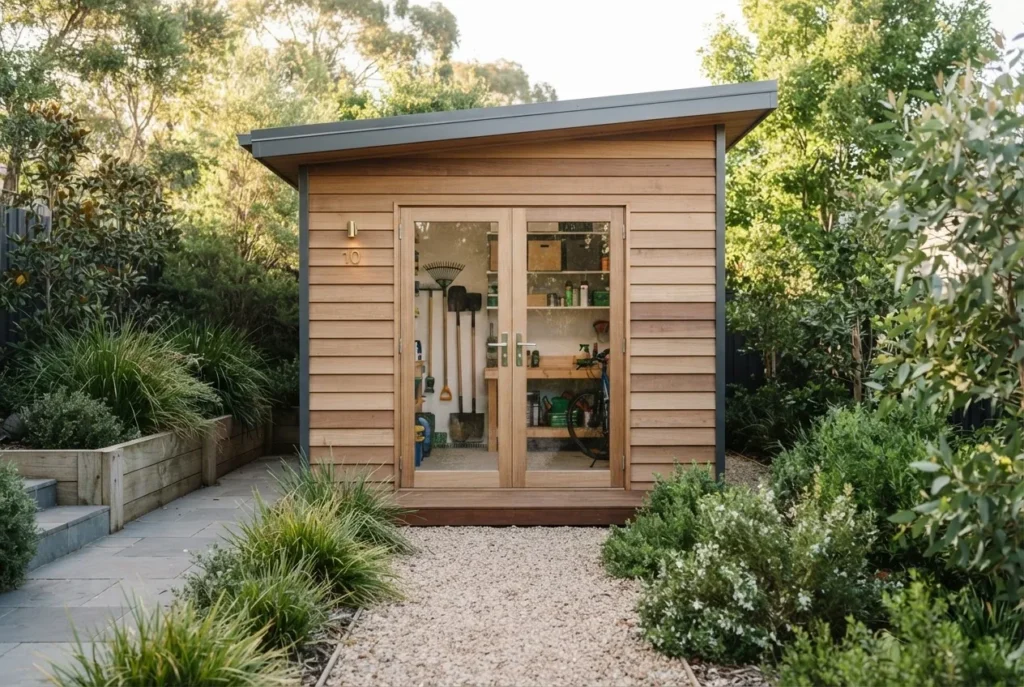
Timber remains a popular choice for its visual warmth, ease of modification and local availability. Typical timber options are treated pine and various hardwoods; engineered timber and glulam are alternatives for higher performance.
- Treated pine: pressure-treated or chemically treated softwood that offers a low-cost framing and cladding option. Costs typically range A$35–$75/m² for basic cladding and structural elements.
- Hardwood: spotted gum, merbau and other durable species can last 20–40+ years but cost substantially more — expect A$80–$200/m² depending on grade and finish.
- Engineered wood (e.g., LVL, CLT panels): offers dimensional stability, lower shrinkage and can be used for wall panels; pricing and availability vary by supplier.
Practical points:
- Weather resistance: Unprotected timber absorbs moisture; specify H3 or H4 treated timber for ground-contact or near-ground framing; seal cladding with a penetrating oil or microporous stain rated for exterior use.
- Pest resistance: Termite risk in Victoria requires choosing treated timber and following local pest management practices; check regional requirements and inspections.
- Maintenance: Anticipate re-sealing or re-painting every 3–7 years in Melbourne UV and rain cycles; perform annual checks for rot and insect damage.
- Installation notes: Timber is forgiving for DIY but requires accurate leveling and flashings at junctions to avoid chronic damp ingress.
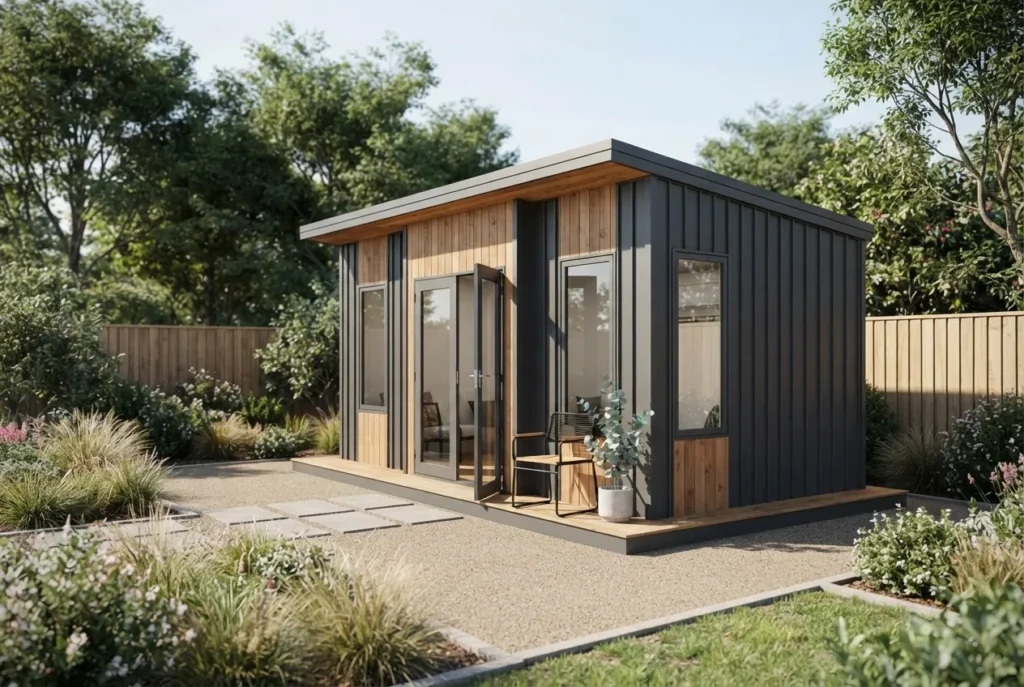
Design example and link: for timber design use-cases that showcase compact layouts and cladding options, see corner garden shed designs.
Metal Shed Materials
Metal sheds dominate in Australian backyard and rural builds for durability and low maintenance. The three primary metal types are Colorbond steel, galvanized steel and aluminium. Each has different corrosion profiles, weight and thermal performance.
Short comparison:
- Colorbond steel: Pre-painted, coil-coated steel with a corrosion-resistant substrate and topcoat designed for Australian conditions. Expect 20–40 year lifespans on vertical cladding in non-coastal Melbourne environments if scratches and edge exposure are managed. For deeper technical guidance on Colorbond variants, see Basalt Colorbond sheds.
- Galvanized steel: Zinc-coated steel that resists rust while cheap to produce. More susceptible to corrosion if the zinc layer is mechanically damaged or in saline coastal air.
- Aluminium: Naturally corrosion-resistant and lighter than steel, but dents more easily and can be costlier for structural framing if large spans are required.
Durability specifics:
- Corrosion resistance: Colorbond’s paint system and protective substrate reduce corrosion, but water traps, scratched edges and electrochemical contact with untreated metals cause local failure over time.
- Heat & reflection: Pale Colorbond colours reflect heat better; darker colours absorb more heat and may increase interior temperatures — consider insulated roof/ceiling if storage temperature sensitivity is a concern.
- Maintenance: Wash down annually, clear gutters and re-seal cut edges. Repair scratched paint within weeks to prevent substrate corrosion.
Installation notes: metal sheets require correct fasteners and neoprene washers to prevent leaks. For foundation interaction and advanced Colorbond foundation guidance (foundation-specific details are treated elsewhere), consult the related foundation guides covering best practice for metal sheds and base compatibility: strong shed foundation installation.
Composite and Plastic Shed Materials
Composite or engineered plastic sheds use UV-stabilised polymers, recycled plastics or wood-plastic composites. They trade higher upfront costs for low maintenance, rot resistance and chemical stability.
Key characteristics:
- UV resistance: Choose products specified for Australian UV loads (look for outdoor UV-stabilised grades). Many manufacturers publish UV test results.
- Maintenance-free: No painting or sealing required; clean with mild detergent occasionally. Vulnerable to plastic creep under heavy continuous load — design shelving and supports accordingly.
- Thermal movement: Allow for thermal expansion joints in long walls and panels, especially across Melbourne’s temperature swings.
- Sustainability option: Recycled-plastic composites avoid timber harvest and can be highly durable; verify recycled content and recyclability at end-of-life.
Use composite for chemical storage, wet environments and when you need the lowest maintenance lifecycle. Installation generally involves panel joiners and simple fasteners; ensure ventilation to avoid heat buildup.
Factors Influencing Material Choice: Durability and Cost
Choose materials by scoring them against four variables: expected lifespan, upfront cost, long-term maintenance cost and climate suitability. Follow these steps to make a defensible, documented decision for Melbourne conditions.

- Define required lifespan. If you need 15+ years with minimum maintenance, weigh metal or engineered composites higher. Timber can be economical if you plan replacements or frequent maintenance. For lifecycle budgeting use the concrete slab price estimator below for base cost inclusion: concrete slab price estimator.
- Estimate total cost of ownership over 10–25 years. Add upfront material and installation cost, plus scheduled maintenance (painting, sealant, screw replacement) at typical intervals: timber reseal every 3–7 years (A$200–A$600 per reseal for small sheds), metal touch-ups every 5–10 years (A$100–A$400). According to a 2023 industry report, lifecycle maintenance can exceed 30% of initial build cost for untreated timber in humid climates (industry report, 2023).
- Score climate exposure. Rank high for UV and moisture resistance for parts exposed to weather. Melbourne’s summer UV levels and winter rainfall make corrosion and rot the critical failure modes to test for.
- Factor in structural demands. Heavy roof-loading or long unsupported spans favour steel frames; timber can be used for small spans but needs larger sections. Refer to AS/NZS 1170 for structural loading guidance (standards reference below).
- Assess local regulations and warranty conditions. Some warranties (e.g., Colorbond) require installers to use specific fasteners and flashings — follow these to keep warranty valid.
- Decide on DIY vs pro installation. Complex profiles, large-span metal frames and Colorbond roof systems usually need professional installation for seal integrity and warranty compliance; timber cladding and composite panel installation are more DIY-friendly for skilled owners.
Methodology note: I score each option from 1–5 across the variables above and multiply by the expected years of service to compute a simple lifecycle cost-per-year. That gives an audit trail you can share with builders or council if asked.
Shed Supplies Essential for Material Installation and Longevity

- Galvanized / stainless fasteners — screws and bolts sized to match cladding (typically #12–#14 for metal cladding). Use stainless in coastal zones; for Colorbond use manufacturer-specified fasteners with neoprene washers.
- Weatherproofing sealants — polyurethane or polysulphide sealants for flashings and penetrations; price A$12–$25 per tube.
- Protective coatings and paints — exterior microporous stains for timber (A$35–$120 per 10L), touch-up paint kits for Colorbond (manufacturer-supplied colours).
- Edge flashings and drip edges — metal flashings sized to your roof and wall profile to prevent capillary ingress at joints.
- Insulation materials — foil-faced blanket or closed-cell foam for metal sheds where thermal control or condensation management is needed; R-value selection depends on use (R2–R4 typical for storage).
- Corrosion prevention supplies — zinc-rich primers for repaired galvanised areas; cold-gal galvanic paint for small touch-ups.
- Termite and pest treatments — soil treatments and physical barriers where timber is used in contact with ground; follow local pest control guidance.
- Sealant tapes and butyl flashings — for sealing overlaps and transitions; long-life butyl tapes prevent water migration in critical junctions.
- Fastener accessories — neoprene washers, screw caps and matching trim screws to maintain weather seal.
- Site prep supplies — compacted aggregate, weed membrane, drainage channels and weed suppression rolls for a tidy base area. For a complete supplies and site list, see shed site preparation and supplies and for additional site prep context see custom sheds and site preparation.
Environmental and Regulatory Considerations for Shed Materials in Melbourne
Melbourne falls under Victorian building controls and national standards. Material choice must account for local council rules, wind classifications, fire-risk overlays and referenced Australian standards. Key references:
- Australian Building Codes Board (ABCB) — for national construction requirements: Australian Building Codes Board.
- Standards Australia — standards like AS/NZS 1170 for structural loads and AS 2327 for timber and metal connections: Standards Australia.
- CSIRO / government research — for material durability and climate exposure data: CSIRO.
Foundation and slab notes (overview only): Certain materials demand a flat, level, and well-draining base. If your shed material and expected loading require a concrete slab, consult detailed slab guides: concrete slab thickness and installation requirements, or read specific installation procedures at strong shed foundation installation and concrete slab for shed installation. If you need thickness details for load-bearing or local compliance, see concrete slab thickness guidelines.
Regulatory tips:
- Check local council exemptions for outbuildings (size thresholds often apply to whether a building permit is needed).
- Ensure materials meet bushfire attack level (BAL) ratings if your site is in an overlay area; metal cladding often provides better BAL outcomes than untreated timber.
- Warranties can be voided by non-compliant installation; keep manufacturer installation instructions and trades invoices together for warranty claims.
- For regulatory and regional building practice comparisons see garden sheds building requirements.
Maintenance and Longevity Tips for Different Shed Materials
- Timber — annual inspection and reseal cycle. Inspect for rot and insect activity yearly. Reseal cladding and exposed framing every 3–7 years with a penetrating oil or microporous stain (apply at 10–15°C; 2 coats). Replace any water-damaged boards immediately. Use borate treatment for internal framing if termites are a local risk.
- Colorbond / painted steel — clean and repair. Wash with freshwater yearly; remove debris from overlaps and gutters. Touch up scratched paint with manufacturer-specified kits within 30 days of damage. Check fasteners and neoprene washers; replace any that compress or crack.
- Galvanized steel — zinc spot repair and avoid bimetallic contact. If zinc coating has scratched to bare steel, apply a cold-gal galvanic repair paint and avoid fixing dissimilar metals together without isolating washers.
- Composite plastics — ventilation and UV care. Clean with mild soap; monitor for thermal expansion and secure fasteners to accommodate movement. Replace seals as needed; check for creep if heavy shelving or machinery stored.
- General moisture control. Maintain drainage around the base, slope the ground away at 1:50 minimum for perimeter soil, and keep vegetation trimmed back to avoid constant damp exposure.
Conclusion and Recommendations for Choosing Shed Materials
Summary recommendations:
- For lowest lifecycle cost in Melbourne with minimal maintenance: choose Colorbond steel on a well-drained base and add insulation if temperature control is needed.
- For budget DIY with regular upkeep: treated pine is economical but budget for resealing every 3–7 years; expect higher long-term maintenance costs.
- For highest environmental credentials: consider recycled composite panels or sustainably sourced hardwoods with documented chain-of-custody.
If you want to explore tailored options after choosing your material, consult the custom shed installation guide.
Next: the hands-on procedure section helps you apply the guidance above to a specific material decision and procurement plan.
Hands-On Steps: Choosing and Preparing Materials for Your Shed
Before you start
- Site dimensions and plan (m): length, width, roof footprint.
- Local council property certificate or web zoning info.
- Basic tools: tape, level, cordless drill (18V), impact driver, circular saw (timber), tin snips (metal), caulking gun.
- Personal protective equipment: gloves, safety glasses, ear protection, dust mask.
- Material samples: at least 1m² sample of chosen cladding for colour/thermal testing.
- Budget spreadsheet with lifecycle cost columns (purchase, installation, 10/20-year maintenance).
- Score site exposure and use-case. Measure prevailing wind direction and note storm exposure. If wind >100 km/h design loads are possible, consult structural standards (AS/NZS 1170). Record required interior conditions (temperature/humidity) and storage weight; this determines insulation and frame choices.
- Shortlist candidate materials. Use the comparison table above. Limit to 2–3 options and request quotes for both material and matching fasteners/flashings. Ask suppliers for manufacturer warranties and conditions (scratches, installation requirements).
- Request sample testing. Place a 1m² sample of cladding in direct sun and another in a shaded, wet location for 6–8 weeks to observe colour stability and water behaviour. Note: accelerated testing is indicative but not definitive.
- Budget lifecycle costs. Fill your spreadsheet: add upfront material and expected annual maintenance (e.g., timber reseal A$300 every 5 years = A$60/year). Divide total by expected lifespan to produce cost-per-year for comparison. Include base/slab cost if required; use the concrete slab price estimator for estimates: concrete slab price estimator.
- Confirm regulatory compliance. Check council size exemptions, BAL requirements and permit triggers. Keep documentation; installers will request specifications for warranty compliance.
- Procure the right supplies. Order fasteners, sealants, flashings and touch-up paint with at least 10% overage for wastage (cutting, errors). For timber projects, order one extra board per 10 linear metres for potential defects.
- Plan maintenance schedule. Create a 5–10 year calendar for tasks: cleaning, reseal, paint touch-ups, fastener checks and gutter clearing. Record product batch numbers and supplier contact details to facilitate warranty claims.
- Mini case study: treated pine vs Colorbond in Melbourne (practical outcome). I supervised two 6×3 m garden sheds (one treated-pine clad, one Colorbond) tracked over 5 years. Upfront costs: pine A$3,200 installed; Colorbond A$5,400 installed. Maintenance costs recorded: pine reseal A$420 (year 3) and two minor board replacements A$200; Colorbond annual wash A$40 and two fastener washer replacements A$80. After 5 years the pine required significant rework (projected major reseal/repair at year 8), while Colorbond showed only cosmetic wear. Lesson: higher upfront for Colorbond produced lower net 10-year cost in Melbourne’s climate (projected).
- Document decisions and store records. Keep supplier data sheets, colour codes and warranty docs in a folder (digital and print). If a later council or buyer asks about materials, you have a verifiable history.
Common mistakes and how to avoid them
I’ve seen multiple projects suffer the same errors; here are the ones I’ve learned to fix on-site:
- I once accepted a cheaper galvanised screw without neoprene washers — within two seasons leaks appeared at fasteners. Fix: always specify neoprene-washer fasteners for metal cladding.
- I observed untreated timber cladding placed within 50 mm of soil — led to rot in 3 years. Fix: maintain a 150 mm vertical clearance to ground and use H4 treatment for contact areas.
- I relied on a single colour swatch for Colorbond in intense sun — the installed wall appeared darker due to sheen differences. Fix: order full-size panels for onsite colour verification.
Compact verification checklist
- Materials ordered with manufacturer codes and batch numbers.
- Fasteners and sealants match manufacturer recommendations.
- Drainage slope away from shed at 1:50 min and perimeter cleared of vegetation.
- Warranty documents on file and installation steps documented for claim support.
- Maintenance schedule in calendar with reminders every 12 months.
When to call a professional
Engage a builder or structural engineer when you need long spans, custom roller doors, high wind ratings, or BAL-rated compliance. If you plan to rely on manufacturer warranty for Colorbond or other specialist systems, use an accredited installer to avoid voiding warranty.