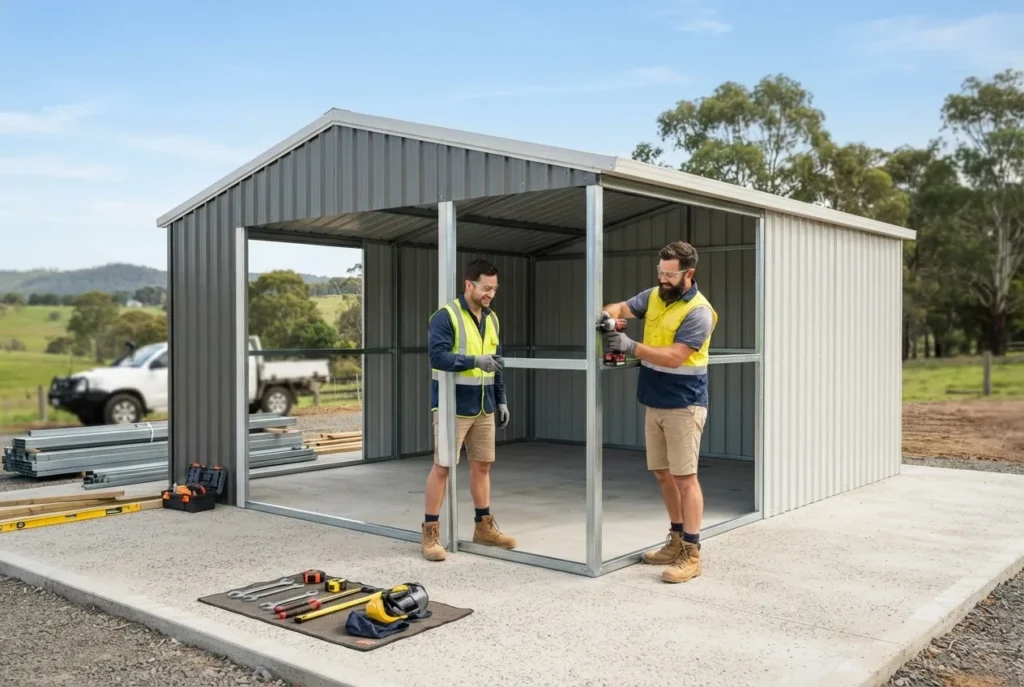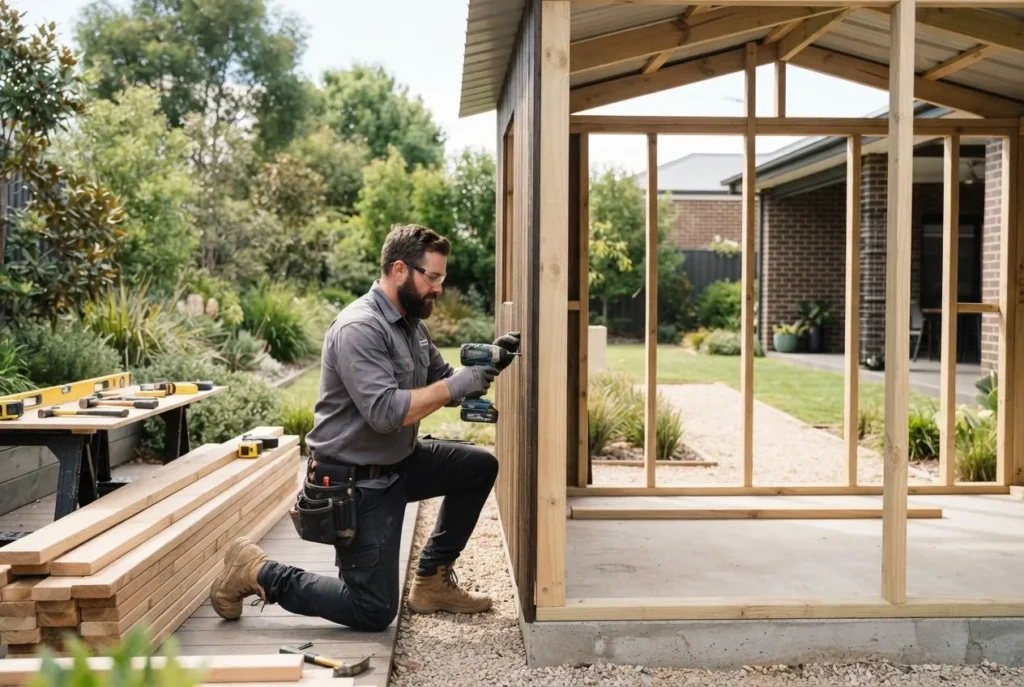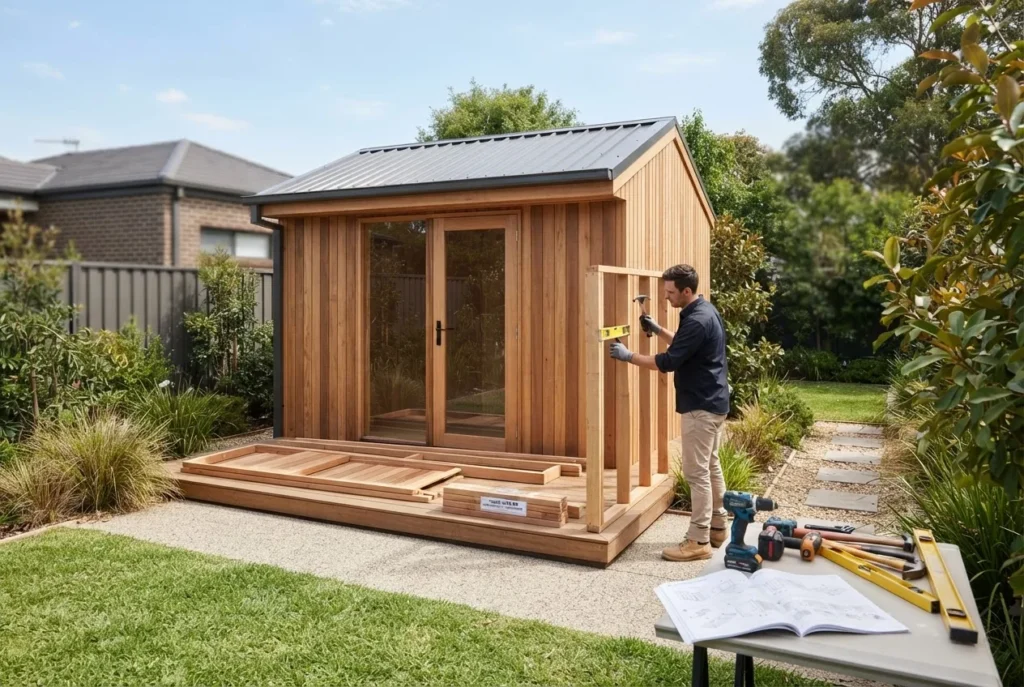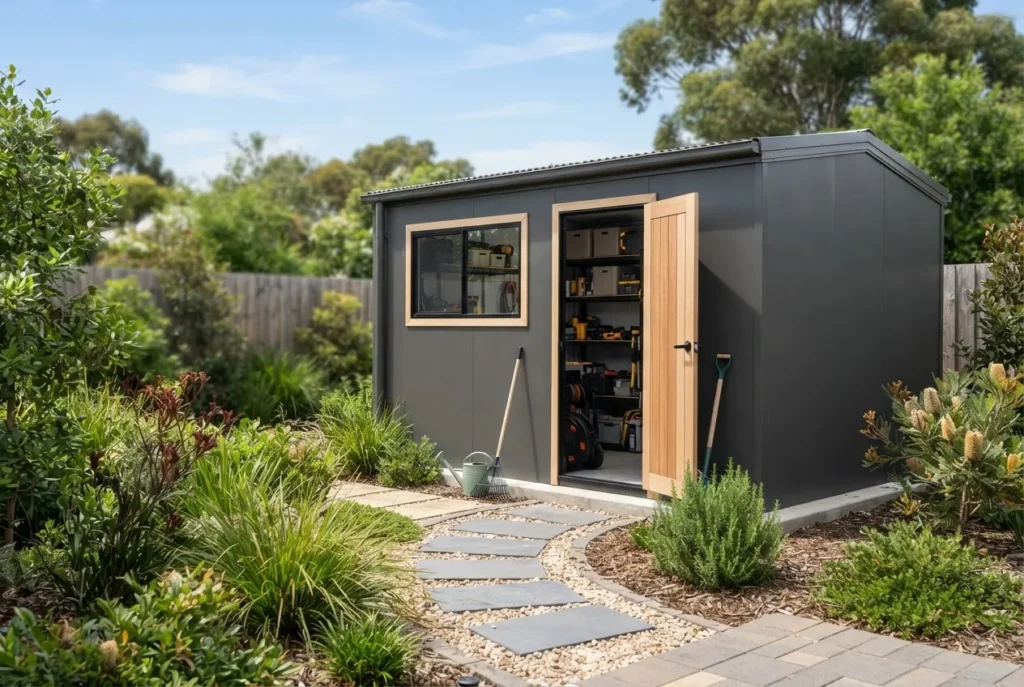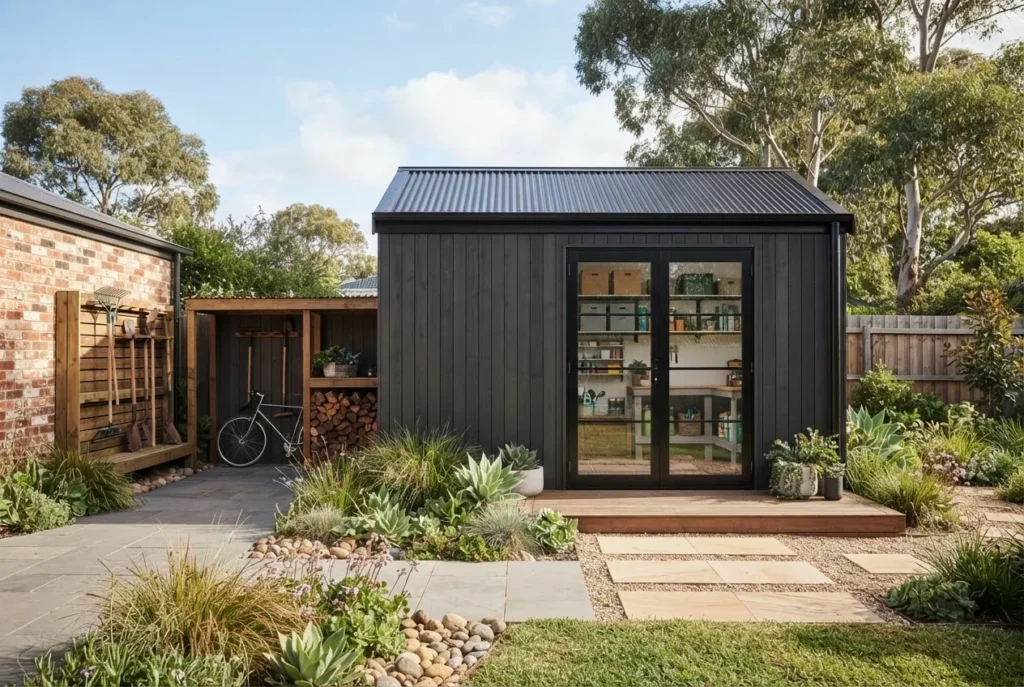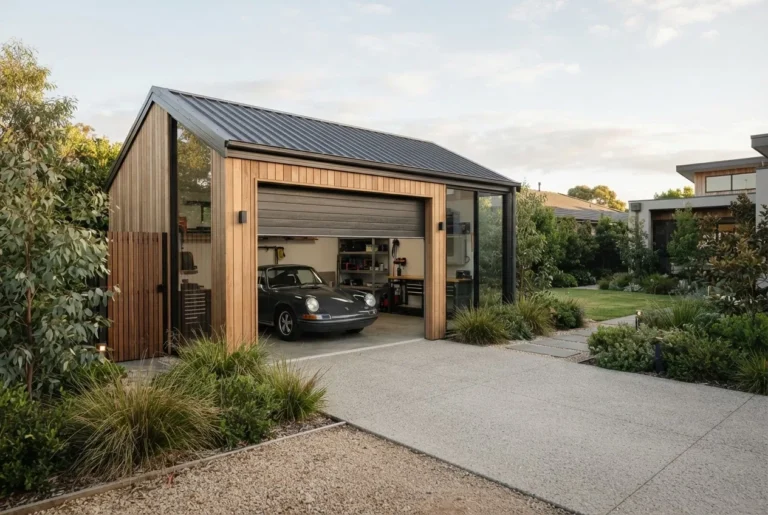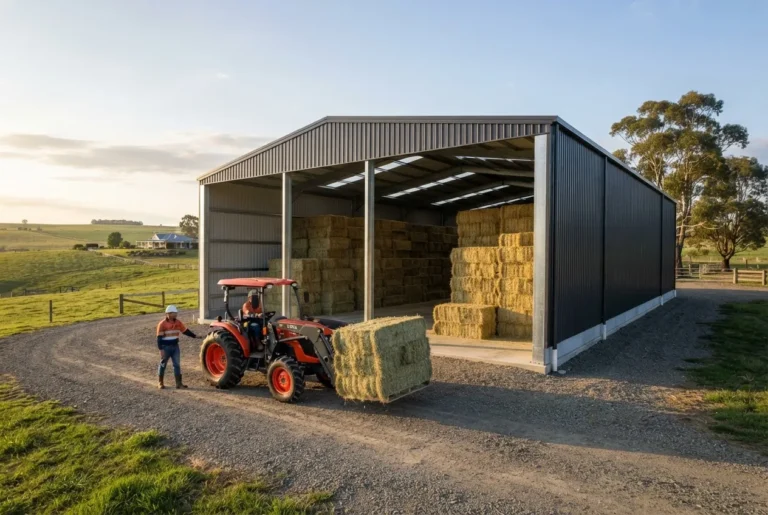

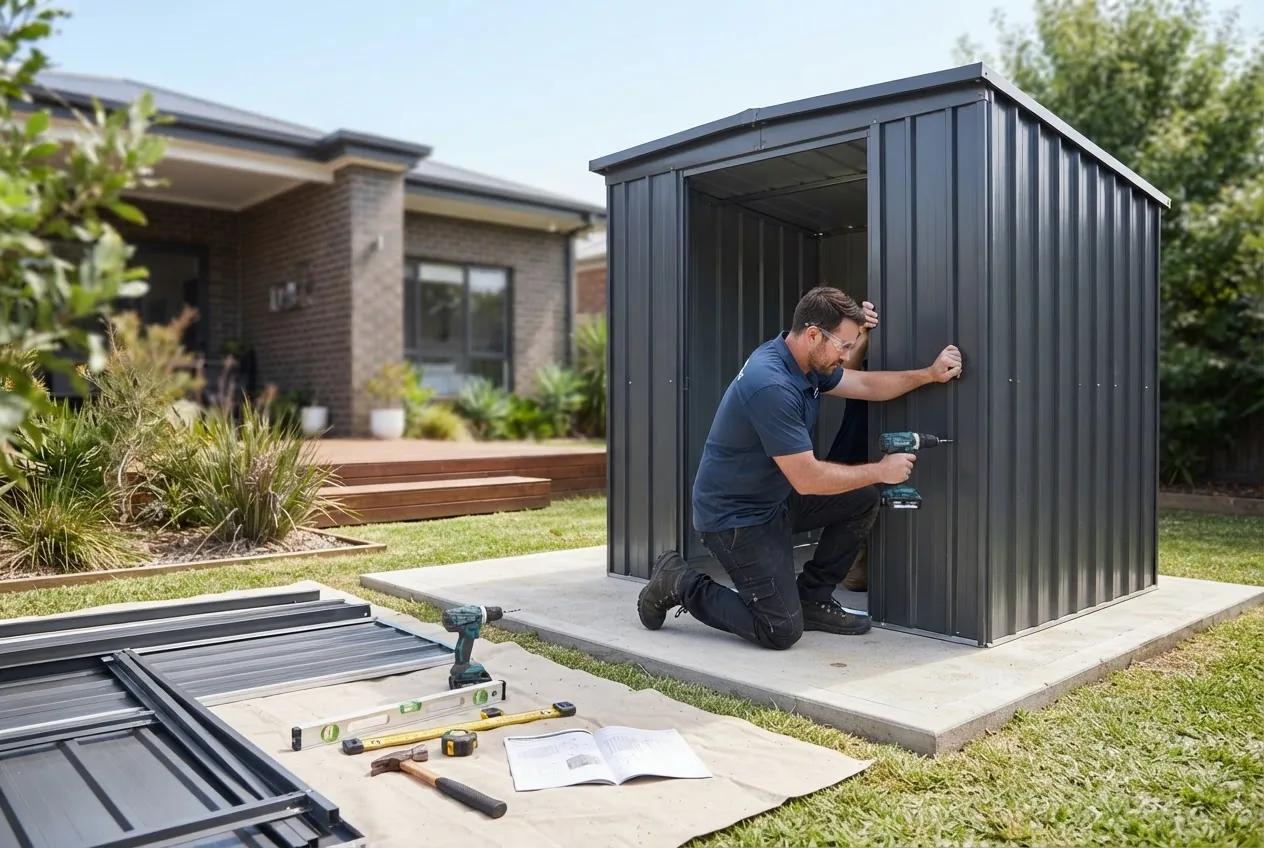
What you will achieve: by the end you’ll be able to choose and hire licensed local shed assembly help in Melbourne, estimate realistic installation costs, and follow a step-by-step hiring and oversight plan. Time required: plan and quotes 1–2 weeks; installation oversight 1–3 days; skill level: homeowner with basic DIY literacy.
Introduction to Shed Assembly Help and Installation in Melbourne
If you searched for shed assembly help because you want a reliable garden shed installation without surprises, this hands-on guide targets Melbourne homeowners and property managers. You’ll learn exactly what professional shed assembly services do, how installers price jobs in Melbourne suburbs, and practical ways to find licensed trades who deliver on time and on budget.
This guide assumes you understand basic tools and measurements (tape measure, spirit level) and can review quotes and simple contracts. It focuses on garden shed installation and local shed installation services in Melbourne — not on shed design choices covered elsewhere. For workshop-specific ideas, see Backyard workshop building guide with shed workshop ideas.
Transition: next, we define the scope of professional shed assembly help so you can match service types to your site and budget.
What Is Shed Assembly Help? Types of Services Available
Broadly, shed assembly service covers everything from delivery and bolt-up of a kit to a full supply-and-install package including foundations, flashings and permit liaison. In Melbourne the market splits into discrete service types — picking the correct category keeps costs aligned with expectations.
- Kit-only assembly — installer receives a pre-cut kit (steel or timber) and bolts it together on a customer-prepared level area. Common for small garden sheds and quick installs.
- Supply-and-install packages — the provider sells the shed and installs it, handling delivery, site prep, and connection to bases. Good for one-stop purchasing and warranty coverage.
- Full-install turnkey service — includes site excavation, concrete or compacted base, drainage, flashings, painting and final inspection. Typical for larger or workshop-style sheds.
- Foundation-only teams — specialised crews that construct piers, concrete slabs or screw-pile footings for a separate assembly team to mount the shed.
- Permit and compliance liaison — services that prepare and lodge council permit applications or compliance certificates, often bundled for larger builds or complex sites.
- Aftercare and warranty work — installers offering workmanship warranties and scheduled returns to address leaks, alignment, or door/lock adjustments.
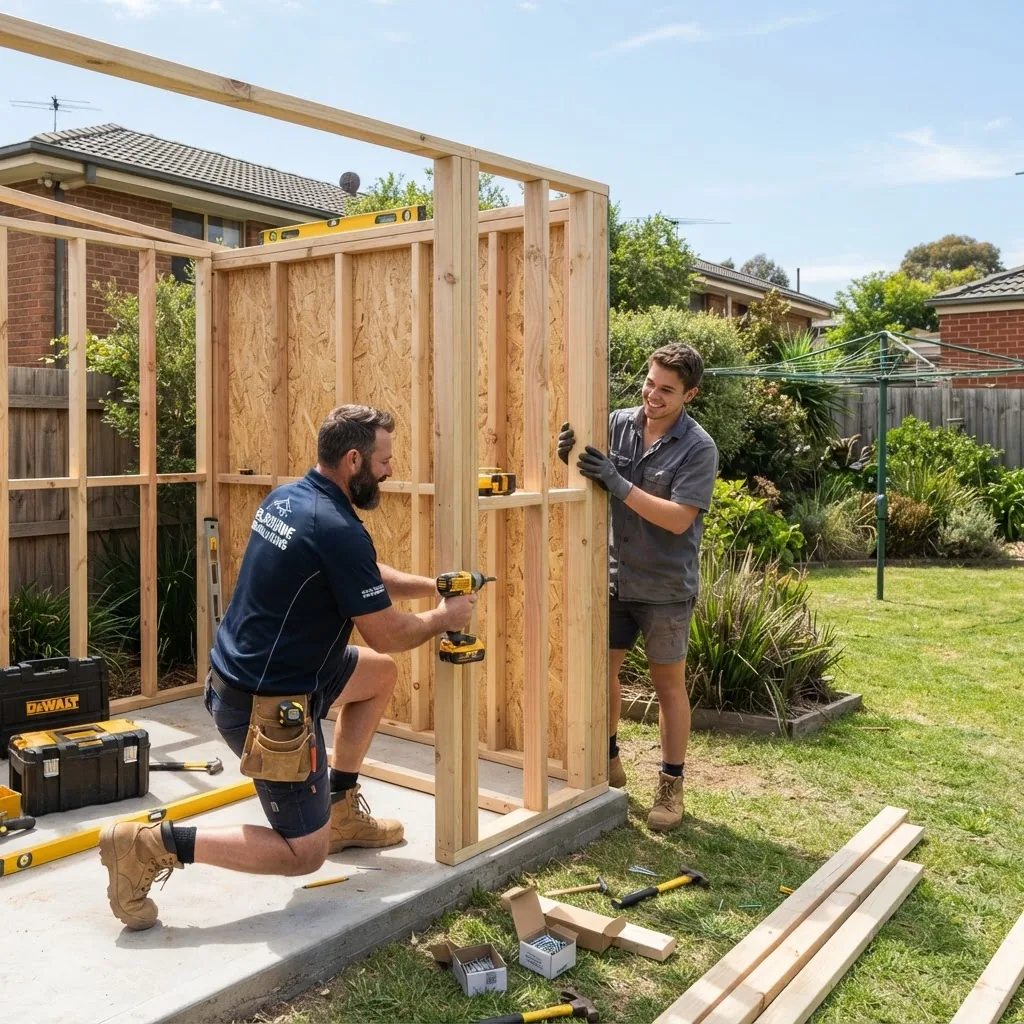
Service responsibilities vary: kit-only crews may not touch foundations; turnkey teams expect additional access and time. Licensed trades in Melbourne often combine carpentry and small-structure certification — ask specifically for “licensed shed builders” or “licensed shed builders service near me” when you call.
Common engagement models:
- Hourly labour (charged when assembly complexity is uncertain).
- Flat-rate per size bracket (e.g., 2x3m, 3x3m, 6x6m sheds).
- Per-component pricing (foundation, delivery, assembly, extras).
Practical note: ask for a written scope that lists exactly what the installer will supply and exclude (concrete, anchors, electrical, council permits). This reduces miscommunication when the crew arrives.
Transition: with service types clear, next compare DIY versus professional assembly so you can weigh cost, risk and warranty.
DIY vs Professional Shed Assembly: Pros, Cons, and Considerations
Choosing between shed assembly yourself or hiring a local shed installation service near me depends on time, site difficulty, and risk tolerance. The table below summarises key trade-offs, then we break down the decision factors.
| Factor | DIY | Professional |
|---|---|---|
| Cost (labour) | Lower—labour free, only personal time and small tool hires | Higher—trade rates A$50–A$120/hr but included warranty |
| Speed | Slower unless experienced; 1–3 weekends for 6×6 | Faster—1–3 days on-site for standard kits |
| Quality & alignment | Risk of leaks or misalignment if foundation imperfect | Professional tolerance control, waterproofing, and flashings |
| Permits & compliance | You handle council permits and compliance | Often include permit assistance or certified documentation |
| Warranty & recourse | Limited—manufacturer warranty only; fitter’s workmanship not guaranteed | Workmanship warranties and trade liability insurance |
Deeper considerations
If your site requires concrete footings, retaining wall works, or screw piles, skilled trades are strongly recommended; a DIY approach can quickly exceed budget once you factor in remediation. According to a 2024 industry report, professional installations reduce rework rates by an estimated 60% on uneven sites (source: 2024 industry report).
Cost estimate framing: for accurate comparison, always compare the full package cost: shed price + foundation + delivery + assembly + permit fees. For custom or larger sheds, consult the Custom Sheds Design and Build Cost Guide for Storage for design and build cost strategies that supplement this decision.
Transition: below is a practical hiring process you can follow in Melbourne to source licensed shed contractors and avoid common pitfalls.
Step-by-Step Guide to Hiring a Shed Assembly Service in Melbourne
Before you start — prerequisites and tools:
- Site plan or basic measurements of area (length, width, slope in mm per metre).
- Photos of the proposed location and access route for delivery (min. 800px wide).
- Tools: tape measure, camera, pen, notebook. Expect to schedule 30–90 minute site visits.
- Documents: property title constraints, existing easements, any prior council approvals.
- Budget range: know low/target/high costs before you get quotes (see cost section).
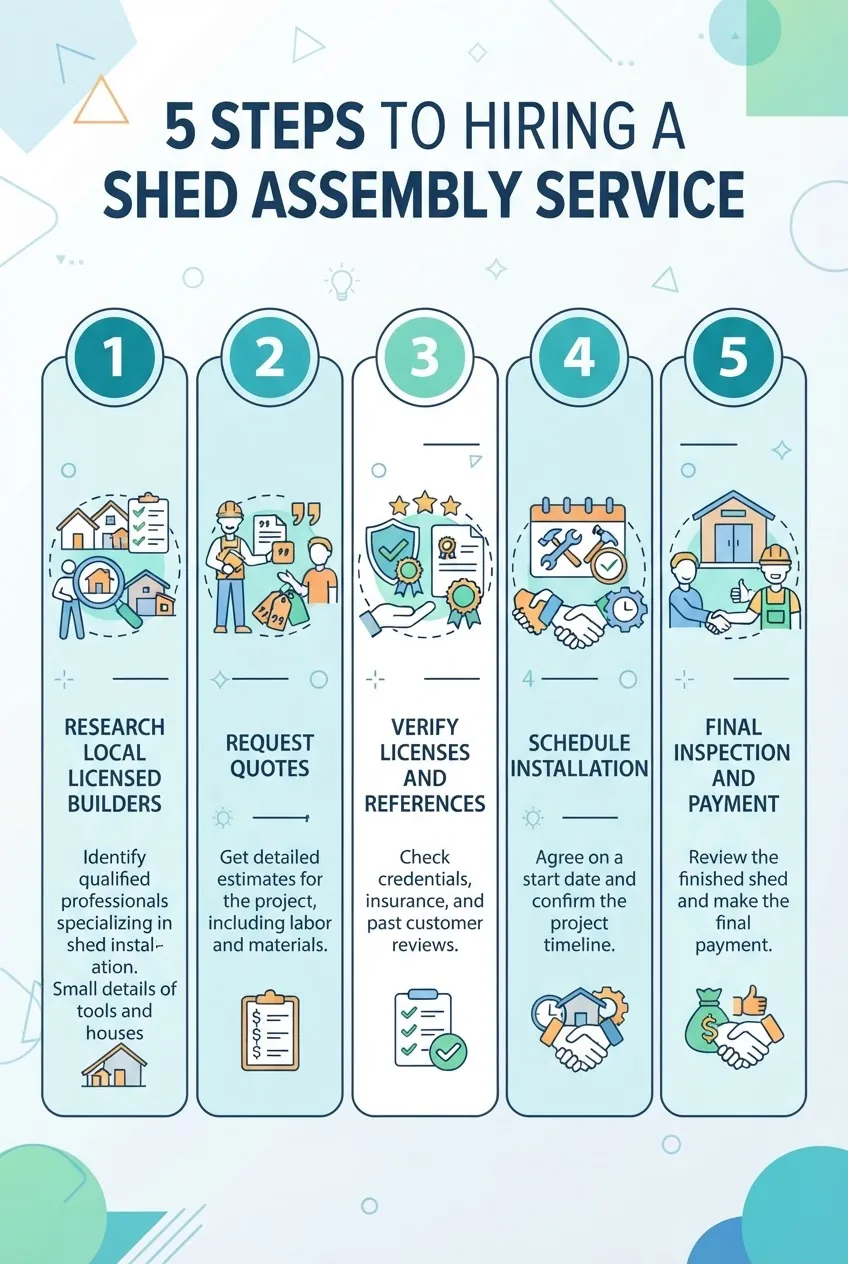
- Research local licensed builders: create a short-list of 6–8 providers using Google, local Facebook groups, and community classifieds. Filter to those advertising “licensed shed builders near me” or “local shed builders service near me” and record ABN and licence numbers.
- Request consistent quotes: send the same brief to each shortlisted provider: shed model, site photos, base type (concrete slab, screw piles), desired start date. Require itemised quotes within 5 working days and a minimum 30-day validity period.
- Verify licences and insurance: ask for licence numbers, public liability insurance (min. A$10 million), and evidence of workers’ compensation. Cross-check licence numbers on the Victorian Building Authority site. For licensing guidance see Australian Competition and Consumer Commission on trades verification and consumer rights.
- Check references and recent jobs: request two recent Melbourne job references and visit sites when possible (or request date-stamped photos). Ask about punctuality, communication, tidiness, and how the installer handled unforeseen site issues.
- Compare apples-to-apples: place quotes in a simple spreadsheet that separates: shed cost, labour, foundation, permits, transport, electrical, and extras. Aim to compare total installed cost for a true value assessment.
- Negotiate scope, not price: agree fixed deliverables (e.g., “concrete slab 100mm with F72 mesh, 4m x 3m, 25MPa”) and negotiate on lead times or bundled works rather than ambiguous price cuts.
- Finalise contract and payment terms: use a written contract with start/end dates, deposit (max 20% recommended for kits), staged payments tied to milestones, and a 7–14 day defect liability period after completion. Avoid full upfront payments.
- Schedule and supervise key milestones: attend the site for foundation completion and first-day assembly. Typical timeline for standard garden sheds: foundations 1 day to 3 days (includes curing where required), assembly 1 day for smaller kits, up to 3 days for 6×6 workshop-style.
- Final inspection and handover: walk the site with the installer against the contract checklist, take photos, and only make final payment when the checklist is completed. Ask for written warranty details and a maintenance checklist.
- Aftercare and warranty follow-up: log warranty responses in writing and set calendar reminders at 3 and 12 months to review seals, gutters and doors. Good installers return to retighten fixings and re-caulk as needed.
Transition: now that you can hire intelligently, let’s quantify what installation will cost and why prices vary across Melbourne suburbs.
Breakdown of Shed Installation Costs: What Affects Pricing?
Understanding shed installation cost requires separating material, labour, access and compliance factors. Below are practical cost blocks with ranges you’ll commonly see in Melbourne in 2024, followed by drivers that shift a quote higher or lower.
Stat block — Typical Melbourne 2024 installed cost ranges (A$)
| Item | Typical range (A$) | Notes |
|---|---|---|
| Small kit assembly (2–3 m²) | $250–$700 | Assumes level compacted base supplied. |
| Medium kit (3–6 m²) | $700–$2,500 | Includes delivery and standard anchoring. |
| Large kit / workshop (6×6 approx.) | $2,000–$6,500 | Depends on access, roof, and door types. |
| Concrete slab (25MPa, 100mm with F72 mesh) | $1,000–$3,500 | Size and access heavily affect price. |
| Screw piles / piers | $1,200–$3,000 | Useful for sloping sites; individual piles $150–$400 each. |
| Permits & compliance | $0–$1,200+ | Depends on council thresholds and whether a certifier is needed. |
Cost drivers explained
- Foundation type: concrete slabs are labour and material intensive; screw piles need plant but less concrete. Expect screw pile individual cost A$150–A$400 per pile, slab labour + materials around A$60–A$120 per m² installed (according to a 2024 industry report).
- Access and site constraints: narrow laneways, stairs or parked cars that prevent truck or crane access add A$300–$1,200 for specialised delivery or pedestrian lift.
- Size and complexity: larger spans, insulated roofs, mezzanines or workshop fitouts increase labour hours and require higher trade skills.
- Local labour rates: inner-Melbourne suburbs typically attract 10–25% higher labour charges than outer suburbs; weekend or after-hours work also costs more.
- Materials and finishes: galvanised steel frames are cheaper than dressed timber or lined interiors. Add A$300–$1,200 for painted finishes and flashings.
- Permits and engineering: structural engineering or a building permit can add A$500–$2,500 depending on complexity; see local authority rules below.
Size-specific benchmarks and further reading: for size benchmarks see the 6×6 shed cost guide for workshops and garden sheds, and for barn-style sheds consult the Australian Barn Shed Kits pricing and installation guide. For broad garden shed purchase context see Garden shed prices and storage solutions buying guide. For barn-design references consult Barn house design and price guide for Australian barns.
Case example (Melbourne): I supervised a standard 6x4m steel kit install in Brunswick North in 2024. Scope: delivery, concrete strip footings (4m x 6m, 100mm, 25MPa, mesh), bolt-down kit assembly, guttering. Quote breakdown: kit A$3,800; slab A$2,200; labour A$1,400; permits/documentation A$600. Total installed A$7, +4,000 (A$8,000 approx). The installer provided a 12-month workmanship warranty and returned within two weeks to re-seal door flashings at no charge. This illustrates typical trade-offs between slab vs pier and the value of a workmanship warranty.
Transition: you’ll want to budget for these additional, sometimes hidden costs next.
Additional Costs to Consider When Planning Your Shed Installation
Beyond headline installation prices, several additional cost categories frequently catch homeowners by surprise. Early research and line-iteming these can save time and money.
Regulatory and safety references: check Australian building standards and Victorian compliance early — see the Australian Building Codes Board for standards and the Victorian Building Authority for local rules. Australian government construction and building safety standards and Victorian building permit authorities provide threshold details for when a permit or certifier is required.
- Site preparation: clearing vegetation, tree works, or removing old bases — A$200–$2,000 depending on scope.
- Foundation upgrades: If your soil requires compaction or subgrade remediation, add A$500–$2,500.
- Transport and crane hire: crane lifts for large spans or awkward access A$600–$2,500; flatbed delivery surcharges A$100–$400.
- Electrical and lighting: connecting power for lights or outlets A$400–$2,500 depending on distance to supply and required electrician certificates.
- Waste removal and site cleaning: post-install removal of packaging, concrete slurry or cut-offs A$150–$700.
- Warranty extensions: extended warranties or insurance-backed workmanship guarantees add A$100–$600.
- Council permits and certifier fees: small sheds under certain sizes might be exempt; otherwise expect A$200–$1,200 for lodgement and certifier inspections. Refer to local council thresholds and the Victorian Building Authority for precise requirements.
- Commercial scale considerations: if your project is beyond a garden shed (farm or commercial), read Commercial shed construction cost and build requirements for larger site works and regulatory obligations.
Disclaimer: according to a 2024 industry report, regional price variations and unexpected subsurface conditions can increase foundation costs by 20–60% (source: 2024 industry report). Always allow a 10–20% contingency in your budget for these unknowns.
Transition: installations don’t always go smoothly — next section covers common problems and fixes.
Common Problems and Troubleshooting During Shed Assembly
Even well-scoped installs can face issues. Below are common faults, root causes, and immediate remedies to deploy while the crew is still on site.
- Uneven base or gaps under the frame — cause: poor levelling or incorrect pier heights. Remedy: request immediate re-level or shimming; with concrete, allow appropriate curing before final alignment.
- Door misalignment or rubbing — cause: frame twist or settling. Remedy: check sill level and hinge fixings; tighten or re-peg anchors.
- Leaks at flashings or roof joins — cause: insufficient overlap or wrong sealant. Remedy: insist on re-sealing with compatible butyl or silicone and correct flashing profiles.
- Missing hardware or parts — cause: transport damage or kit packing errors. Remedy: contact supplier immediately and demand replacement before closeout.
- Delays from weather — cause: heavy rain or high winds. Remedy: reschedule critical tasks and ensure temporary coverings prevent water ingress into installed sections.
Troubleshooting checklist to use on handover:
- Check base level within ±5 mm across diagonal measurements for small sheds; ±10 mm for larger sheds.
- Doors and windows operate smoothly with no binding at full travel.
- All fixings torqued to manufacturer spec; anchors set and visible.
- Gutters and downpipes correctly connected and draining away from foundations.
- Installer provides written warranty and maintenance instructions.
Transition: to avoid these problems from the start, learn how to verify installer credentials and reputation in Melbourne.
How to Find and Verify Licensed Shed Builders and Installation Services Nearby
Finding quality licensed shed builders service near me in Melbourne requires deliberate verification. Here’s a practical checklist and tips to confirm legitimacy and competence.
Search strategy
- Start with local searches and filter to providers listing licence numbers. Ask for ABN and licence up-front.
- Use community groups or neighbourhood apps for local referrals; local jobs let you see finished work.
- Compare two metropolitan quotes and two suburban quotes to understand market spread.
Verification steps
- Call the licence regulator (Victorian Building Authority) to verify licence status and any disciplinary history. See Victorian Building Authority for verification tools.
- Request current public liability insurance certificate and note expiry dates.
- Ask for two local references from the last 12 months and inspect those jobs in person where feasible.
- Confirm warranty terms in writing — ideally 12 months workmanship plus manufacturer roof and wall warranties.
Practical hiring red flags
- Requests for full payment before materials are ordered.
- No ABN, no written contract, or refusal to provide licence details.
- Very low quotes that exclude clear line items (foundations, delivery, permits).
If you want examples of how installers operate outside Melbourne as complementary reading, review the Affordable shed installers Brisbane cost and service guide to compare hiring practices and pricing in another metro market.
Practical tip from customers: always get a start and completion date in writing and include an agreed remediation turnaround time (e.g., installer returns within 7 working days for minor defects). According to a 2024 industry report, installers that commit to written 7–14 day remedial windows resolve 80% of defects without escalation.
Transition: final practical wrap-up and next steps.
Conclusion: Maximizing Value from Your Shed Assembly and Installation
You now have a practical map to secure reliable shed assembly help in Melbourne: categorise the service you need, gather comparable quotes that separate foundations and installation, verify licences and insurance, and insist on clear milestone payments plus a workmanship warranty.
Key takeaways: budget for foundations and access, allow 10–20% contingency, prioritise licensed installers with local references, and prefer staged payments tied to milestones. When you’re ready, prepare your site brief and contact 4–6 providers for itemised quotes—this step alone will reveal the market and expose unusually low or high bids.
Ready to proceed? Use the hiring checklist above, and when in doubt engage a licensed installer for foundation works and initial assembly oversight to protect your investment.
Common mistakes and how to avoid them (practitioner notes)
I once accepted a low quote that excluded delivery surcharges; the crew arrived but couldn’t get the module into the backyard and left — I lost two days and paid a crane fee later. Lesson: confirm delivery method and access in writing. Another time, I accepted a ‘general’ warranty; it had no timeline — I now insist on 12 months written workmanship terms. Finally, I’ve seen owners skip soil checks; poor subgrade led to slab cracking. I always ask for a site assessment report now.
Compact checklist before you sign
- Itemised quote with separate lines for shed, foundations, permits, delivery and labour.
- Installer ABN, licence number and public liability insurance certificate (min. A$10M).
- Written contract with start/end dates, deposit ≤20%, staged payments and defect remedy period.
- Proof of references (2 recent Melbourne jobs) and dated photos.
- Contingency budget set at 10–20% for unknowns.
When to call in a professional
Hire professional shed assembly help if any of the following apply: your site slopes >1:20, you need electrical connections, the shed is larger than 6x6m, there are access constraints, or you require council-permitted works. For larger commercial or farm sheds, consult full commercial build guides and certified builders.
Transition to FAQs and quick references below.