

Introduction to Carports and Sheds in Tamworth
A well-designed carport or shed does more than keep the rain off your ute. In Tamworth, it protects vehicles from summer heat, winter frost, hail, UV exposure and dust while improving convenience and property value. Local climate, setbacks and council rules determine whether a simple kit or a fully engineered build is the right choice.
Tamworth sits in a non‑cyclonic region, but site exposure, topography, and surrounding buildings can change wind classification and engineering requirements. Plan for council regulations, stormwater and inspections early. If you are comparing carports Tamworth .
Features of a Great Carport in Tamworth
The best carport in Tamworth is engineered for the site: correct footings, corrosion‑resistant fixings, usable clearance and reliable water management. Key elements include:
- Engineer-certified structural framing: Cold-formed or structural steel sized to span, bay width and exposure; drawings showing bracing, hold-downs and anchors.
- Wind classification and design: Check AS/NZS 1170.2 for wind actions — many local sites are N2 or N3. Ensure bracing and footings match the site classification.
- AS/NZS footings & fixings: Footing depth and anchor design must reflect soil class and applied loads per relevant standards.
- Water management: Gutters, downpipes, overflow and optional rainwater tanks to protect the slab and neighbouring properties.
- Practical clearances: Clearance height for vehicles, caravan or boat access, and roof fall for reliable drainage.
- Durable connections: Fasteners to AS 3566 and appropriate corrosion protection for exposed elements.
Checklist for specification: site survey, wind classification, footing detail, fastening schedule (AS 3566), engineer sign-off and certifier nomination before manufacture. For workshop plans, consider future services (power, lighting, insulation) early so framing and cladding align with those needs.
Best Materials for Tamworth’s Climate
Tamworth’s inland climate is tough: hot summers with high UV, frost in winter and occasional hail. Choose materials that balance long‑term durability, appearance and maintenance.
Colorbond steel is the common residential choice — pre‑painted with strong UV resistance and a broad colour palette. Lighter colours such as Surfmist reduce heat absorption and can improve comfort in adjacent indoor spaces. Colorbond also provides a refined street look for front‑facing carports.
Zincalume steel suits rural sheds and budget builds: durable, reflective and practical. When using Zincalume, pair with corrosion‑resistant fasteners and careful detailing at penetrations and footings.
- High‑tensile steel framing: For longer spans and reduced member size, high‑tensile steel is often preferable. It allows larger clear spans with lighter sections but has a higher material cost and requires accurate fabrication and welding standards for joints.
- Hot‑dip galvanisation: Recommended for posts, base plates and brackets near ground level for extra corrosion protection.
- Fasteners & coatings: Use Class 3 or Class 4 fasteners to AS 3566 depending on exposure. Match trim and flashings to AS 1397 coated product performance.
- Insulation & condensation: Anti‑condensation blankets or insulated roof panels reduce interior temperature swings and condensation risks in enclosed sheds.
Navigating Council Approval in Tamworth
Approval pathways in NSW are typically: exempt development, complying development (CDC) or Development Application (DA). Each has different documentation and timeframes.
Exempt development applies when strict size, height, setback and siting conditions are satisfied. Use the NSW Planning Portal to confirm whether your proposal meets the rules: NSW Planning Portal.
Complying Development Certificate (CDC) is faster than a DA but requires plans and engineering that meet the relevant codes. A certifier will assess compliance and issue the CDC when documentation is complete.
DA is required for non‑complying works or sites with constraints (heritage, environmental overlays or complex easements). DAs take longer but allow discretion for custom designs.
Codes SEPP and NSW policy: The State Environmental Planning Policy (SEPP) framework — historically the Codes SEPP and successor SEPP instruments — controls certain complying development provisions. Check the current SEPP provisions and Code SEPP successor rules on the NSW Planning Portal for up‑to‑date criteria and how they affect complying development pathways.
Useful links and resources: NSW Planning Portal — exempt & complying development and local council pages for Tamworth Regional Council. For assistance preparing CDC or DA documentation, our planning and compliance team can coordinate with your certifier;.
Types of Carports, Sheds, and Garages Available
We supply a broad range of structures to suit suburban blocks, rural acreage and commercial needs. Typical options:
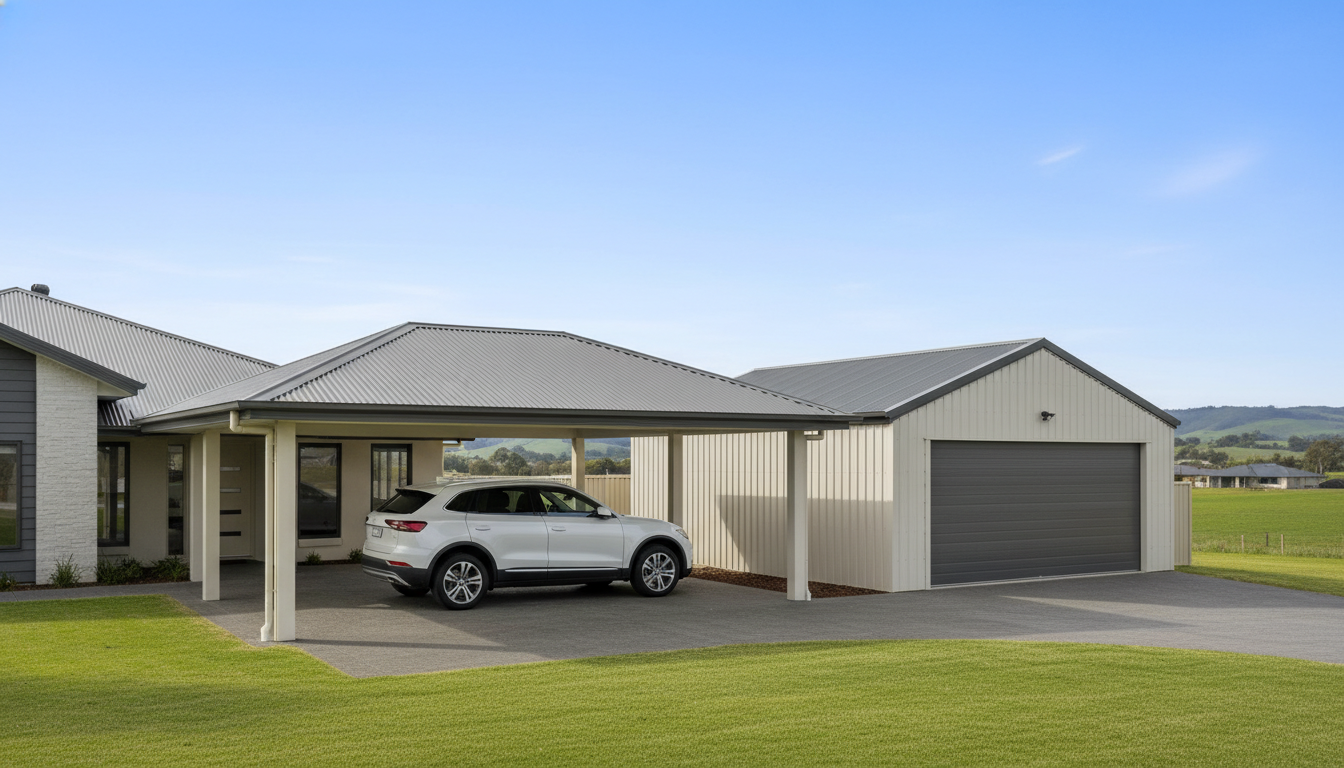
- Single and double carports (open-front)
- Caravan covers with taller eaves and wider bays
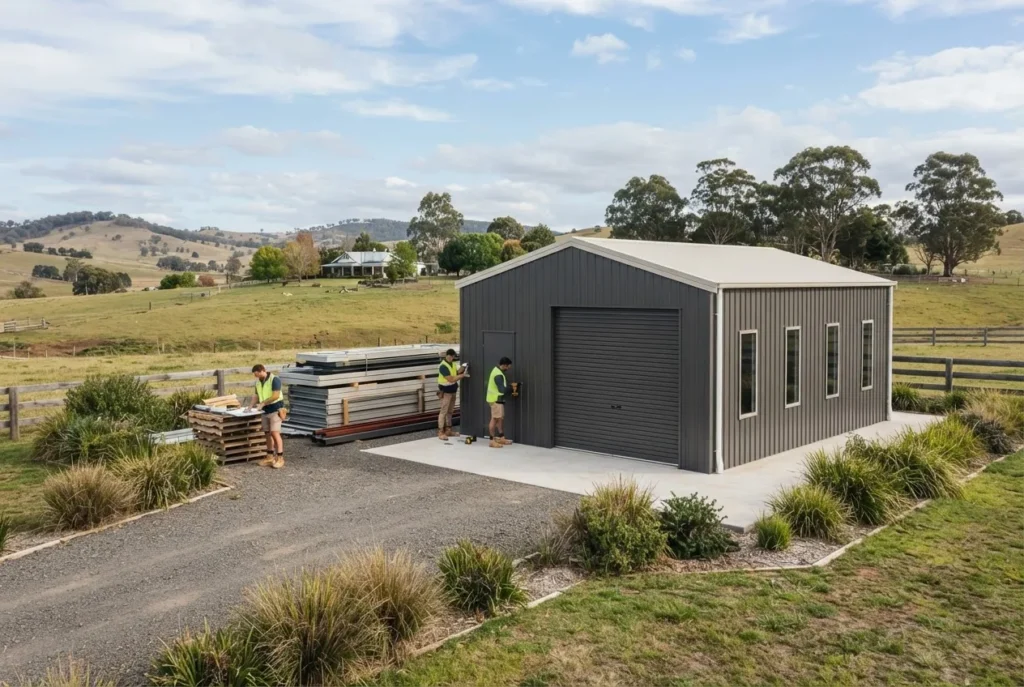
- Workshop sheds with roller doors, mezzanines or insulation
- Rural machinery sheds with extra headroom and wide bay spacing
- Fully enclosed custom garages with stairs, power and fit-out
- Turnkey packages including slab coordination, engineering and sign-off
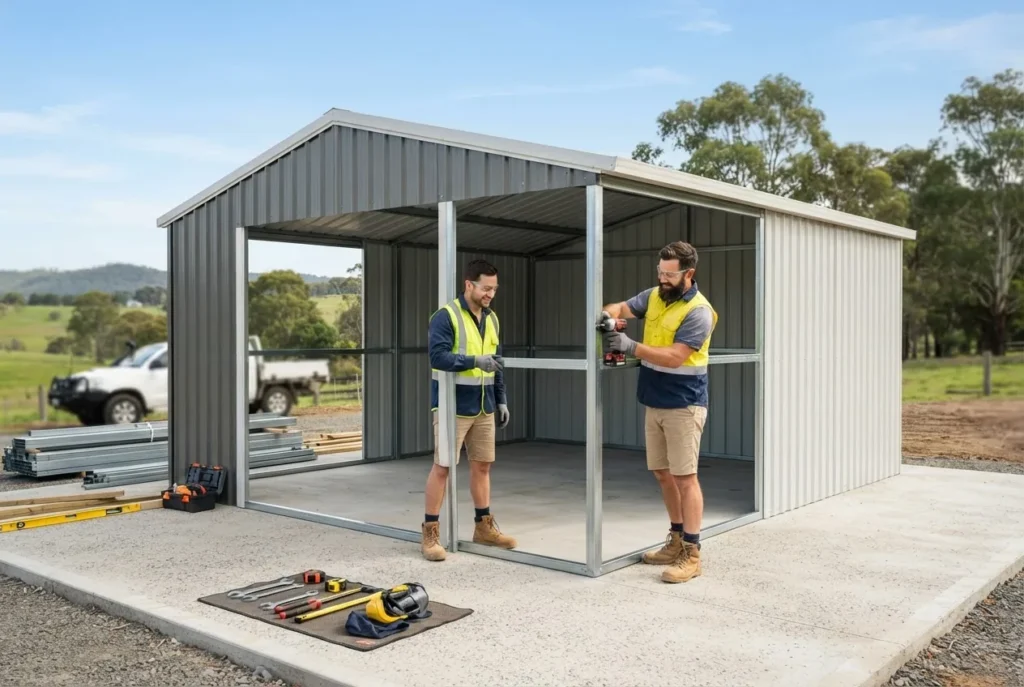
- DIY shed kits for experienced builders or owner-builders
Example build briefs:
Suburban compact carport (example)
6.0m x 3.0m skillion Colorbond carport, Surfmist roof, concrete slab (4m x 3m local slab excluded), hot‑dip galvanised posts, gutters plumbed to stormwater. Indicative installed price band: $5,000–$8,000 (excl. slab and DA/CDC costs). Typical installation: 1–3 days after slab cure and inspections.
Rural machinery shed (example)
Clear‑span 12.0m x 9.0m rural shed with roller doors, high eaves, heavy‑duty portal frame in high‑tensile steel. Indicative installed price band: $35,000–$60,000 (site-dependent, excluding remote access or extensive earthworks). Typical timeline: 4–8 weeks from engineering to handover, depending on approvals and footing work.
5-Step Buying Guide for Custom Structures in Australia
Follow these steps to reduce surprises and get a reliable fixed price and timeline.
- Define the project scope — Decide use (vehicle protection, caravan, workshop), target bay widths, clearance heights and future conversion potential. Prepare a concise brief and photos of the site.
- Site check & constraints — Confirm lot boundaries, easements, services, slope, existing drainage, and bushfire overlays. Order a quick site survey or certification if required.
- Select materials & structural type — Choose Colorbond or Zincalume, decide on high‑tensile framing if long spans needed, insulation needs and roof profile.
- Confirm approvals & engineering — Determine whether the job is exempt, CDC or DA. Commission site‑specific engineering and nominate a certifier early. Allow 1–3 weeks for CDC, longer for DA.
- Schedule the build — Coordinate slab timing, concrete cure (usually 7–28 days depending on mix and load), delivery windows, and inspection dates. For turnkey installs, confirm who organises slab and who signs off each stage.
Sample timelines: turnkey small carport (4–6 weeks including CDC), custom rural shed (6–12+ weeks including DA and geotechnical). Accurate scope reduces change orders and keeps the quoted price stable.
Technical and Compliance Notes for Australia
Key standards and how they apply:
- NCC 2022 (National Construction Code): Sets performance requirements for building safety, egress and structural sufficiency. Carports and sheds must meet relevant NCC provisions when they are part of a building or affect occupant safety.
- AS/NZS 1170.2 (Wind actions): Defines wind regions and site classifications (N1–N3 for non‑cyclonic). Designers calculate design wind pressures and specify bracing and footing loads accordingly. See Standards Australia and design guidance for specifics: Standards Australia.
- AS/NZS 4600 (Cold‑formed steel): Applies to design of cold‑formed steel members and connections for portal frames and light‑gauge sections.
- AS 4100 (Steel structures): Governs design of structural steelwork, welding and connections for heavier members.
- AS 1397 (Continuous hot‑dip metallic coated steel): Classifies coated steel products (Zincalume, galvanised) and test criteria for longevity.
- AS 3566 (Self‑drilling screws & fasteners): Specifies corrosion protection and performance classes; choose Class 3 or 4 in higher exposure zones.
Checklist for certifiers and suppliers:
- Confirm wind classification (AS/NZS 1170.2) and apply to structural calculations.
- Specify fastener class (AS 3566) and coating to match exposure.
- Provide footing details referencing geotechnical report where reactive soils present.
- Document water management (gutter capacity and overflow) and any BAL requirements for bushfire-prone sites.
- Coordinate inspections (slab/footing, frame, final) and supply engineer sign-off for CDC or DA as required.
Geotechnical primer (brief): regional NSW often has reactive (Class H1–H4) soils. Typical footing adjustments include increased depth, reinforced edge beams or piers; a standard site investigation (AS 2870 referencing) will indicate soil class and recommend footing types. Order a site investigation when: project >50m2, heavy machinery use, observed cracking or prior structural movement, or for rural sheds on new earthworks.
Comparison Tables (expanded)
Material & cost overview (indicative)
| Type | Typical installed price (indicative) | Typical install time | Best use |
|---|---|---|---|
| Single carport (Colorbond) 6m x 3m | $5,000–$9,000 (excl. slab & approvals) | 1–3 days on site after slab cure | Suburban vehicle protection |
| Double carport 6m x 6m | $9,000–$16,000 (excl. slab & approvals) | 2–4 days | Families, extra storage |
| Small workshop shed 7.5m x6m | $18,000–$30,000 (turnkey incl. basic insulation) | 1–2 weeks on site | Workshops, secure storage |
| Rural clear-span shed 12m x 9m | $35,000–$60,000 (site dependent) | 2–4 weeks | Machinery storage |
Colorbond vs Zincalume (extended)
| Feature | Colorbond | Zincalume |
|---|---|---|
| Appearance | Pre‑painted, wide colour range | Metallic finish, industrial look |
| Thermal / UV | Good UV resistance; light colours reduce heat | Reflective; less colour choice |
| Durability | High with correct maintenance | High; economical |
| Cost | Higher upfront | Lower upfront |
| Best for | Residential, visible street frontage | Rural, budget, functional sheds |
Roof styles & installation type summary
| Aspect | Skillion | Gable |
|---|---|---|
| Profile | Single slope, modern | Pitched, traditional |
| Complexity | Simpler, often cheaper | More complex & slightly costlier |
| Best for | Tight setbacks, contemporary homes | Ventilation, aesthetic centre height |
For detailed comparisons, see DIY shed kits.
Pro Tips and Additional Benefits
- Choose lighter colours where heat matters: Surfmist and other light tones reduce solar absorption and help adjacent interior comfort.
- Insulated roof panels: Useful in workshops and garages to control temperature and reduce noise from rain.
- Anti‑condensation blankets: Prevent moisture dripping and corrosion in enclosed spaces.
- Schedule maintenance: Clean gutters and downpipes annually; inspect fasteners and flashings every 3–5 years.
- Rainwater recycling: Connect gutters to a tank to capture water for irrigation or workshop use.
Why Choose Us for Carports in Tamworth?
We combine local experience, certified engineering and end‑to‑end support. Our team offers:
- Engineer‑certified designs and council paperwork support
- Local knowledge of Tamworth wind exposure, soil conditions and council expectations
- Transparent fixed quotes and clear scope documentation
- Finance and payment options (deposit + staged payments or finance packages via our partners) to help budget larger projects
- Insurance cover and WHS procedures for on‑site works
Get a Fast Quote
To get started, send us the site address, rough dimensions, desired roof style and colour. We will check setbacks, likely wind rating and whether the build looks exempt, CDC or DA before finalising a fixed price. Typical next steps: site review (phone/photo), initial scope and an indicative quote within 48–72 hours, followed by engineering and final quote.
- Licensed builders and accredited certifier partners
- Public liability and professional indemnity insurance
- Local Tamworth case studies and client references (available on request)
Client testimonial — N.T., Tamworth (Mar 2024): “Professional advice, timely approvals and a solid install. Happy with how it sits on the street.”
Frequently Asked Questions
Do I need council approval to build a carport in Tamworth?
Possibly. Small carports may be exempt if they meet NSW rules on size, height, setbacks and site constraints. If not exempt, a CDC or DA will be necessary. Check your lot zoning, any overlays and the NSW Planning Portal, then confirm with a certifier before ordering materials or starting work.
Which is better for Tamworth’s climate: Colorbond or Zincalume steel?
Colorbond is often preferred for residential, street‑facing projects because it offers UV‑resistant paint and a wide colour range; lighter colours reduce heat. Zincalume is durable and cheaper for rural or utilitarian sheds. Choose based on appearance, heat management, maintenance expectations and budget.
What wind rating is required for carports in Tamworth?
There is no single rating for every address. Many Tamworth sites are classified N2 or N3 under AS/NZS 1170.2 depending on exposure, terrain and shielding. A site assessment by an engineer or experienced supplier is essential to confirm the correct wind classification and sizing of posts and bracing.
Should I choose a flat (skillion) or gable roof for my carport?
Choose a skillion roof for a modern, simpler form and tighter setbacks; it’s often more cost‑effective. Choose a gable roof for extra centre height, better natural airflow and a traditional aesthetic. Setbacks, house style, and clearance requirements usually determine the best option.
Can I install a DIY shed kit or should I have a professional do it?
DIY kits can save labour costs if you have skills, time and equipment. Professionals are recommended for sloping sites, large spans, enclosed garages, or when approvals and engineering are required. Consider risk tolerance, local compliance and warranty coverage when deciding.
How long does the council approval process take in Tamworth for a custom carport?
Times vary by pathway: exempt development is immediate if compliant; CDCs often take a few days to a few weeks depending on certifier availability; DAs can take several weeks or longer. Complex sites, heritage overlays or incomplete documentation lengthen the process.
What materials provide the best protection against Tamworth’s summer heat and hail?
Light‑coloured Colorbond (e.g., Surfmist) helps reduce heat absorption; insulation improves comfort in enclosed spaces. Hail protection depends on roof profile, sheet thickness and fastening system as much as material. Robust framing and correct fixings reduce damage risk.
How do I ensure my carport meets BAL (Bushfire Attack Level) requirements near bushland?
Start by confirming the site’s BAL rating, then select non‑combustible materials, ember guards, sealed gaps and appropriate cladding and mesh. BAL affects openings, materials and detailing; have a certifier or bushfire‑accredited design professional verify the design against current NSW bushfire controls.