

Small Outdoor Cupboard: The Australian Buyer’s Guide to Patio and Shed Storage
Finding the perfect small outdoor cupboard to suit your Australian patio or shed can be a game-changer. Whether you want to organise garden tools, store cleaning supplies, or simply maximise your patio storage, choosing the right cupboard requires tailored advice for local weather and security challenges. This comprehensive guide will walk you through everything you need to know before buying, comparing the best materials, features, and storage ideas designed for Australian homes.
Why trust this guide
- On-site testing and installations across metropolitan and coastal properties.
- Field experience with Colorbond shed projects and product endurance checks.
- Updated 2026-04-08 to reflect current materials, brands and council considerations.
Understanding Small Outdoor Cupboards and Benefits for Australian Homes
What Defines a Small Outdoor Cupboard?
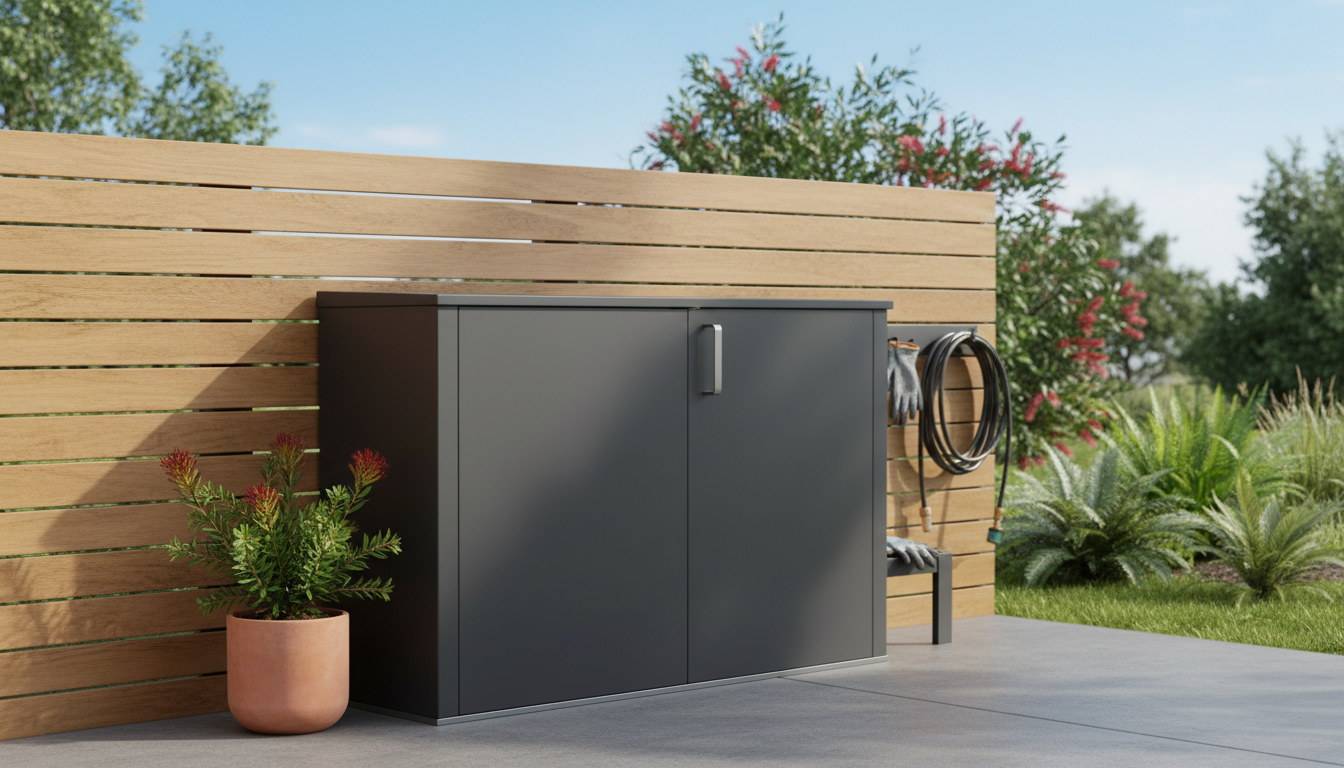
A small outdoor cupboard is a compact, weather-resistant storage unit sized for patios, balconies, or inside garden sheds. Typical dimensions range from compact boxes under 1.0 m wide to vertical units around 1.5 m high. They prioritise space-saving, often using vertical shelving or wall-mounted designs for small outdoor footprints.
Real-world Use Cases and Suggested Dimensions
Common practical uses include:
- Patio cushion and pool-supply box — example dimension: 1.1 m (W) x 0.6 m (D) x 0.6 m (H) to hold stacked cushions and pool chemicals safely.
- Outdoor broom cupboard for rental or strata properties — recommended internal height: 1.5–1.6 m to store brooms, mops and long-handled tools upright.
- Shed accessory organiser — narrow vertical unit: 0.4–0.6 m (W) x 1.5 m (H) for rakes, hoes, and small power-tool storage.
These example volumes help match model sizes to your needs: measure your largest item (e.g., 1.2 m long potting bench tool) and add 50–100 mm clearance for handles and door swing.
Insurance and Security Considerations for Rentals and Strata
For rented properties and strata, note that insurers and body corporates may require lockable storage for hazardous chemicals or high-value tools. Check your strata by-laws and contents insurance policy — many insurers list storage conditions for chemicals or petrol cans. When in doubt, discuss lockable storage with your insurer or strata manager.
For further reading on integrating small cupboards with larger garden structures see our Barn Sheds Australia information.
Essential Features When Choosing a Small Outdoor Cupboard
Size and Space-Saving Design — A Step-by-Step Measuring Checklist
Before buying, follow this checklist to ensure a good fit:
- Measure available width, depth and height at installation point (include skirting and eaves).
- Account for door swing or sliding door clearance — allow 50–100 mm beyond door width.
- Measure obstructions such as downpipes, taps and electrical meters.
- Allow 50–100 mm clearance at the back/top for ventilation and shelving adjustments.
- Consider shelf-adjustment range if items vary in height (brooms, folding chairs ~0.6 m, potting benches ~1.2 m).
Example: if you store 0.6 m folding chairs, allow cupboard internal depth ≥0.65 m and clearance for handles; for tall brooms allow internal height ≥1.5 m.
Weatherproofing and Waterproof Features for Australian Climates
Weatherproofing features matter much more under the Australian sun and coastal salt spray. Compare door seals and overlaps:
- Rubber gaskets: best for high-rain areas, provide positive seal around the door edge.
- Door overlap: a mechanical overlap where the face of the door sits outside the frame — good for moderate climates and simple designs.
- Door sweep: bottom rubber or brush sweep prevents wind-driven rain; effective combined with raised base.
Coastal tip: prioritise fully sealed doors (rubber gaskets) and stainless steel hardware to resist corrosion. Inland/low-rain areas can manage with door overlap if UV protection is good.
Security: Locks, Fixings and Practical Buying Tips
For effective theft resistance choose cupboards with robust lock provisions. Recommended lock types and fitments:
- 6-pin cylinder or keyed cam locks for integrated metal doors; look for weather-rated cylinders.
- Stainless steel or marine-grade padlock compatible hasps with closed shrouds for external padlocks.
- Disc or closed-shackle padlocks (stainless) resist bolt-croppers better than standard open-shackle locks.
Buying tip: ask retailers for hinge and fixing details — use tamper-proof screws and hinge-bolts on external doors. For specialist guidance see a licensed locksmith or security supplier.
Material Durability and Maintenance Needs
Material choice drives maintenance frequency and long-term performance. Consider how much time you want to invest in upkeep. A Colorbond steel unit offers low regular maintenance but inspect coatings every 6–12 months; plastic needs washing but no painting; timber requires scheduled resealing. For Colorbond coating and warranty details refer to Bluescope’s guidance on Colorbond Steel.
Comparing Materials: Metal, Plastic, and Wood Small Outdoor Cupboards
Metal Cabinets Outdoor — Colorbond Steel, Corrosion Modes and Care
Colorbond steel (a pre-painted steel product from Bluescope) is widely used in Australian outdoor buildings for corrosion resistance and UV-stable finishes. Colorbond’s pre-finished coating resists fading and offers long life in suburban and inland settings. For manufacturer corrosion and warranty information see Bluescope Colorbond resources (external link).
Common failure modes to monitor:
- Galvanic corrosion where dissimilar metals contact (avoid direct contact of untreated steel with aluminium or copper fixtures).
- Coating damage from scratches or edge exposure — water ingress at damaged points accelerates rust.
Inspection & maintenance schedule for metal cupboards: inspect paint and fasteners every 6–12 months; touch up damaged paint using manufacturer-recommended repair paint; lubricate hinges and locks yearly with a silicone or marine-grade lubricant.
Plastic Outdoor Cupboards — Polymers, UV Stabilisation and Load Considerations
Most plastic outdoor cupboards are made from high-density polyethylene (HDPE) or polypropylene (PP). Look for the term UV-stabilised on product listings — this indicates additives to resist sun degradation. Plastic is lightweight and waterproof but has lower inherent security and may have limited shelf load capacity compared to metal. Check each manufacturer’s shelf load rating; where unspecified, assume modest loads (20–40 kg per shelf) and distribute weight evenly.
Plastic fits DIY users well: snap-fit assembly, limited tooling, and negligible repainting needs. For coastal sites, choose UV-stabilised plastics and protect hinges from salt spray.
Outdoor Wood Storage Cabinets — Treatments, Lifespan and Maintenance
Treated timber provides a natural look but needs active care. Modern timber preservatives commonly used in Australia include ACQ (alkaline copper quaternary) and other water-borne preservatives; older references to CCA (copper chrome arsenate) require verification against current state guidelines — check authoritative timber guidance such as WoodSolutions or state agriculture resources for up-to-date treatment rules.
Maintenance schedule for timber cupboards (coastal): clean surfaces every 6 months, apply water-repellent or oil annually, full sand and re-seal every 2–3 years. Expected lifespan ranges widely based on exposure and maintenance; well-maintained treated timber cabinets can last 10–20+ years but require regular attention.
Pros, Cons and Expected Lifespans (Estimates)
| Material | Coastal Suitability | Shelf Load | Estimated Lifespan* |
|---|---|---|---|
| Colorbond Steel (metal) | Good if coated & stainless fixings used | High (50+ kg/shelf typical for metal shelving) | 15–25 years (estimate; verify with manufacturer) |
| Plastic (HDPE / PP) | Good if UV-stabilised; hinges require protection | Low–medium (20–40 kg/shelf typical) | 5–12 years depending on UV exposure |
| Treated Timber (ACQ etc.) | Moderate — requires frequent maintenance | Medium (varies with construction) | 10–20+ years with upkeep |
*Lifespans are estimates; always confirm warranty and expected life with the manufacturer.
Case Studies — Example Models & Links
- Colorbond-style metal cupboard example: local Colorbond suppliers and shed accessory cupboards (see Colorbond steel outdoor storage).
- Plastic cupboard example: Keter outdoor cupboards stocked at major retailers — check retailer product pages for models and warranties (search “Keter outdoor cupboard” or ask in-store).
- Timber cabinet example: locally made treated timber cupboards sold by specialist suppliers; verify preservative type (ACQ) and maintenance instructions.
Specialized Small Outdoor Cupboards: Outdoor Broom Cupboards and Wall-Mounted Cabinets
Outdoor Broom Cupboard Features and Recommended Dimensions
Outdoor broom cupboards are tall slender units optimised for long-handled tools. Recommended internal dimensions:
- Minimum internal height: 1.6 m (to store long brooms and mops upright).
- Internal width for multiple brooms: 400–600 mm (allow 75–100 mm per broom/mop handle).
- Depth: 200–350 mm for broom sockets; 400–600 mm if storing shoe trays or small buckets.
Consider models with internal hooks, adjustable slots or removable racks for flexible use.
Wall-Mounted Cabinets — Substrate and Anchor Checklist
Wall-mounted units save floor space but must be fixed correctly. Checklist by wall type:
- Brick/concrete: use masonry anchors or concrete screw anchors (min M6-M8 depending on load).
- Timber stud walls: fix to studs with coach screws or heavy-duty timber screws; use a plywood backer where studs are not aligned to cabinet fixings.
- Colorbond/fibre cement: use heavy-duty toggle or specific metal-sheet anchors and distribute load across multiple points.
Anchor spacing: top and bottom fixings every 600–800 mm recommended for medium loads; for wider cabinets add intermediate fixings.
Storage Safety: Storing Chemicals in Outdoor Cupboards
If storing chemicals, designate a lockable compartment with ventilation and clear labelling. Keep fertilizers, pesticides and petrol containers in original containers with lids secured. Strata or rental properties may require chemical storage to meet by-laws — always consult your insurer or strata manager.
Innovative Outdoor Storage Ideas and Practical Tips for Australian Patios and Sheds
Concrete Layout Suggestions (Text Diagrams)
Below are layout descriptions you can adapt for narrow, medium and large patios. These are text “diagrams” that describe placement rather than images.
- Narrow patio (1.8 m wide): Place 1 × 1.2 m tall broom cupboard on one end, mount a 1.0 m wall cabinet 1.0 m above a small bench to keep floor clear.
- Medium patio (3.5 m wide): Arrange a 1.2 m Colorbond cupboard against the rear wall, wall cabinets above a 1.6 m potting bench, and a small 0.8 m corner cupboard for cushions.
- Large patio/garage hybrid: Use a 1.5 m wide base cupboard for power tools, pair with wall cabinets above and a separate dedicated lockable chemical locker near the side access door.
- Shed interior: Fix a broom cupboard (1.6 m tall) at the entrance, hang a 1.2 m magnetic toolboard on the wall, and use labelled bins inside a 1.0 m wall cabinet for consumables.
Coastal Maintenance Calendar
Seasonal checklist for coastal properties:
- Quarterly (every 3 months): Rinse cupboard exteriors with fresh water to remove salt; check and tighten fixings.
- Pre-winter: Lubricate locks and hinges with marine-grade lubricant; inspect seals and gaskets.
- Post-storm: Inspect anchors, bases and door seals for damage; touch-up paint and re-seal as required.
- Annual: Deep clean and service hardware; reapply protective oils to timber cupboards and check warranty terms.
Security Enhancements and Product Examples
Improve security with these measures:
- Motion-sensor lights above cupboard entry points.
- Ground anchors or floor-bolts for freestanding units; bolt to concrete or timber pads at four corners.
- Door contact sensors connected to existing alarm systems or smart alarms — simple, low-cost deterrents for suburban yards.
For integrated security and layout ideas, see our Garden shed organisation ideas.
Australian Market Buying Guide: Brands, Compliance, and Value Considerations
Validated Brands, Models and Warranty Notes
Common brands available in Australia include Keter (popular for plastic cupboards), Durabuilt (timber and composite cabinetry from specialist retailers), and many local fabricators offering Colorbond metal cupboards. Major retailers such as Bunnings and Mitre 10 list models with varying warranties; always confirm warranty length on the product page before purchase. For Colorbond warranties and material information visit Bluescope’s Colorbond pages.
Where to buy: national retailers give local returns and visible stock; specialist suppliers often offer custom sizes and installation. Retailer pros/cons:
- Bunnings/Mitre 10: broad range, easy returns, standard warranties.
- Specialist suppliers: custom sizing, stronger after-sales support for bespoke installs but higher lead-times.
Compliance Tips: When Cupboards May Trigger Approvals
Most freestanding small cupboards don’t require council approval. However, approvals may be needed where cupboards are:
- Attached to a structure (verandah/roof), or form part of an enclosed space that alters setbacks.
- Installed within heritage overlays or in strict strata environments.
How to check: 1) review your local council website 2) call council planning 3) consult the state planning portal. Example council resources: NSW Planning .
Cost vs Value and Warranty Support
Price decisions should factor expected lifespan, warranty and after-sales support. Look for clear warranty terms (covering rust-through, structural failure) and understand what voids them (incorrect installation, coastal salt exposure without recommended stainless fixings). Always ask for written warranty details and retention of purchase receipts for claims.
Installation and Maintenance Best Practices for Small Outdoor Cupboards
DIY Tools, Time Estimates and Material-Specific Advice
Tools & approximate times (single person unless noted):
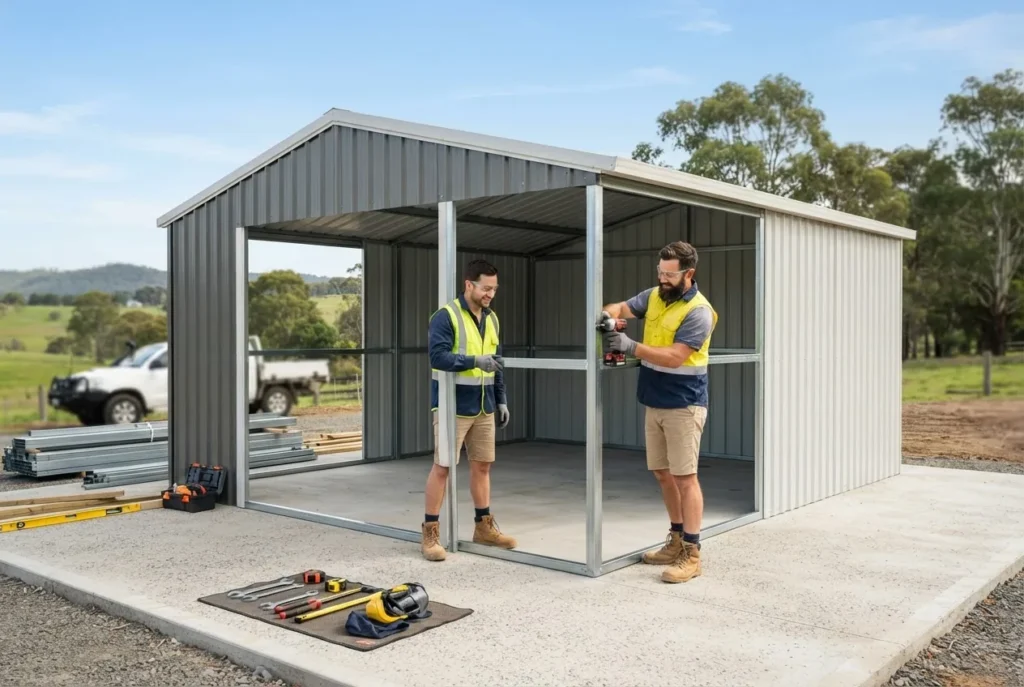
- Metal cupboards: drill, masonry anchors or concrete bolts, socket set — 60–120 minutes to anchor and fit for one person.
- Plastic cupboards: Philips screwdriver, silicone sealant — 30–60 minutes assembly and siting.
- Timber cupboards: level, coach screws, timber preservative, circular saw (if base trimming) — 90–180 minutes depending on base prep.
Anchoring and Fixing Recommendations
Proper anchoring prevents tipping and theft:
- Wall cabinets: fix top and bottom mounting points every 600–800 mm; use coach screws into studs or masonry anchors for brick/concrete.
- Freestanding cupboards: bolt to base at four corners; use galvanised or stainless steel bolts and washers.
- Base preparation: for permanent installs use a concrete pad or treated timber skids elevated slightly for drainage.
See our guides on concrete floor for garden sheds and garden shed brackets for foundation and anchoring details.
Seasonal Maintenance Schedule
Recommended maintenance routine:
- Quarterly: rinse coastal salt, clear debris, check seals and tighten fasteners.
- 6-month: lubricate locks and hinges; reapply waterproof sealant to door joints if needed.
- Annual: full inspection, touch-up paint on metal, re-oil timber, replace worn gaskets.
Frequently Asked Questions (FAQs) on Small Outdoor Cupboards in Australia
For targeted answers to common buyer queries, see the FAQ section below.
Ready to compare models? Use this Small outdoor cupboard buying guide to shortlist models, then check local retailer stock at Bunnings or Mitre 10 for availability.
Explore related topics: 10×6 garden sheds, caravan shelter kits.
Frequently Asked Questions
What size small outdoor cupboard should I choose for my patio or shed?
Choose based on the largest item you plan to store. For brooms allow internal height ≥1.6 m; for stacked cushions aim for ≈1.1 m (W) × 0.6 m (D) × 0.6 m (H). Measure door swing, add 50–100 mm clearance for ventilation, and account for fixed obstructions.
Are metal or plastic small outdoor cupboards better for harsh Australian climates?
Metal (Colorbond) generally offers superior security and higher shelf loads; plastic (UV-stabilised HDPE/PP) is lightweight, waterproof and low-maintenance. For coastal sites choose coated metal with stainless fixings or UV-stabilised plastics; always verify manufacturer salt-spray guidance.
How do lockable outdoor cupboards improve security?
Lockable cupboards deter theft and restrict access to chemicals and tools. Use weather-rated cylinder locks or closed-shackle stainless padlocks, secure hinges with tamper-proof screws, and bolt freestanding units to the floor for enhanced theft resistance.
Can I install a small outdoor cupboard myself, and what tools do I need?
Yes—many are DIY-friendly. Tools: Phillips/flat screwdrivers, drill, masonry anchors for brick, coach screws for timber studs, silicone sealant and a spirit level. Budget 30–120 minutes depending on material and anchoring needs; get a second person for heavy metal units.
What maintenance do wood outdoor cupboards require in coastal areas?
Coastal timber needs extra care: rinse salt quarterly, apply water-repellent oil yearly, inspect for rot and insect damage every 6 months, and fully sand/seal every 2–3 years. Use ACQ-treated timber and stainless fixings; consult WoodSolutions for current treatments.
How do outdoor broom cupboards differ from regular small outdoor cupboards?
Outdoor broom cupboards are narrow and tall with internal hooks/slots to store long-handled tools upright (min internal height 1.6 m). Regular cupboards focus on broader storage, shelves and bins for pots, cushions and small equipment rather than vertical tool storage.
Are there Australian regulations I must consider when installing outdoor cupboards?
Freestanding cupboards usually don’t need approval, but attached cupboards, enclosures or installations affecting setbacks may. Check your local council website or state planning portal (e.g., NSW Planning or Victorian Planning) and consult your strata manager if applicable.
What are the top Australian brands for small outdoor cupboards with good warranties?
Popular options include Keter for plastic units and local suppliers for Colorbond-style metal cupboards; warranties vary (typically 1–10 years). Always verify specific model warranty terms on the seller’s product page and ask about coverage for coastal corrosion.