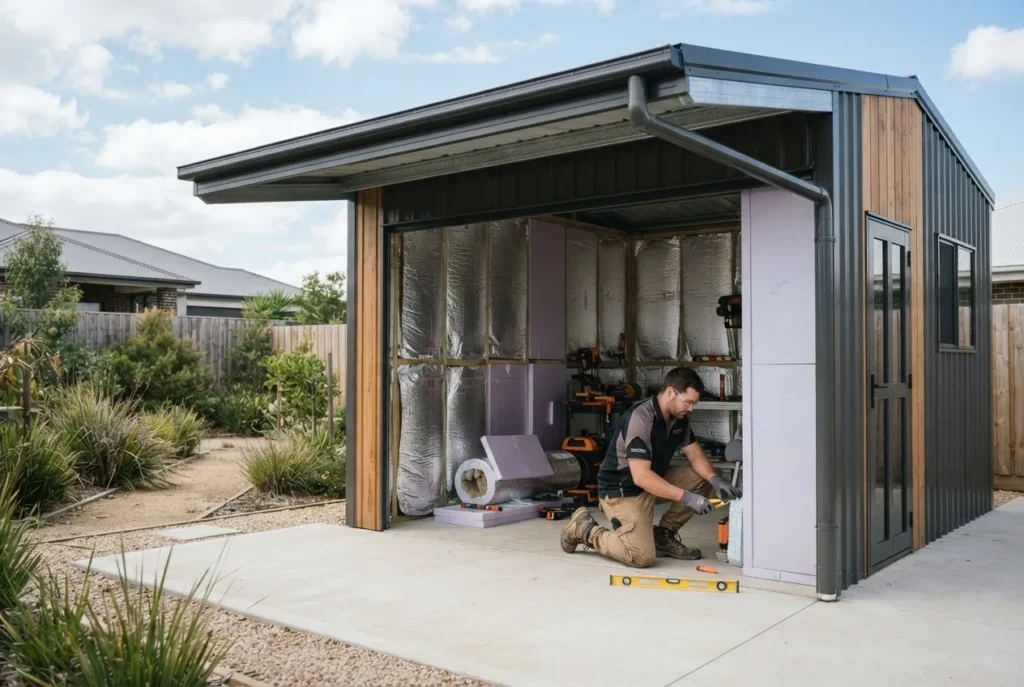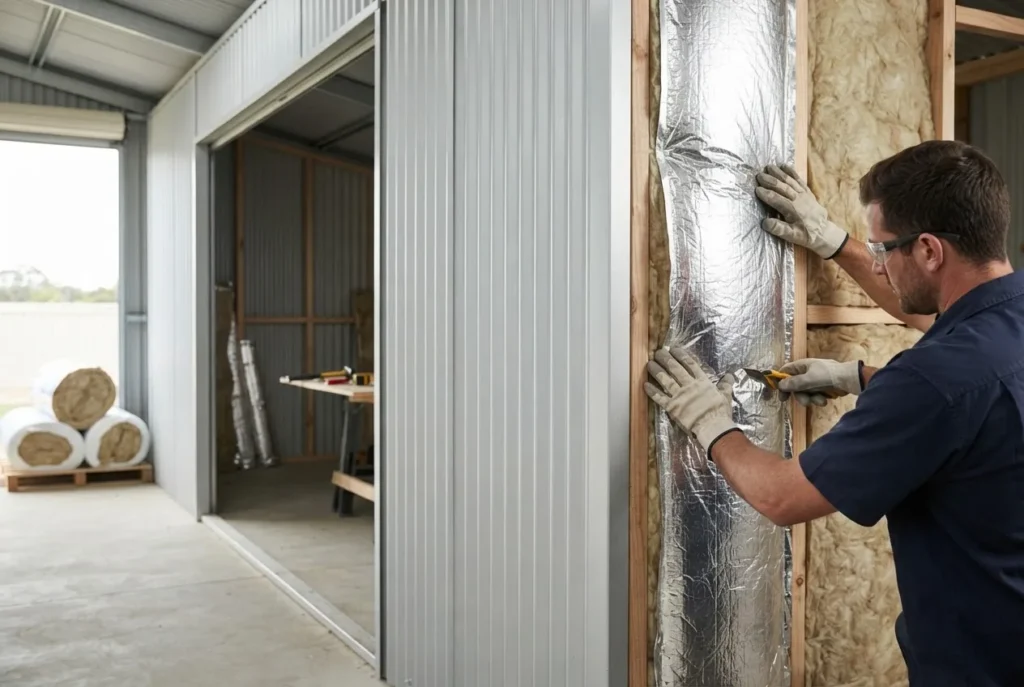


This guide explains doors and garage doors for Melbourne homes, covering types, materials, leading manufacturers, cost ranges (as of 2024), local suppliers, installation, security and maintenance to help you choose the right product, budget accurately and find trusted installers.
Introduction to Doors and Garage Doors for Melbourne Homes
Answer: The right doors and garage doors combine material, style, compliance with Australian standards, budget and installer competence; Melbourne buyers should weigh climate, insulation, security and local supplier reputation when comparing options. This section introduces how to prioritise those factors and what local buyers commonly need.
Transition: First, understand the main product categories and materials available so you can compare like-for-like when reviewing brands and quotes.
What types and materials of doors and garage doors are available?
Answer: Residential garage doors commonly come as roller, sectional, panel or tilt styles and are typically made from steel, Colorbond® (pre-painted steel), or timber; each option varies by cost, insulation, durability and local compliance requirements.
Term: Colorbond is a pre-painted steel product with a corrosion-resistant zinc/aluminium coating and factory-applied finish commonly used in Australian cladding and doors.
Term: Sectional door is a garage door made from horizontal panels that slide up vertically then horizontally along the ceiling, saving driveway space.
| Type / Material | Typical use | Pros | Cons |
|---|---|---|---|
| Roller door (steel) | Single/double garages; sheds | Space-saving, cost-efficient, good automation options | Lower insulation unless fitted with attachments; visual lines |
| Sectional door (steel/insulated) | Homes needing insulation and modern styling | Better insulation, quieter, secure, customised finishes | Higher cost and requires ceiling space for tracks |
| Panel / tilt door (timber or steel) | Traditional homes and character properties | Classic look, timber option improves aesthetics | Timber needs maintenance; tilt action needs driveway clearance |
| Colorbond doors (pre-finished steel) | Modern homes, matching roof/wall colours | Durable finish, wide colour range, low maintenance | Can dent; colour matching on repainting requires care |
| Timber doors | Heritage properties, premium finishes | High-end look, natural insulation, customizable | High maintenance, susceptible to warping in extreme weather |
| Composite / insulated steel | Energy-efficient garages and home workshops | Best thermal performance, sound dampening | Higher upfront cost |
Summary: Choose roller doors for tight clearances and budget, sectional or insulated steel for energy efficiency and security, Colorbond for low maintenance and matching facades, and timber for aesthetics where upkeep is acceptable. For shed doors complementing garage choices, refer to Shed Doors Selection Guide Including Colorbond and Steel.
Transition: With materials and types clear, next compare manufacturers and brands to understand who leads in quality, warranty and local support.
Who are the leading garage door brands and residential garage door manufacturers?
Answer: Australia’s residential market is dominated by local divisions of national manufacturers and specialist firms offering roller, sectional and custom doors; choose brands based on warranty, local service, materials and compatibility with automation options.
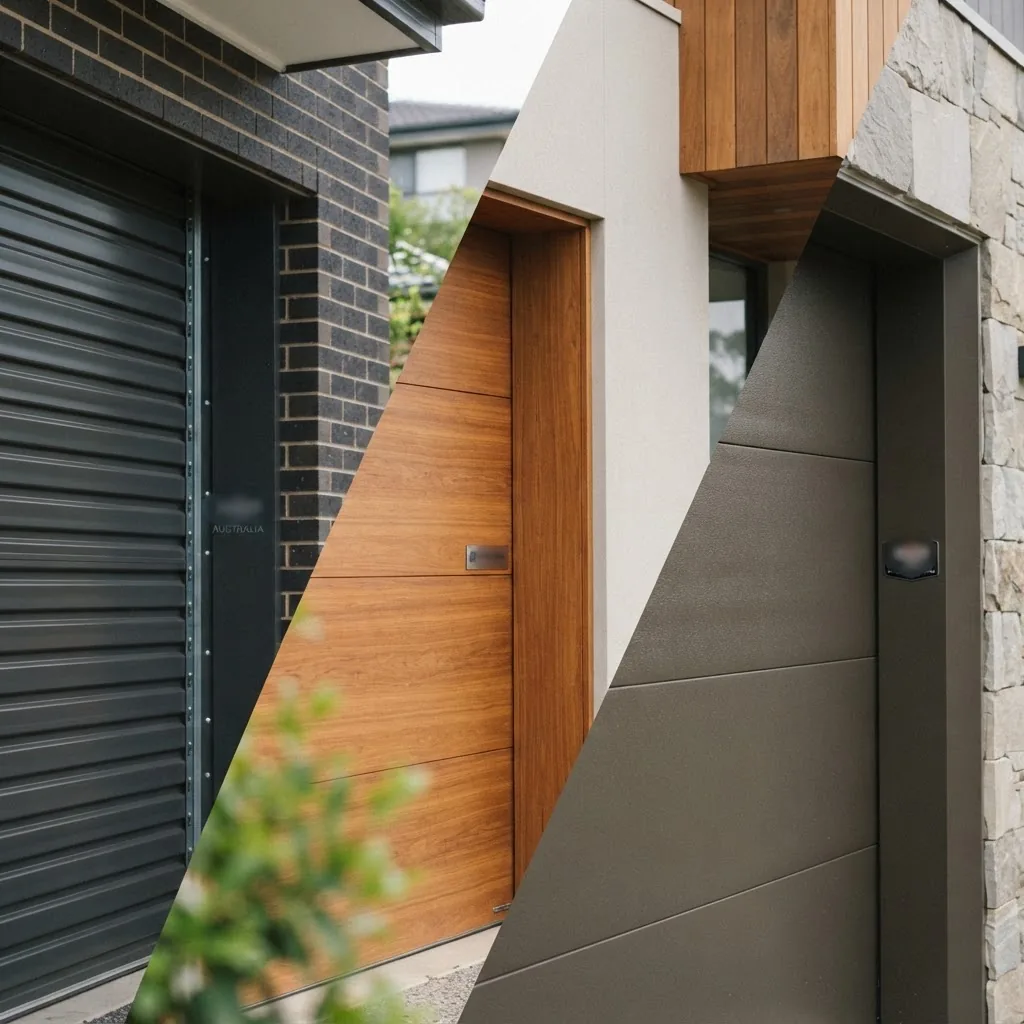
- B&D Garage Doors — Overview: B&D is an Australian-built household name known for roller doors and garage door openers; widespread installer network and strong aftermarket support. Warranty & notes: 10–15 year limited warranties on metal components; known for accessible parts supply.
- Gliderol — Overview: Specialises in roller and sectional doors with a strong emphasis on insulated and automated solutions. Warranty & notes: Offers locally-sourced fittings and competitive installation packages.
- Centurion — Overview: Focused on robust sectional and panel doors with a reputation for custom finishes and security features. Warranty & notes: Good for higher-end residential projects; installers available across Melbourne metro.
- Colorbond-branded systems (BlueScope/Fielders supply chain) — Overview: While Colorbond is a material, many manufacturers offer Colorbond-clad doors for consistent finish with roofing; choose accredited suppliers to ensure coating warranty. Warranty & notes: Material warranties often backed by manufacturer documentation.
- Roll-A-Door / Local roller specialists — Overview: Numerous regional specialists supply and service roller doors with rapid response for repairs; often flexible on custom sizes. Warranty & notes: Check installer reputation and parts availability.
- Custom timber door makers — Overview: Local joiners and small manufacturers produce timber panel and heritage doors tailored to character homes. Warranty & notes: Warranty periods vary; insist on moisture-sealed construction details for Melbourne’s variable climate.
Brand selection tips:
- Confirm local stock and authorised installers for prompt service in Melbourne.
- Compare warranties: look for 5–15 year structural or finish warranties and clear exclusions.
- Request demo of operation (manual and automated) to judge noise, speed and safety features.
- Ask for references or recent local installations—insist on photos and contactable customers.
Experience note: In a Melbourne suburb case study (2023), a homeowner chose an insulated sectional from a national brand to reduce workshop condensation; installer-measured R-value and fitment reduced summer heat gain noticeably within three months. According to a 2024 industry report, customer satisfaction correlates strongly with local service response time and warranty clarity.
Transition: Knowing who makes doors is half the decision — you also need realistic costs to budget properly.
How much do doors and garage doors cost in Melbourne?
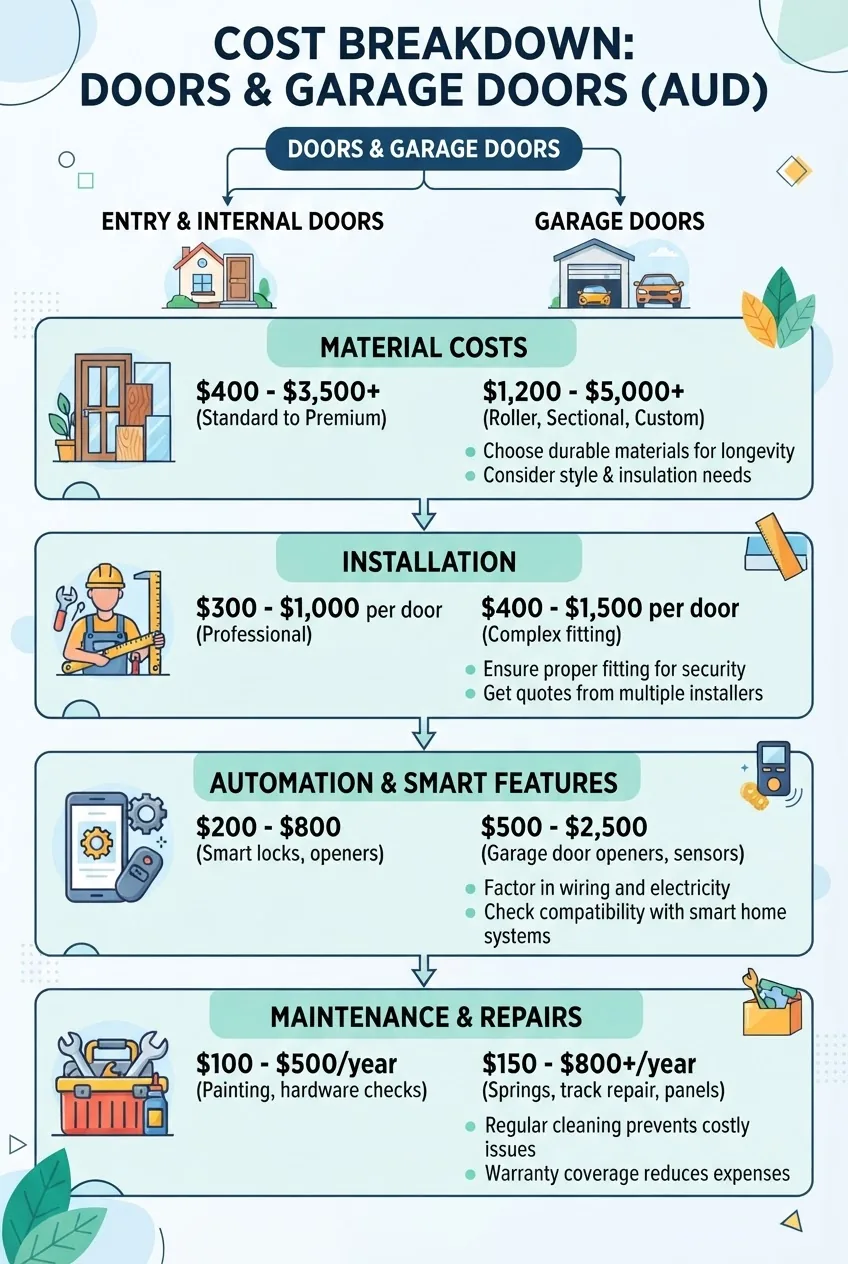
Answer: Typical door and garage door costs in Melbourne vary by type, material, size and automation; as of 2024 expect roller doors from ~AUD 900–3,000, sectional doors AUD 2,500–8,000, plus installation and automation—details follow.
- Roller door (single): AUD 900–2,200 (material only)
- Roller door (double): AUD 1,800–3,000 (material only)
- Sectional insulated door: AUD 2,500–8,000 (material only)
- Timber custom panel door: AUD 2,500–10,000+
- Automation / opener: AUD 500–2,000 (depending on features)
- Installation labour (Melbourne average): AUD 300–1,200 depending on complexity
- Typical total installed single roller: AUD 1,500–3,500; sectional installed: AUD 3,500–10,000+
Ranges stated as of 2024; according to a 2024 industry report and local supplier pricing surveys — final quote depends on size, site access and custom options.
Cost drivers explained:
- Material and finish: Colorbond or painted steel premiums, timber costs, and insulation thickness affect material pricing.
- Size and complexity: Wide or non-standard openings need custom manufacturing or reinforced tracks, increasing cost.
- Automation: Remote openers, smart-home integration and battery backup add between AUD 500–2,000 depending on brand and features.
- Installation access: Narrow driveways, high lintels, or required structural work (lintel replacement, frame repairs) inflate labour.
- Warranty and service packages: Extended warranties or annual service plans increase initial cost but reduce lifecycle risk.
Budgeting checklist before you get quotes:
- Measure opening accurately (width, height, headroom, side room) or have installer measure; use a tape measure and record to nearest mm.
- Decide on automation needs: basic remote, coded remotes, or smart-home linked openers.
- Specify insulation needs—garage used as living space/workshop should require insulated sectional doors.
- Request itemised quotes separating materials, automation and labour for easy comparison.
- Check exclusions and site-specific conditions in each quote (e.g., removal of old door, disposal fees).
For alternative cost insights and gate-focused saving strategies, see Garage Gate Options and Cost Guide for Affordable Doors and for automated roller price detail see Garage Roller Doors Prices and Cost Guide for Automatic Models.
Transition: After budget planning, locate reputable suppliers and installers in Melbourne to get reliable quotes and fast service.
Where can I find garage door suppliers near me in Melbourne?
Answer: Use local authorised dealers of national brands, established independent installers, and trade directories with verified reviews; prioritise suppliers offering on-site measuring, written quotes and post-installation service.
How to search and vet suppliers:
- Start with authorised dealer locators on brand sites (B&D, Gliderol) and confirm local stock and service.
- Check online reviews (Google, ProductReview) and ask for recent Melbourne installation references.
- Request itemised quotes and compare included warranties and response times for repairs.
- Confirm installer licensing, insurance and whether they comply with Australian standards.
Directory-style supplier list (Melbourne focus):
- National brand dealers — Look up B&D and Gliderol authorised dealers for factory-backed products and warranties.
- Local roller door specialists — Small businesses offering fast repair response and custom sizes; useful for odd-sized or retrofit jobs.
- Garage door automation installers — Specialists installing openers and smart integrations; essential if you want MyDoor or a home-automation setup.
- Timber joineries — For customised timber panel doors and heritage replacements.
- Metal fabricators — For bespoke steel doors and large-span shed doors requiring heavy-duty tracks and motors.
Local resources and consumer protection: check registrations and dispute guidance at Consumer Affairs Victoria, and confirm construction compliance via the Australian Building Codes Board.
Experience signal: A Melbourne homeowner’s brief: after receiving three quotes, they picked a local authorised dealer whose quote included pre-install structural checks and a 10-year panel warranty, resolving a pre-existing lintel corrosion issue at installation and avoiding later costs.
Transition: Once you’ve chosen a supplier, understand the installation process, maintenance and security options to ensure long-term performance.
What does installation, maintenance and security for doors and garage doors involve?
Answer: Installation involves accurate measuring, structural checks, frame preparation, hardware fitment and testing; maintenance includes lubrication, balance checks and weatherstrip replacement; security features range from manual deadlocks to smart access controls and motion sensors.
Term: Garage door automation refers to powered openers and control systems that operate the door via remotes, keypads, or smart devices.
Typical installation walkthrough (step-by-step)
- Site measure: installer records width, height, headroom, side room and structural condition; they note lintel strength and clearances.
- Pre-install checks: remove old door, inspect frame, repair or reinforce lintel if required.
- Manufacture/order: custom doors are manufactured to measured dimensions; standard doors may be in stock.
- Fit frame and tracks: installer sets the frame level and installs tracks or roller drums.
- Install door panels or roller curtain: panels secured and aligned; insulation and seals added.
- Fit motor and automation: motor mounted, limit switches set, remotes paired and safety sensors tested.
- Commissioning and walkthrough: safety testing, balancing test and homeowner handover with operation demo and paperwork.
Common local challenges in Melbourne installations:
- Older brickwork or corroded lintels requiring structural repair before door fitment.
- Limited headroom in older garages preventing sectional doors without adjustment.
- Driveway gradients preventing tilt doors from operating safely; installers may recommend sectional or roller alternatives.
Maintenance steps and schedule
- Quarterly: visual inspection, clean tracks of debris, lubricate rollers, hinges and springs with manufacturer-recommended lubricant.
- Annually: balance test, motor service, check safety reversal sensors and weather seals; tighten bolts and inspect springs for fatigue.
- Every 5–10 years: consider replacing worn springs, repainting or re-coating Colorbond panels as needed for coastal exposure.
Security features: pros and cons
- Manual deadlocks — Pros: high physical security when locked; Cons: inconvenient for frequent use.
- Automatic locking motors — Pros: locks on closure, integrates with remotes; Cons: relies on motor and electronics.
- Rolling code remotes / encrypted access — Pros: prevents code grabbing; Cons: costs more than basic remotes.
- Smart access and camera integration — Pros: remote monitoring and history logs; Cons: privacy considerations and network security risks.
- Security sensors and alarms — Pros: integrated alarm response; Cons: added installation and monitoring costs.
For further reading on automation and remote options, see Garage Roller Doors Overview with Features and Remote Options.
Transition: With installation, maintenance and security understood, use the following advice and checklist to select a door that fits your home and lifestyle.
How do I choose the right door and garage door for my shed or home?
Answer: Match the door type and material to your use-case—insulated sectional for workshops, roller for space-saving and sheds, Colorbond for low maintenance, timber for aesthetic value—then use a checklist to confirm sizing, ventilation, automation and compliance.
Design advice and practical selection criteria:
- Function first: workshop or habitable garage needs insulation and seals; storage-only sheds can use simpler roller doors.
- Match style: use Colorbond to match existing roofing or façade; timber for heritage properties but plan maintenance.
- Consider energy efficiency: insulated sectional doors reduce heat transfer—important for attached garages or rooms above.
- Durability: coastal homes need higher corrosion protection and marine-grade fittings.
- Accessibility: motorised doors with keypad or smartphone access suit frequent use and elderly users.
Checklist before ordering:
- Confirm exact opening measurements and any site obstacles.
- Decide material and finish—Colorbond colour code or timber species.
- Specify insulation (foam core or sandwich panels) if needed.
- Choose automation level and remote/keypad options.
- Get written warranties and check post-install service terms.
- Ensure compliance with Australian standards; consult the Standards Australia website for product standards and testing regimes.
If you are matching doors to shed projects and need broader kit or storage advice see Aussie Barns Sheds Guide and Cost for Quality Storage, for outdoor kitchens and specialised doors see Barbecue Shed Features and Cost Guide for Outdoor Kitchens, and for garden-shed roller matches see Garden Shed with Roller Door Options and Price Guide. Custom kit options are covered in Kit Sheds Dalby: Custom Shed Options and Price Guide.
Transition: Finally, summarise key takeaways and the recommended next steps when buying doors and garage doors in Melbourne.
Conclusion and recommendations
Answer: For most Melbourne homes, choose a Colorbond or insulated sectional if you need energy efficiency and low maintenance; roller doors are best for sheds or tight spaces; always get multiple itemised quotes, verify installer credentials and confirm warranties (as of 2024). Prioritise local serviceability.
Final recommendations:
- Measure, then get at least three written quotes itemising materials, automation and labour.
- Choose accredited local installers with clear warranty and service commitments.
- For energy-efficient garages, favour insulated sectional doors and sealed frames.
- Retain documentation, maintenance schedules and proof of compliance for future resale value.
Call to action: Ready to compare models and installers in Melbourne? Start by measuring your opening, prepare your checklist above and contact three local authorised dealers for itemised quotes to pick the best fit for budget, performance and ongoing support.